Note that this post is a bit morbid – and also note that while these festivals are still practiced, they are not sacrificial in nature – at least not to this degree…
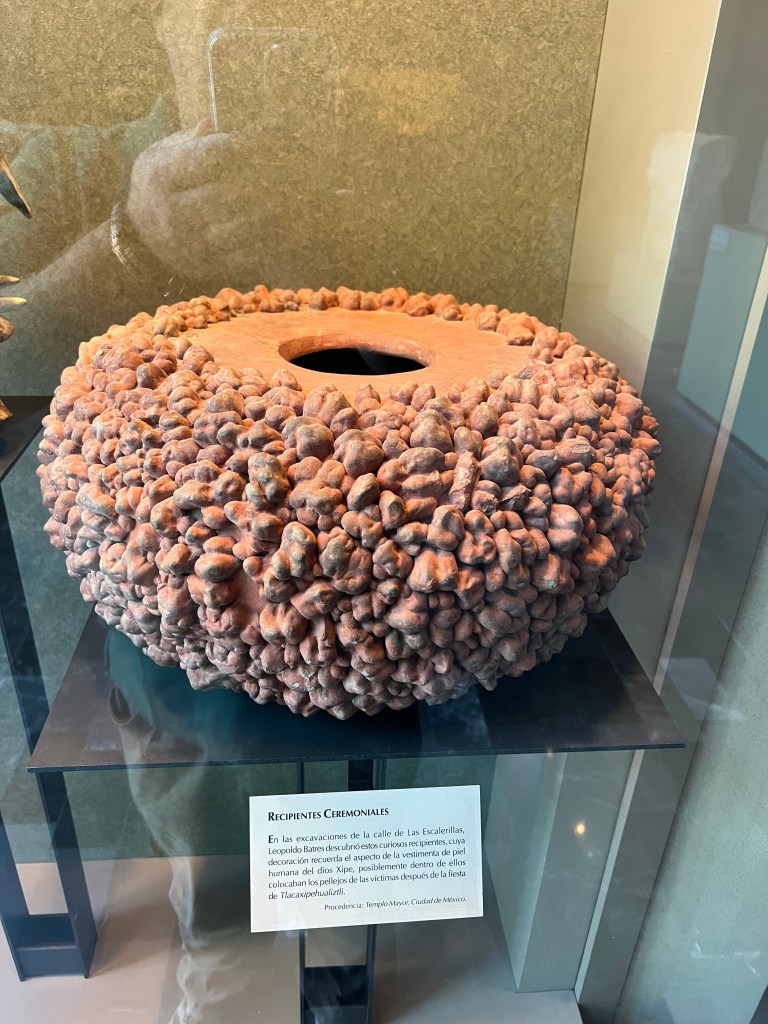
Tlacaxipehualiztli is an important festival in Aztec culture, celebrated during the month of March in the ancient Aztec calendar. The name Tlacaxipehualiztli translates to “the flaying of men” or “the festival of the flayed one.” It was dedicated to the god Xipe Totec, who represented fertility, agriculture, and the renewal of life.
The festival was a time of great significance and was observed with various rituals and ceremonies. The central element of Tlacaxipehualiztli involved the sacrifice of a captive warrior who was chosen to represent Xipe Totec. The chosen warrior would be dressed in the flayed skin of a previous sacrifice, symbolizing the renewal of life and the shedding of the old to make way for the new. This act of flaying represented the shedding of the outer layer, revealing the fresh, fertile skin beneath.
Once the flayed skin was worn, the warrior would participate in a series of rituals and processions. These included dances, music, and offerings to honor Xipe Totec. The festival was also associated with agricultural rituals, as it marked the beginning of the planting season.
Tlacaxipehualiztli was a time for the Aztec people to express their devotion to Xipe Totec and seek his blessings for a fruitful harvest. The festival was seen as a means to ensure the renewal of life, both in the agricultural and spiritual realms. It also served as a reminder of the cycle of life, death, and rebirth.
While the practice of Tlacaxipehualiztli involved human sacrifice, it is essential to understand it within the context of the Aztec civilization and their religious beliefs. Human sacrifice was a central aspect of Aztec religious rituals and was thought to appease the gods and maintain cosmic balance.
Today, the ancient rituals and ceremonies of Tlacaxipehualiztli are no longer practiced. However, its historical significance and cultural impact continue to be recognized and studied as a part of Aztec civilization and Mesoamerican history.
 Pizote Adventures