Rim woes, zipties, and rebuilds…

When we left off, I was holding a cider and squinting at something shiny on my back wheel.

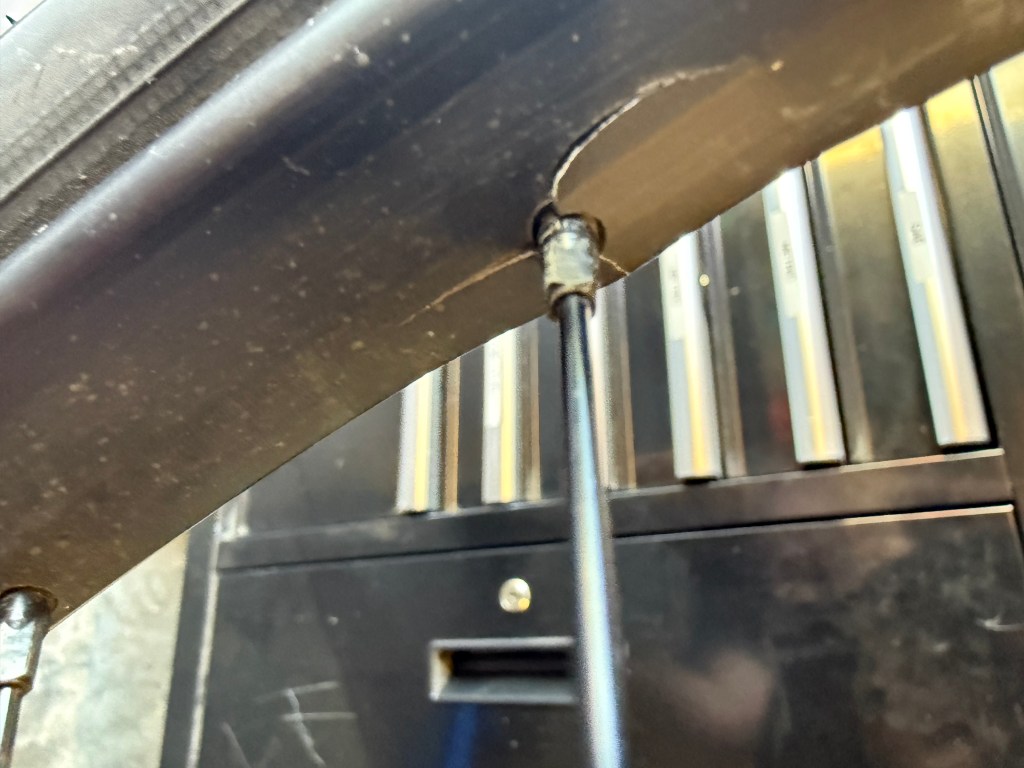
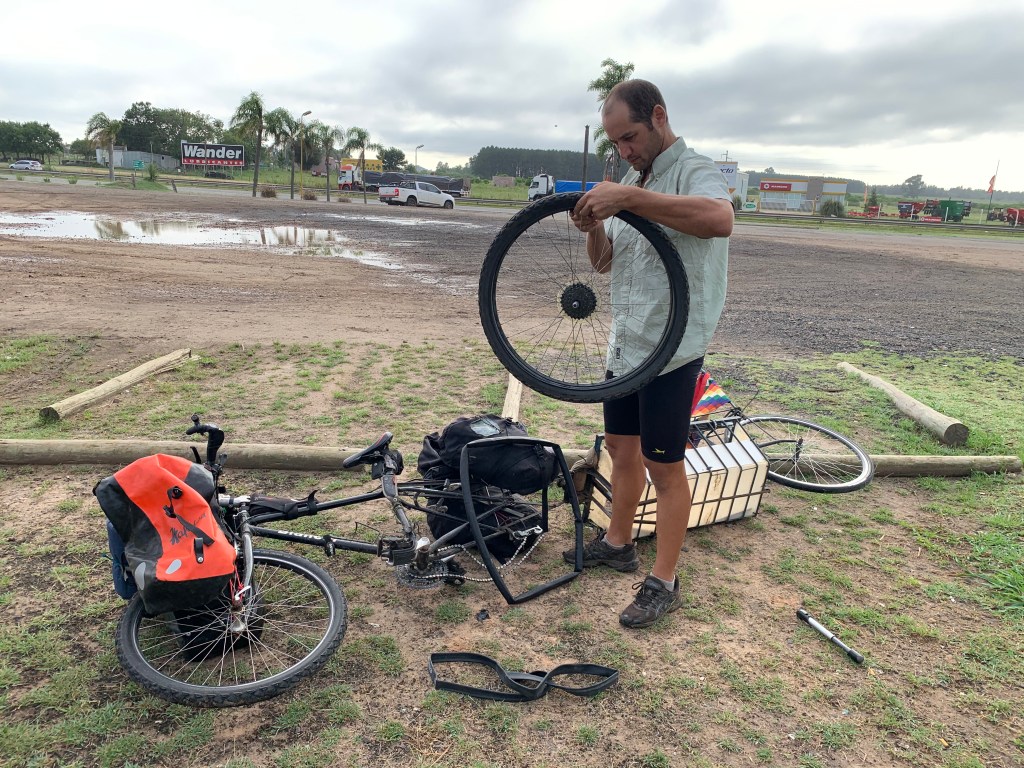
It was a crack. I put the cider down and looked closer. Then I found another one. And another. By the time I had gone all the way around, I had counted ten. Ten spokes slowly pulling their way out of the rim, each one with its own little crack.

The rim was destroyed. Not “keep an eye on it” destroyed. Done.

My guess is the spokes were too tight from the factory. After Argentina the bike mostly sat for five years, and the cracks sat with it, waiting patiently for me to pour a cider and notice.

A word about Guille

My first instinct was to hand the whole mess to a bike shop and write a check. Then I talked to Guille.

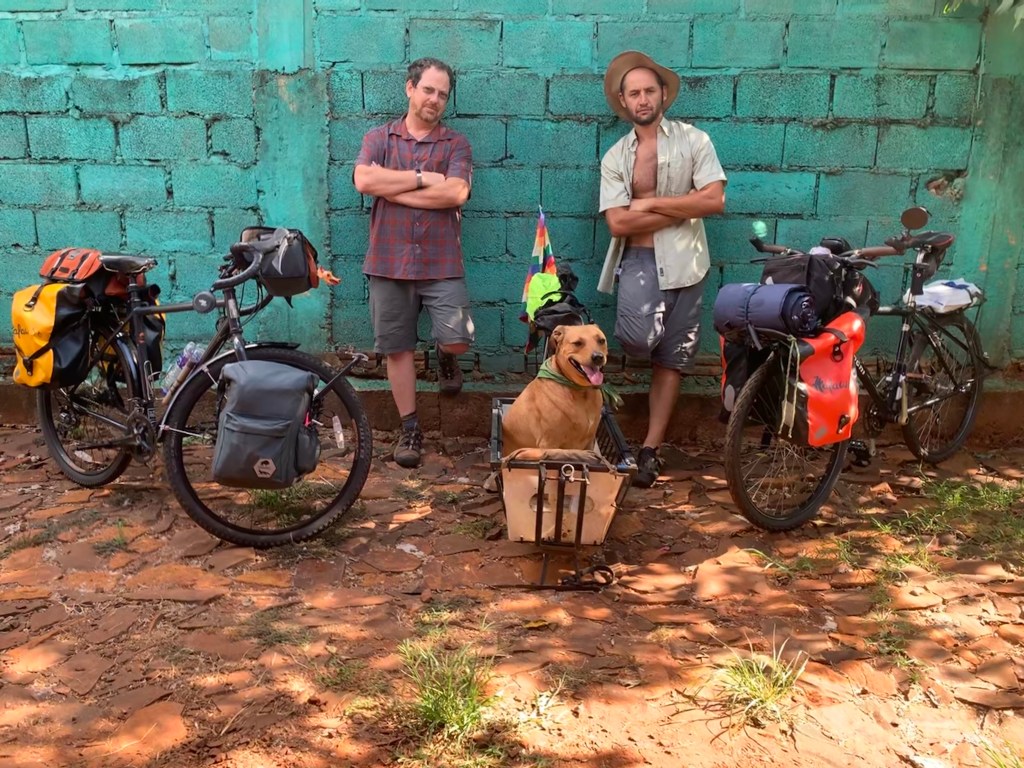
Some history. On day one of our Argentina ride, I was sitting in the heat with a liter of beer when my phone buzzed. It was Guille: “My rim broke, can you meet us here?” A third of his spokes had torn clean out of the metal. We spent four hours at a gas station with our thumbs out.

So naturally, the man with the exploded rim is the one who convinced me to build my own wheels. And naturally, I listened.
While I’m in there

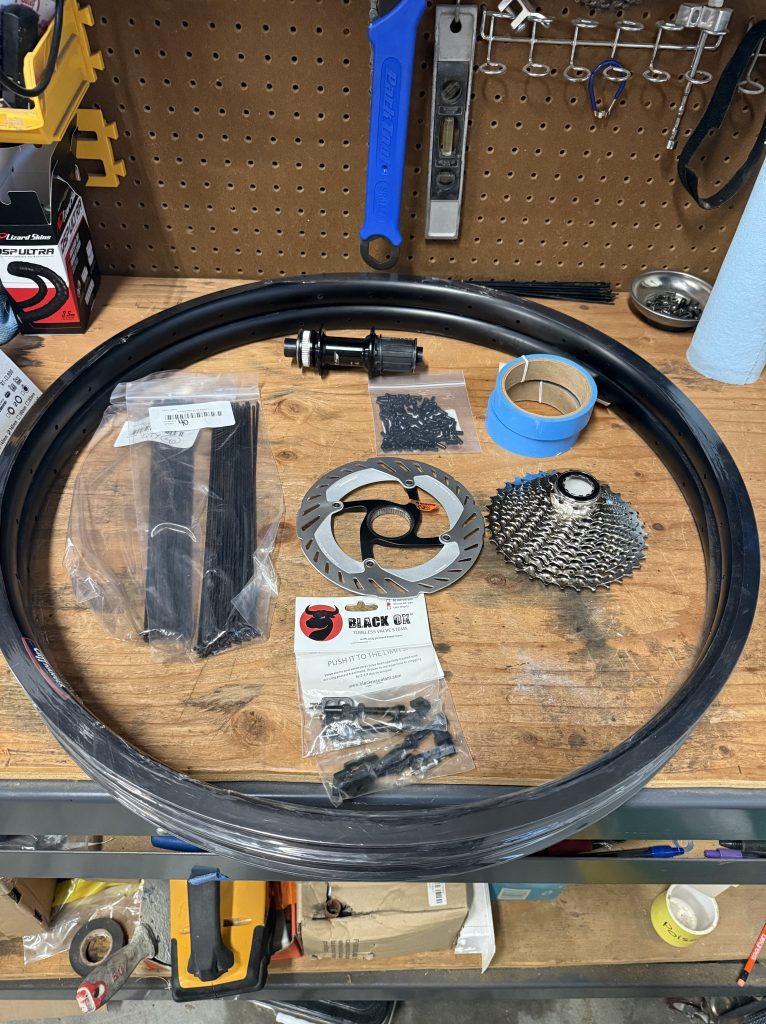
The only things I kept were the hubs. New rims, new spokes, new everything else, front and rear. The front rim hadn’t cracked, but it was the same age and had lived the same life, and I wasn’t going to wait for it to tell me.

Then came the most expensive phrase in any garage: might as well. The rear wheel was already in pieces, so I might as well replace the brake rotors. And the cassette. The old ones would probably have lasted. Now I know they will.

Final tally: the wheels cost double what the cockpit did. The thrifty plan is not going well.
Tools? Who needs tools?

Wheel builders use a truing stand, a precise and costly piece of equipment that tells you exactly where your wheel wobbles.

I used zip ties.

Put the wheel in the bike, strap a zip tie to the frame on each side, snip the ends so they just miss the rim, and spin. Where the rim touches a zip tie, that’s your wobble. Tighten a spoke, spin again. It works. It works well enough that I was a little smug about it.

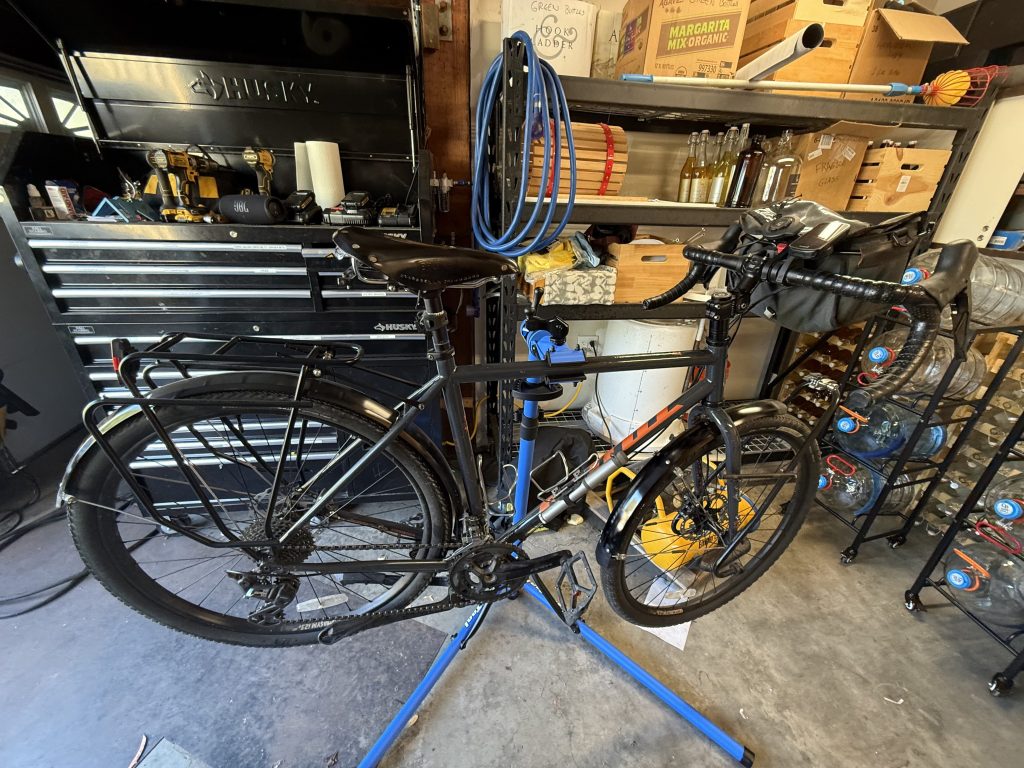
And now, sheepishly: I did buy a few things. A bike stand, so the whole bike could hang at eye level while I worked. And a spoke tension meter, because if too-tight spokes killed the last rim, I wanted a number this time and not a feeling.

But the truing stand, the precise and costly one? Never bought it. The bike went up on the stand, the zip ties went on the frame, and two bits of plastic that cost less than a cent each did the job. I have stopped trying to explain this to people.

Like butter

You are supposed to oil the spokes and nipples before you put a wheel together. On the rear wheel I did exactly that, and it went together like butter.

On the front wheel, I did not.

I also had a cheap spoke tool. Dry threads plus a cheap tool is how you round the corners off brass nipples, one after another, each time thinking the next one will be different. It was not. I tore the whole wheel back down and replaced half of them.

Then I bought a better tool. I oiled the spokes and the nipples. Went together like butter.

Some lessons you pay for twice.

The tire problem

Both rims are now taped for tubeless tires. Which brings me to my wheel size: 650b x 47 mm.

Finding that tire in the US has become close to impossible. Everyone has moved to 700. Shops look at you like you asked for a typewriter ribbon. And 650b is… sigh.

Yes, I could have gone to 700 while I was rebuilding everything anyway. They would probably fit the fork. I never measured. They would not fit under my splash guards, and I am riding through Norway. The splash guards stay.

So I searched. And searched. And found three Teravail Washburns.

Yes, three. I am aware that “bi” means two. The third one is the spare.

I don’t expect to need it. 650b is still popular in Europe, so finding a tire over there should be easier than here. Which is exactly the kind of sentence Murphy’s Law was written for. If a tire is going to gash open, it will do it on a Sunday, in the rain, 40 km from a shop that closed on Saturday. So the spare comes along.

They are the “Durable” version, with a tougher sidewall. Better for touring. Heavier, but… durable. Fewer gashed sidewalls on the side of the road, which is a trade I will take every time.

Where things stand

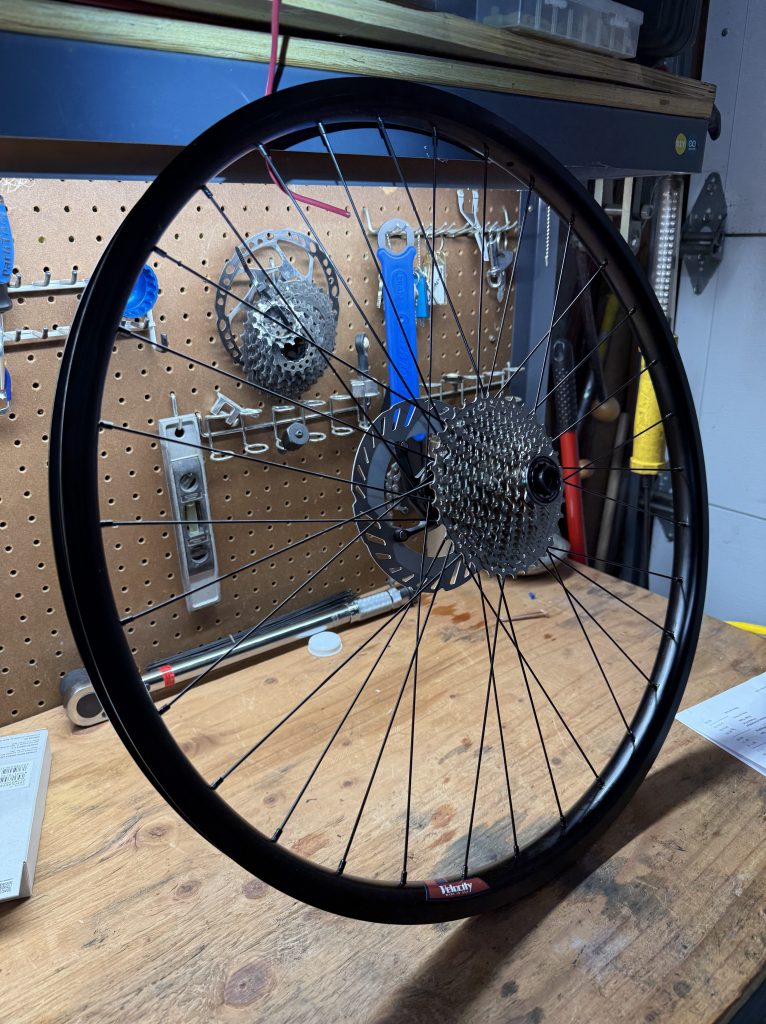
Both wheels are built. They are round, they are true, and I made them, which still surprises me. Now I am just waiting on the tires.
Next time: the finished bike, all of it, settled.

What changed

  1. Rims: Velocity Cliffhanger, front and rear
  2. Spokes and nipples: DT Swiss, brass nipples
  3. Hubs: kept
  4. Brake rotors and cassette: new
  5. Tires: Teravail Washburn, Durable, 650b x 47, tubeless. Two on the bike, one spare.
The cockpit: what Argentina taught me about handlebars

The Kona came with drop bars. Drop bars look fast. They look like you know what you are doing. For 1400 km across Argentina, they were also the part of the bike I argued with every single day.

The problem

I wore progressive lenses. Leaned forward over a drop bar, the only way to see the road ahead is to crank your head back and peer through the top edge of your glasses, like a turtle checking the weather. Do that for six hours in 41°C heat and your neck files a formal complaint.

The other problem was hands. Drop bars promise lots of hand positions. I never used the drops. Not once. That left me the horns, and the narrow bit across the top.

The top is about as wide as a coat hanger, which puts your hands a few inches apart, right next to the stem. Steering 30 kg of loaded bike from there is like driving a bus with a steering wheel the size of a jar lid. Every wobble, I saw my life flash by. Then my looks. Then my happiness. In that order.

So really I had one hand position, for three and a half weeks.

I came home with a list. A short list. It said: fix the cockpit.

The back and forth

Then I spent months not fixing it. Researching, I called it.

I went back and forth between handlebars more times than I will admit. Butterfly bars, the kind every German touring cyclist seems to be born holding. A plain flat bar with bar ends. Swept bars, loop bars, bars that look like someone bent a coat hanger in a hurry. Each had a fan club on the internet, and each fan club was certain.

My plan was simple and thrifty: change the bars, keep everything else. Shifters, brakes, derailleurs, all of it perfectly good.

The bike had other ideas. Road shifters don’t work on a flat bar. The brake levers that do work on a flat bar wouldn’t run my brake calipers. New levers meant new calipers. New shifters meant a new rear derailleur. Pull one thread and the whole sweater shows up on the garage floor.

At some point I did the math on just buying a different bike. It was closer than I would like. But then what would I do with two bikes? I like this one. It carried me across Argentina. It stays.

The solution

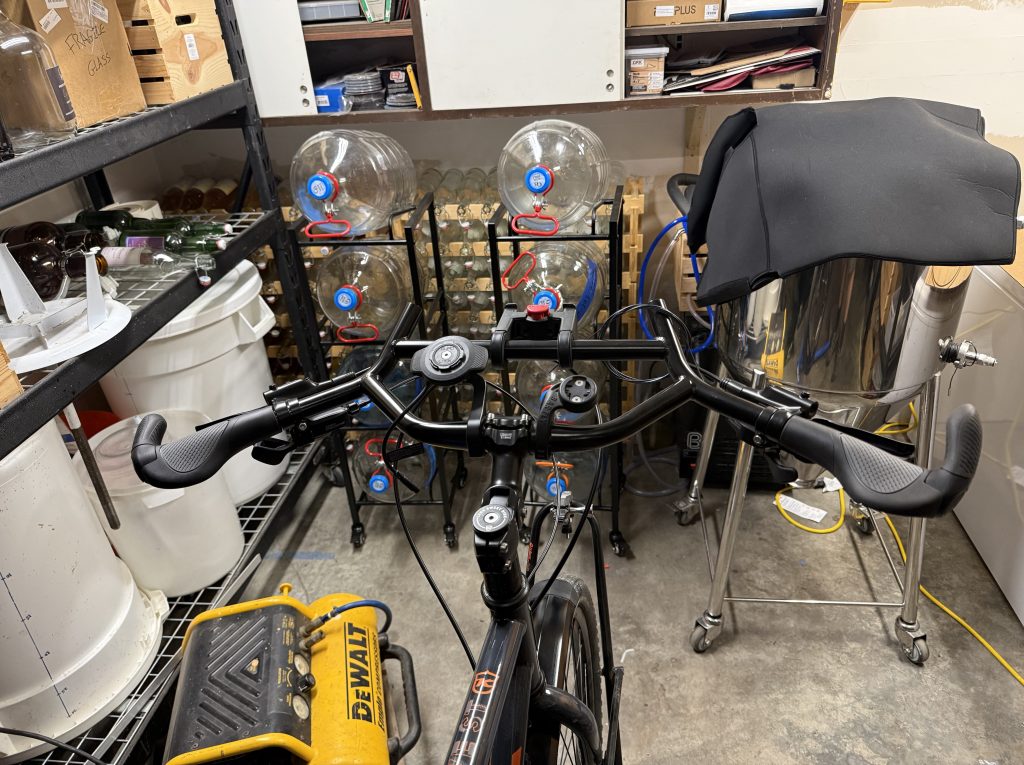
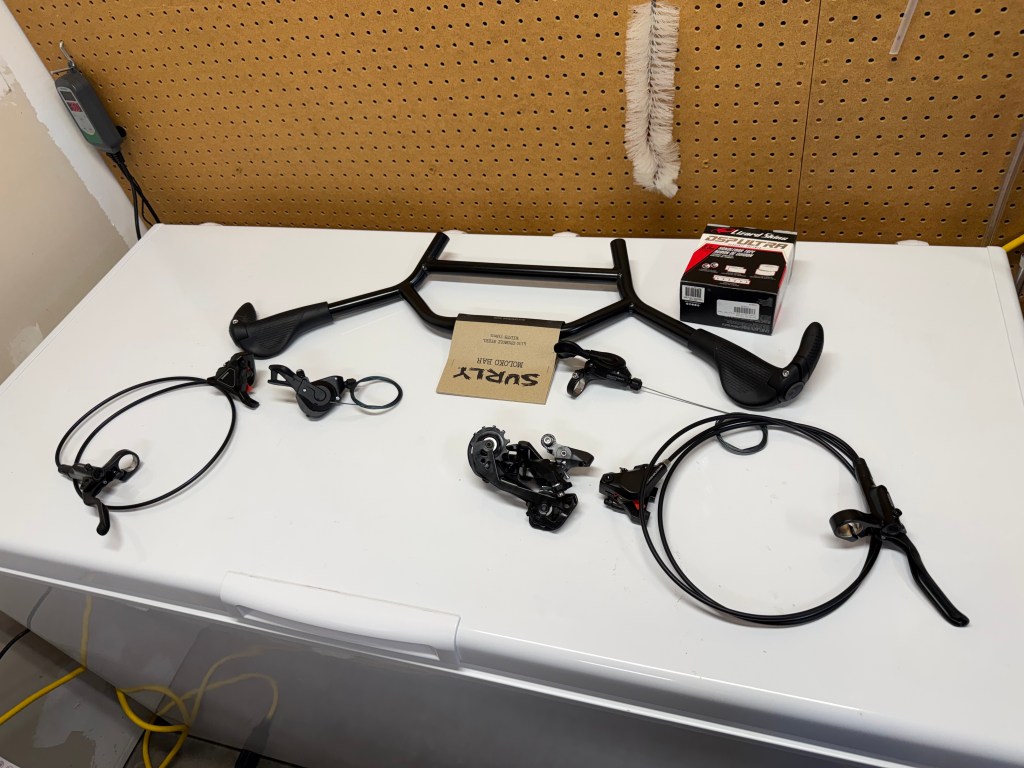
The winner was a Surly Moloko, a wide, swept-back bar with a loop out front and more places to put your hands than I have hands. I sit upright now. I look straight ahead, like a person.

By the time I was done, I had replaced everything but the front derailleur and the cranks. So much for thrifty.

And then, after rebuilding an entire bicycle around my glasses, I switched to contacts. Timing has never been my strong suit.

I like everything about the new cockpit. Everything. The choice I will brag about, though, is the least exciting one: the new shifting parts are plain Shimano Deore. Nothing fancy. That is the point. Every bike shop between Trondheim and Santiago has Deore hanging on the wall, and when something breaks in a small town in France, I want the boring part.

The build

I did the work myself. I have been in IT for 40 years. How hard can a bicycle be?

A couple of weeks hard, as it turns out. That is on top of the months it took me to decide.

The box of parts sat on the bench for a few days, judging me. Then the old cockpit came off in about an hour, which should have been a warning. Taking things apart is the easy half of any project.

The new bar is 735 mm wide. My garage door is not much wider. The bike and I have had words about this.

I watched the videos. In the videos, a calm man with clean hands does each step once. I did most steps twice and at least one of them three times, with hands that were not clean, hunting for bolts. Plural. Bolts the size of a grain of rice, each one rolling under the one shelf I cannot move. Somewhere under there is enough hardware to build a second cockpit.

Then came the cable housing. Measure twice, cut once, they say. I measured twice. I cut once. I cut in the wrong place. There is no undo button on a cable cutter, so a new length of housing went on the shopping list, and the second cut was preceded by a great deal of staring.

The brakes, to my surprise, were the easy part. They came filled and ready, and I managed not to ruin them.

And a confession. Once it all shifted, mostly, I cheated. I took it to a shop and had the rear derailleur fine tuned. The mechanic was kind enough not to ask who had set it up.

The bars are still naked. No tape yet. I want to ride it for a while and move things around before I seal every lever in place under expensive tape. Expensive tape is a commitment.

The moment

When it was all set up and dialed in, I rolled the bike out, poured myself a cider, and sat there admiring it. New bars. New controls. I was pretty pleased with myself.

Then something shiny caught my eye. Back wheel, on the rim, right near a spoke.

What is that?

Is that a crack?

Stay tuned for the next challenge. I am about to learn how to build wheels.

What changed

  1. Handlebar: Surly Moloko
  2. Grips: Ergon, with bar ends
  3. Shifters and rear derailleur: Shimano Deore
  4. Brake levers and calipers: Shimano hydraulic
  5. Kept: front derailleur, cranks

A new adventure: the EuroVelo 3

Six years ago I rolled into Buenos Aires, wrote that I had been bitten by the cycling bug, and said the next ride might happen in 2021. It is now 2026. The bug, it turns out, has a long incubation period.

That ride was January 2020. Iguazú Falls to Buenos Aires, just under 1400 km, with my friend and brother Guille and his dog Rocco. Before it, I hadn’t owned a bike, or even ridden one, in more than 15 years. So my OCD monkey mind went to work. I researched every option and settled on the Kona Rove ST. A fine gravel bike. I really had no idea what I was doing.

I trained at home: 50 km four times a week, with one ride stretching longer each week until I hit 100 km, all in a civilized 15°C to 23°C. Argentina answered with 41°C and 30 kg of gear.

I came home knowing what I liked and didn’t like about that specific trip. Too fast, too hot, no time to stop and look at anything. The next one would be slower. Kinder to the body, and to the soul, weather-wise.

I also wrote that the next one would be about 1850 miles. Hold that thought.

The next one was going to be the Danube. EuroVelo 6, from the headwaters in Germany to the Black Sea, June 2026. I had maps. I had a plan. Guille and I have a running joke that the best plan is to not have a plan. The Danube agreed with us.

Enter the Norwegians.

Torger and Håkon are father and son. I met them last year on the Camino Primitivo, and they are the ones who invited me to the lunch where a waitress baptized me in Estrella Galicia. Håkon is the reason I am back in school studying philosophy. He is well read, and he has a habit of asking the one question that takes apart whatever I just said. Over the past year they have invited me to hike in Norway and to join them for a couple of weeks on the Camino Francés. School and work said no each time.

When I told them about the Danube, they asked if I had looked at the EuroVelo 3. They wanted to ride that one some day.

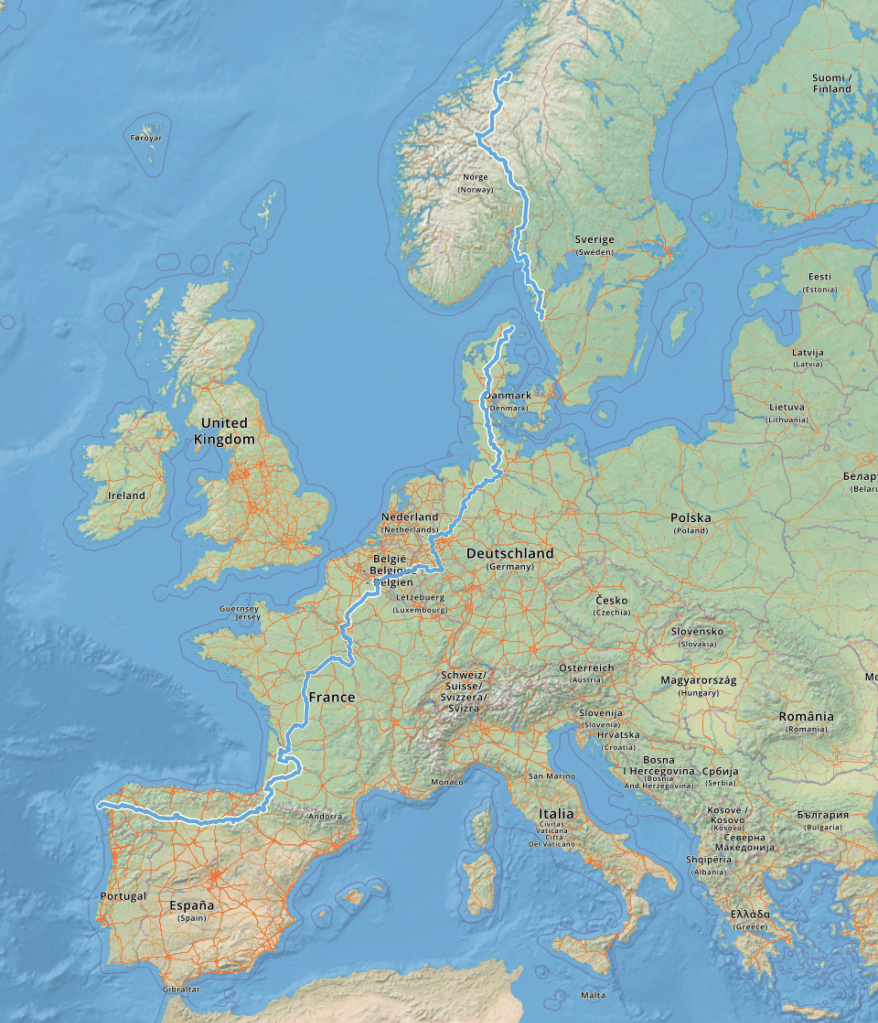
So I looked. The EV3 is called the Pilgrims Route. It starts at Nidaros Cathedral in Trondheim, Norway, and it ends in Santiago de Compostela. I have been to Spain and Portugal eight times and walked into Santiago on seven of them. Riding there from a cathedral in Norway? That is the perfect pilgrimage for me.

The numbers are a little less romantic. About 5,650 km, from 63° latitude north down to 43°. That is roughly 3,500 miles, for anyone still holding the 1850 thought. I was off by a bit. Roughly three months, starting in Trondheim in June 2027.

Then there is the climbing. Around 40,000 meters of it, which is Everest four and a half times, on a loaded bike. On the Primitivo last year the group used me as their guide, and I had one description for whatever was coming, dead flat or mountain pass: rolling hills. Norway has rolling hills at the start. Spain has them at the finish, and Spain’s are steeper per kilometer than Norway’s.

Rolling hills indeed…

As it stands, Torger and Håkon will probably not be able to join me. I still have hopes. If it ends up a solo trip, so be it. On foot I like walking alone for two or three weeks, and after that I want company. A bike will be different. I don’t know how yet.

Three months also bumps right up against the 90 days a visitor gets in the Schengen area. I will need to get creative, and France may be part of the answer. Homework pending.

And yes, I will walk in Spain again. I am positive of it.

The bike is the same one that crossed Argentina. Mostly. Six years gave me plenty of time to think about what I didn’t like about it, and all of it was in the cockpit: the handlebars, the controls, everything my hands and eyes deal with all day. Figuring out what to change took a while. Then I changed it. That story is next.

Now it’s time for a plan without a plan…

Day 36-40: goodbyes, reunions, another walk, and more goodbyes

The last five days have carried me in a quiet drift through the far northwest corner of Spain — Santiago, A Coruña, Fisterra — each place leaving its own soft mark on me.

Last Friday, our little band of pilgrims dissolved into different directions: some partings final, some temporary, some full with promises of future adventures. Usually, when I finish a Camino, I retreat inward, drawn into a private cocoon of reflection. But this time felt different. When I left for A Coruña, I carried a quiet joy in my chest, knowing I would see an old friend and then reunite with new ones for the journey to Fisterra.

A Coruña felt like a gentle reentry into urban life, its old town inviting me to get lost among tapas bars, its beach alive with the laughter of locals, the marina pulsing with the energy of wandering visitors. It was a soft landing, yet it reminded me how long it had been since I had let myself drift anonymously through a bustling city.

On Sunday, the train and taxi carried me quickly to the halfway point of the Camino de Fisterra. Tor and Hok were already waiting, and Eri arrived soon after. We shared drinks and dinner, our conversations spiraling into philosophical questions that only the Camino seems to inspire.

Monday’s walk to Cee was gentle, almost too easy, 20 kilometers along gravel paths and winding farm roads. We watched green hills roll past us until the sea revealed itself at the final turn, a sudden horizon that felt like a gift. We arrived in town, showered off the dust, and spent the afternoon in unhurried wandering and playful talk of creating a pilgrim’s albergue, a true oasis for souls like ours.

Tuesday brought a short 12-kilometer stroll to Fisterra. Those last 4 kilometers, we slipped off our shoes and let the Atlantic waves wash our feet, an unspoken ritual of release. I did not want to put my shoes back on; my feet felt baptized, unburdened.

That evening, we met Pav from the Czech Republic, who carried a kindness that felt rare and luminous. She gathered us all to the beach with a picnic she had assembled from the local market. We watched the sun slip beneath the sea and shared a simple meal, salt in the air, laughter curling into the dusk.

Wednesday morning came too quickly. My friends walked me to the bus stop; we lingered in that last stretch of togetherness before scattering again. On the bus, I found an echo of the past weeks, a family from California we had crossed paths with many times. We shared a fleeting reunion before they vanished into Santiago’s labyrinth of streets and faces.

Today, Santiago feels different. The errands I had to run pulled me through its winding lanes, but beneath each step there was a low hum of melancholy. The familiar post-Camino ache settled into my bones, the tension between belonging and returning, between motion and stillness.

I realize now that my sadness is more than just an end-of-walk melancholy. It points to something deeper. In California, my social life has thinned over the years. Working from home, scattered friends, long quiet evenings, I have grown used to a certain solitude that no longer feels like choice. On the Camino, that solitude dissolves into shared meals, spontaneous laughter, the warmth of strangers who become family for a few days or a few weeks.

I can feel the shape of a question rising. What comes next? Paid work seems to be fading from my horizon, but what will I reach for instead? Social projects? Volunteering? Another country? Another Camino?

The Camino always has a way of peeling away the layers, of showing me what I did not know I was missing. And maybe this one is not quite finished with me yet. Maybe I am not quite ready to return. Maybe I never will be.


This is my final blog post from this Camino, and I want to thank each of you for following along with me, for walking beside me in spirit, sharing in the small joys and quiet reflections. If any of you have questions, thoughts, or simply want to talk more about the Camino, please reach out to me directly. I would be happy to share a conversation, just as I have shared these miles.

Day 34: arrival in Santiago

Arriving in Santiago always feels like stepping into a dream that you are not quite ready to wake from. Today marked our final day walking together, the last physical steps of this long, winding Camino. We gathered at Monte do Gozo, finally reunited after being scattered across various albergues and reservations. With hugs, bright smiles, and a rousing “Happy Birthday” for Ana, we set off in a lighthearted, celebratory mood. At a luxurious 8:30 start, practically midmorning by Camino standards, we ambled the final 4 kilometers, arriving at the cathedral around 10:15, give or take a few spontaneous photo stops, café breaks, and extra stamps for those who wanted to squeeze in one last sello.

The moment we stepped into the Praza do Obradoiro, it felt as if our hearts all spilled out together into the square. We were happy, overwhelmed, and somehow already nostalgic before we had even finished hugging each other. Reaching the cathedral is beautifully bittersweet. There is joy in the accomplishment, pride in the perseverance, but also an ache because we do not want it to end. These weeks of laughter, blisters, shared dinners, and philosophical rants under thundering skies have welded us together in a way that feels deeper than everyday life allows.

After a storm of hugs and the usual group photos, some with tears and some with goofy faces, we dropped our packs into storage, perhaps the greatest act of freedom after weeks of carrying them like a second spine. We slipped into the cathedral to pay our respects to Saint James, a quiet, reverent moment to thank him for his silent companionship on this wild journey.

Soon after, we found ourselves around a table at a nearby café, beers in hand, grinning like kids on the first day of summer. I tossed out a question that took everyone off guard: “What have you learned about yourself on the Camino?” One by one, each person shared, and it felt like we were opening little treasure chests. There were stories of discovering personal strength, learning to lead rather than follow, finding peace in solitude, embracing vulnerability, and affirming old truths. It was as if the Camino had turned us inside out, and in that messy unraveling, we had each found something worth keeping.

The real question now is how do we carry this home? How do we keep the Camino alive inside us, not just as a story we tell, but as a quiet force that shapes us? I do not have the answer, but maybe it starts with remembering. Remembering each sunrise start, each unexpected act of kindness, each conversation that meandered deeper than we thought possible. Perhaps we live the Camino daily by walking through life with the same open heart we carried across Spain.

We scattered to run errands, prepare for Ana’s big birthday lunch, and tie up the final pilgrim tasks. That birthday meal turned into something beyond food and cake. It felt like the perfect ending, or rather, a new beginning. We celebrated not just Ana turning fifty, but also the family we had chosen along the way. We came from every corner, every background, and yet here we were, sharing a table as if we had known each other forever. We honored each person for who they are, and in that acceptance, found something beautifully human.

After lunch, one by one, we drifted away, some to visit family, some to catch flights, some to stay a bit longer and soak in the magic of Santiago. Each goodbye tugged at the heart a little more. But there was no sense of finality. Plans are already brewing, more Caminos, a potential pilgrim spa, even dreams of opening an albergue together someday.

None of us knows where the next path will lead, but we do know this: we are forever connected. We carry each other in our hearts, like little stamps from our journey, silent proof that we were here, we walked, and we loved every step.

Day 32-33: Melide to Monte do Gozo

Last night as I arrived at the albergue, slipping in along a quiet back road. From the moment the gates came into view, something felt ominous. Iron bars wrapped the entire property, creating a sense of imprisonment rather than safety. Though unlocked, they looked designed to keep people from escaping, not to keep them safe. The Camino is a place of openness and trust, but here, everything hinted at secrecy and control.

Ana, already having arrived and always alert, quietly pointed to the reception and warned that the staff were unfriendly. Inside, a blond woman sat behind the counter, her eyes sharp and watchful. Without a glance, she continued a tense phone call in her Eastern European language, her voice cold and dismissive. There was no warmth, no greeting, just a sense of strict control and hidden tension that poisoned the air.

In the bar, a young woman from Peru worked under that same heavy atmosphere. Her strong Andean features stood out, but her eyes were downcast. For a brief moment, when I spoke to her in Spanish, her spirit flickered to life. That light died immediately when the blond woman entered and spoke to her sharply in her language. The young woman shrank, replying in short, subdued Spanish, her entire posture that of someone conditioned to obey without question.

Later that evening, the blond woman’s husband arrived. Heavy and commanding, he moved like a man used to ownership, not partnership. The second young Peruvian woman called him “Papa” with a tone that did not match any natural affection. The sisters kept working late into the night, tirelessly tending to chores and guests. Meanwhile, two small children of the older sister ran around the compound, their features hinting at a connection to the dat man. There was no sign of a father, no partner, no hint of freedom or choice.

The next morning, a simple breakfast became another display of dominance. As the younger sister began to process the payment, the man intervened. He seized the card terminal, entered the amount himself, turned the screen away, and quickly snatched it back. Only later did a bank notification reveal the charge was twice what it should have been.

As we walked together sharing our experiences, the unsettling pieces began to form a horrifying picture. The forced silence, the controlling behavior, the fearful glances, the unexplained children. All of it pointed toward something far darker than a strict workplace. Though there was no direct proof, it felt unmistakable. This was a place where freedom had been stripped away, where human dignity had been erased, it felt like human trafficking. I feel that it should be reported but without proof, it makes it difficult to do so.

Now, on to the lighter side of things.

The last two days on the French route have been everything you might expect and then some. From Melide to Arzúa, we practically had to learn crowd-surfing techniques to navigate groups walking four or five across, oblivious to anything smaller than a bulldozer. Then there were the bicigrinos, cyclists who apparently think bells are optional accessories, perhaps to be swapped for a second water bottle or an extra selfie stick.

We decided to skip the circus of Arzúa and head to a smaller town, a tactical move designed to slide between the pilgrim waves. This plan worked brilliantly. Once we left Arzúa, we finally had room to swing our arms without smacking someone’s wide-brimmed hat, and the bird songs returned to us like old friends.

This morning, we left our albergue with a ten-kilometer buffer in front and behind us, Camino solitude at its finest. We floated down the trail like phantoms, greeting the few souls we encountered as though they were long-lost cousins.

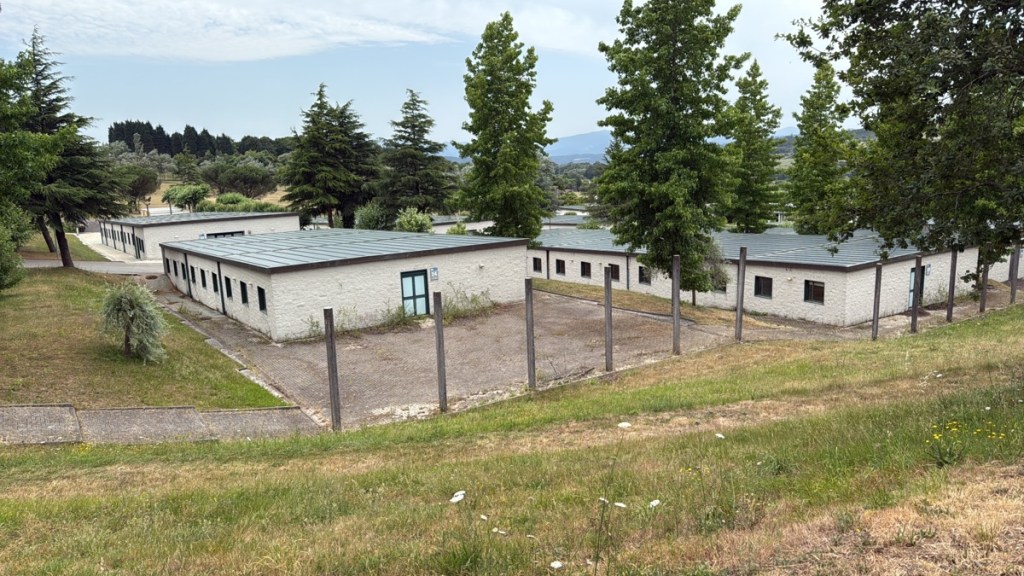
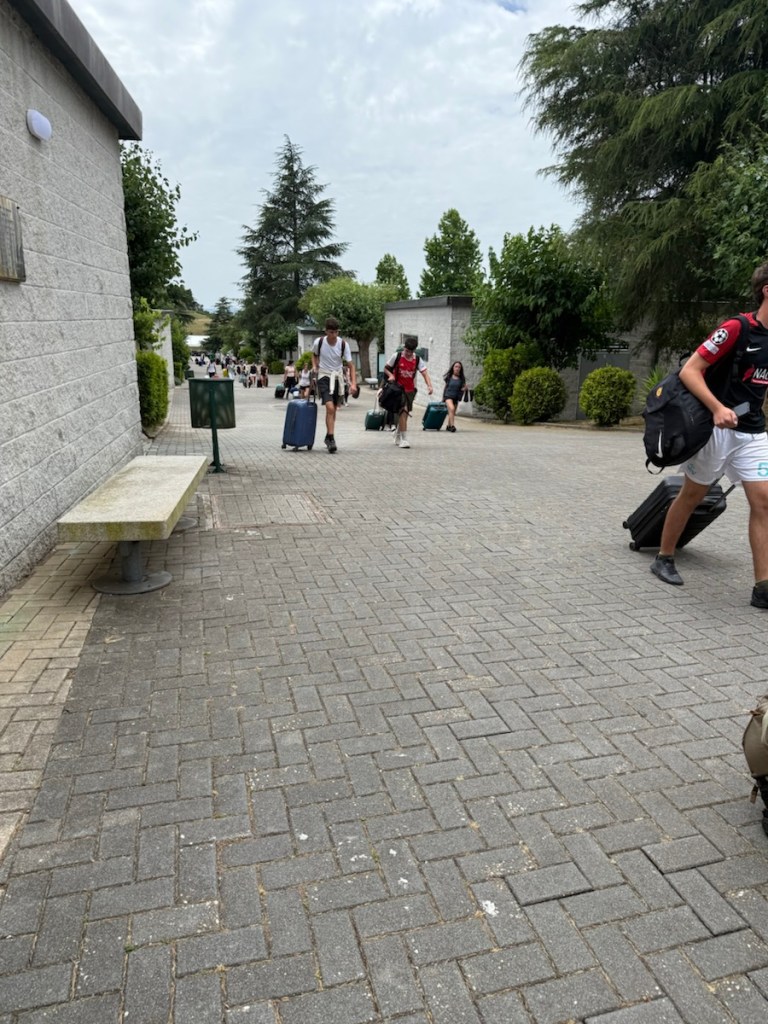
We opted to stay at Monte do Gozo, five kilometers shy of the cathedral. The place looked like a Cold War military base retrofitted for pilgrims and youth groups. We arrived just in time to be engulfed by a sea of Italian teenagers in matching shirts. I briefly feared being conscripted into a spontaneous soccer match, but thankfully our private room spared us from group singalongs and late-night pranks.

The four of us were piled into the room, enjoying what can only be described as a world-class siesta with the windows wide open and our collective snoring surely harmonizing with the birds outside. Just as we had all drifted into that blissful stage where you start dreaming of tortilla de patatas and ice-cold Estrella Galicia, a young girl’s voice suddenly sliced through the air like a surprise bagpipe in a yoga class. “Cris, Cris…” she called, sweet and insistent. In my half-asleep daze, I instinctively answered, probably sounding like a startled goat. The next thing we heard was the frantic scurrying of teenage feet sprinting away, echoing down the hallway like a herd of startled cats. We all sat up, bleary-eyed, looking at each other as if we had just been woken by a cosmic prank. Now my friends are mimicking her voice calling out my name at every opportunity, turning every quiet moment into a chorus of “Cris, Cris” that I may never live down.

Despite the mob scenes, this has been my favorite final approach to Santiago yet. The quiet mornings, the tactical leapfrogging of pilgrim hordes, the discovery that I still possess some ninja-level evasion skills, all of it a reminder of how unpredictable and charming the Camino can be.

And through all of it, I am grateful. Grateful for the dear friends who share these steps, grateful for every croissant (even overpriced ones), and grateful for the kaleidoscope of people and moments that make each Camino unique. Even the awkward, even the suspicious, they all weave into the tapestry of the journey.

Day 31: the end of the Camino Primitivo

After 30 days on the trail, I can no longer tell you the day of the week, let alone what planet I’m on. On the Camino, time is measured in kilometers, café con leches, and how many times someone’s snoring made you question you’re walking the Camino. Dates? Those are for train tickets and doctor’s appointments back home. Here, the only thing we schedule with any seriousness is our next stop at a bar/cafe.

Except… when you get close to Santiago. Then suddenly people start muttering words like “deadlines” and “reservations” as if we were all high-powered executives instead of professional blister collectors. In the last 100 kilometers, reservations get made with fierce determination at 7 am, then canceled by 9:15 am because someone decided they wanted to walk a bit slower to enjoy yet another cow pasture. Plans made months ago? Untouchable. Plans made this morning? Gone before the second café con leche.

Last night’s accommodations were a charming example of Spanish rustic minimalism, which is a polite way to say it felt like we were sleeping in a converted horse stable, complete with flies. The rooms were about the size of your average wardrobe, the air hotter than a tortilla griddle, and the only thing missing was a pile of hay on the floor. J, T2, Em, and F had the wisdom to book private rooms, leaving the rest of us to slowly melt into our bunk beds like forgotten ice creams. Ed made a midnight escape to the common room couch, which probably saved his sanity and gave him the best seat in the house for the 3 am mosquito rave.

Today’s hike to Melide marked the end of the Camino Primitivo and the start of the Camino Francés. We only have three days on this new stretch, so we will see if it’s as crowded and “lively” as we remember. (Spoiler alert: probably yes.)

But the highlight of the day, no sarcasm here was celebrating T3’s birthday. A big shout-out to him for surviving another year with his trademark giant grin and unstoppable good spirit. He is the kind of person who makes you believe that happiness really is a choice, and he chooses it every single day. His son Er joined us today for the hike, though they started late and did their best impression of mysterious forest creatures, only emerging at dinner. We all gathered to celebrate, laugh, and toast to T3’s infectious joy. What a wonderful family they are.

Cheers to kilometers, camaraderie, and birthdays on the trail, exactly the kind of time that really matters.

Day 29-30: Down day in Lugo and 27… 30km to

I do not know what day it is today. I do not know what year it is either, come to think of it. At this point, I am lucky to remember my own name and which foot goes in which shoe.

Europe is in the middle of a heat wave hotter than the surface of Mercury. Spain has been clocking in at 110 degrees, but to keep it fun and spicy, yesterday and today were each a cozy 97. My personal thermometer only goes up to “sweating through your socks,” and we passed that somewhere around 8 a.m.

Yesterday was a rest day. We called it “rest,” but really it was an advanced exercise in horizontal living. We explored Lugo in a haze of ice cream, shared a lunch that turned into an accidental multi-hour hydration fest, and took naps so profound they probably qualified as spiritual awakenings.

Then came today. L had the bright idea to start walking in the dark to escape the heat. At first, she proposed midnight. Midnight! The hour reserved for vampires, and raccoons. Through vigorous negotiation (bribery involving croissants), we compromised on 4 a.m.

The early start was genius. We floated along the moonlit path, feeling like a band of confused ghosts. Today’s stage was a robust 27 km, full of asphalt radiating heat like a griddle at a pancake festival. To make it extra memorable, four of us missed our albergue and kept going. Like lemmings in neon vests, we went a full kilometer too far and then had to trudge back uphill. Total for the day: 30 km. My feet are so angry they have started composing a manifesto.

Today is bittersweet. T1 and N had to peel off to catch flights back to the States. L, fueled by caffeine and apparently the spirit of some ancient marathon deity, decided not to walk back with us. She kept on to Melide, another 20km away and who knows, she might have kept going to Portugal for dessert or a music festival.

As I looked through photos from the past days, I stumbled on one of R and H. In the picture, R is deep in conversation, hands moving like he is orchestrating an opera. H, meanwhile, is either contemplating life’s deepest mysteries or quietly slipping into a heat-induced coma. Hard to tell. Either way the audio stimulation tripped his breakers.

Even with the sore feet, missed turns, and tearful goodbyes, I cannot help but feel grateful. This Camino keeps throwing curveballs, but it also hands out unexpected laughter, unforgettable bonds, and little snapshots of pure joy. We might be a few friends lighter tonight, but the spirit of our wild, wandering little tribe is very much alive — heat waves, pre-dawn starts, and all.

Day 26-27: A Fonsagrada to Lugo

Today was what some might call a “down day.” I call it a “strategic masterstroke of self-preservation.” After all, I have been walking since June 1, and though my feet and legs are still in shockingly good shape (probably because they’ve already accepted their fate), my energy reserves have taken a vacation to somewhere with colder beer.

So, when the plan for today involved a stage nicknamed “the leg wrecker” in low 90s heat, we did what any wise, experienced, slightly lazy pilgrims would do: we called Rocio.

Ah, Rocio. Our taxi driver, our savior, and, apparently, part-time Formula One driver. When she saw us again, she thought it was pure chance. Little did she know, we actually requested her, she the woman is faster than a Galician gossip chain. She did not disappoint. In fact, she delivered us to O Cádavo in one piece, but I suspect we arrived a few years younger due to her near light-speed driving.

As we zipped along, I watched the Camino crisscross the highway like a confused snake. Each of those gentle undulations that looked so scenic from the passenger seat would have translated into 15 to 20 minutes of sweating, huffing, and me questioning all my life choices. Instead, we covered it all in about 25 minutes of joyous wind-whipped laughter.

Tomorrow’s plan? A casual stroll from O Cádavo to Lugo — just 30 kilometers, which sounds charming until you add 93-degree heat and realize there is exactly one bar after 8 kilometers. After that? Nothing but an endless stretch of personal reflection and possible hallucinations about ice-cold Kaz de Limón.

T1 and I bravely tackled the first 8 kilometers before our collective common sense (and lack of additional bars) persuaded us to call Rocio again. Meanwhile, J and T2 took the day off entirely and wisely called for a lift from their own starting points.

Reunited in Lugo, we did what any triumphant band of tactical pilgrims would do: checked into a semi-fancy hotel. We pretended to be civilized adults as we unloaded our bags and immediately transformed the room into a drying rack for sweaty socks. Lunch followed, complete with a generous serving of Xeato (Galician ice cream), which might just be the pinnacle of human achievement.

I have to hand it to my companions. They were all smart enough to listen to their bodies (and perhaps their stomachs) today. As for me? I have learned that sometimes the most heroic act on the Camino is not to march uphill in punishing heat but to lift your arm, call Rocio, and buckle up.

Day 26 A Fonsagrada

Day 26: Of Rolling Hills, Lies, and Fly-Filled Skies

Today was billed as an easy 25-kilometer walk over “rolling hills.” This turned out to be a cruel euphemism, what we faced was less a gentle ramble and more an unsolicited audition for Everest Base Camp. Right out of the gate, the path tilted skyward with such enthusiasm that our calves filed formal complaints. And as if climbing Mount K2’s little Galician cousin were not enough, both cafes listed on every reputable Camino app were either shuttered forever or practicing their best impression of a haunted house, completely lifeless.

With coffee dreams dashed, we slogged upward. As the air thinned and our oxygen needs increased, we were instead treated to lungfuls of buzzing flies. These little winged demons orbited our sweaty heads like caffeinated satellites, each one determined to tap a vein and file a flight plan for the promised land of forehead salt.

Then, like a vision from some alternate Camino dimension, R from Poland came bounding up the trail, pack on, singing, glowing with vitality. “I feel great!” he declared as he pranced around the bend. We assumed he had just been assigned to mock us by the Camino gods. Moments later, he reappeared—showered, shaved, and dressed like he was ready for a dinner date in Madrid. He smiled wide and asked, “How was your morning?”

At kilometer 15, a café appeared like a mirage. Beer was ordered. Tortilla devoured. Hopes, slightly restored. T&T, dealing with battle-worn knees and hips, suggested we cab the last 10 km. My stomach, still furious at the pork belly extravaganza of the night before, quickly joined their union and demanded representation. A taxi was summoned. J&N, ever the overachievers, left their packs with us and charged ahead on foot.

Life, as it does, had other plans. The taxi took so long we had time to age gracefully at the bar. We finally rolled into A Fonsagrada just as J&N arrived, sweaty, triumphant, and only slightly smug. They kindly refrained from gloating. Probably.

Sometimes, the Camino gives you a mountain when you expected a meadow. And sometimes, it gives you a taxi… eventually.

A from Portugal walks the Camino as if it were a part of her soul, because in truth, it is. Her pack is patched with stories, a living archive of the many roads she has walked and the lessons she has gathered. Her Camino tattoos mirror my own, not just in ink but in meaning, symbols of transformation, resilience, and devotion. She lives right on the trail in Portugal, where every journey begins at her front door, as natural to her as breathing. For A, the Camino is not a trip; it is a way of life, a calling that continues to shape and refine her spirit.

I think of her as our trail angel, ever-present in the most surprising and beautiful ways. One moment she is behind you, then ahead, then appearing just when someone needs a gentle smile or a word of quiet encouragement. Her energy is calm and kind, like a balm for tired souls. She too is walking a path of deep change, and in that, I feel a shared understanding. Her presence reminds me that the Camino brings the right people into our lives exactly when they are meant to arrive. And A, lighthearted, grounded, full of grace is one of those rare gifts the Camino gives when your heart is open.