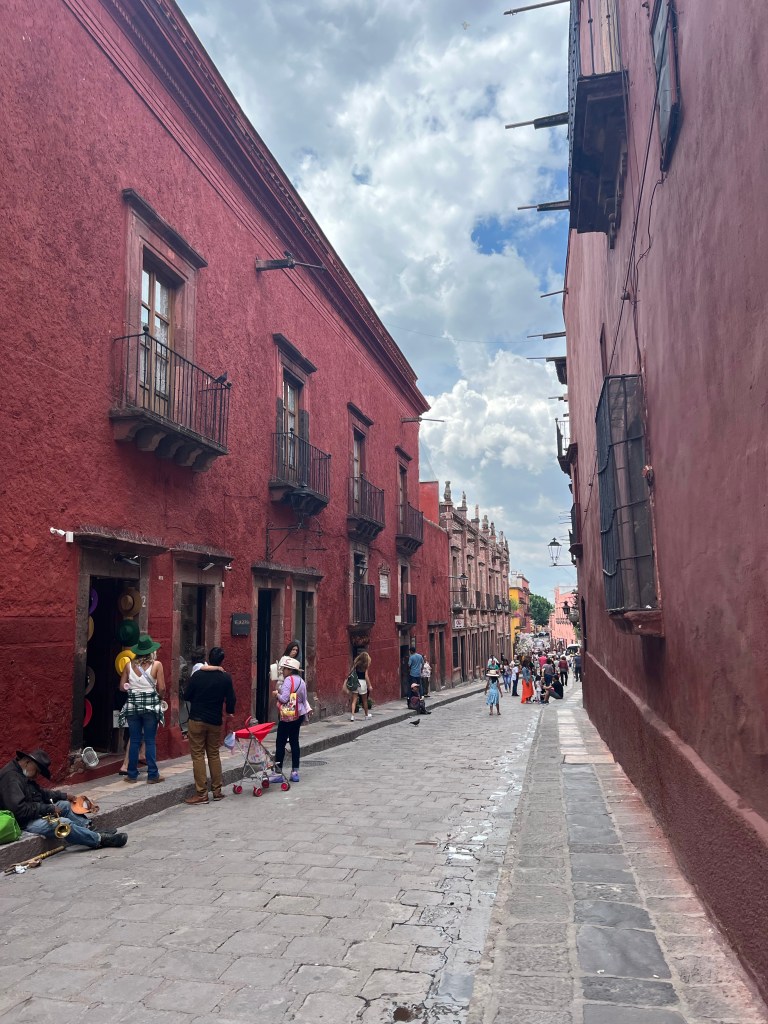
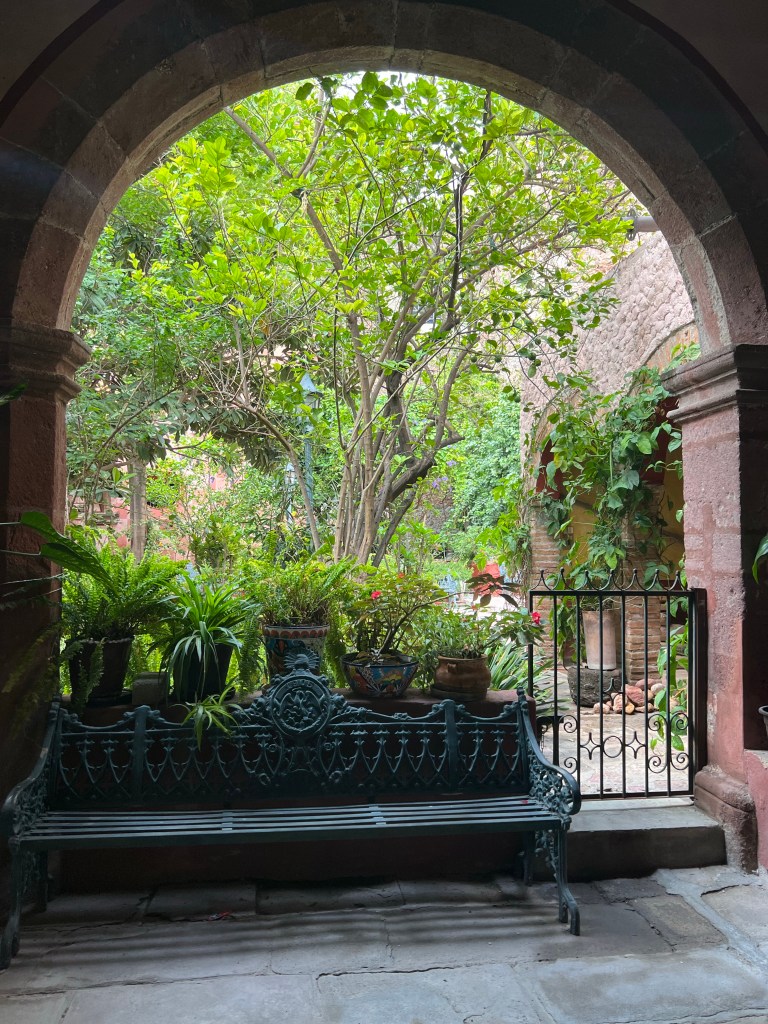
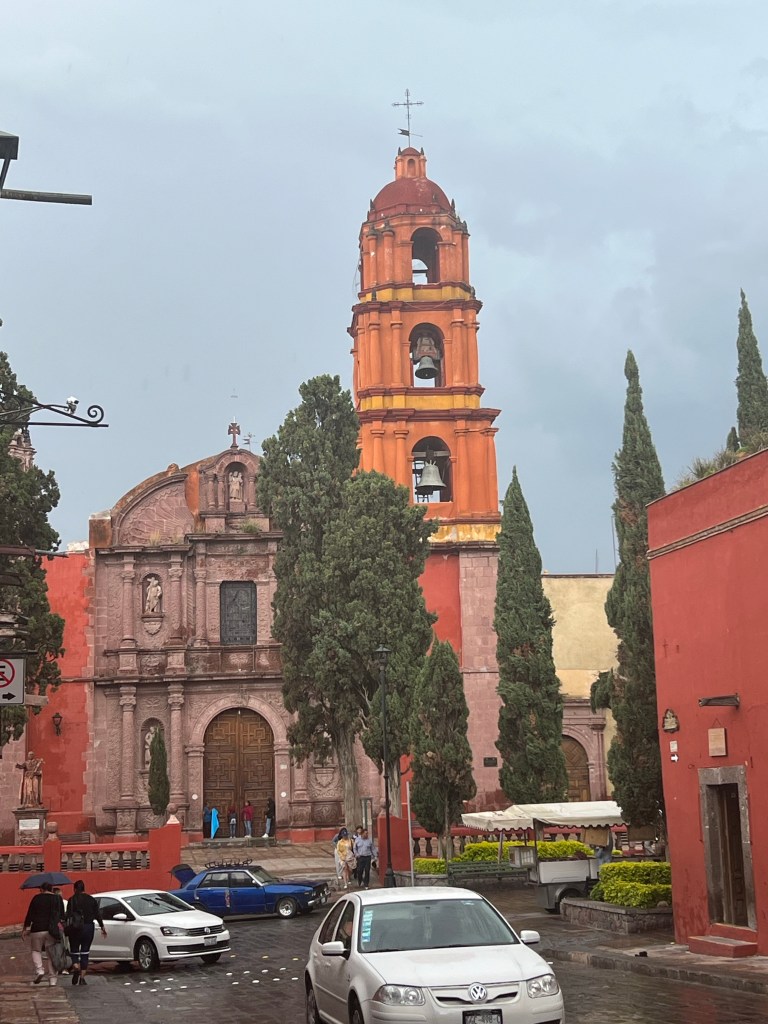
San Miguel de Allende
Mineral de Pozos
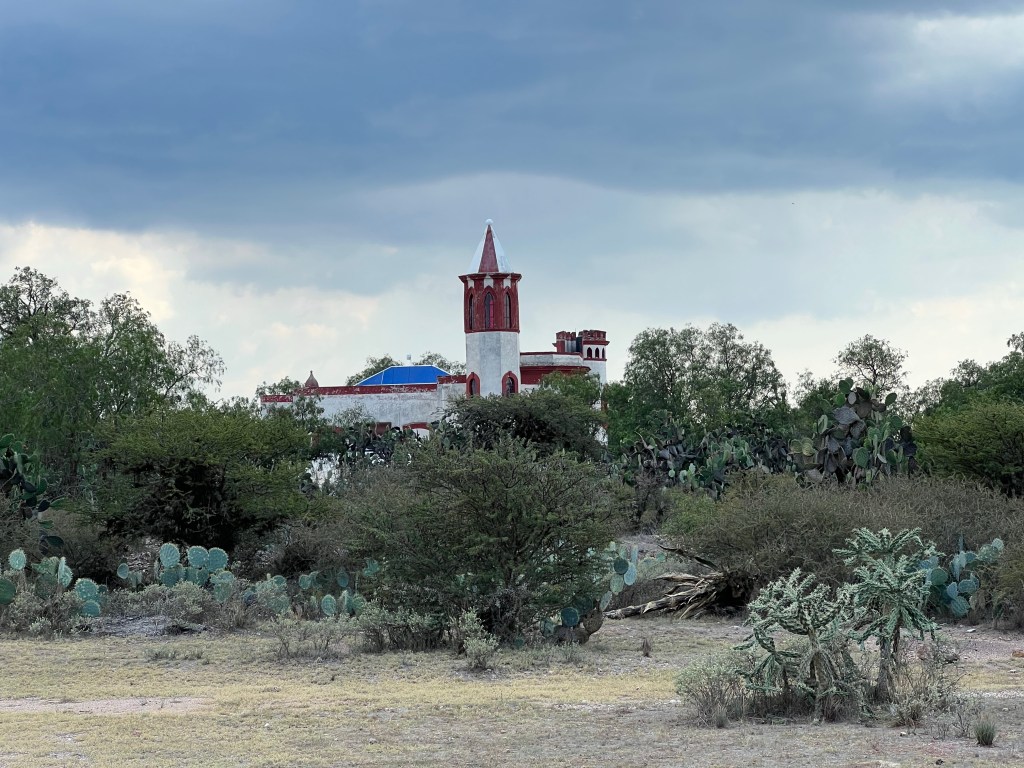
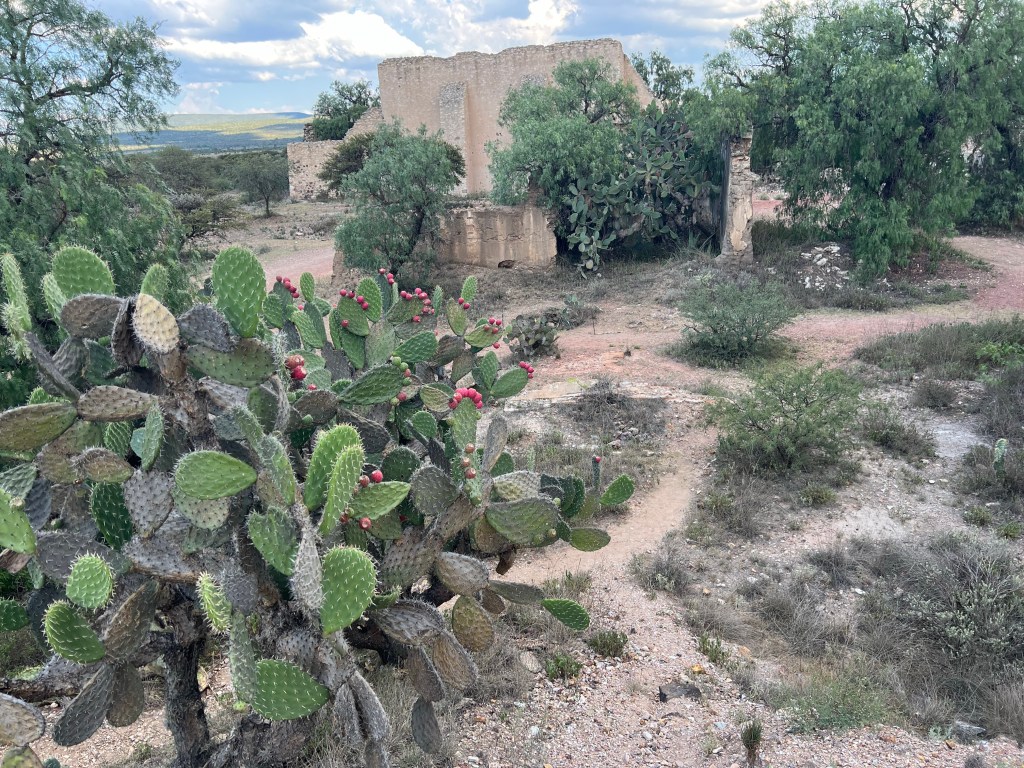
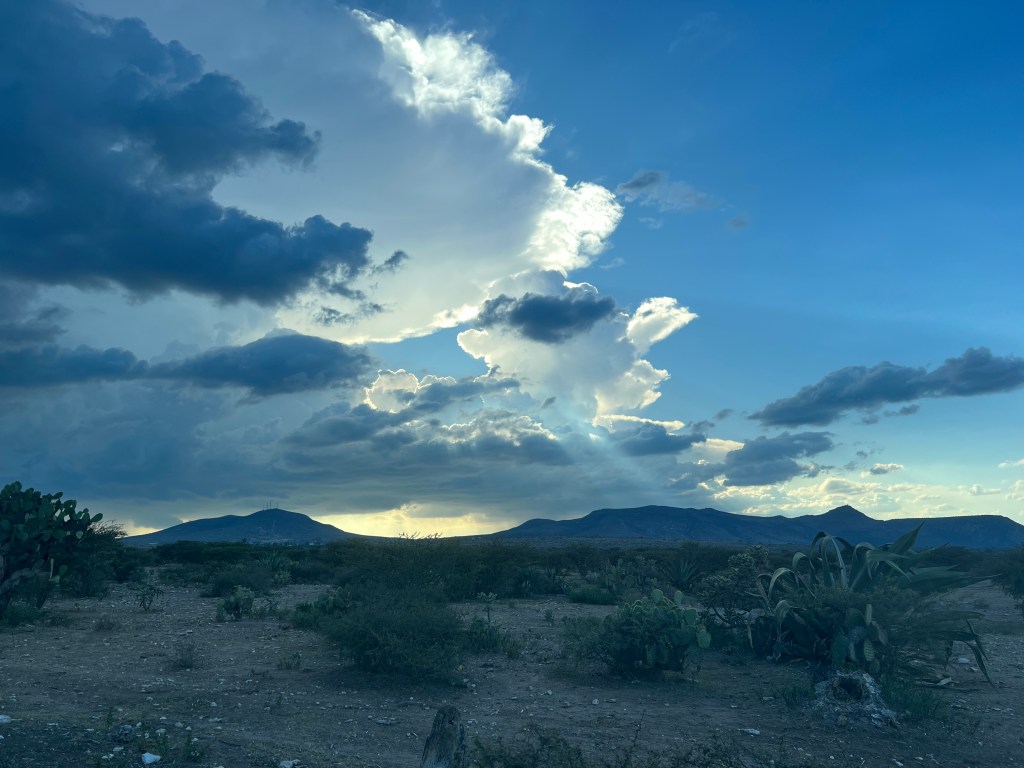
MdP is a PM near SMdA – about 40km. It is another mining town, but this time it is located in the high desert. Much of the agriculture are nopales. They say this is a large dairy area, but I haven’t seen any cattle.
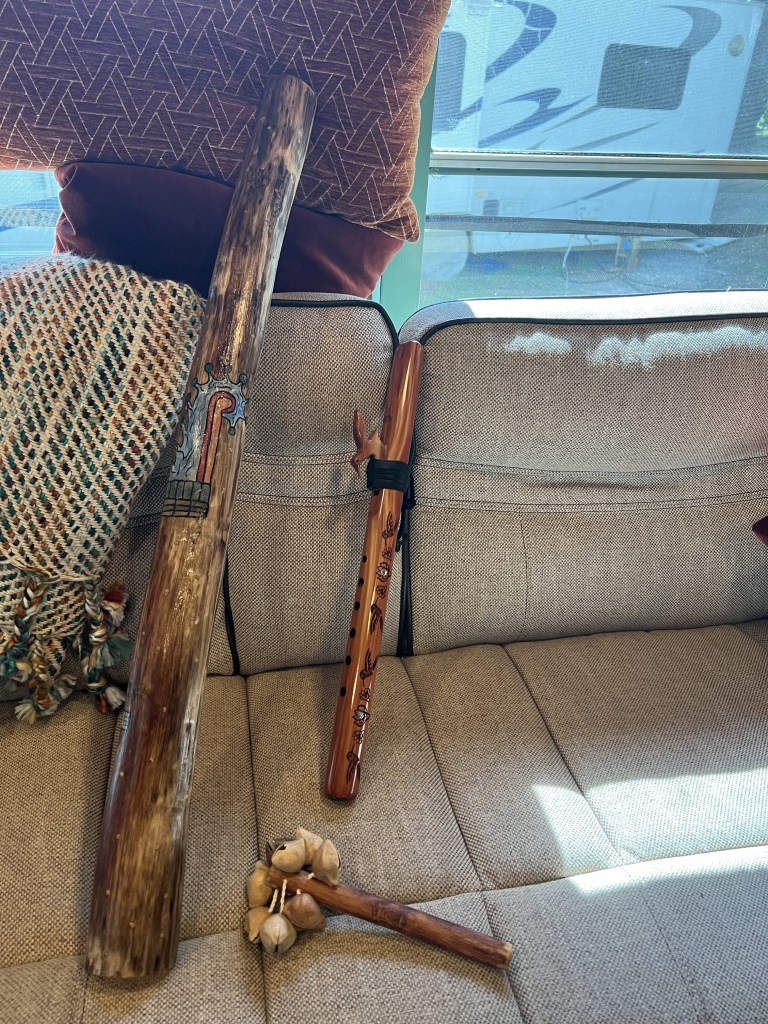
This is a very small town, the city center is about six square blocks, and from what we could tell, there’s not much else to the town. The first thing we did was to bump into a gallery of pre-hispanic musical instruments. This was a -really- cool gallery, we were encouraged to pick up all displays and play with them – and to buy them if we so wanted. We wanted… After talking to the proprietor about the different instrument makers, etc., I bought two instruments. One is a rattle made of seed pods from Flor de Maguey. This one sounds like a babbling brook, rain, or water. It’s really cool and fun to play. The other one that I bought is a rain stick – made from mesquite and cactus spines. Inside, the little rocks fall on the spines and since none of them are the same, each spine sounds a little different. You can hear the individual drops of rain from this instrument.
This is a very small town, the city center is about six square blocks, and from what we could tell, there’s not much else to the town. The first thing we did was to bump into a gallery of pre-hispanic musical instruments. This was a -really- cool gallery, we were encouraged to pick up all displays and play with them – and to buy them if we so wanted. We wanted… After talking to the proprietor about the different instrument makers, etc., I bought two instruments. One is a rattle made of seed pods from Flor de Maguey. This one sounds like a babbling brook, rain, or water. It’s really cool and fun to play. The other one that I bought is a rain stick – made from mesquite and cactus spines. Inside, the little rocks fall on the spines and since none of them are the same, each spine sounds a little different. You can hear the individual drops of rain from this instrument. Alongside my Hopi flute, they go quite well.
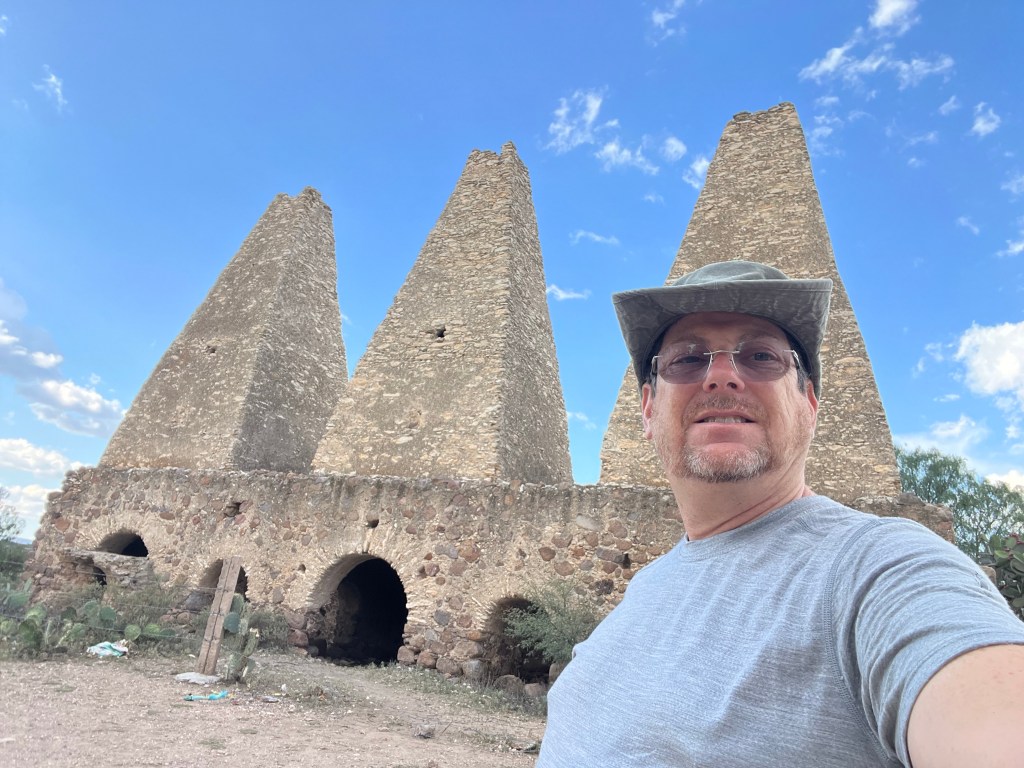
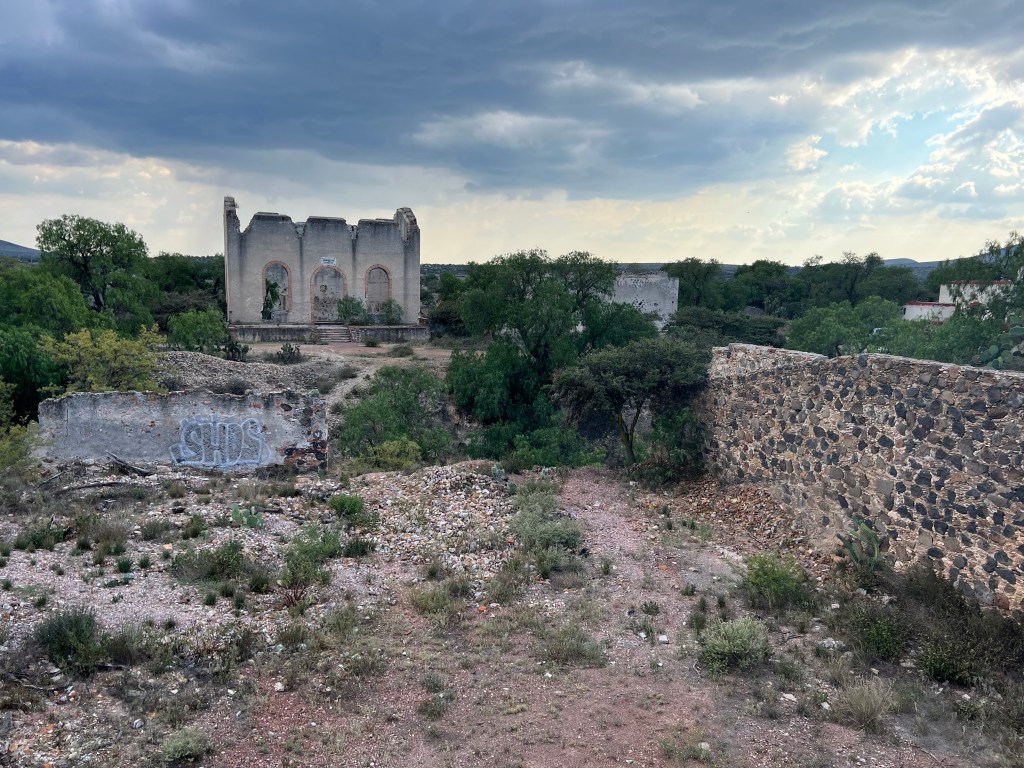
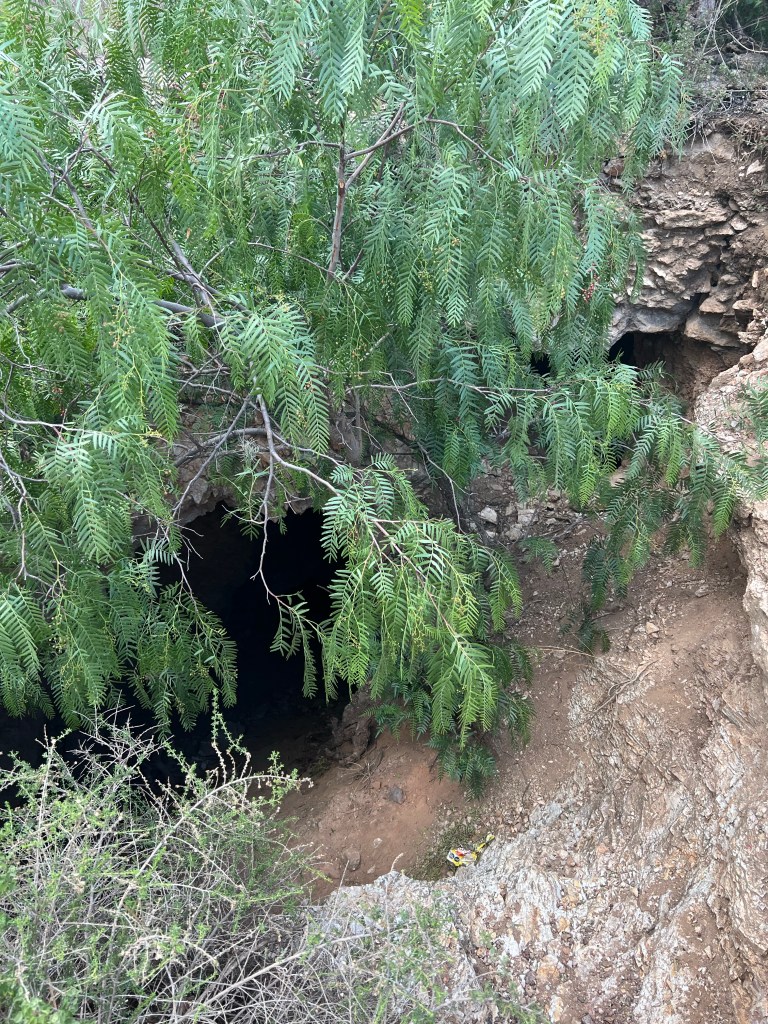
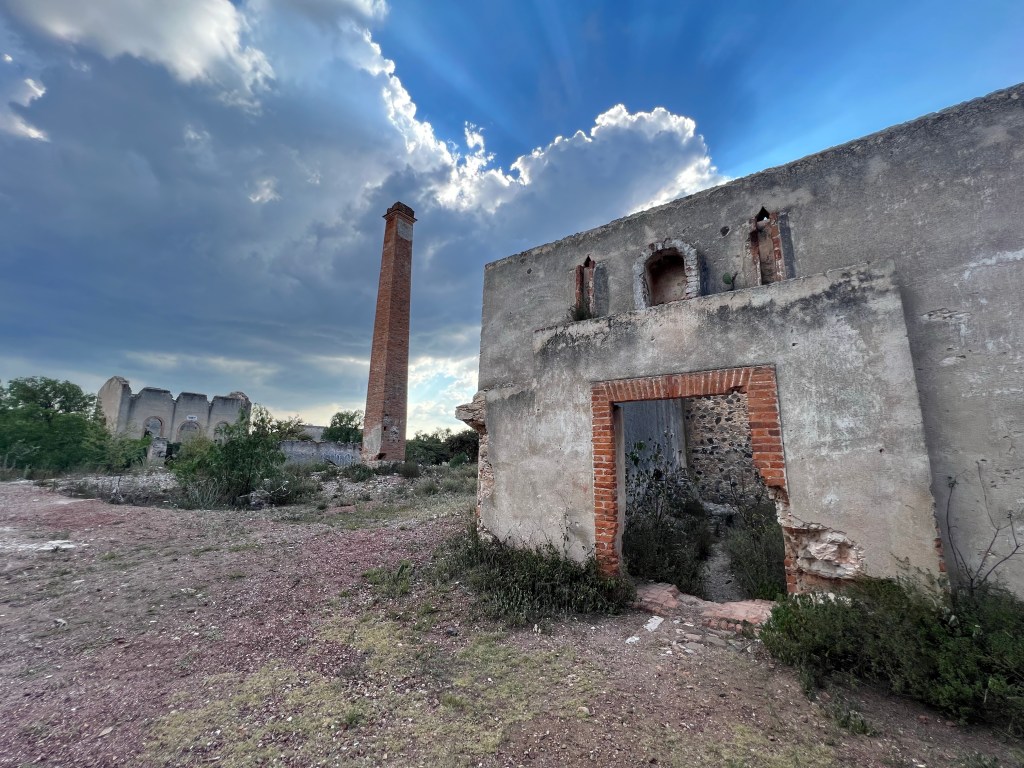
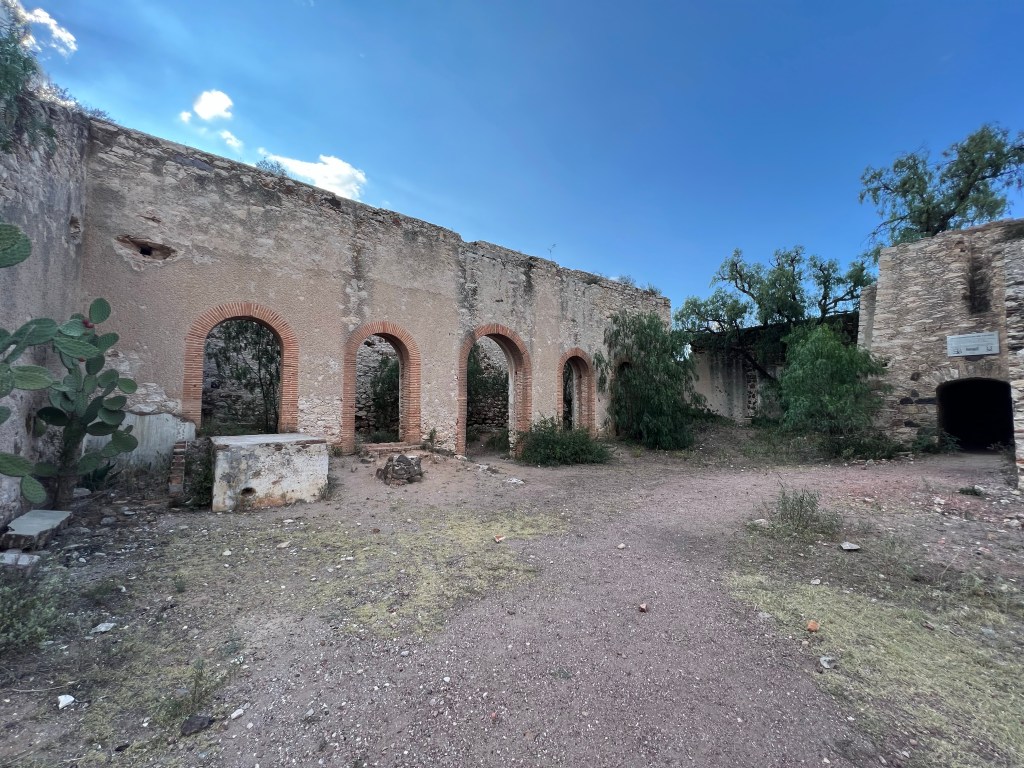
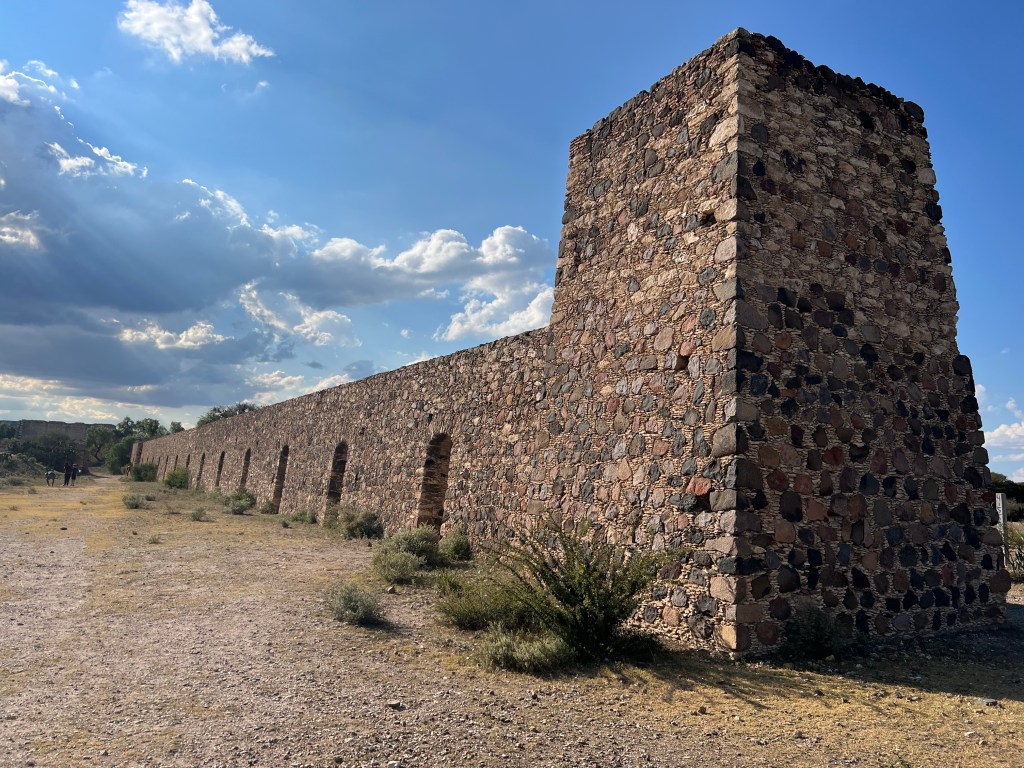
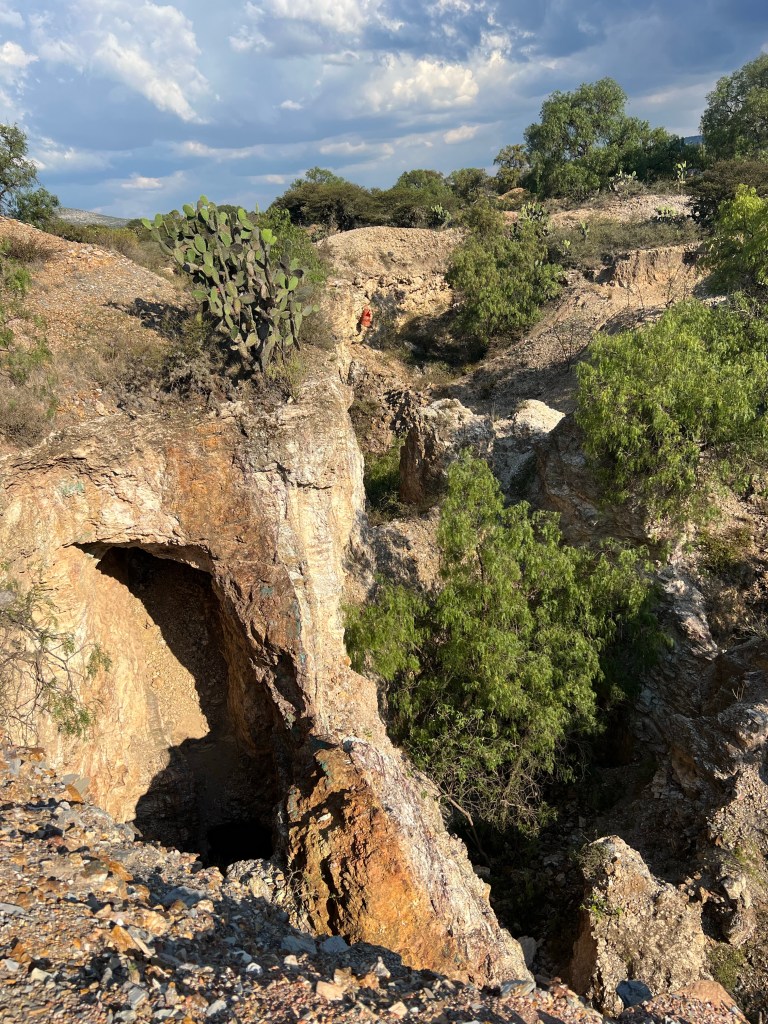
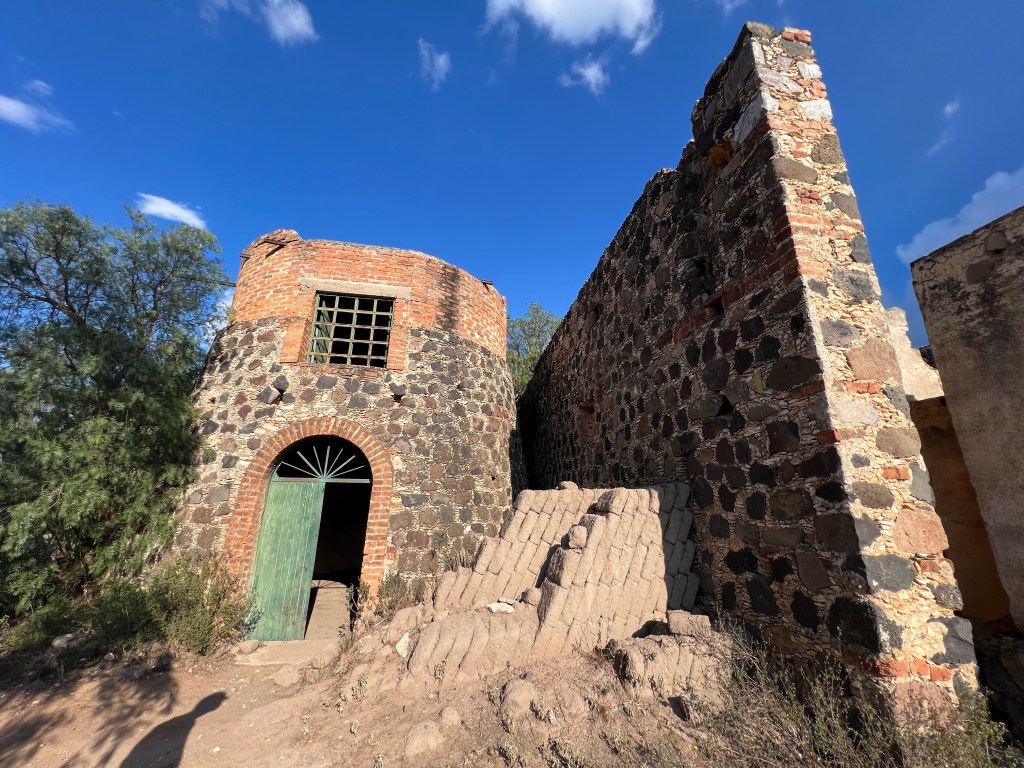
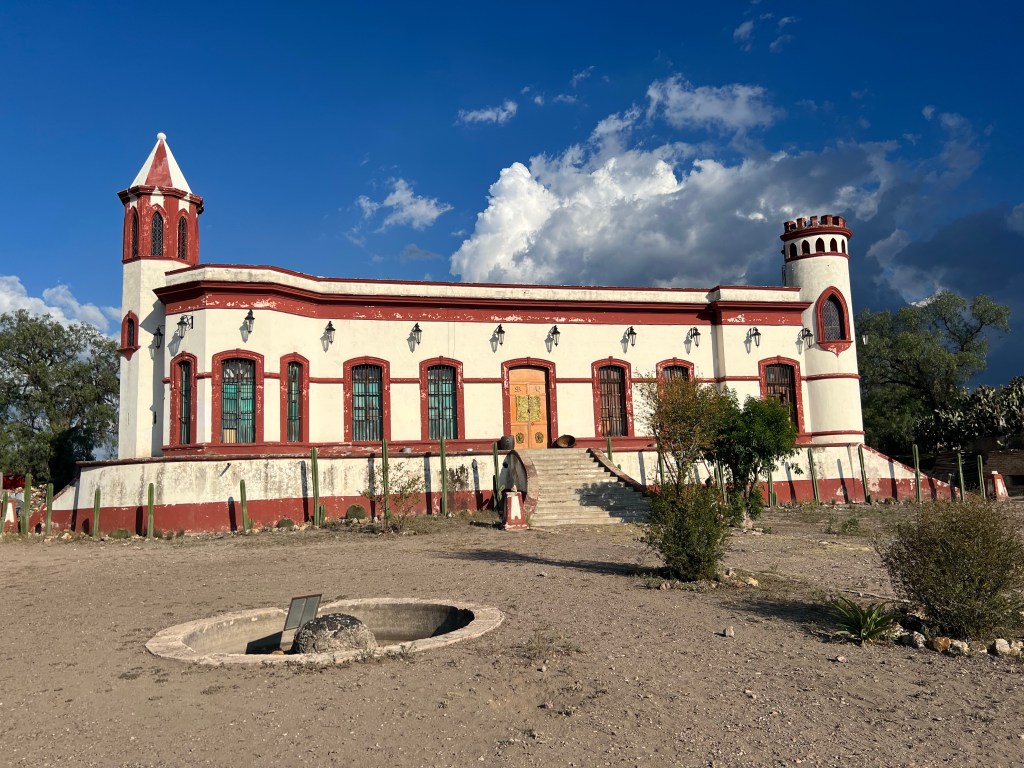
One of the attractions of Mineral de Pozos is all of the mines. There are over 500 mines in the municipality, most of them unbarricaded and ripe to fall in for any unsuspecting soul. We took a tour which have no regulation other than you must wear a hard-hat. Your safety is your problem, the guides cannot be responsible for you. If you only have three beers to take down into the mine, it’s not enough, you need more, etc, etc. Along with the mines is a Jesuit site to see. It’s ruins now, but it’s pretty incredible. Talk about open mines…



Dolores de Hidalgo
My wife texted me the other day and asked me to pick up some talavera pots. I asked at the RV Park office where to get some and the girl at the front desk pointed me to Dolores de Hidalgo – another Pueblo Mágico about 30km away.
Off we went, with the sole intention of buying pottery. When my wife sent me pictures of what she wanted, the pictures also had the prices in USD. When I got to the stores, I realized the prices were about 10-15% of the prices in the US. So I bought some pottery. The bus is full, my wife will be happy. The most challenging thing of the day, was how to fit all of the pottery I bought into Gary’s truck – the Ford Super Duty F-350 truck… I didn’t worry about it fitting into my bus – it’s a school bus after all.
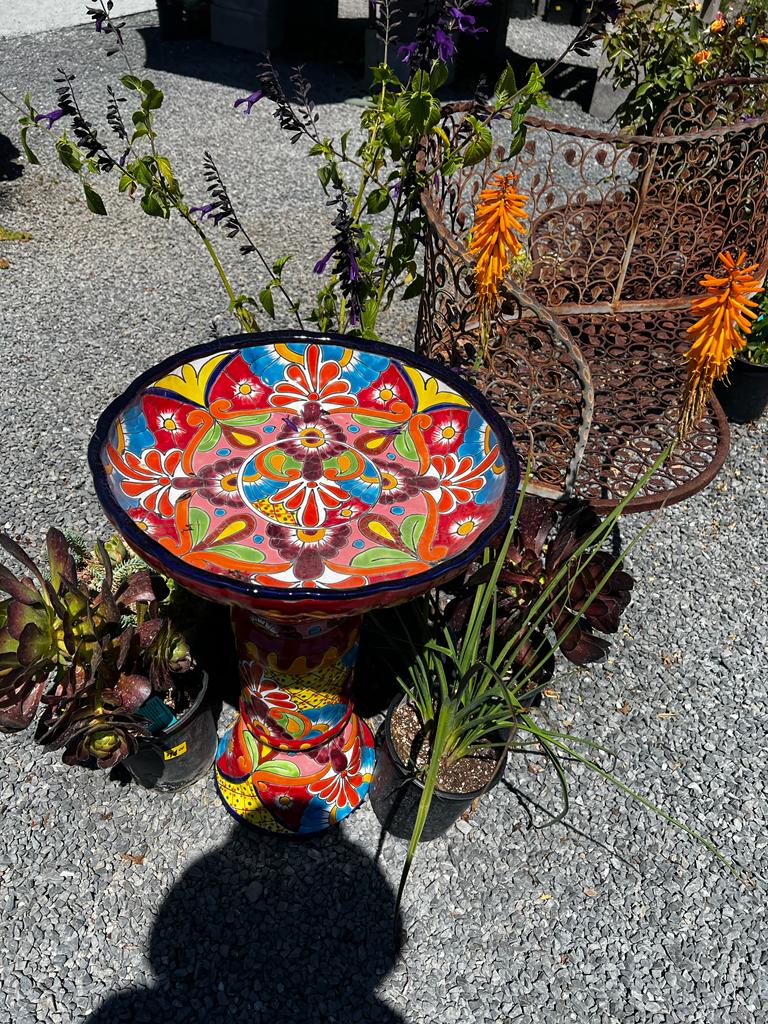
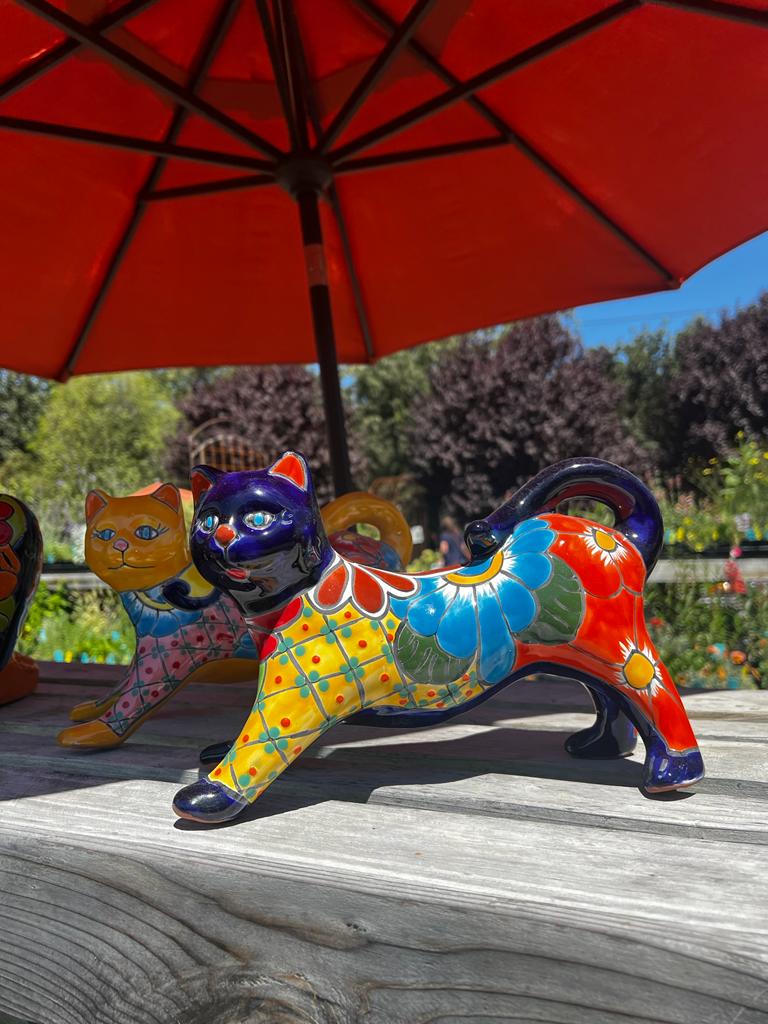

This town was a little desert town. Not much about it other than the Talavera pottery. Except…
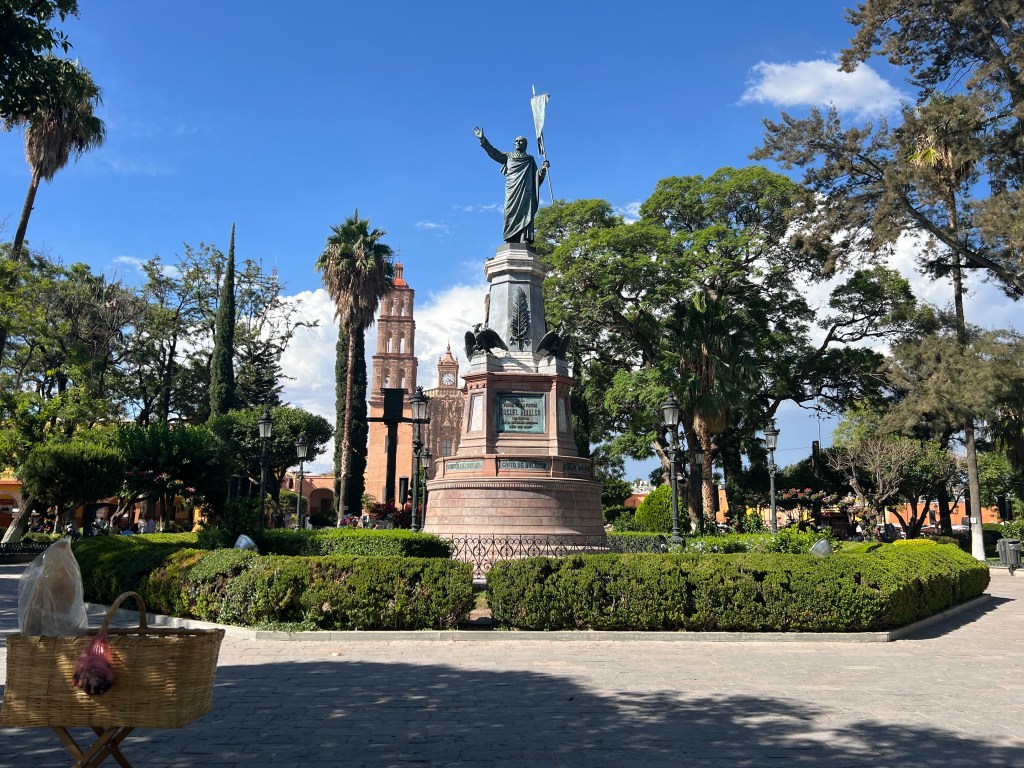
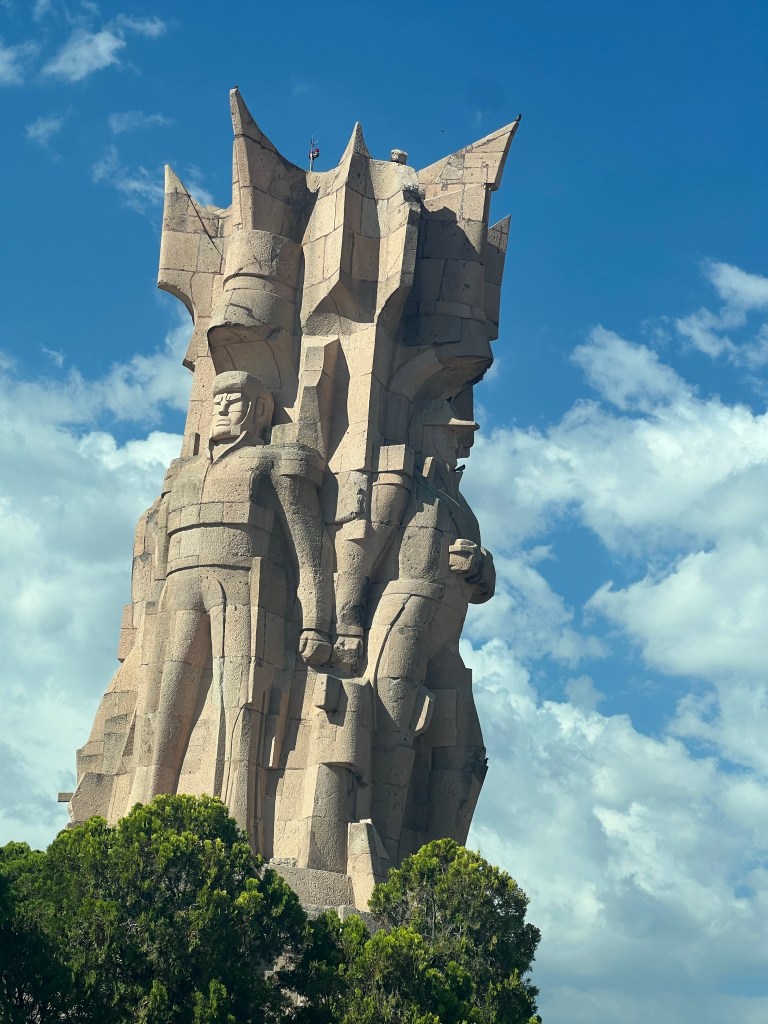
This town is where Padre Hidalgo, a Catholic priest who championed for the indigenous, meztico, and poorer Spaniards alike, cried for Mexican independence in 1865. While his movement was short lived due to his capture and murder, he is known as the father of Mexican independence. He is a much celebrated historical figure and his “Grito de la Independencia” was given in Dolores de Hidalgo.

 Pizote Adventures