Pueblos Mágicos – The journey has begun…

Well, after years of talking and months of planning, the journey has begun. I left yesterday and it was a long day. All interstate. All 520 miles of interstate. Ok – mostly interstate with some US highways thrown in.

Took the 101 to the 580, to the 5, to the 210. I was going to stay in San Bernardino but decided the extra 80 miles to Palm Springs to meet up with my friend was worth it. He’s staying at an established campground. When I got here, my frugalness led me to opt out of the $88/night KOA and park under the security trailer at the local Home Depot the price is good – free. No hassles. For transitory nights, I just can’t justify spending money like that.

I woke up before 0600 and my first urge was to hit the road. Wait – why? I have everything I need with me, my destination is only five hours away, I can leave at any time. So, I decided to sit back and enjoy my coffee in the cool morning desert air. Forecast today is 100° so better enjoy outside now than later.

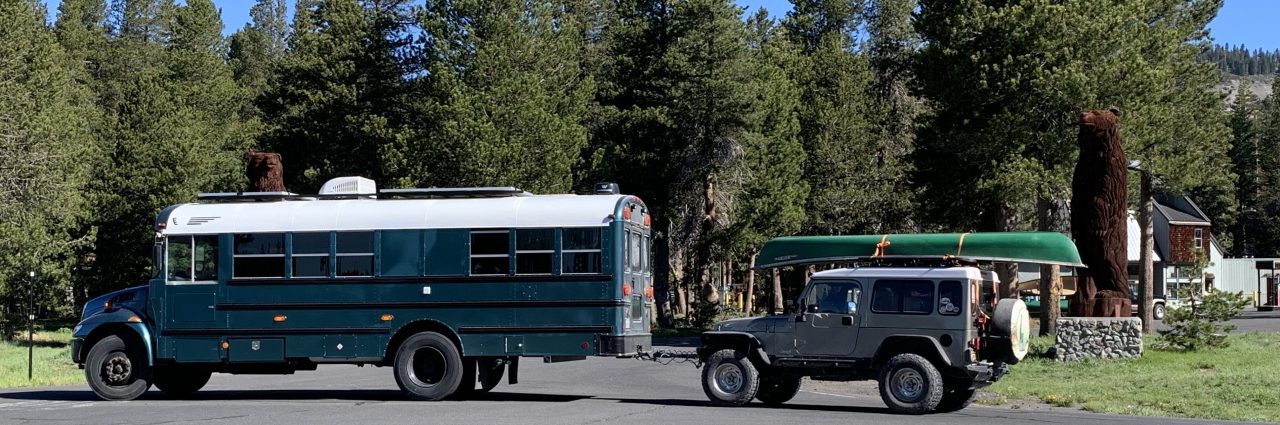
The bus performed exceedingly well. Not towing the Jeep makes a big difference. I don’t have to monitor the temps, and I can travel with the flow of traffic. Not towing the Jeep, I’ve gained 150 miles range on one tank of fuel. Now I’m up to about 600 miles. heading over the grapevine, I stayed at 65 up and over. No struggle – it just went.

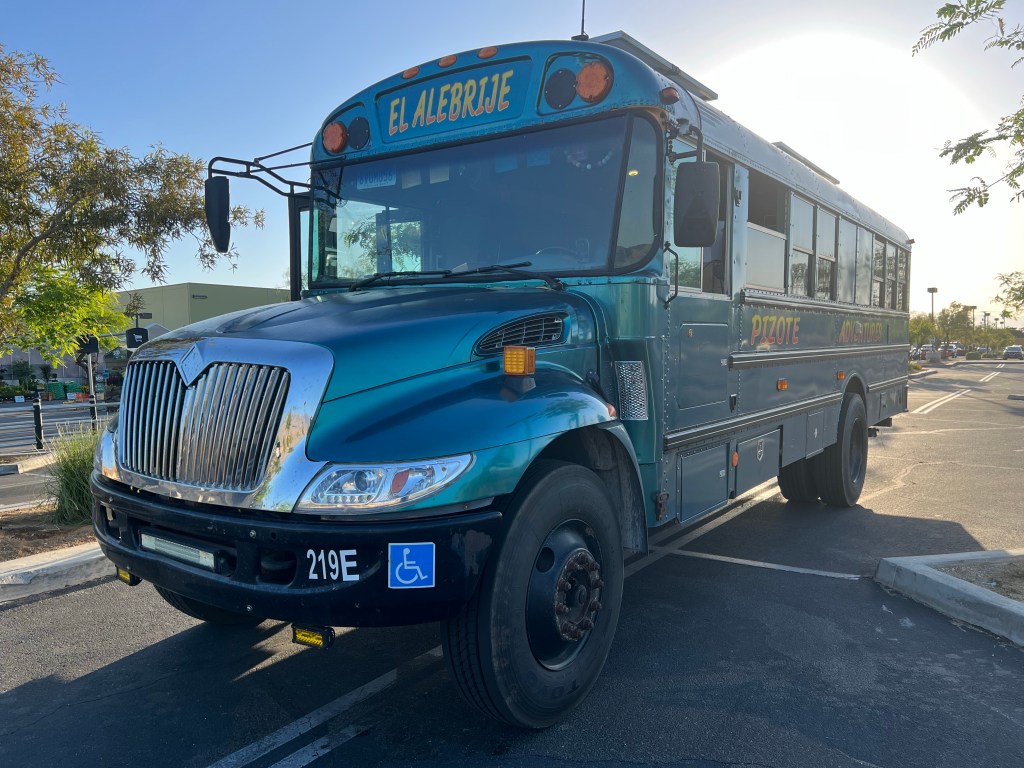
I’ve named the bus “El Alebrije”. Which is a fairly modern term in Mexico. It’s a piece of art. But more than that, it’s a fantastical creature with multiple aspects of spirit protectors or guides, or nahual. They are there to guide and protect you in every day life. Alebrijes are guided for the spirits. To guide them back to the world of the living, to the altar that those that remember them have built for Día de Los Muertos in November.

While my Alebrije is not guiding the dead, it is a fantastical merging of a school bus and a home on wheels, and it is guiding my inner Pizote, or mischievous self in this journey – where there is no destination, only the road traveled.

Wish me well on this journey and welcome along in the telling of it.
Alebrijes – What are they?

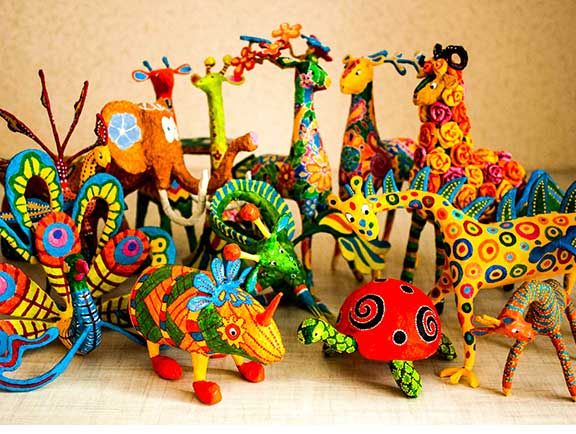
Alebrijes are brightly colored Mexican folk art sculptures of fantastical creatures. Originally, these creatures are created using a technique called papier-mâché, but are now carved in wood, and are often adorned with intricate patterns and designs. Alebrijes have become a beloved symbol of Mexican culture and are now popular all over the world.

History

The history of alebrijes dates back to the 1930s, when a Mexican artist named Pedro Linares fell seriously ill. While he was in bed, he dreamed or hallucinated of a strange place resembling a forest. There, he saw trees, animals, rocks, clouds, and other things that suddenly transformed into strange, fantastical creatures. In his dream, these creatures repeated a word to him: “alebrijes.” When Linares recovered from his illness, he started to create sculptures of these creatures, using papier-mâché as the main material. Over time, the craft of creating alebrijes transitioned into wood carving, and became a tradition in Mexico, passed down from generation to generation.

Meaning

The word “alebrijes” comes from two Nahuatl words, “alebrije” and “ixtle.” “Alebrije” means something that is not real or something that does not exist, while “ixtle” is a type of paper made from the bark of a tree. Together, the two words refer to the process of creating something that does not exist in reality.

Alebrijes are not only fanciful creations; they also carry important cultural and symbolic meanings. Many of these creatures are inspired by animals that are considered sacred in Mexican folklore, such as jaguars, eagles, and snakes. These animals represent different spiritual forces, such as courage, strength, and wisdom.

The intricate patterns and designs on alebrijes are also significant. These patterns are often inspired by pre-Hispanic art and motifs, which carry their own symbolic meanings. For example, the use of circles and spirals represents the cycle of life and death, while the use of triangles symbolizes the connection between heaven and earth.

Today, alebrijes continue to be an important part of Mexican culture. They are often created and sold by artisans in markets and shops throughout Mexico, but mainly in the state of Oaxaca. In recent years, alebrijes have also been featured in popular culture, such as in the movie “Coco,” which tells the story of a young boy who dreams of becoming a musician and encounters a magical world filled with alebrijes.

Alebrijes have become important facets in Mexican culture and have been interpreted, not only as protectors but also spirit guides where an Alebrije is paired with the spirit of a loved one and guides the loved one back to the altar during day of the dead festivals so that the spirits can see their family members.

Conclusion

Alebrijes are an important part of Mexican culture, representing a fusion of indigenous and Spanish influences. These whimsical creatures have captivated people’s imaginations all over the world, and their symbolic meanings continue to resonate with many. Through the craft of creating alebrijes, artists are able to express their creativity, preserve cultural traditions, and honor the natural world.

Pueblos Mágicos 2023

The time is rapidly approaching that I embark on another epic adventure with my good friend GLRay. This year, the adventure entails cultural exploration by visiting many Pueblos Mágicos and UNESCO sites in the central highlands of México. The general idea, as my brother-from-another-mother says, is to not have a plan. This year, we have a general idea of what we want to do, but it’s open ended and with a few exceptions, there is no itinerary. We will be traveling in a pattern guided by vagaries.

Our method of travel will be that of dérive. This word literally translates to “drift,” but thanks to some mid-20th century French philosophers, it can also refer to a spontaneous trip, completely free of plans, in which you let your surroundings guide you. This is a much different method of travel than either of us typically embark on, with lots of planning and strict itineraries. This is a journey of change, growth, awareness, and acceptance for what is.

We have some dates and timelines we must abide by, meeting up to leave, when to be at certain airports to pickup/drop-off family and friends that are visiting, visa limitations, etc. Other than the initial getting to México and our first couple of nights, we don’t know where this adventure will take us.

In my past adventures, I have been asked to write about them as most people don’t have the opportunities of travel that I have, and my stories are educational, funny, and inspirational – or so I’m told. I have found that the easiest way to reach people is on social media, but the little red flags and bells have me drooling worse than Pavlov’s dog, and I have better things to do with my time than watch cat videos and engage in toxic exchanges on social media. So the birth of this blog. If I can figure out a way to post my blogs posts of past adventures here, I will, but some of those are many years old and it might not be worth it.

The Dates

The current dérive plan – an oxymoron in itself is to enter México on May 14th, and to return sometime mid-late August, or maybe September… So as mid-May approaches, you will see more and more posts, and possibly a daily post once we enter México.

Meet the Players

El Alebrije – this is my beast. It’s a school bus conversion, it took me about 18 months to build. Another 24 months in fine tuning and changing things up to meet my needs. The latest iteration was to take out the two captain’s chairs and large dining room table, and in place install a sofa/lounge/bed and a smaller table (still sizable) for mobile work area/dining table, etc. For this trip, I will be taking just the bus. The Jeep (Pizote) stays home.
The word Alebrije is a new term in Mexican Spanish. For more information – visit El Alebrije

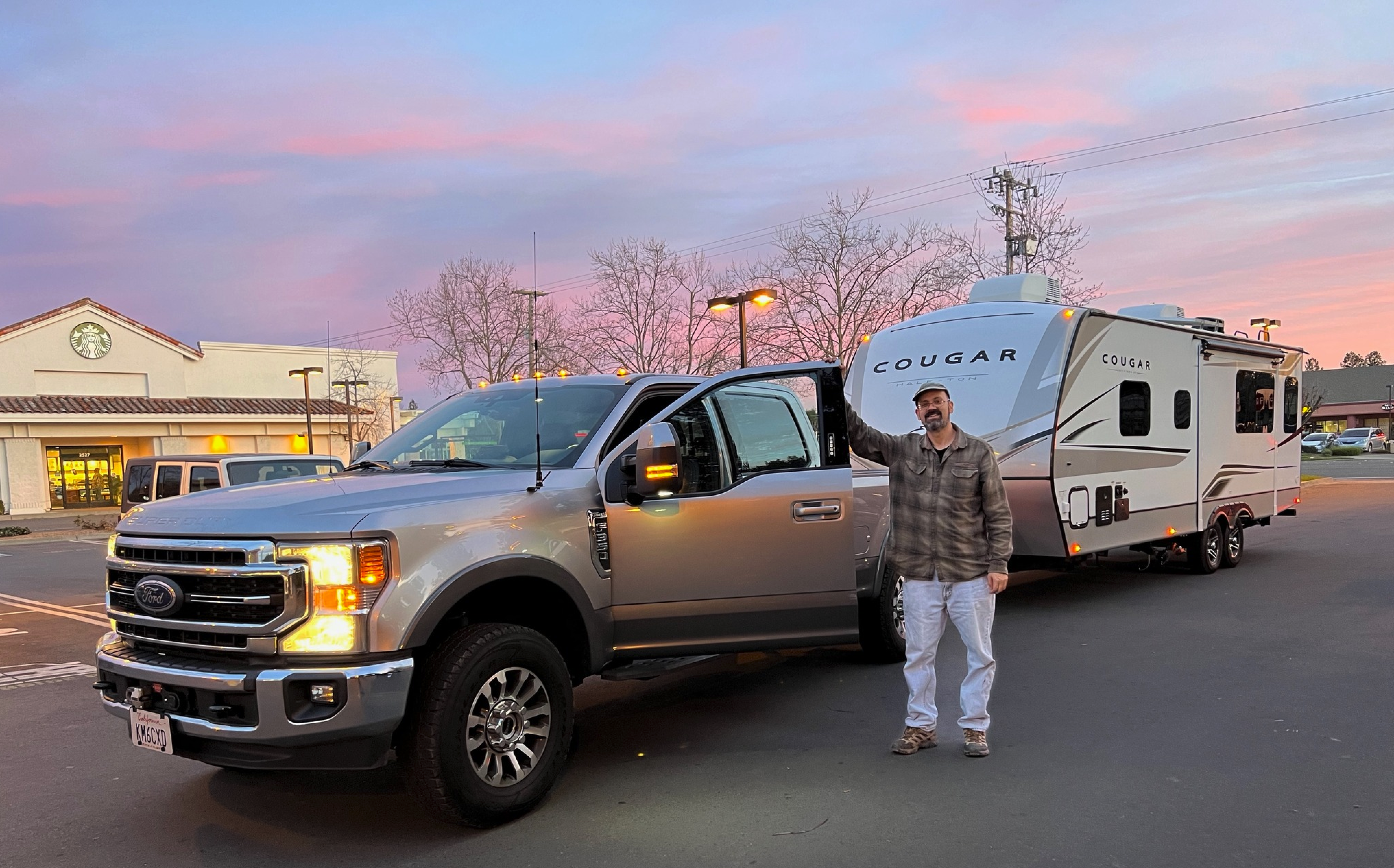
Owlbear – this combination is my friend GLRay’s rig. He bought the truck 18 months ago and the trailer about 8 months ago. We’ve been working on modifying the solar and electrical system of the trailer.