Normally, the walk from Lisbon to Santarém takes about three days and covers 90 kilometers. However, the first few days on any Camino tend to be the hardest as your body gets used to the physical demands of the trek. While that was a consideration, the main reason we decided to skip ahead a day was because of the wildfire smoke and heat. Even though the plumes were high, the smell of smoke filled the air, which meant there were particulates floating around. And honestly, I’d rather not be breathing in toxic air while hiking in the heat!
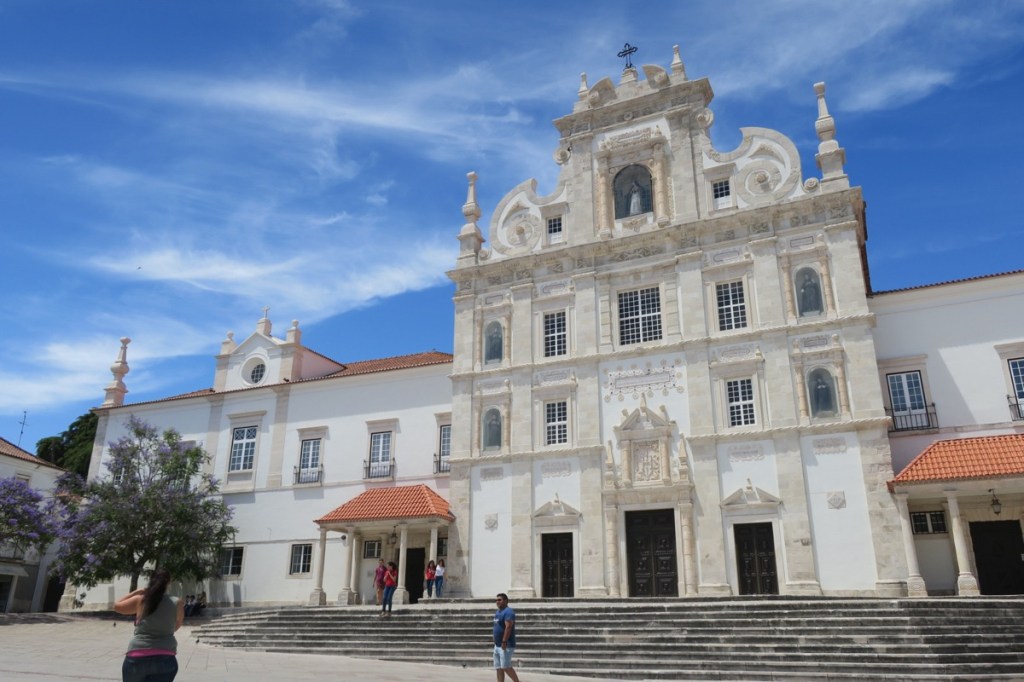
Instead, we took the opportunity to enjoy a rest day in Santarém and explore the town. It’s a lively place thanks to the polytechnic college, though the population is only around 30,000. We wandered around, ate some great food, checked off a few chores, and just enjoyed the rhythm of the day. It was a good, laid-back day.
The forecast for Day Two was in the low 90s. We had two options: a 20km hike or a 34km one. We decided to keep our plans flexible.
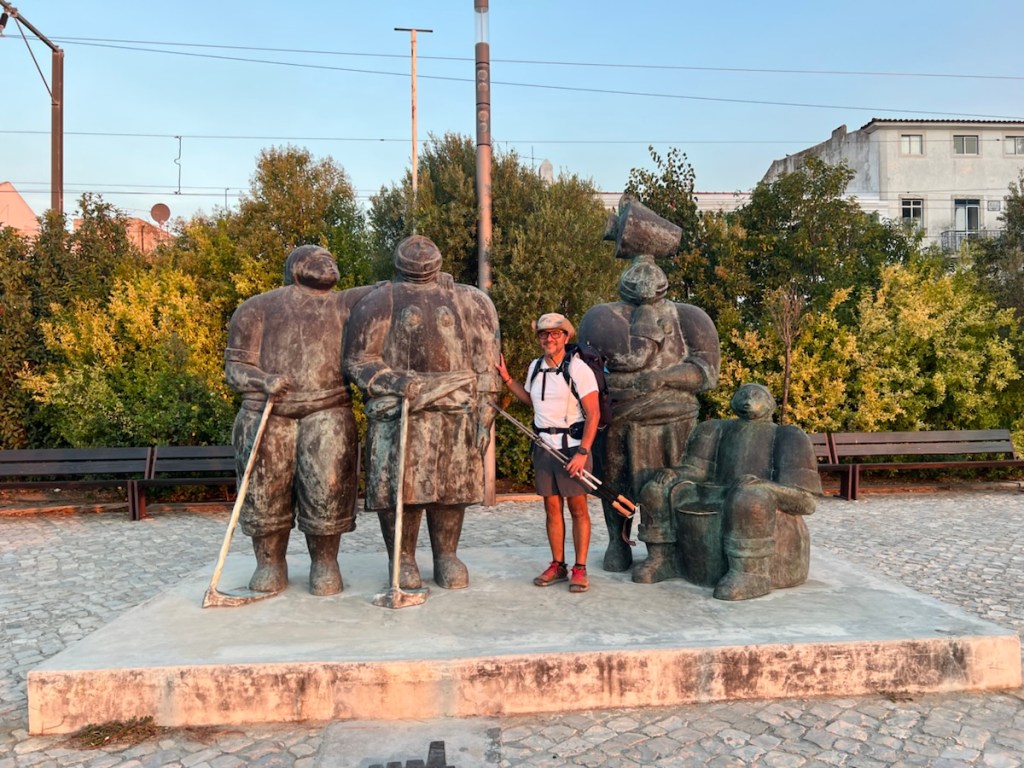
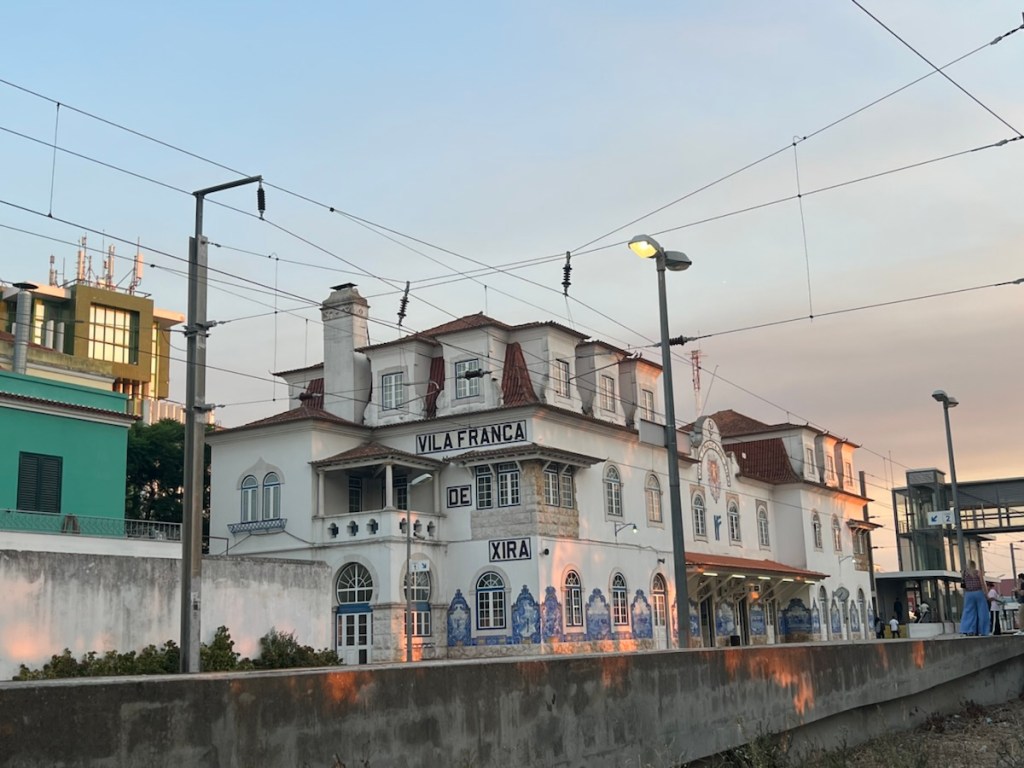
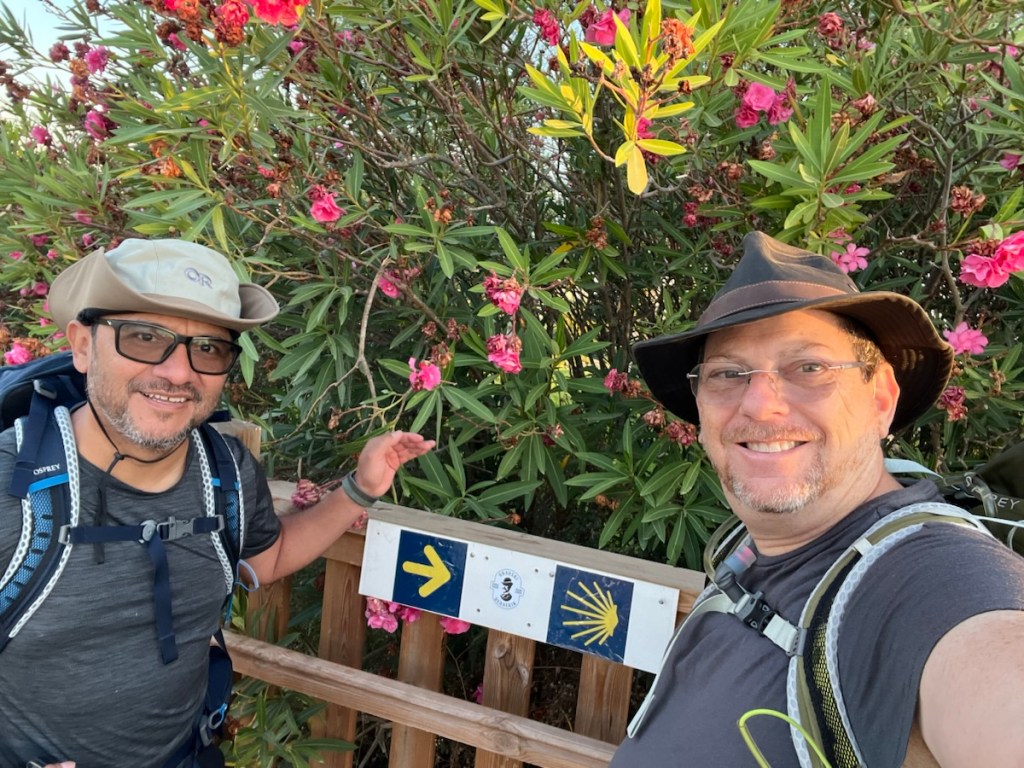
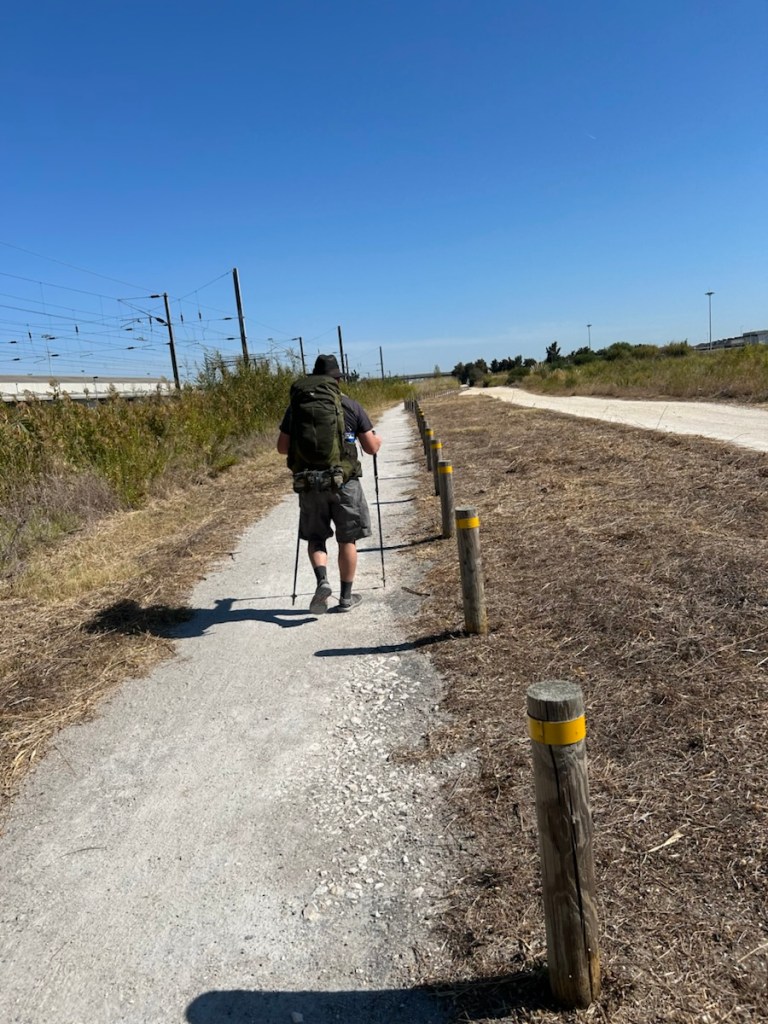
The route from Vila Franca da Xira to Azambuja was 20km, mostly on asphalt—probably 70-80%—with the rest on dirt roads. It was completely flat and entirely exposed, with no shade.
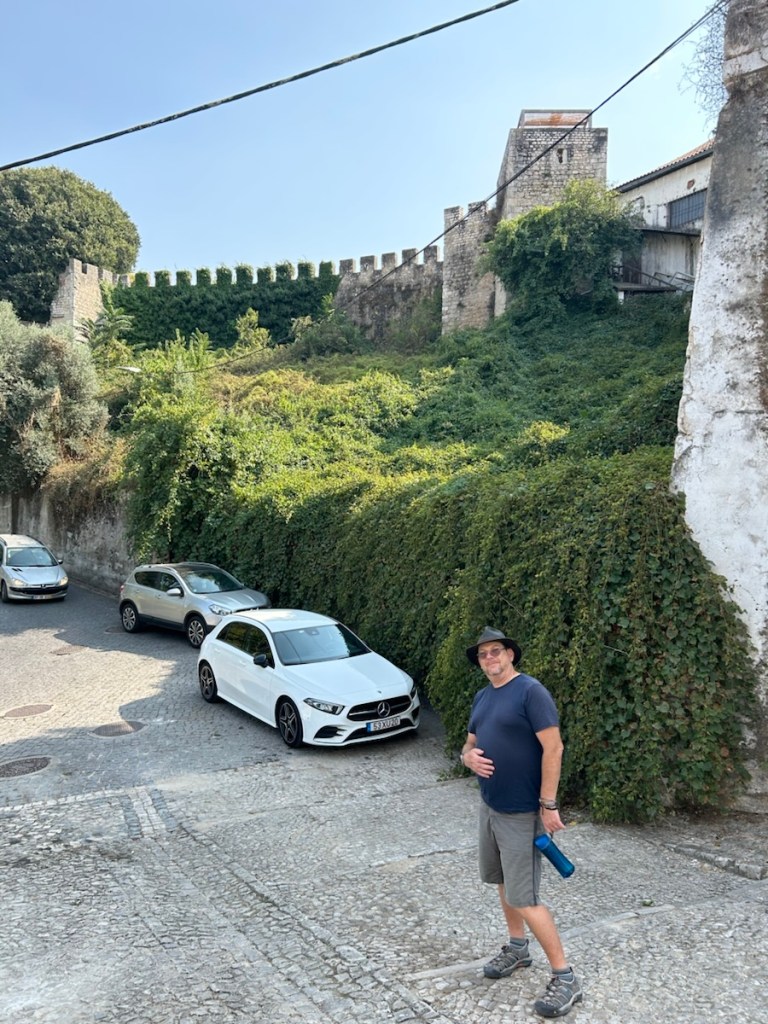
The day started off cool, around 68°F, but the heat quickly ramped up. At about 16km into the hike, we considered pushing on to the next albergue, another 13km away, since we were feeling pretty good. But then the heat really hit, and before I knew it, Luis Armando was out of sight. At the edge of Azambuja, I found a small patch of shade near some bamboo and waited for him. When he caught up, we both realized we were exhausted from the heat. Since it was still early and the albergue wasn’t open yet, we decided to grab lunch. Unfortunately, the flies were all over the tuna lasagna, making the meal less than enjoyable, but I ate what I could.
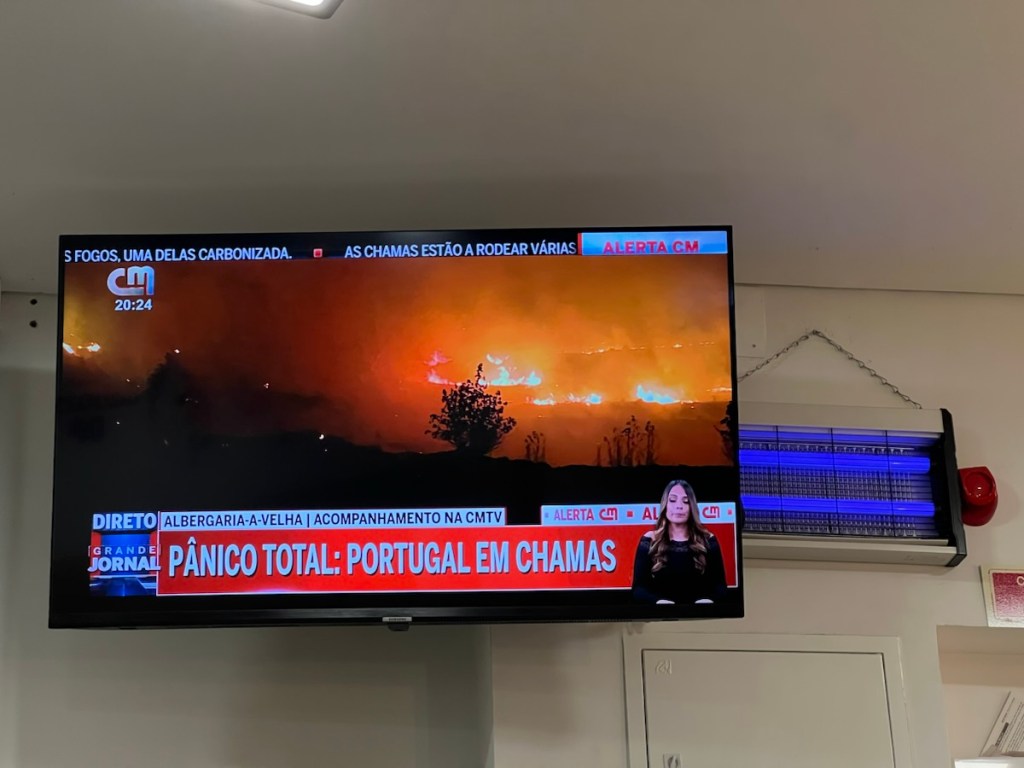
Throughout the day, every place we stopped had the TV on, showing news of wildfires about 150-200km to the north. Though the fires were far from us, we could smell the smoke as the plume passed overhead.
With the high temperatures, smoke in the air, and more heat forecast for the following day, we decided to take the train to Santarém, giving ourselves a rest day to do laundry and explore the town.
On the train, I managed to find some seats, facing three ladies who seemed to be enjoying their peaceful ride. As I hoisted my pack up to the overhead storage, disaster struck—my water bottle slipped out, and wouldn’t you know it, it smacked one of them right on the knee before bouncing to the floor.
In a heroic attempt to help, she bent down to pick it up. Unfortunately, what neither of us realized was that the top had broken during the fall, and the bottle was now basically an open faucet. Water sprayed everywhere—on her, on me, and all over the seats I had just claimed.
Luis Armando, blissfully unaware of the chaos, turned around just in time to witness the aftermath—the confusion, the soaked seats, and the ladies trying not to laugh. That was it, the perfect icebreaker. Soon, we were deep in conversation with the three women, who, it turned out, were elementary school teachers heading home to Santarém after a long day at work.
What started as a water bottle disaster ended up as the beginning of a delightful chat. It’s funny how a little chaos can bring people together!
Leaving Lisbon for the first stage is always tough. If you choose to hike it, it’s an 8-12km stretch through some rough parts of the city and industrial areas. I’ve done it before and wasn’t keen on doing it again, especially with the forecast calling for 95°F and the entire stage being 34km. So, we decided to take the train to Sacavém, where a new pedestrian bridge has been built since I last walked this route. As a result, much of today’s walk was new to me.
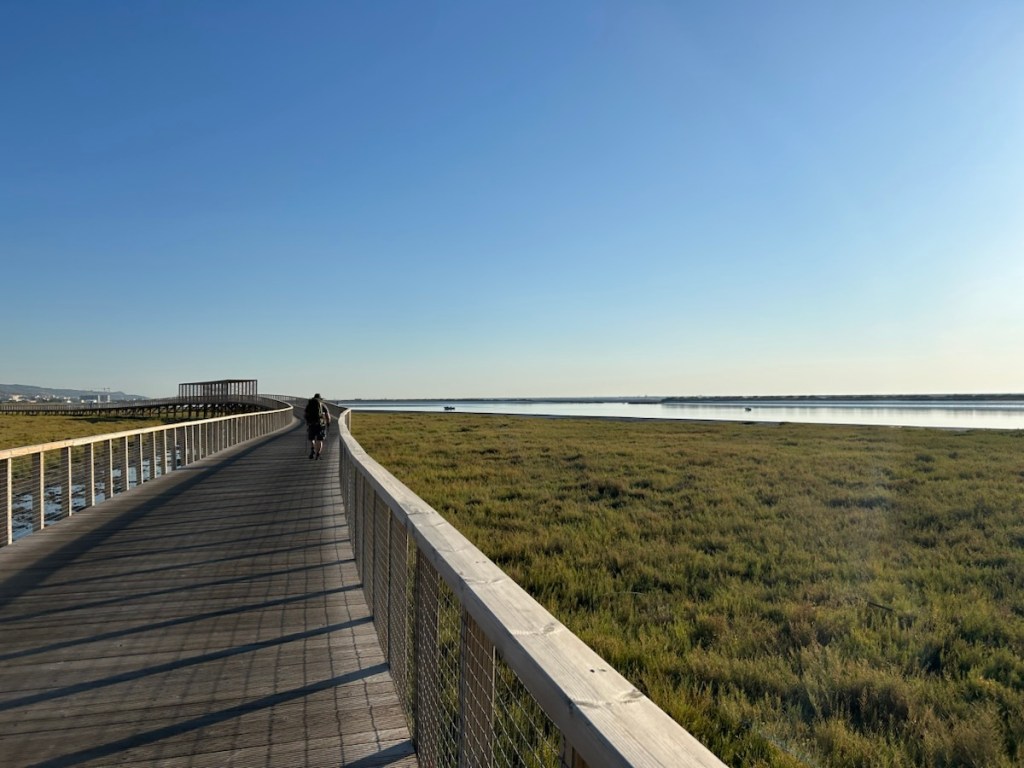
This stage doesn’t pass through many towns but instead follows a 22km boardwalk and gravel trail through wetlands, where we saw an abundance of waterfowl.
We arrived in Vila Franca da Xira without any issues, though we were completely exhausted from the heat after covering 28km.
The direct flight from San Francisco to Lisboa was smooth and straightforward. I was only carrying a 10kg backpack, which seemed to surprise the gate agents. The plane was packed, with just a couple of babies who occasionally got fussy. Interestingly, the mom and kids were in economy while the dad was seated in first class. He only came back to let the mom take a bathroom break. Go figure…
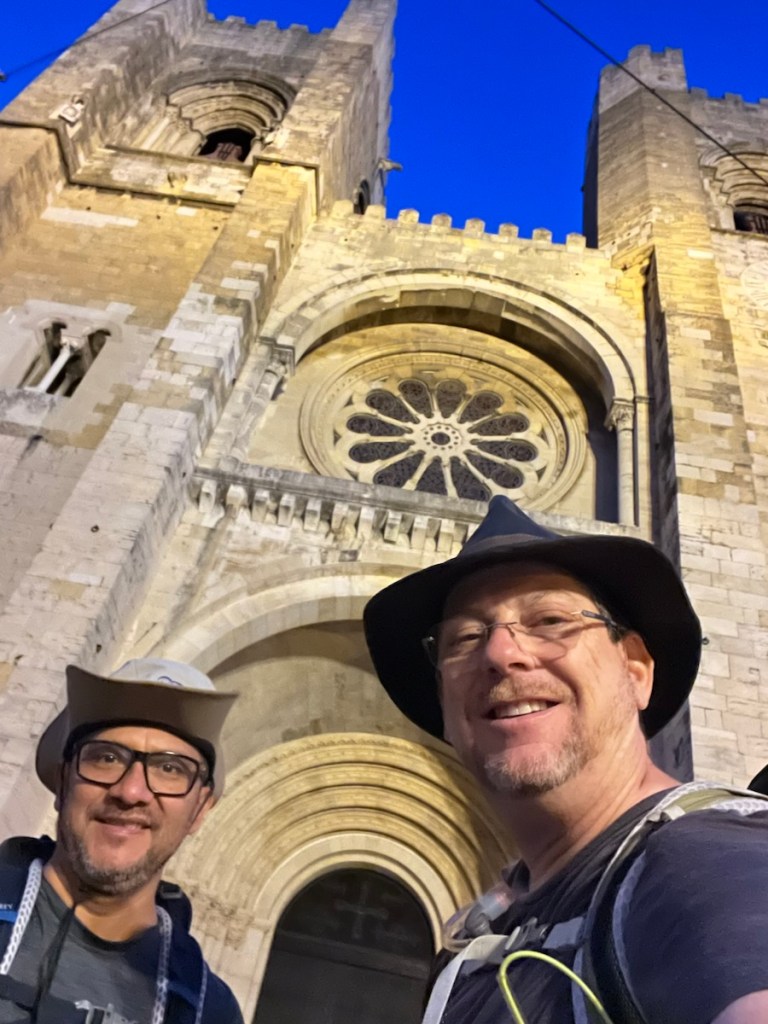
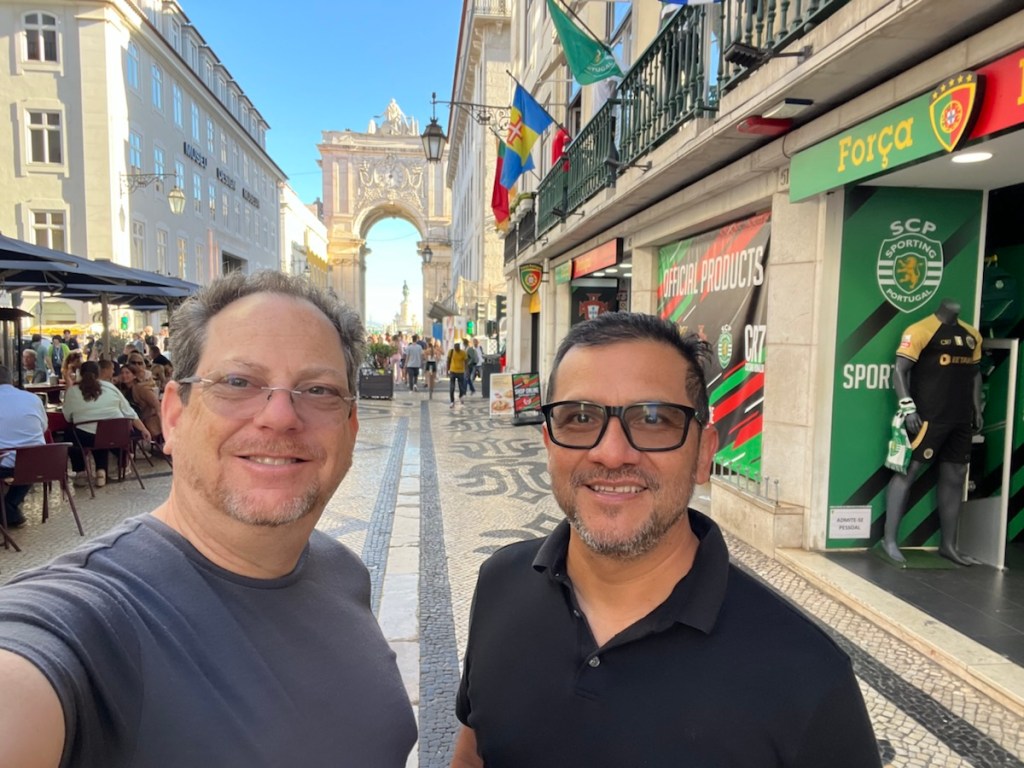
I arrived in Lisbon three hours before Luis Armando, so I spent that time people-watching, always a fun way to pass the time. Once Luis Armando arrived, we took the metro, and 30 easy minutes later, we were at our hostel, the Lisbon Lounge.
The city was alive with a mix of languages, though most conversations were in either English or Spanish. We met travelers from Latin America—Mexico, Guatemala, Argentina, Colombia, Bolivia—as well as people from France, Ukraine, the U.S., and Spain. Most were in their 20s to 40s, but there were also retirees and younger students adding to the diversity.
Day 1: Alfama and the Castle of San Jorge
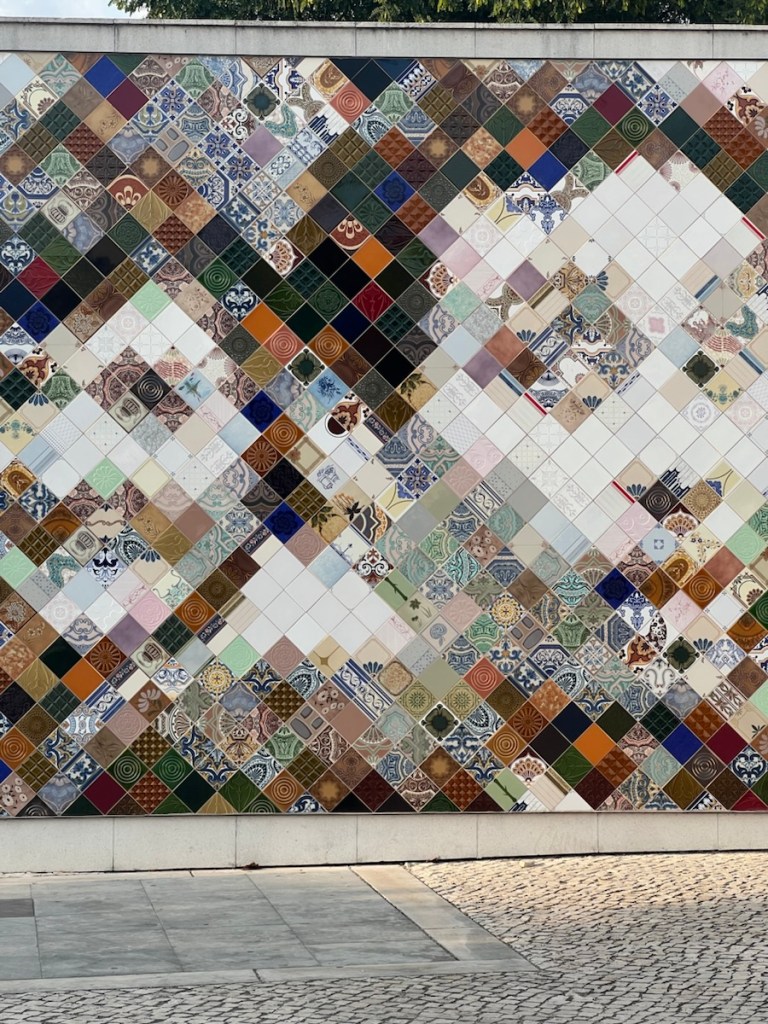
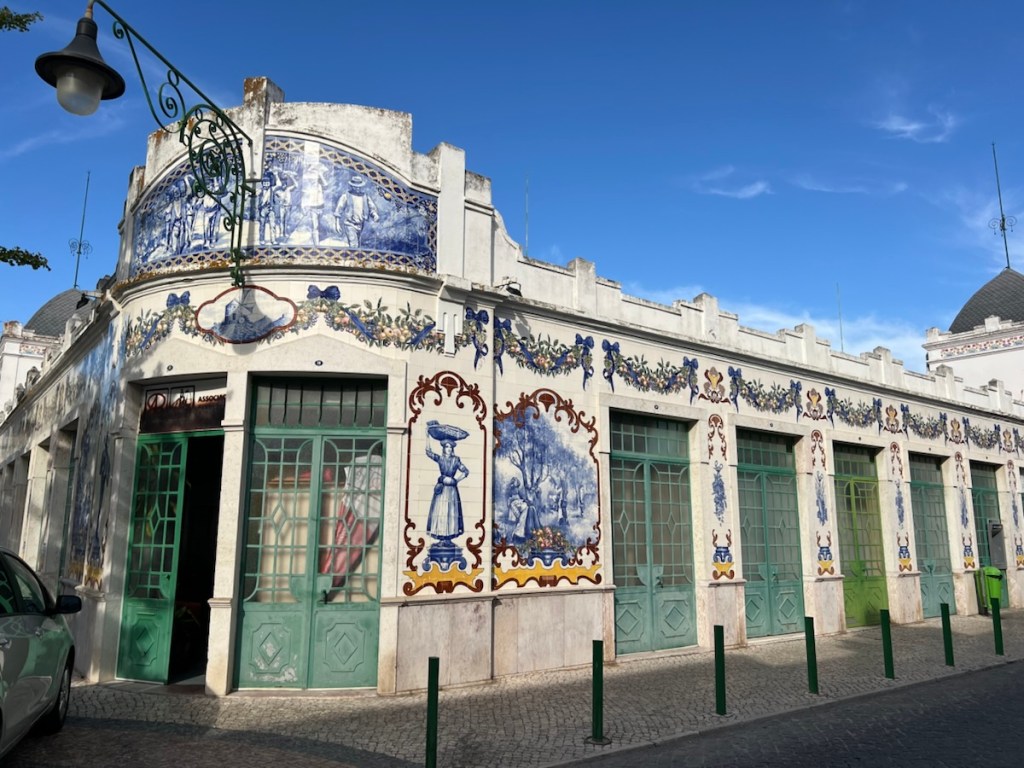
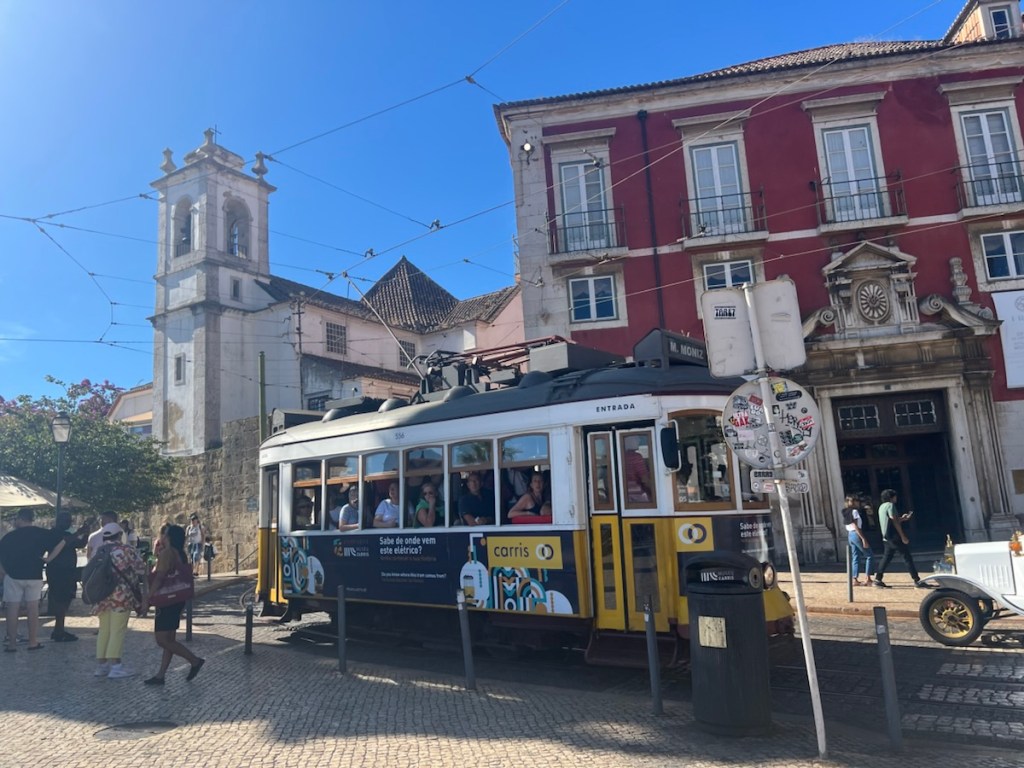
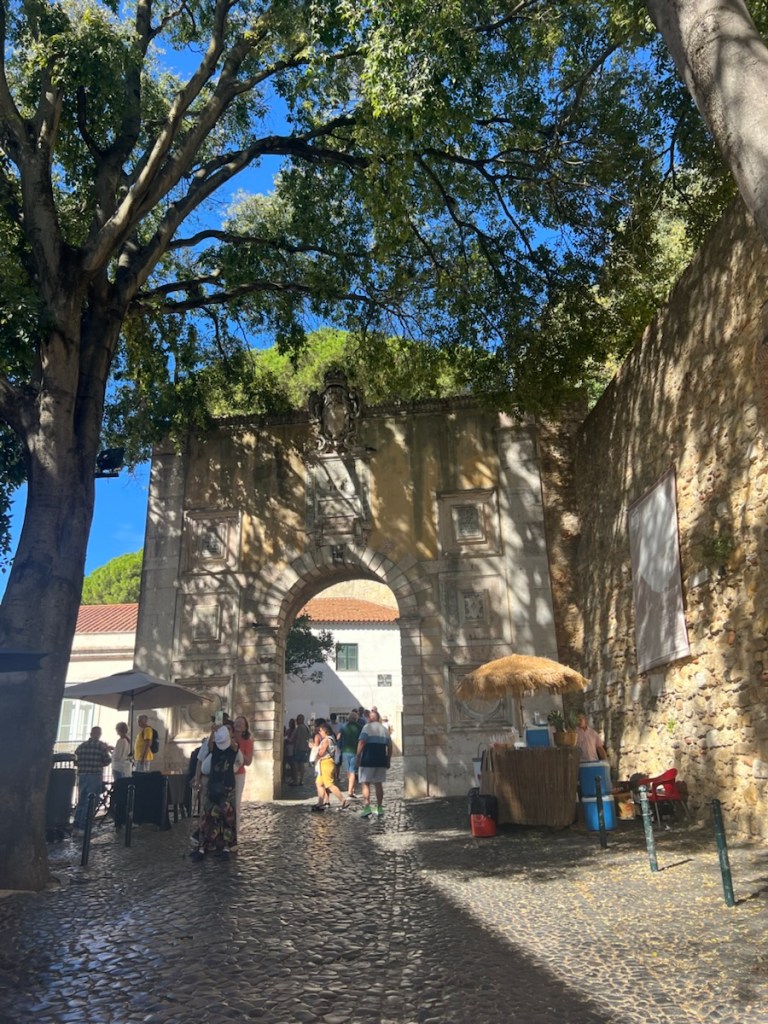
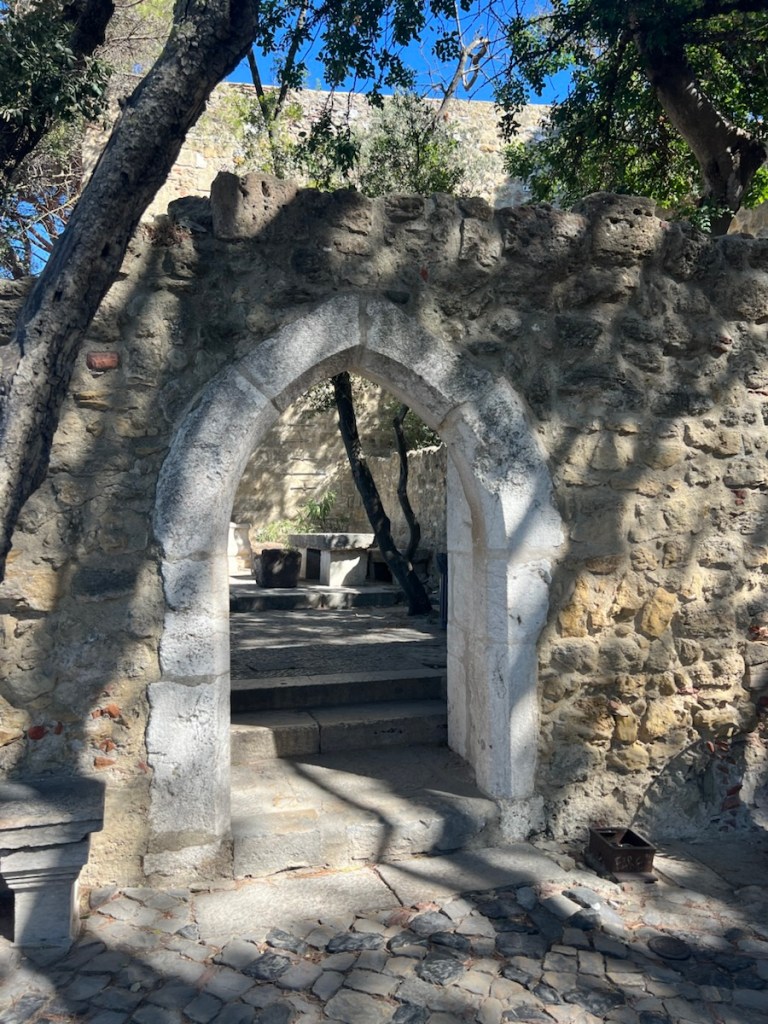
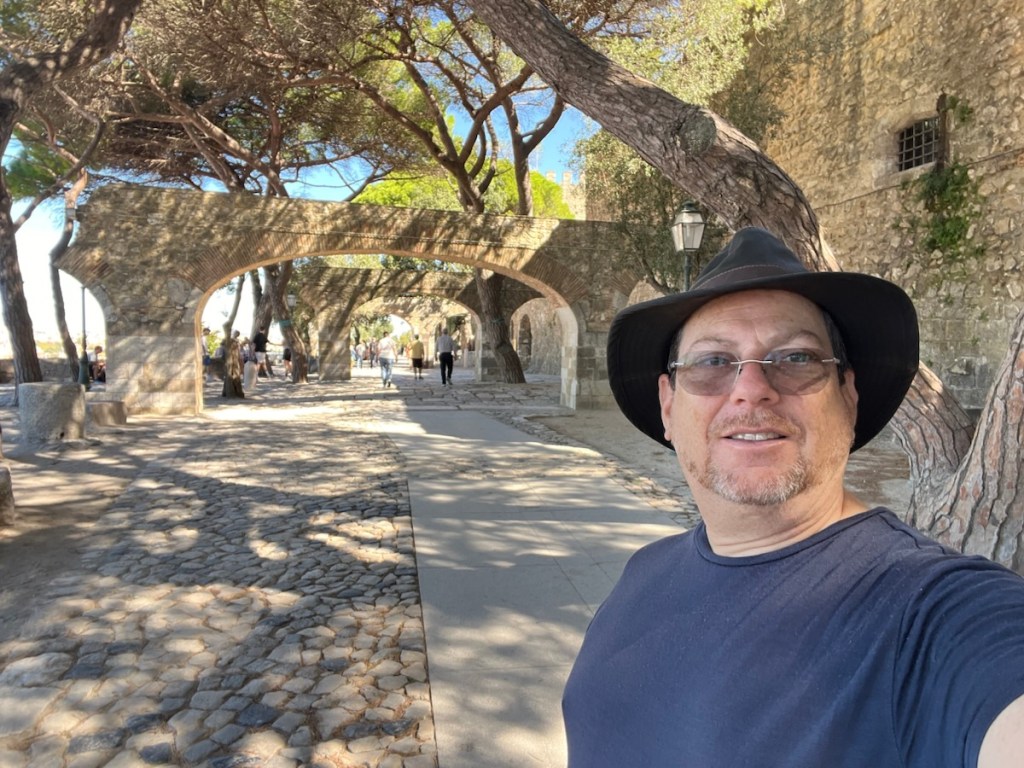
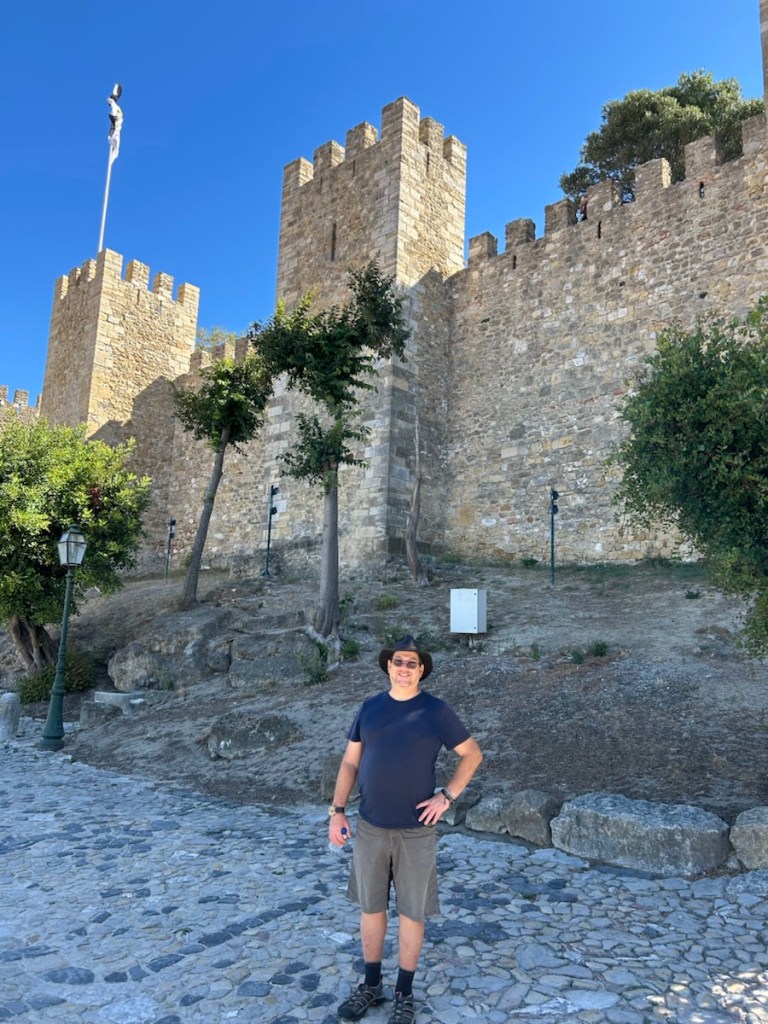
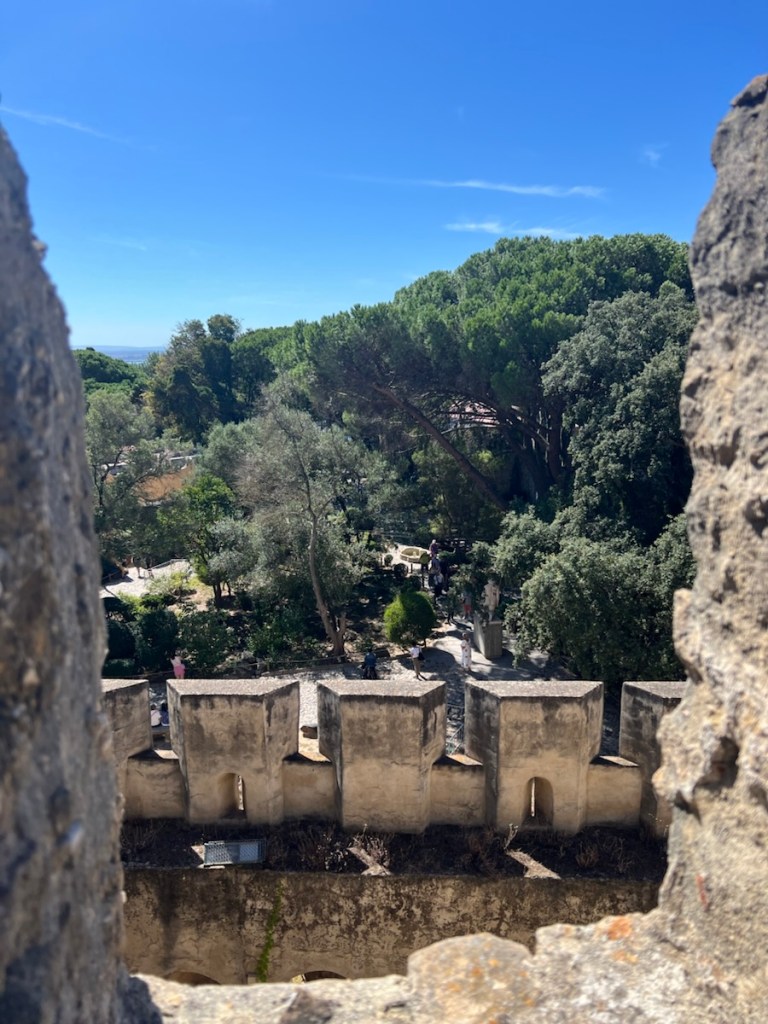
On our first day, we explored Alfama, famous for its food, architecture, and the iconic Castle of San Jorge. Walking up to the castle was a great way to stretch our legs after the long flight. The buildings were adorned with Moorish tiles, and the streets were made of smooth cobblestones. If walking wasn’t your thing, the trolley system was always an option to get up the hill.
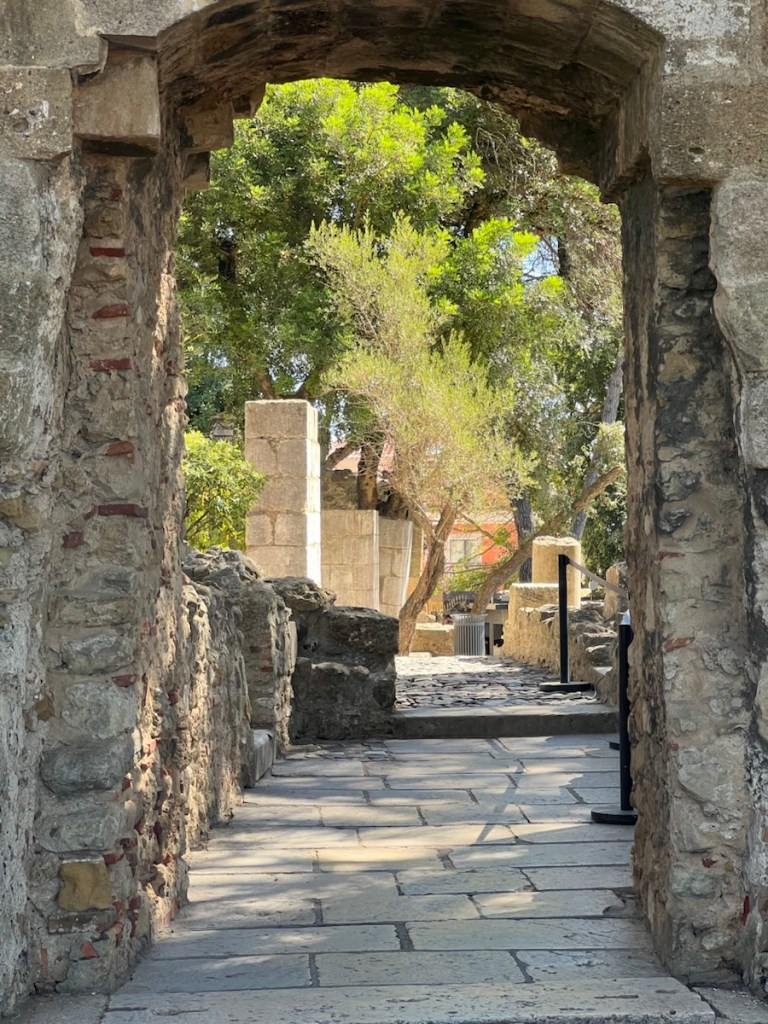
The Castle of San Jorge is a beautifully preserved example of Moorish architecture. It’s a reminder of the violence humans have inflicted on each other over the centuries, though it’s hard to believe we now live in a much more peaceful world.
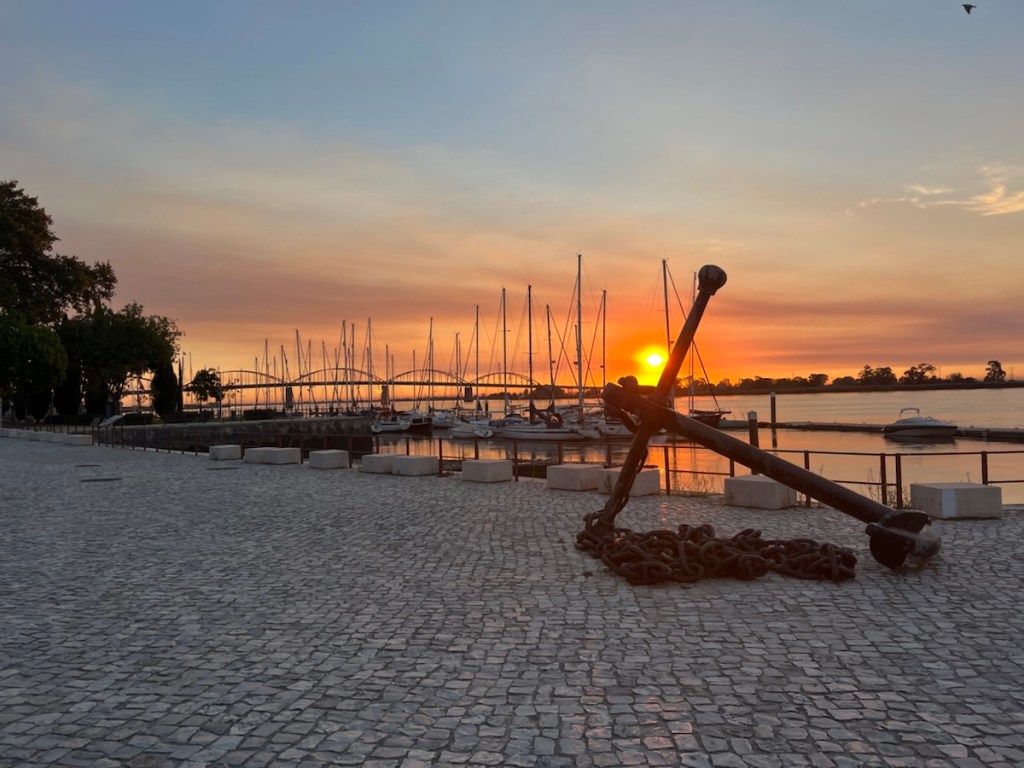
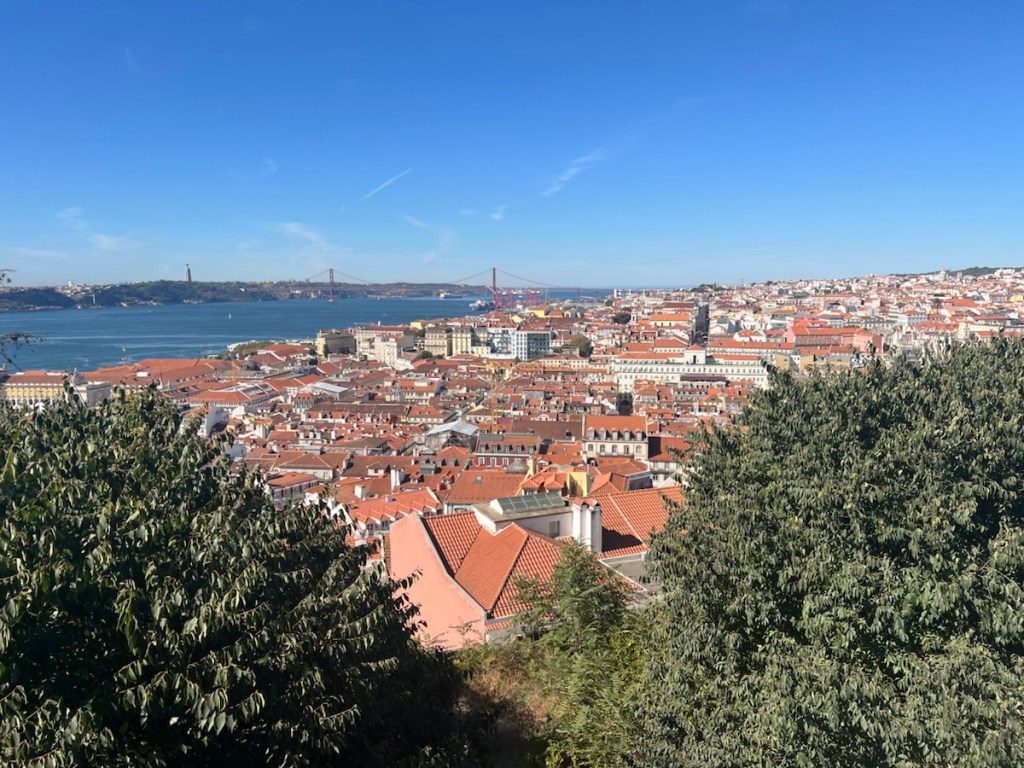
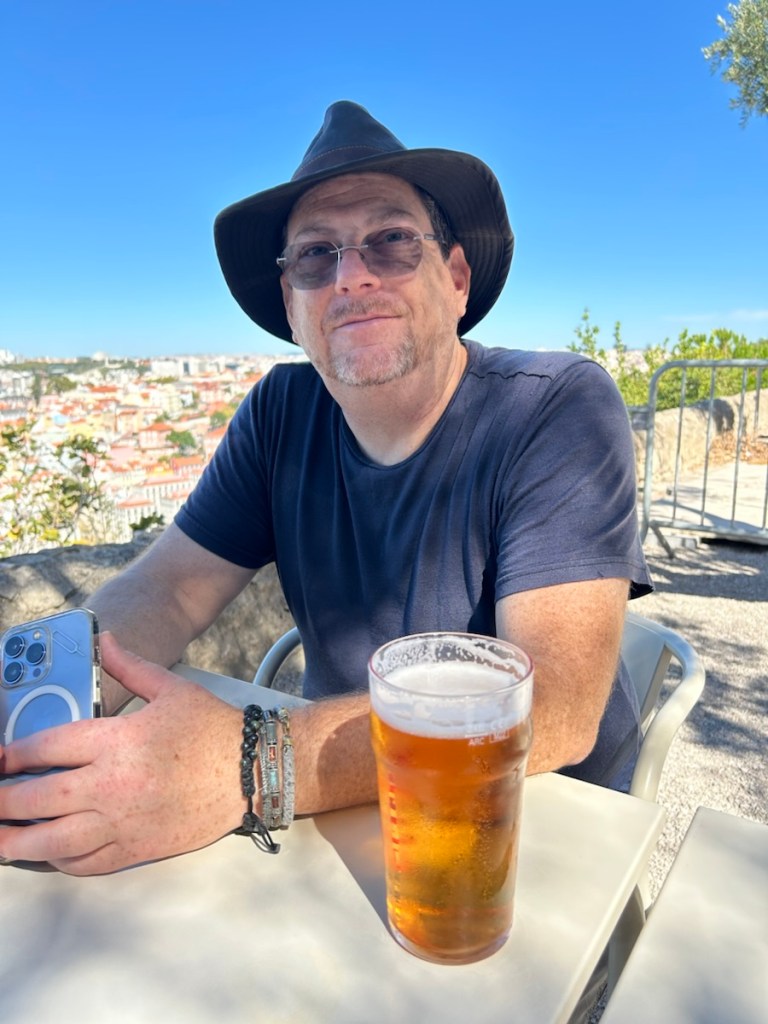
Lisbon, with its bay and the river Tejo, reminded me of San Francisco. Crossing the river is a suspension bridge, much like the Golden Gate. The weather is warmer, but the ecosystem is surprisingly similar—oak forests and golden rolling hills.
Day 2: Sintra
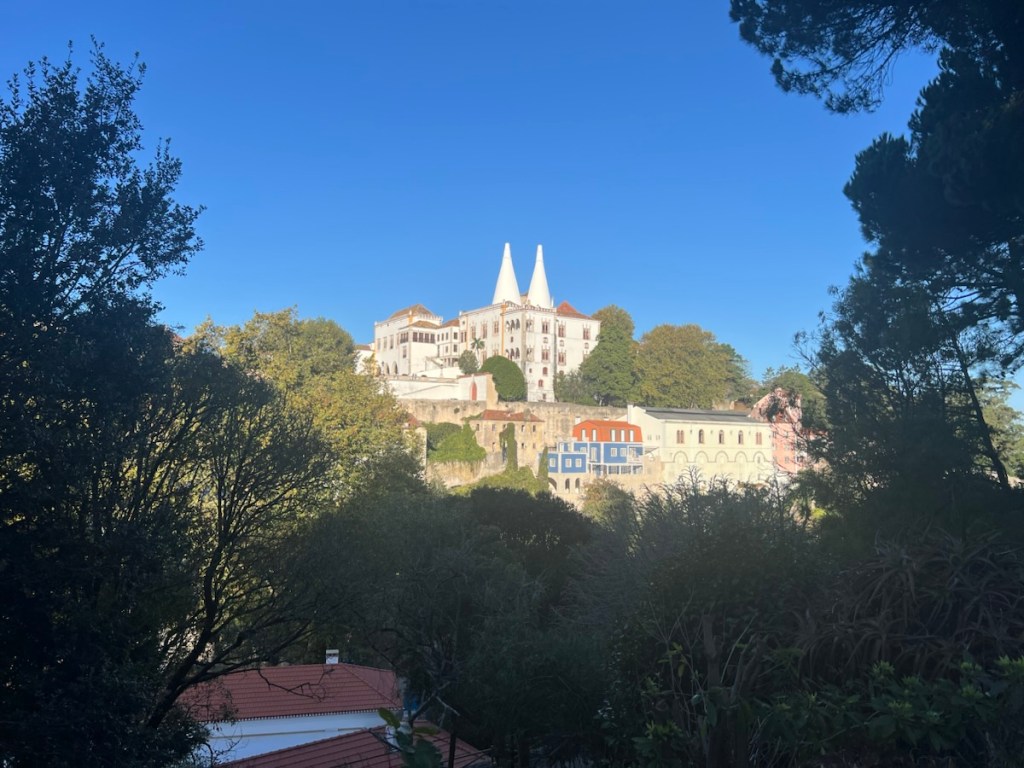
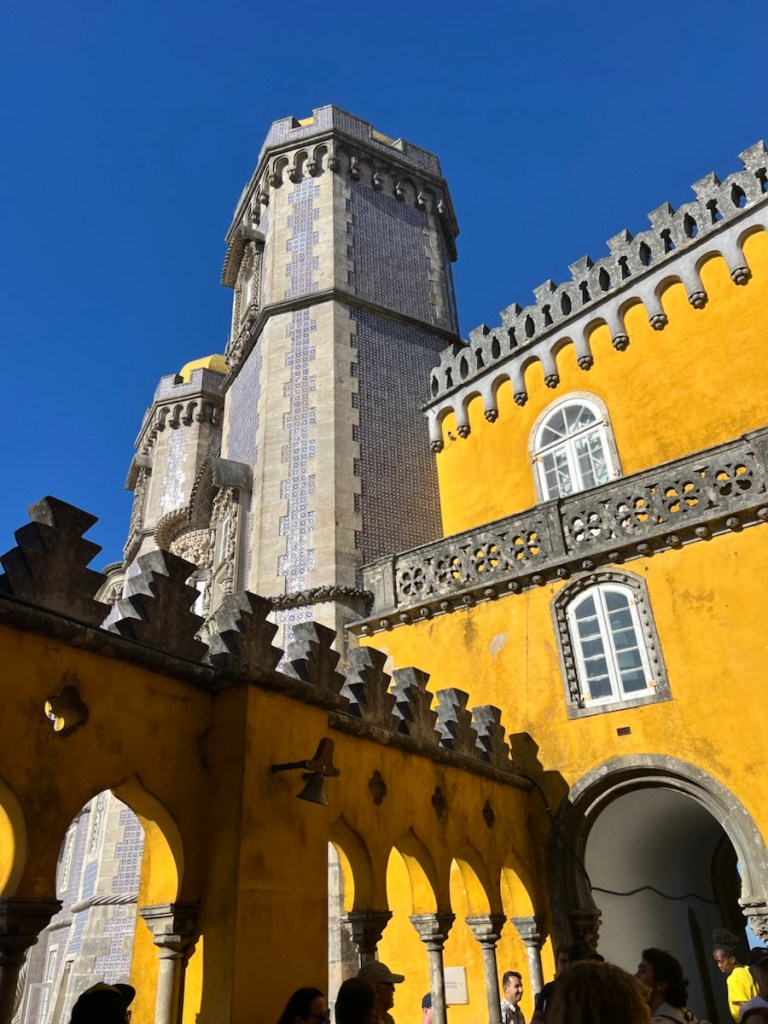
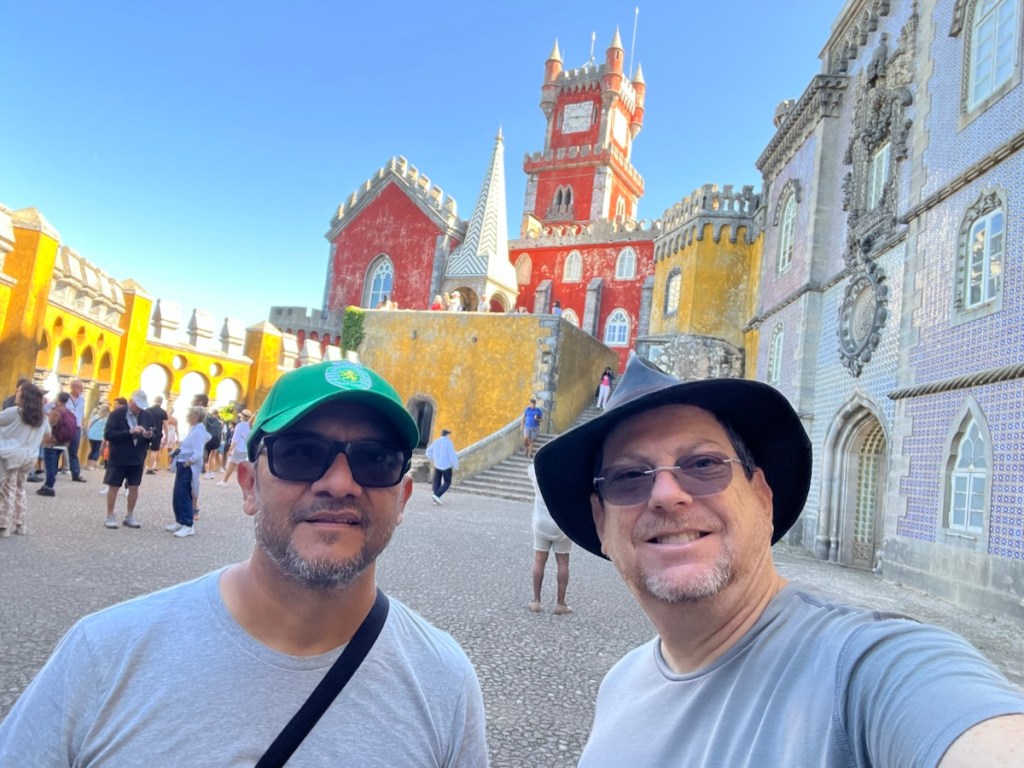
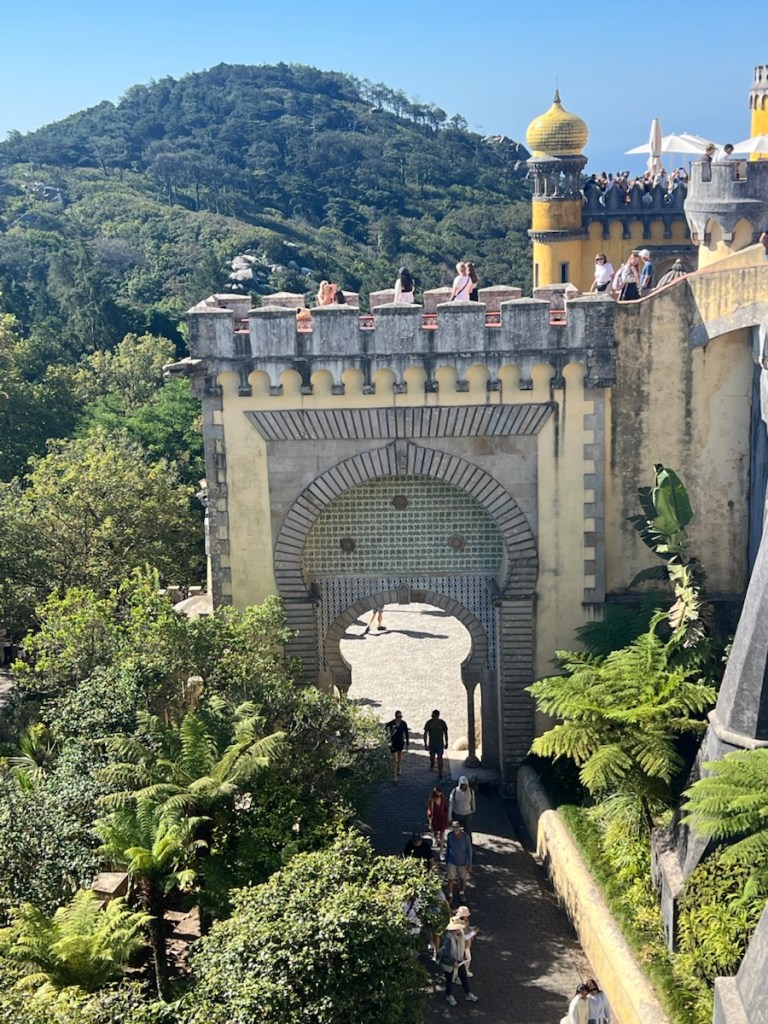
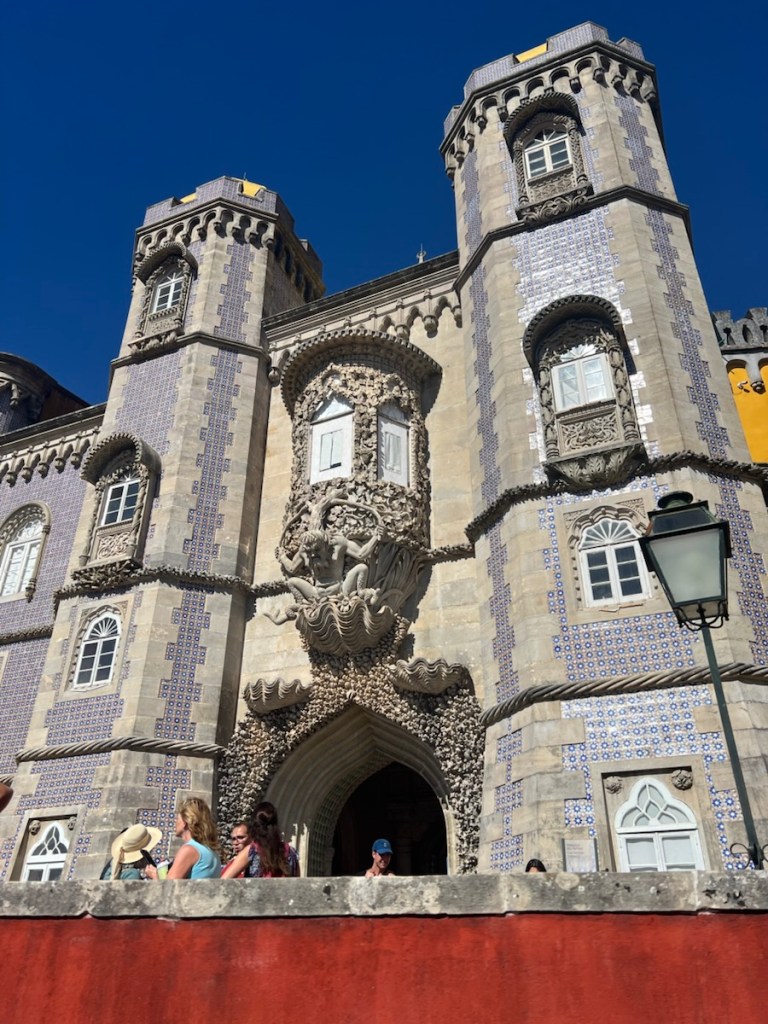
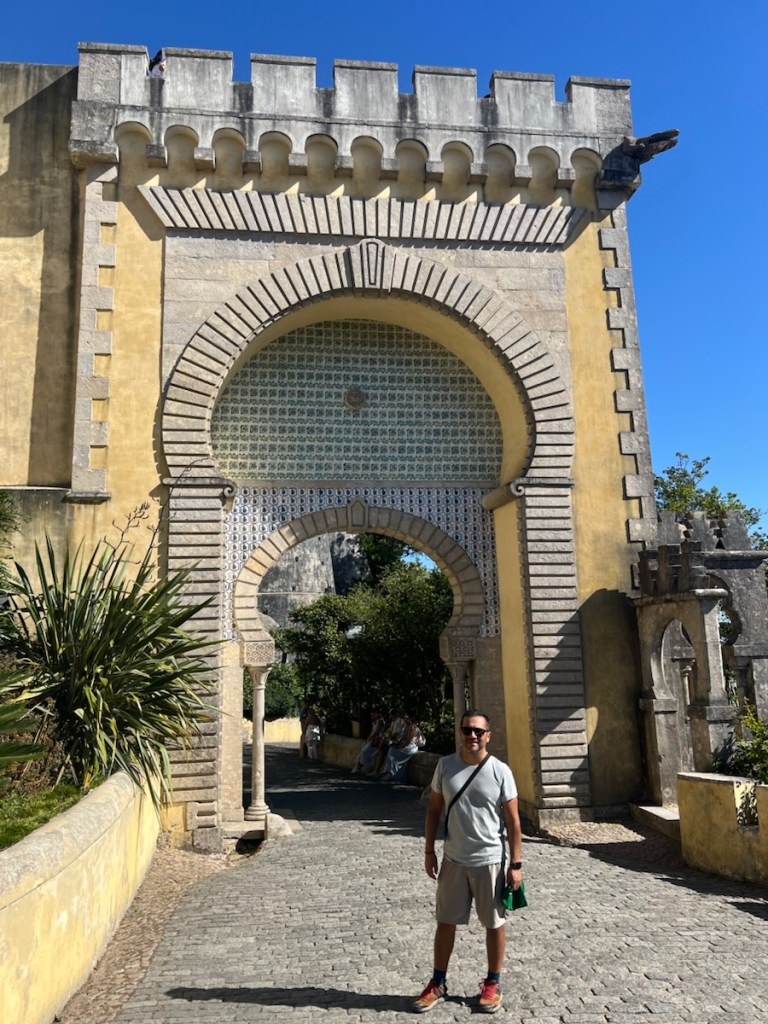
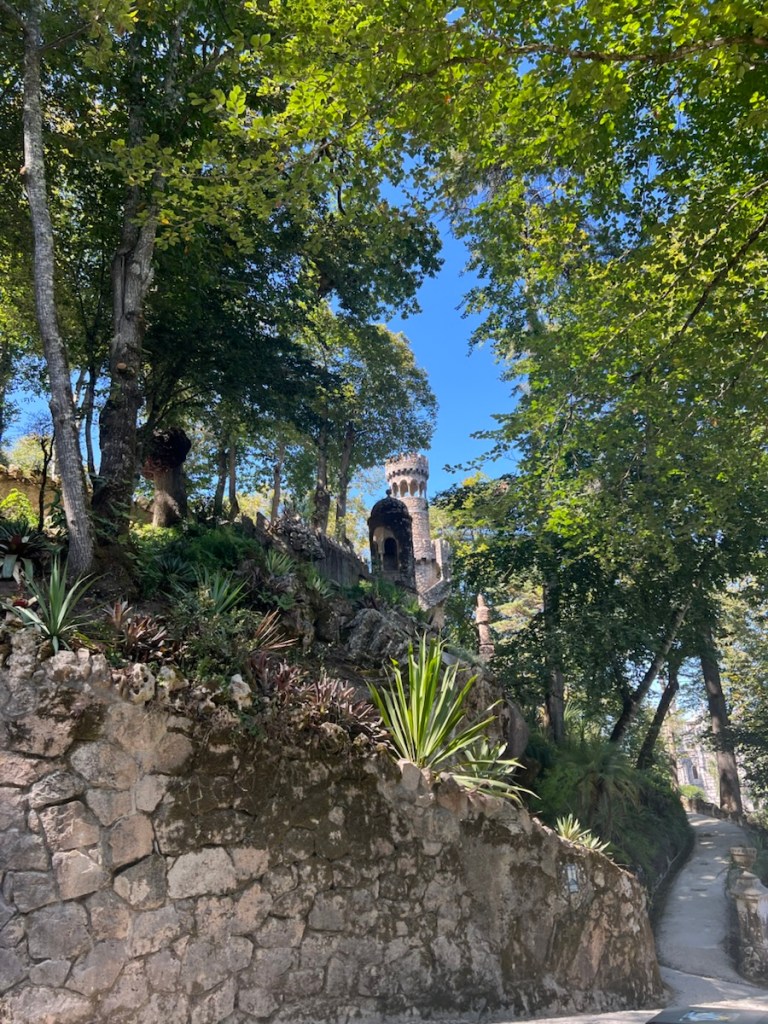
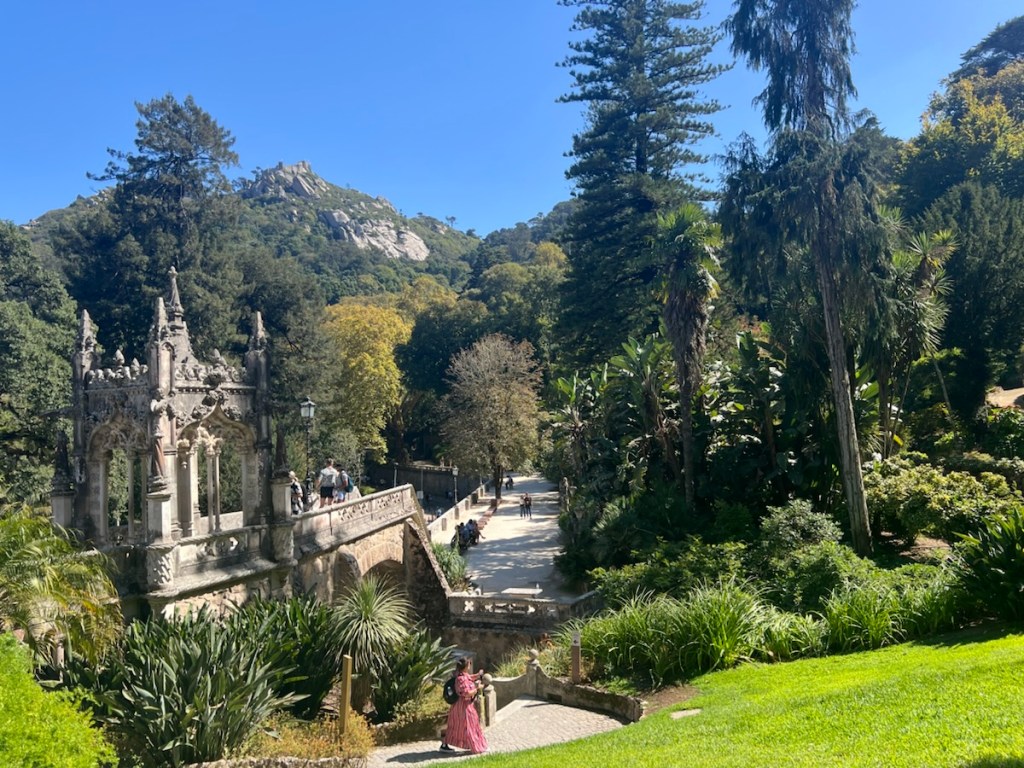
On our second day, we left early for Sintra, the former summer retreat of Portuguese royalty. Built on a mountain, Sintra is home to forests, castles, palaces, and lush gardens.
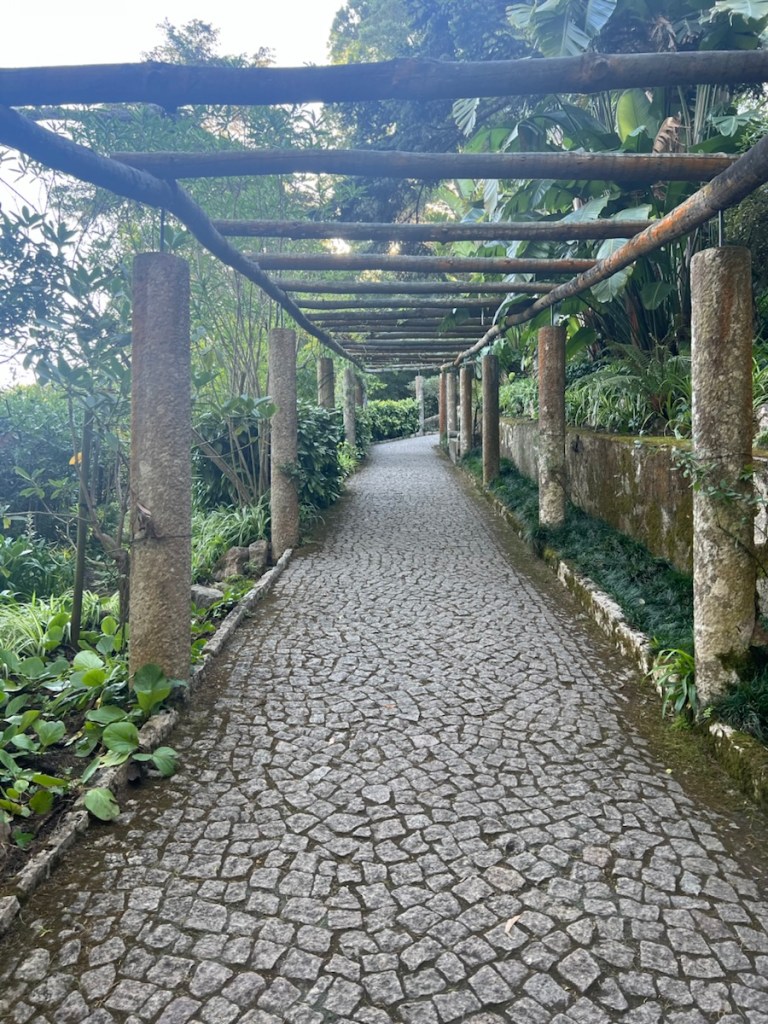
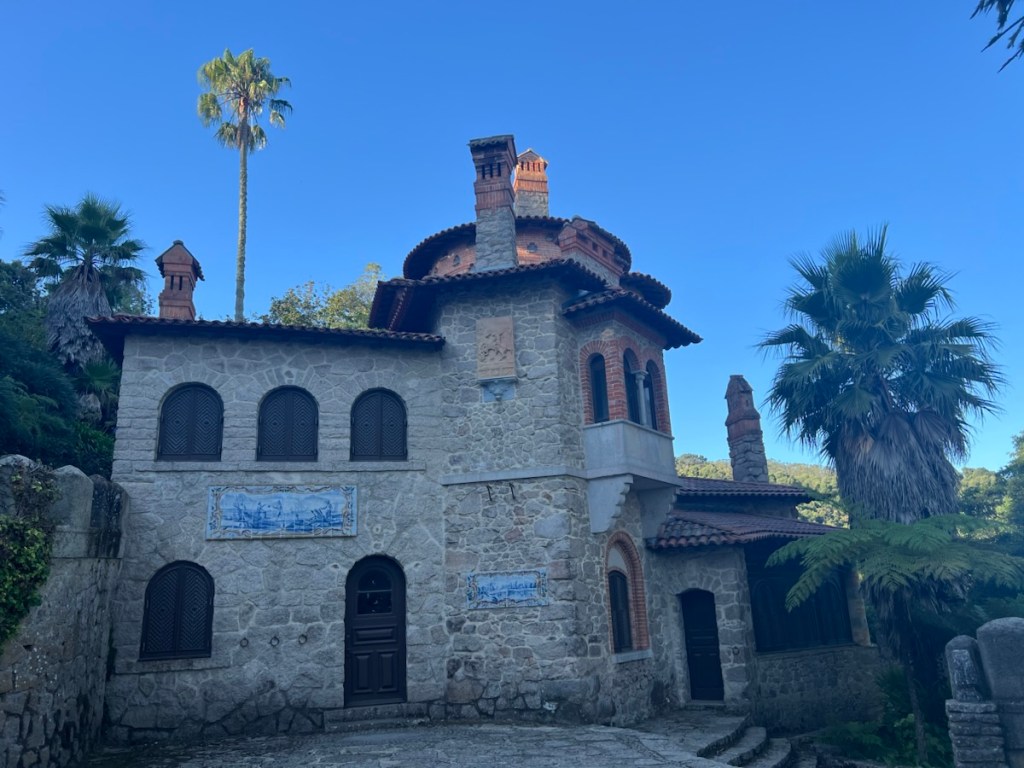
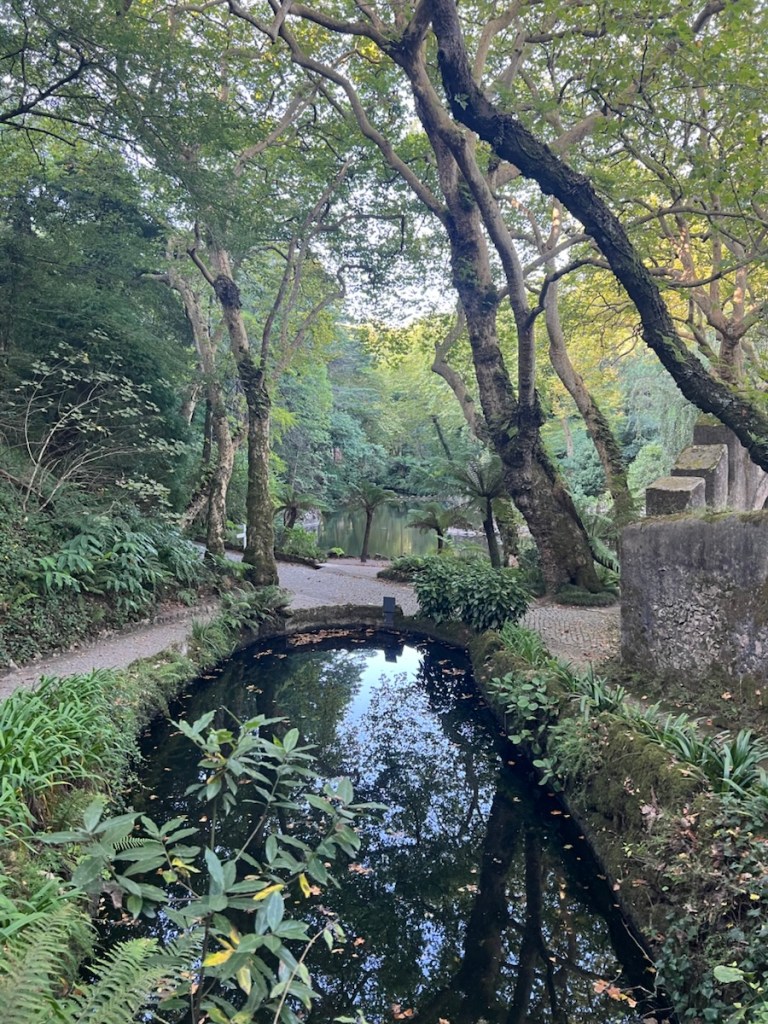
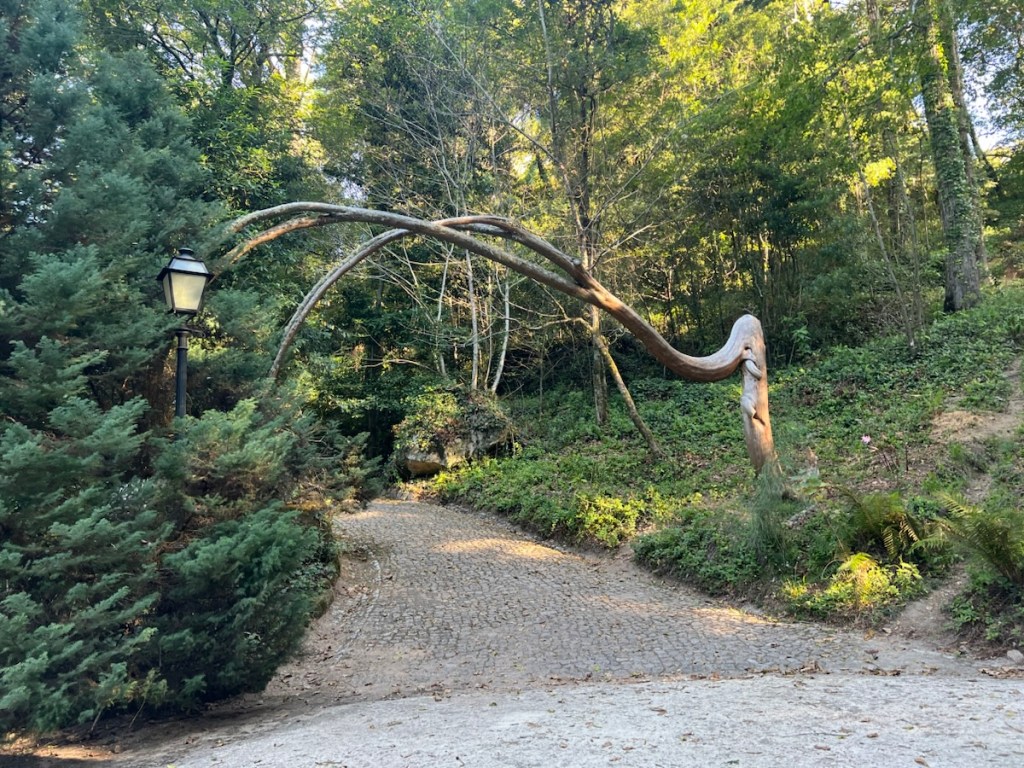
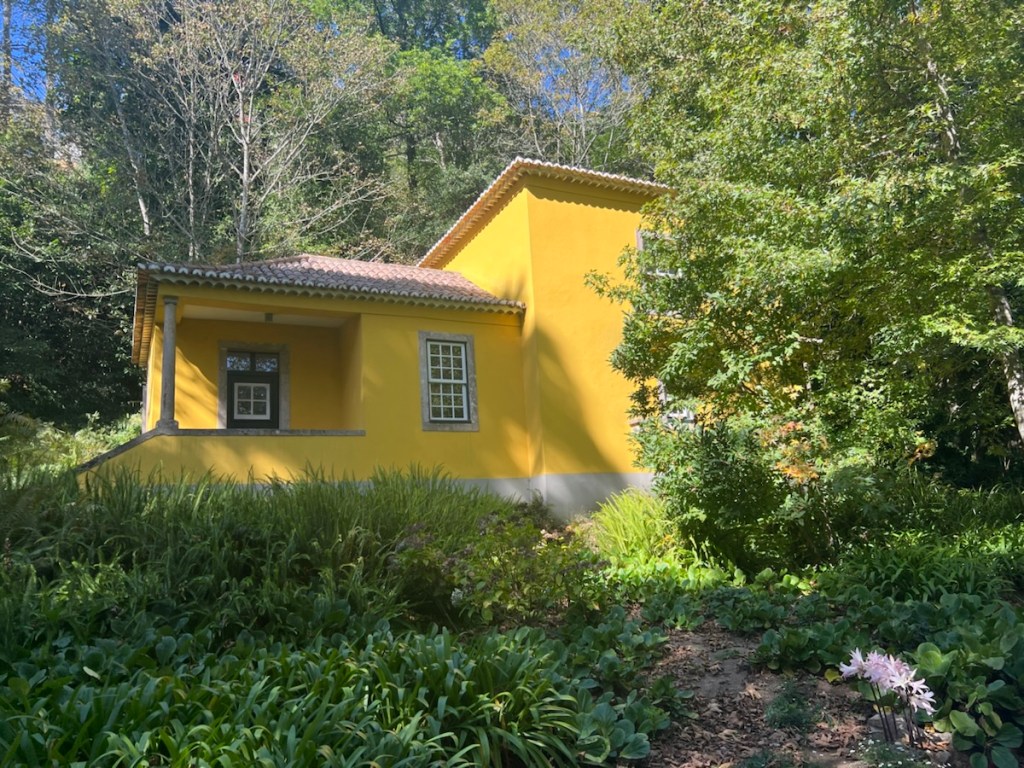
A 40-minute train ride took us up about 500 feet to the town of Sintra, which reminded me of Taxco, Mexico—an ancient town clinging to a steep mountainside. We walked 2.5 miles from the train station, gaining another 1,000 feet in elevation, and explored hidden gardens, rock formations, secret homes tucked away from palace life, and forests filled with trees from around the world—including giant sequoias and coastal redwoods from Oregon and California, some 200-300 years old.
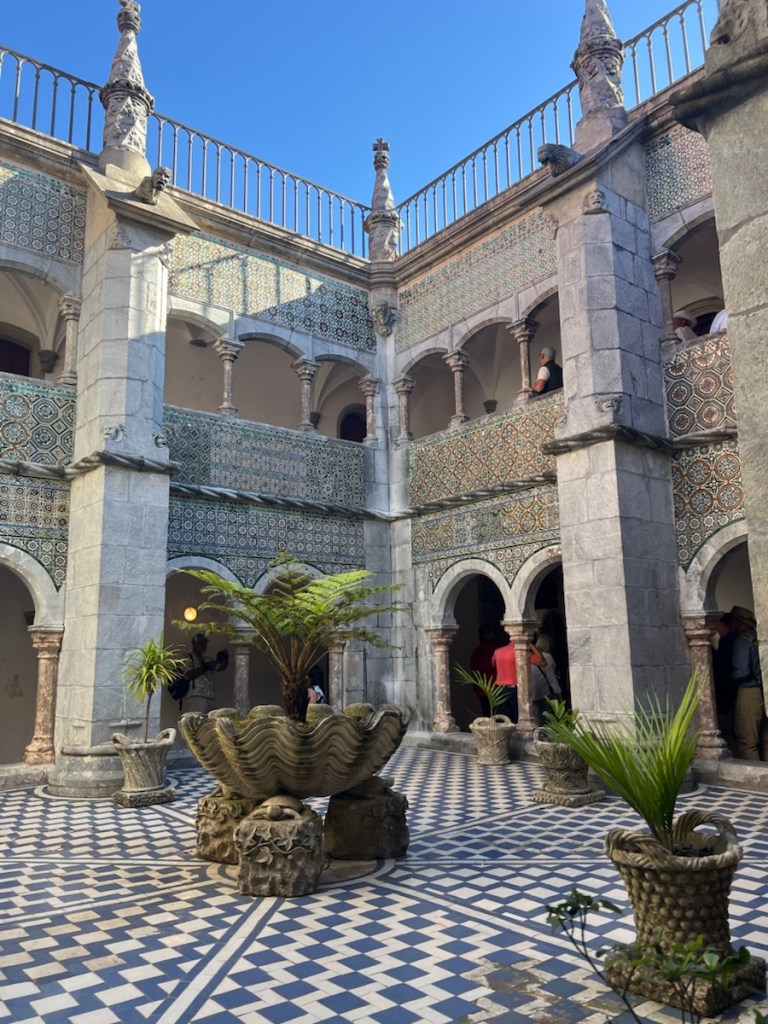
The Palacio da Pena is incredibly popular, and entry times are strictly controlled. We arrived at 9:30 am and found the line manageable, though once inside, the palace was crowded, making it hard to take in all the details. The palace is a blend of architectural styles—Moorish, monastic, and royal—each era leaving its mark on the structure. The grandeur was overwhelming, though, as expected, there was little mention of the people who kept it all running behind the scenes.
After leaving the palace, we wandered down through the forest, taking in the serene beauty of the surroundings. I got a bit carried away, choosing the scenic path at every turn, which extended our walk a little longer than planned. By the time we reached the town for lunch, around 11:30, the restaurants hadn’t opened yet, but the wait was worth it. I had bacalhau (codfish) baked to a crisp in a slightly sweet glaze—easily the best meal I’ve had in Portugal so far.
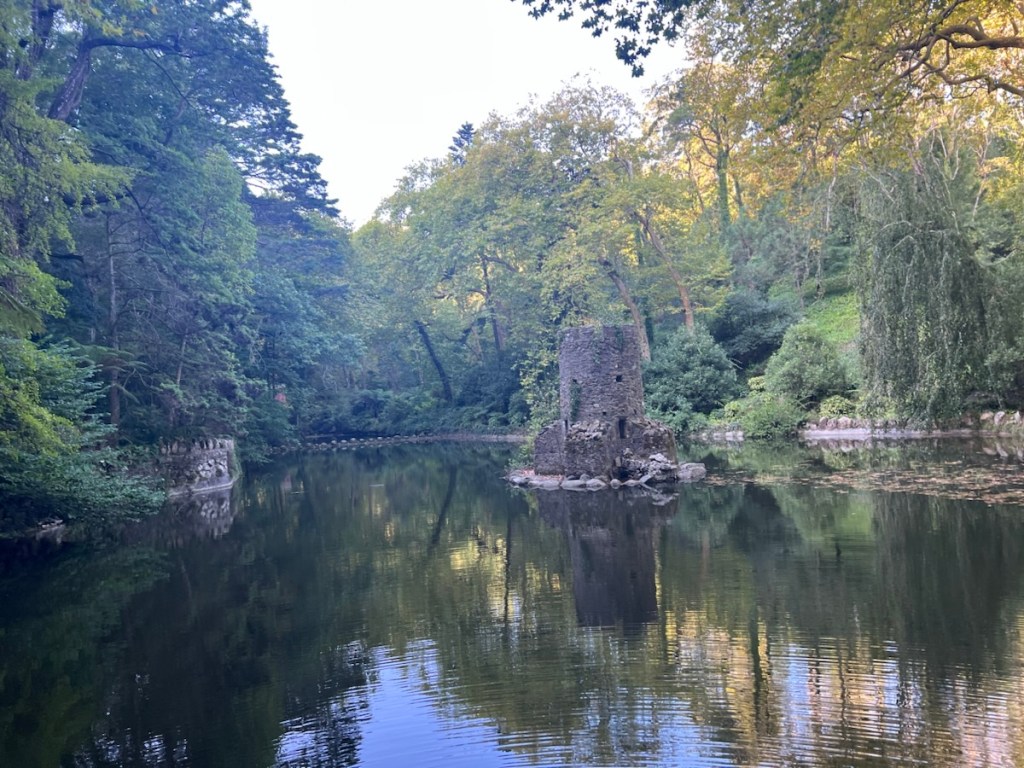
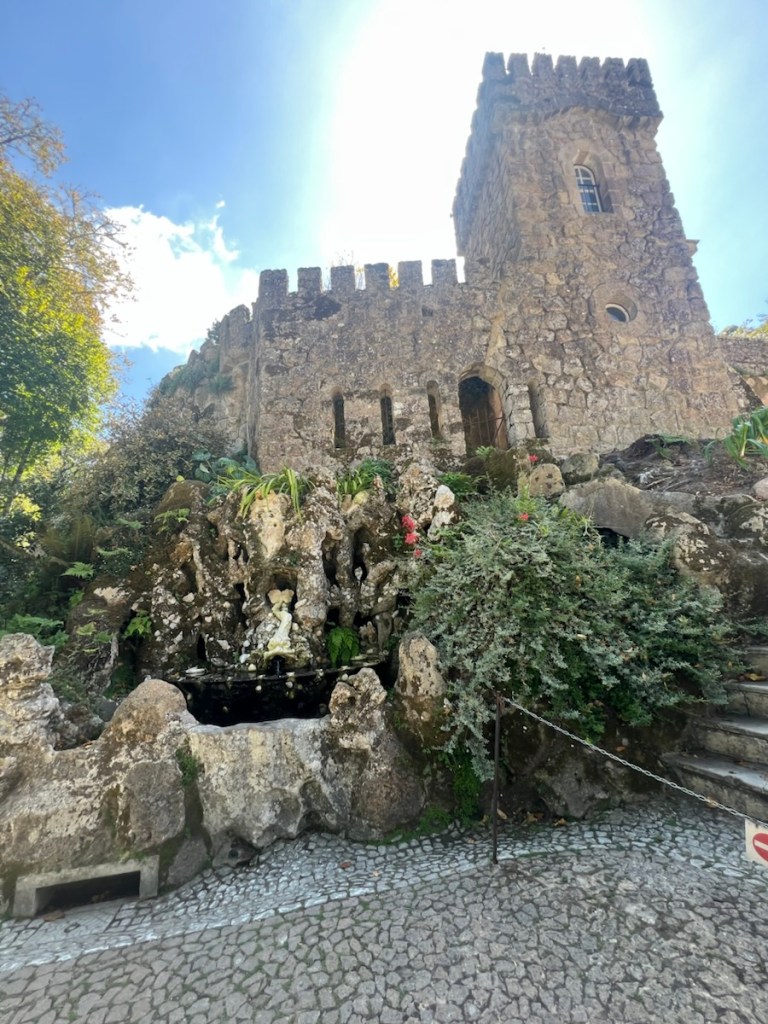
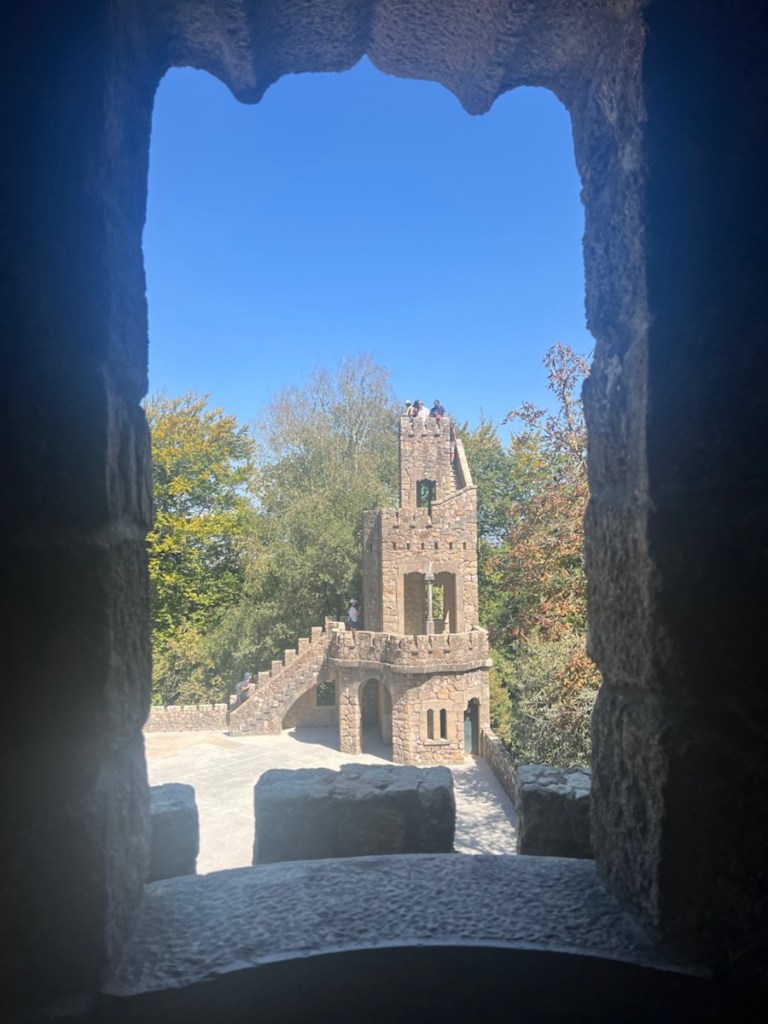
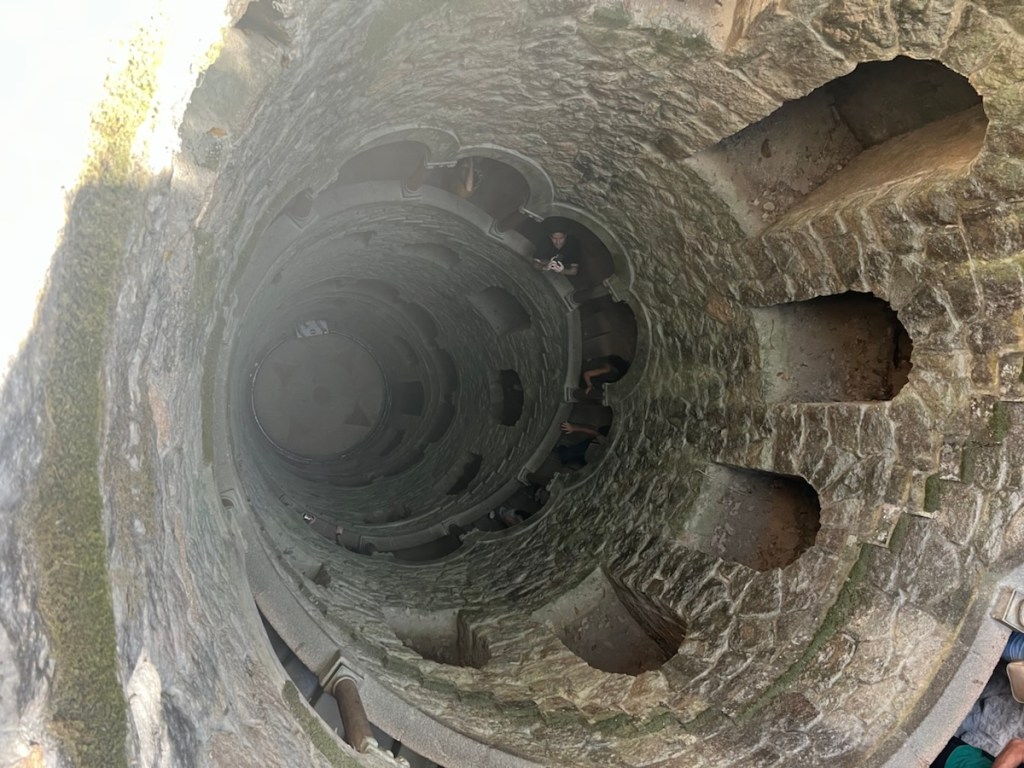
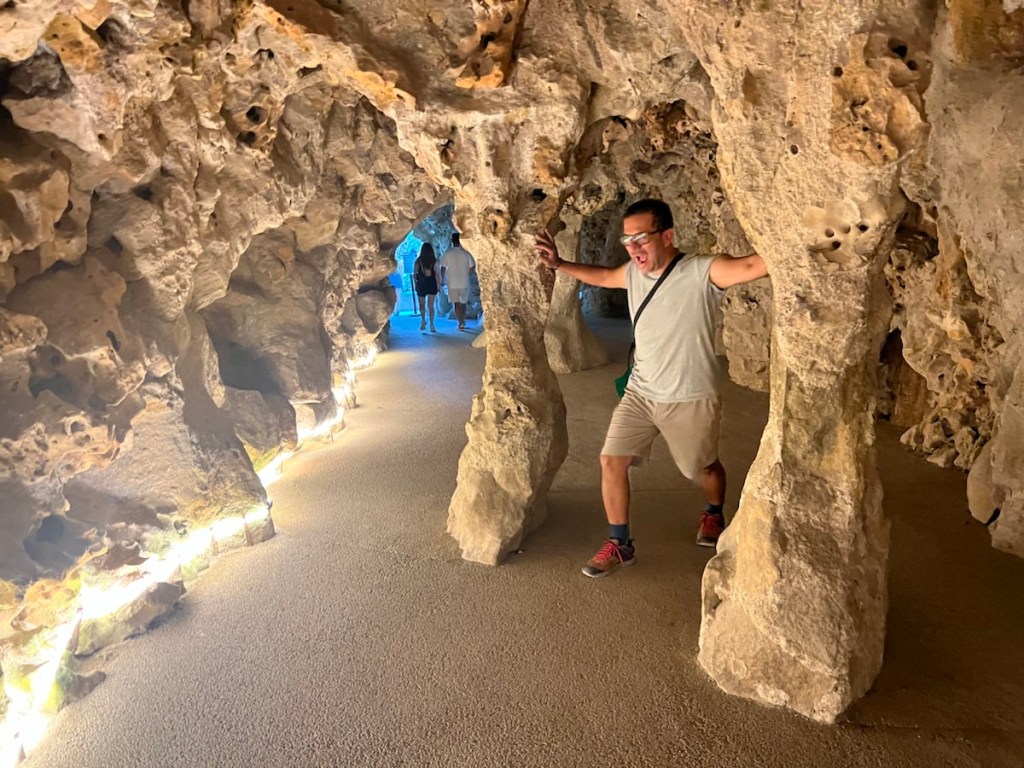
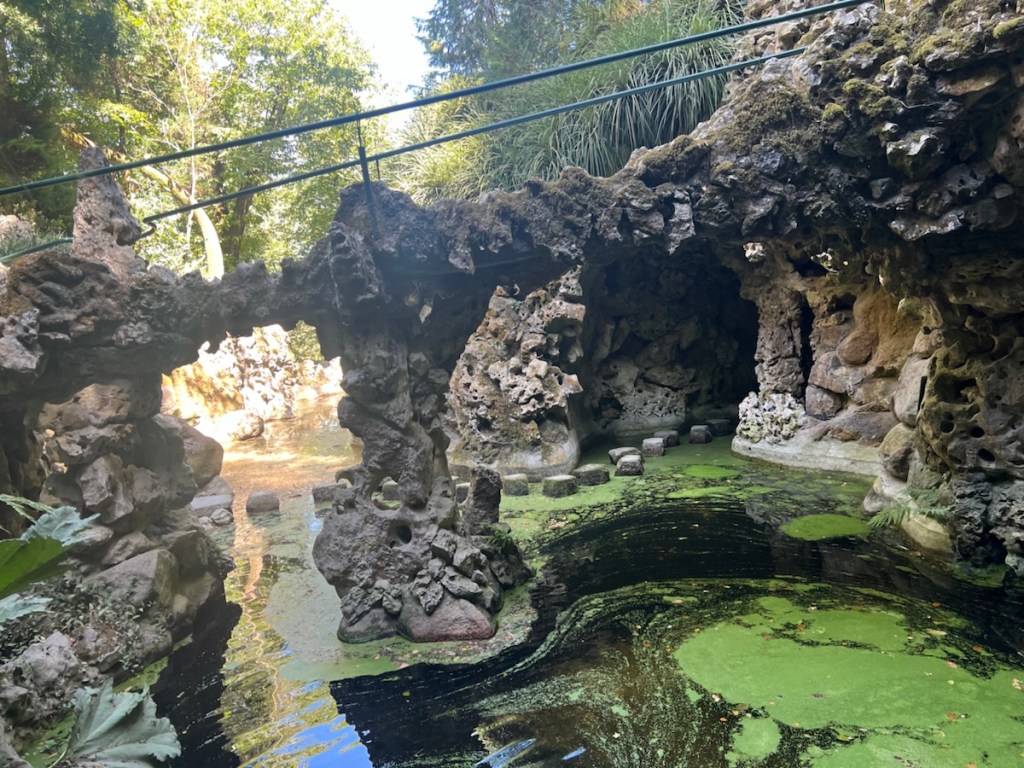
In the afternoon, we explored a whimsical four-hectare garden created by an eccentric man who loved rituals and games. The garden was filled with wells and rock formations concealing secret entrances to tunnels. You could disappear around a corner and end up in a Templar ritual site or evade prying eyes while sneaking off with your buddies.
Despite the number of visitors, the garden felt peaceful, filled with birdsong and the sounds of the forest. The only real lines were at the entrance and for the most famous attraction—a spiral staircase that descends into the earth, connecting with the underground tunnel system.
Day 3: E-Scooters to Belém
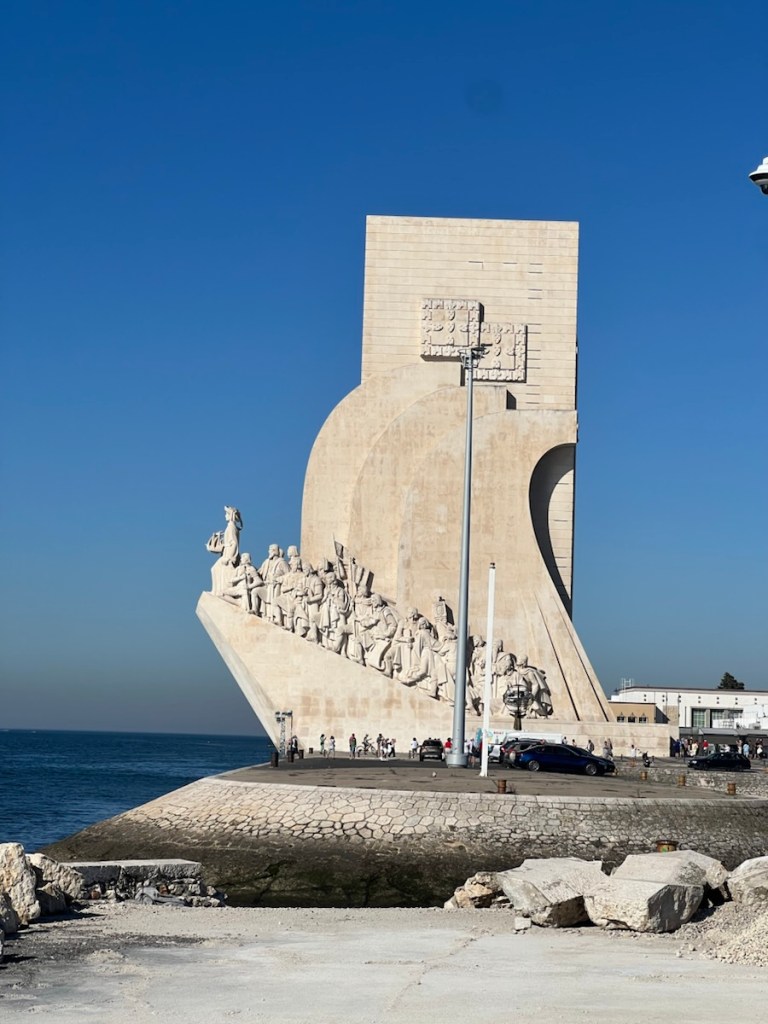
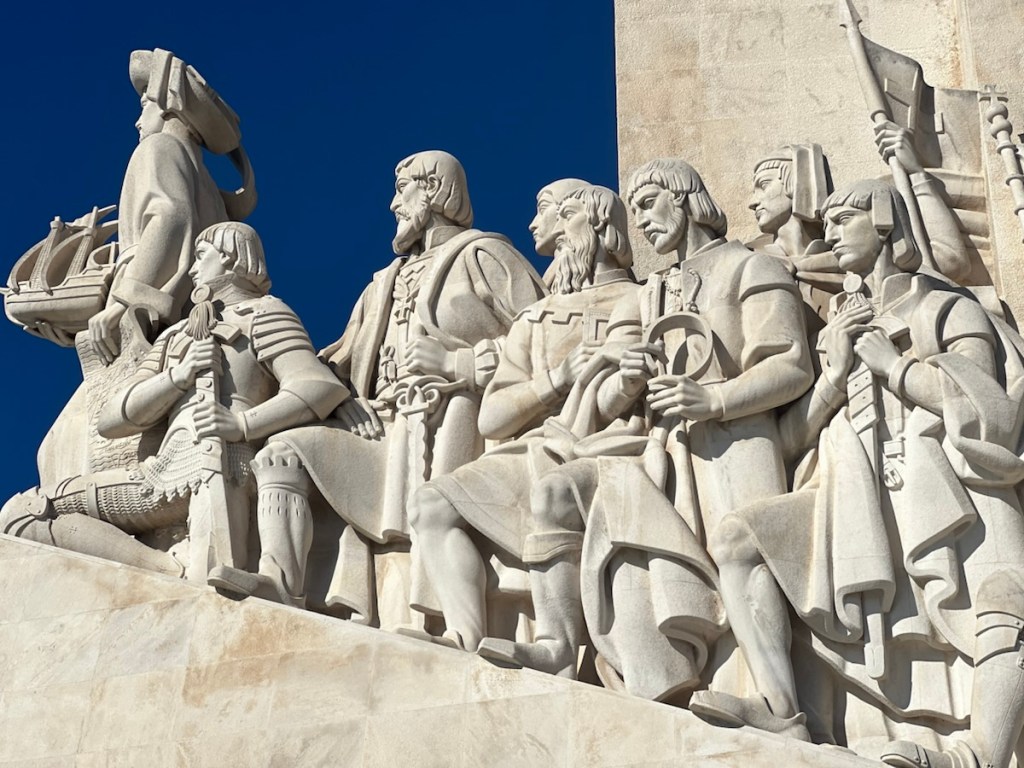
For our final day, we decided to head to Belém, about 10-12km from Lisbon, along the coast. Instead of taking the metro or trolley, we opted for e-scooters. After a thrilling 40-minute ride, we arrived at the Monument to Vasco da Gama, who set sail from here in search of a westward route to India, accidentally discovering Brazil along the way. The monument is a modern, concrete structure vaguely resembling a ship’s bow, with Vasco da Gama and his crew looking out toward the unknown.
[EDIT: I have been corrected and educated by a wonderful waitress.
Portuguese explorer Pedro Álvares Cabral was the first European to discover Brazil on April 22, 1500. He landed on the coast of what is now the state of Bahia, claiming the territory for Portugal under the Treaty of Tordesillas, which divided newly discovered lands between Portugal and Spain. However, indigenous peoples had inhabited the region for thousands of years before the arrival of Europeans.]
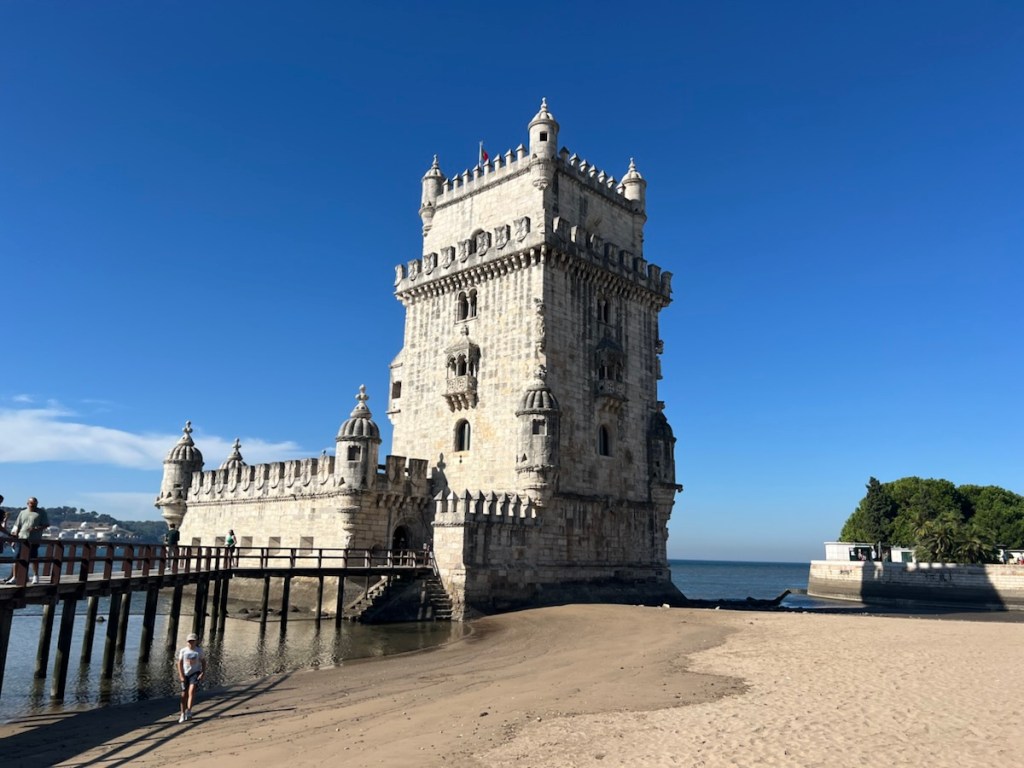
Our next stop was a small fortress on the riverfront, built to defend Lisbon. Unfortunately, when the time came, it fell to the Spanish in just a few hours.
Finally, we visited the monastery where Vasco da Gama’s remains are buried. The line to enter was wrapped around the block, so we chose to visit the Maritime Museum instead. It’s clear that the Portuguese are immensely proud of their history of exploration and colonization, though there’s little mention of the darker aspects, like slavery and oppression. It reminded me of how Spain and the U.S. often gloss over similar parts of their histories.
When I started walking the caminos back in 2015, I had no idea that it was a life-long dream of my sister-in-law to also walk the Camino. She was a person of great faith and followed me through my journeys as she was unable to walk a Camino herself. As I happened upon religious sites and events on the various Caminos, she would want to know all about them and my experiences. This is one very personal thing that we shared together, even though our faith and belief in God couldn’t be more different.
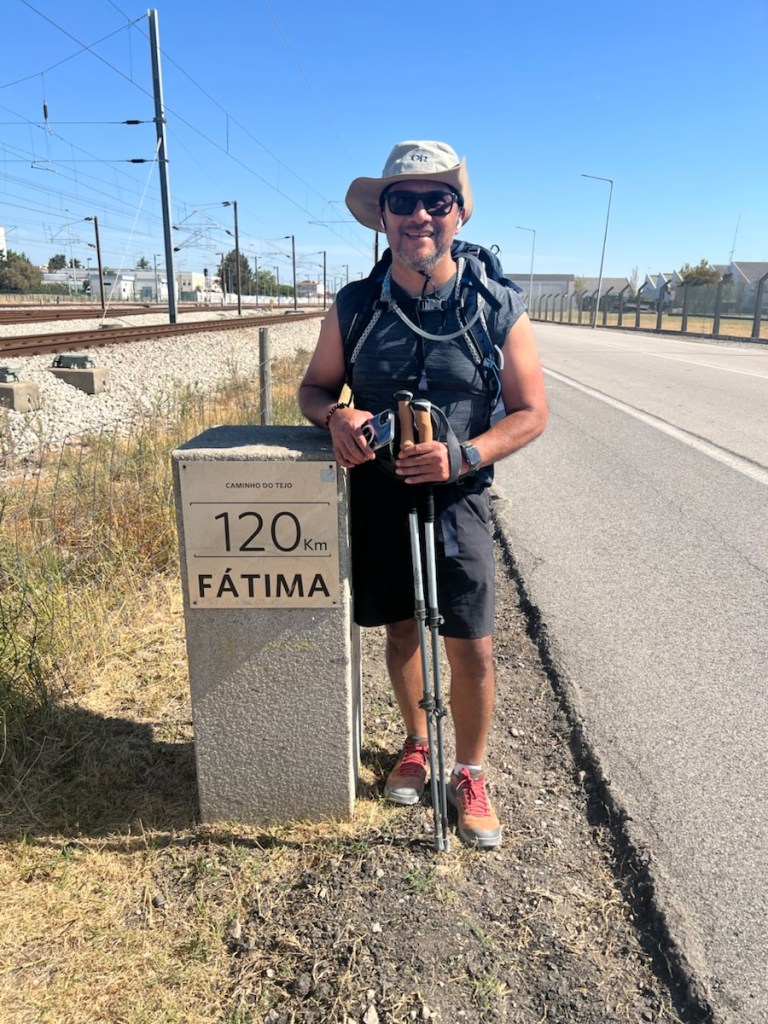
For 17 years, she fought with cancer. This past June, her suffering ended as she passed away. Her husband and I will be traveling this year in her memory and taking a lock of her hair along with us. We will attempt to get a Compostela in her name. Because of her strong faith, we decided to take the Portuguese route from Lisboa to Fatima so that she could be present in spirit there with us. We will then continue on the Camino to Santiago, and then on to Muxia and Finestere. It will be a mixed trip of walking and bus travel due to available time.
This year you ask? When exactly? Well, we leave on Wednesday, September 11th. Many people have asked for me to write about the journey. I wrote about my Camino this past April, but I did not publish it. Because there are two of us, and we will be sharing with family, I expect to post fairly often on this trip.
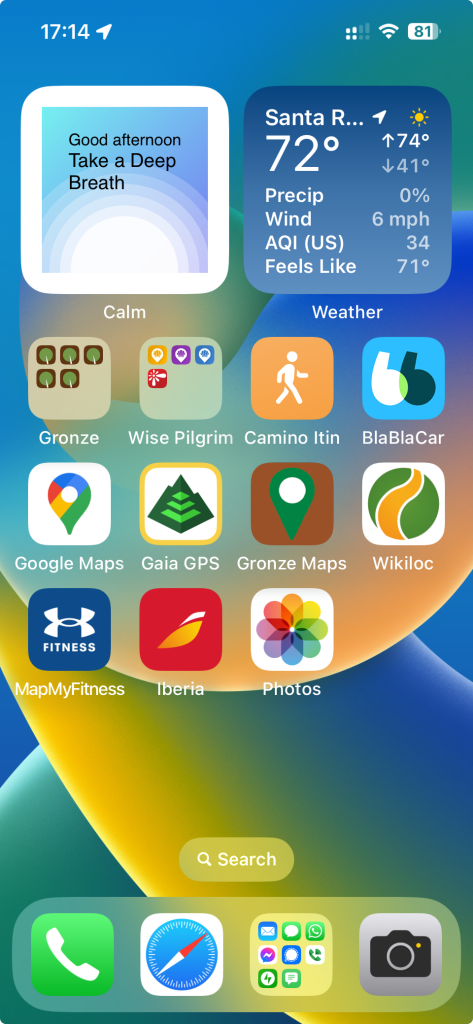
I’m a techie… been in IT for almost 40 years now. Tracking stats, maps, and things are all fun things for me. They aren’t for everyone, and that’s OK. Everyone has their own Camino and one is no better than another. I have always used tech on my Caminos. Researching, mapping, GPS tracks, health and distance stats, etc. Many ask which tools to use, and there are as many tools and ways to use them as there are Caminos. But here’s what I have used and what I like…
Fitness Tracker
I use an iPhone 13 Plus and Apple Watch Ultra 2. They just work. I particularly like that all of my files, photos, and information I use on a day-to-day basis is automatically backed up to the cloud and synced on all of my devices. If I lose my phone, I haven’t lost any data, and I can be up and running as soon as I replace it. The one thing I don’t like about my Apple Watch is that if its misting outside, or because I am a surdo (left-handed), buttons or the screen get pushed/tapped and stop my workouts and tracking. I have just recently found a way to overrule this – put the watch in “Water Lock” mode where it locks the screen and buttons so they can’t be inadvertently tapped or pushed. I think this will solve my problem.
Mapping Software
Gaia Pro
MapMyFitness
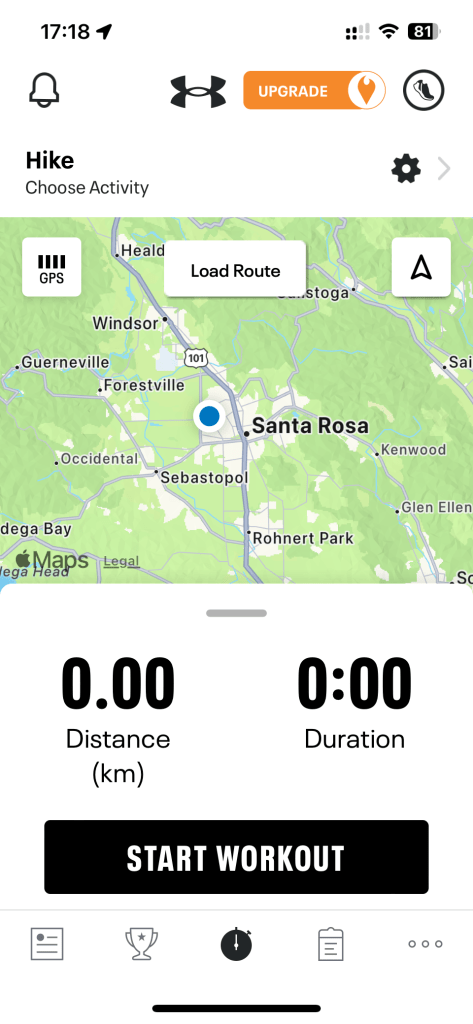
As for software for fitness tracking, I use MapMyFitness by Underarmor. I have used many others, but have settled on MapMyFitness. There’s not really anything I like about it more than the others, they are all underwhelming – that is to say, I haven’t found anything better about any of the others to make me want to change and lose my history, or have to migrate my history.
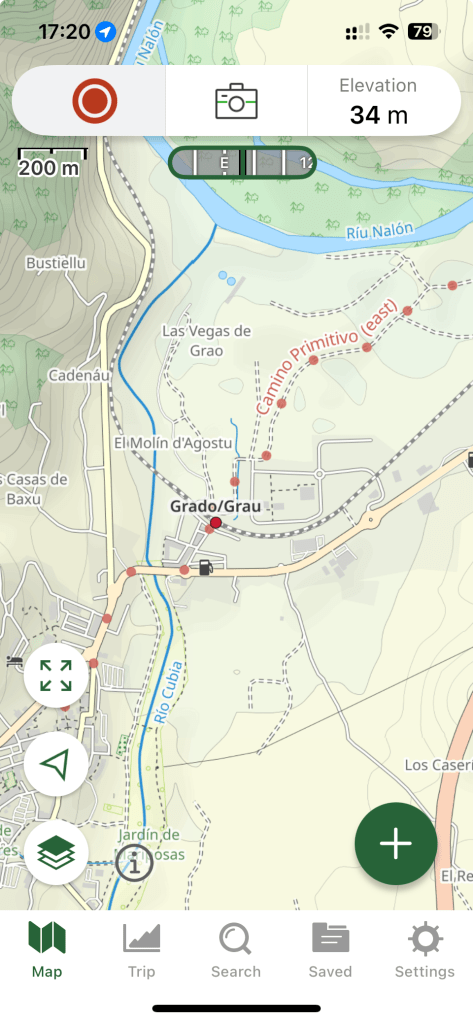
For generic mapping software, I use GaiaPro. This is a pretty advanced application that has a myriad of map styles and sources to choose from. There are even base hiking maps with the Camino routes already on them. Standard features are routing, off-line maps, route tracking, photo insertion, etc. I also use it for other things like my CritterCam projects with the California State Parks.
Gronze.Com
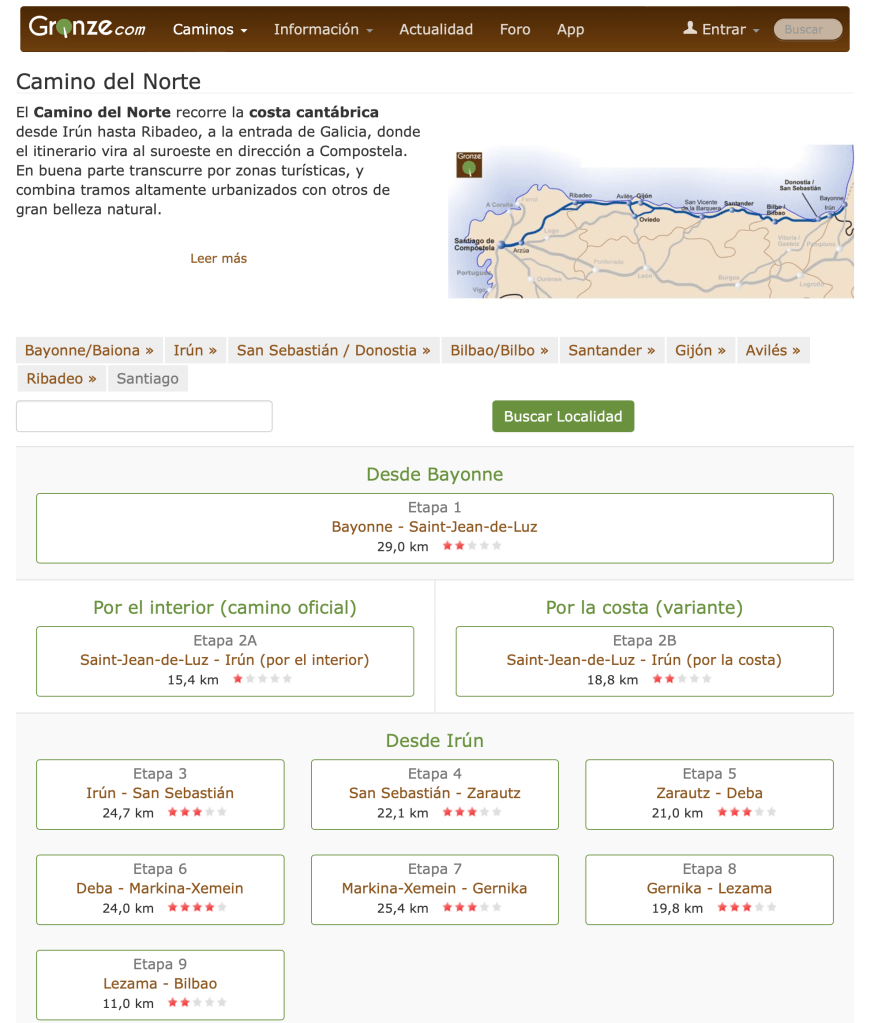
Gronze.com is an online mapping tool that is specific to the Camino. It’s in Spanish/Castellano, and has the official routes documented. I primarily use it for the other information it contains, which I will talk about later.
Google Maps. I use google maps whenever I am overseas, as I find that it has the best/most accurate database of businesses, transit, etc. that I might need while I am traveling. I like Apple Maps better, but it’s not as good as Google Maps overseas.
WikiLoc
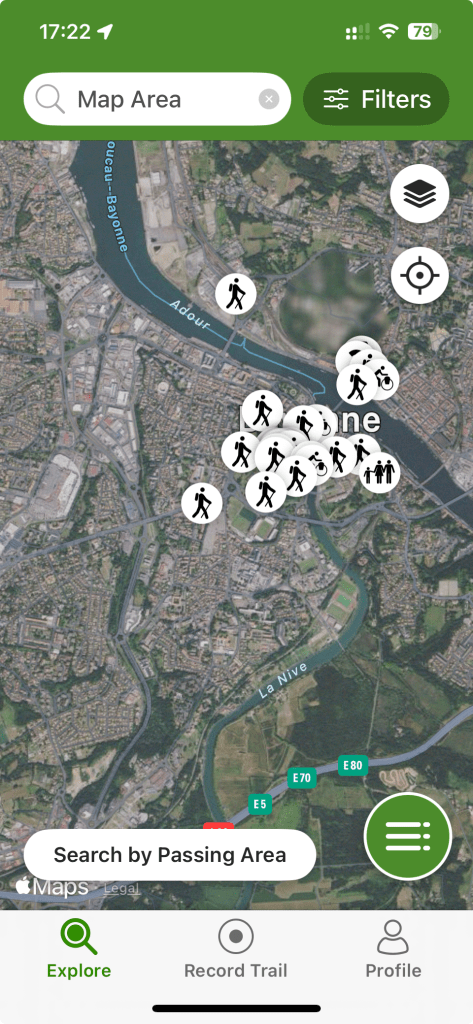
Wikiloc – this is similar to All Trails, but it’s more widely used in Europe than All Trails – or seems to be. This is both good and bad. There are sooooo many trails that have been uploaded by so many people, it’s difficult to filter just what you need. You can download routes to your phone and watch if you want to do that. But for routing, I like to put my devices on mute and route by the yellow arrows. While I like tech, I’m working on being present more…
Camino Specific Apps
Gronze.com is a Spanish Language site that has detailed information on most Camino routes including albergues, places to eat and get supplies, history, route steps and information, attractions, etc. It seems endless the amount of information they have. Very useful. My main gripe about Gronze.com is that it’s not an app. You have to have internet access and it can be hard/slow to navigate on a small screen. But the amount of information available is probably the best of the apps I’ve been exposed to.
Wise Pilgrim
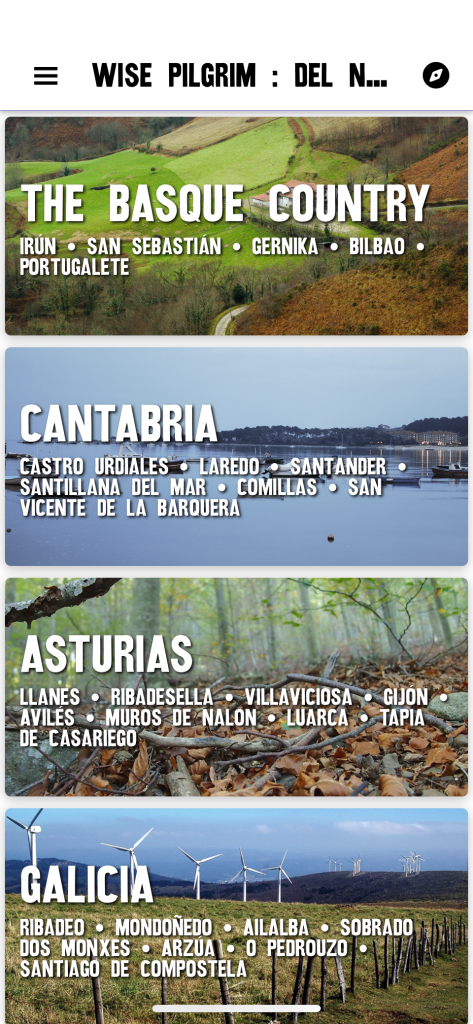
Wise Pilgrim Apps (one for each route). This is a great set of tools. They offer much of the same information as Gronze.com, but it’s in an app, offline, and in English. It’s quick to navigate and they have done a really good job at improving it over the years.
These tools provide trail profiles, details about which trails and services are open/closed, and they also provide a forum where users can post updates which WP can incorporate into their database.
Transportation
Don’t forget transportation and how to get around. Google Maps is a good starting place, but I quickly found that it was inaccurate and incomplete. I have yet to find a complete tool that encompasses most forms of transportation in Spain. I have, however, downloaded BlaBlaCar -again-. In 2015, I took a ride share from Madrid to Pamplona and it cost me something like €12. A bus ride from Bilbao to Bayona, Fr, on Google Maps was going to take 4-6 hours and cost €40. On Uber it was going to be something like €350. On BlaBlaCar, it cost €5.99 and will take 2hr 20min on a bus. There are other transport apps like RENFE (train), Alsa (bus), etc, but those are sometimes hard to navigate if you don’t know the exact stations you need to be at/go to.
Caveat
You always have to have a caveat as there are those people who like to argue and insert their toxicity behind the anonymity of the internet. These are only some of the tools I have used, and the ones I am taking on my trip this year. If I find others, I will look at them. Tools that I have used in previous years are no longer on my phone as I found these work better for me. Make your Camino your own, find the tools that work best for you.
Each Camino is different. They offer different climates, cultures, food, terrain, history, etc. The Camino Frances, which is the best known of the published routes, runs for about 790km and has mountains, plains, forest, cities and towns, single track to asphalt. It also offers arguably the most flexible route as far as the frequency and distance between places to stay and eat. It is a beautiful route, but because it is the most widely known route, it’s not my preference. Not that I wouldn’t walk it again, but there is so much more to see, that I would prefer walking other routes over this one.
On the opposite, is the Camino Olvidado. It runs between Bilbao and Ponferrada (Camino Frances) for 489km and is some of the most remote paths that I have encountered to-date. Many towns do not have complete services and many albergues are sporadically closed. One must plan to walk this route and you would be luck to encounter another pilgrim. It is a solitary trail, but offers some of the most beautiful countryside of any of the caminos.
My favorite so far has been the Camino Primitivo between Oviedo and Melide (Camino Frances) and runs 261km. This route has a nice blend of mountains, forests, rivers, villages and towns, and people. It is better known than the Camino Olvidado, so it has more services, but it is arguably more strenuous than the Camino Frances. It’s a good balance.
Year
Camino
From
To
Distance
Terrain
People(Other pilgrims)
2015
Frances
Saint Jean-Pied-de-Port
Santiago
790km
Mountain, plains, forest
100’s per day
2016
Norte
San Sebastian
Santander
245km
Costal, Mountains
15-30 per day
2016
Primitivo
Oviedo
Melide/Santiago
311km
Mountains, forest, farms
Typically no more than 20 per day
2017
Portugues (Costal)
Lisbon
Santiago
630km
Mountains, Oak Savana, costal, cities & towns
20-40 per day
2022
Olvidado
Bilbao
Ponferrada
475km
Mountains, forests, farms
<10 entire route (three when I did it)
2022
Invierno
Ponferrada
Santiago
260km
Mountains, forests, rivers, towns
10-15 per day
2024
My Custom Route (Norte->Vadiense->Olvidado->Salvador->Primitivo->Frances)
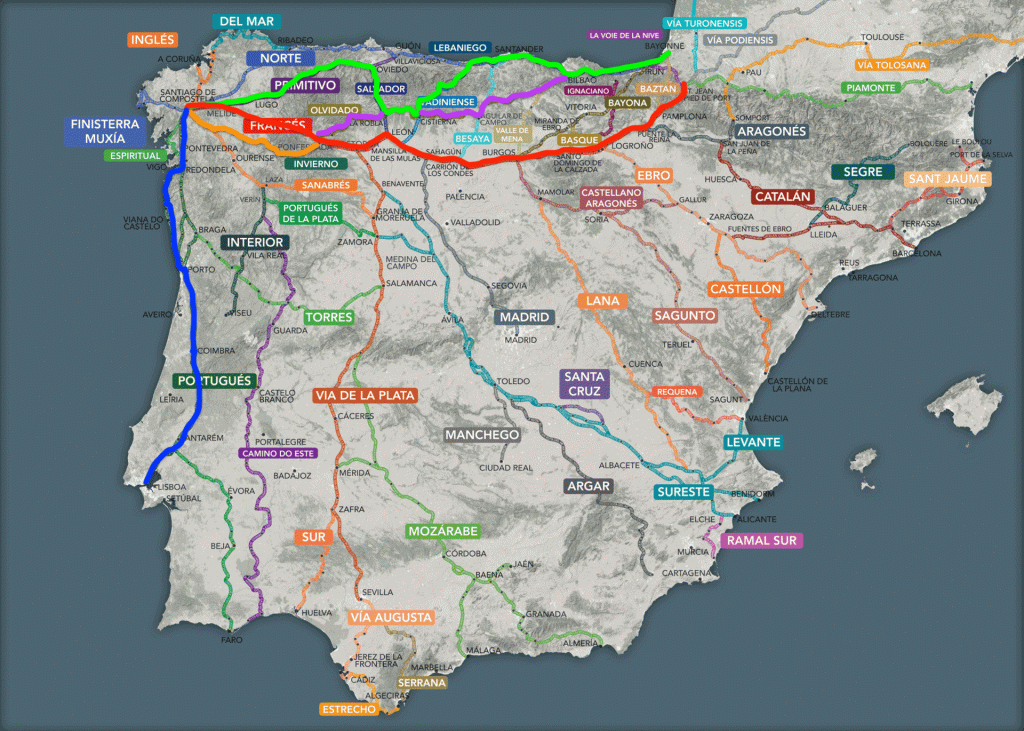
This year I will embark on yet another Camino walk. This will be my fifth time there, and walking six different routes this year. This year will also be my longest walk exceeding 1000km or 600 miles. About half of this year’s route will be new to me, and the other half, will be on previously walked trails.
The Camino is a unique experience, even between companions, each one will have a different experience, challenges, and take-aways. There is a saying on the Camino: Your camino starts when you reach Santiago. The tomb Santiago or Saint James of course being the typical destination, located in the north-western corner of Spain, in Galicia, in the city of Santiago de Compostela. The most known route is the Camino Frances which runs from Saint-Jean-Pied-de-Port in the south western part of France, and travels 790km to Santiago. This was my first Camino in 2015. I physically suffered during this Camino, but I got hooked, and returned to walk the Camino Norte and Camino Primitivo in 2017, then the Camino Portuguese in 2017, and then the Camino Olvidado in 2022.
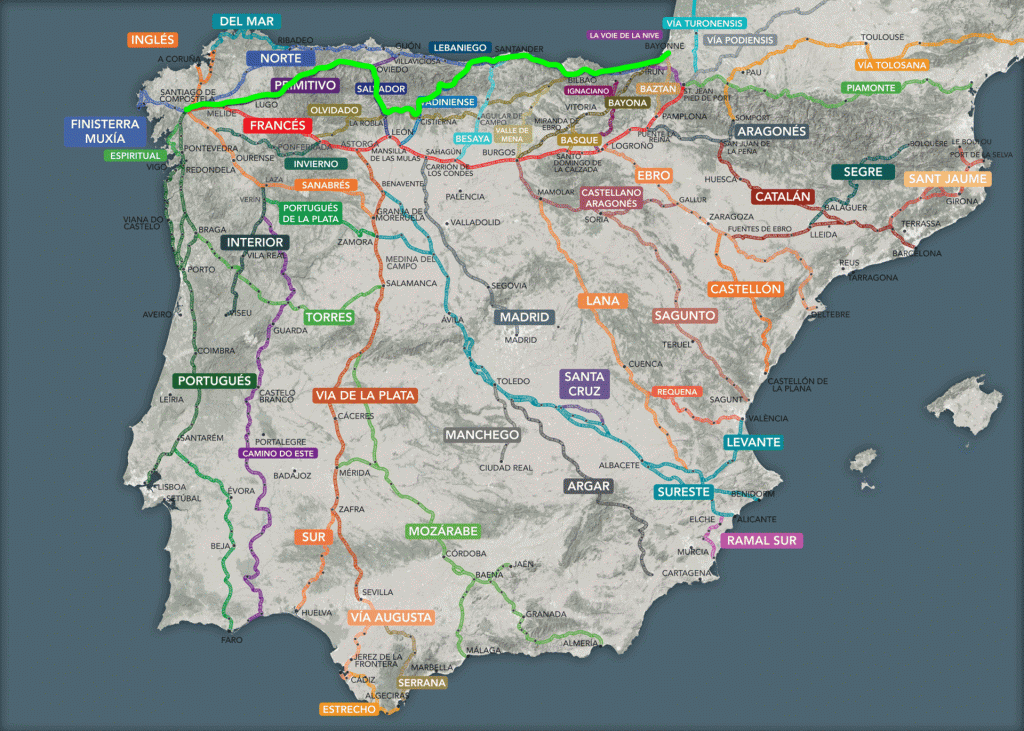
This year, I will start in Bayona France, and walk the Camino Norte along the cost of the Bay of Biscay for 16 days. Of these 16 days, six will be new to me. After the 16 days, I will then head south and cross the Cantabrian Mountains on the Camino Vadiniense – all new to me – for eight days. I then connect to the Camino Olvidado in Cistern for two days – which I have walked before, and then head north for five days on the Camino Salvador – new to me – to once again cross the Cantabrian Mountains to the city of Oviedo. From Oviedo, I head south west to cross the Cantabrian Mountains one more time on the Camino Primitivo for 11 days (I’ve walked this route before), and then finally in the town of Melide, I connect with the Camino Frances for the final three days. That’s a total of 45 days on the trail, and lots of coast, but mostly mountains. The route is roughly the neon green highlighted in the map below.
I plan to share my journal on this blog of this Camino as I have shared other adventures. I leave California on April 24th and will start walking a few days later. Feel free to ask questions, and share the blog to anyone who might be interested.





 Pizote Adventures