Normally, the walk from Lisbon to Santarém takes about three days and covers 90 kilometers. However, the first few days on any Camino tend to be the hardest as your body gets used to the physical demands of the trek. While that was a consideration, the main reason we decided to skip ahead a day was because of the wildfire smoke and heat. Even though the plumes were high, the smell of smoke filled the air, which meant there were particulates floating around. And honestly, I’d rather not be breathing in toxic air while hiking in the heat!
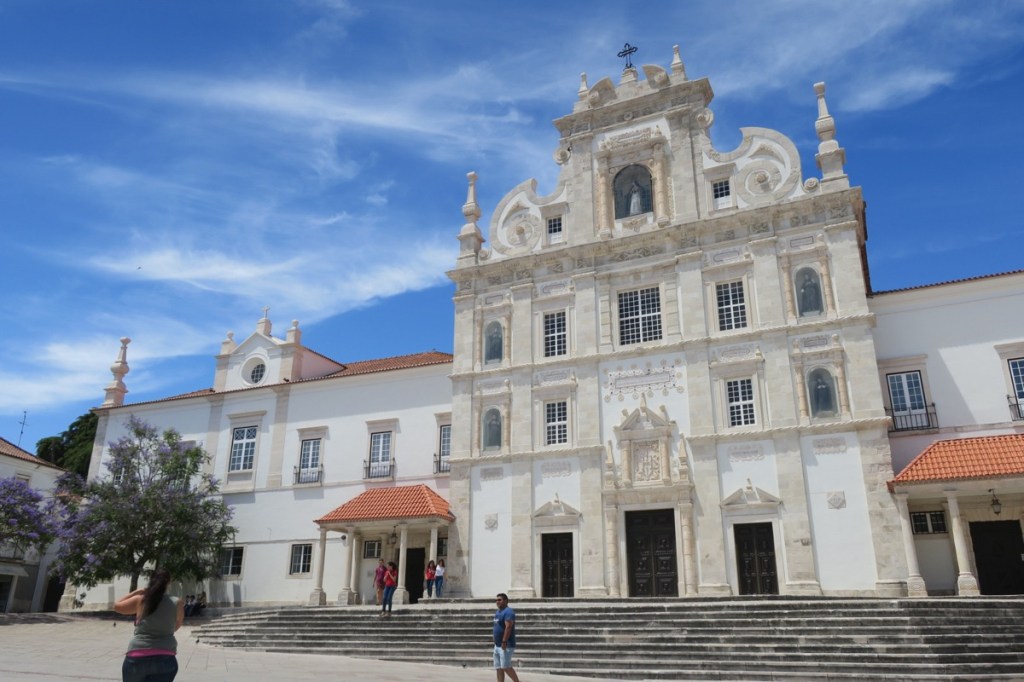
Instead, we took the opportunity to enjoy a rest day in Santarém and explore the town. It’s a lively place thanks to the polytechnic college, though the population is only around 30,000. We wandered around, ate some great food, checked off a few chores, and just enjoyed the rhythm of the day. It was a good, laid-back day.
The forecast for Day Two was in the low 90s. We had two options: a 20km hike or a 34km one. We decided to keep our plans flexible.
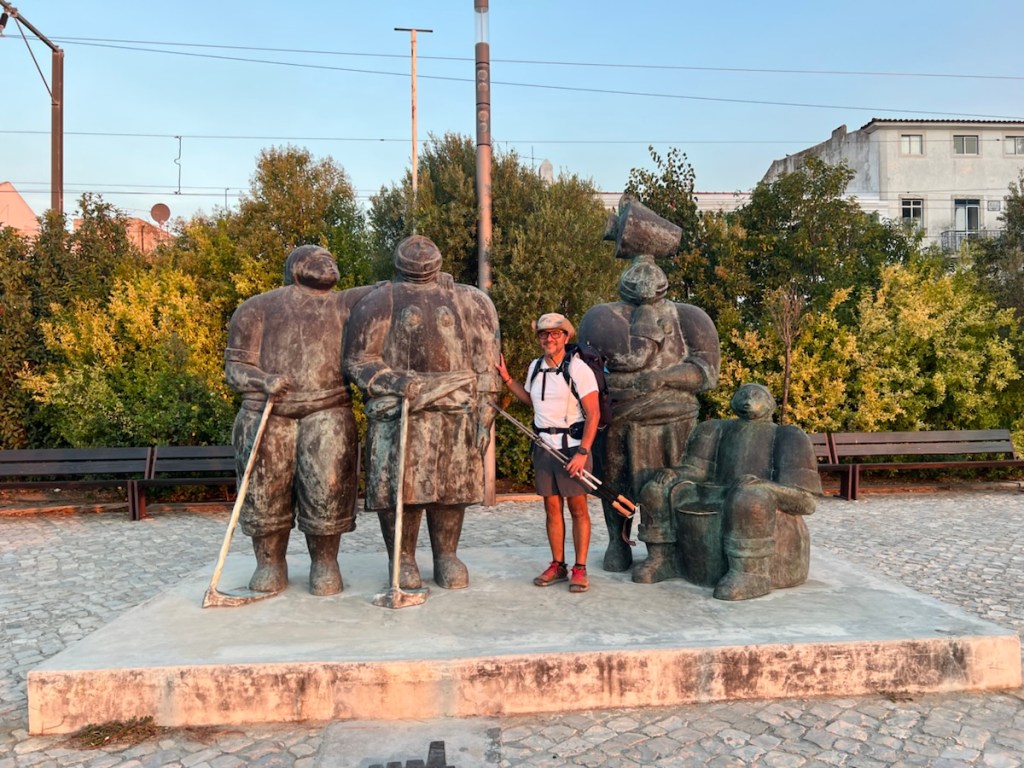
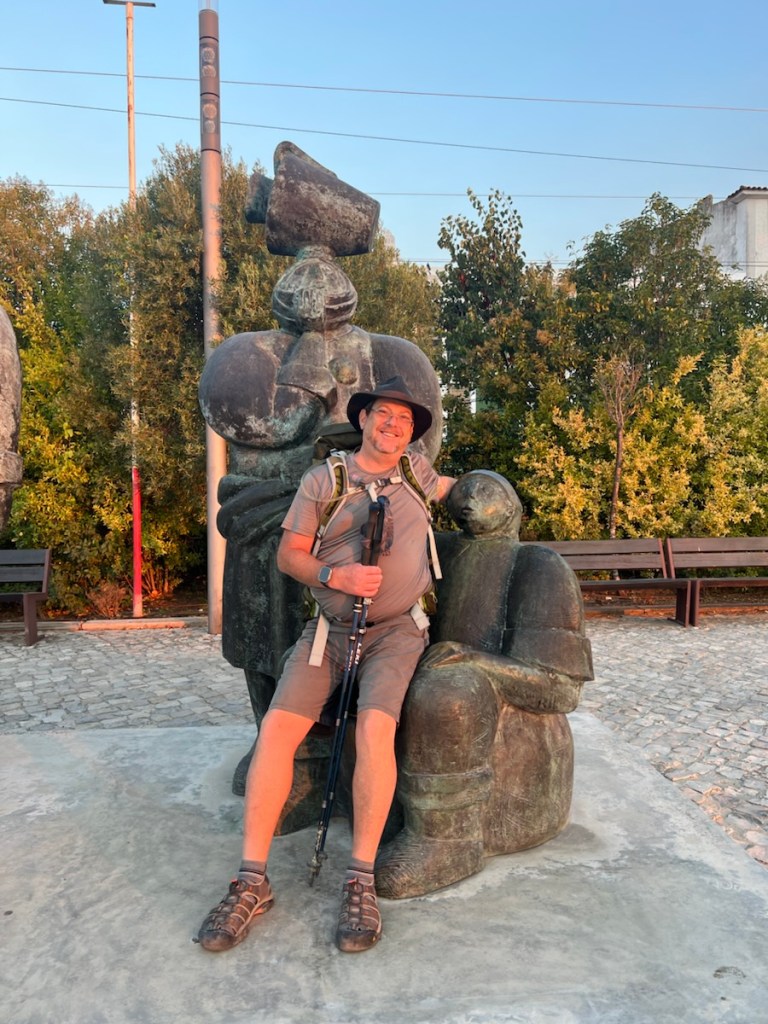
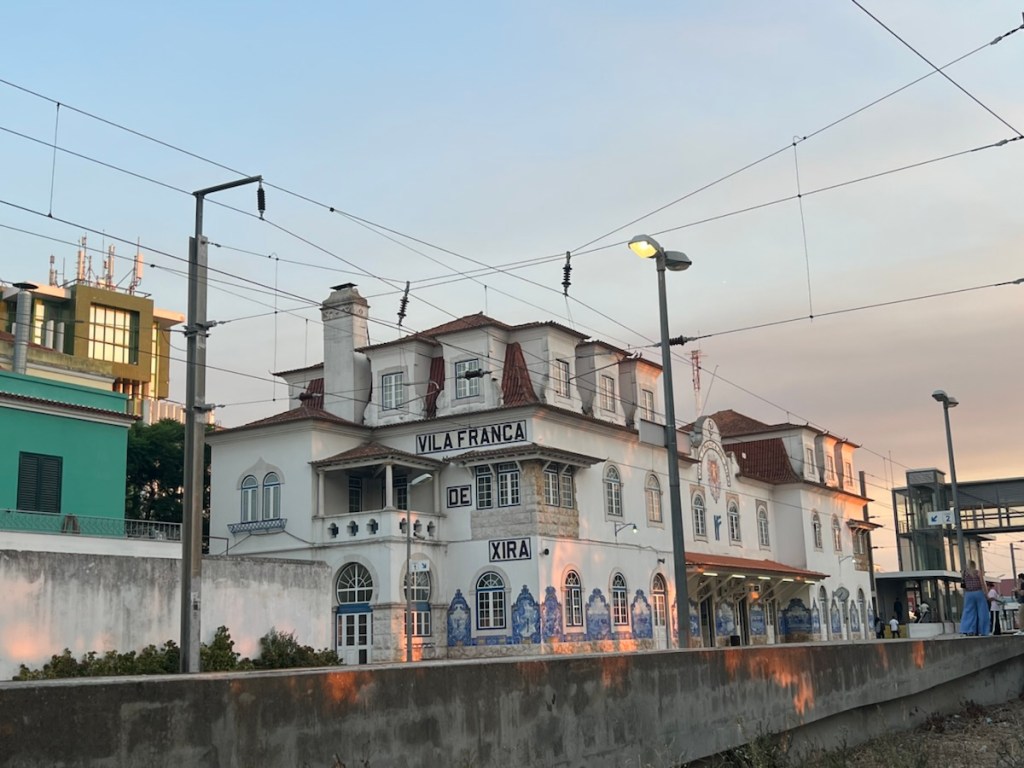
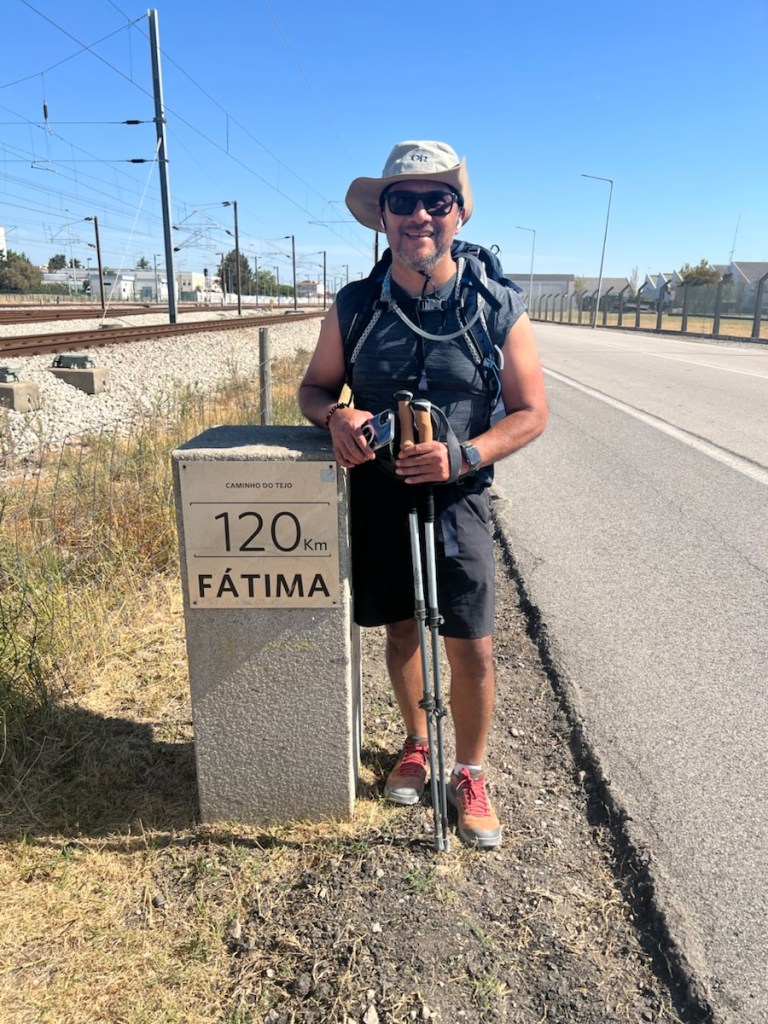
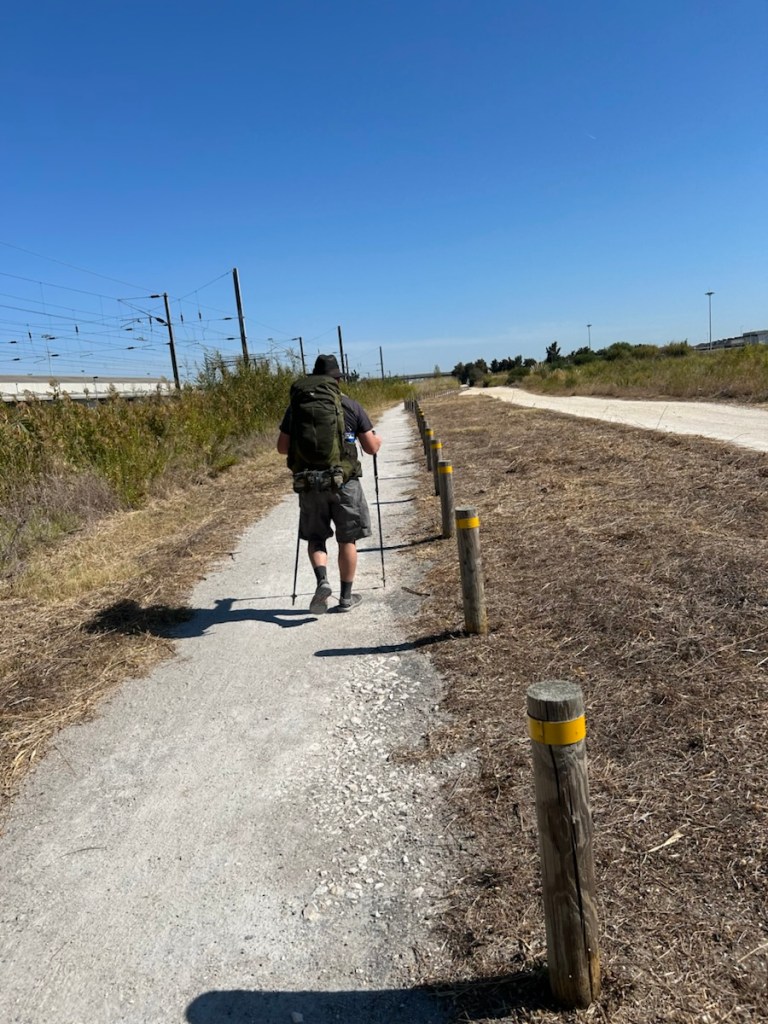
The route from Vila Franca da Xira to Azambuja was 20km, mostly on asphalt—probably 70-80%—with the rest on dirt roads. It was completely flat and entirely exposed, with no shade.
The day started off cool, around 68°F, but the heat quickly ramped up. At about 16km into the hike, we considered pushing on to the next albergue, another 13km away, since we were feeling pretty good. But then the heat really hit, and before I knew it, Luis Armando was out of sight. At the edge of Azambuja, I found a small patch of shade near some bamboo and waited for him. When he caught up, we both realized we were exhausted from the heat. Since it was still early and the albergue wasn’t open yet, we decided to grab lunch. Unfortunately, the flies were all over the tuna lasagna, making the meal less than enjoyable, but I ate what I could.
Throughout the day, every place we stopped had the TV on, showing news of wildfires about 150-200km to the north. Though the fires were far from us, we could smell the smoke as the plume passed overhead.
With the high temperatures, smoke in the air, and more heat forecast for the following day, we decided to take the train to Santarém, giving ourselves a rest day to do laundry and explore the town.
On the train, I managed to find some seats, facing three ladies who seemed to be enjoying their peaceful ride. As I hoisted my pack up to the overhead storage, disaster struck—my water bottle slipped out, and wouldn’t you know it, it smacked one of them right on the knee before bouncing to the floor.
In a heroic attempt to help, she bent down to pick it up. Unfortunately, what neither of us realized was that the top had broken during the fall, and the bottle was now basically an open faucet. Water sprayed everywhere—on her, on me, and all over the seats I had just claimed.
Luis Armando, blissfully unaware of the chaos, turned around just in time to witness the aftermath—the confusion, the soaked seats, and the ladies trying not to laugh. That was it, the perfect icebreaker. Soon, we were deep in conversation with the three women, who, it turned out, were elementary school teachers heading home to Santarém after a long day at work.
What started as a water bottle disaster ended up as the beginning of a delightful chat. It’s funny how a little chaos can bring people together!
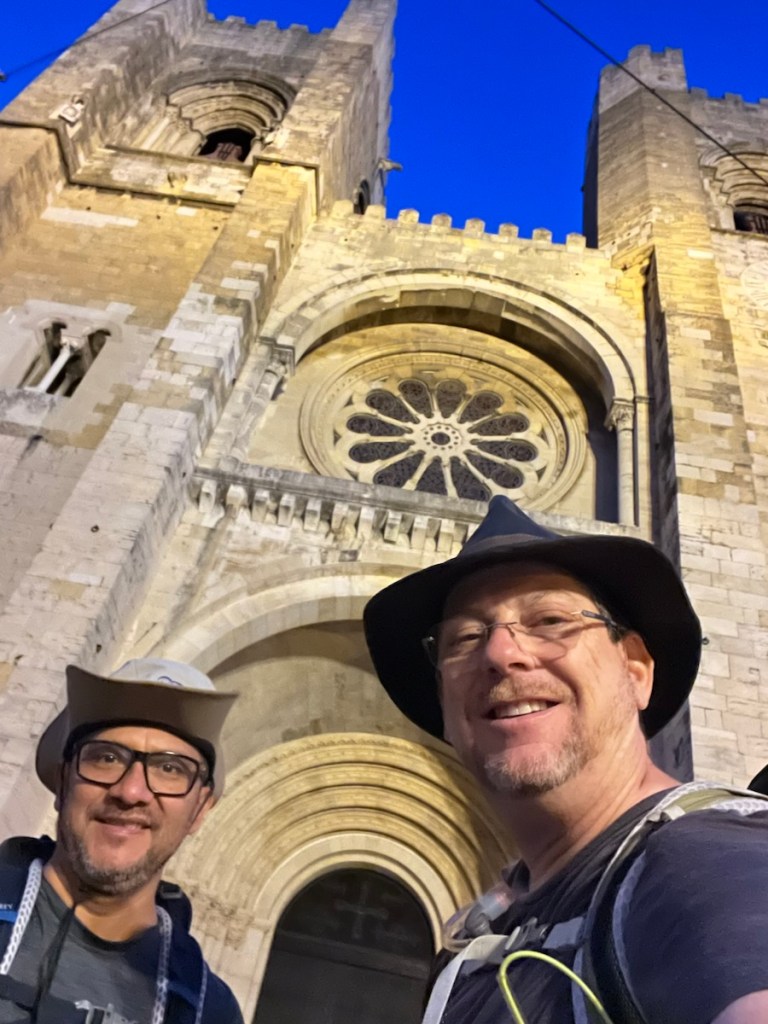
Leaving Lisbon for the first stage is always tough. If you choose to hike it, it’s an 8-12km stretch through some rough parts of the city and industrial areas. I’ve done it before and wasn’t keen on doing it again, especially with the forecast calling for 95°F and the entire stage being 34km. So, we decided to take the train to Sacavém, where a new pedestrian bridge has been built since I last walked this route. As a result, much of today’s walk was new to me.
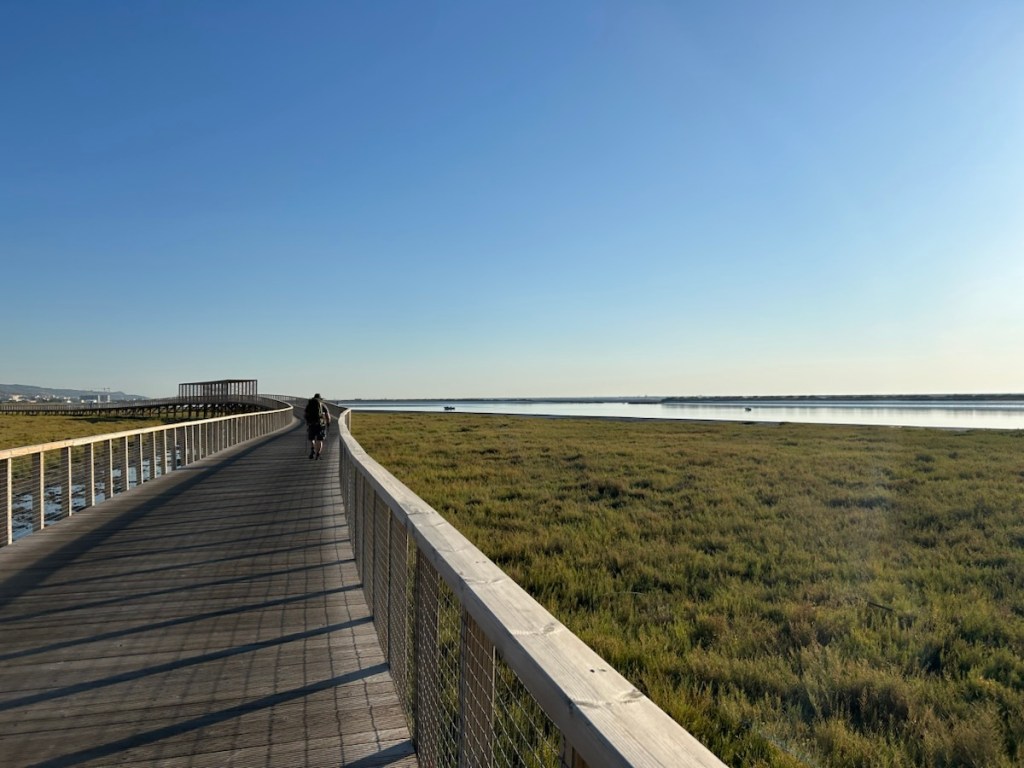
This stage doesn’t pass through many towns but instead follows a 22km boardwalk and gravel trail through wetlands, where we saw an abundance of waterfowl.
We arrived in Vila Franca da Xira without any issues, though we were completely exhausted from the heat after covering 28km.
The direct flight from San Francisco to Lisboa was smooth and straightforward. I was only carrying a 10kg backpack, which seemed to surprise the gate agents. The plane was packed, with just a couple of babies who occasionally got fussy. Interestingly, the mom and kids were in economy while the dad was seated in first class. He only came back to let the mom take a bathroom break. Go figure…
I arrived in Lisbon three hours before Luis Armando, so I spent that time people-watching, always a fun way to pass the time. Once Luis Armando arrived, we took the metro, and 30 easy minutes later, we were at our hostel, the Lisbon Lounge.
The city was alive with a mix of languages, though most conversations were in either English or Spanish. We met travelers from Latin America—Mexico, Guatemala, Argentina, Colombia, Bolivia—as well as people from France, Ukraine, the U.S., and Spain. Most were in their 20s to 40s, but there were also retirees and younger students adding to the diversity.
Day 1: Alfama and the Castle of San Jorge
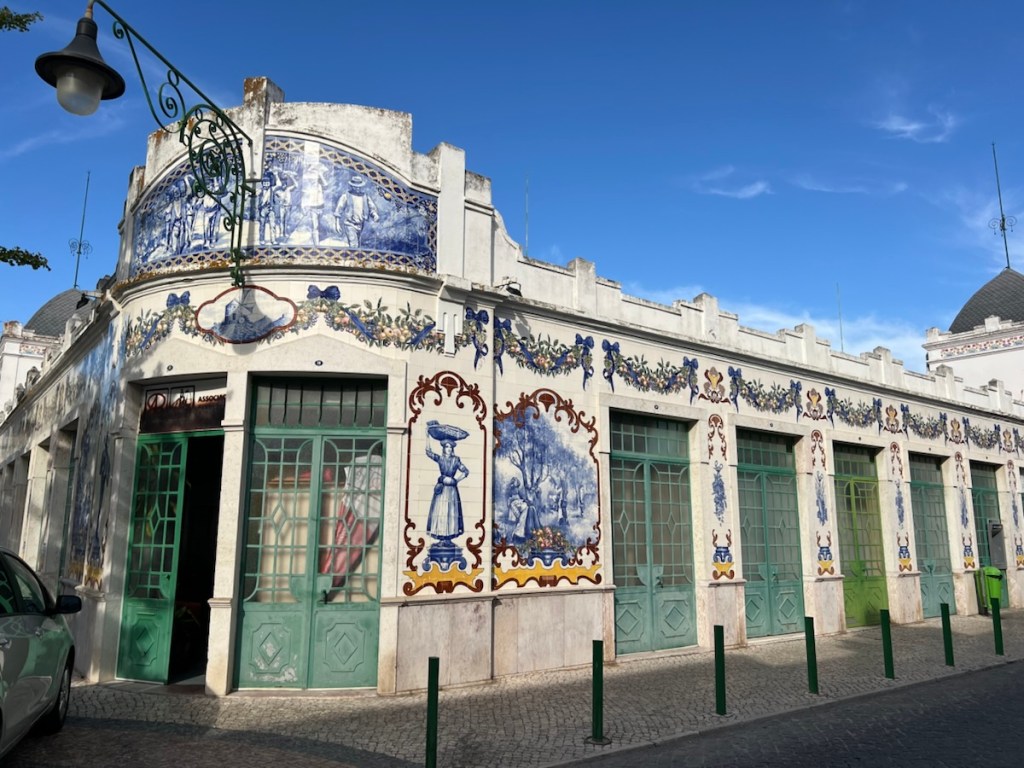
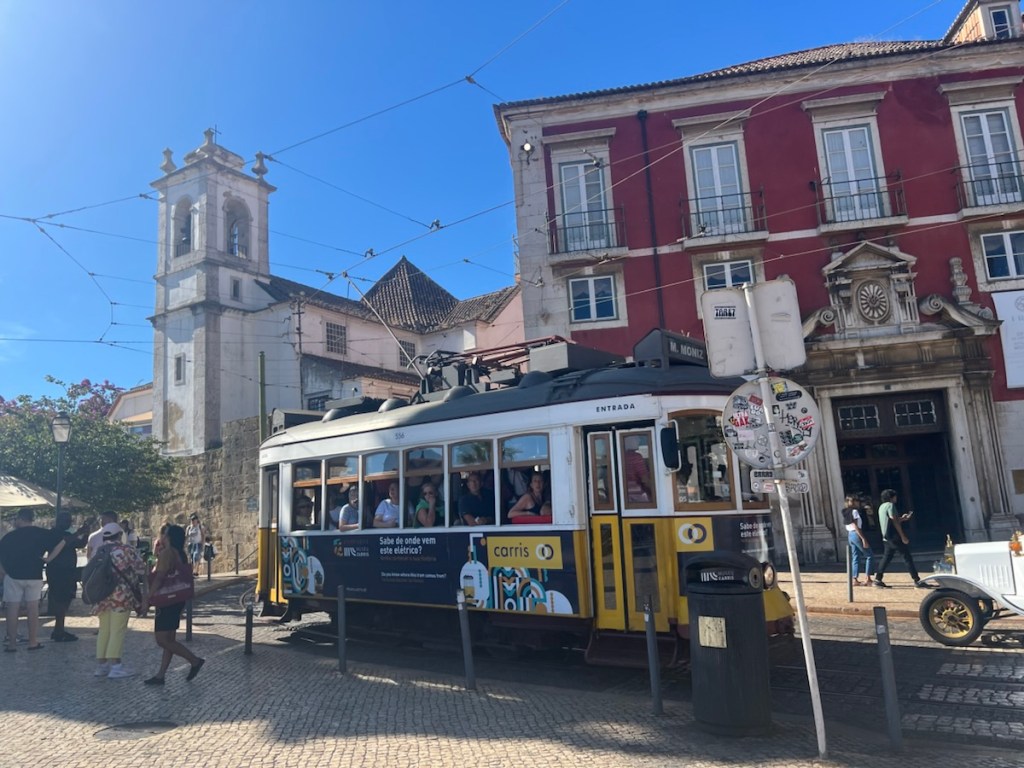
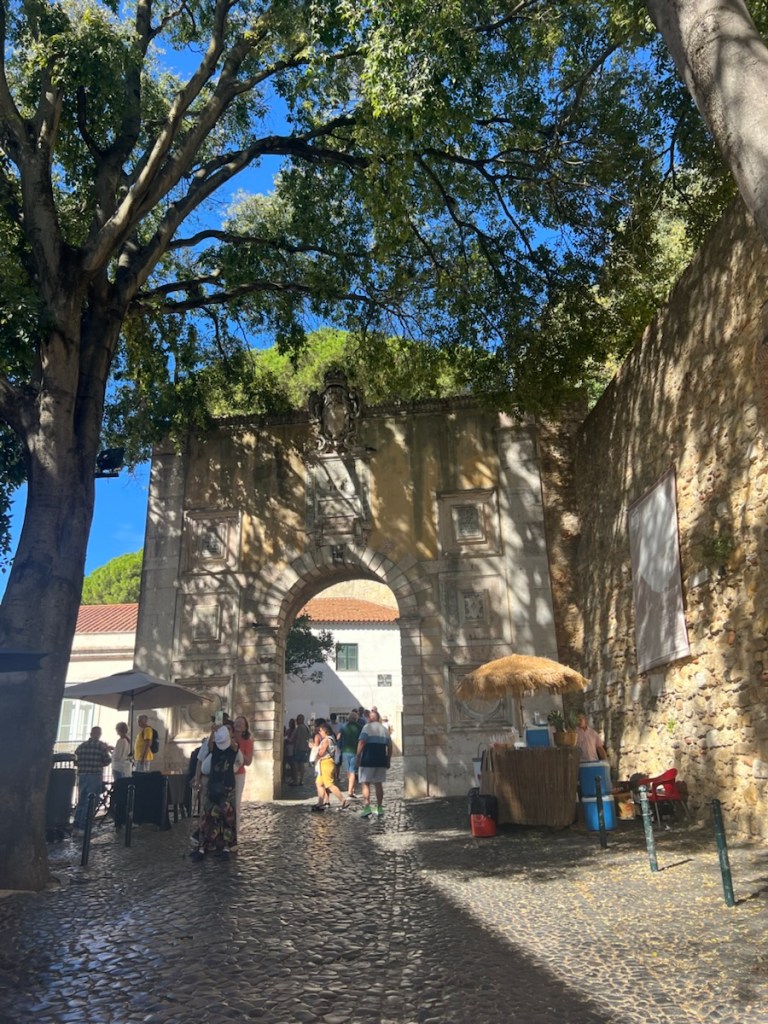
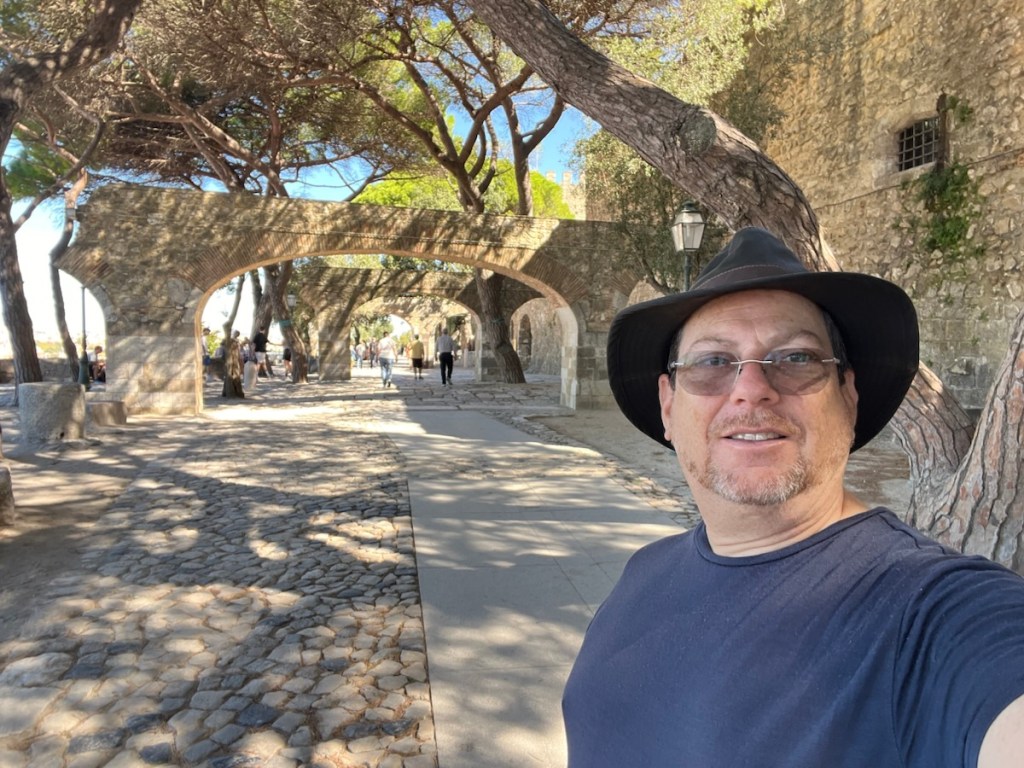
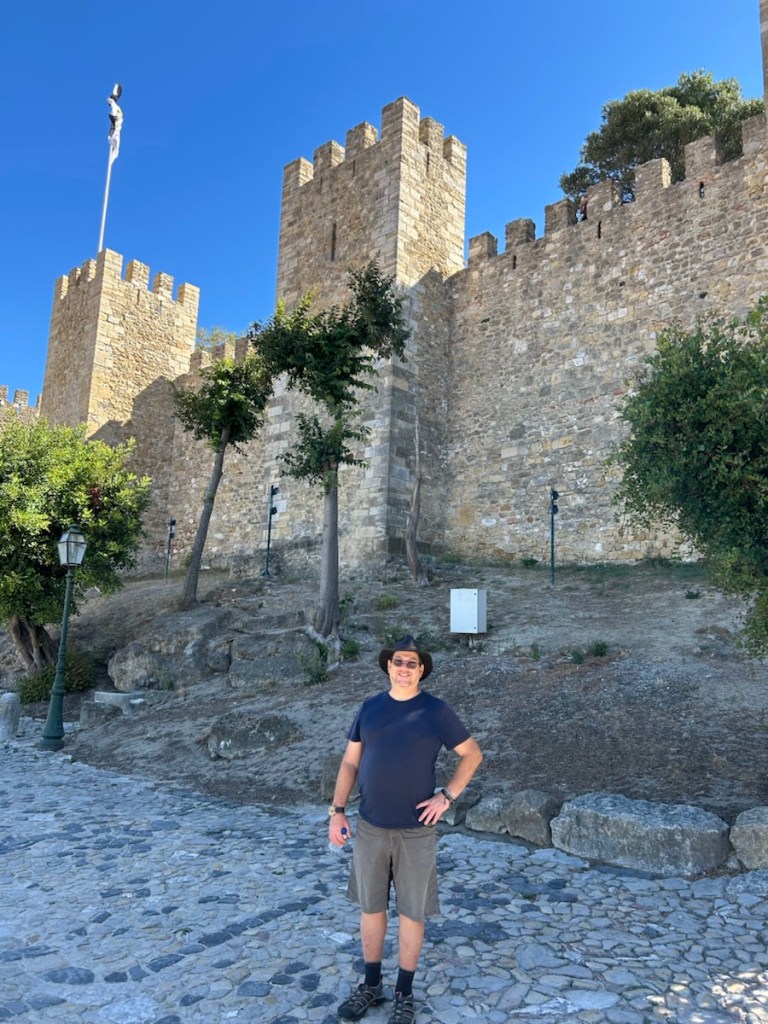
On our first day, we explored Alfama, famous for its food, architecture, and the iconic Castle of San Jorge. Walking up to the castle was a great way to stretch our legs after the long flight. The buildings were adorned with Moorish tiles, and the streets were made of smooth cobblestones. If walking wasn’t your thing, the trolley system was always an option to get up the hill.
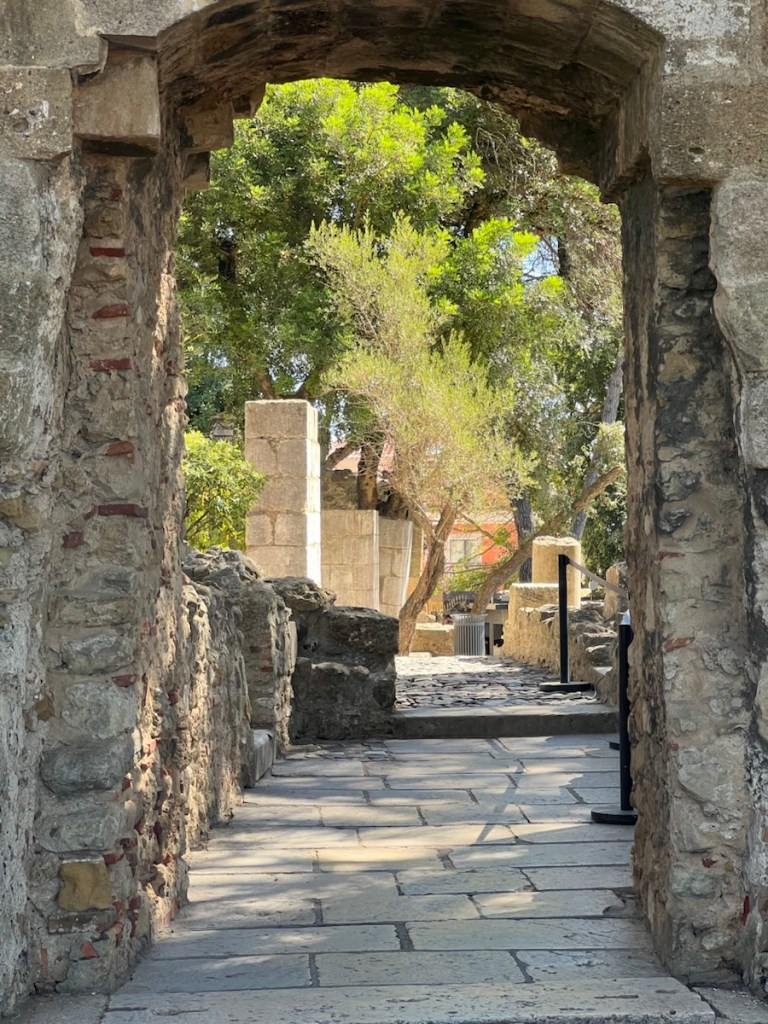
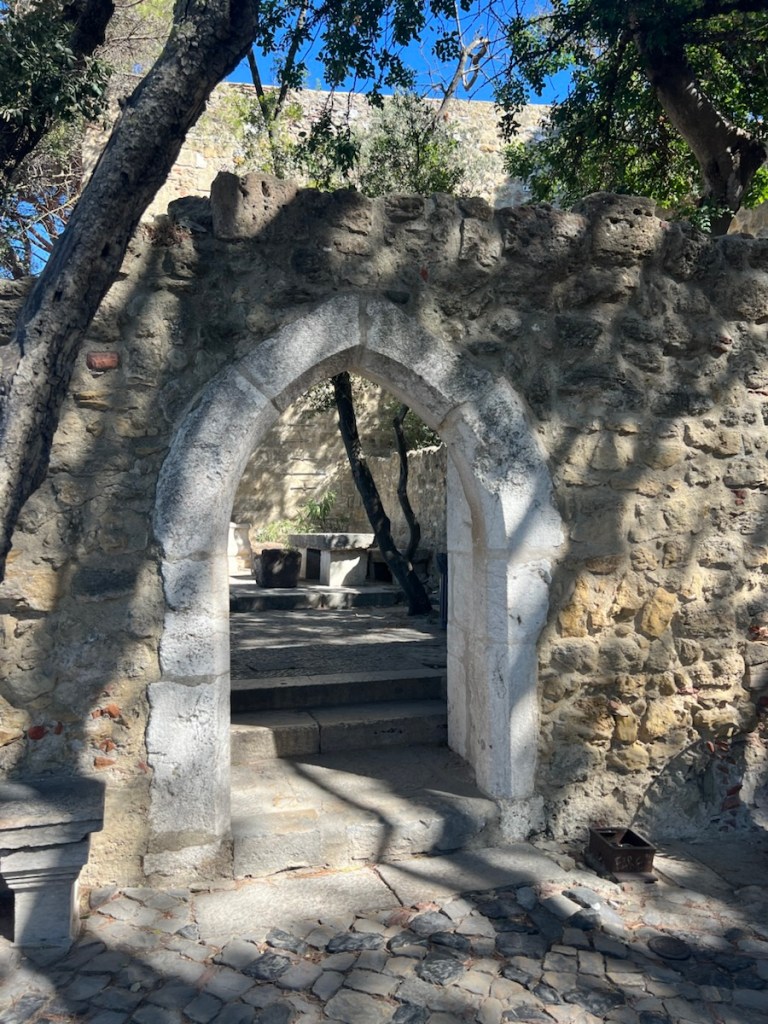
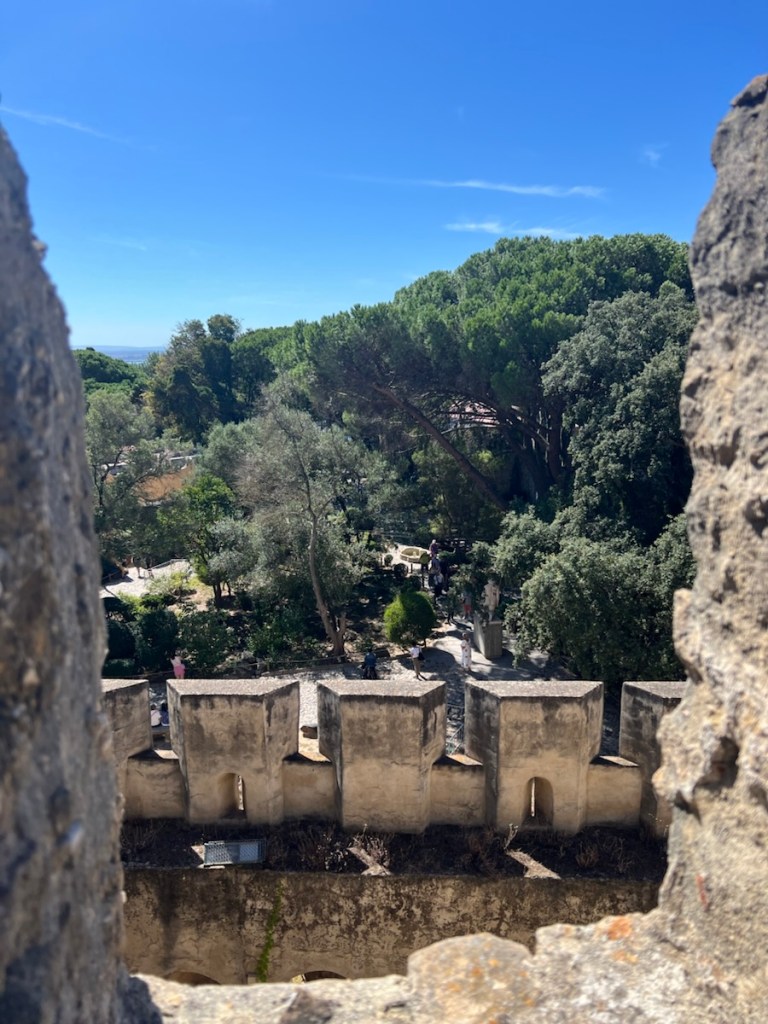
The Castle of San Jorge is a beautifully preserved example of Moorish architecture. It’s a reminder of the violence humans have inflicted on each other over the centuries, though it’s hard to believe we now live in a much more peaceful world.
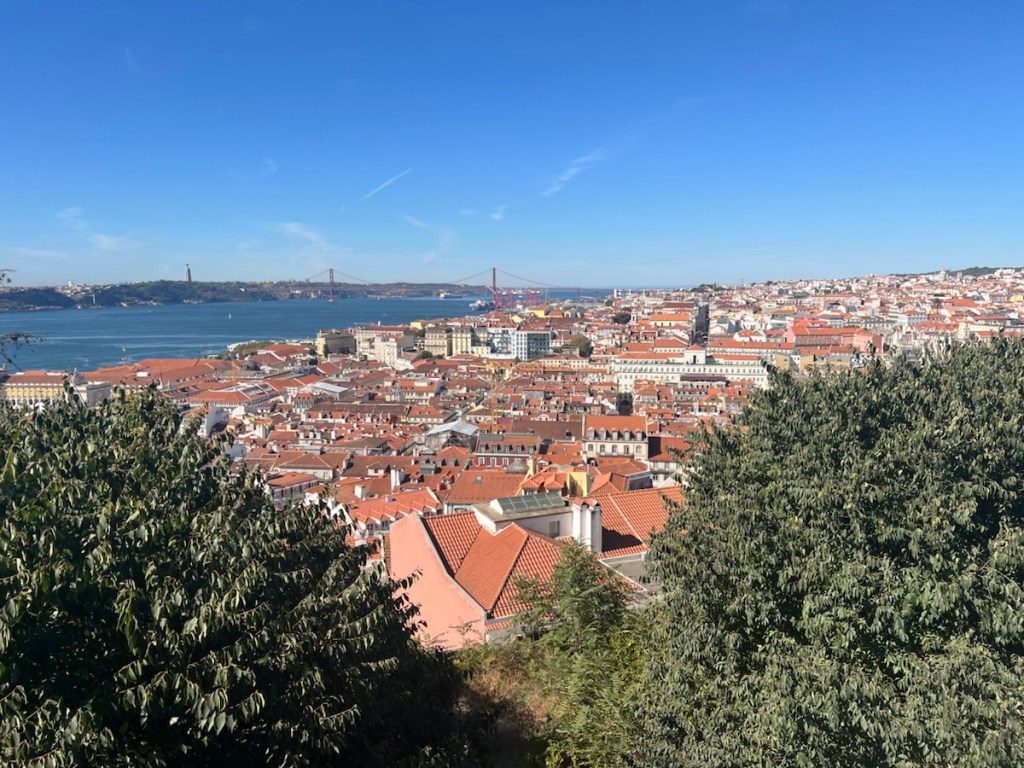
Lisbon, with its bay and the river Tejo, reminded me of San Francisco. Crossing the river is a suspension bridge, much like the Golden Gate. The weather is warmer, but the ecosystem is surprisingly similar—oak forests and golden rolling hills.
Day 2: Sintra
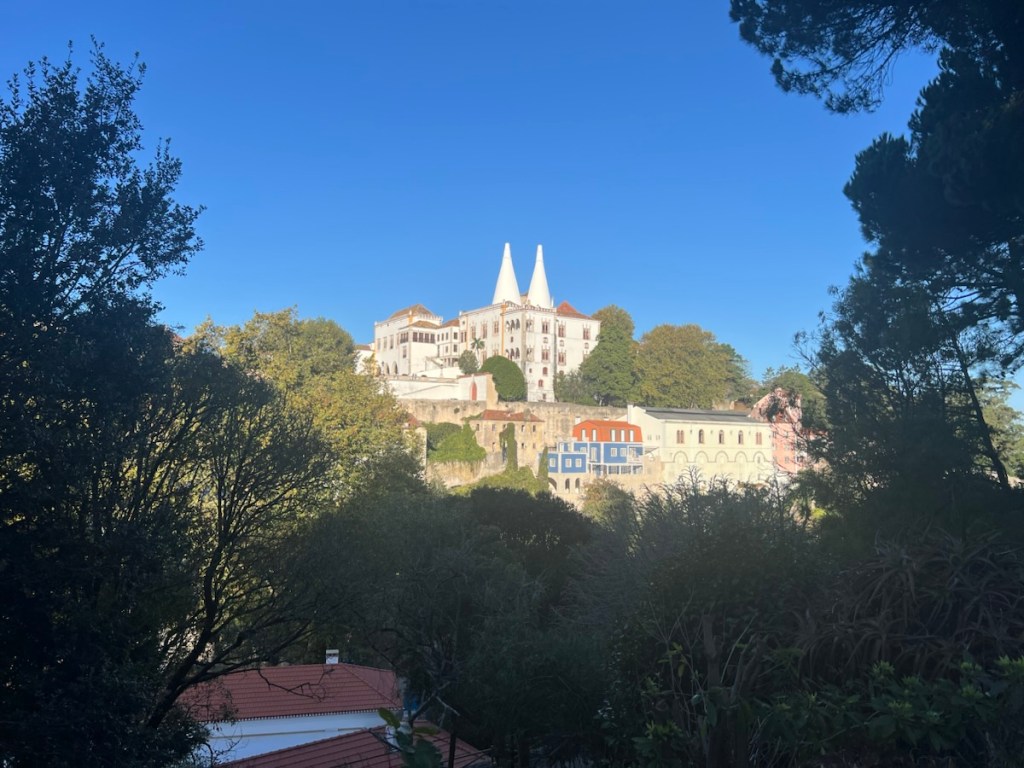
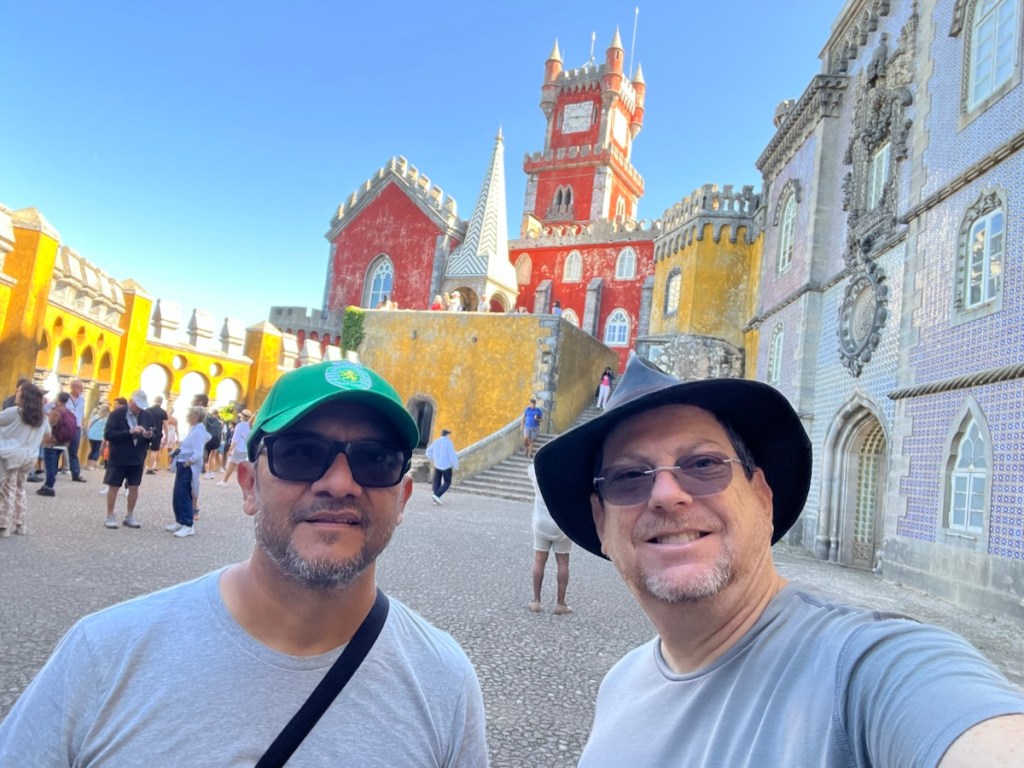
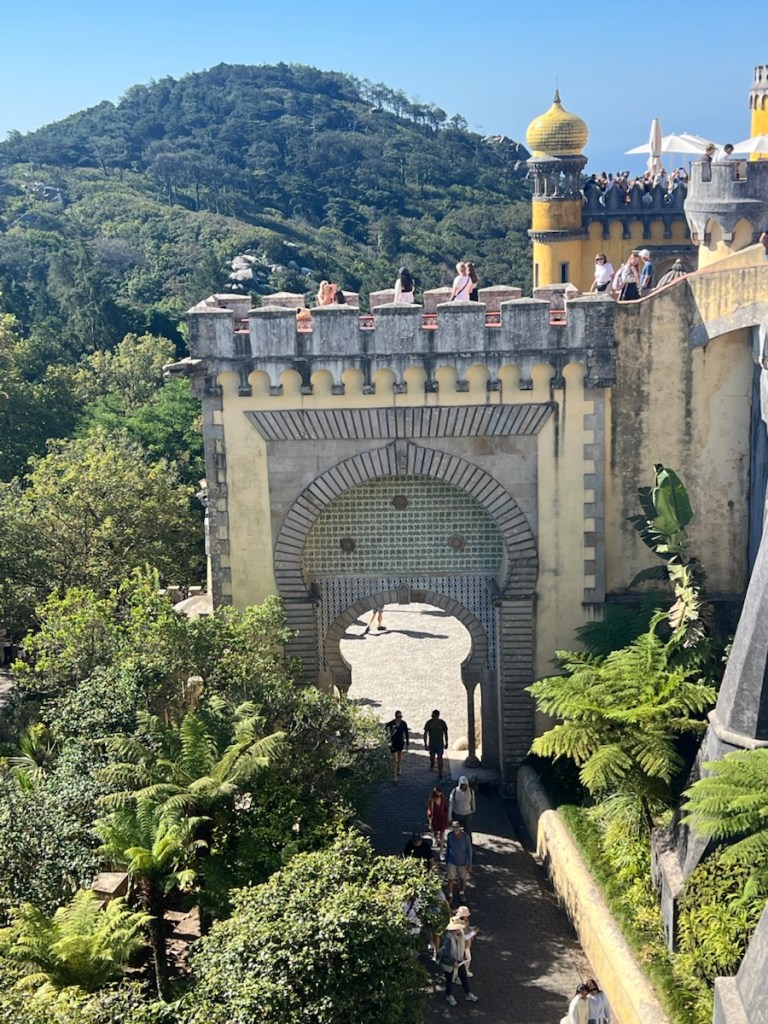
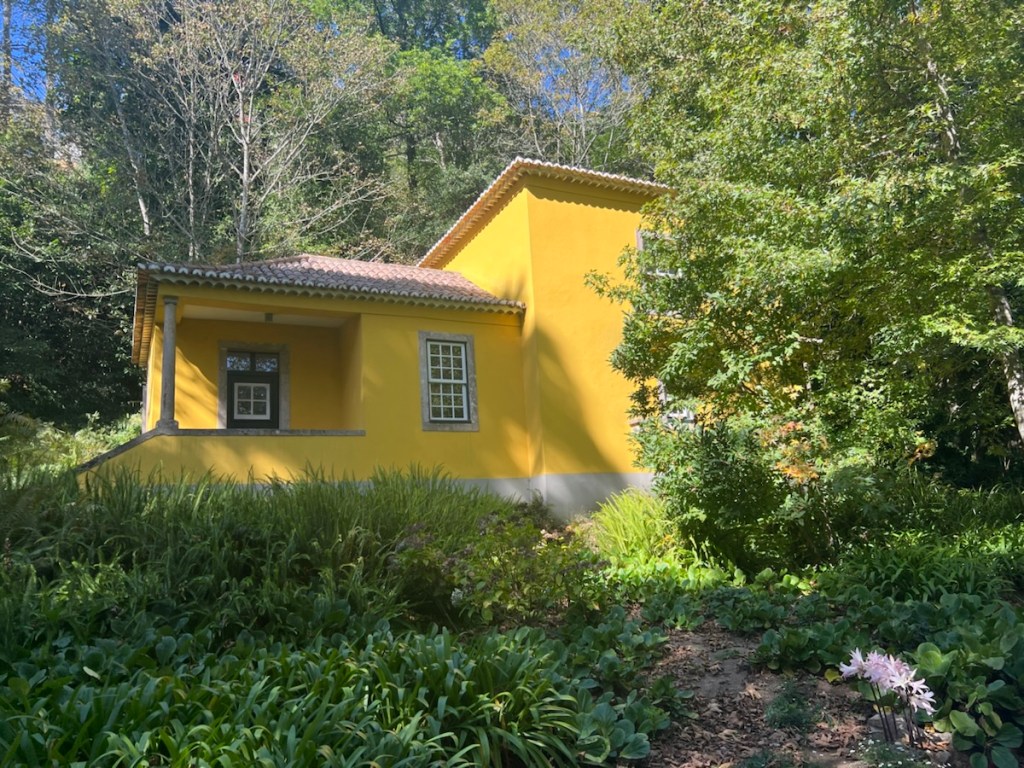
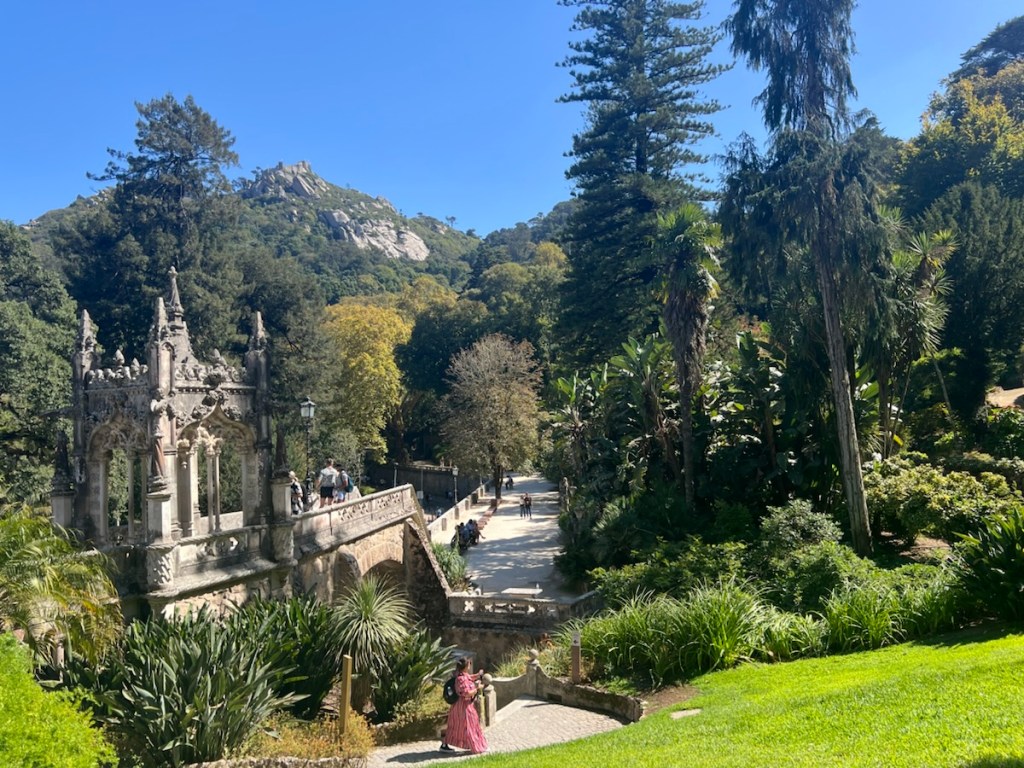
On our second day, we left early for Sintra, the former summer retreat of Portuguese royalty. Built on a mountain, Sintra is home to forests, castles, palaces, and lush gardens.
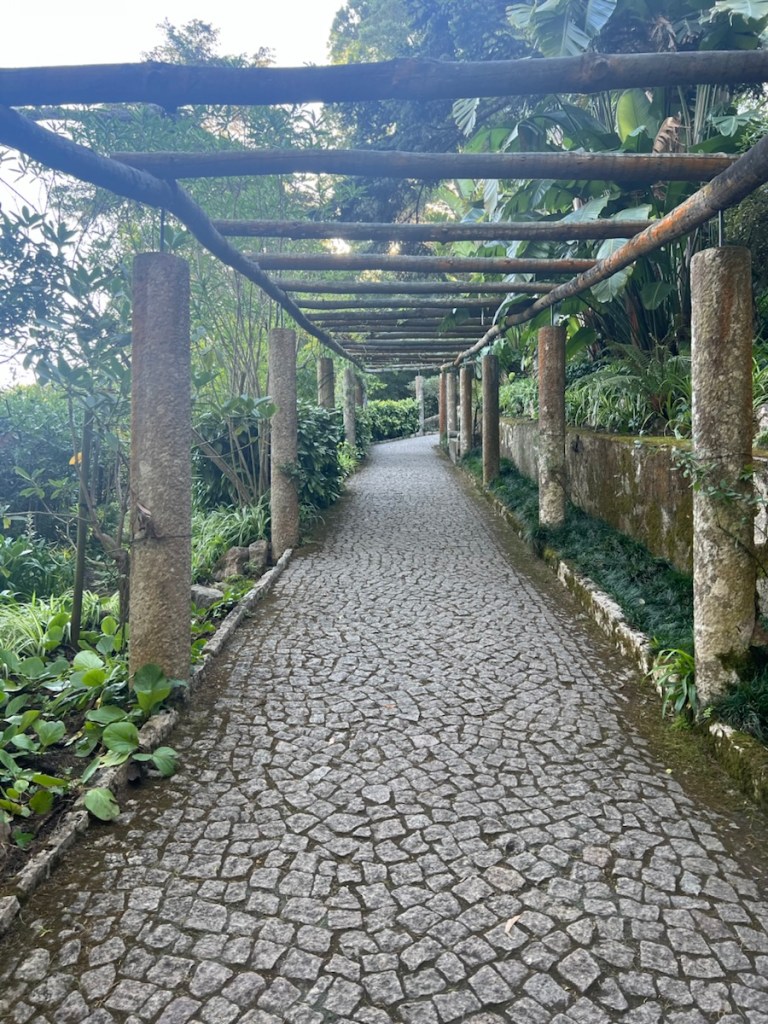
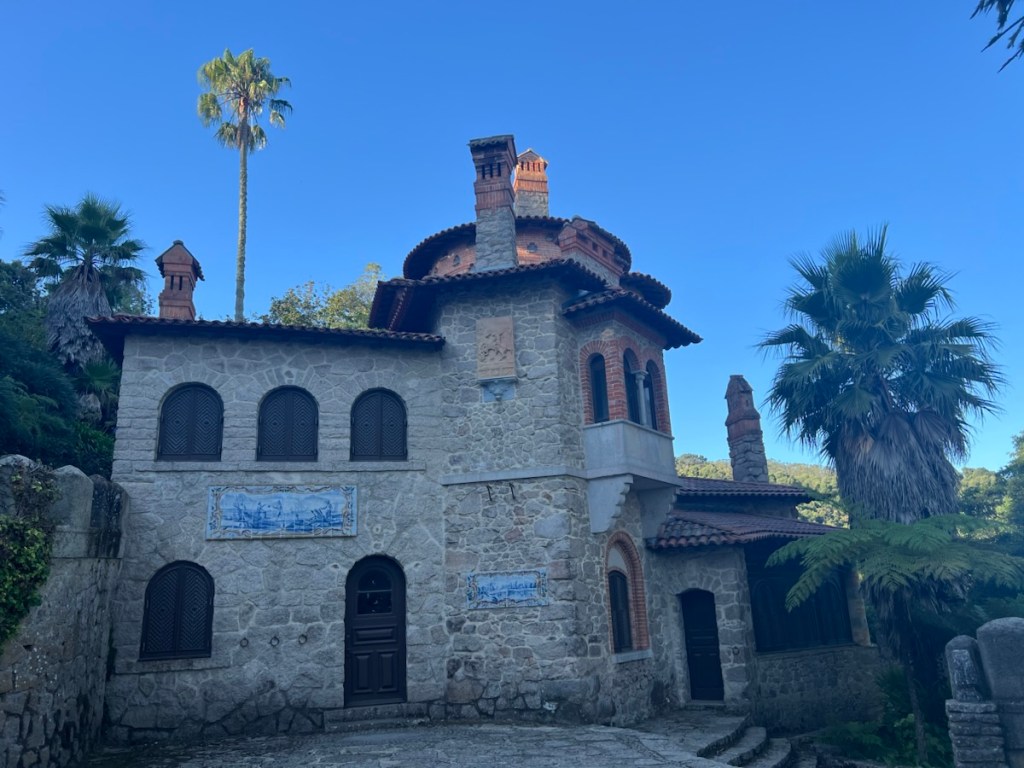
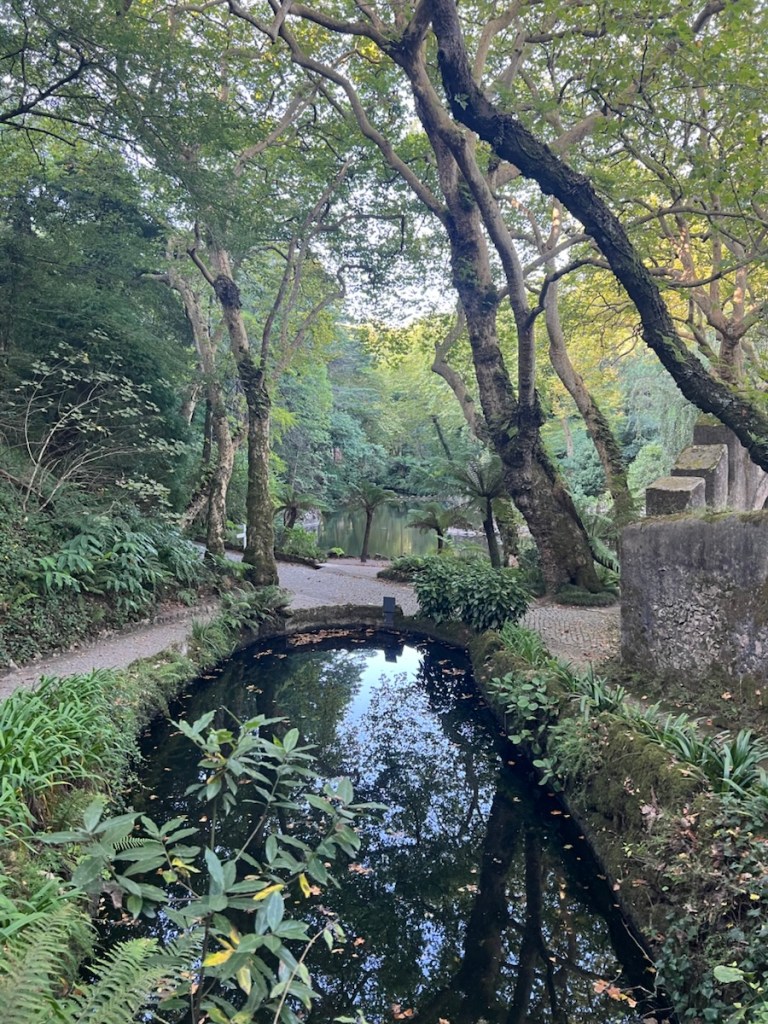
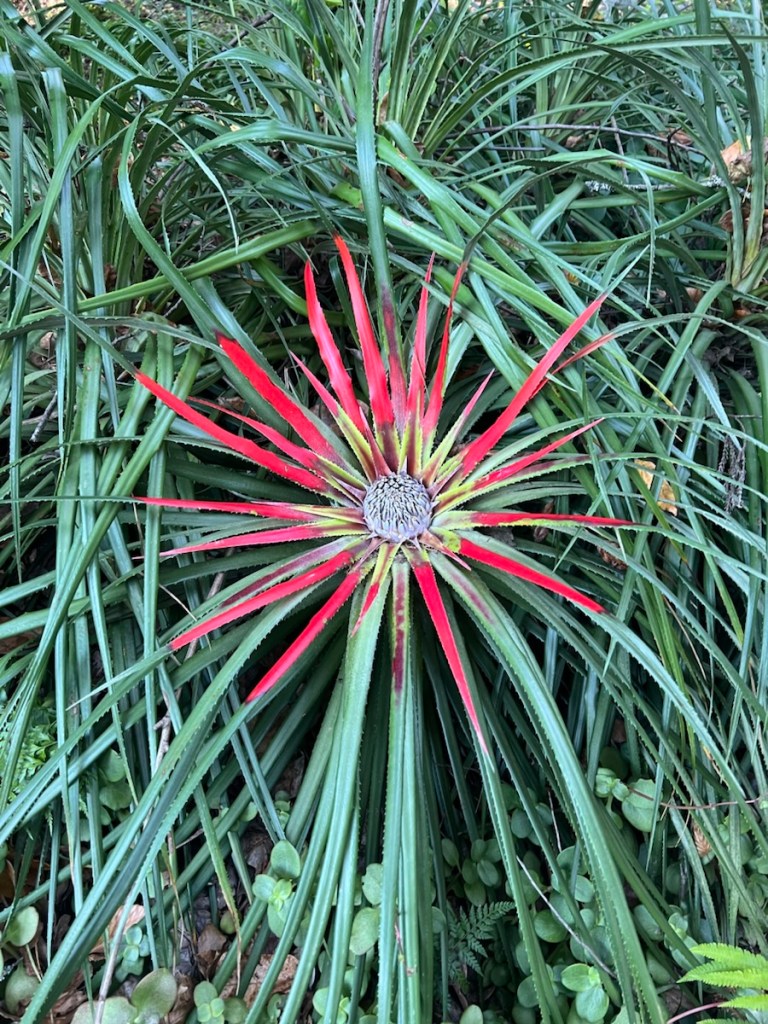
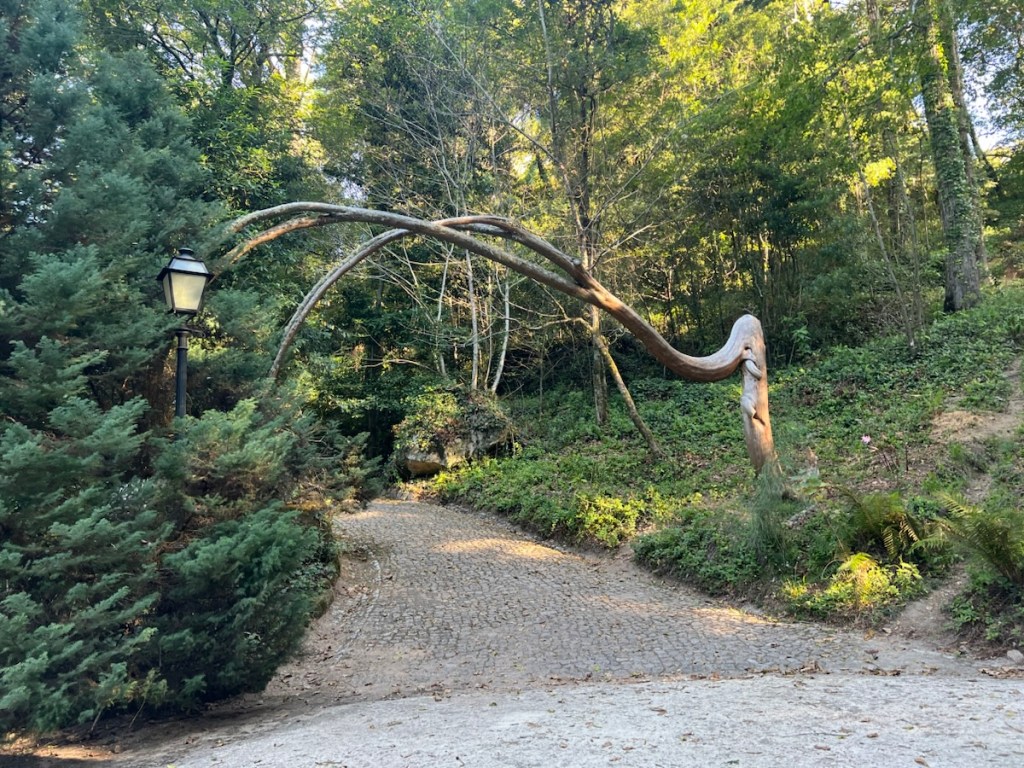
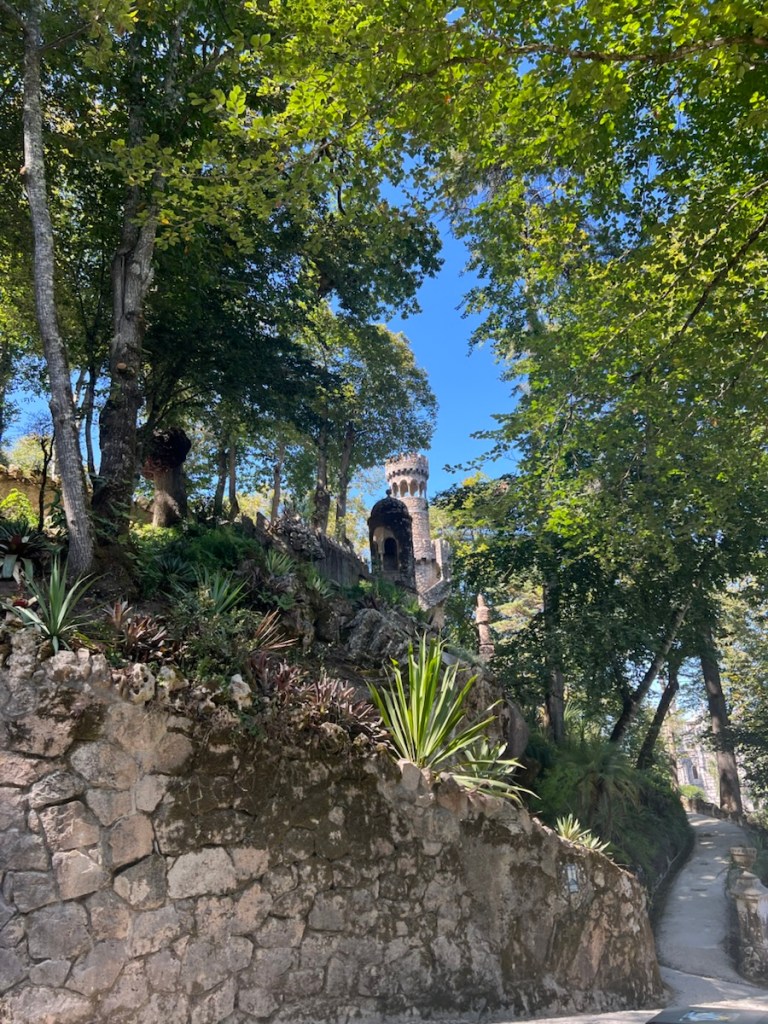
A 40-minute train ride took us up about 500 feet to the town of Sintra, which reminded me of Taxco, Mexico—an ancient town clinging to a steep mountainside. We walked 2.5 miles from the train station, gaining another 1,000 feet in elevation, and explored hidden gardens, rock formations, secret homes tucked away from palace life, and forests filled with trees from around the world—including giant sequoias and coastal redwoods from Oregon and California, some 200-300 years old.
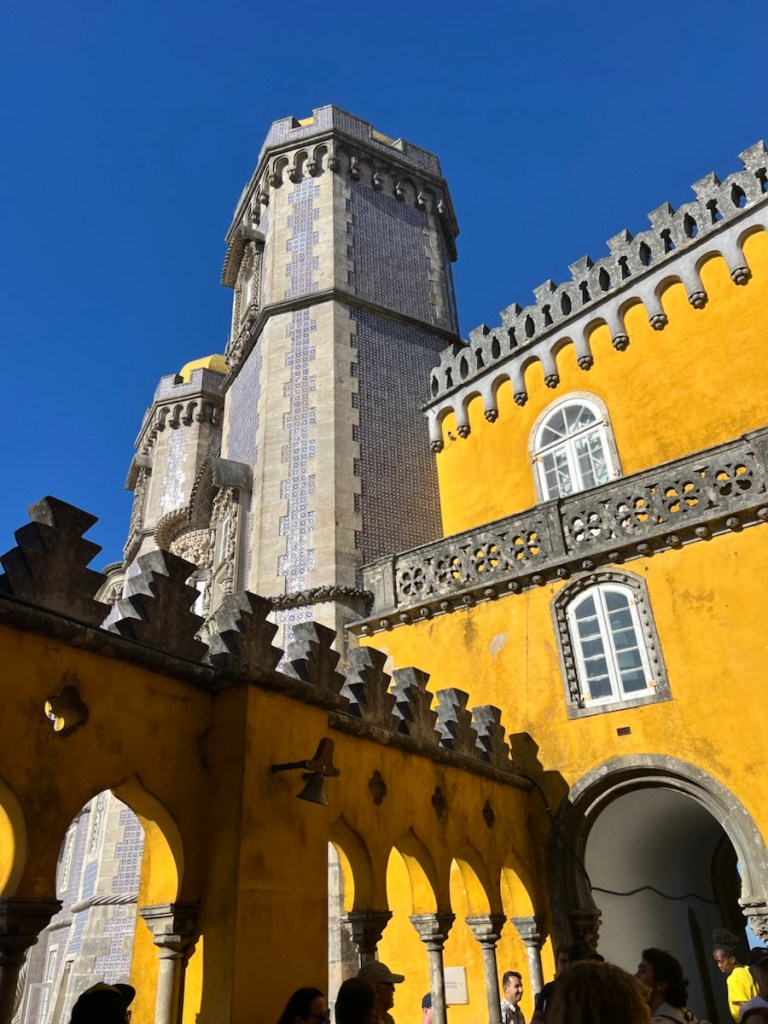
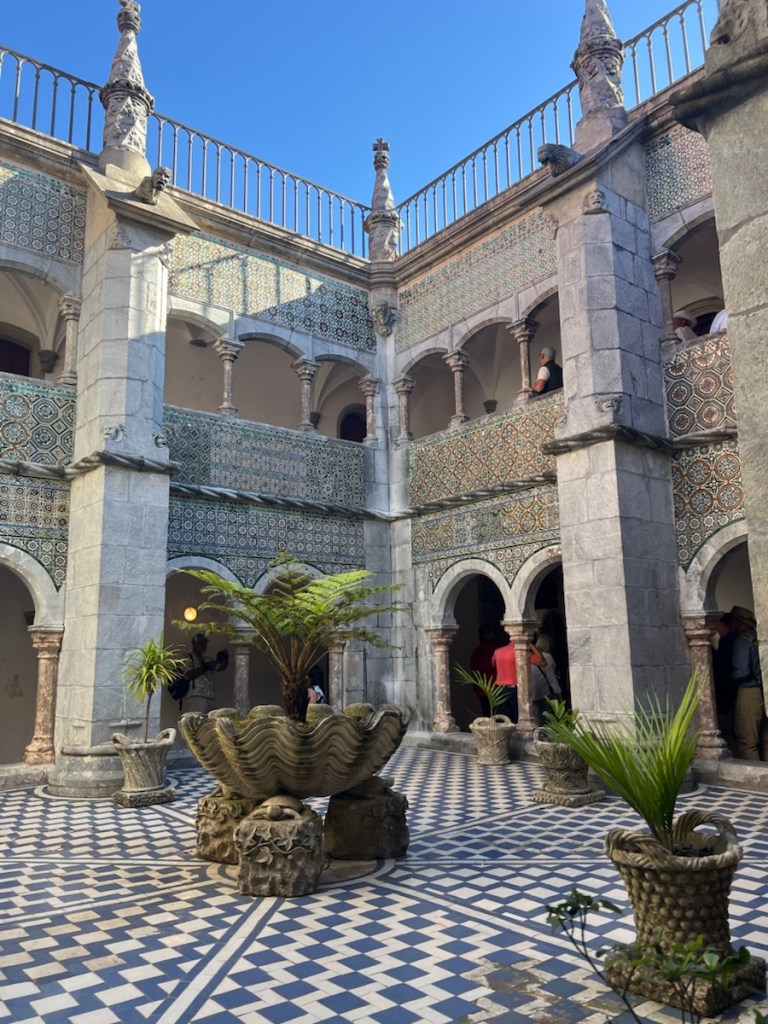
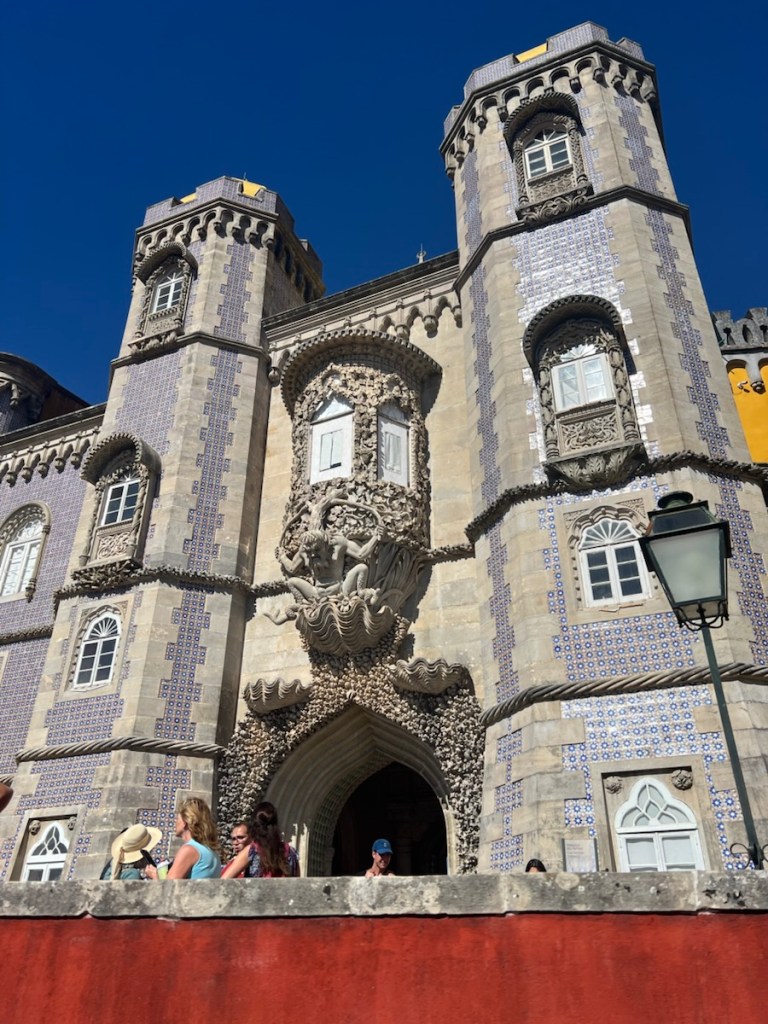
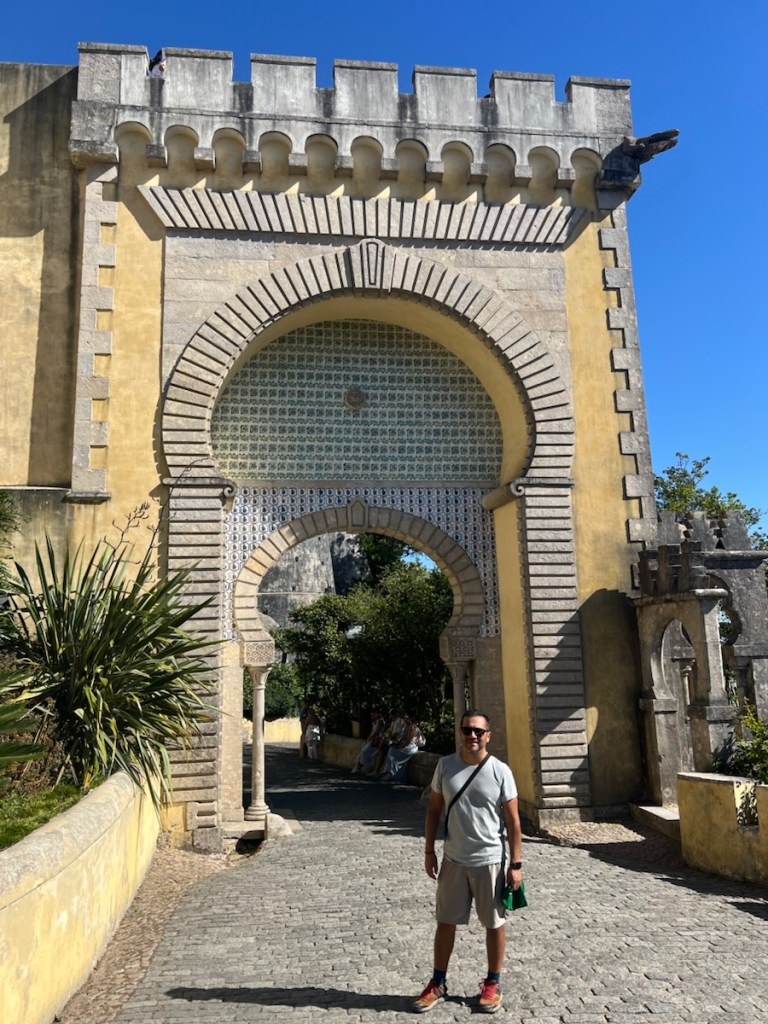
The Palacio da Pena is incredibly popular, and entry times are strictly controlled. We arrived at 9:30 am and found the line manageable, though once inside, the palace was crowded, making it hard to take in all the details. The palace is a blend of architectural styles—Moorish, monastic, and royal—each era leaving its mark on the structure. The grandeur was overwhelming, though, as expected, there was little mention of the people who kept it all running behind the scenes.
After leaving the palace, we wandered down through the forest, taking in the serene beauty of the surroundings. I got a bit carried away, choosing the scenic path at every turn, which extended our walk a little longer than planned. By the time we reached the town for lunch, around 11:30, the restaurants hadn’t opened yet, but the wait was worth it. I had bacalhau (codfish) baked to a crisp in a slightly sweet glaze—easily the best meal I’ve had in Portugal so far.
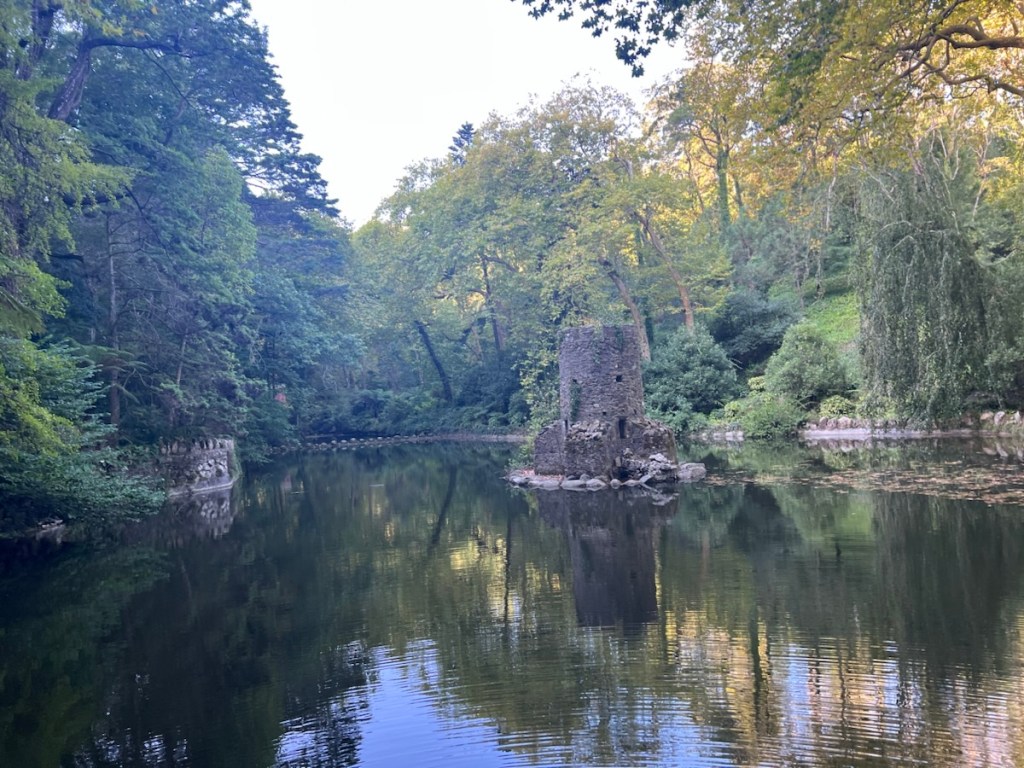
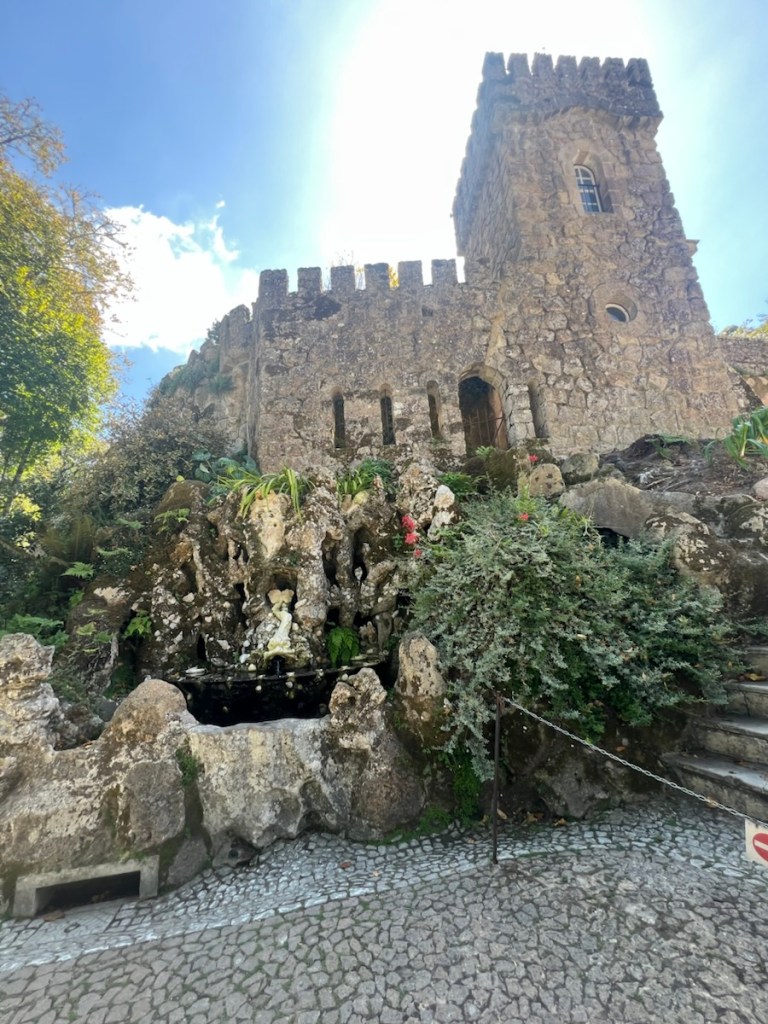
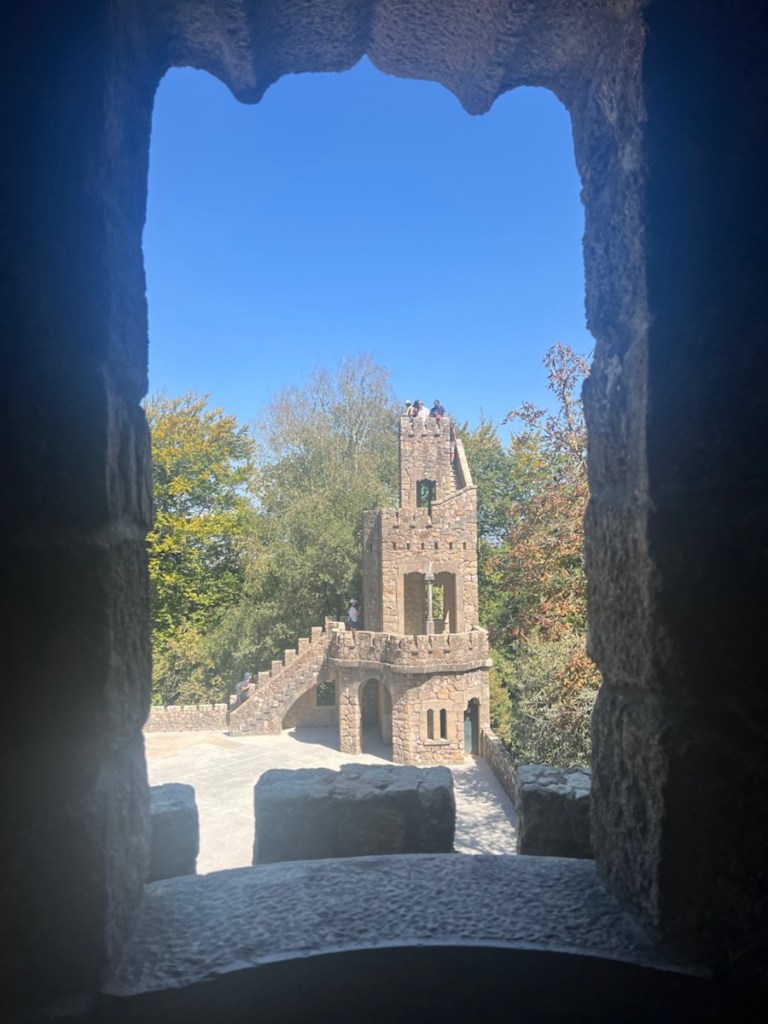
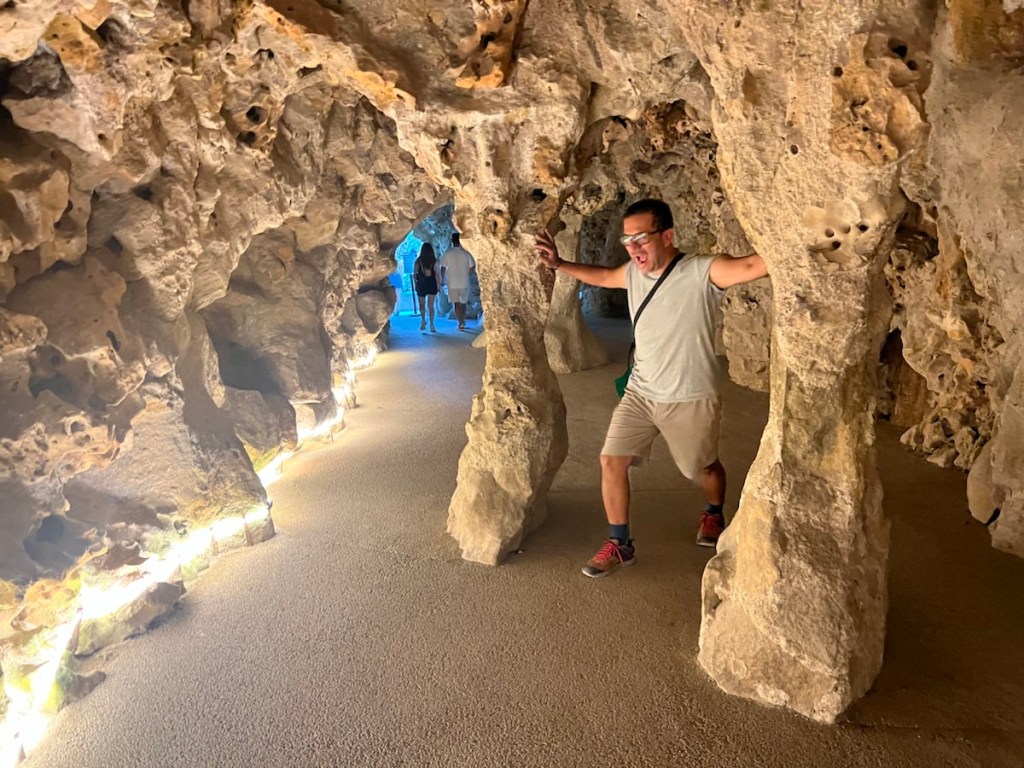
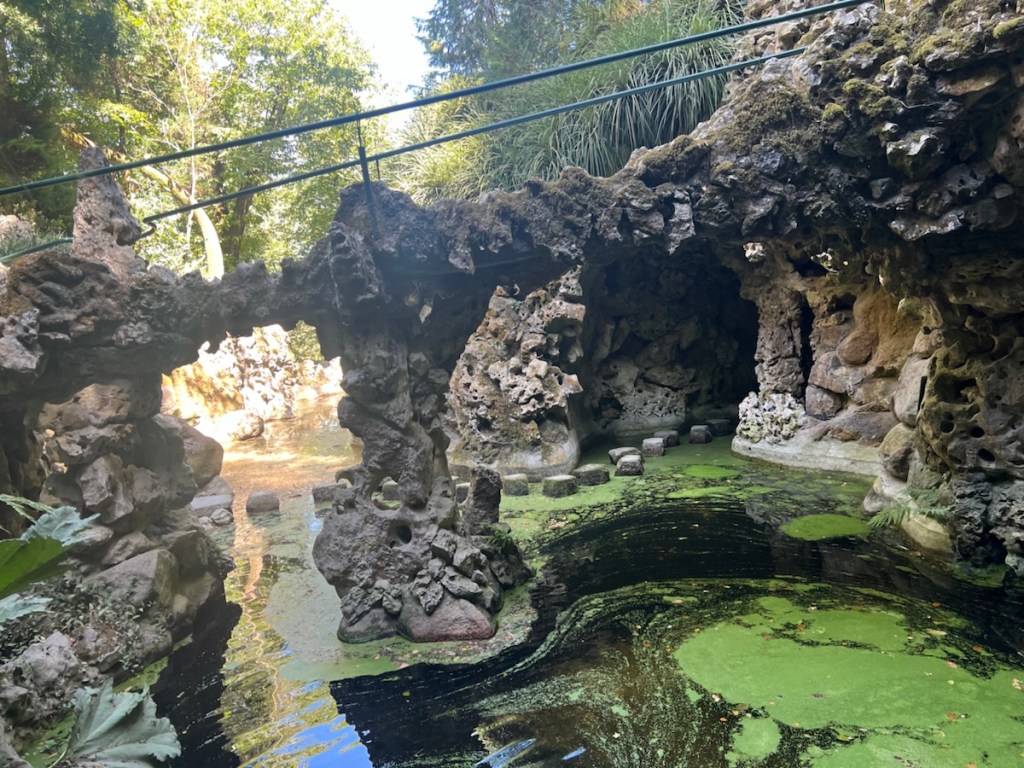
In the afternoon, we explored a whimsical four-hectare garden created by an eccentric man who loved rituals and games. The garden was filled with wells and rock formations concealing secret entrances to tunnels. You could disappear around a corner and end up in a Templar ritual site or evade prying eyes while sneaking off with your buddies.
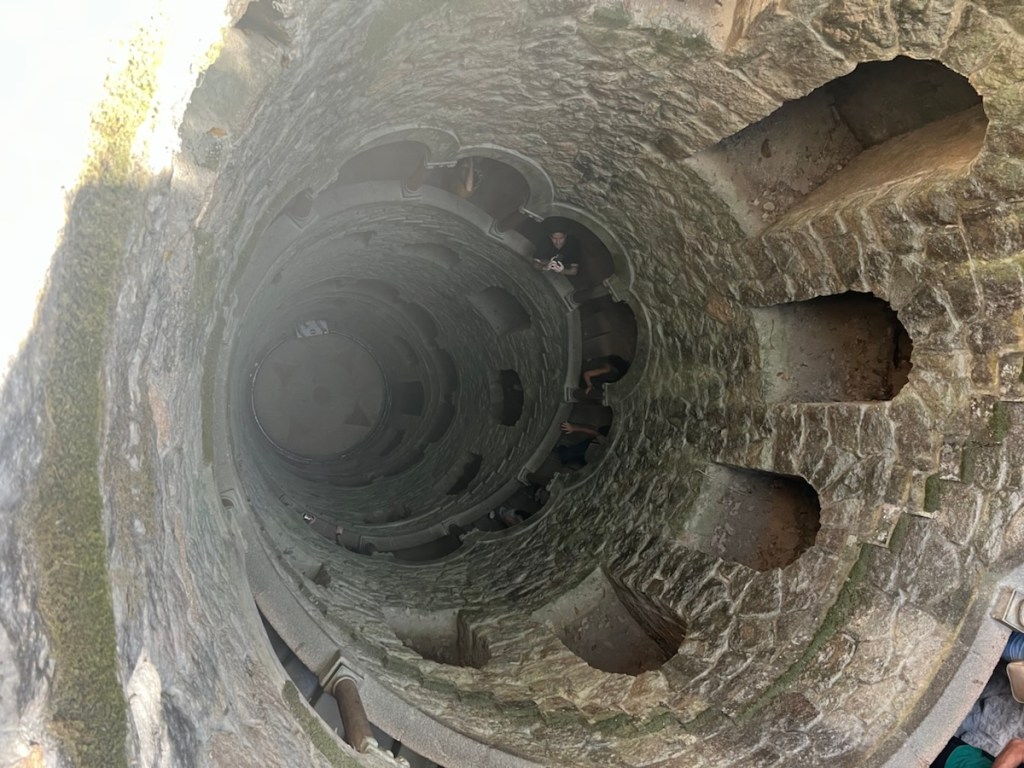
Despite the number of visitors, the garden felt peaceful, filled with birdsong and the sounds of the forest. The only real lines were at the entrance and for the most famous attraction—a spiral staircase that descends into the earth, connecting with the underground tunnel system.
Day 3: E-Scooters to Belém
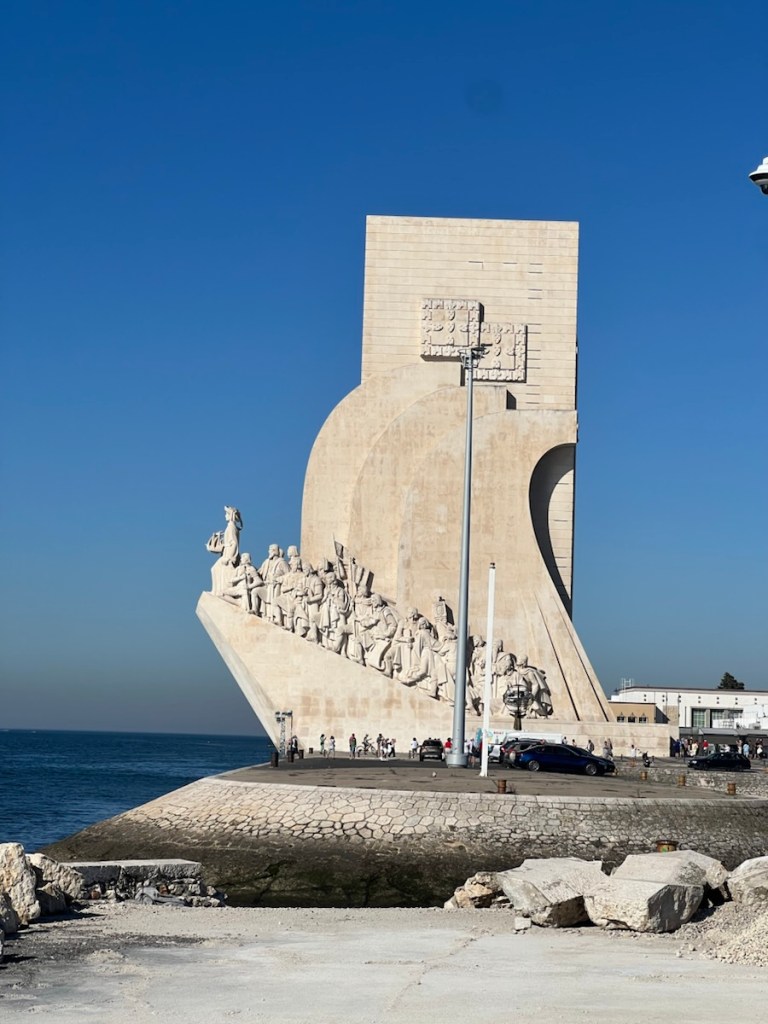
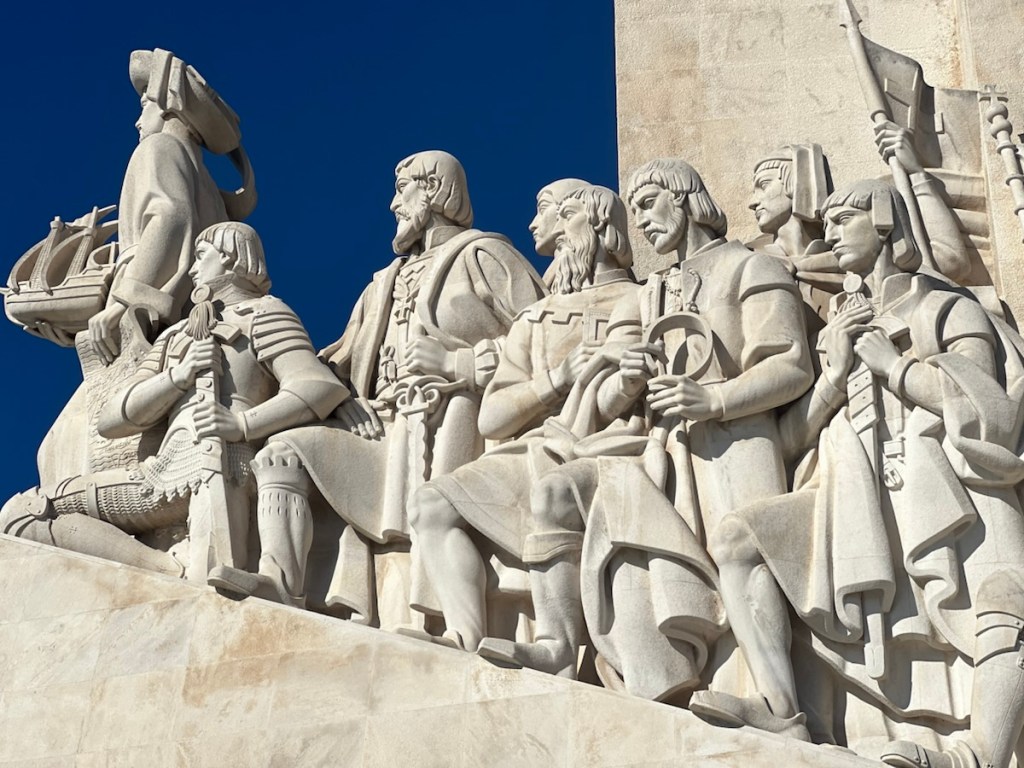
For our final day, we decided to head to Belém, about 10-12km from Lisbon, along the coast. Instead of taking the metro or trolley, we opted for e-scooters. After a thrilling 40-minute ride, we arrived at the Monument to Vasco da Gama, who set sail from here in search of a westward route to India, accidentally discovering Brazil along the way. The monument is a modern, concrete structure vaguely resembling a ship’s bow, with Vasco da Gama and his crew looking out toward the unknown.
[EDIT: I have been corrected and educated by a wonderful waitress.
Portuguese explorer Pedro Álvares Cabral was the first European to discover Brazil on April 22, 1500. He landed on the coast of what is now the state of Bahia, claiming the territory for Portugal under the Treaty of Tordesillas, which divided newly discovered lands between Portugal and Spain. However, indigenous peoples had inhabited the region for thousands of years before the arrival of Europeans.]
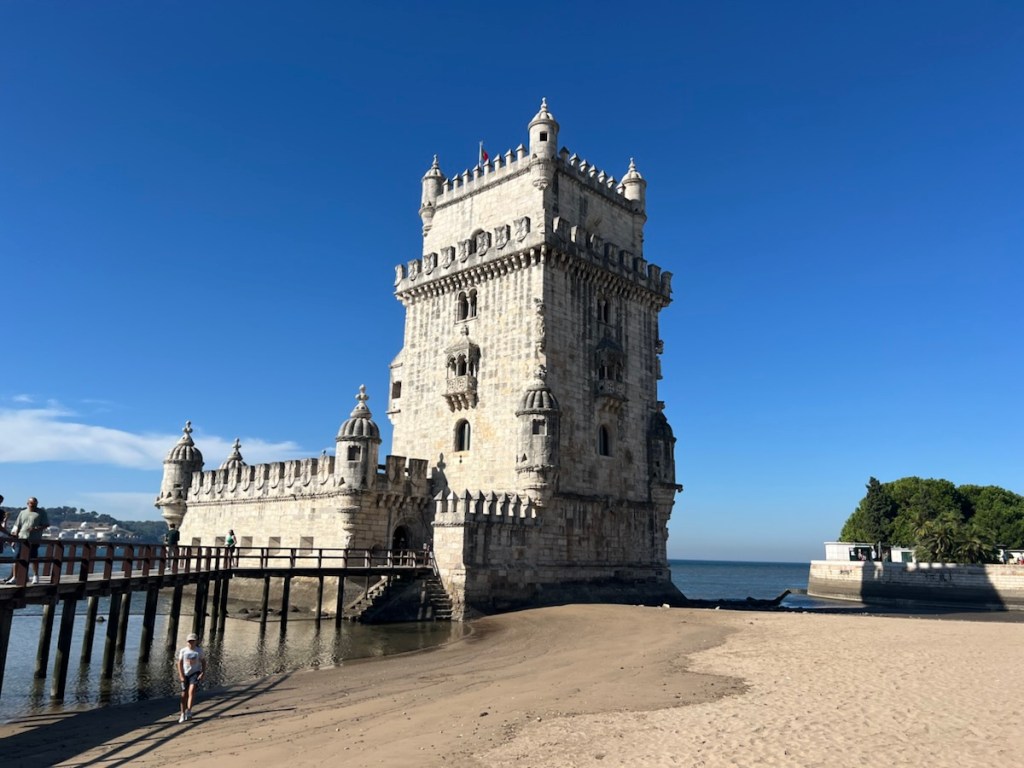
Our next stop was a small fortress on the riverfront, built to defend Lisbon. Unfortunately, when the time came, it fell to the Spanish in just a few hours.
Finally, we visited the monastery where Vasco da Gama’s remains are buried. The line to enter was wrapped around the block, so we chose to visit the Maritime Museum instead. It’s clear that the Portuguese are immensely proud of their history of exploration and colonization, though there’s little mention of the darker aspects, like slavery and oppression. It reminded me of how Spain and the U.S. often gloss over similar parts of their histories.







 Pizote Adventures