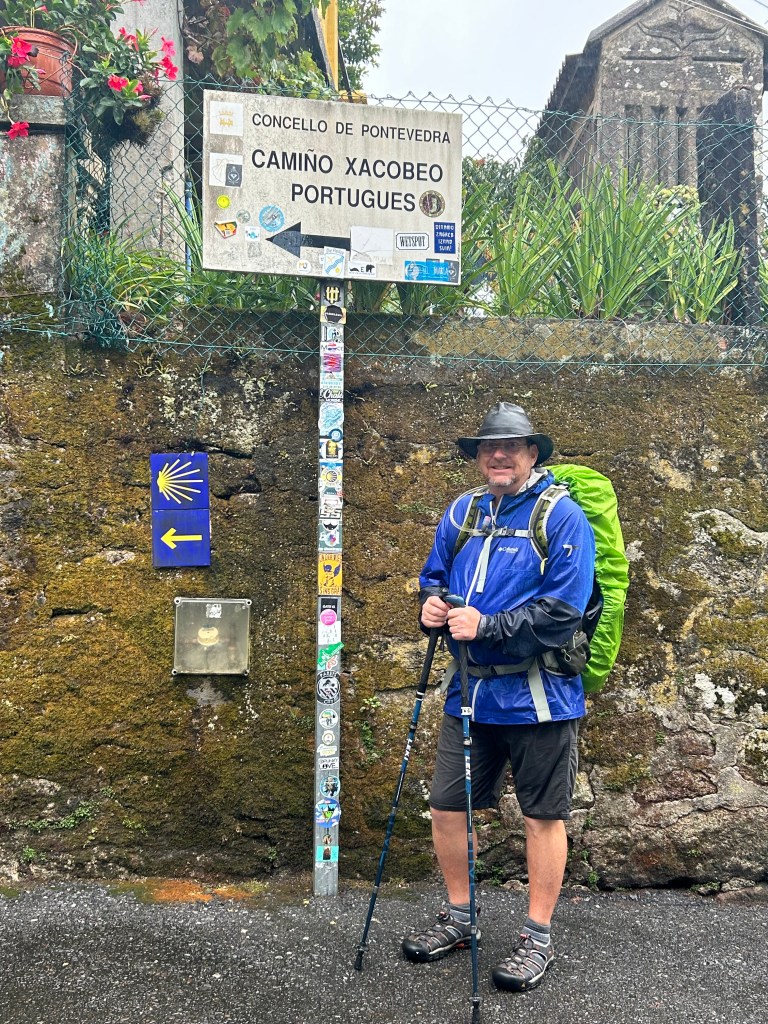
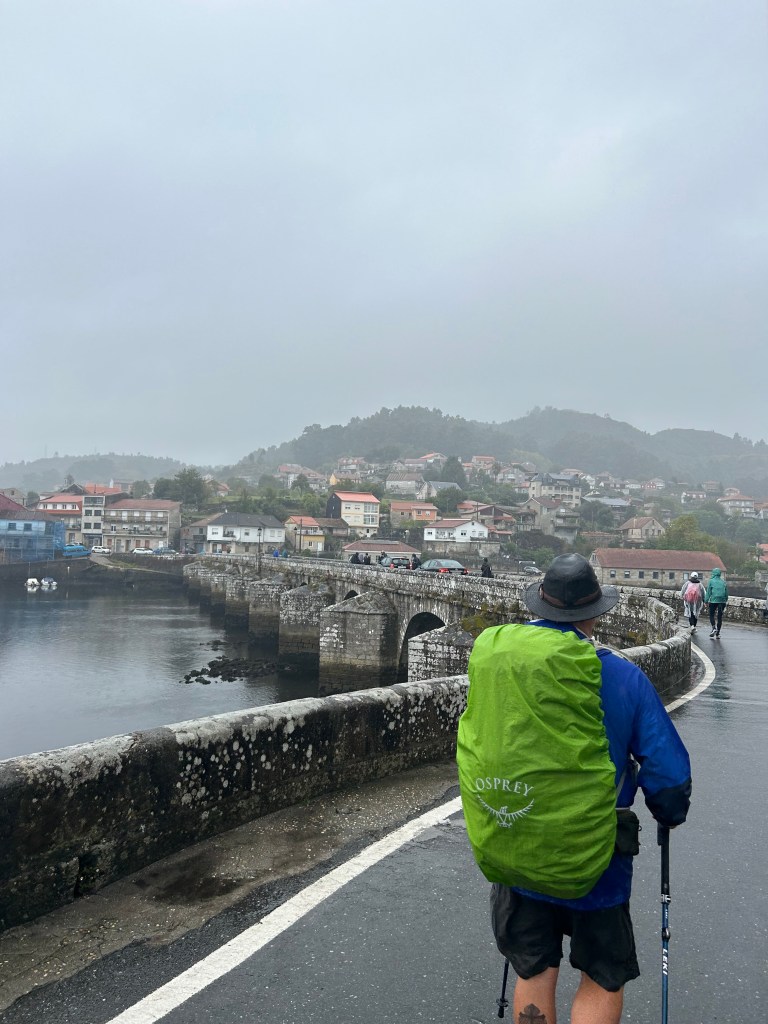
2025 Camino de Santiago – Cordillera Cantábrica

Back on the Camino: A New Adventure Through Northern Spain

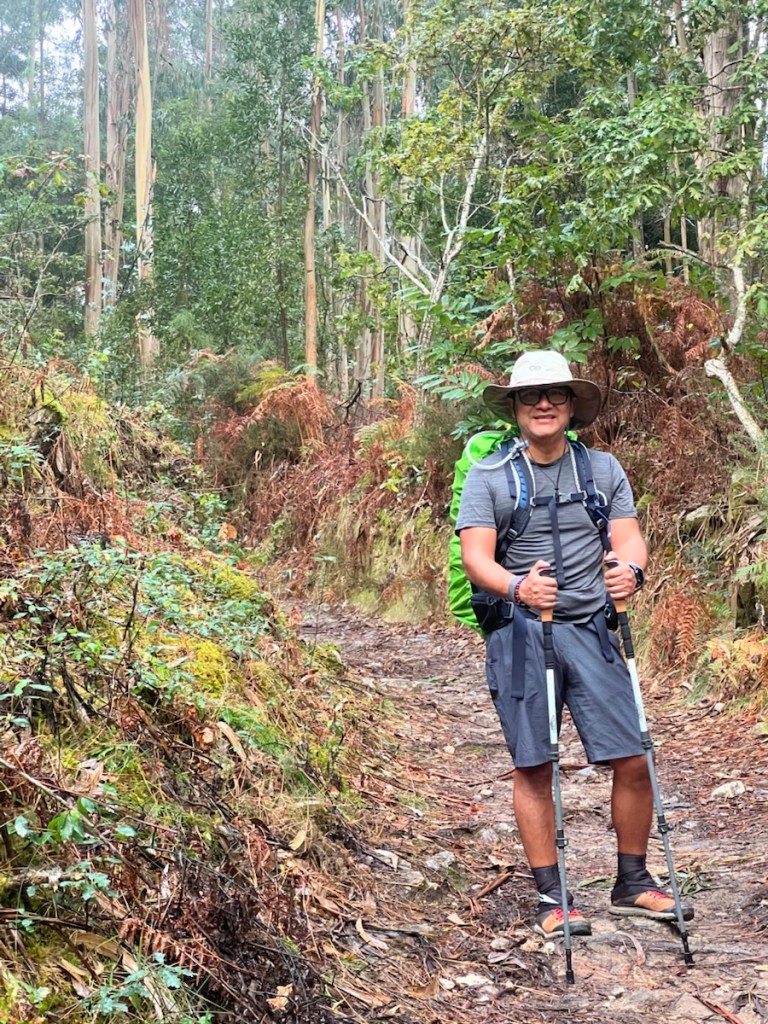
The backpack is packed (well, almost). The flights are booked. And my feet? They’re itching to hit the trail again. This June, I’ll be picking up where I left off on the Camino de Santiago (Norhtern route) in Bilbao, resuming my journey from Bayonne to Santiago after a pause last year due to a loss in the family. Now, it’s time to lace up (or, in my case, strap on my sandals) and dive back into the rhythm of walking, one step at a time.

The Route: A Bit of Everything

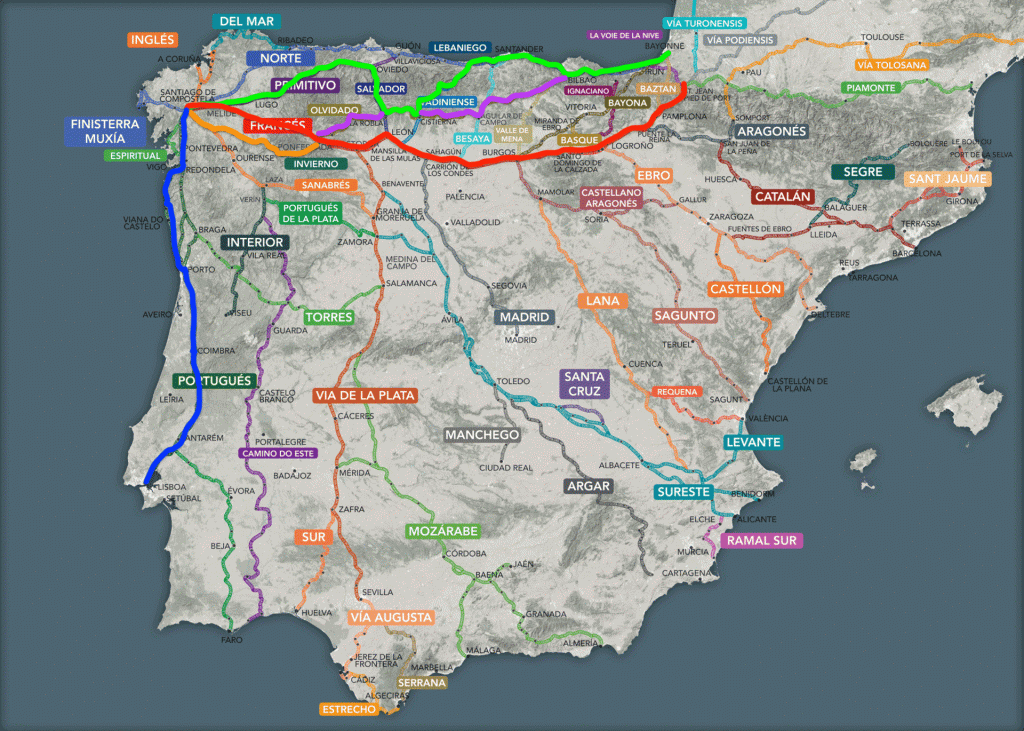
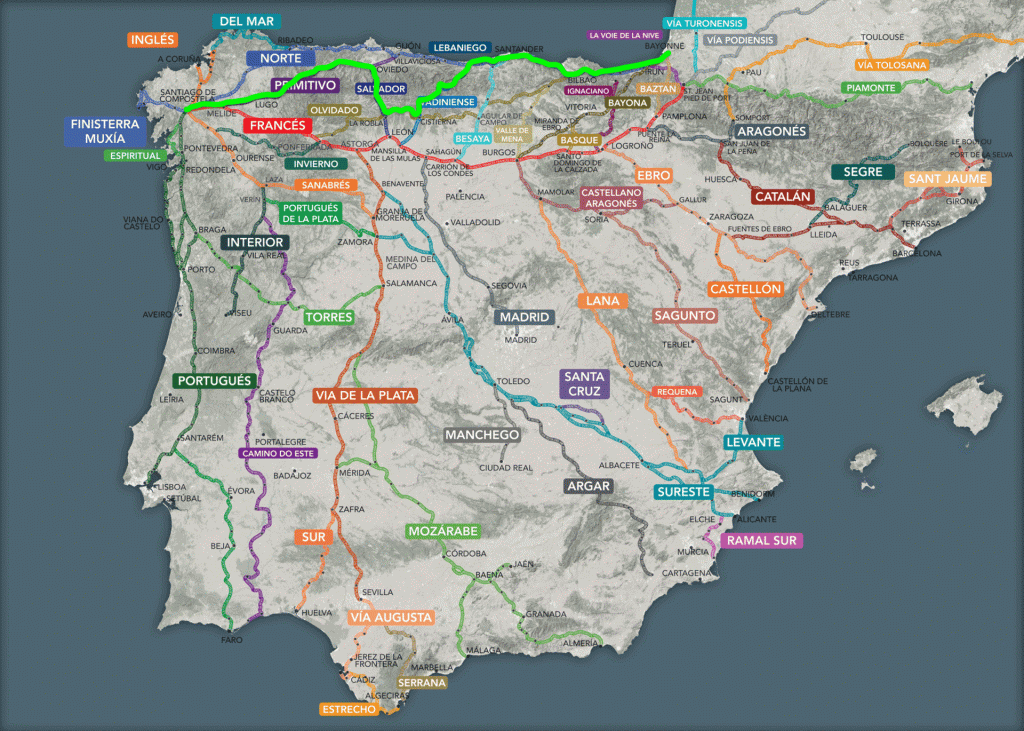
This walk isn’t just a straight shot to Santiago—it’s a winding, meandering, choose-your-own-adventure kind of Camino. From Bilbao, I’ll follow the Camino del Norte, hugging the dramatic northern coast, until I reach San Vicente de la Barquera. There, I’ll veer inland onto the Camino Vadiniense, making my way to Cistierna, where the Camino Olvidado will carry me westward to La Robla.

At La Robla, I’ll pivot north onto the Camino San Salvador, climbing through the Cantabrian Mountains toward Oviedo—because what’s a pilgrimage without a little uphill suffering? From Oviedo, I’ll join the Camino Primitivo (the oldest of the Caminos) until Melide. And then? I have a decision to make. I’ll either:

  1. Walk straight into Santiago on the Camino Francés, or
  2. Hop a bus to Ferrol and complete this year’s Camino on the Inglés with my brother-in-law, adding a bit of historical flair to the final steps.

Either way, Santiago is the goal, and every twist, turn, and elevation gain will just be part of the story.

Packing Lighter, Walking Smarter

This year, I’m making a bold move: downsizing from a 36L to a 24L backpack. That’s right—less gear, fewer gadgets, and a lot more faith in the “I’ll figure it out” philosophy.

How am I pulling this off?
✔ Hiking in sandals instead of boots (because my feet prefer freedom).
✔ Ditching extra charging equipment and unnecessary electronics.
✔ Leaving behind things I’ve barely touched in past walks (goodbye, bulky first-aid kit and extra sets of clothes).

It won’t be truly minimalist, but it will be lighter—dropping from 10kg to around 7kg, not counting water or snacks.

The Big Picture: One Step at a Time

In total, this journey will cover around 800-900km. Add that to the 200km/280km (route/total) I walked last year from Bayonne to Bilbao, and by the time I reach Santiago, I’ll have clocked somewhere between 1100 and 1200km.

I’ll be walking for five weeks, with a total of six weeks away to soak in the experience, rest my feet, and enjoy Spain’s incredible landscapes (and food—let’s not forget the food).

So, here we go. New routes, fewer possessions, and the same love for the Camino. Every journey is different, and this one promises to be full of surprises, stunning views, and hopefully, just enough challenge to keep things interesting.

Buen Camino! 🚶‍♂️🌿☀️
Day 19: Padrón->Santiago de Compostela

https://www.mapmyfitness.com/workout/8200101115

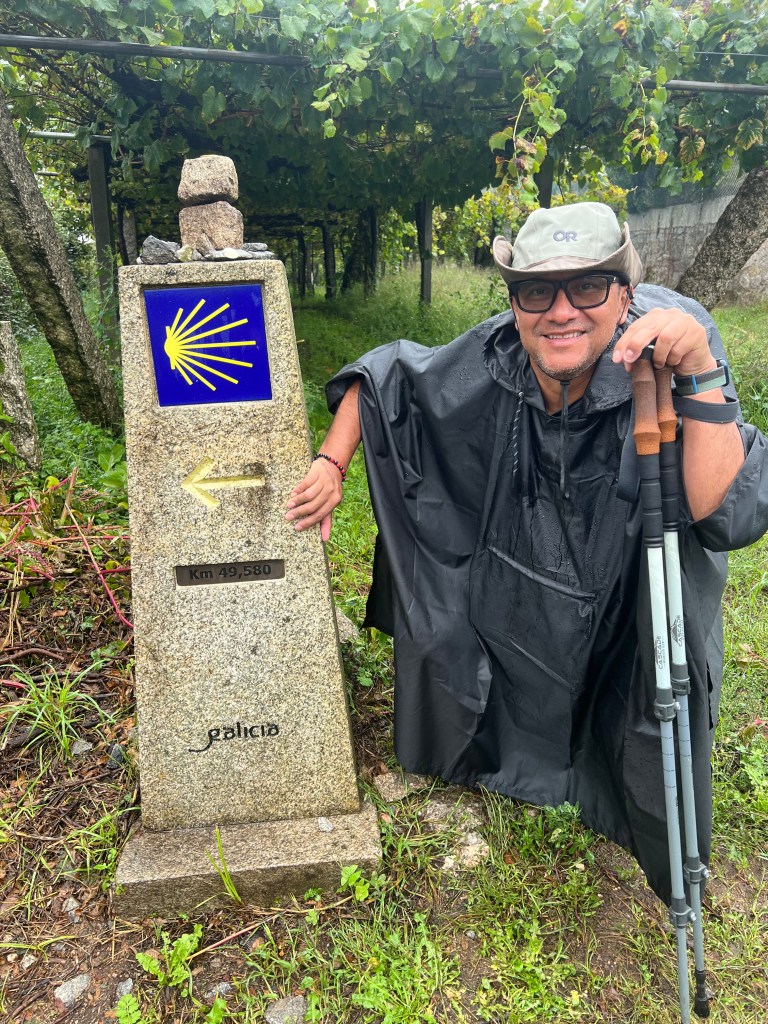
This day marked the final day of my Camino journey—or as the saying goes, “Your Camino truly begins when you arrive in Santiago.” It’s a phrase often met with skepticism, but after completing this pilgrimage six times, totaling more than 5,400 kilometers and over 7 million steps, I can confidently say that the real growth happens in reflecting on those kilometers traveled. Now, six weeks later, I’m writing this with fresh perspective and a mix of experiences—some I’ll share, and others that will remain mine alone. But first, let’s talk about the walk.

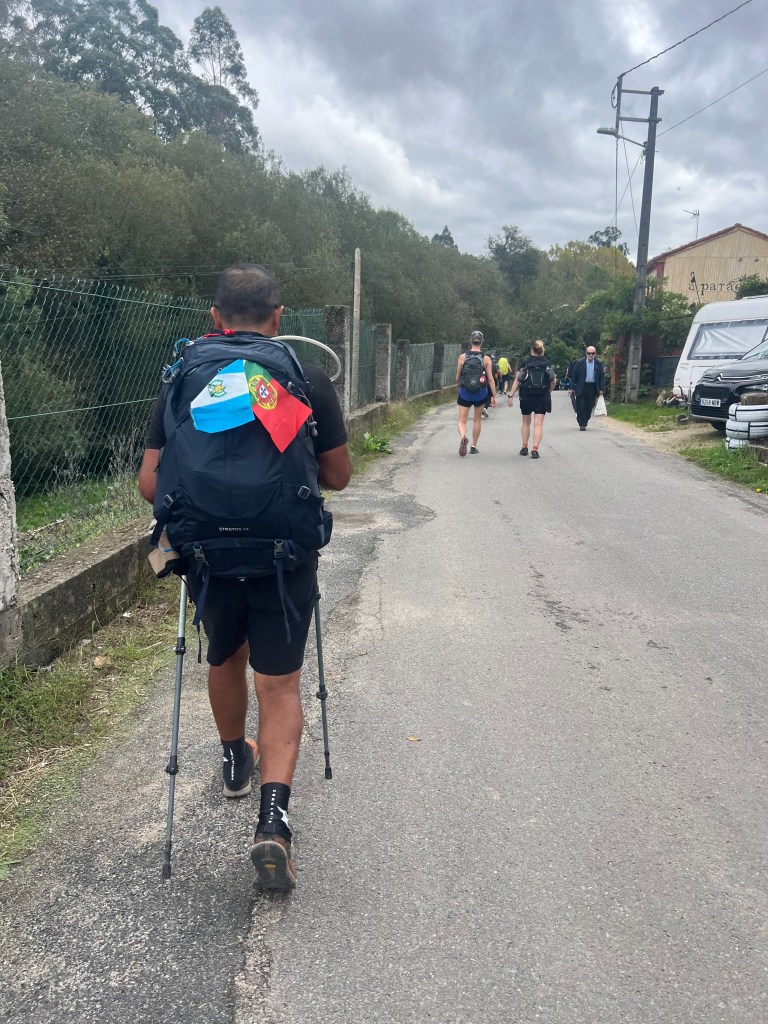
The day was split between two worlds: half spent on soft forest paths, the other on asphalt as the city loomed closer. The peaceful forest stretches invited introspection, my thoughts meandering like the trail itself. Then, as the rural turned urban, my focus shifted to navigating Santiago’s outskirts, a growing buzz of anticipation propelling me forward.

Admittedly, that excitement got the better of me. I sped up, leaving Luis behind—an oversight that brought its own lesson. While I waited for him at the entrance to the Casco Viejo, where the cathedral resides, I realized I’d pushed too hard, upsetting the balance of our shared journey. It was a humbling moment, one that required introspection and acknowledgment in the days that followed. All was resolved eventually, but it’s a reminder: the Camino teaches as much about patience and connection as it does about endurance.

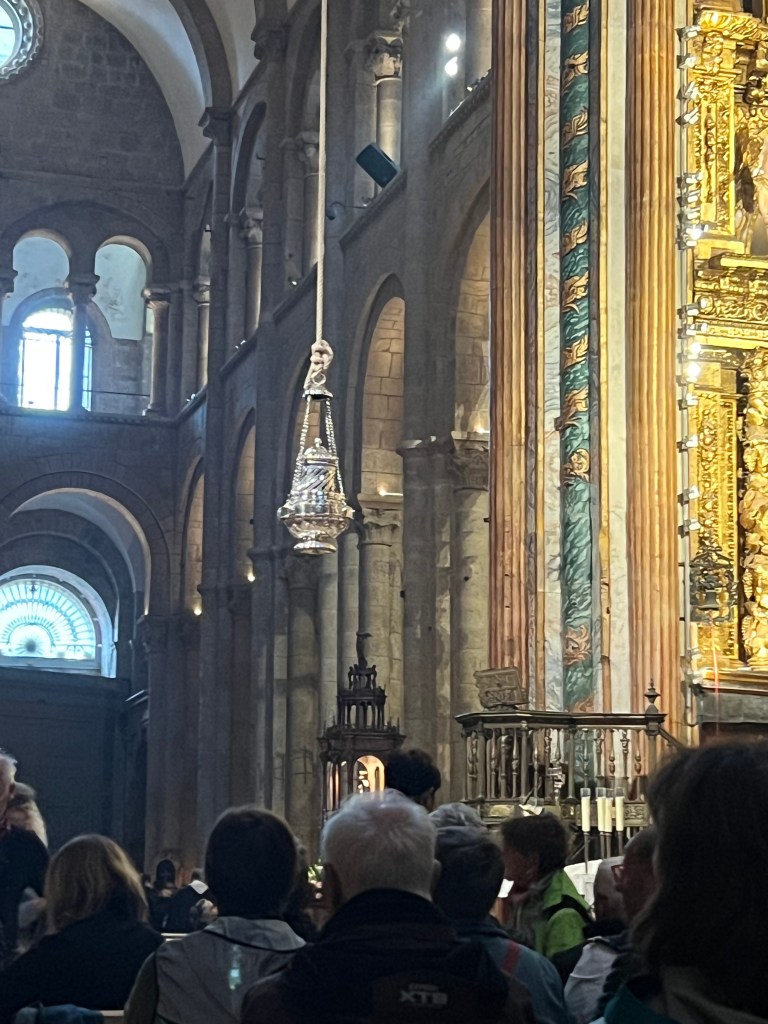
Arriving at the cathedral’s plaza was a mix of celebration and camaraderie. Pilgrims from all walks of life gathered, greeting friends and savoring the shared accomplishment of a lifetime. Under partly cloudy skies and a blessed lack of rain, the plaza brimmed with joy. Contact information was exchanged, tearful goodbyes were said, and the Camino worked its magic once again, forging bonds that will last a lifetime.

After a couple of days in Santiago, we ventured to the coast—Muxia specifically—before returning to Santiago for one last evening of bar-hopping, Orujo tasting, and last-minute shopping. From there, it was on to Lisbon for our flights home.

This Camino was unlike any of my others. The reasons I embarked on it weren’t entirely my own; I walked for someone and with someone. Yet, as the Camino often does, it became deeply personal. No matter the reasons you start, the Camino finds a way to touch your soul. It was as much my journey as it was for the important people in my life.

Galicia’s Celtic heritage added a layer of mysticism to this pilgrimage. Known as one of the seven Celtic nations, its land is steeped in ancient beliefs, including the concept of ley lines—energetic pathways that, where they intersect, are thought to hold extraordinary spiritual power. Muxia, believed to be one such powerful conjunction, held special significance for me this time. Unlike my 2015 visit, which felt more like sightseeing, this visit carried the weight of nine years of growth and deeply personal experiences.

Sitting on the rocks in Muxia, meditating and contemplating life, I was overcome with a profound sense of peace—akin to moments I’ve experienced in meditation or altered states. This calm, a gift from the ley lines and the Camino itself, remains with me even now. It has allowed me to truly “begin my Camino” in Santiago, embracing the journey that lies ahead with an open heart and a peaceful mind.

Walking the Camino with my brother-in-law, Luis, was an experience that deepened my respect and love for him in ways I couldn’t have anticipated. Luis is a man of quiet strength, a steady presence who approaches life with a unique blend of humility and wisdom. Sharing this journey with him was both an honor and a privilege. His ability to face challenges with grace and his unwavering support throughout the walk made our time together unforgettable. There was a profound sense of camaraderie in our shared steps, laughter, and conversations. Walking alongside Luis reminded me of the importance of family and connection, and I’ll always treasure the bond we strengthened on this pilgrimage. To share this sacred path with someone so special was, truly, a gift.

Day 18: Caldas de Reis->Padrón

https://www.mapmyfitness.com/workout/8198306938

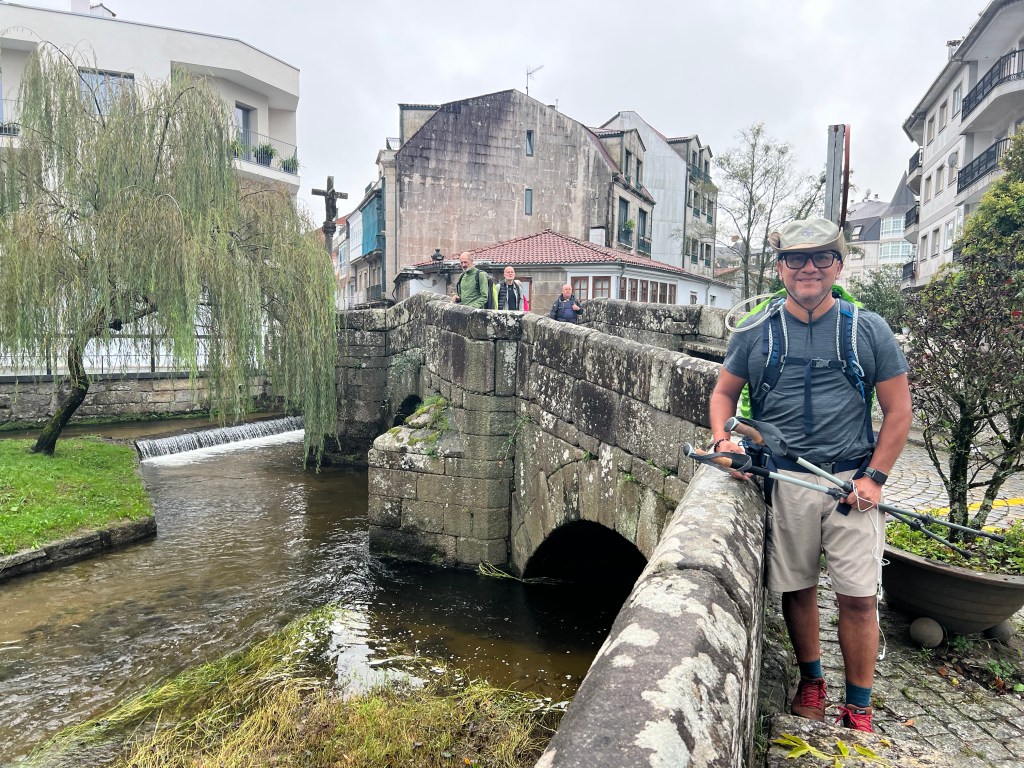
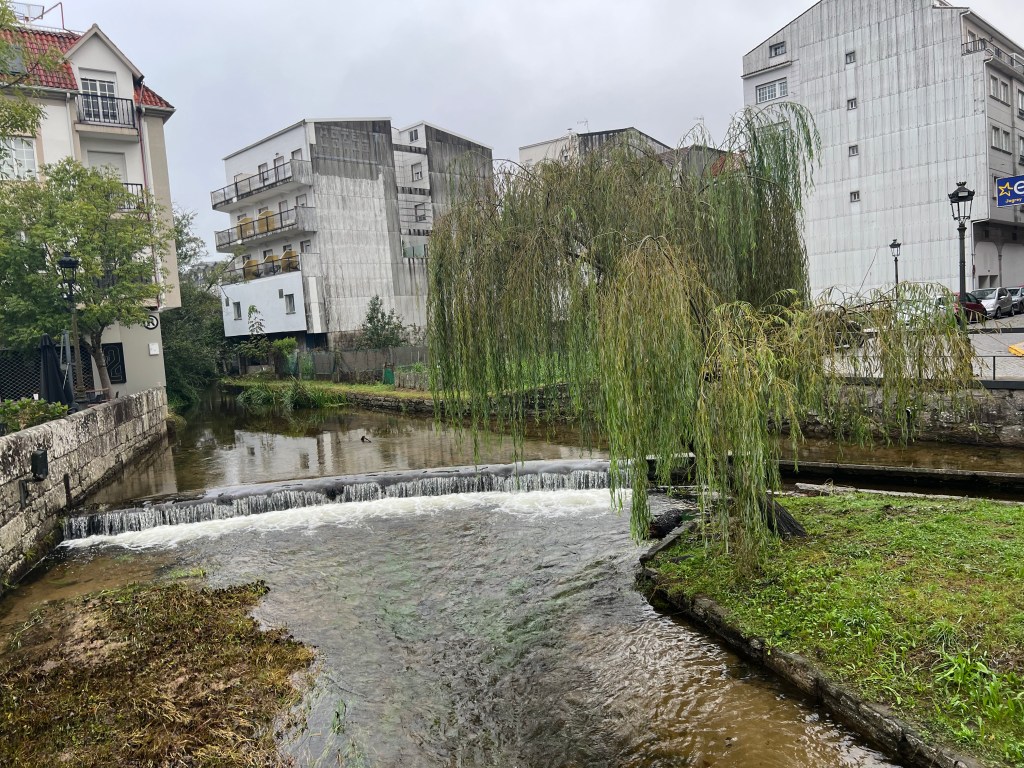
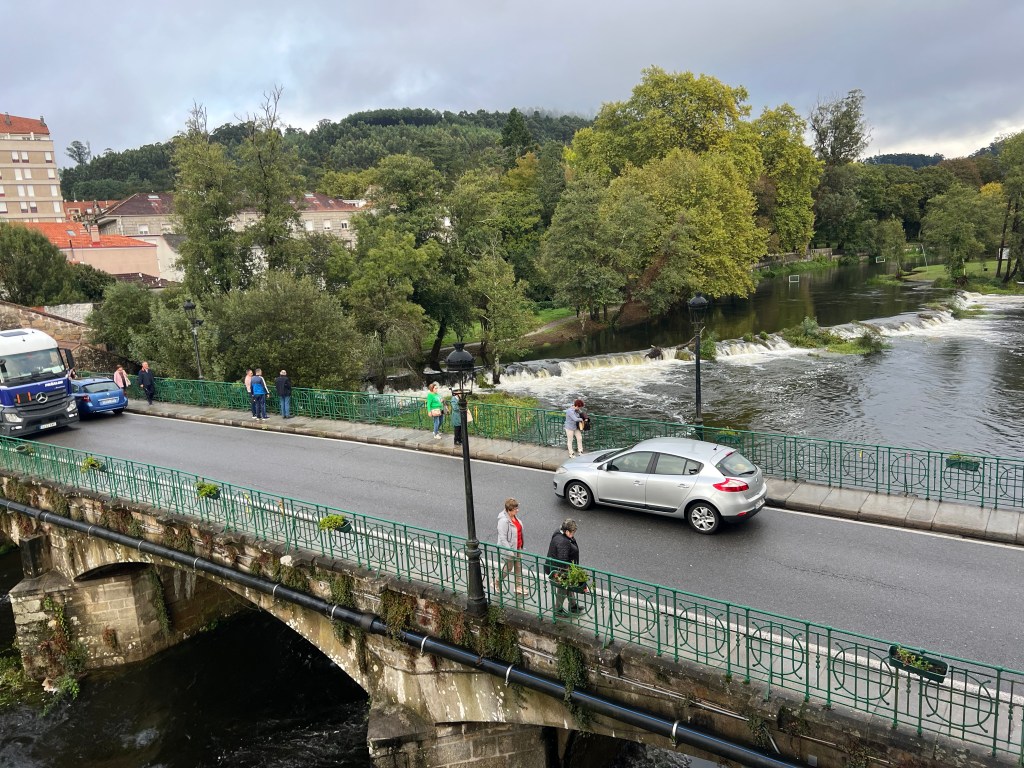
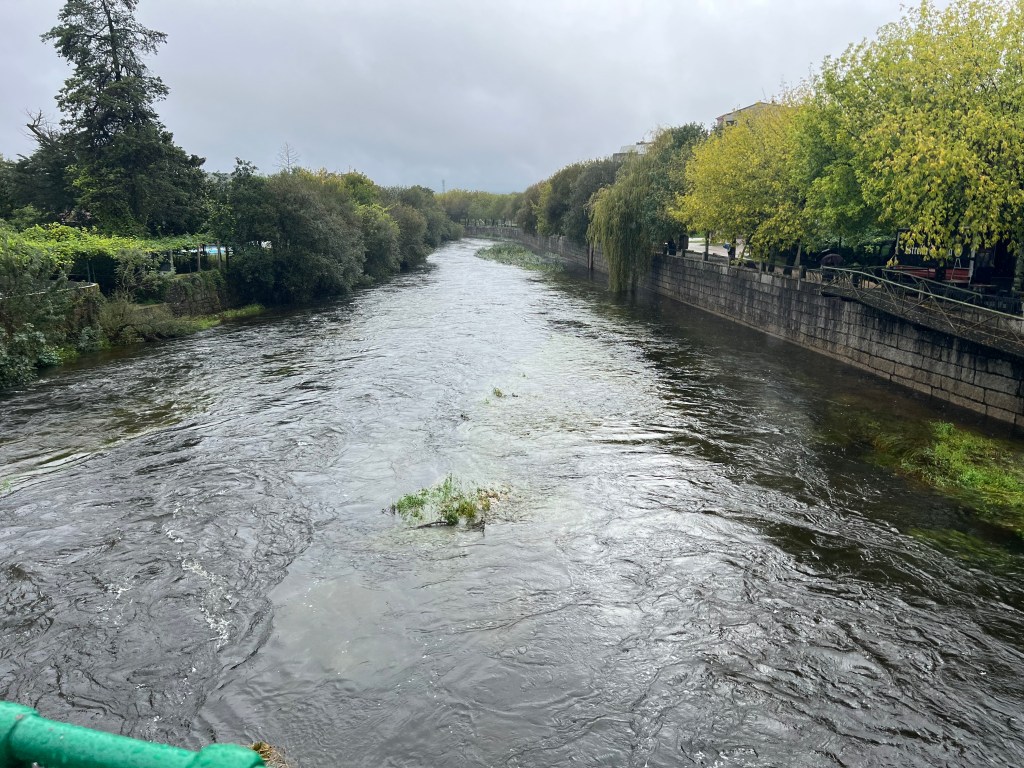
We left Caldas de Reis under a light drizzle—not quite rain, but the kind that sneaks up on you. Had it lingered, we’d have been as soaked as if it had poured all day. Luckily, it fizzled out before drenching us. The path out of town crossed a river and passed by public hot springs and fountains, places where people once gathered to bathe in days gone by. The town’s name, Caldas de Reis, roughly translates to “Hot Springs of the Kings,” a nod to the royalty who once flocked here for a bit of thermal relaxation.

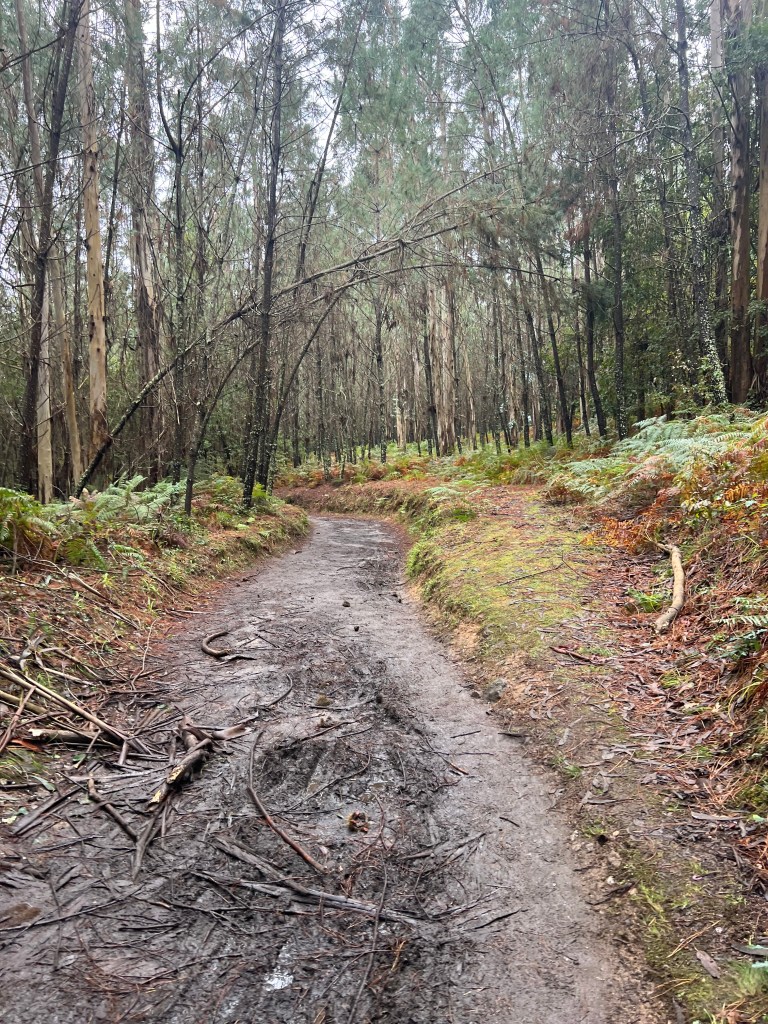
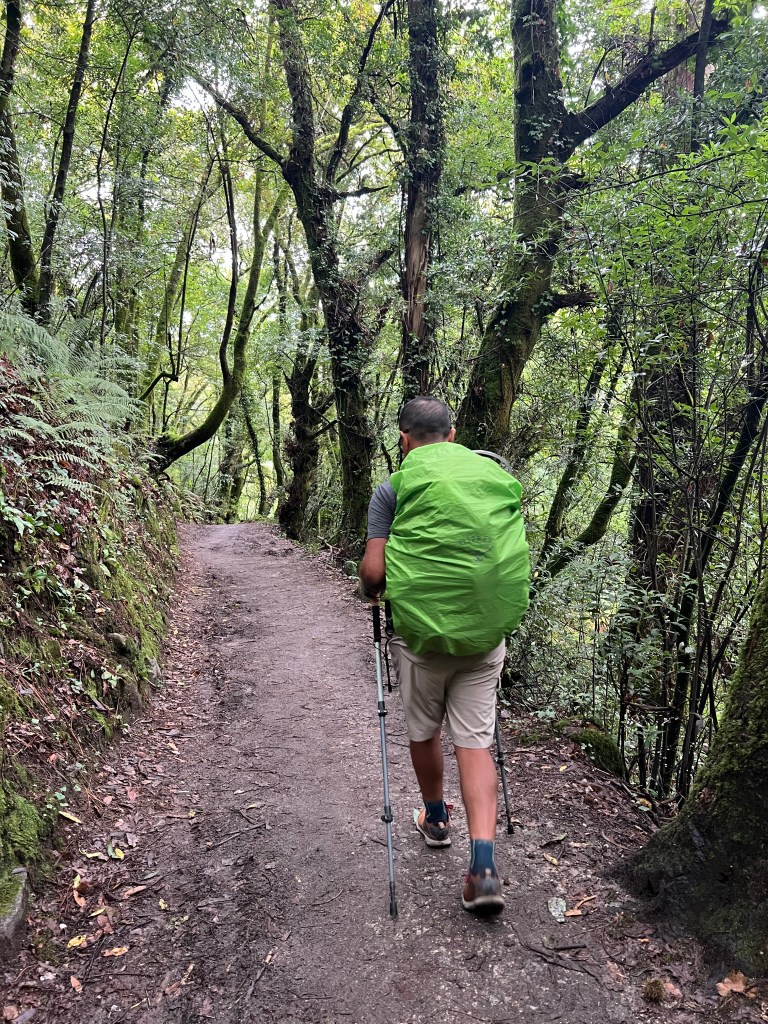
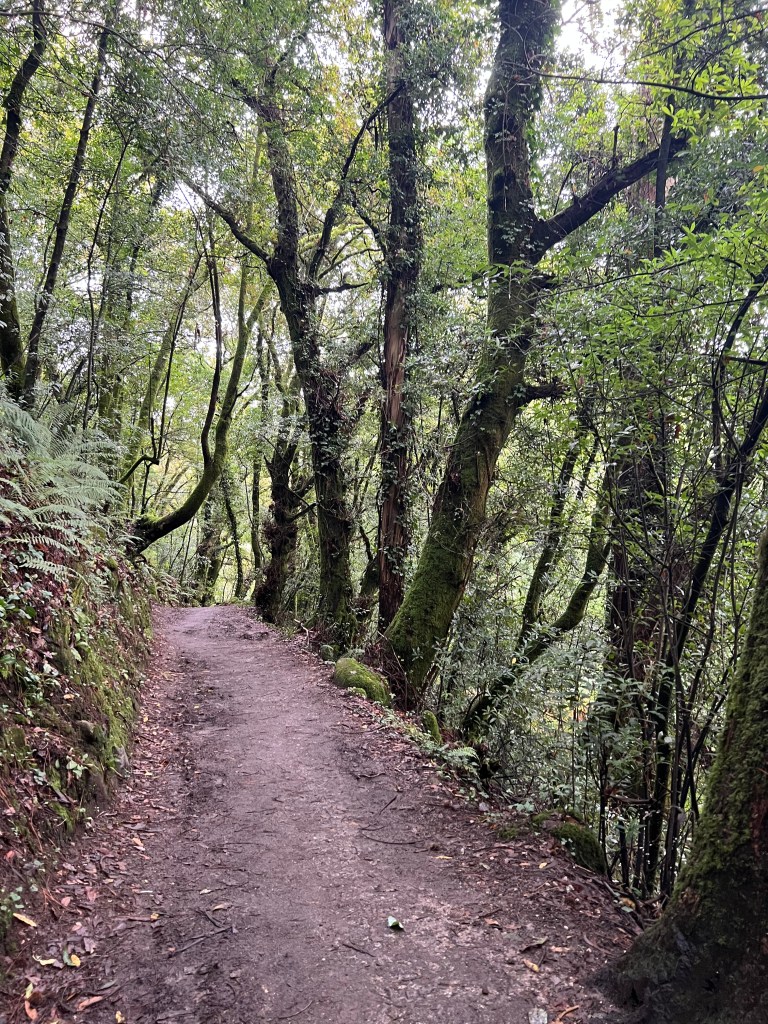
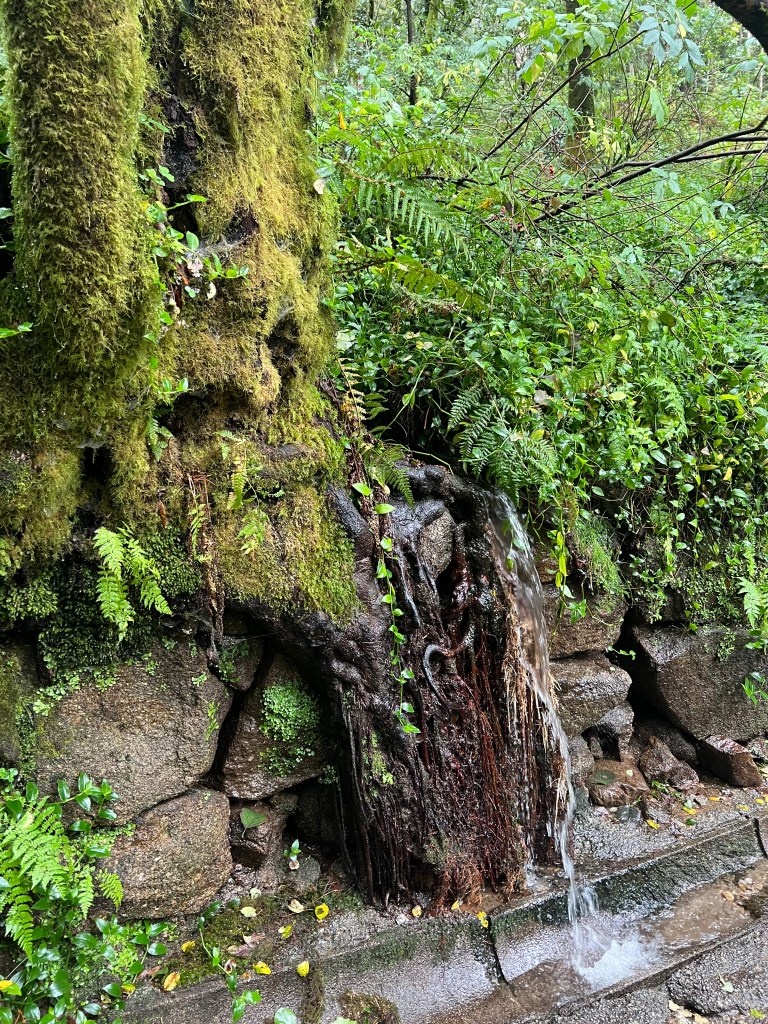
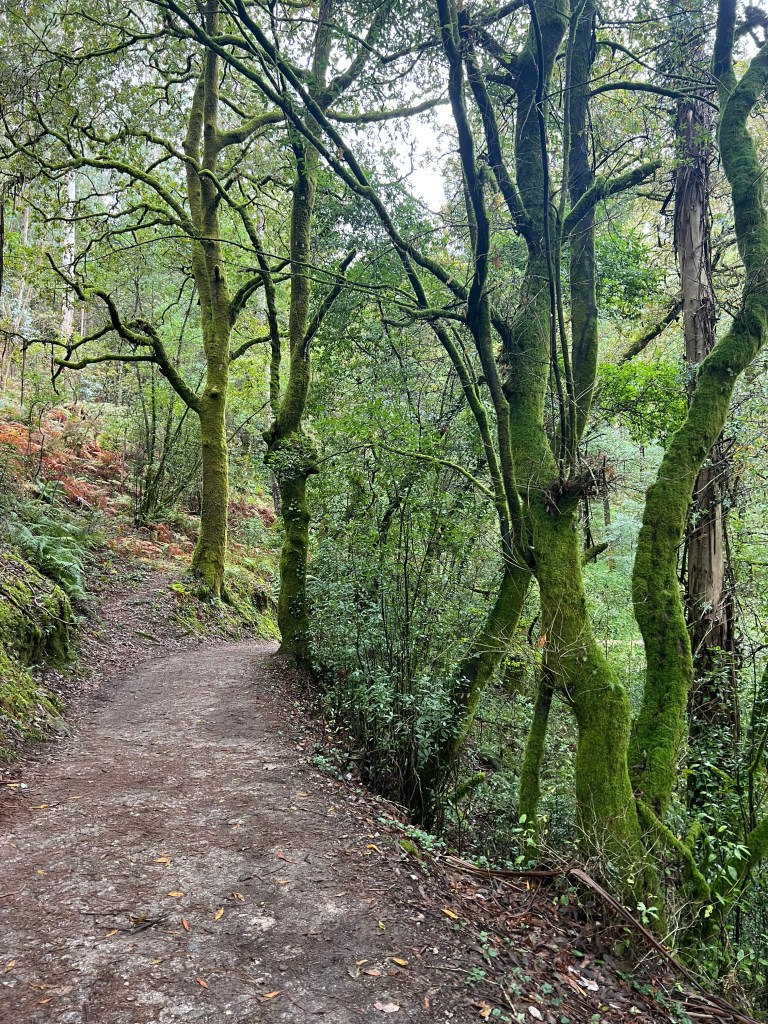
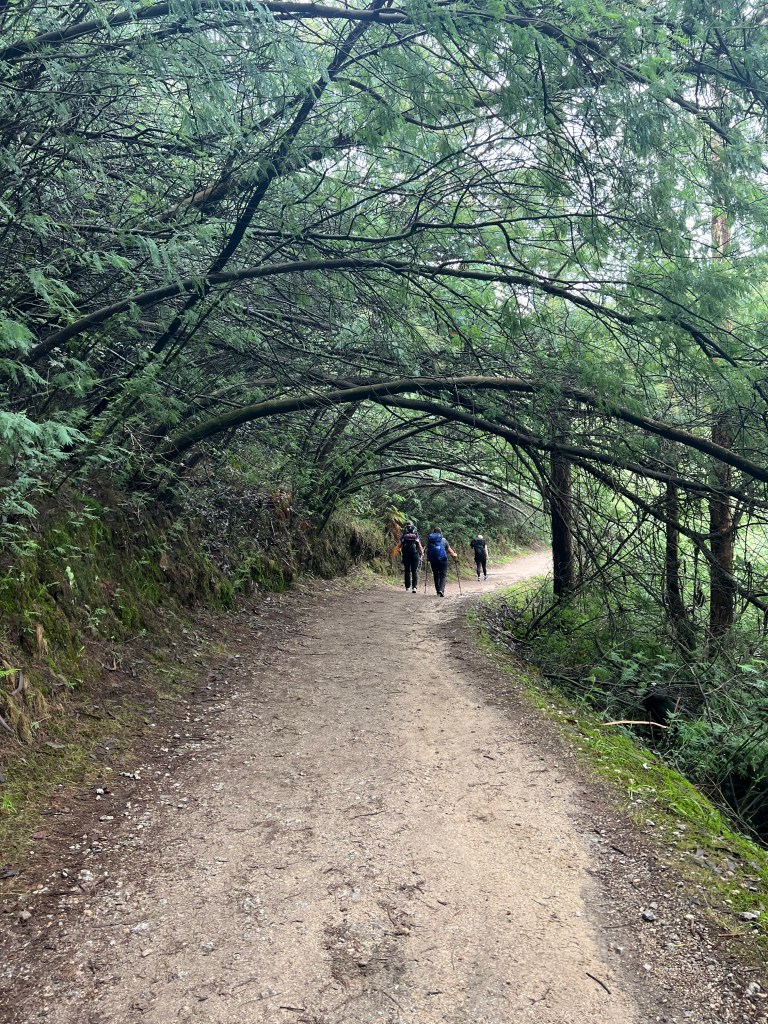
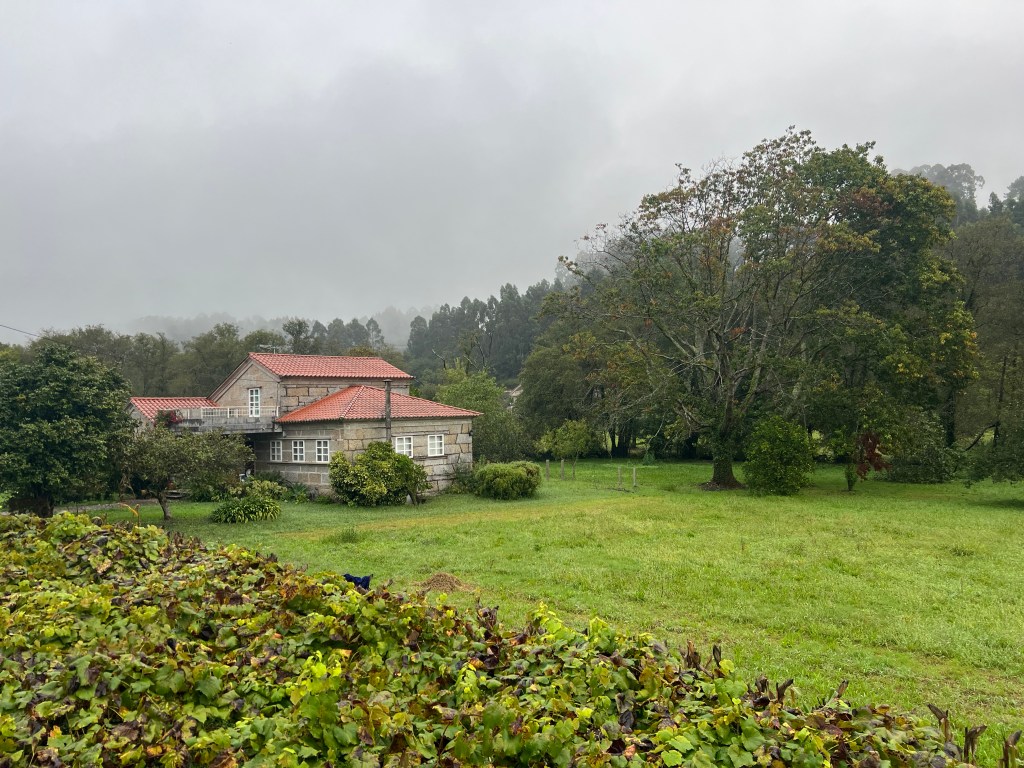
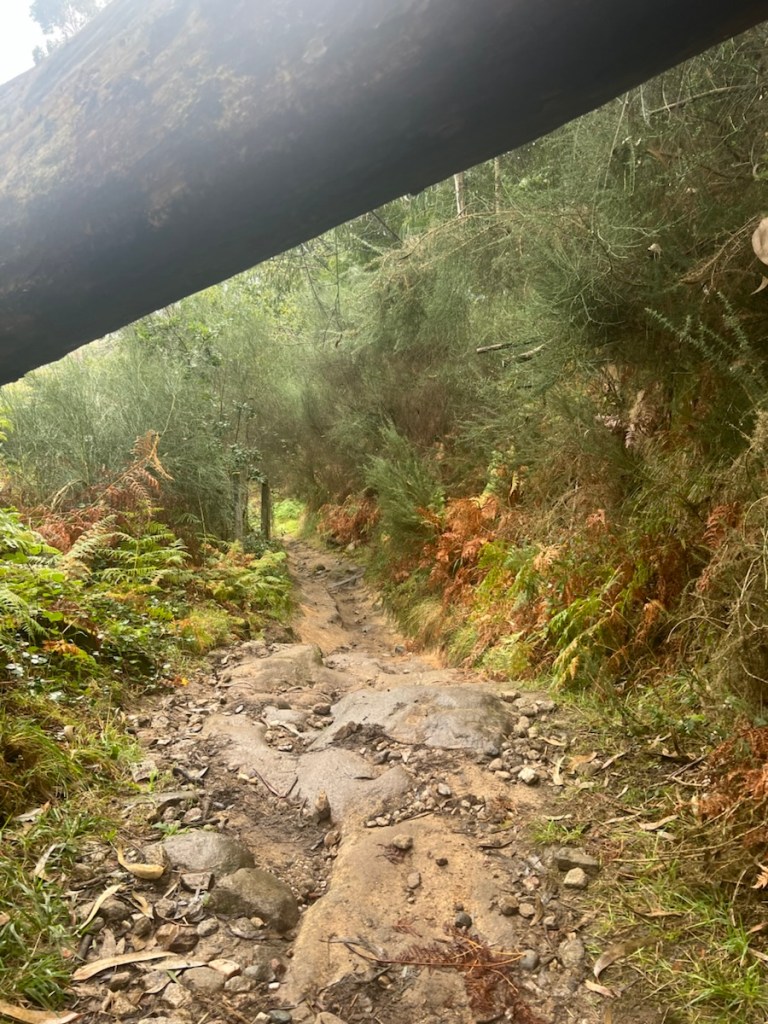
As we left the town behind, the Camino treated us to peaceful country dirt roads and mountain trails—a welcome break after over 500 kilometers of asphalt since Lisbon. These are my favorite parts of the Camino: forested paths, quiet mountain trails, and a chance to truly connect with the journey. Though the trail was still busy with other pilgrims, we were lucky to enjoy stretches of solitude. For brief, blissful moments, there wasn’t another soul in sight or earshot—just us and the serenity of nature.

On the way to Padrón, we stopped at a café to rest, and there he was—an elderly gentleman with a twinkle in his eye, selling Camino shell pendants. He had the gift of the gab, charming a crowd of women as he extolled the virtues of his pendants. In the half-hour I sat watching, he sold at least 20 or 30 of them. Naturally, I couldn’t resist—I bought two!

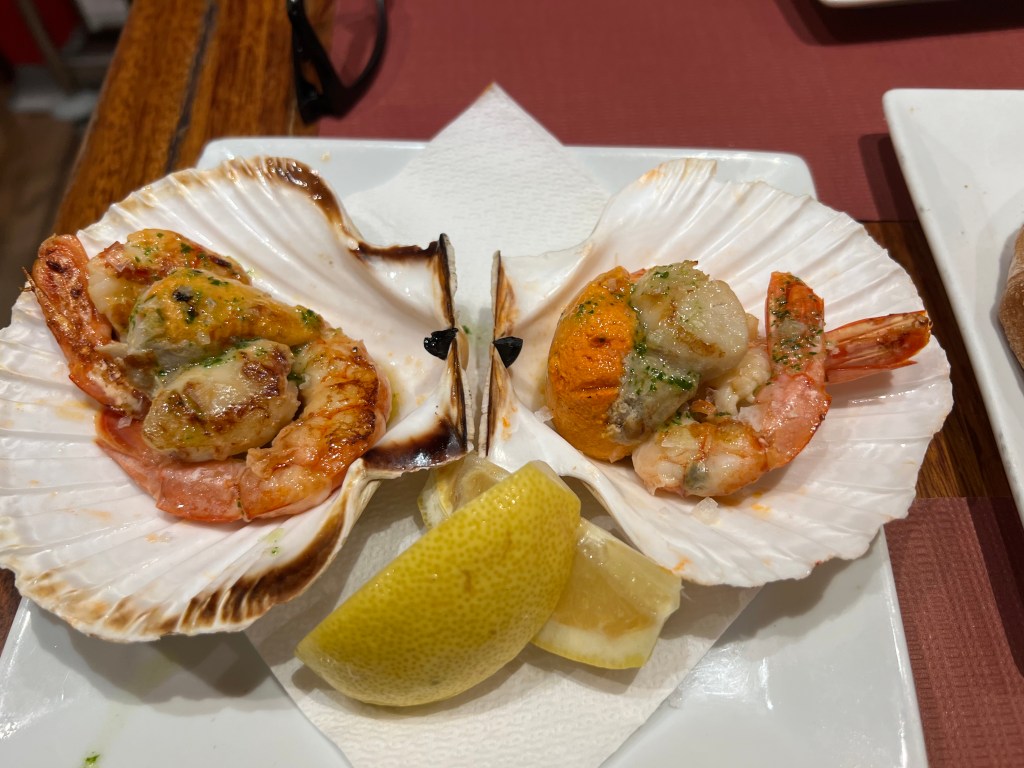
With tomorrow being our last day on the Camino proper, we decided to get an early celebration in. We splurged on dinner at a fancy parilla-style restaurant. It wasn’t a full-fledged fine dining spot, but it ticked all the boxes for hunger and celebration. The food was satisfying, and the occasion felt just right.

As we approached Padrón, memories from my last visit here nine years ago in 2017 began flooding back—where I stayed, where I ate, and the people I was with. The sights brought back a mix of joy and melancholy, a bittersweet reminder of how time reshapes the familiar. These reflections added a nostalgic layer to the day, making it all the more meaningful.

Tomorrow, the final stretch awaits. Santiago is almost within reach.

Day 17: Pontevedra->Caldas de Reis

https://www.mapmyfitness.com/workout/8196557014

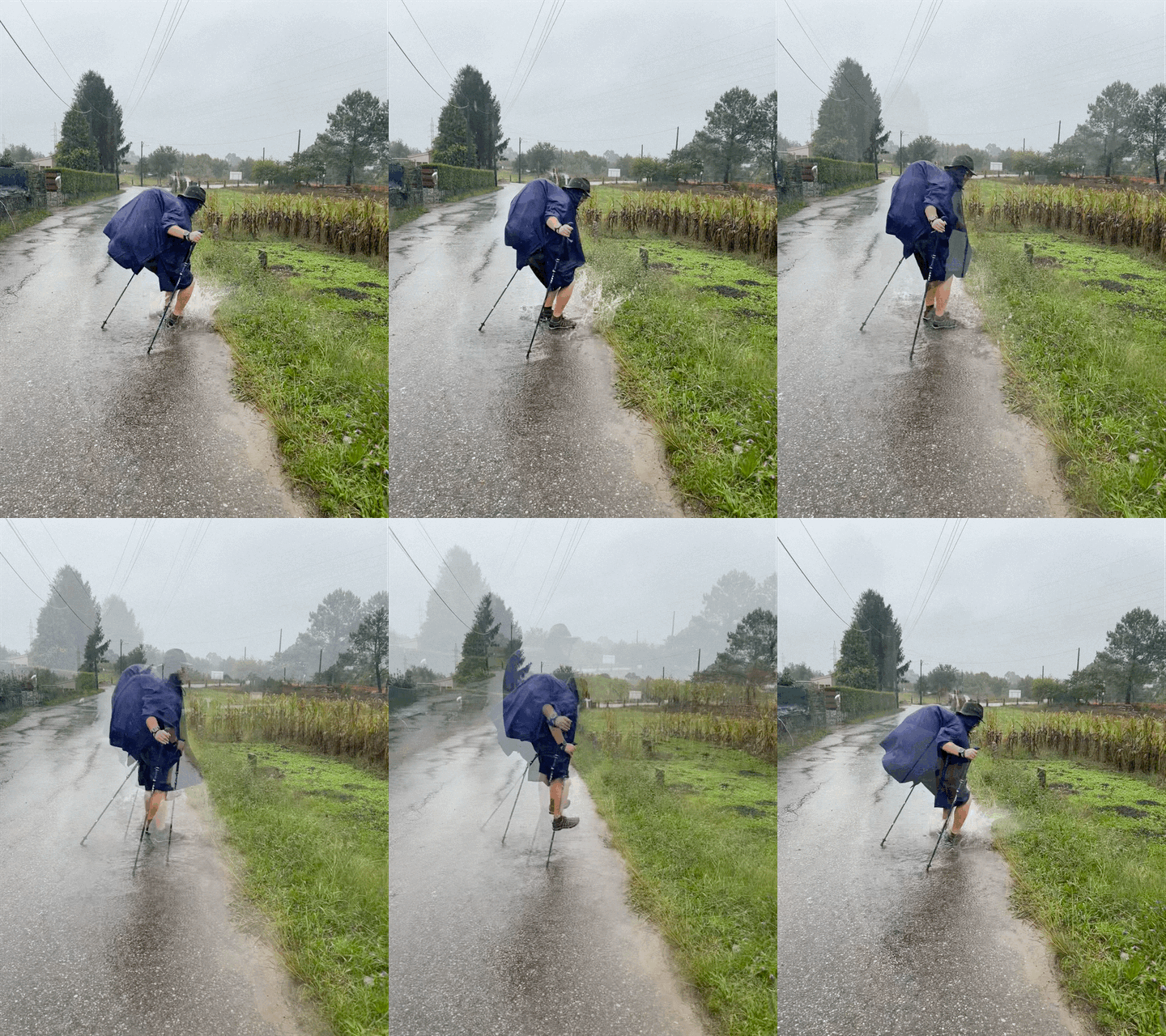
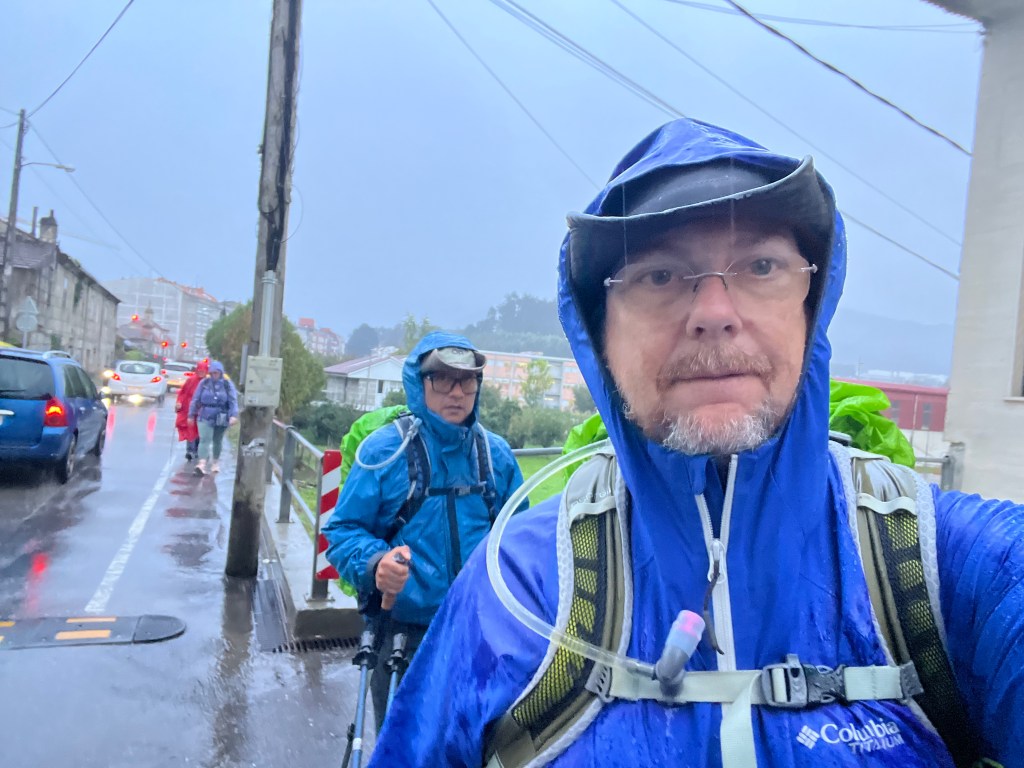
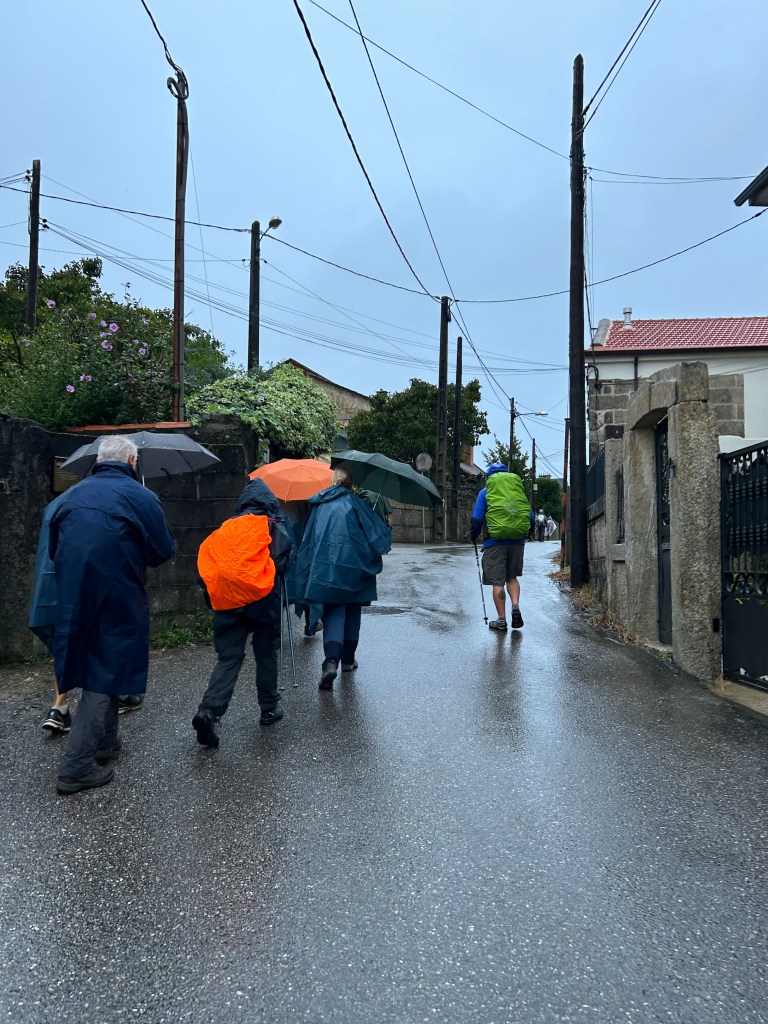
Another day, another donning of the rain gear as we left Pontevedra. It was clear the weather wasn’t going to cut us any slack. Walking in the rain with glasses is its own special brand of challenge: leave them on, and they fog up so badly you can’t see. Take them off, and—well, you still can’t see. Let’s just say the day’s views were a bit blurry for me, literally and figuratively.

The rain didn’t stop at my glasses; my hands became so waterlogged that my phone refused to recognize my fingers. Communicating with Luis turned into a game of voice-command roulette. Siri became our intermediary, but with multiple languages set on our devices, Siri had no clue what we were saying half the time. The results? Pure comedy. Mis-translated messages had us scratching our heads at first, but we soon learned to just laugh it off. Nothing like Siri to keep things interesting on the Camino!

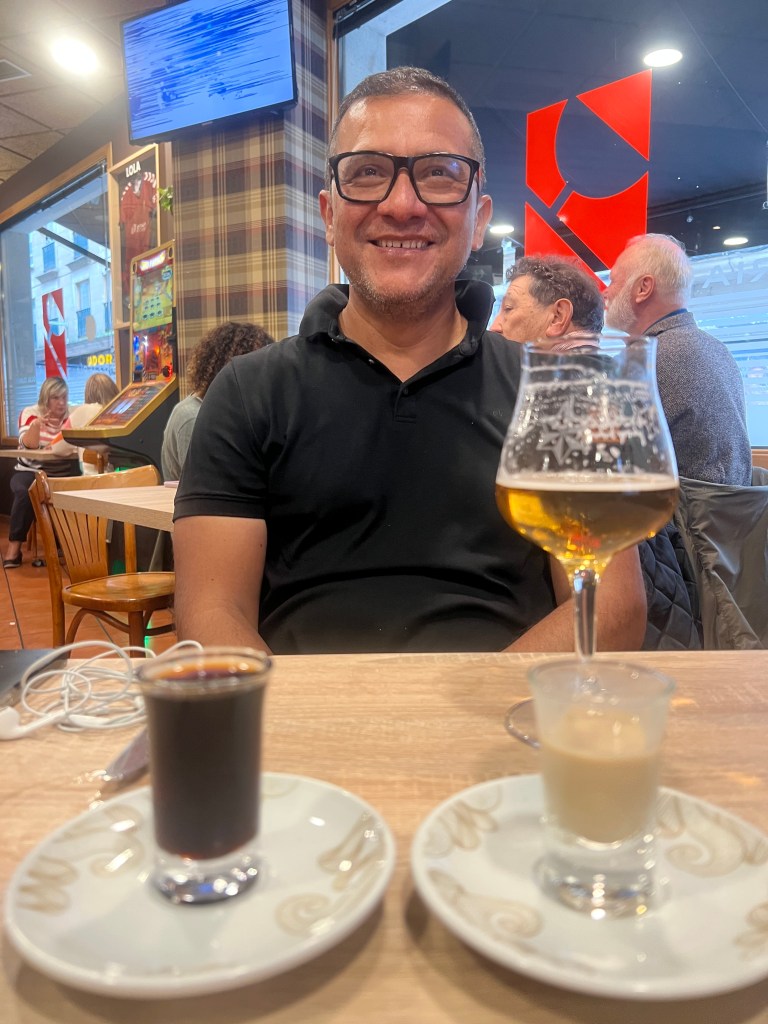
At one point, the crowds separated us by more than a kilometer. When I finally reached Caldas de Reis, I found a café and waited for an hour, only to discover Luis had already passed me! He grumbled as he backtracked, and we reunited over lunch and some much-needed “liquid nutrients.” From our café perch, we people watched— all different types of people: pilgrims, locals, and tourists as they wove through the streets.

With just a few blocks left to walk, we weren’t in any rush, especially since we had reservations at a spa that evening. The spa, or balneario, was perched right on the river, with my room offering a view straight down into the rushing water. We spent the evening soaking up the comfort: hanging out at the bar, doing some laundry, and fully embracing the art of relaxation.

With only two days left to Santiago, the mixed emotions started to creep in. We were both thrilled and melancholic, excited yet reflective. Thrilled to be nearing the end, but sad that this incredible journey was wrapping up. Excited to see what revelations the Camino might bring in the coming weeks and months, but at peace knowing the memories we’d already made would stay with us forever.

Day 16: Redondela->Pontevedra

https://www.mapmyfitness.com/workout/8196119449

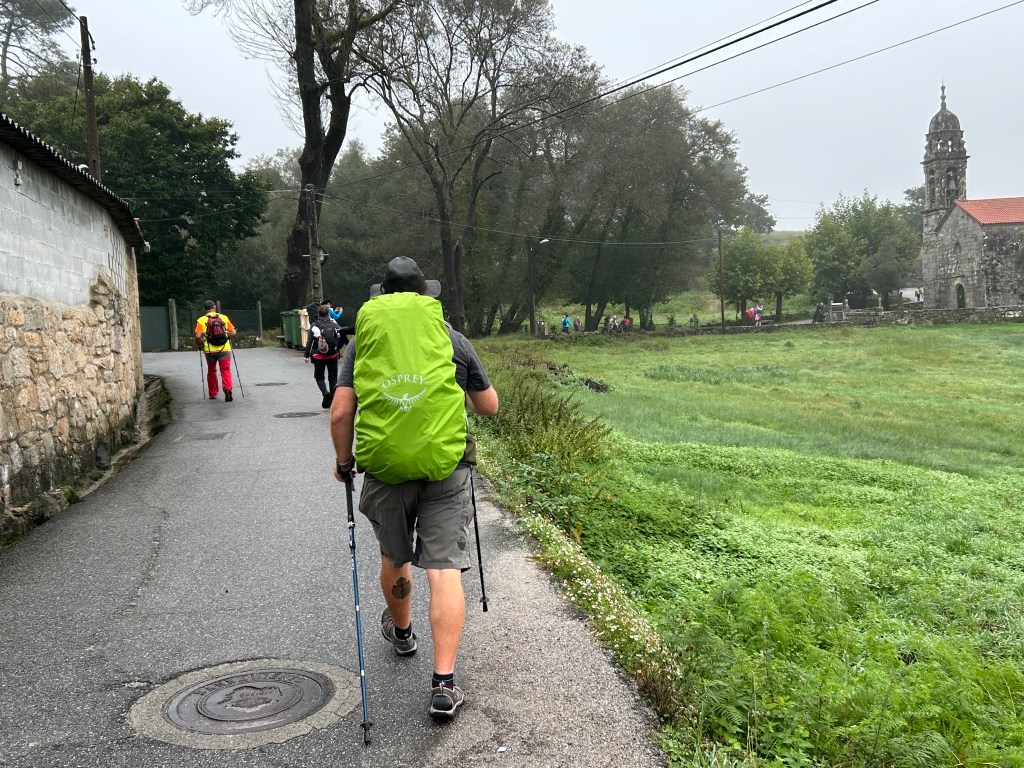
Redondela is a bustling junction where several Camino routes converge from the south, and being about 100 kilometers from Santiago, it attracts a steady stream of pilgrims. Translation: it’s a bit of a pedestrian traffic jam! Picture a constant flow of walkers, chatting away in groups of four or five, completely blocking the trail. Navigating this gauntlet wasn’t exactly easy, especially for someone like me who prefers a more introspective pilgrimage. Don’t get me wrong—I enjoy a good Camino chat, but there’s a time and a place for socializing.

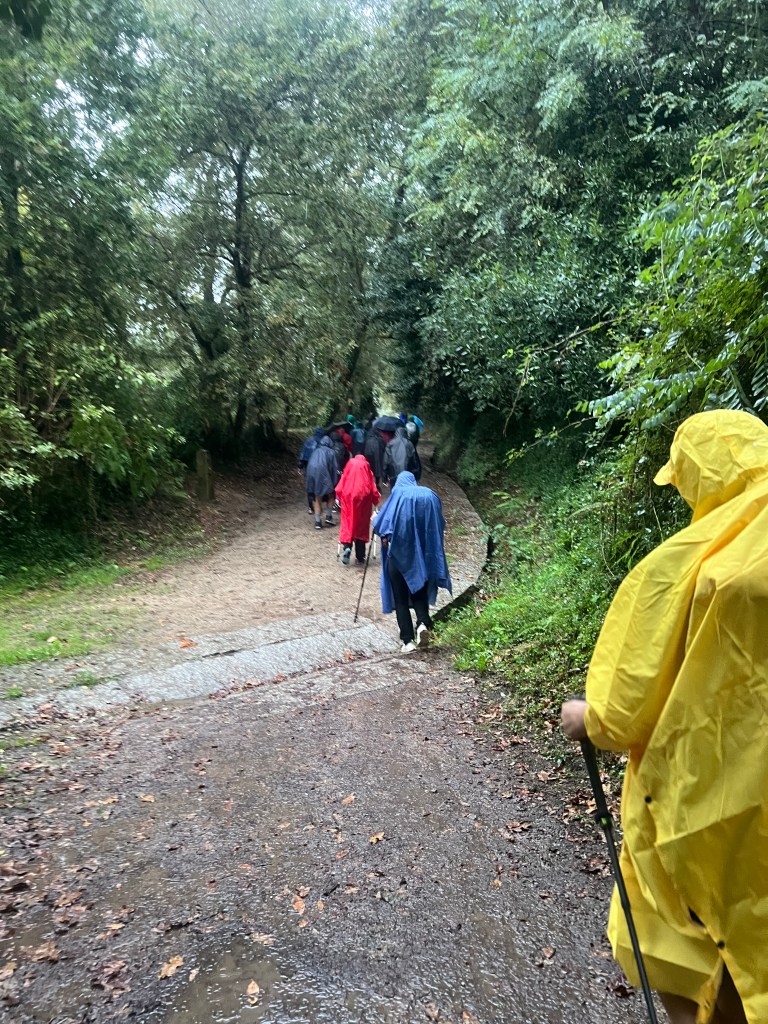
And then, there was the rain. Oh, the rain! It poured all day, soaking us right down to our bones. I had two layers of rain gear, and my backpack was triple-protected—it stayed dry (thankfully), but I was a walking puddle. My main strategy was simple: escape the crowds. Spoiler alert: the crowds were relentless. At every village, I hoped for a cozy café to dry off and warm up, but the cafés were packed to the brim with other waterlogged pilgrims. With their doors wide open and soaked patrons shedding rain everywhere, it was just as wet inside as out. So much for drying off.

By the time we finished the day’s trek, we decided we’d earned a little comfort. We booked a hotel for some much-needed relief—warm showers, adjustable heat, and, most importantly, space to spread out and actually dry off. After a long, wet slog, it felt like pure luxury. Sometimes, you’ve got to treat yourself, especially on a day like today!

Day 15: Nigrán->Redondela


Today was meant to be a 20km day, but we didn’t want to end up with an ultra-short day later, so we decided to combine two stages and walk right through Vigo.

The walk took us over a mountain, through beautiful forests filled with waterfalls and archaeological sites. As we approached Vigo, we passed through an industrial area and then along a lovely river walk that stretched for about 6 km. The river led us by the Vigo fútbol stadium and the Citroën factory, which, according to one enthusiastic local, are the heartbeat of Vigo.

I hadn’t fueled up properly in the morning rush, so by the time we arrived in Vigo and sat down for lunch, I was completely wiped. That’s when I made the executive decision: we’d take the train for the last 12 km. And thus began our little train adventure.

We headed to the train station to buy tickets from Vigo to Redondela. The attendant, for reasons unknown, seemed to be on a mission to confuse us, sending us on a wild goose chase—go downstairs, look for a ticket booth, then back upstairs and over to another platform. It turned out that the ticket machine was conveniently located… right outside the ticket office. Classic!

Tickets in hand, we had a two-hour wait. The waiting area was right outside security, which felt a bit like airport security. Our train wasn’t on the board, but when security opened, we went through. They checked our tickets and promptly told us we were too early—30 minutes early, in fact. 🤷‍♂️ So, we sat down between security and the platform… and were immediately ushered back out by security. We had to wait outside.
After 30 more minutes, we went through security again, only to be told by the platform agent that we were at the wrong station and needed to go a few blocks to the other one. Huh?

So, we ran—getting a little lost in the maze of the train station and shopping mall—until we finally found the right station and platform. Turns out, the first station was for long-distance trains, while the one we needed was for local commuter trains (which, by the way, use the same tracks).

Settling into our seats, I checked the train details: Redondela, yup, that’s our stop. Time to relax for 10 minutes. Or not…

As I glanced at Google Maps, I realized there were two stations in Redondela. We needed the second one, so we stayed on the train. But… it didn’t stop at the second station. And suddenly, we were on our way to Pontevedra—the place we were supposed to walk to the next day! Meanwhile, we had a reservation in Redondela for the night.

A quick search showed there was only one train back to Redondela, and it left just before we’d arrive in Pontevedra. Uh-oh. I started scrambling to find a new place to stay, only to discover everything was fully booked.

As we got off the train and crossed platforms, we stumbled upon a sign showing the next train’s destination… and wouldn’t you know it, it was for Redondela, and it was running late! Woot!

There was some back-and-forth about whether we’d need to buy new tickets, but we thought, “Screw it, we just overstayed our ride a bit.” The train arrived, and the next stop? Redondela, the one we originally wanted.

I have no idea how all of that worked out, but it did. The Camino provides…


Camino Tech

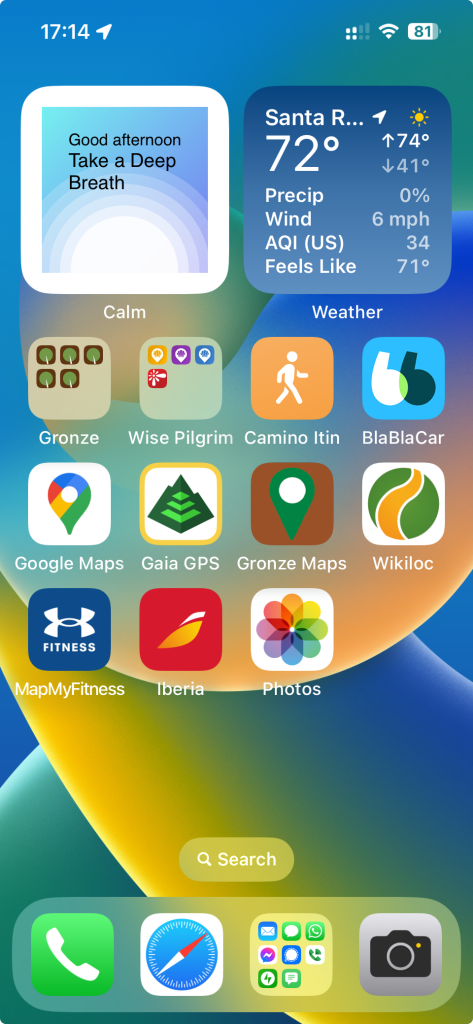
I’m a techie… been in IT for almost 40 years now. Tracking stats, maps, and things are all fun things for me. They aren’t for everyone, and that’s OK. Everyone has their own Camino and one is no better than another. I have always used tech on my Caminos. Researching, mapping, GPS tracks, health and distance stats, etc. Many ask which tools to use, and there are as many tools and ways to use them as there are Caminos. But here’s what I have used and what I like…

Fitness Tracker

I use an iPhone 13 Plus and Apple Watch Ultra 2. They just work. I particularly like that all of my files, photos, and information I use on a day-to-day basis is automatically backed up to the cloud and synced on all of my devices. If I lose my phone, I haven’t lost any data, and I can be up and running as soon as I replace it. The one thing I don’t like about my Apple Watch is that if its misting outside, or because I am a surdo (left-handed), buttons or the screen get pushed/tapped and stop my workouts and tracking. I have just recently found a way to overrule this – put the watch in “Water Lock” mode where it locks the screen and buttons so they can’t be inadvertently tapped or pushed. I think this will solve my problem.

Mapping Software

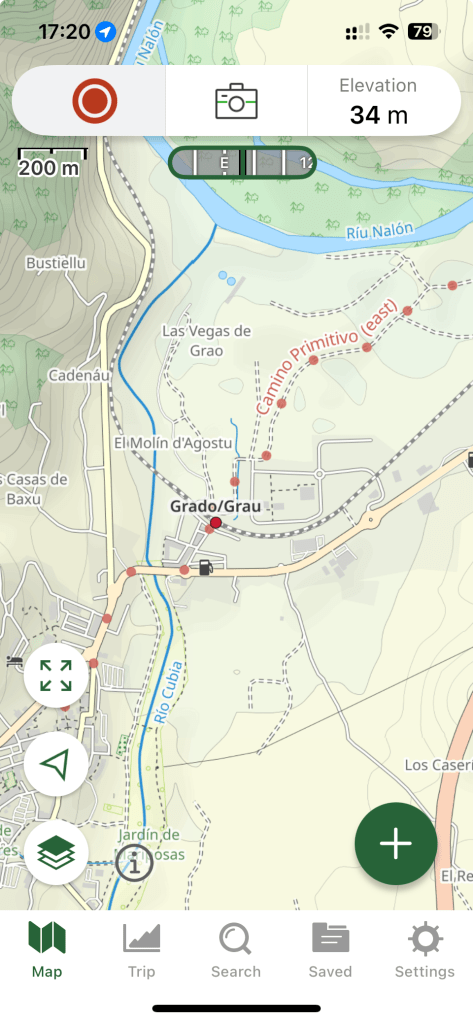
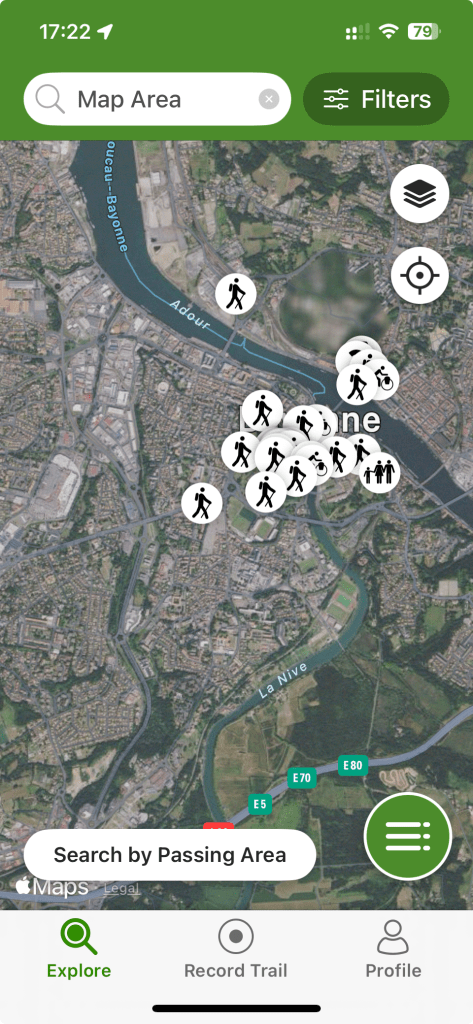
Gaia Pro

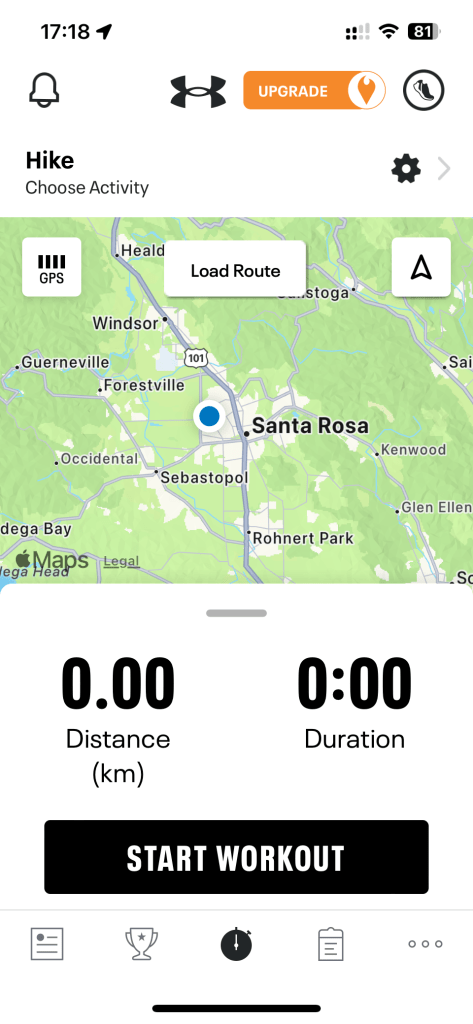
MapMyFitness

As for software for fitness tracking, I use MapMyFitness by Underarmor. I have used many others, but have settled on MapMyFitness. There’s not really anything I like about it more than the others, they are all underwhelming – that is to say, I haven’t found anything better about any of the others to make me want to change and lose my history, or have to migrate my history.

For generic mapping software, I use GaiaPro. This is a pretty advanced application that has a myriad of map styles and sources to choose from. There are even base hiking maps with the Camino routes already on them. Standard features are routing, off-line maps, route tracking, photo insertion, etc. I also use it for other things like my CritterCam projects with the California State Parks.

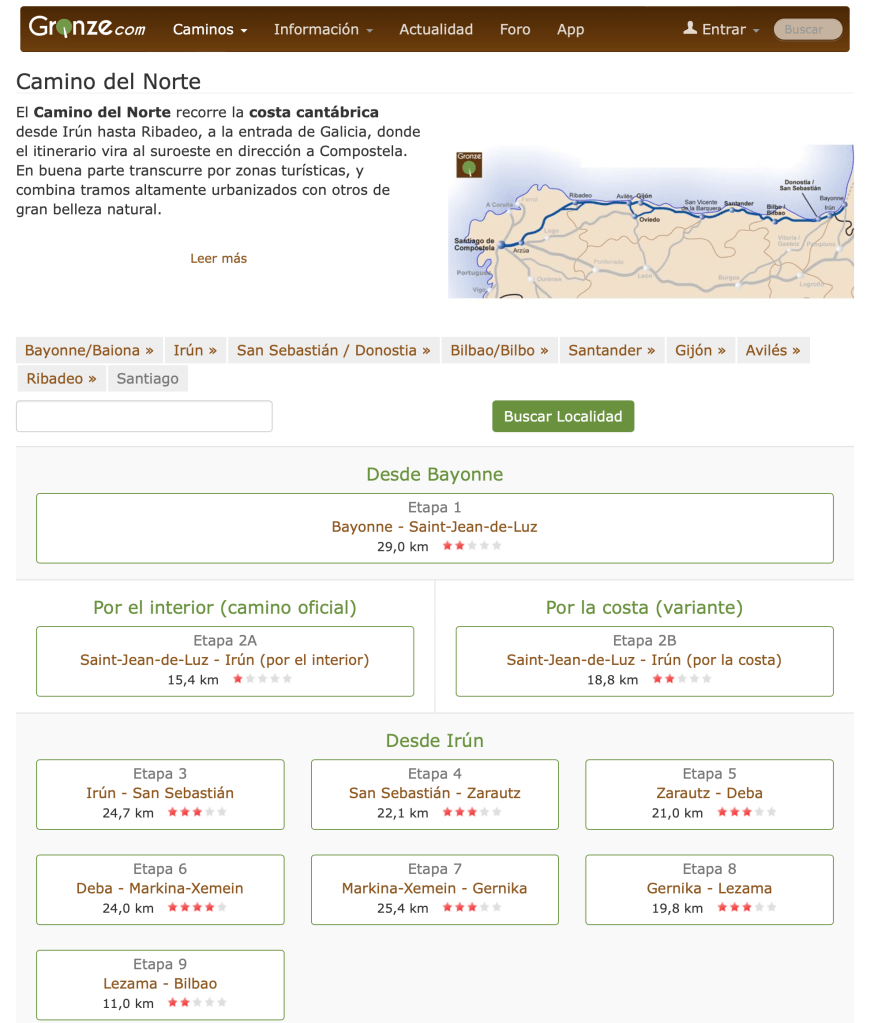
Gronze.Com

Gronze.com is an online mapping tool that is specific to the Camino. It’s in Spanish/Castellano, and has the official routes documented. I primarily use it for the other information it contains, which I will talk about later.

Google Maps. I use google maps whenever I am overseas, as I find that it has the best/most accurate database of businesses, transit, etc. that I might need while I am traveling. I like Apple Maps better, but it’s not as good as Google Maps overseas.

WikiLoc

Wikiloc – this is similar to All Trails, but it’s more widely used in Europe than All Trails – or seems to be. This is both good and bad. There are sooooo many trails that have been uploaded by so many people, it’s difficult to filter just what you need. You can download routes to your phone and watch if you want to do that. But for routing, I like to put my devices on mute and route by the yellow arrows. While I like tech, I’m working on being present more…

Camino Specific Apps

Gronze.com is a Spanish Language site that has detailed information on most Camino routes including albergues, places to eat and get supplies, history, route steps and information, attractions, etc. It seems endless the amount of information they have. Very useful. My main gripe about Gronze.com is that it’s not an app. You have to have internet access and it can be hard/slow to navigate on a small screen. But the amount of information available is probably the best of the apps I’ve been exposed to.

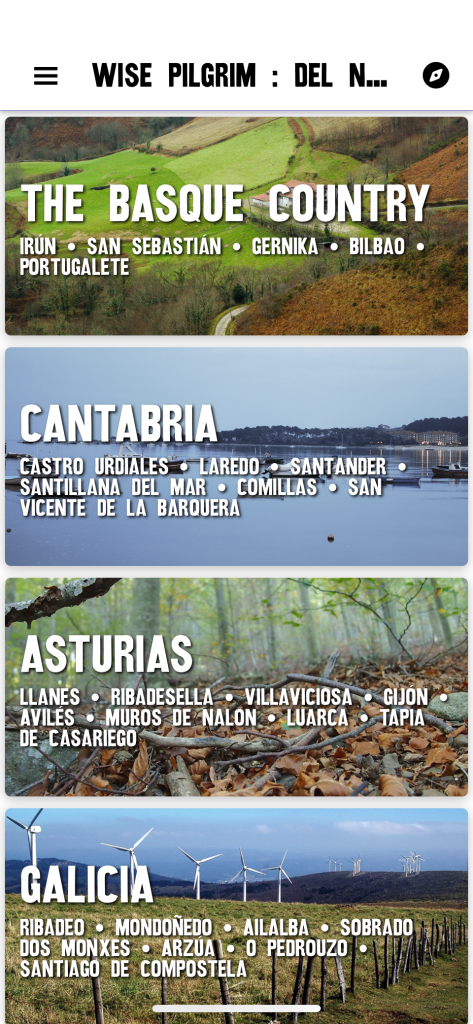
Wise Pilgrim

Wise Pilgrim Apps (one for each route). This is a great set of tools. They offer much of the same information as Gronze.com, but it’s in an app, offline, and in English. It’s quick to navigate and they have done a really good job at improving it over the years.

These tools provide trail profiles, details about which trails and services are open/closed, and they also provide a forum where users can post updates which WP can incorporate into their database.

Transportation

Don’t forget transportation and how to get around. Google Maps is a good starting place, but I quickly found that it was inaccurate and incomplete. I have yet to find a complete tool that encompasses most forms of transportation in Spain. I have, however, downloaded BlaBlaCar -again-. In 2015, I took a ride share from Madrid to Pamplona and it cost me something like €12. A bus ride from Bilbao to Bayona, Fr, on Google Maps was going to take 4-6 hours and cost €40. On Uber it was going to be something like €350. On BlaBlaCar, it cost €5.99 and will take 2hr 20min on a bus. There are other transport apps like RENFE (train), Alsa (bus), etc, but those are sometimes hard to navigate if you don’t know the exact stations you need to be at/go to.

Caveat

You always have to have a caveat as there are those people who like to argue and insert their toxicity behind the anonymity of the internet. These are only some of the tools I have used, and the ones I am taking on my trip this year. If I find others, I will look at them. Tools that I have used in previous years are no longer on my phone as I found these work better for me. Make your Camino your own, find the tools that work best for you.

A list of my Caminos

Each Camino is different. They offer different climates, cultures, food, terrain, history, etc. The Camino Frances, which is the best known of the published routes, runs for about 790km and has mountains, plains, forest, cities and towns, single track to asphalt. It also offers arguably the most flexible route as far as the frequency and distance between places to stay and eat. It is a beautiful route, but because it is the most widely known route, it’s not my preference. Not that I wouldn’t walk it again, but there is so much more to see, that I would prefer walking other routes over this one.

On the opposite, is the Camino Olvidado. It runs between Bilbao and Ponferrada (Camino Frances) for 489km and is some of the most remote paths that I have encountered to-date. Many towns do not have complete services and many albergues are sporadically closed. One must plan to walk this route and you would be luck to encounter another pilgrim. It is a solitary trail, but offers some of the most beautiful countryside of any of the caminos.

My favorite so far has been the Camino Primitivo between Oviedo and Melide (Camino Frances) and runs 261km. This route has a nice blend of mountains, forests, rivers, villages and towns, and people. It is better known than the Camino Olvidado, so it has more services, but it is arguably more strenuous than the Camino Frances. It’s a good balance.

YearCaminoFromToDistanceTerrainPeople (Other pilgrims)
2015FrancesSaint Jean-Pied-de-PortSantiago790kmMountain, plains, forest100’s per day
2016NorteSan SebastianSantander245kmCostal, Mountains15-30 per day
2016PrimitivoOviedoMelide/Santiago311kmMountains, forest, farmsTypically no more than 20 per day
2017Portugues (Costal)LisbonSantiago630kmMountains, Oak Savana, costal, cities & towns20-40 per day
2022OlvidadoBilbaoPonferrada475kmMountains, forests, farms<10 entire route (three when I did it)
2022InviernoPonferradaSantiago260kmMountains, forests, rivers, towns10-15 per day
2024My Custom Route (Norte->Vadiense->Olvidado->Salvador->Primitivo->Frances)Bayona->Comillas->Cistierna->La Robla->Oviedo->Melide->SantiagoSantiago1006kmAll of the aboveAll of the above
My Routes and Overview
My Caminos

Camino de Santiago 2024

This year I will embark on yet another Camino walk. This will be my fifth time there, and walking six different routes this year. This year will also be my longest walk exceeding 1000km or 600 miles. About half of this year’s route will be new to me, and the other half, will be on previously walked trails.

The Camino is a unique experience, even between companions, each one will have a different experience, challenges, and take-aways. There is a saying on the Camino: Your camino starts when you reach Santiago. The tomb Santiago or Saint James of course being the typical destination, located in the north-western corner of Spain, in Galicia, in the city of Santiago de Compostela. The most known route is the Camino Frances which runs from Saint-Jean-Pied-de-Port in the south western part of France, and travels 790km to Santiago. This was my first Camino in 2015. I physically suffered during this Camino, but I got hooked, and returned to walk the Camino Norte and Camino Primitivo in 2017, then the Camino Portuguese in 2017, and then the Camino Olvidado in 2022.

This year, I will start in Bayona France, and walk the Camino Norte along the cost of the Bay of Biscay for 16 days. Of these 16 days, six will be new to me. After the 16 days, I will then head south and cross the Cantabrian Mountains on the Camino Vadiniense – all new to me – for eight days. I then connect to the Camino Olvidado in Cistern for two days – which I have walked before, and then head north for five days on the Camino Salvador – new to me – to once again cross the Cantabrian Mountains to the city of Oviedo. From Oviedo, I head south west to cross the Cantabrian Mountains one more time on the Camino Primitivo for 11 days (I’ve walked this route before), and then finally in the town of Melide, I connect with the Camino Frances for the final three days. That’s a total of 45 days on the trail, and lots of coast, but mostly mountains. The route is roughly the neon green highlighted in the map below.

I plan to share my journal on this blog of this Camino as I have shared other adventures. I leave California on April 24th and will start walking a few days later. Feel free to ask questions, and share the blog to anyone who might be interested.

As we say on the Camino… Buen Camino!