Note: The picture galleries are just that – as displayed, they are thumbnails. To view the full sized picture, just click on the thumbnail and you can cycle through the pictures in the gallery.
I’ve been to see a lot of Mesoamerican pyramids – mostly Maya, but Olmec, Zapotec, and Toltec as well. I have not seen a lot of Aztec ruins – aside from the Templo Mayor in CDMX. I had always incorrectly thought that the Teotihuacán pyramids were of Aztec origin. This trip set me straight.
Danza de los Voladores
The Voladores Totonaceños greeted us in the parking lot – we parked right in front of their pole. Due to the stresses of the morning’s drive, we sat for a bit in the rigs and made lunch and relaxed for a bit. I then heard a whistle playing a little jig and looked outside. The four dancers were at the top of the pole and started to descend. I quickly got my phone out and snapped a few pictures and then took a video of the dance. It basically consists of four men tied off and hanging upside down from a wood frame that has ropes twisted around the top of the central pole. As their weight pulls on the ropes, they all unwind together causing them to spin in unison around the pole. As they spin, the ropes extend and they descend to the ground.
This dance is to offer prayers to Tlaloc and other gods to ask for rain and abundance. In this case, they were requesting rain for their vanilla crop to grow. After they descended, I joked with one of them: “better you than me, I would be throwing up on the people below spinning like that…”. He laughed and said in broken Spanish that one gets used to it. His Spanish was worse than mine. So I asked him what is maternal language was and he said Totoneco – the local indigenous language. He was selling little bottles of vanilla extract – so I bought one, if for nothing else then to contribute to the show.
Piramedes de Teotihucán
With most ancient ruins in mesoamerica, the signage and information about them tends to be lacking. I didn’t want to wander around and just observe them, so we got a guide to take us through. His name was Miguel and was an amicable guide.
The city complex foundation was laid down during the pre-classic period of mesoamerica – from 2000 BCE – 250 CE while most of the pyramids and temples were built during the classic period from 250–900 CE. Here’s a quick table of the Mesoamerican periods and the civilizations that we prominent during each period (copied from Wikipedia).
As we entered the complex, Miguel explained that in 1910, the government of Mexico “discovered” the ruins and the president at the time wanted to preserve them. The main problem was that the city was thought to be 22 sq km. Much of which had towns and aldeas (villages) built on top of it, and he couldn’t use eminent domain without causing a problem. So instead he concentrated on the center of the city, which included the main temple complex(es) consisting of about 9sq km. At the time, the 22sq km consisted of surviving stone ruins where the city center, elites, temples, main markets, pyramids, etc were located. Any clay, wooden or thatch buildings were outside of this area and were not considered at the time, nor conserved.
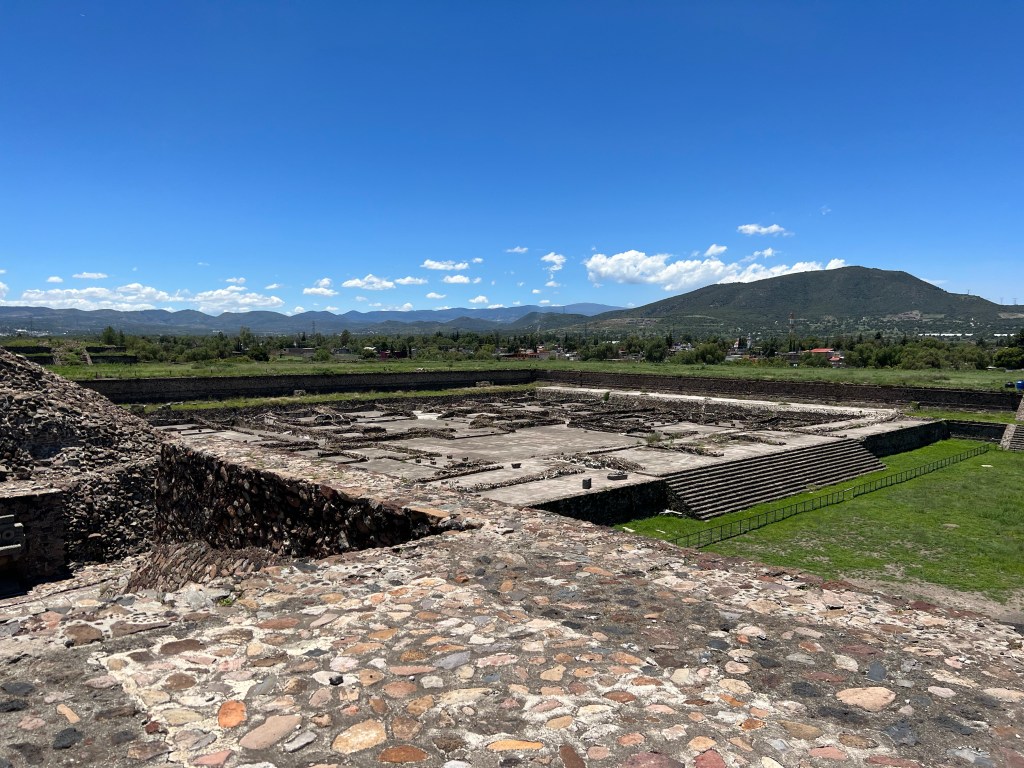
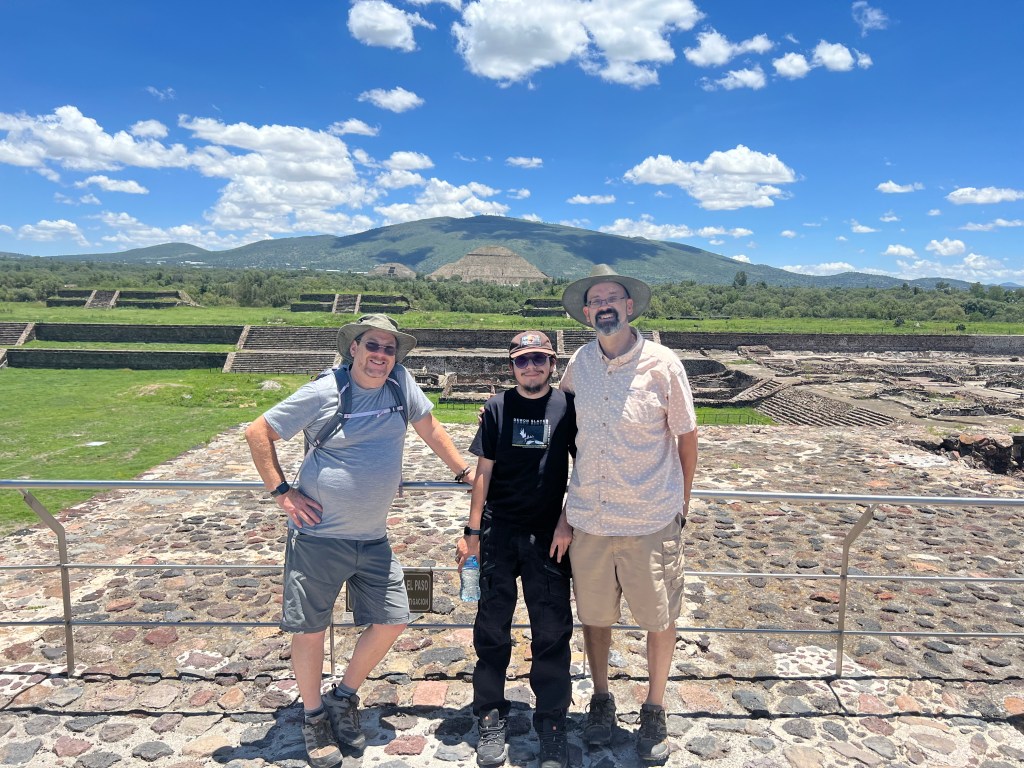
The city we would be seeing today – from the Citadel and the Temple of the Feathered Serpent to the Pyramid of the Moon, was about 3km long.
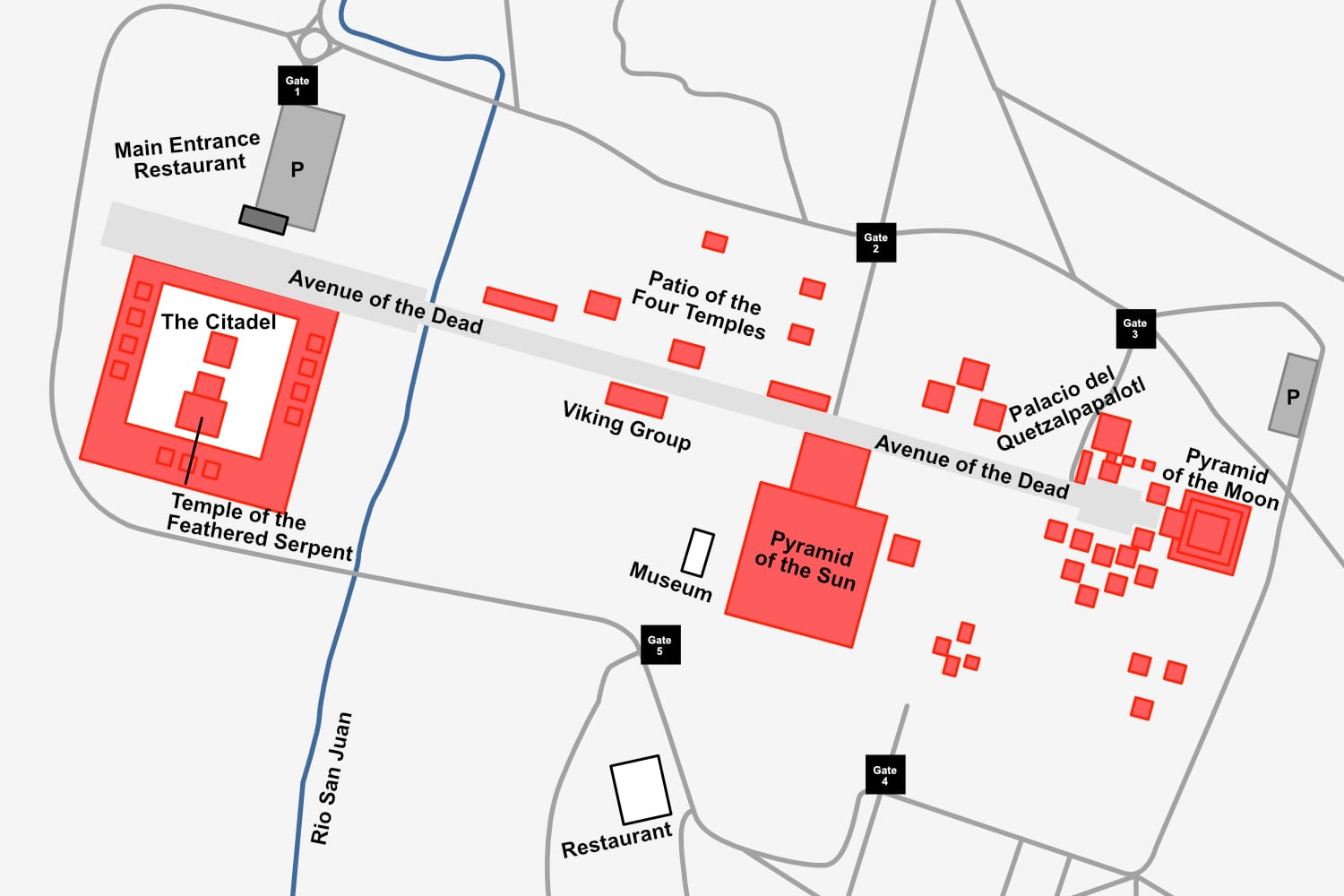
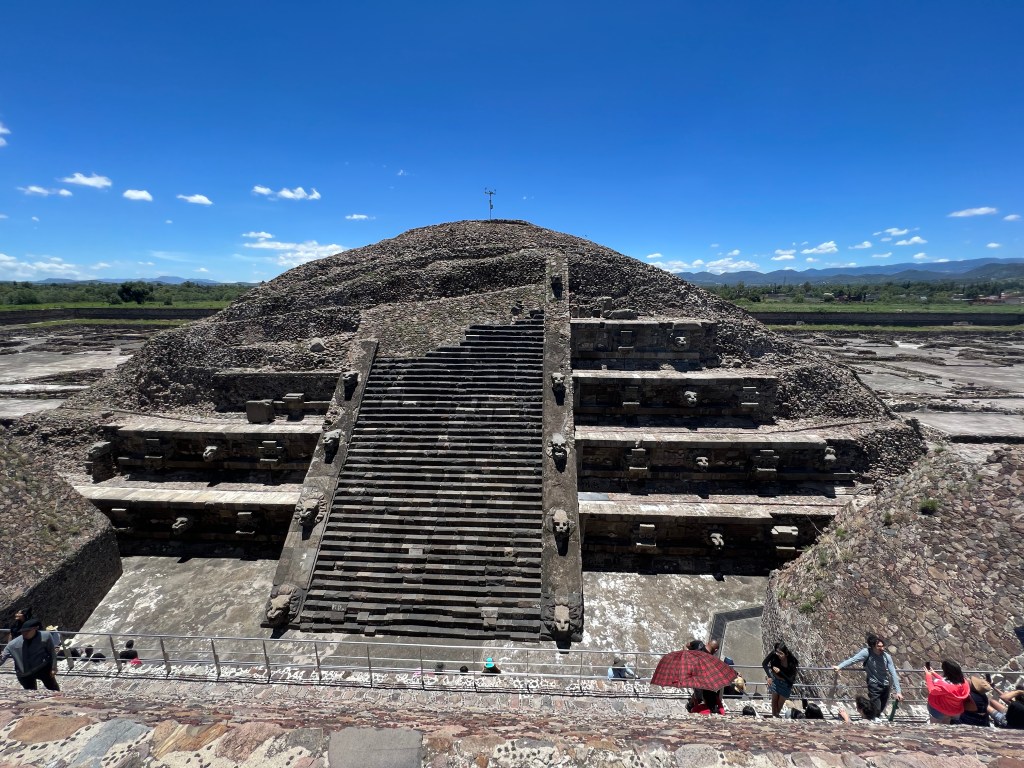
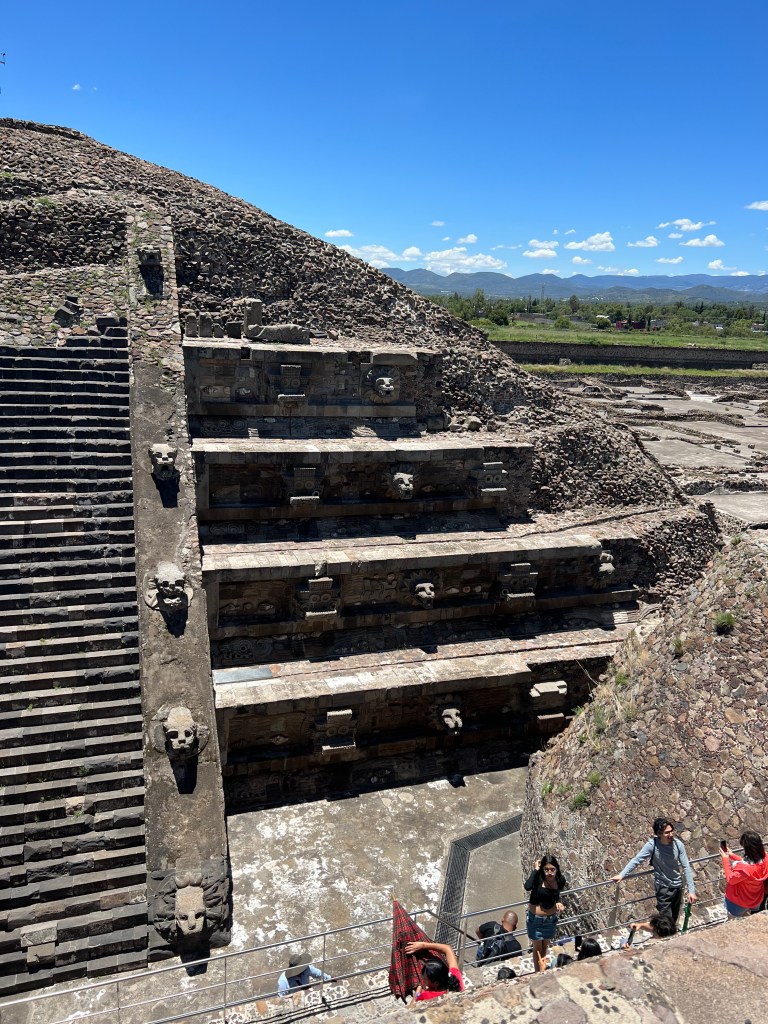
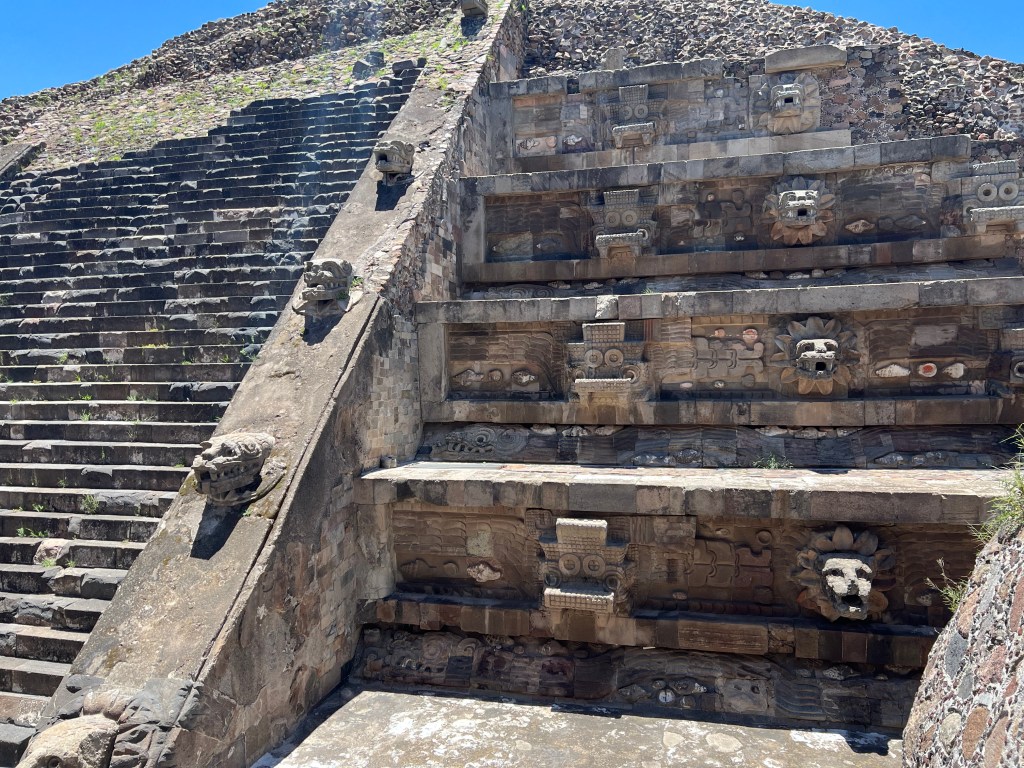
The Citadel plaza is about 200m x 200m squared on the inside. The outside walls were made up another 50m on each side – so not really that small. There is a small short platform in the center – being the citadel. Next to it, is the Temple of the Feathered Serpent (in Mayan, it is called Kululkan). I had always thought that Quetzalcoatl was the feathered serpent in Aztec, but for some reason the guide wanted to express that Quetzalcoatl and the Feathered Serpent were different. Perhaps because Quetzalcoatl is Aztec and the “Feathered Serpent” was pre-aztec.
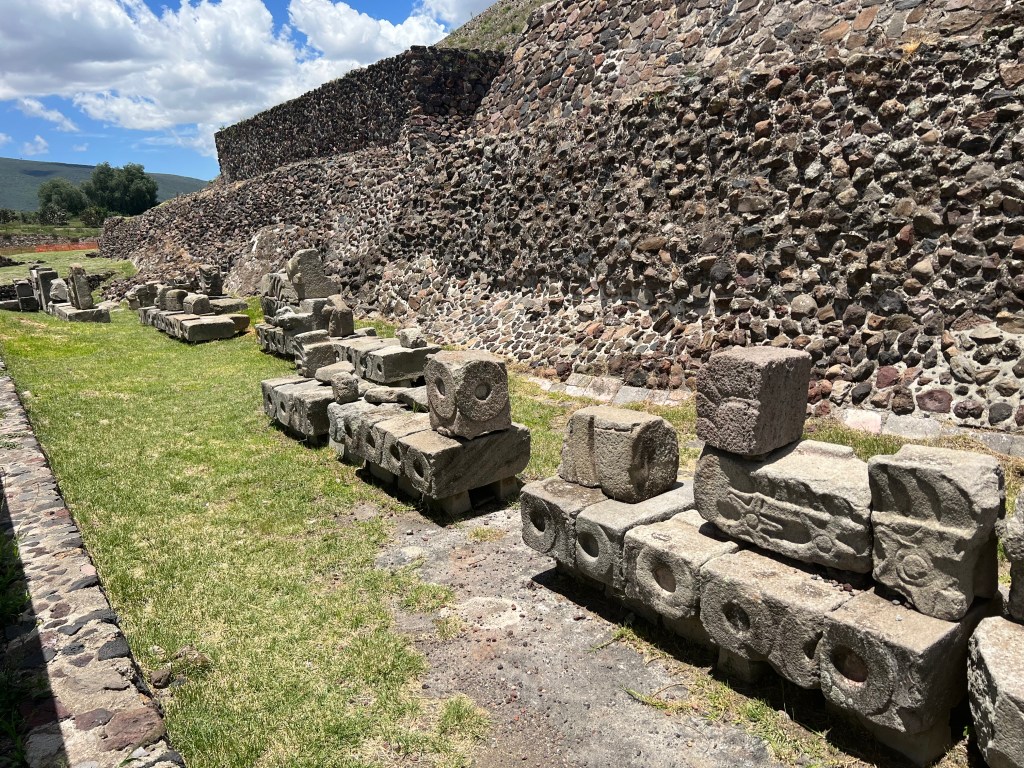
Between the Citadel and the Temple of the Feathered Serpent, sits an archeological dig site tent. There they found a tunnel entrance. It goes down 15m or 50′, and then heads east towards the Temple of the Feathered Serpent for about 100m where it ends in a tomb where in 2010, the found 260 bodies from all over mesoamerica. These were not just any ordinary bodies, these seem to be elite, priests, the wealthy, etc. from all over. These were not sacrifices, they were offerings. It is thought that these people got together and “offered” their lives and bodies to the significance of the rituals which the pyramids entomb. The number 260 corresponds to the lunar calendar of 260 days. At the different exterior layers of the Temple of the Feathered Serpent, are 365 monuments set into the sides, of Tlaloc (the god of water) and The Feathered Serpent. This is more of a curiosity than anything else for me, more research is needed as to the reasons why.

Avenue of the Dead
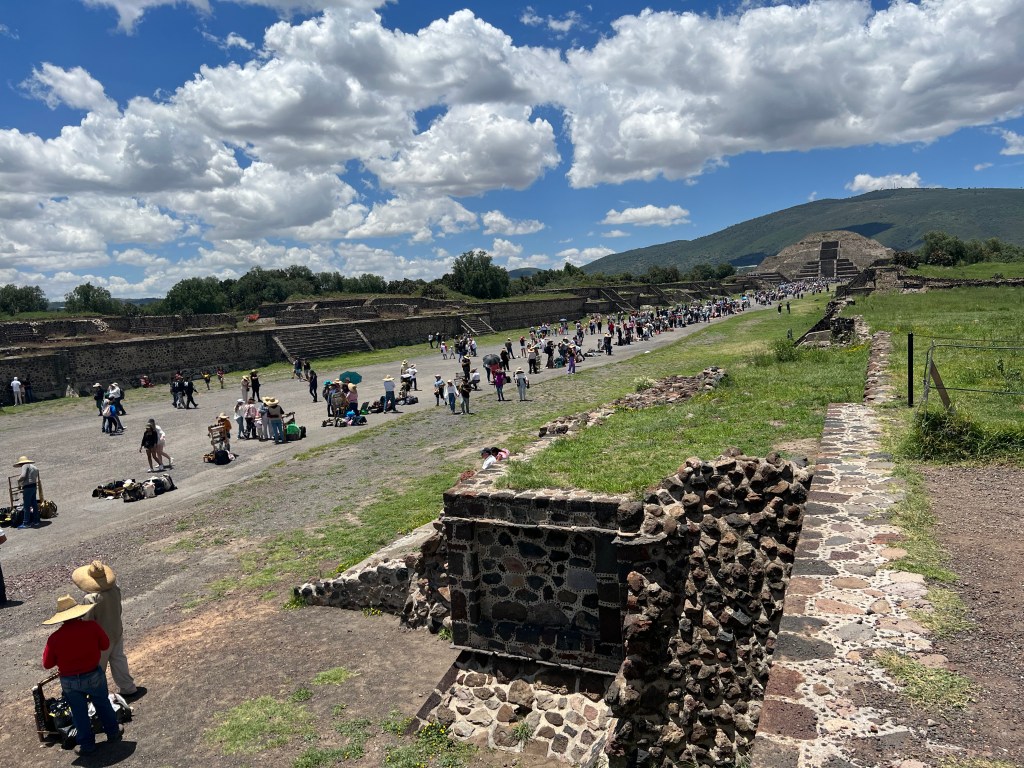
The Avenue of the Dead is the main boulevard that goes north-to south starting at the Pyramid of the Moon down to the Citadel complex – and beyond. It is named that because the people who inhabited Teotihuacán did not have cemeteries. Instead, they buried their dead in family temples in front of their homes along the street. So while the non-permanent structures are now long gone, their family tombs and the dead buried there are still present – except those that have been removed in modern times.

Administration, Government Offices, Elite Residences
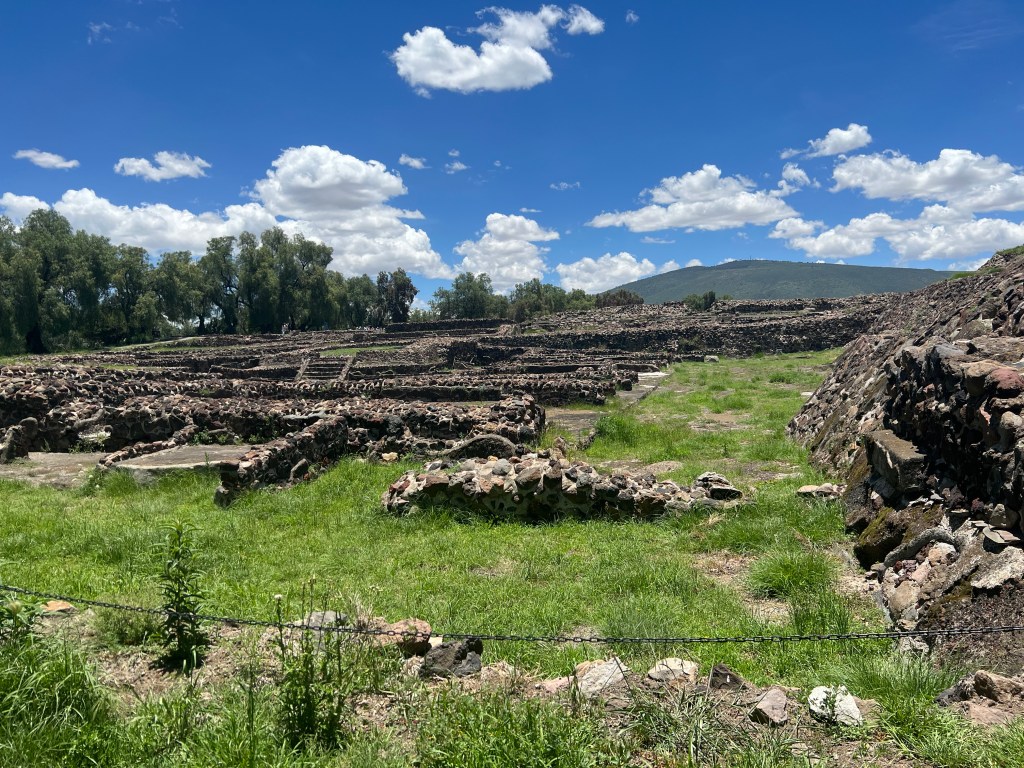
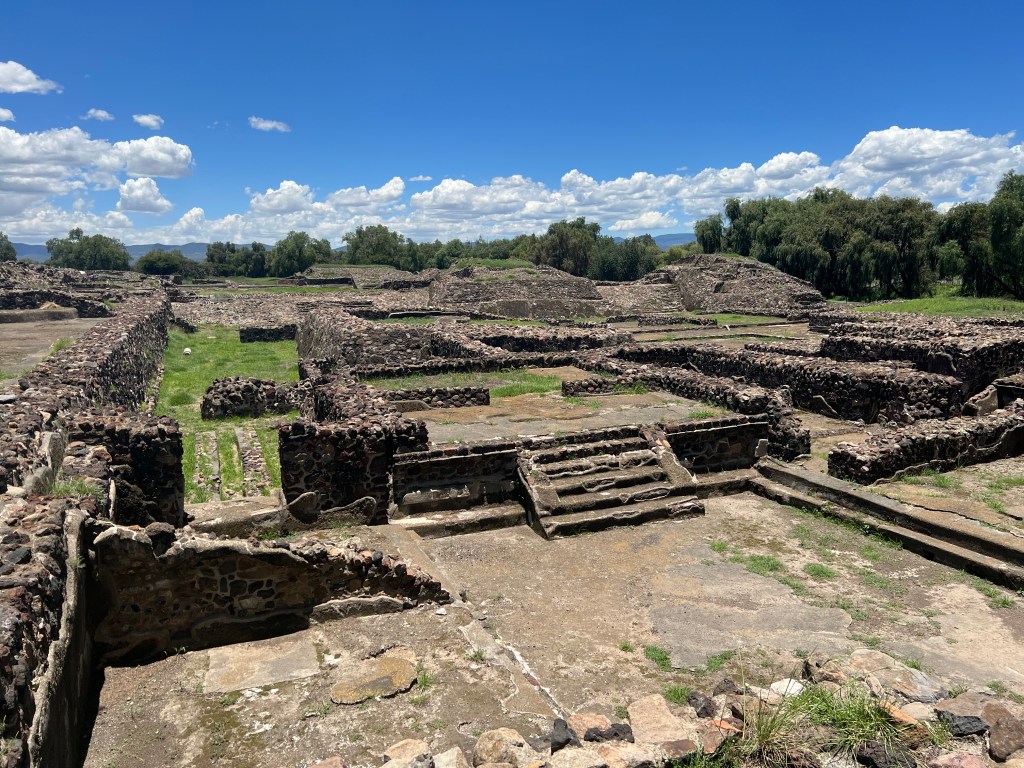
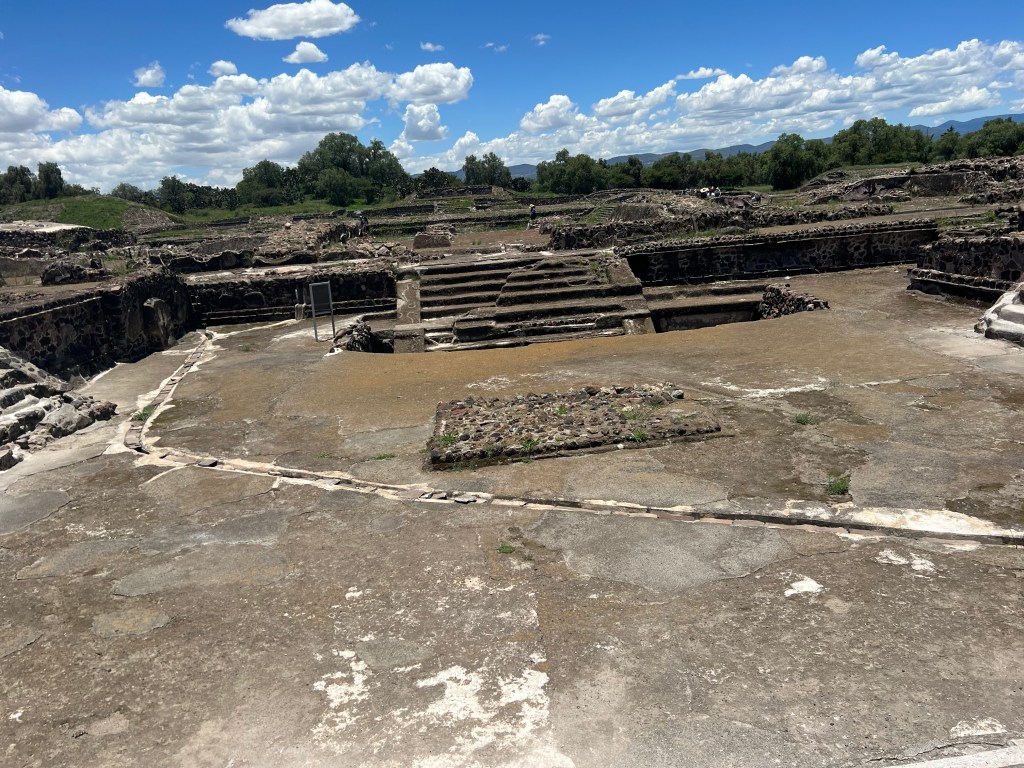
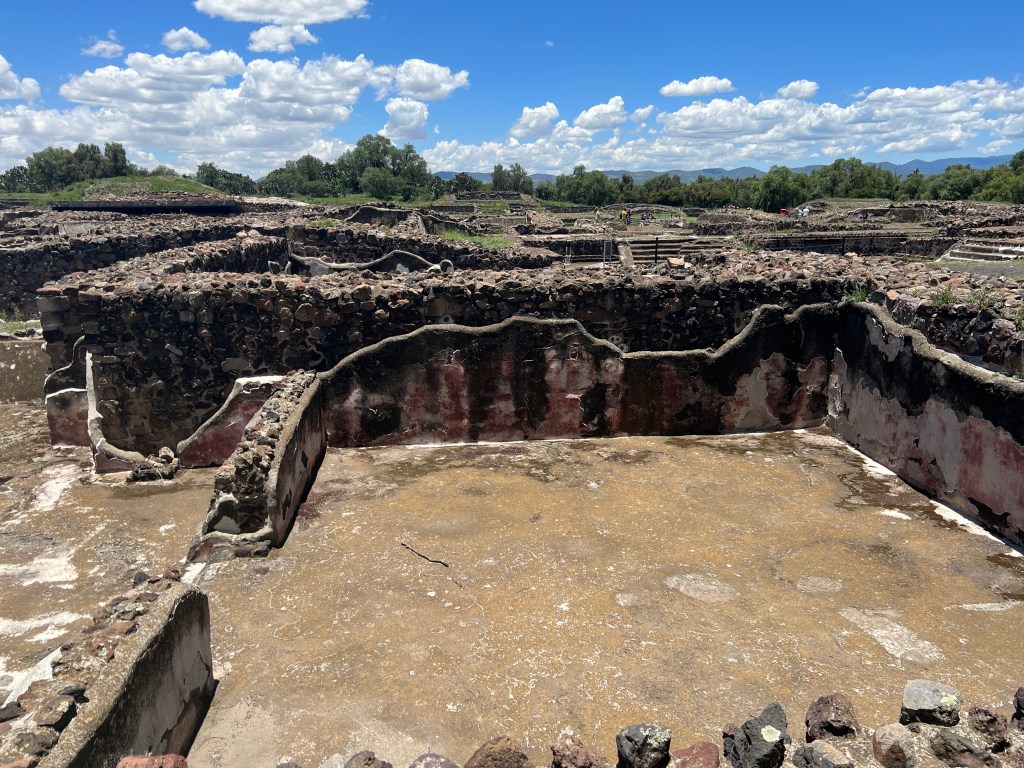
With any town or large city, there must be a place where the daily grind is adminstered from. In the case of Teotihuacán, it is thought that these compounds were also the residences of the elite, as they have found evidence of residencies within. This section is possibly 100m x 100m and has multiple layers, and levels. There are areas for food stores, water cisterns, fresh water channels, and sewage channels. There is even evidence of showers with running water controlled by gates.

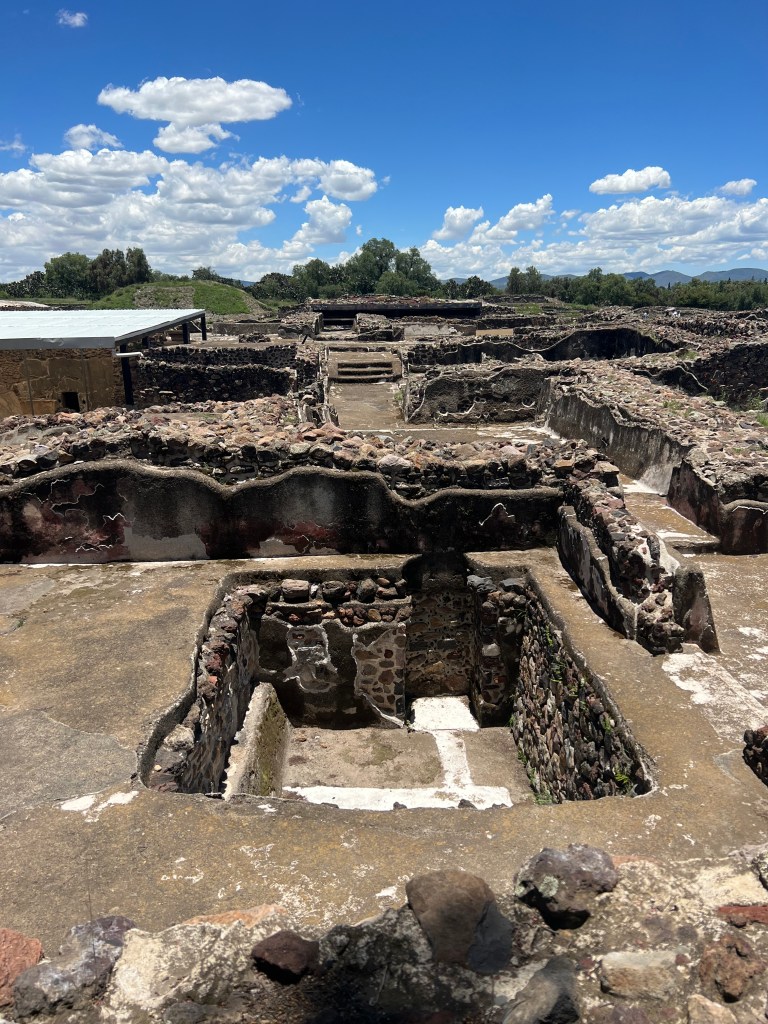


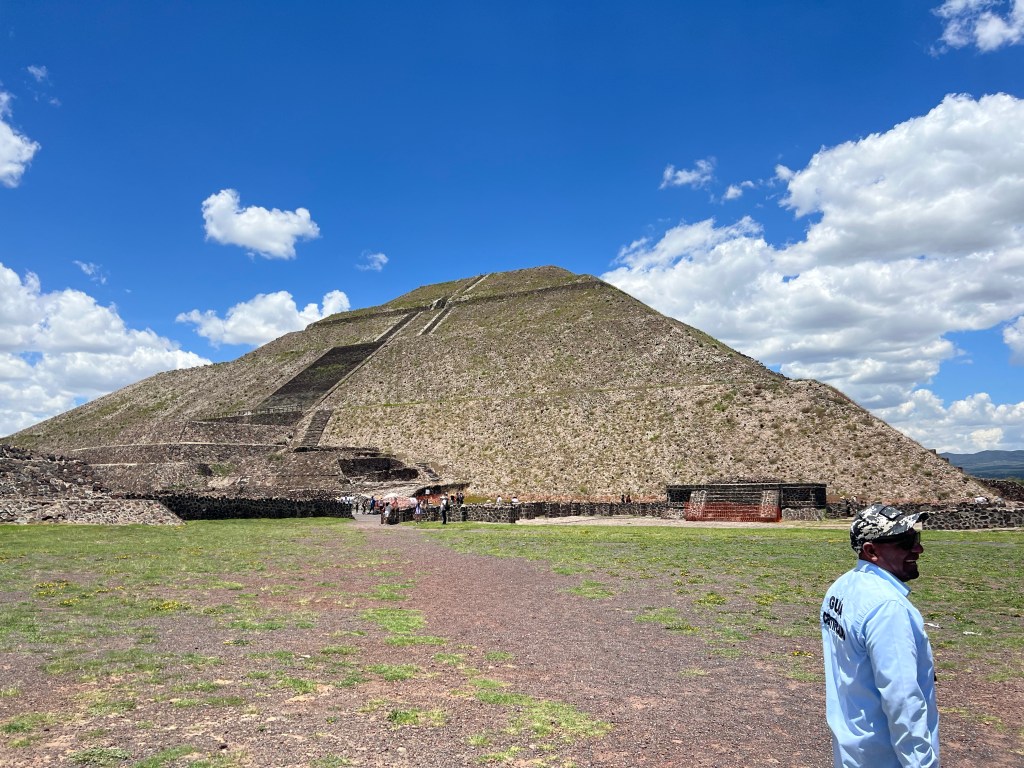
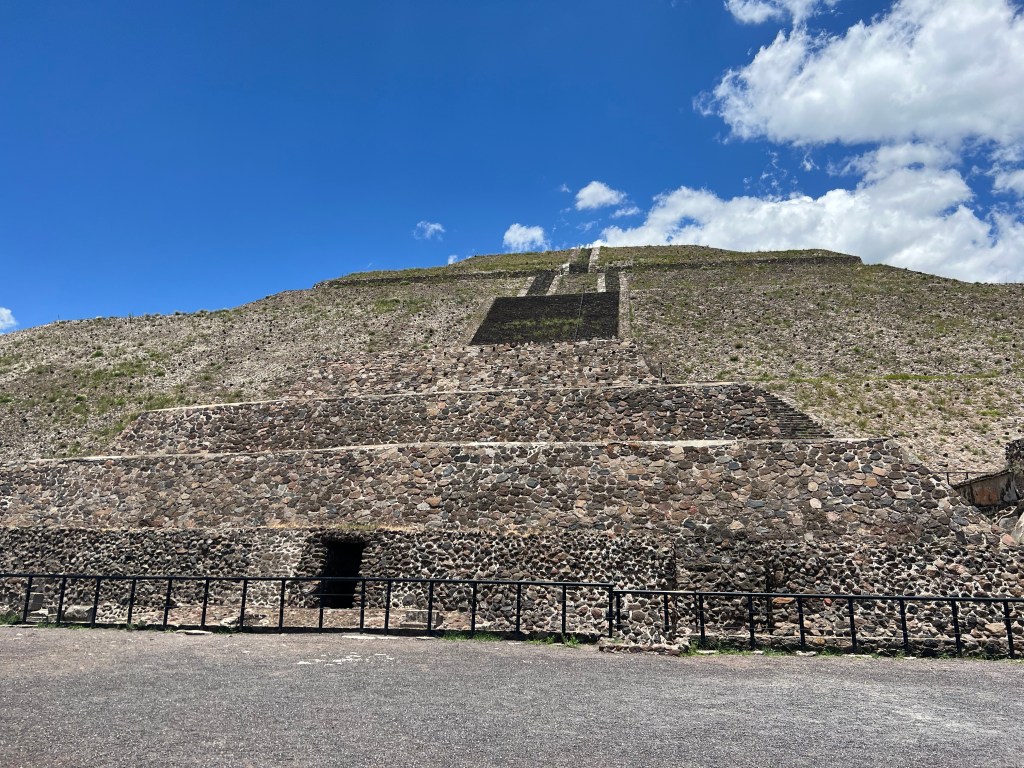
Pyramid of the Sun
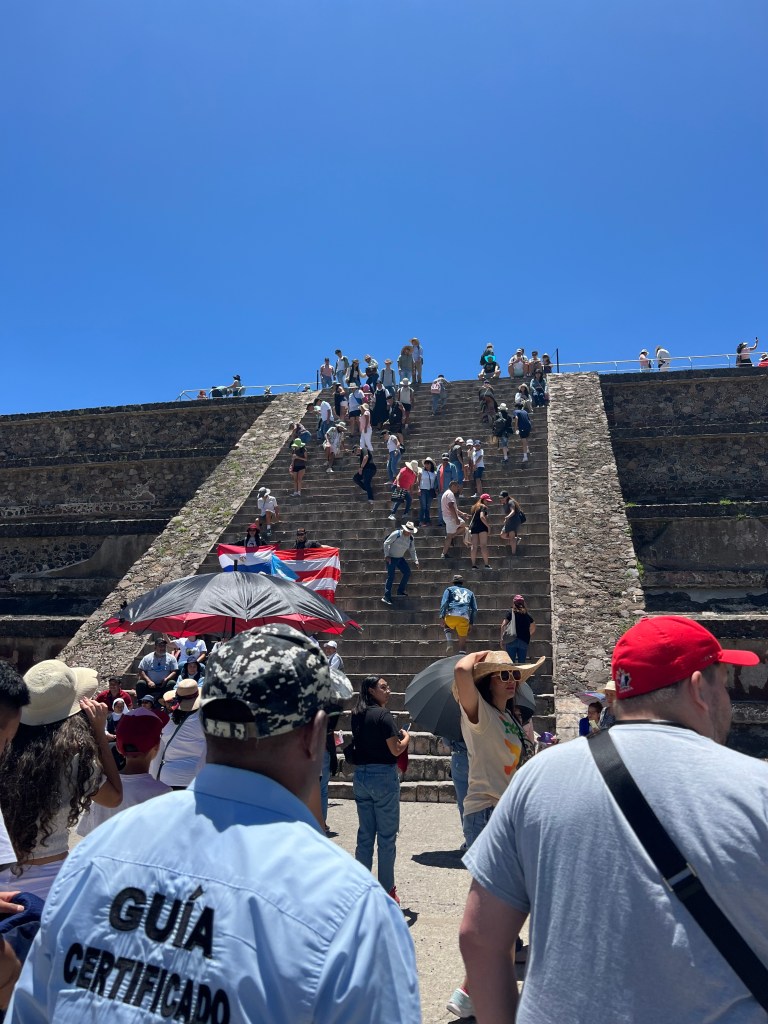
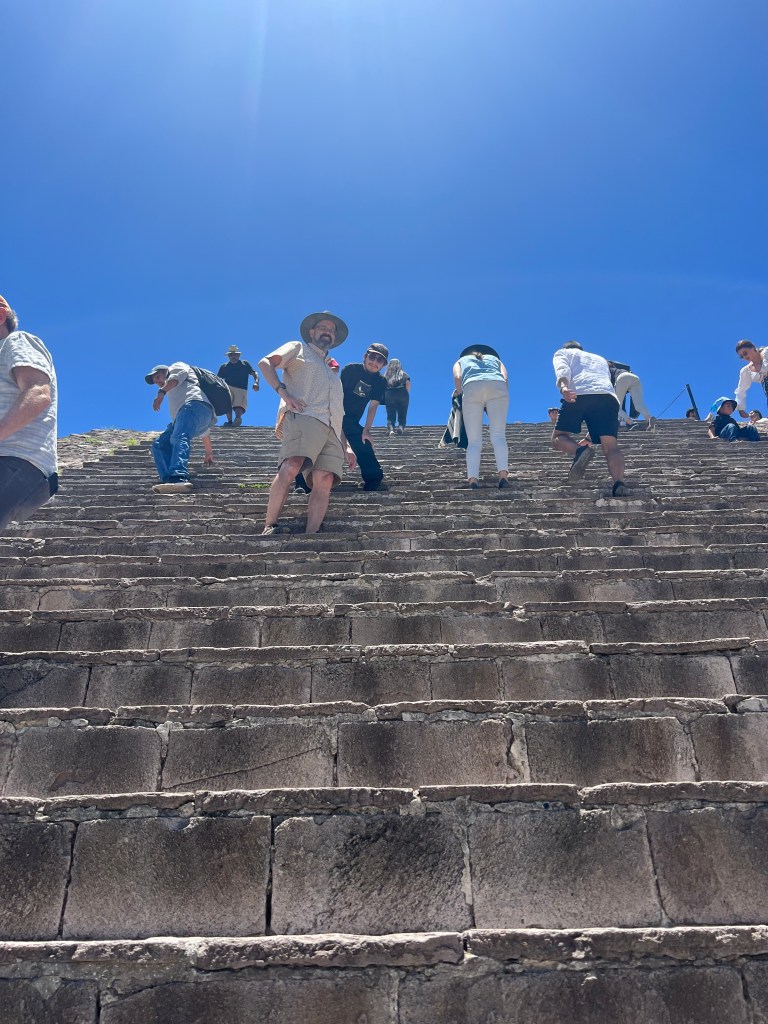
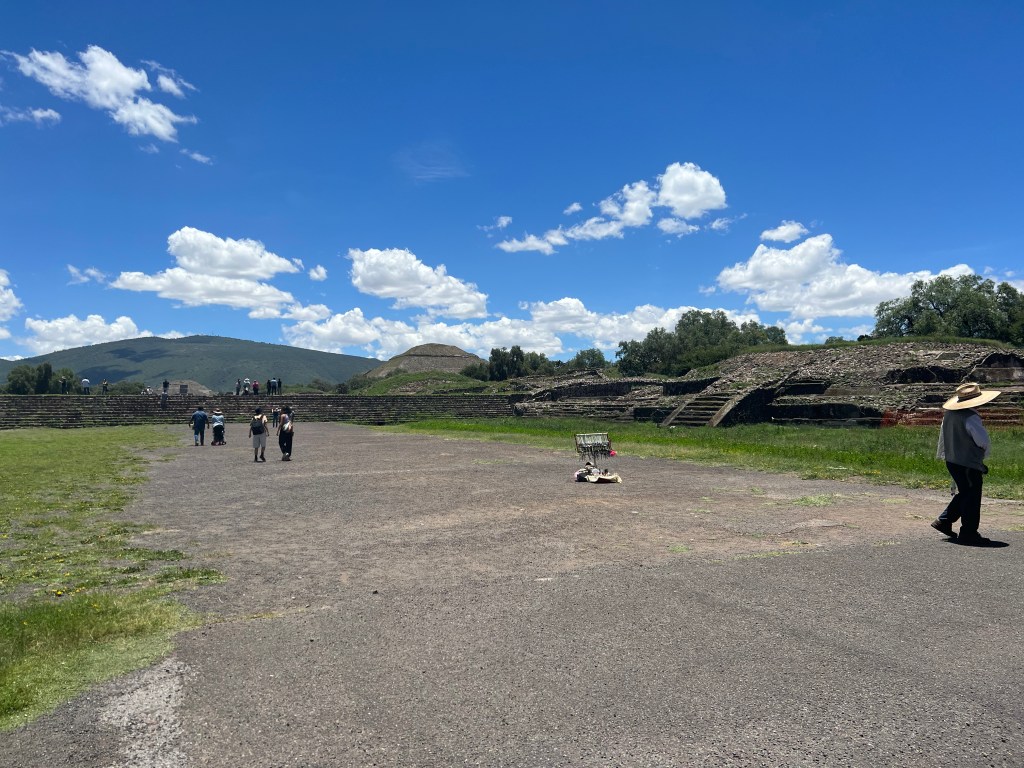
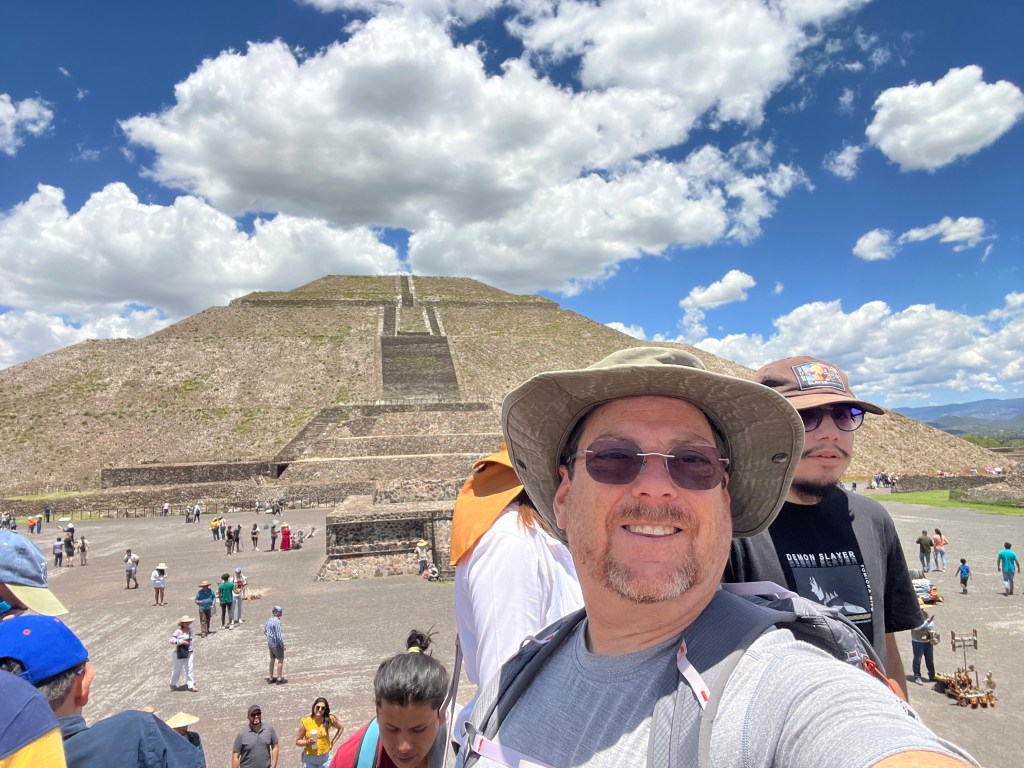
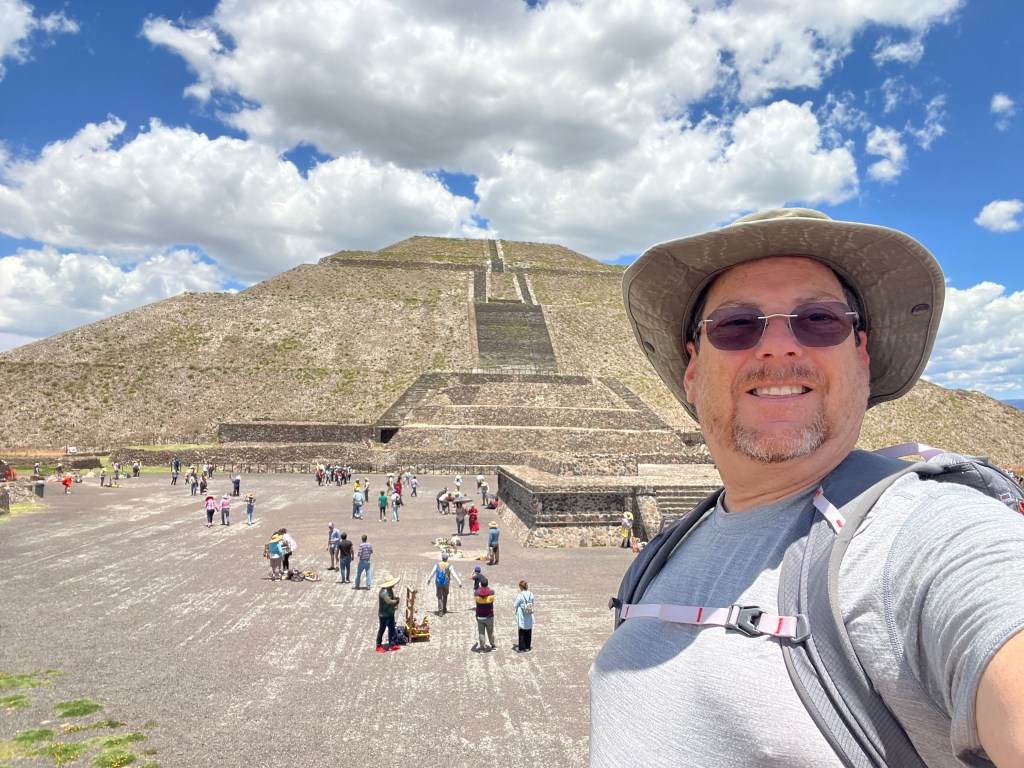
The pyramid of the sun is the largest pyramid in Teotihuacán – although it is not the largest pyramid in Mexico as we found out later. For better and worse, the pyramid of the sun has been permanently closed for two years because there was too much wear from all of those that wanted to climb it. Archeological digs still are active and they continue to discover new details about the ancient civilizations that inhabited and built these monuments.

Mural of the Puma
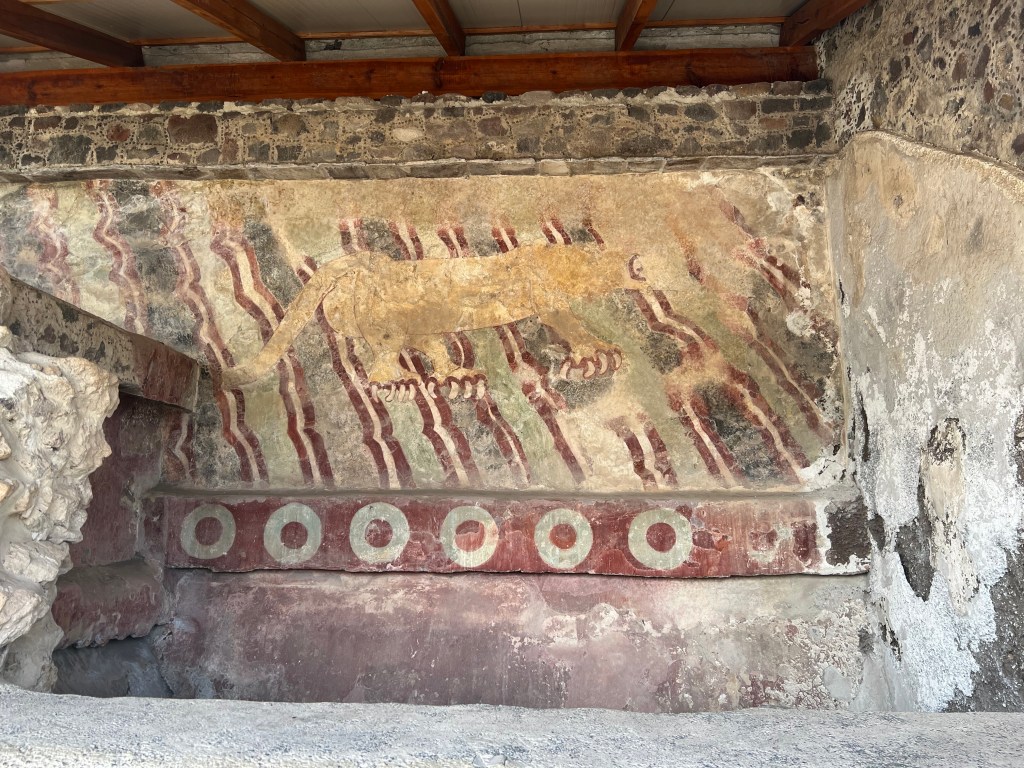
It was thought that this mural was that of the Jaguar as the jaguar holds prominence throughout the city. However, after close study, it is now the thought that this mural is that of a puma, in the rain. This mural pays tribute to Tlaloc, the god of water and agriculture, as well as the Puma which could symbolize power and strength. One could come to the conclusion that this mural was a depiction of Tlaloc bringing the power and abundance of water to the agriculture for bountiful crops.
Pyramid of the Moon
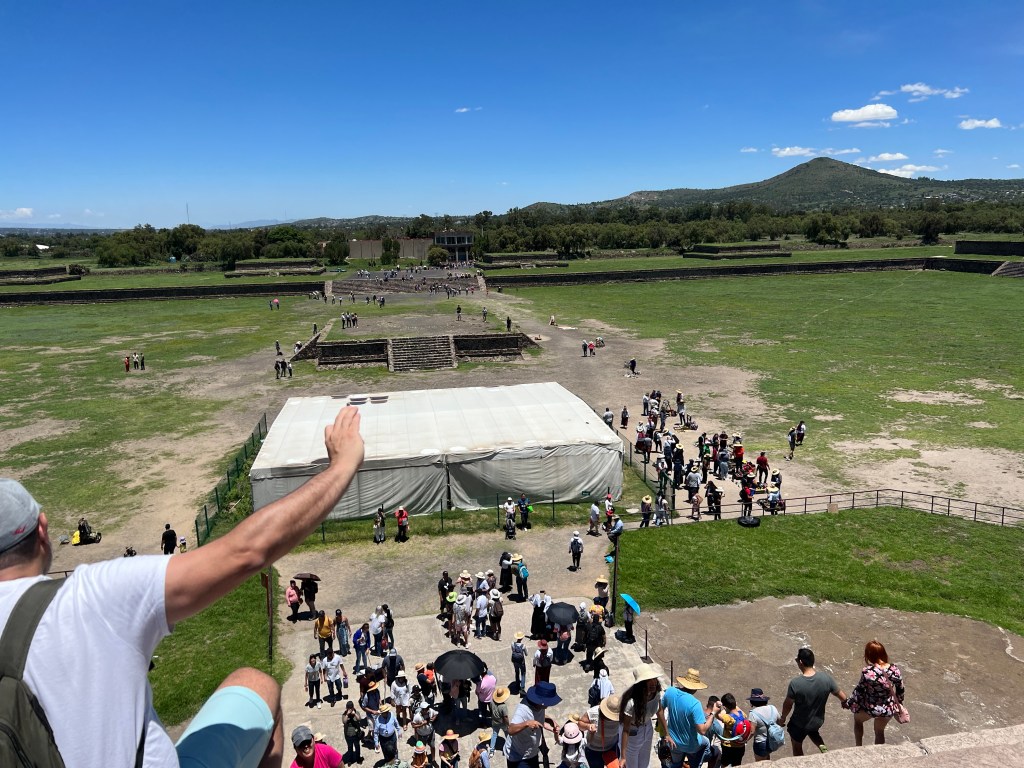
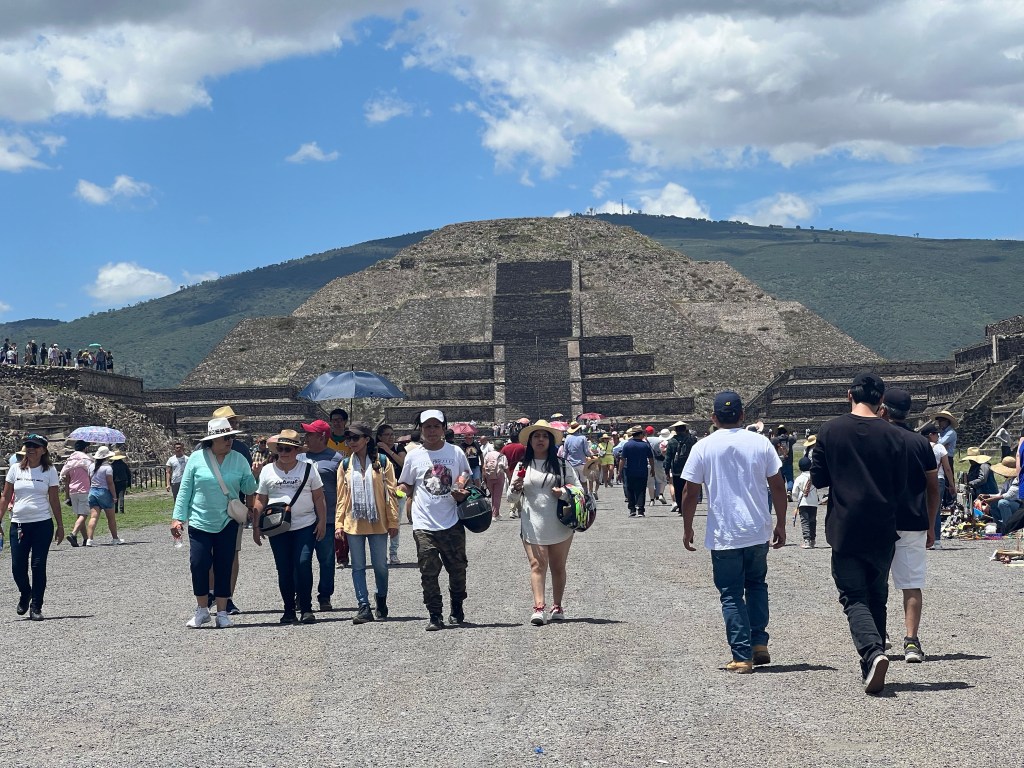
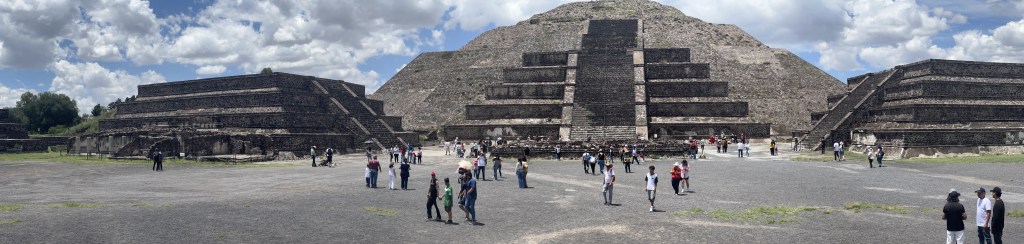
The pyramid of the moon is situated further north and uphill from the pyramid of the sun. While the Pyramid of the Moon is shorter and smaller than the Pyramid of the Sun, because of where they are located and their elevation, the tops of both pyramids are equal to each other. It is thought that some ceremonies would be held at both pyramids at the same time in concert or synchronization with each other to express their relationship in the cosmos.
The Pyramid of the Moon has also been closed to scaling due to abuses, but it is still open during equinox and solstice festivals for indigenous groups.
In the picture below, the size of the pyramids is so large, that my panoramic shot could not capture the complete complex. In the far left, you can see a mound covered by trees – that is yet another pyramid that has yet to be uncovered.
Palace of Quetzalpapalotl
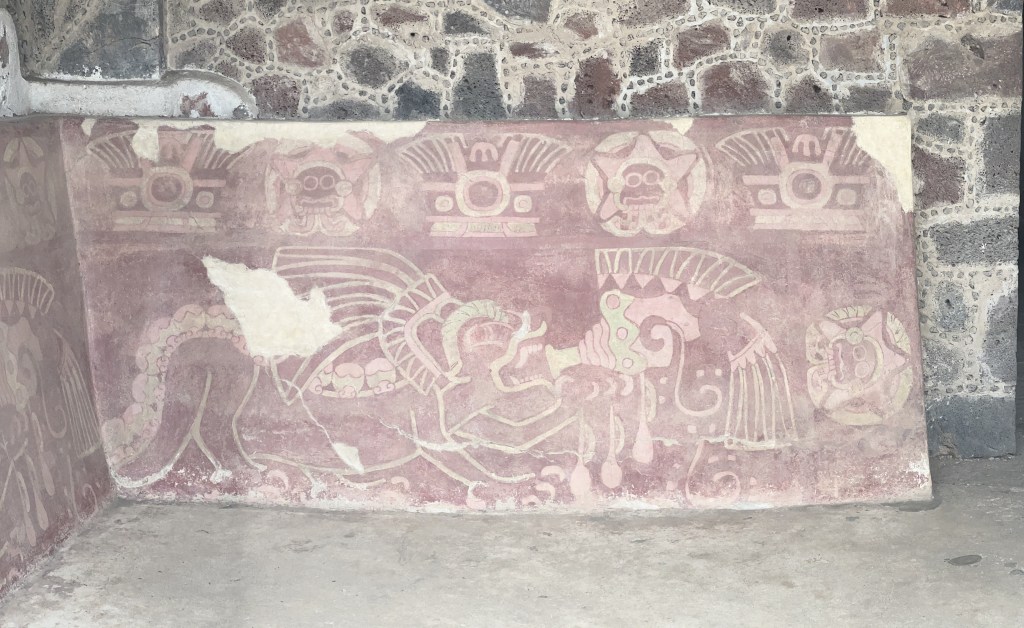
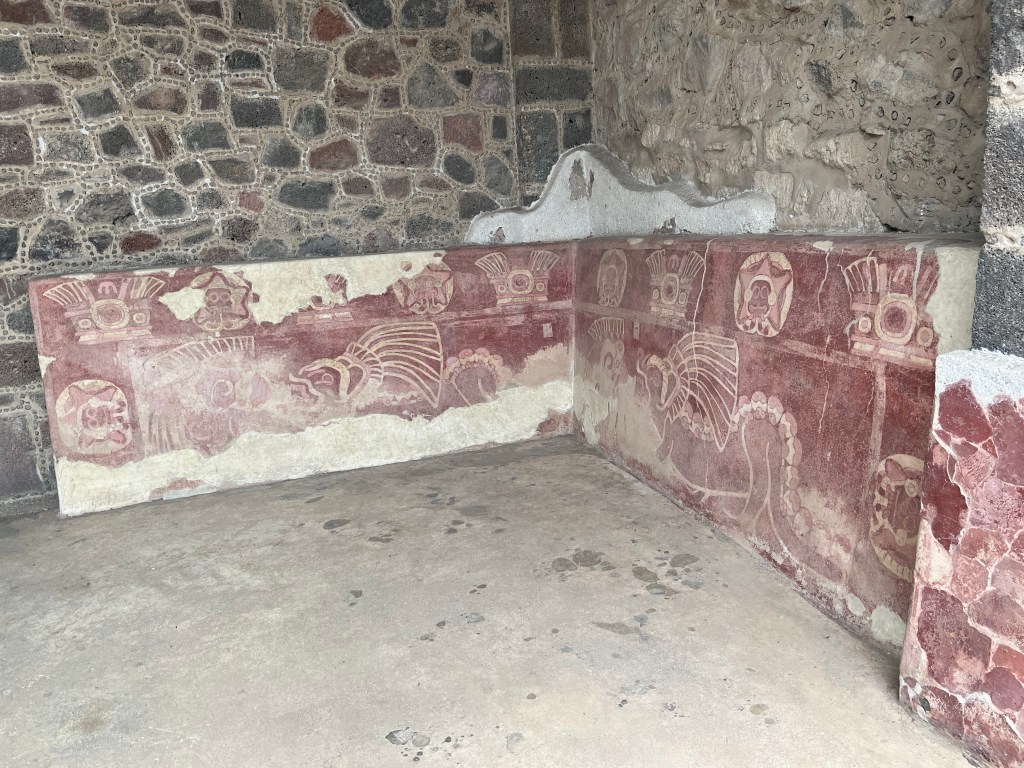
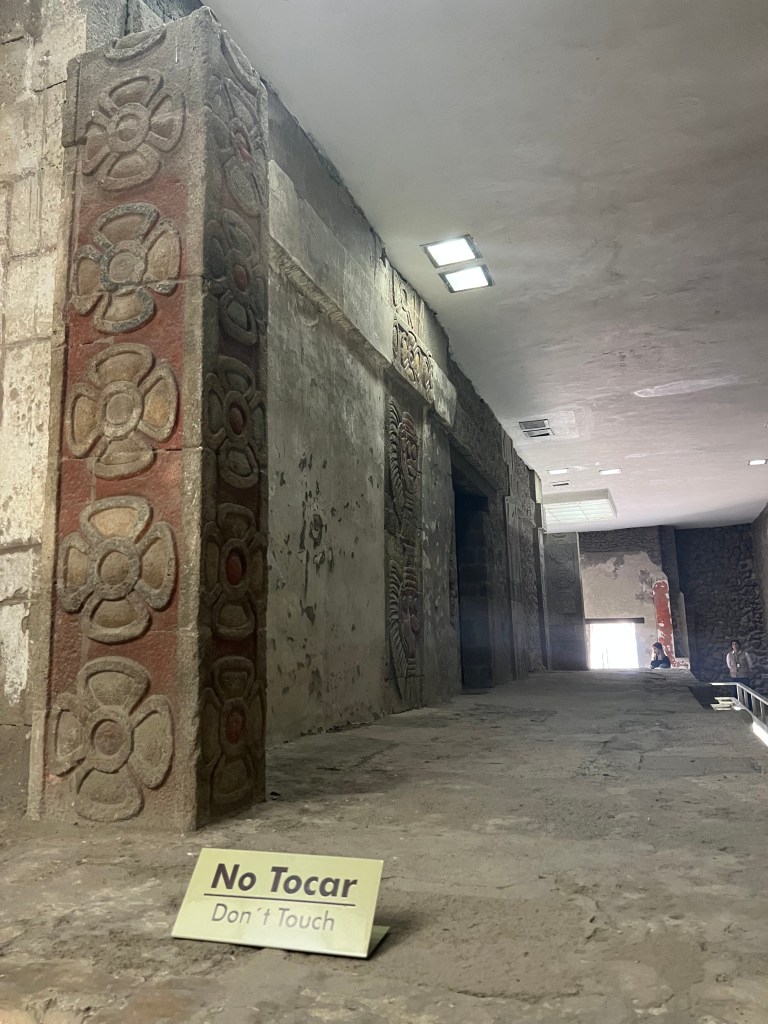
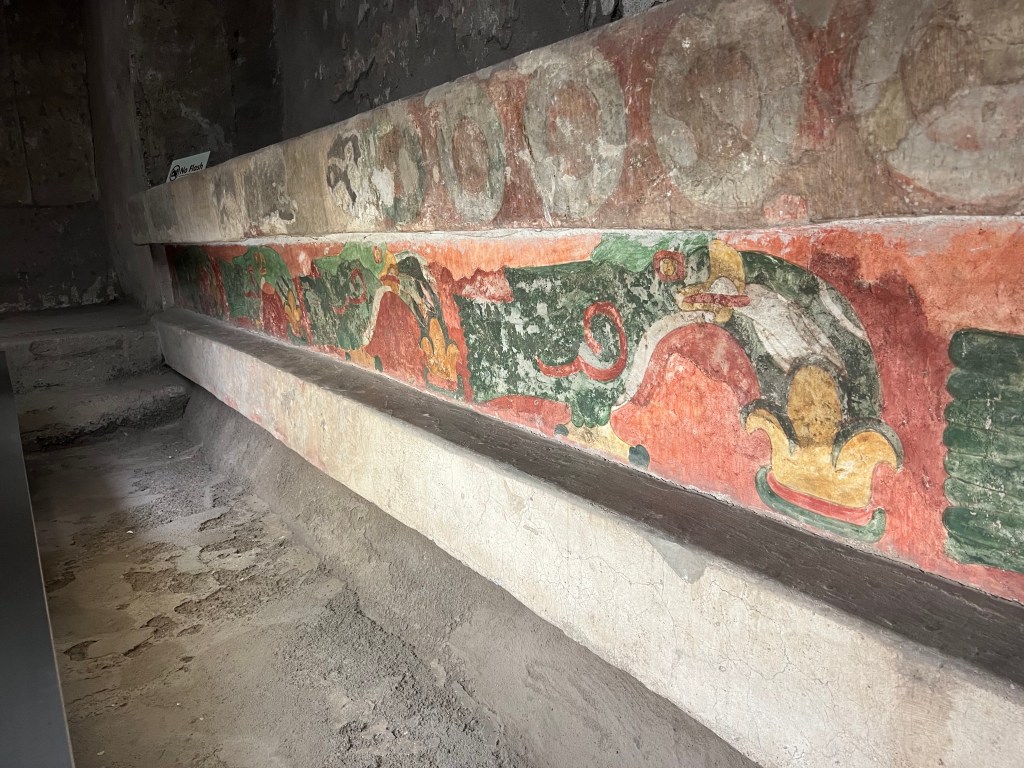
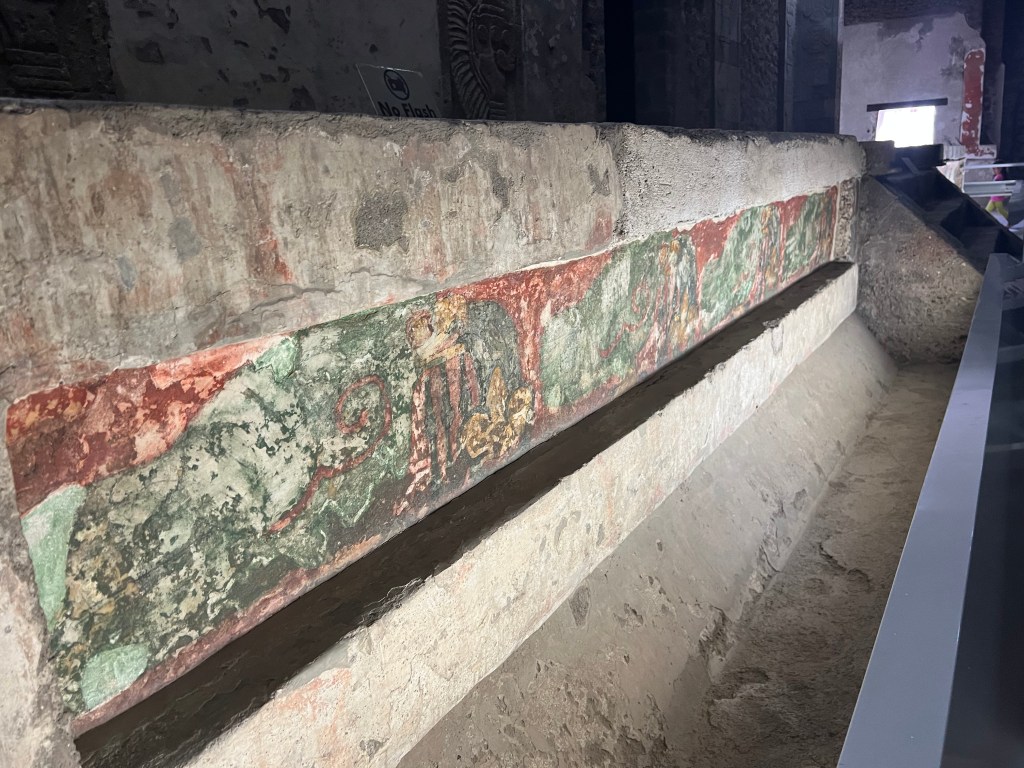
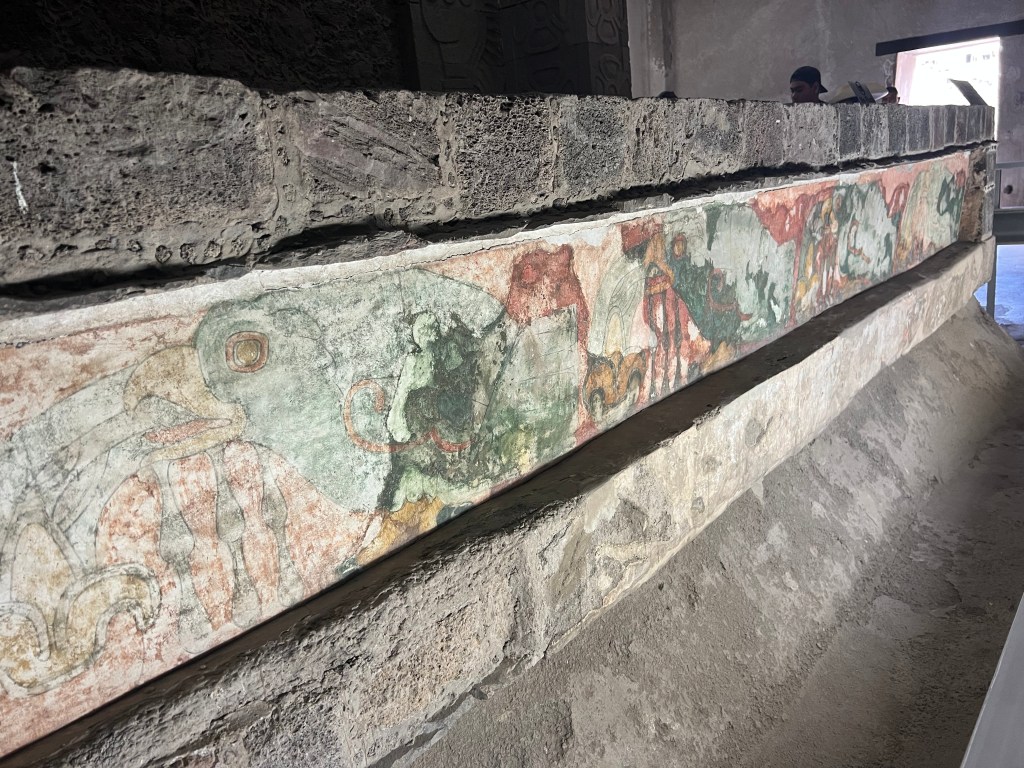
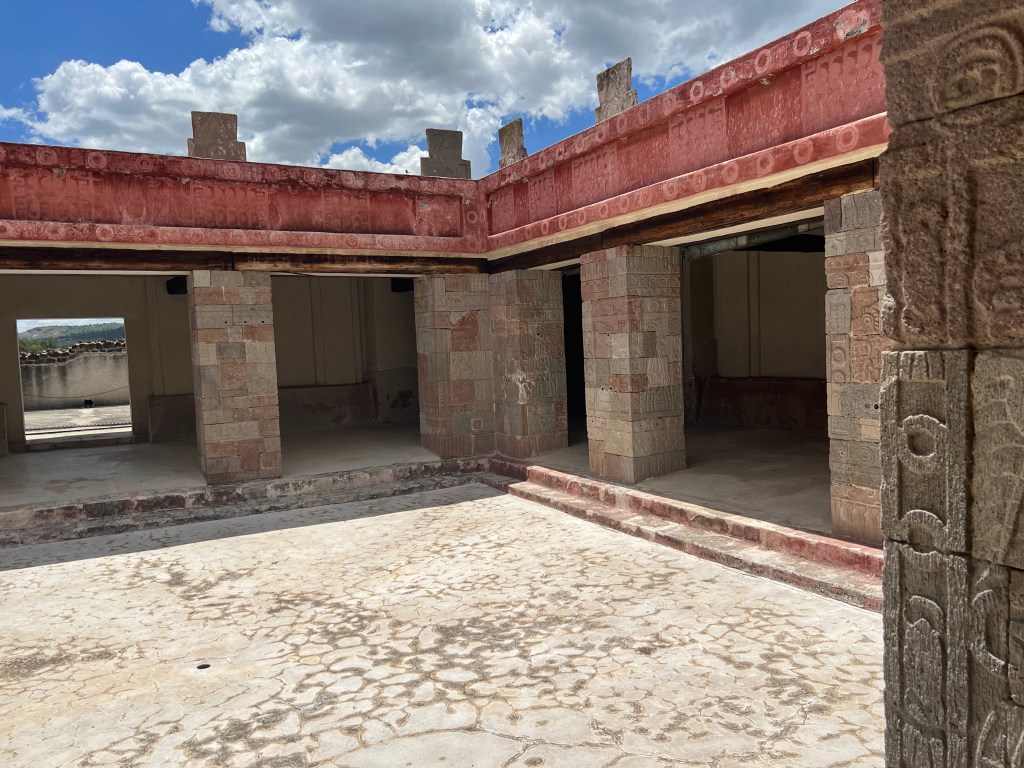
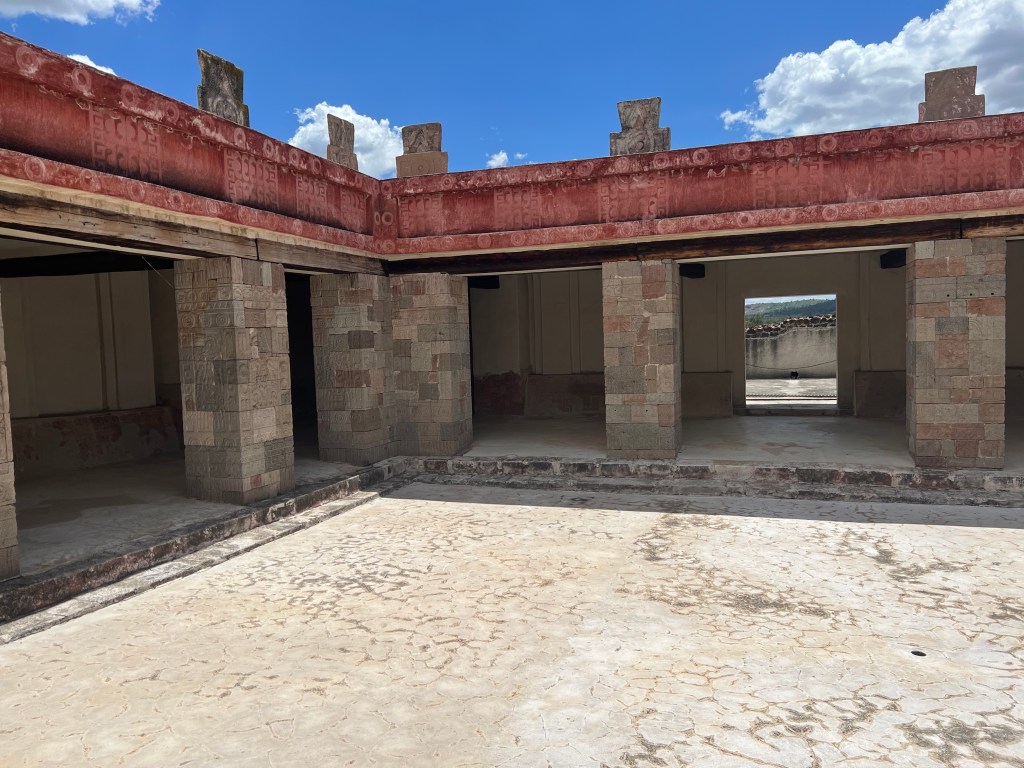
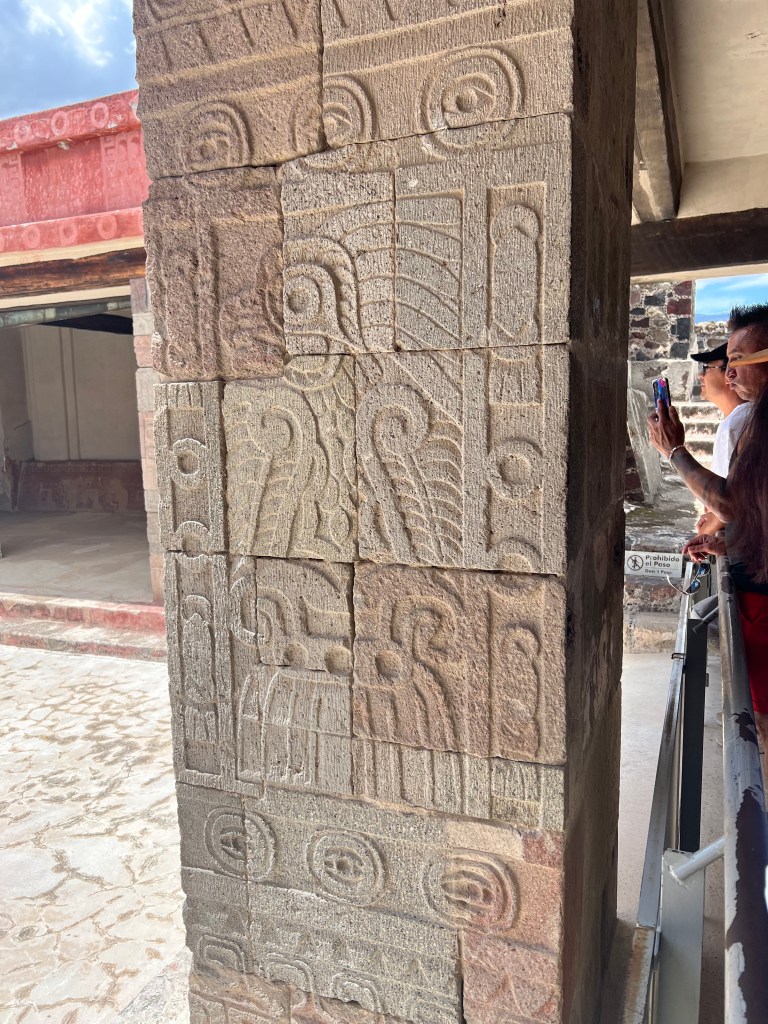
This palace, while it has been reconstructed, has some of the most well preserved murals and stucco in the city. There are many stucco murals of the Quetzal and Jaguar throughout this palace. In addition, there are good examples of the water system, including baths and toilets.



Observatory
I have seen many ancient Mesoamerican observatories. The one located at Teotihuacán is both impressive and ordinary – if you could call anything here ordinary. Comparing it to that of Palenque, Tikal, or Copán, this observatory seems to lack awe. However, if you have a guide that can explain to you how it worked, you would be highly impressed.
This observatory has an open roof – to better see the cosmos, and it measures about 15m x 15m on the inside. The floor used to be covered in sheets of mica – a reflective stone, also called fools gold. Then it would be filled with water. The results were that the light of the cosmos would be reflected through the water, off the mica and onto the walls of the observatory, where readings could be taken on the special markings that no longer exist. You can see holes in the walls where instruments would be placed for the readings.


 Pizote Adventures
Hi Chris! Great tour through teotehuican! Very nice photos and dialogue. Keep having fun! *************************************** Wayne T. Williams, PhD
Author of Bestseller Kissing the Hand of the Dead
Details on http://www.waynetwilliams.com
>
LikeLike