Rim woes, zipties, and rebuilds…

When we left off, I was holding a cider and squinting at something shiny on my back wheel.

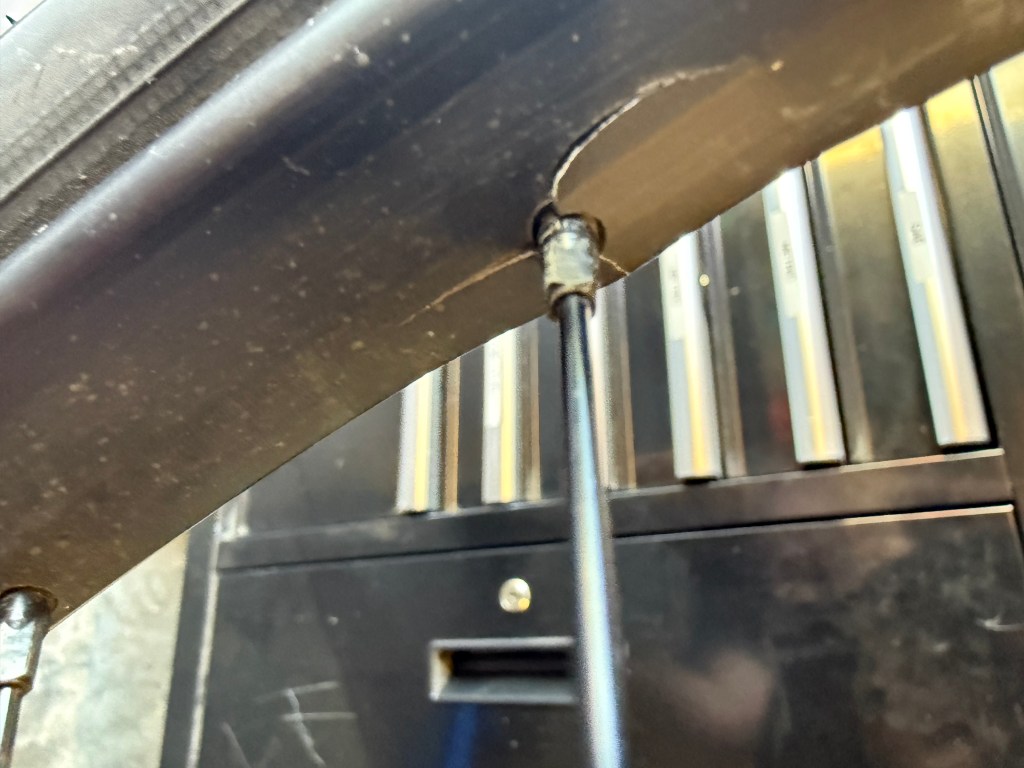
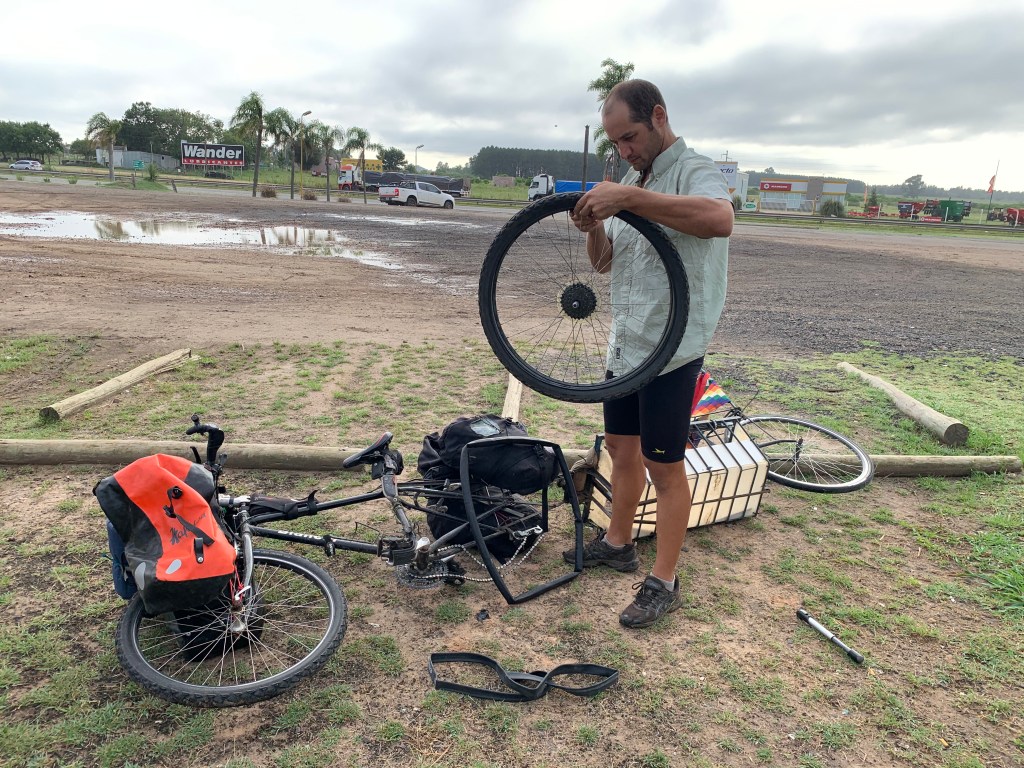
It was a crack. I put the cider down and looked closer. Then I found another one. And another. By the time I had gone all the way around, I had counted ten. Ten spokes slowly pulling their way out of the rim, each one with its own little crack.

The rim was destroyed. Not “keep an eye on it” destroyed. Done.

My guess is the spokes were too tight from the factory. After Argentina the bike mostly sat for five years, and the cracks sat with it, waiting patiently for me to pour a cider and notice.

A word about Guille

My first instinct was to hand the whole mess to a bike shop and write a check. Then I talked to Guille.

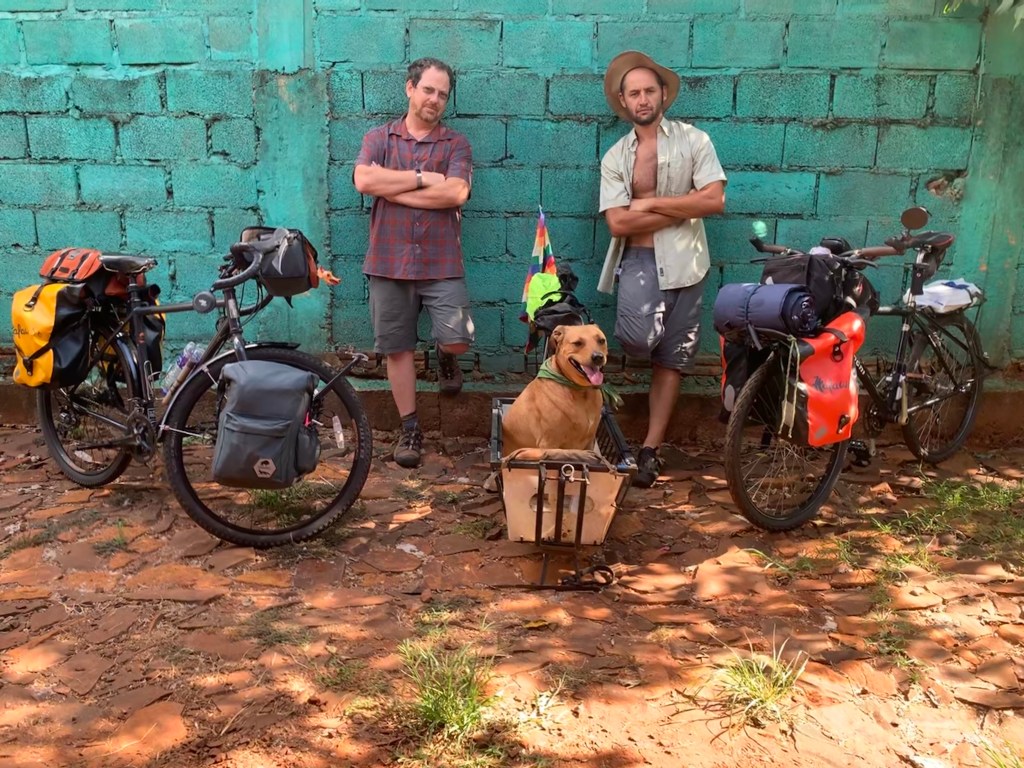
Some history. On day one of our Argentina ride, I was sitting in the heat with a liter of beer when my phone buzzed. It was Guille: “My rim broke, can you meet us here?” A third of his spokes had torn clean out of the metal. We spent four hours at a gas station with our thumbs out.

So naturally, the man with the exploded rim is the one who convinced me to build my own wheels. And naturally, I listened.
While I’m in there

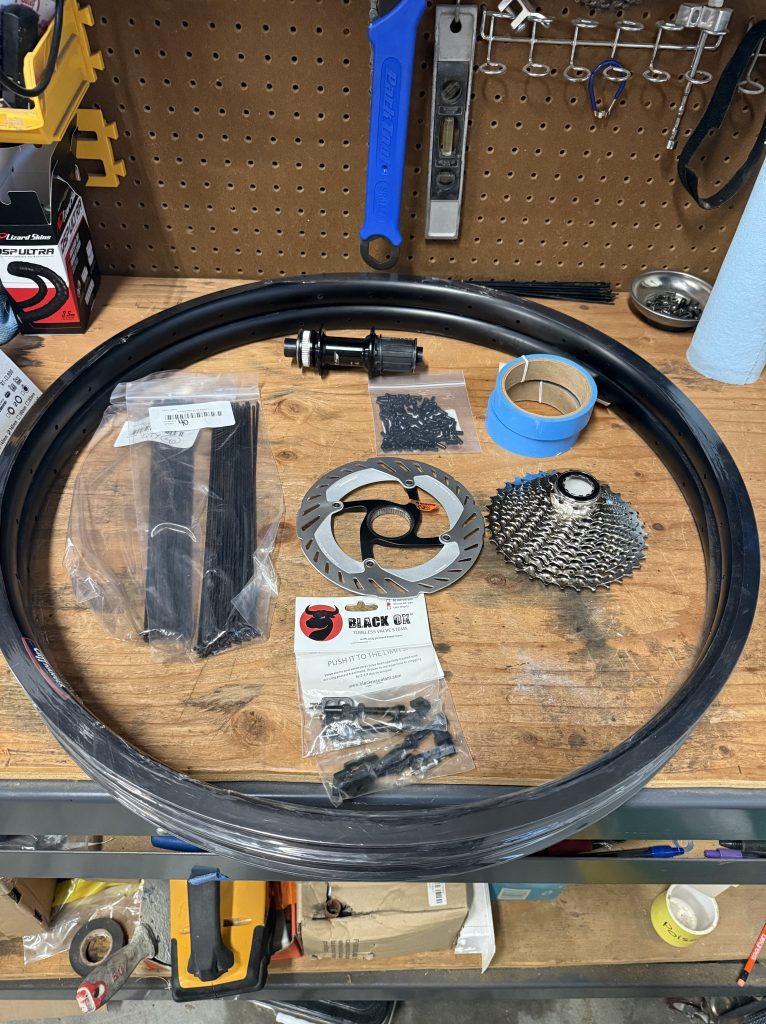
The only things I kept were the hubs. New rims, new spokes, new everything else, front and rear. The front rim hadn’t cracked, but it was the same age and had lived the same life, and I wasn’t going to wait for it to tell me.

Then came the most expensive phrase in any garage: might as well. The rear wheel was already in pieces, so I might as well replace the brake rotors. And the cassette. The old ones would probably have lasted. Now I know they will.

Final tally: the wheels cost double what the cockpit did. The thrifty plan is not going well.
Tools? Who needs tools?

Wheel builders use a truing stand, a precise and costly piece of equipment that tells you exactly where your wheel wobbles.

I used zip ties.

Put the wheel in the bike, strap a zip tie to the frame on each side, snip the ends so they just miss the rim, and spin. Where the rim touches a zip tie, that’s your wobble. Tighten a spoke, spin again. It works. It works well enough that I was a little smug about it.

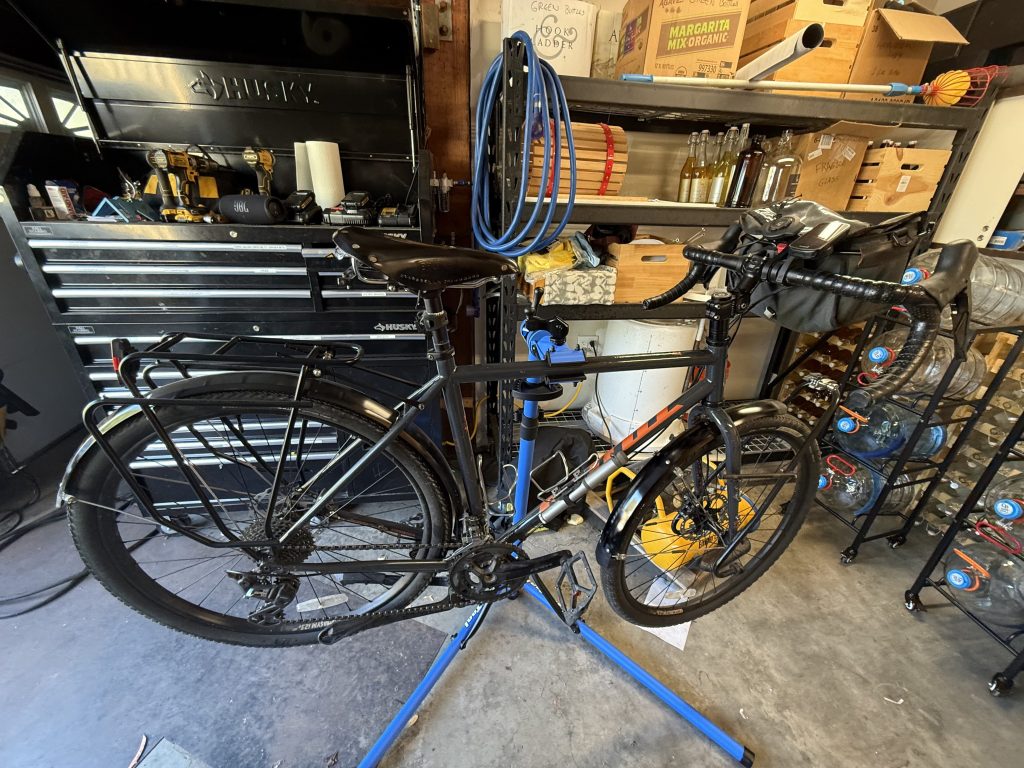
And now, sheepishly: I did buy a few things. A bike stand, so the whole bike could hang at eye level while I worked. And a spoke tension meter, because if too-tight spokes killed the last rim, I wanted a number this time and not a feeling.

But the truing stand, the precise and costly one? Never bought it. The bike went up on the stand, the zip ties went on the frame, and two bits of plastic that cost less than a cent each did the job. I have stopped trying to explain this to people.

Like butter

You are supposed to oil the spokes and nipples before you put a wheel together. On the rear wheel I did exactly that, and it went together like butter.

On the front wheel, I did not.

I also had a cheap spoke tool. Dry threads plus a cheap tool is how you round the corners off brass nipples, one after another, each time thinking the next one will be different. It was not. I tore the whole wheel back down and replaced half of them.

Then I bought a better tool. I oiled the spokes and the nipples. Went together like butter.

Some lessons you pay for twice.

The tire problem

Both rims are now taped for tubeless tires. Which brings me to my wheel size: 650b x 47 mm.

Finding that tire in the US has become close to impossible. Everyone has moved to 700. Shops look at you like you asked for a typewriter ribbon. And 650b is… sigh.

Yes, I could have gone to 700 while I was rebuilding everything anyway. They would probably fit the fork. I never measured. They would not fit under my splash guards, and I am riding through Norway. The splash guards stay.

So I searched. And searched. And found three Teravail Washburns.

Yes, three. I am aware that “bi” means two. The third one is the spare.

I don’t expect to need it. 650b is still popular in Europe, so finding a tire over there should be easier than here. Which is exactly the kind of sentence Murphy’s Law was written for. If a tire is going to gash open, it will do it on a Sunday, in the rain, 40 km from a shop that closed on Saturday. So the spare comes along.

They are the “Durable” version, with a tougher sidewall. Better for touring. Heavier, but… durable. Fewer gashed sidewalls on the side of the road, which is a trade I will take every time.

Where things stand

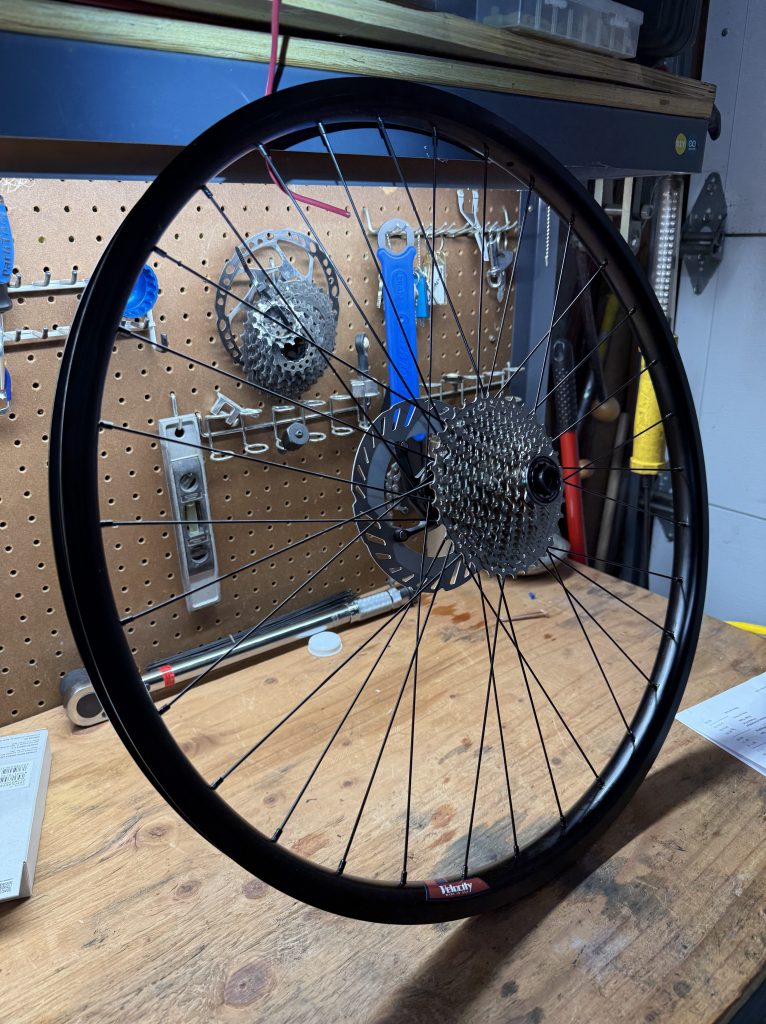
Both wheels are built. They are round, they are true, and I made them, which still surprises me. Now I am just waiting on the tires.
Next time: the finished bike, all of it, settled.

What changed

  1. Rims: Velocity Cliffhanger, front and rear
  2. Spokes and nipples: DT Swiss, brass nipples
  3. Hubs: kept
  4. Brake rotors and cassette: new
  5. Tires: Teravail Washburn, Durable, 650b x 47, tubeless. Two on the bike, one spare.
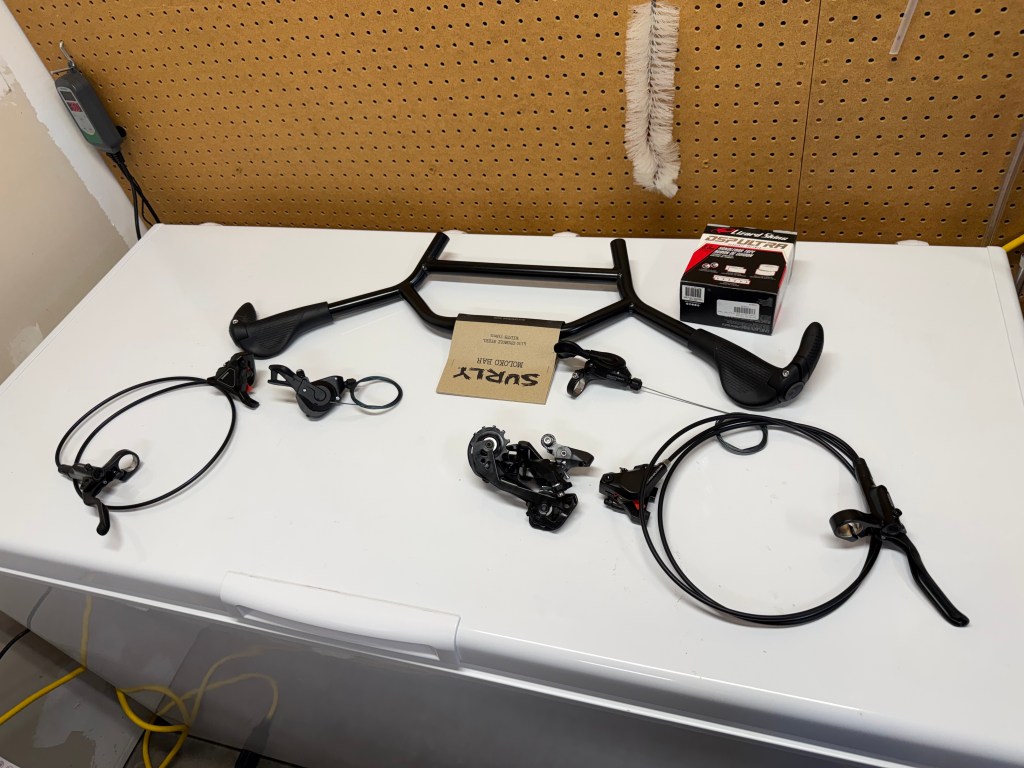
The cockpit: what Argentina taught me about handlebars

The Kona came with drop bars. Drop bars look fast. They look like you know what you are doing. For 1400 km across Argentina, they were also the part of the bike I argued with every single day.

The problem

I wore progressive lenses. Leaned forward over a drop bar, the only way to see the road ahead is to crank your head back and peer through the top edge of your glasses, like a turtle checking the weather. Do that for six hours in 41°C heat and your neck files a formal complaint.

The other problem was hands. Drop bars promise lots of hand positions. I never used the drops. Not once. That left me the horns, and the narrow bit across the top.

The top is about as wide as a coat hanger, which puts your hands a few inches apart, right next to the stem. Steering 30 kg of loaded bike from there is like driving a bus with a steering wheel the size of a jar lid. Every wobble, I saw my life flash by. Then my looks. Then my happiness. In that order.

So really I had one hand position, for three and a half weeks.

I came home with a list. A short list. It said: fix the cockpit.

The back and forth

Then I spent months not fixing it. Researching, I called it.

I went back and forth between handlebars more times than I will admit. Butterfly bars, the kind every German touring cyclist seems to be born holding. A plain flat bar with bar ends. Swept bars, loop bars, bars that look like someone bent a coat hanger in a hurry. Each had a fan club on the internet, and each fan club was certain.

My plan was simple and thrifty: change the bars, keep everything else. Shifters, brakes, derailleurs, all of it perfectly good.

The bike had other ideas. Road shifters don’t work on a flat bar. The brake levers that do work on a flat bar wouldn’t run my brake calipers. New levers meant new calipers. New shifters meant a new rear derailleur. Pull one thread and the whole sweater shows up on the garage floor.

At some point I did the math on just buying a different bike. It was closer than I would like. But then what would I do with two bikes? I like this one. It carried me across Argentina. It stays.

The solution

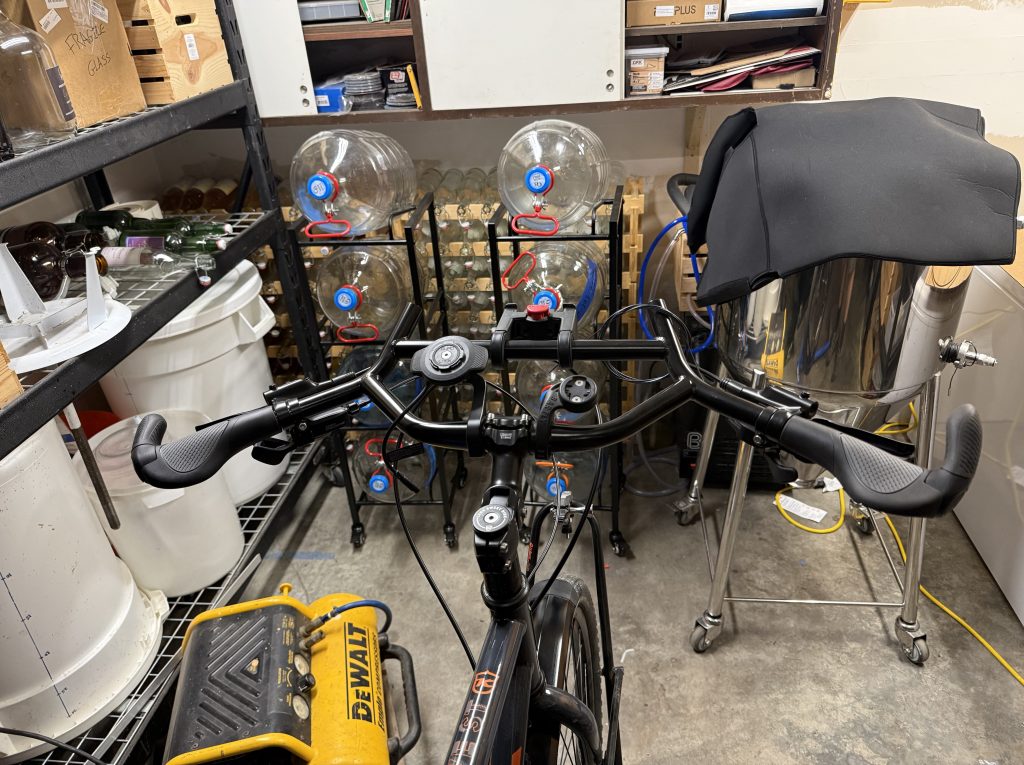
The winner was a Surly Moloko, a wide, swept-back bar with a loop out front and more places to put your hands than I have hands. I sit upright now. I look straight ahead, like a person.

By the time I was done, I had replaced everything but the front derailleur and the cranks. So much for thrifty.

And then, after rebuilding an entire bicycle around my glasses, I switched to contacts. Timing has never been my strong suit.

I like everything about the new cockpit. Everything. The choice I will brag about, though, is the least exciting one: the new shifting parts are plain Shimano Deore. Nothing fancy. That is the point. Every bike shop between Trondheim and Santiago has Deore hanging on the wall, and when something breaks in a small town in France, I want the boring part.

The build

I did the work myself. I have been in IT for 40 years. How hard can a bicycle be?

A couple of weeks hard, as it turns out. That is on top of the months it took me to decide.

The box of parts sat on the bench for a few days, judging me. Then the old cockpit came off in about an hour, which should have been a warning. Taking things apart is the easy half of any project.

The new bar is 735 mm wide. My garage door is not much wider. The bike and I have had words about this.

I watched the videos. In the videos, a calm man with clean hands does each step once. I did most steps twice and at least one of them three times, with hands that were not clean, hunting for bolts. Plural. Bolts the size of a grain of rice, each one rolling under the one shelf I cannot move. Somewhere under there is enough hardware to build a second cockpit.

Then came the cable housing. Measure twice, cut once, they say. I measured twice. I cut once. I cut in the wrong place. There is no undo button on a cable cutter, so a new length of housing went on the shopping list, and the second cut was preceded by a great deal of staring.

The brakes, to my surprise, were the easy part. They came filled and ready, and I managed not to ruin them.

And a confession. Once it all shifted, mostly, I cheated. I took it to a shop and had the rear derailleur fine tuned. The mechanic was kind enough not to ask who had set it up.

The bars are still naked. No tape yet. I want to ride it for a while and move things around before I seal every lever in place under expensive tape. Expensive tape is a commitment.

The moment

When it was all set up and dialed in, I rolled the bike out, poured myself a cider, and sat there admiring it. New bars. New controls. I was pretty pleased with myself.

Then something shiny caught my eye. Back wheel, on the rim, right near a spoke.

What is that?

Is that a crack?

Stay tuned for the next challenge. I am about to learn how to build wheels.

What changed

  1. Handlebar: Surly Moloko
  2. Grips: Ergon, with bar ends
  3. Shifters and rear derailleur: Shimano Deore
  4. Brake levers and calipers: Shimano hydraulic
  5. Kept: front derailleur, cranks

A new adventure: the EuroVelo 3

Six years ago I rolled into Buenos Aires, wrote that I had been bitten by the cycling bug, and said the next ride might happen in 2021. It is now 2026. The bug, it turns out, has a long incubation period.

That ride was January 2020. Iguazú Falls to Buenos Aires, just under 1400 km, with my friend and brother Guille and his dog Rocco. Before it, I hadn’t owned a bike, or even ridden one, in more than 15 years. So my OCD monkey mind went to work. I researched every option and settled on the Kona Rove ST. A fine gravel bike. I really had no idea what I was doing.

I trained at home: 50 km four times a week, with one ride stretching longer each week until I hit 100 km, all in a civilized 15°C to 23°C. Argentina answered with 41°C and 30 kg of gear.

I came home knowing what I liked and didn’t like about that specific trip. Too fast, too hot, no time to stop and look at anything. The next one would be slower. Kinder to the body, and to the soul, weather-wise.

I also wrote that the next one would be about 1850 miles. Hold that thought.

The next one was going to be the Danube. EuroVelo 6, from the headwaters in Germany to the Black Sea, June 2026. I had maps. I had a plan. Guille and I have a running joke that the best plan is to not have a plan. The Danube agreed with us.

Enter the Norwegians.

Torger and Håkon are father and son. I met them last year on the Camino Primitivo, and they are the ones who invited me to the lunch where a waitress baptized me in Estrella Galicia. Håkon is the reason I am back in school studying philosophy. He is well read, and he has a habit of asking the one question that takes apart whatever I just said. Over the past year they have invited me to hike in Norway and to join them for a couple of weeks on the Camino Francés. School and work said no each time.

When I told them about the Danube, they asked if I had looked at the EuroVelo 3. They wanted to ride that one some day.

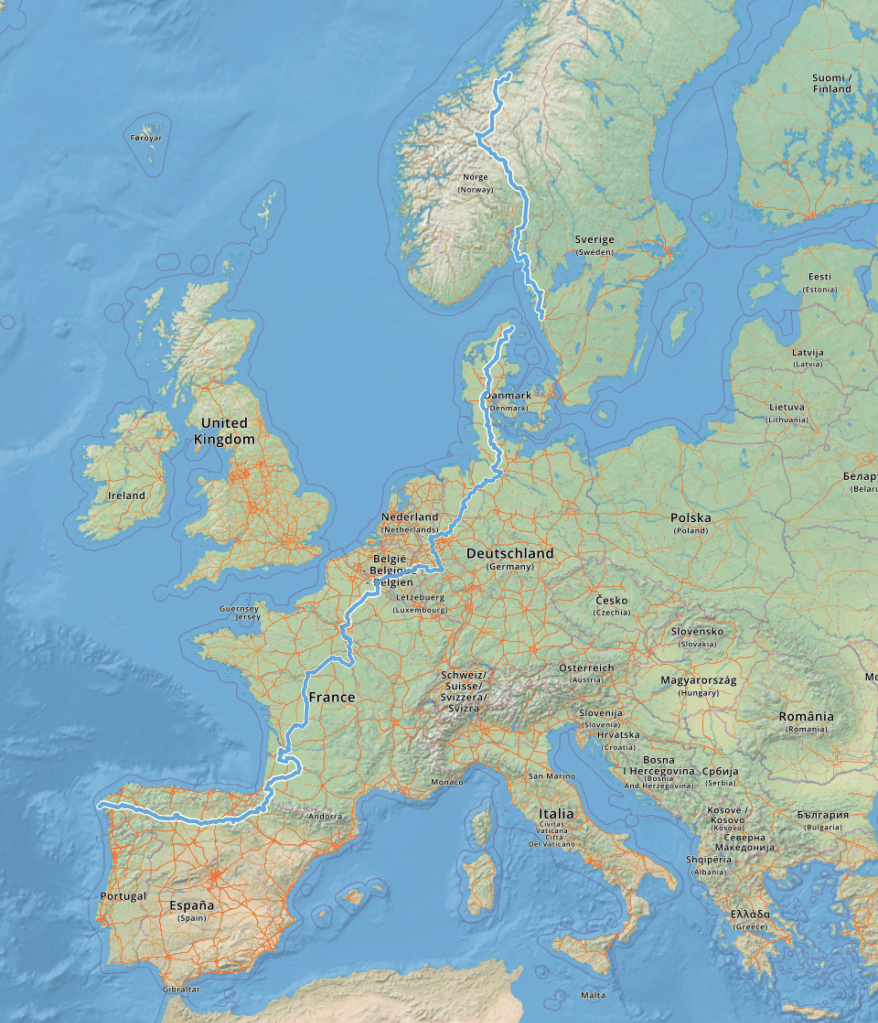
So I looked. The EV3 is called the Pilgrims Route. It starts at Nidaros Cathedral in Trondheim, Norway, and it ends in Santiago de Compostela. I have been to Spain and Portugal eight times and walked into Santiago on seven of them. Riding there from a cathedral in Norway? That is the perfect pilgrimage for me.

The numbers are a little less romantic. About 5,650 km, from 63° latitude north down to 43°. That is roughly 3,500 miles, for anyone still holding the 1850 thought. I was off by a bit. Roughly three months, starting in Trondheim in June 2027.

Then there is the climbing. Around 40,000 meters of it, which is Everest four and a half times, on a loaded bike. On the Primitivo last year the group used me as their guide, and I had one description for whatever was coming, dead flat or mountain pass: rolling hills. Norway has rolling hills at the start. Spain has them at the finish, and Spain’s are steeper per kilometer than Norway’s.

Rolling hills indeed…

As it stands, Torger and Håkon will probably not be able to join me. I still have hopes. If it ends up a solo trip, so be it. On foot I like walking alone for two or three weeks, and after that I want company. A bike will be different. I don’t know how yet.

Three months also bumps right up against the 90 days a visitor gets in the Schengen area. I will need to get creative, and France may be part of the answer. Homework pending.

And yes, I will walk in Spain again. I am positive of it.

The bike is the same one that crossed Argentina. Mostly. Six years gave me plenty of time to think about what I didn’t like about it, and all of it was in the cockpit: the handlebars, the controls, everything my hands and eyes deal with all day. Figuring out what to change took a while. Then I changed it. That story is next.

Now it’s time for a plan without a plan…