Camino Culture 101: Pilgrim Etiquette, Albergue Life, and the Unspoken Rules

There is something special about the Camino that goes beyond just walking from one town to the next. It is not just a hike—it is a shared journey, one that connects you to a long tradition of pilgrims from all over the world. But with that shared journey comes a set of unwritten rules—the do’s and don’ts of life on the trail. Some are practical, some are about respect, and some exist purely to prevent a full-blown international incident in a crowded albergue at 3 a.m. Understanding these unspoken rules will make your Camino smoother, more enjoyable, and more meaningful—not just for you, but for everyone walking alongside you.

First things first—if you take nothing else from this, remember this phrase: “Buen Camino!” While the words mean “Good Road/Way”, it’s meanings are more complex and you will say it constantly—to fellow pilgrims, to locals, to the person passing you on the trail, to the old man in the village who gives you a thumbs-up. It is more than just a greeting—it is a recognition that you are on this journey together. And trust me, there is something magical about hearing it, especially on a tough day. When someone says “Buen Camino” to you, say it back.

Albergues are the heart of the Camino experience, offering cheap beds, shared meals, and some of the best and worst nights of sleep you will ever have. If you have never slept in a communal dormitory with 30 strangers, congratulations—you are about to earn that life experience. The key to surviving albergue life is simple: respect. Arrive and check in early—most albergues open in the afternoon and fill up fast, operating on a first-come, first-served basis. Keep your gear organized—no one appreciates a backpack explosion. If you need to wake up early, do not be an alarm clock terrorist—pack your bag the night before and, for the love of all things holy, do not rustle plastic bags at 5 a.m. Showers should be quick—others are waiting in sweaty misery. Snoring happens, so bring earplugs and do not take it personally if someone gently nudges you in the night. And always, always be kind to the hospitaleros, the volunteers who run the albergues. A smile and a simple “gracias” go a long way.

Every pilgrim is different. Some walk fast, some slow. Some carry their own bags, others send them ahead. Some have been planning this for years; others decided on a whim. And guess what! All are valid. There is no “one right way” to do the Camino. If you start judging other people—“Oh, they are not a real pilgrim because they are taking a bus today”—congratulations, you have missed the entire point of the Camino. Walk your own Camino. Let others walk theirs.

Out on the trail, basic courtesy makes the journey smoother for everyone. Stay to the right and pass on the left. If you need music, use headphones—do not blast it on speaker. Say “Buen Camino” when passing another pilgrim—it is just good manners. Respect the locals—this is their home, their farmland, their church, their town. Be polite. And most importantly, leave no trace. If you carried it in, carry it out. Littering on the Camino is not just bad form—it is a direct insult to the very path you are walking.

Food on the Camino is more than just fuel—it is an event, a time to swap stories, rest tired legs, and bond with strangers over a shared bottle of wine. Pilgrim menus offer simple, hearty meals—three courses, often including bread, a main dish (meat, fish, or pasta), dessert, and what seems like unlimited wine. Yes, wine is included. Mornings start light, which is why second breakfast is a sacred Camino ritual—coffee, toast with tomato and olive oil, fresh-squeezed orange juice, and a pastry to keep you going. Some days, a picnic lunch is the best option—fresh bread, cheese, and fruit enjoyed on a quiet hilltop. Hydration is key—drink lots of water, even when wine is tempting. If you do not, your body will remind you (and not in a nice way).

One of the most beautiful things about the Camino is the random acts of kindness between strangers. A pilgrim struggling with blisters? Someone will offer tape. A fellow walker feeling discouraged? A simple “You are doing great” can mean the world. Some pilgrims leave handwritten notes, drawings, or little tokens at rest stops—small gestures that remind you that this is not just a walk, but a shared human experience. And just when you need it most, the Camino often provides—someone will offer exactly what you need, exactly when you need it.

Not every day will be magical. Some days, you will feel amazing—like you could walk forever. Other days, your feet will hurt, your energy will crash, and you will wonder why you ever thought this was a good idea. This is normal. The Camino will test your patience, endurance, and ability to let go of control. It will remind you that you are not in charge—the Camino is. And just when you think you have had enough, something will happen—a breathtaking sunrise, a stranger’s kindness, a perfect meal after a long day—and suddenly, you will remember why you are here. Because the Camino is not just a walk. It is a lesson in slowing down, embracing the unknown, and being fully present. And if you can do that? You will understand why people keep coming back.

Buen Camino.

Training for the Camino: Getting Your Feet (and Soul) Ready

So, you have decided to walk the Camino. You have picked your route, started gathering your gear, and maybe even found yourself daydreaming about tapas and a post-walk glass of vino tinto. But before you get too carried away with thoughts of leisurely strolls through Spanish vineyards, let’s talk about something that will make or break your pilgrimage: training.

Yes, I know. The Camino is not Everest. It is not an ultramarathon. And yes, people of all ages and fitness levels complete it every year. But let’s be clear—walking 20-30 km (12-18 miles) a day, every day, for weeks is no small feat. Your feet, legs, and back will feel it. The good news? A little preparation now can mean fewer blisters, less pain, and a much more enjoyable journey.

Walk, Walk, and Walk Some More

There is no magic formula, but the best way to train for walking… is to walk. Start now, even if your Camino is months away. Begin with 3-5 km (2-3 miles) a day, then gradually work your way up to 15-20 km (9-12 miles) at least once a week. Walking long distances once is easy—doing it day after day is the real challenge. Try a back-to-back training weekend, where you walk long distances two days in a row. Your legs will thank you later. And most importantly, train in the shoes you will wear on the Camino. They should be broken in long before you arrive in Spain. If they give you blisters now, they will give you blisters on Day 1 of the Camino.

The Art of Walking with a Backpack

Your backpack will be your best friend and your worst enemy. Learning how to carry weight comfortably will make all the difference. Start by walking with 3-5 kg (6-10 lbs) in your pack, then slowly increase to your full Camino load (ideally under 10% of your body weight). Make sure the hip belt takes most of the weight, not your shoulders. Adjust the straps as needed for maximum comfort. And do not just walk on sidewalks—train on different terrain. The Camino is not smooth pavement the whole way. Seek out hills, dirt paths, cobblestones, and uneven surfaces. If you can, train in the rain. You will walk through all kinds of weather, and better to discover now whether your gear holds up when wet.

Strength & Endurance: More Than Just Walking

Walking is key, but a little strength and flexibility training can prevent injuries and make the walk feel easier. Squats and lunges strengthen your legs for long walking days. Calf raises prepare you for uphill climbs. Yoga and stretching help keep your legs, back, and shoulders happy. Cross-training—whether cycling, swimming, or hiking—can build overall endurance. The more prepared your muscles are, the less pain you will feel after long days on the trail.

Train Your Mind (It Will Quit Before Your Legs Do)

Here is a Camino secret: your mindset matters as much as your muscles. There will be days when you feel amazing, like you could walk forever. And there will be days when everything hurts, when you are exhausted, when you wonder why you ever thought walking across Spain was a good idea.

This is where mental training comes in. Embrace discomfort. Accept now that there will be sore feet, hills, and long days. The sooner you let go of the idea that everything should be easy, the better you will handle the tough moments. Practice slowing down. Walk without rushing, without checking your watch, without worrying about how far you have left to go. The Camino is not about speed—it is about being present in each step. And train for “Camino frustrations.” Walk when you are tired. Walk in the rain. Walk when things do not go as planned. Because on the Camino, things will not always go as planned.

Blister Prevention: The Real MVP of Training

Blisters can ruin your Camino faster than a lost backpack. The best way to avoid them? Prevention. Wear the right socks—no cotton! Wool or moisture-wicking socks (like Darn Tough or Smartwool) help reduce friction. Your shoes should have extra room—your feet will swell after long days. A half-size up can prevent painful toe blisters. Some pilgrims swear by lubricating their feet with Vaseline or anti-chafing balm to prevent hotspots. And the most important rule? The moment you feel rubbing, stop and fix it. Apply tape, adjust your socks, take a break—do not wait until you have a full blister.

The Ultimate Test: A “Mini Camino”

If possible, do a multi-day test walk before you leave. Walk two to three days in a row with your full pack and Camino shoes. This will reveal:
• If your backpack is too heavy
• If your shoes will destroy your feet
• If you actually like walking all day (because, spoiler: you will be doing a lot of it)

Final Thoughts: Walk at Your Own Pace

The Camino is not a race. You do not need to be the fastest, strongest, or most prepared person out there. But you do need to listen to your body, walk your own walk, and enjoy the journey.

Because the truth is, no amount of training will fully prepare you for the Camino. There will be surprises, struggles, and moments of unexpected joy. But what training can do is help you start strong, avoid injuries, and make the journey a whole lot more enjoyable.

So start walking now. Train your legs, train your mind, and most of all—train yourself to embrace the unknown.

Because the Camino is waiting for you.

Buen Camino.
The Camino Packing List: What to Bring (and What You’ll Regret Carrying)

Let’s get one thing straight: your backpack is your life on the Camino. For the next few weeks, everything you need—clothes, gear, first-aid supplies, snacks, and that one luxury item you swear you can’t live without—will be on your back.

And if you overpack? You will regret it.

I promise you, by Day 3, that just-in-case outfit, extra-large bottle of shampoo, and hardcover book you thought would be a great companion will feel like bricks dragging you down. At some point, you will either mail stuff home, leave it behind at an albergue, or curse yourself for not listening when everyone said: pack light. But do not worry—I have got you covered. Here is what you actually need, what you can leave behind, and a few hard-earned lessons from pilgrims who learned the hard way.

The Packing Golden Rule: Keep It Under 10% of Your Body Weight

You will hear this rule again and again: your pack should not exceed 10% of your body weight (or ideally 7-8% if you can manage it).

For most people, that means 6-9 kg (13-20 lbs) fully loaded, including water.

“But what if I’m strong?” It does not matter. After walking 25 km (15 miles) a day, even the toughest person will feel the weight. Trust me—lighter is always better.

The Absolute Essentials (AKA, What You Cannot Walk Without)

These are the non-negotiables. Forget anything else, but do not forget these:

Backpack (24-36L) – Large enough to fit your essentials, small enough to keep it light. Try it on with weightbefore you leave.

Shoes – Trail runners, lightweight hiking boots, or sturdy walking shoes. Whatever you choose, break them in before you go.

Socks (4 pairs max) – Good wool or moisture-wicking socks will save your feet. Cotton = blisters.

Sleeping Bag Liner – Not always needed in summer, but hostels often only provide blankets. A lightweight liner keeps you warm and keeps bedbugs away.

Water Bottle or Hydration Bladder – At least 1L capacity. Refill often.

Pilgrim Credential (Credencial) – This is your pilgrim passport, needed for staying in albergues and proving you walked the Camino.

Phone and Charger – Communication, navigation, journaling—everything can be done on your mobile.

Clothing (Keep It Simple!) – The rule of three: 1 to wear, 1 to wash, 1 to dry. That means:
• 3 shirts (moisture-wicking, quick-dry)
• 2 pairs of pants/shorts/leggings
• 3 pairs of underwear (quick-dry)
• 1 lightweight fleece or jacket
• 1 rain jacket or poncho (ESSENTIAL in Galicia)

First-Aid Kit (Small but Mighty)
• Compeed or Leukotape for blisters
• Ibuprofen or acetaminophen (your best friend)
• Band-aids and antiseptic wipes
• Any personal medications

Toiletries (Minimalist Edition)
• Travel-size everything
• Solid shampoo bar (lasts longer, no spills)
• Quick-dry towel
• Toilet paper or tissues (You’ll thank me for this)

Sun Protection – Hat, sunscreen, sunglasses. The Spanish sun does NOT play around.

A Positive Attitude – The most important thing in your pack.

The “Nice to Have” (But Only If You Have Room)

These are optional, but they can make life easier:

Sandals or Flip-Flops – Perfect for letting your feet breathe in the evening.

Walking Poles – If you have knee issues, they help a LOT on hills. (Buy them in Spain to avoid airline hassles.)

Earplugs and Sleep Mask – You WILL sleep in a room with snorers. It is unavoidable.

Stuff Sack or Dry Bag – Keeps your things organized and dry.

Notebook or Journal – If you like writing, the Camino is full of moments worth remembering.

Small Knife or Spork – Handy for cutting fruit, cheese, or picnic lunches.

The “You Will Regret This” List

Too Many Clothes – You will not need five shirts. Laundry is easy.

Jeans – Heavy, take forever to dry, miserable in rain. Leave them at home.

Big Bottles of Toiletries – A travel-size tube of toothpaste lasts longer than you think.

A Giant First-Aid Kit – Pharmacies are everywhere. You do not need a full emergency room in your pack.

Books – They are heavy. Read on your phone or swap books at albergues.

Camping Gear – Unless you plan on wild camping (which is difficult in Spain), leave the tent and stove at home.

Expensive Electronics – A phone is enough. You do NOT need a laptop, drone, or giant camera. (And yes, I have seen people carrying all of these.)

Headlamp – Not needed—your phone flashlight is sufficient.

Tiny Laundry Kit – these things are generally provided for you at laundromats.

Less is More

Every pilgrim has their own packing philosophy, but almost everyone wishes they had packed less by the end. The Camino is about simplicity, and you will quickly learn that you need far less than you think.

At some point, you will meet a fellow pilgrim who has ditched half their stuff and is now walking with nothing but a tiny backpack and a huge smile. That is when it will hit you: freedom comes from carrying less.

So, before you pack that extra “just in case” item, ask yourself: Do I really need this? Or am I just afraid of being uncomfortable?

Because the truth is, the Camino will make you uncomfortable at times—tired, sore, maybe even questioning your life choices on a particularly brutal hill. But it will also show you that you are stronger than you think, and you need far less than you imagined.

And that, my friend, is part of the journey.

Buen Camino.

A Pilgrim’s Mindset: How to Walk with Purpose (Even if You’re Just Here for the Wine)

The Camino has a way of humbling you. One moment, you are standing atop a ridge, looking out at rolling hills bathed in golden light, feeling like you have unlocked the secret to life itself. The next, you are cursing your decision to bring that extra pair of socks as you haul your backpack up yet another hill, wondering why you willingly signed up to spend weeks walking across Spain.

And yet, this is exactly what makes the Camino so powerful. It is not just about walking—it is about how you walk. Your mindset will shape your experience just as much as your physical preparation, maybe even more so. Some days will be full of deep reflection; others will be about simple joys, like the first sip of cold beer after a long walk. And some days? Some days will just be about putting one foot in front of the other, because that is all you can manage.

Wherever you fall on that spectrum, whether you came seeking transformation or just a really good glass of Albariño, your mindset will make all the difference.

You Walk the Camino, or the Camino Walks You

Before you take your first step, you may have an idea of how your Camino will go. Maybe you have meticulously planned each stage, scouted out the best albergues, and even picked out the spots where you will treat yourself to pulpo a la gallega.

Spoiler alert: The Camino does not care about your plans.

The truth is, things will go sideways at some point. You will lose something. You will get rained on. You will arrive at a fully booked albergue and have to keep walking when your feet are begging for mercy. And when that moment comes, you will have a choice: fight it or embrace it.

One of the greatest lessons of the Camino is learning to surrender—not in a passive, defeated way, but in the realization that some of the best moments come when you let go of control. The Camino has a way of giving you exactly what you need, even if it is not what you expected.

The Art of Slowing Down

At home, life is fast. We rush from one thing to the next, measuring success by how much we accomplish in a day.

But on the Camino? Your only job is to walk.

And at first, that might feel strange.

You might find yourself pushing to “get there faster,” treating each day like a race. But then, little by little, the rhythm of the walk changes you. You start to notice things—the way the morning light filters through the trees, the sound of birdsong at dawn, the smile of a local wishing you Buen Camino.

Eventually, you stop focusing on the destination and start living in the moment. You realize that there is nowhere else to be, nothing else to do, except take the next step.

And that is a gift.

Pilgrimage vs. Tourism: Does It Matter?

There is a running joke on the Camino that some people walk for religion, some for spirituality, and some just for the wine and food. And honestly? All are valid.

Some pilgrims walk seeking something deeper—a sense of peace, closure, or understanding. Others are simply here for the adventure. Some do not know why they are walking, only that something pulled them to the trail.

Here is the secret: It does not matter why you start. The Camino will meet you where you are.

Even if you came thinking this was just a long-distance hike, somewhere along the way, the Camino has a way of getting under your skin. Maybe it happens when you share a meal with strangers who feel like old friends. Maybe it happens when a local offers you a gift, asking for nothing in return. Maybe it happens in the silence of a misty morning, when you suddenly feel connected to something bigger than yourself.

The Camino does not require you to believe in anything specific. But it asks you to be present. And if you can do that, you might just find something unexpected along the way.

Joy is in the Smallest Moments

People often think of the Camino as a deeply serious, reflective journey—and at times, it is. But some of the best moments are the lighthearted ones.

  • The pure joy of taking off your boots after a long day.
  • The laughter of a group of pilgrims trying to mime their way through ordering dinner in a tiny village.
  • The ridiculous conversations that happen when you are deliriously tired but still walking.
  • The shared look of understanding when someone else limps into the albergue with the same blister problemsyou have.

There is something magical about stripping life down to its basics. Food, shelter, companionship, movement. Everything else fades into the background. And in that simplicity, you find joy.

The Camino Doesn’t End in Santiago

The Compostela certificate you receive in Santiago is nice, but it is not the real reward.

The real Camino continues long after you stop walking. It stays with you in the way you approach life, in the friendships you carry forward, in the lessons you bring home. Maybe you will slow down more. Maybe you will let go of little frustrations that once consumed you. Maybe you will start seeing life as a journey rather than a checklist of achievements.

And maybe, just maybe, you will find yourself longing for the road again.

Because here is the thing: No one walks the Camino just once. Even if you never physically return, a part of you will always be on that path.

So whether you are here for spiritual renewal, adventure, or just a really good glass of wine at the end of the day, walk with purpose. Walk with an open heart. And most of all, walk knowing that the Camino will change you in ways you never expected.

Buen Camino.

The Many Roads to Santiago: Which Route is Right for You?

So, you’ve heard about the Camino and want to know more, or are confused about all of the different routes. You’ve felt the pull of adventure, history, or maybe just the promise of unlimited tapas and cheap wine. But now comes the big question: Which route do you take?

Because here’s the thing—the Camino isn’t just one trail. It’s a vast network of paths, all leading (or connecting) to Santiago de Compostela, each with its own personality, challenges, and quirks. Some routes are bustling with pilgrims; others feel like you’ve stepped into the Middle Ages. Some are physically grueling; others will test your patience with endless, flat, unshaded roads.

And while there are a few well-known routes, last time I counted, there are actually 57 named Camino routes, many with official variants. Some lead directly to Santiago. Others are ancient connector routes, funneling pilgrims from remote corners of Spain, Portugal, and beyond into the larger, well-traveled paths.

The Camino isn’t just a Spanish phenomenon. It’s a vast network stretching across Europe and beyond. Pilgrims have started from Paris, Rome, Vienna, and even Jerusalem. The scallop shell symbol, seen all over Spain, marks trails that weave through Germany, Belgium, Poland, and the Netherlands. Some modern pilgrims even begin walking from their own front doors, turning the entire journey into a personal pilgrimage.

And let’s get one thing straight—your Camino does not start in Spain. It starts the moment you decide to go. It starts at your front door. Because this is more than a walk. It is a journey that, in some ways, begins long before your first step on a trail marked with a scallop shell.

1. The Camino Francés: The Classic Experience

Best for: First-timers, social butterflies, and those who want a “Camino Greatest Hits” experience.

If you’ve heard of the Camino, chances are you’ve heard of the Camino Francés. It’s the most famous route, starting in Saint-Jean-Pied-de-Port, France, and stretching about 500 miles (800 km) to Santiago. It’s the trail of legends—scenic mountain passes, rolling vineyards, medieval villages, and, yes, plenty (perhaps crowds) of fellow pilgrims.

Type: Main Route

Pros:

•Well-marked and easy to navigate.
•Plenty of albergues, cafés, and rest stops.
•The best chance of making lifelong Camino friends.

Cons:

•It gets crowded, especially in the last 100km.
•Some stages (looking at you, Pyrenees) are physically demanding.
•If you’re seeking solitude, this may not be your best bet.

2. The Camino Portugués: Coastal Beauty & Cultural Charm

Best for: Those who want a slightly shorter walk, fewer crowds – but ever-present – and the option to stroll along the Atlantic Ocean.

The Camino Portugués starts in Lisbon (if you’re ambitious) or Porto (if you prefer the most scenic part) and runs 380 miles (600 km) from Lisbon or 160 miles (260 km) from Porto. It’s flatter than the Francés, less crowded, and packed with Portuguese and Galician charm.

But here’s the fun part: The Camino Portugués actually has three main variants, allowing you to tailor your experience to what suits you best. Whether you prefer the salty breeze of the Atlantic, the rolling countryside, or a deeper spiritual experience, there’s a path for you.

2A. Camino Portugués Interior (Central Route)

This is the most traditional of the three Portuguese routes, following the historical inland path used by medieval pilgrims. It passes through rolling farmland, vineyards, and some of Portugal’s most picturesque towns. If you want a classic Camino experience with more historical charm and cultural depth, this is your route.

Type: Main Route

Highlights:

•Rich history, with stops in Barcelos, Ponte de Lima, and Tui.
•More albergues and pilgrim infrastructure than the coastal route.
•Authentic countryside charm, with vineyards and stone villages.

Things to Consider:

•Warmer temperatures in summer, as you’re away from the ocean breeze.
•More hills compared to the Litoral route (especially around Ponte de Lima).
•Fewer ocean views, if that’s what you were hoping for.

2B. Camino Portugués Litoral (Coastal Way)

If walking beside the sea sounds like your idea of paradise, this is the route for you. The Litoral Route follows the Atlantic coast, treating you to breathtaking ocean views, fishing villages, and endless golden beaches. It starts in Porto and follows the shoreline for much of the way, sometimes merging with the Senda Litoral (a beachside path that sticks even closer to the water).

Type: Main Route (Variant)

Highlights:

•Spectacular ocean views almost every day.
•Charming seaside towns like Vila do Conde, Viana do Castelo, and A Guarda.
•Cooler temperatures in summer due to the ocean breeze.

Things to Consider:

•More road walking compared to the inland route.
•Some detours required when the tide is high.
•Fewer historical sites compared to the interior route.

2C. Camino Portugués Espiritual (The Spiritual Variant)

For those who want a mix of Camino history, scenic beauty, and a deeper connection to the journey, the Camino Espiritual is a must. This diversion from the Central Route begins near Pontevedra and takes pilgrims along a three-day detour through stunning Galician countryside, past monasteries, and across an estuary—by boat! This section is often referred to as the “Traslatio”, mirroring the legendary final journey of St. James’ body by sea to Santiago.

Type: Variant

Highlights:

•Visit the Monastery of Poio and the Church of Armenteira, two important pilgrimage sites.
•Walk through the mystical “Ruta da Pedra e da Auga”, a serene riverside forest path filled with ancient stone mills.
•Boat journey along the Arousa Estuary, an unforgettable way to approach Santiago.

Things to Consider:

•Requires a bit more planning, as the boat trip needs to be arranged in advance.
•Less infrastructure, since it’s a lesser-traveled route.
•A bit longer, adding a few extra days to your Camino.

3. The Camino del Norte: For the Rugged and Adventurous

Best for: Hikers who love coastal views, fewer crowds, and don’t mind a bit of a challenge.

This one hugs Spain’s northern coastline, running 510 miles (820 km) from Irún to Santiago. It’s breathtaking—cliffside trails, sweeping ocean views, and cities like San Sebastián and Bilbao—but it’s also tough. The daily elevation changes will make your legs beg for mercy.

Type: Main Route

Pros:

•Jaw-dropping scenery along Spain’s rugged coastline.
•Cooler temperatures in summer.
•Fewer pilgrims—more peace and quiet.

Cons:

•The elevation gains are no joke. Be prepared for steep climbs.
•Fewer albergues and long stretches without services.

4. The Camino Primitivo: The Original & Brutal One

Best for: Pilgrims who want a hardcore experience, historic trails, and mountain solitude.

The Camino Primitivo (The Original Way) is the oldest recorded Camino route, dating back to the 9th century. It starts in Oviedo, covering 200 miles (320 km) and merging with the Francés near Santiago. It’s breathtaking—but it will break you if you’re not prepared.

Type: Main Route, Connector Route between Camino del Norte and Camino Frances

Pros:

•A true off-the-beaten-path Camino.
•Stunning mountain scenery.
•A deep historical feel—this was the original Camino.

Cons:

•Some of the most challenging terrain on any Camino.
•Weather can be unpredictable.
•Limited albergues—plan your stops carefully.

5. The Camino Inglés: The Quick & Historic Route

Best for: Pilgrims with limited time or those who want a taste of the Camino.
The Camino Inglés (The English Way) was historically used by medieval pilgrims from England and Northern Europe who arrived by boat. It’s a 5-day route (120 km) starting in either Ferrol or A Coruña.

Type: Main Route

Pros:

•Quick and perfect for those with limited time.
•A great intro Camino for beginners.
•Historic—this was a key medieval pilgrimage route.

Cons:

•Some parts feel very urban.
•Not the deep, immersive Camino experience of longer routes.

6. The Camino Olvidado: The Forgotten Way

Best for: Pilgrims seeking solitude, history, and rugged terrain.

The Camino Olvidado (The Forgotten Way) predates the Francés and was used by early medieval pilgrims who feared Moorish-controlled areas in Spain. It winds through northern Castilla y León, offering mountain passes, small villages, and a deep sense of history.

Type: Main Route, connects to Camino Frances

Pros:

•Almost no crowds—true solitude.
•Deep historical significance.
•Gorgeous, untouched landscapes.

Cons:

•Limited infrastructure—requires careful planning.
•Some sections are very remote.

7. The Camino de San Salvador: Short, Sweet, and Stunning

Best for: Pilgrims who love mountains and want a short but epic trek.

This 5-day route (120 km) runs from León to Oviedo, offering breathtaking mountain scenery. It’s a hidden gem for those who want a short, challenging, and spectacular Camino.

Type: Connector Route between  Camino Primitivo, Camino Olvidad, and Camino Frances

Pros:

•One of the most beautiful Caminos.
•A great short trek before or after another route.
•Ends in Oviedo, home of the stunning San Salvador Cathedral.

Cons:

•Steep climbs—this is a tough one.
•Not a direct route to Santiago (you’ll need to connect to another Camino).

Why Walk the Camino? The Allure of the Ancient Path

You are going to walk across Spain. On foot. Carrying everything you need on your back. Sleeping in shared dormitories. Wearing the same two outfits for weeks. Eating whatever is available. Enduring blisters, sore muscles, and the occasional snorer who could shake the walls of a medieval albergue.

Sounds crazy, right?

And yet, thousands of people do it every year. Not just hikers or seasoned backpackers, but retirees, students, accountants, teachers, artists, and people who have never set foot on a trail before. The Camino de Santiago has a pull unlike any other journey in the world. And once you hear about it, once it plants itself in your mind, it’s only a matter of time before you find yourself booking a flight, lacing up your shoes, and stepping onto that first dusty path.

But why? Why do people do this?

The Many Reasons to Walk

Some come for adventure. Some for history. Some for faith. Others, simply because they saw “The Way” with Martin Sheen and thought, Hey, that looks fun!

The truth is, there’s no single reason to walk the Camino—there are thousands. Some pilgrims are processing grief, heartbreak, or a major life transition. Some are seeking clarity or purpose. Others just want an extended break from emails, traffic, and the never-ending scroll of modern life.

The beauty of the Camino is that no matter why you start, the journey has a way of shifting and surprising you. What begins as a physical challenge soon becomes a lesson in patience. What starts as a quest for solitude turns into an unexpected festival of friendships. And sometimes, the moment you stop looking for answers, you find exactly what you needed.

The Pull of History

The Camino is old—very old. For over a thousand years, people have followed these same routes toward Santiago de Compostela, where the remains of St. James are said to be buried. Before that, ancient Celtic and Roman roads traced the same paths, leading travelers toward the westernmost edge of the known world.

There’s something humbling about walking in those footsteps, knowing that for centuries, people from all backgrounds—medieval peasants, noble knights, monks, merchants, misfits—have made this same journey. Some carried relics, some carried sins, some carried nothing at all. But all of them walked, just like you will.

A Different Kind of Travel

The Camino is not a vacation. It is not a resort getaway. You will not be sipping cocktails by the beach (unless, of course, you detour to Finisterre, which I highly recommend).

Instead, you’ll wake up early, lace up your boots, and walk. Every day, a new town. Every night, a new bed. Some days will be easy, filled with laughter and sunshine. Others will test your patience, with sore feet, endless hills, and the nagging question of Why did I think this was a good idea?

But along the way, something shifts. The clutter of everyday life falls away. The rhythm of walking becomes meditative. And you start noticing things—how the morning mist hangs over the fields, how a stranger’s kindness can feel like a miracle, how a simple meal after a long walk tastes like the best thing you’ve ever eaten.

The Camino Changes You

Ask any pilgrim, and they’ll tell you: the Camino stays with you. It gets under your skin. Long after you’ve returned home, unpacked your bag, and soaked your weary feet, the memories will linger.

Maybe it’s the people you met—the Dutch retiree who had the best stories, the Korean student who shared their last granola bar, the Spanish hospitalero who greeted every pilgrim with a warm smile. Maybe it’s the simplicity—how little you needed to be happy, how light you felt without the weight of daily worries. Maybe it’s the realization that, for a while, you were part of something bigger than yourself—a pilgrimage that has stretched across centuries.

And maybe, just maybe, you’ll start planning your next Camino before the dust has even settled on your boots.

Because if there’s one thing I know for sure, it’s this: the Camino calls. And when it does, you go.
2025 Camino de Santiago – Cordillera Cantábrica

Back on the Camino: A New Adventure Through Northern Spain

The backpack is packed (well, almost). The flights are booked. And my feet? They’re itching to hit the trail again. This June, I’ll be picking up where I left off on the Camino de Santiago (Norhtern route) in Bilbao, resuming my journey from Bayonne to Santiago after a pause last year due to a loss in the family. Now, it’s time to lace up (or, in my case, strap on my sandals) and dive back into the rhythm of walking, one step at a time.

The Route: A Bit of Everything

This walk isn’t just a straight shot to Santiago—it’s a winding, meandering, choose-your-own-adventure kind of Camino. From Bilbao, I’ll follow the Camino del Norte, hugging the dramatic northern coast, until I reach San Vicente de la Barquera. There, I’ll veer inland onto the Camino Vadiniense, making my way to Cistierna, where the Camino Olvidado will carry me westward to La Robla.

At La Robla, I’ll pivot north onto the Camino San Salvador, climbing through the Cantabrian Mountains toward Oviedo—because what’s a pilgrimage without a little uphill suffering? From Oviedo, I’ll join the Camino Primitivo (the oldest of the Caminos) until Melide. And then? I have a decision to make. I’ll either:

  1. Walk straight into Santiago on the Camino Francés, or
  2. Hop a bus to Ferrol and complete this year’s Camino on the Inglés with my brother-in-law, adding a bit of historical flair to the final steps.

Either way, Santiago is the goal, and every twist, turn, and elevation gain will just be part of the story.

Packing Lighter, Walking Smarter

This year, I’m making a bold move: downsizing from a 36L to a 24L backpack. That’s right—less gear, fewer gadgets, and a lot more faith in the “I’ll figure it out” philosophy.

How am I pulling this off?
✔ Hiking in sandals instead of boots (because my feet prefer freedom).
✔ Ditching extra charging equipment and unnecessary electronics.
✔ Leaving behind things I’ve barely touched in past walks (goodbye, bulky first-aid kit and extra sets of clothes).

It won’t be truly minimalist, but it will be lighter—dropping from 10kg to around 7kg, not counting water or snacks.

The Big Picture: One Step at a Time

In total, this journey will cover around 800-900km. Add that to the 200km/280km (route/total) I walked last year from Bayonne to Bilbao, and by the time I reach Santiago, I’ll have clocked somewhere between 1100 and 1200km.

I’ll be walking for five weeks, with a total of six weeks away to soak in the experience, rest my feet, and enjoy Spain’s incredible landscapes (and food—let’s not forget the food).

So, here we go. New routes, fewer possessions, and the same love for the Camino. Every journey is different, and this one promises to be full of surprises, stunning views, and hopefully, just enough challenge to keep things interesting.

Buen Camino! 🚶‍♂️🌿☀️

Day 19: Padrón->Santiago de Compostela

https://www.mapmyfitness.com/workout/8200101115

This day marked the final day of my Camino journey—or as the saying goes, “Your Camino truly begins when you arrive in Santiago.” It’s a phrase often met with skepticism, but after completing this pilgrimage six times, totaling more than 5,400 kilometers and over 7 million steps, I can confidently say that the real growth happens in reflecting on those kilometers traveled. Now, six weeks later, I’m writing this with fresh perspective and a mix of experiences—some I’ll share, and others that will remain mine alone. But first, let’s talk about the walk.

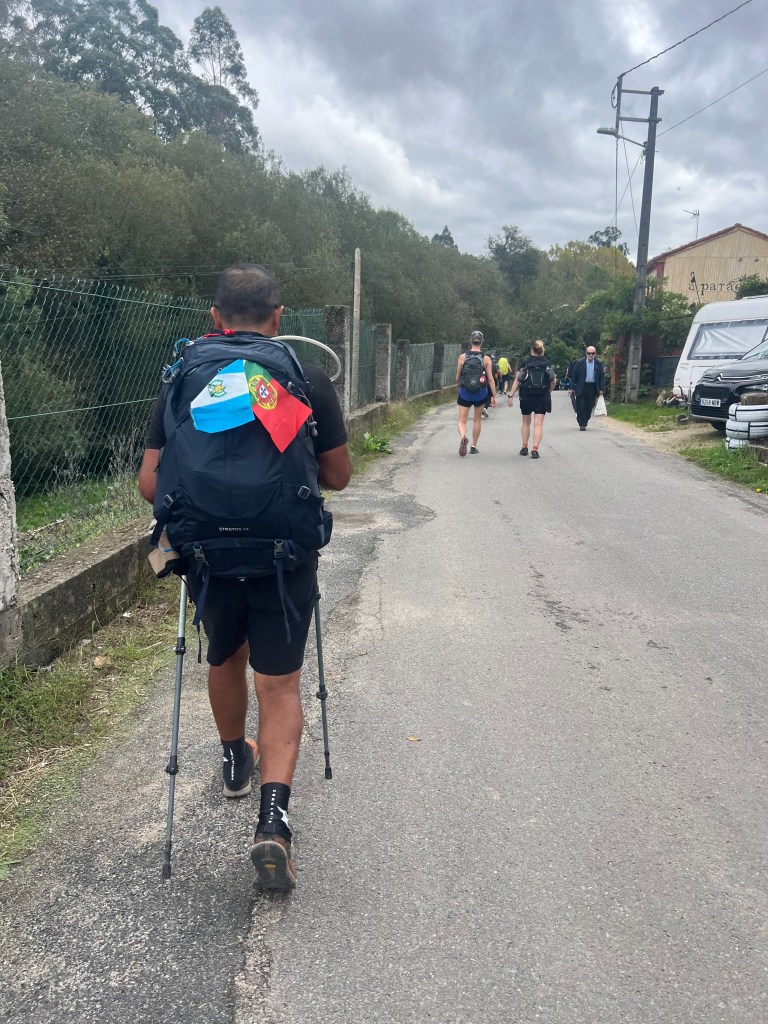
The day was split between two worlds: half spent on soft forest paths, the other on asphalt as the city loomed closer. The peaceful forest stretches invited introspection, my thoughts meandering like the trail itself. Then, as the rural turned urban, my focus shifted to navigating Santiago’s outskirts, a growing buzz of anticipation propelling me forward.

Admittedly, that excitement got the better of me. I sped up, leaving Luis behind—an oversight that brought its own lesson. While I waited for him at the entrance to the Casco Viejo, where the cathedral resides, I realized I’d pushed too hard, upsetting the balance of our shared journey. It was a humbling moment, one that required introspection and acknowledgment in the days that followed. All was resolved eventually, but it’s a reminder: the Camino teaches as much about patience and connection as it does about endurance.

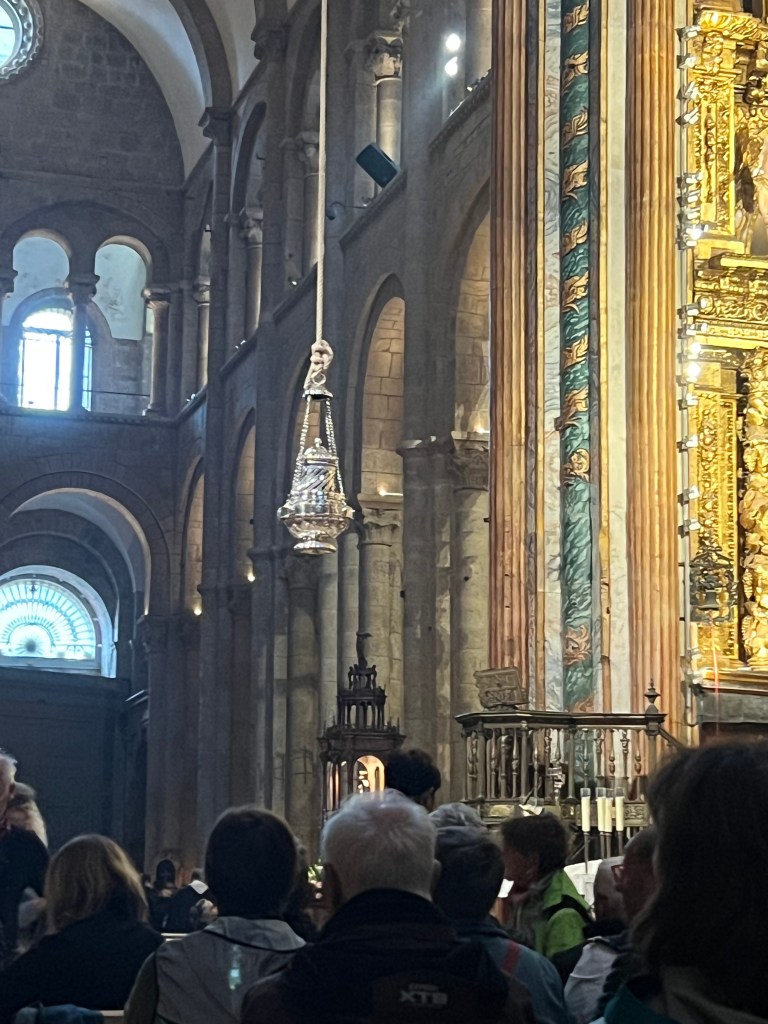
Arriving at the cathedral’s plaza was a mix of celebration and camaraderie. Pilgrims from all walks of life gathered, greeting friends and savoring the shared accomplishment of a lifetime. Under partly cloudy skies and a blessed lack of rain, the plaza brimmed with joy. Contact information was exchanged, tearful goodbyes were said, and the Camino worked its magic once again, forging bonds that will last a lifetime.

After a couple of days in Santiago, we ventured to the coast—Muxia specifically—before returning to Santiago for one last evening of bar-hopping, Orujo tasting, and last-minute shopping. From there, it was on to Lisbon for our flights home.

This Camino was unlike any of my others. The reasons I embarked on it weren’t entirely my own; I walked for someone and with someone. Yet, as the Camino often does, it became deeply personal. No matter the reasons you start, the Camino finds a way to touch your soul. It was as much my journey as it was for the important people in my life.

Galicia’s Celtic heritage added a layer of mysticism to this pilgrimage. Known as one of the seven Celtic nations, its land is steeped in ancient beliefs, including the concept of ley lines—energetic pathways that, where they intersect, are thought to hold extraordinary spiritual power. Muxia, believed to be one such powerful conjunction, held special significance for me this time. Unlike my 2015 visit, which felt more like sightseeing, this visit carried the weight of nine years of growth and deeply personal experiences.

Sitting on the rocks in Muxia, meditating and contemplating life, I was overcome with a profound sense of peace—akin to moments I’ve experienced in meditation or altered states. This calm, a gift from the ley lines and the Camino itself, remains with me even now. It has allowed me to truly “begin my Camino” in Santiago, embracing the journey that lies ahead with an open heart and a peaceful mind.

Walking the Camino with my brother-in-law, Luis, was an experience that deepened my respect and love for him in ways I couldn’t have anticipated. Luis is a man of quiet strength, a steady presence who approaches life with a unique blend of humility and wisdom. Sharing this journey with him was both an honor and a privilege. His ability to face challenges with grace and his unwavering support throughout the walk made our time together unforgettable. There was a profound sense of camaraderie in our shared steps, laughter, and conversations. Walking alongside Luis reminded me of the importance of family and connection, and I’ll always treasure the bond we strengthened on this pilgrimage. To share this sacred path with someone so special was, truly, a gift.

Day 18: Caldas de Reis->Padrón

https://www.mapmyfitness.com/workout/8198306938

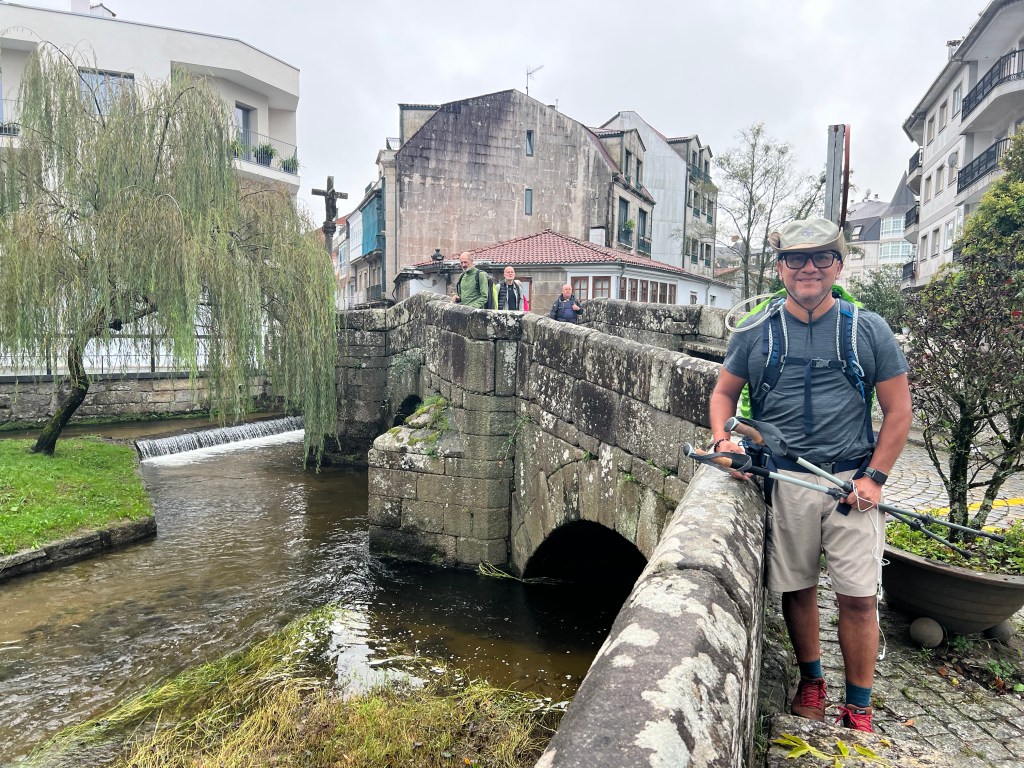
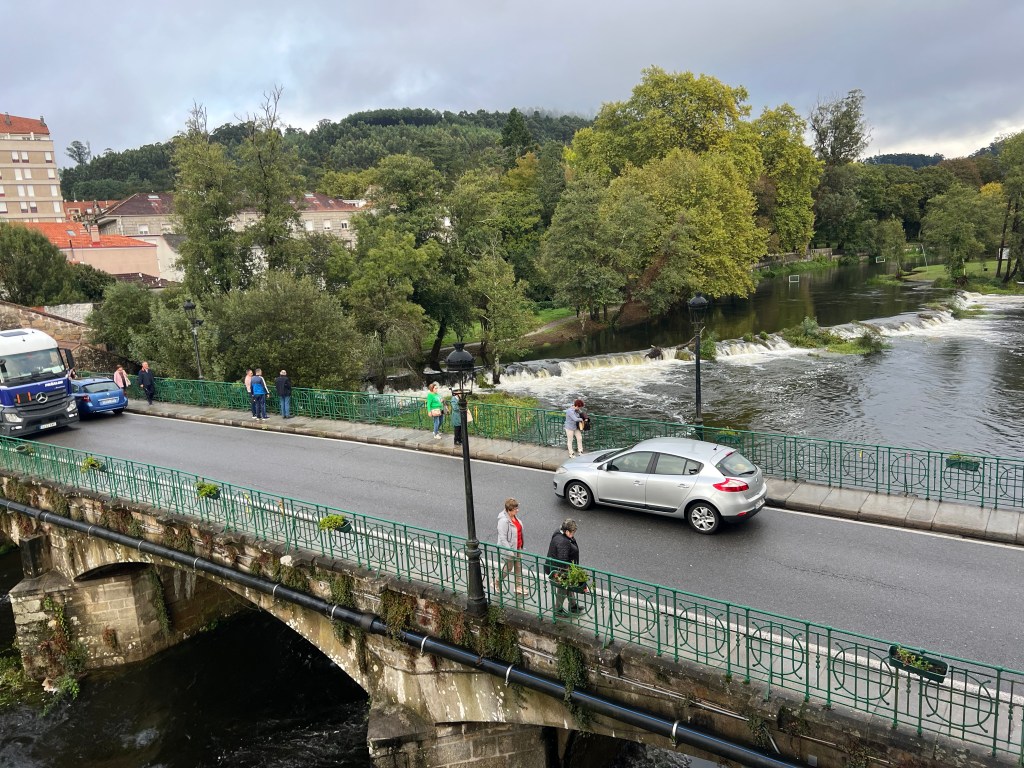
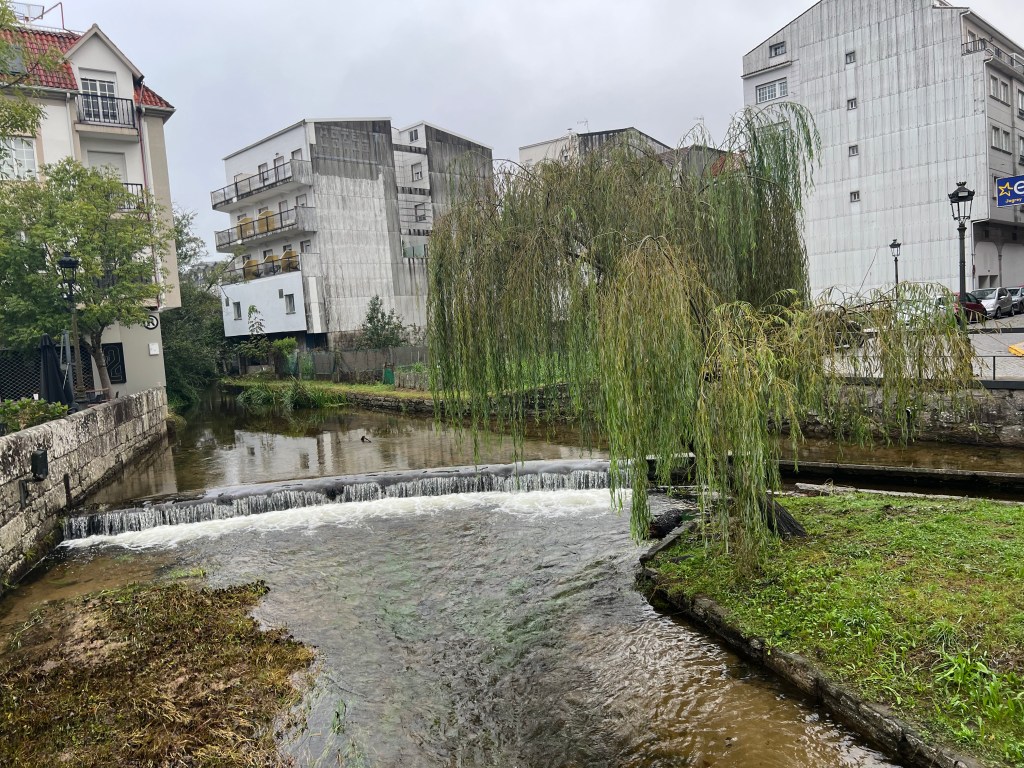
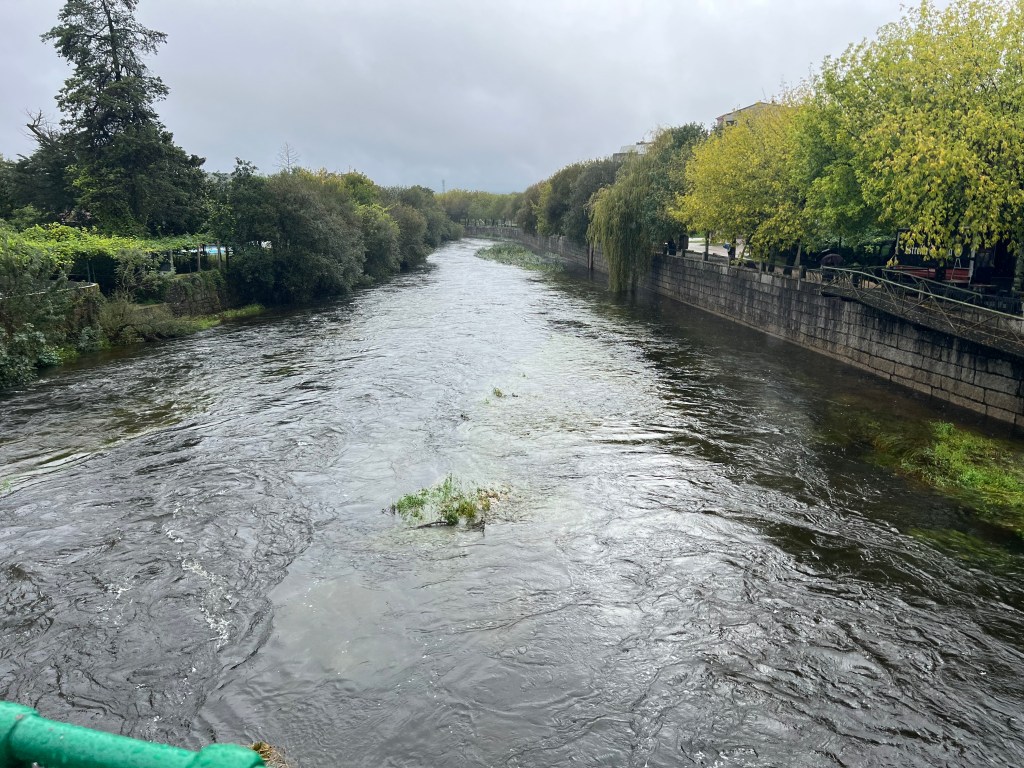
We left Caldas de Reis under a light drizzle—not quite rain, but the kind that sneaks up on you. Had it lingered, we’d have been as soaked as if it had poured all day. Luckily, it fizzled out before drenching us. The path out of town crossed a river and passed by public hot springs and fountains, places where people once gathered to bathe in days gone by. The town’s name, Caldas de Reis, roughly translates to “Hot Springs of the Kings,” a nod to the royalty who once flocked here for a bit of thermal relaxation.

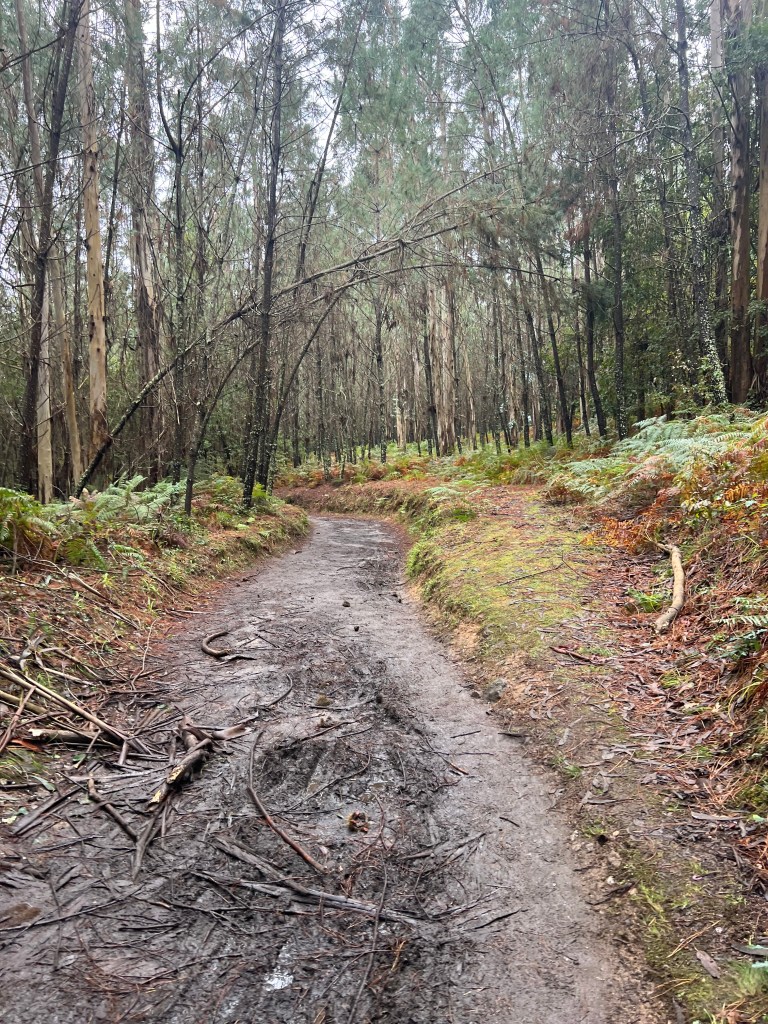
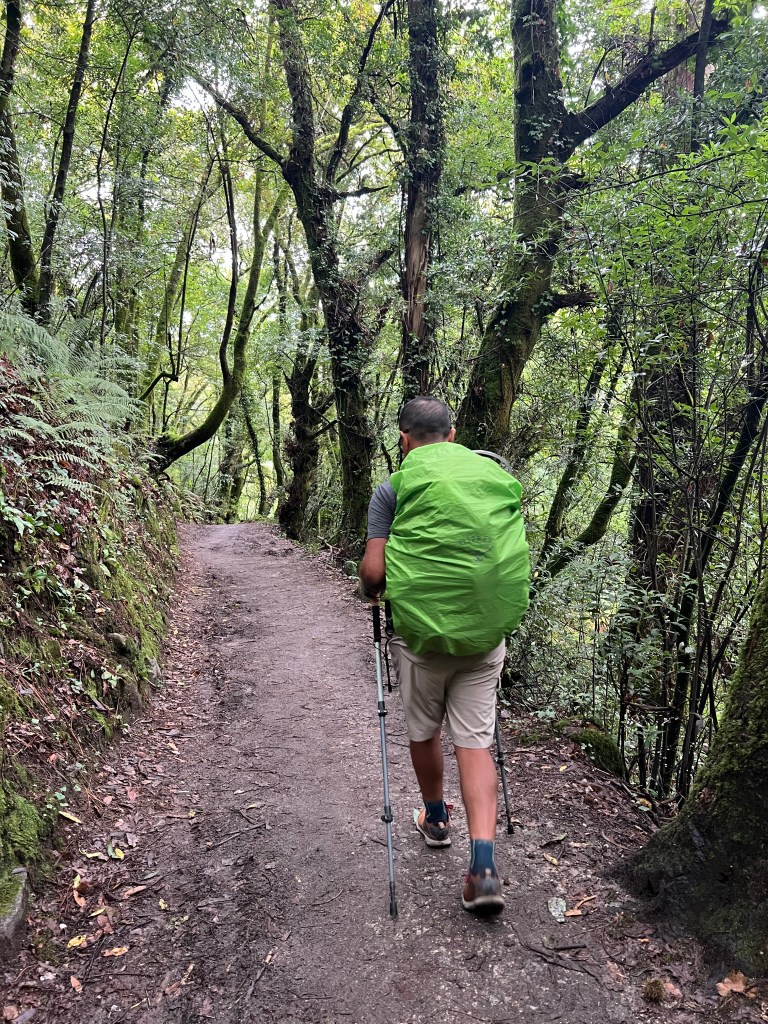
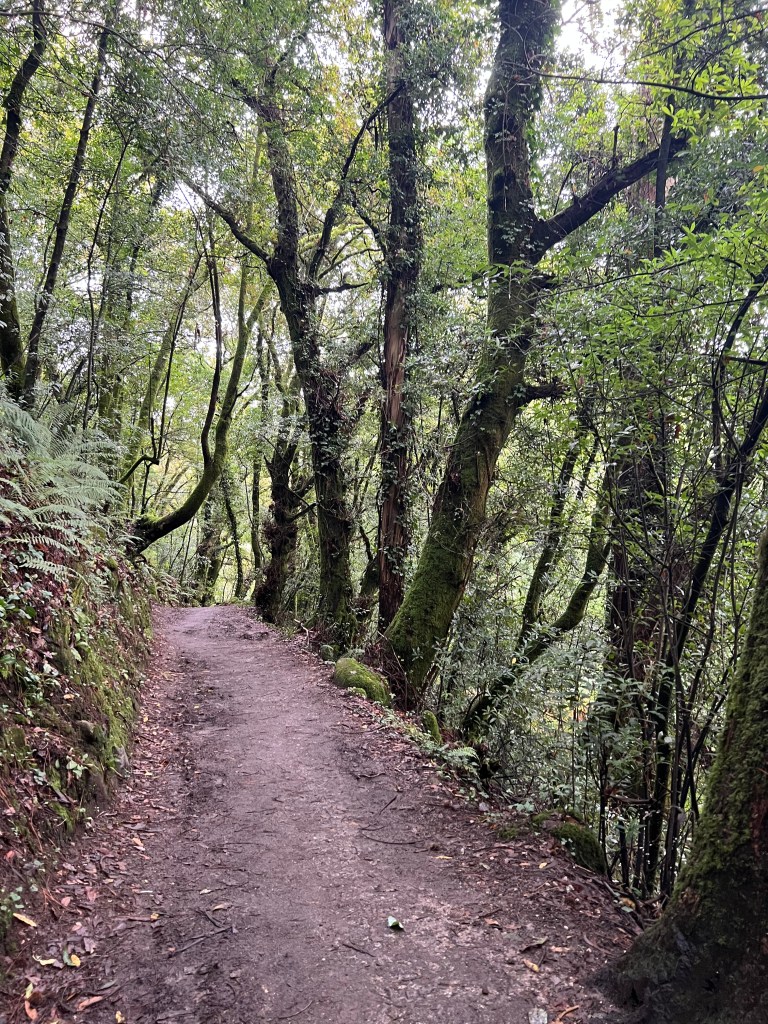
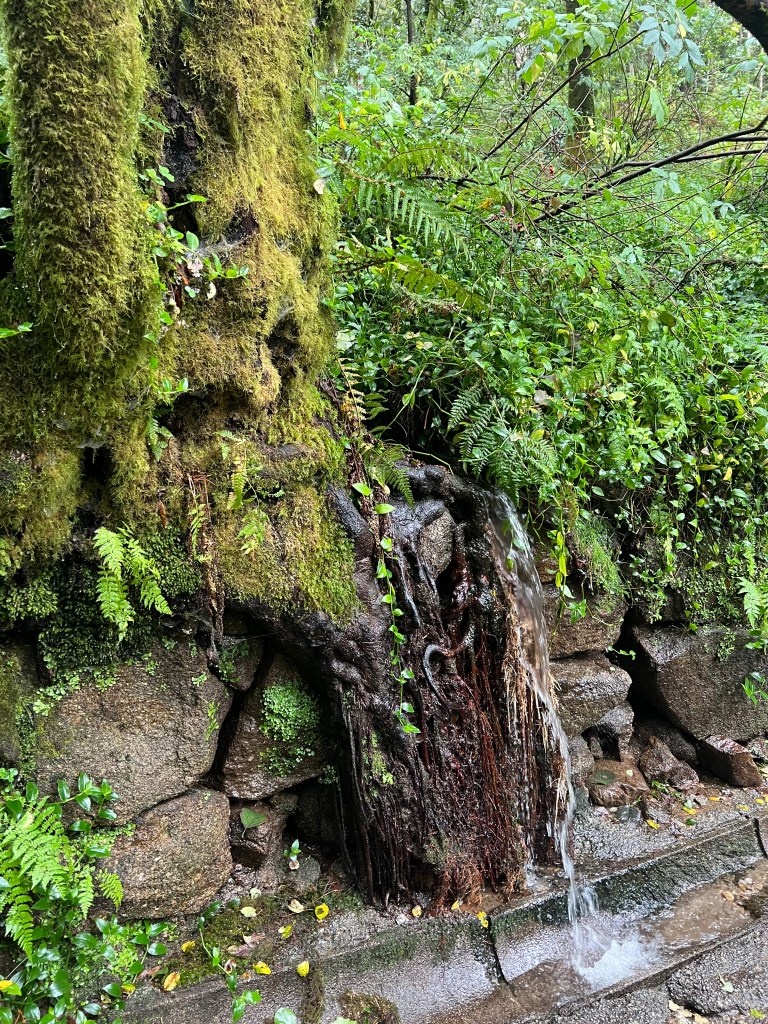
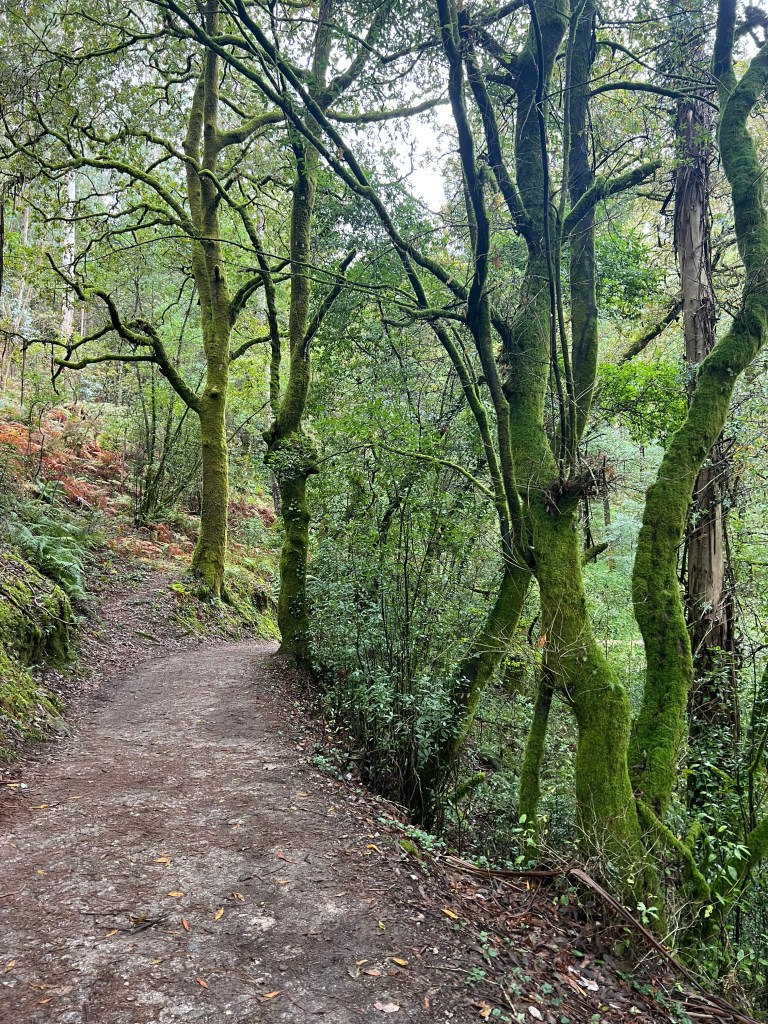
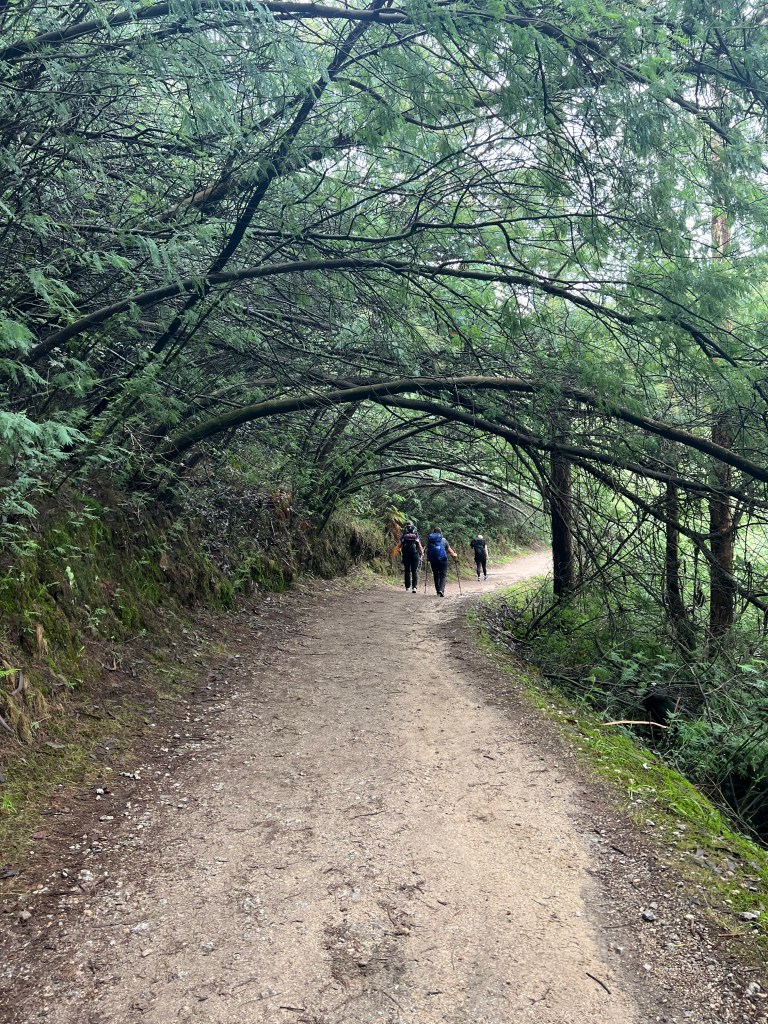
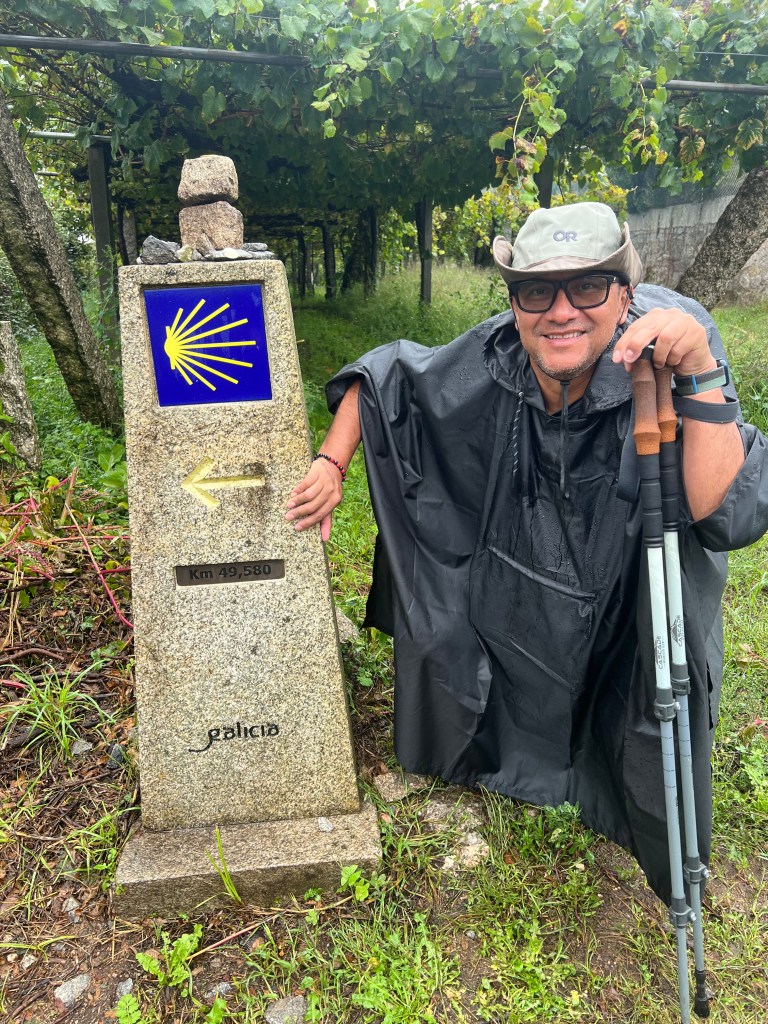
As we left the town behind, the Camino treated us to peaceful country dirt roads and mountain trails—a welcome break after over 500 kilometers of asphalt since Lisbon. These are my favorite parts of the Camino: forested paths, quiet mountain trails, and a chance to truly connect with the journey. Though the trail was still busy with other pilgrims, we were lucky to enjoy stretches of solitude. For brief, blissful moments, there wasn’t another soul in sight or earshot—just us and the serenity of nature.

On the way to Padrón, we stopped at a café to rest, and there he was—an elderly gentleman with a twinkle in his eye, selling Camino shell pendants. He had the gift of the gab, charming a crowd of women as he extolled the virtues of his pendants. In the half-hour I sat watching, he sold at least 20 or 30 of them. Naturally, I couldn’t resist—I bought two!

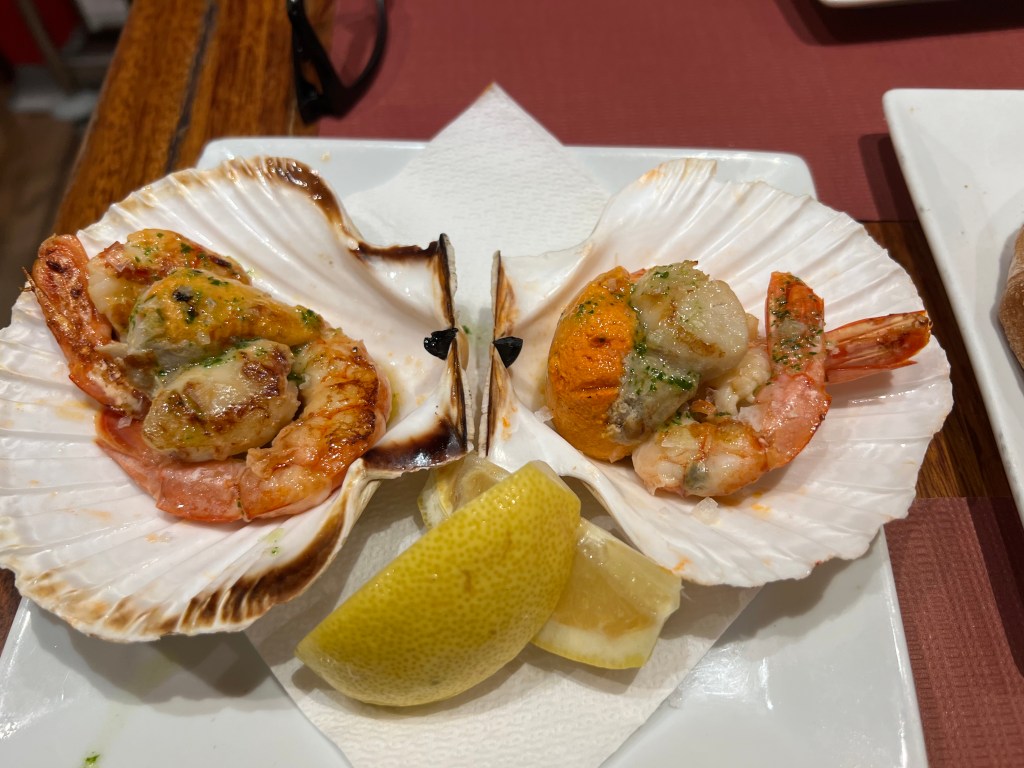
With tomorrow being our last day on the Camino proper, we decided to get an early celebration in. We splurged on dinner at a fancy parilla-style restaurant. It wasn’t a full-fledged fine dining spot, but it ticked all the boxes for hunger and celebration. The food was satisfying, and the occasion felt just right.

As we approached Padrón, memories from my last visit here nine years ago in 2017 began flooding back—where I stayed, where I ate, and the people I was with. The sights brought back a mix of joy and melancholy, a bittersweet reminder of how time reshapes the familiar. These reflections added a nostalgic layer to the day, making it all the more meaningful.

Tomorrow, the final stretch awaits. Santiago is almost within reach.

Day 17: Pontevedra->Caldas de Reis

https://www.mapmyfitness.com/workout/8196557014

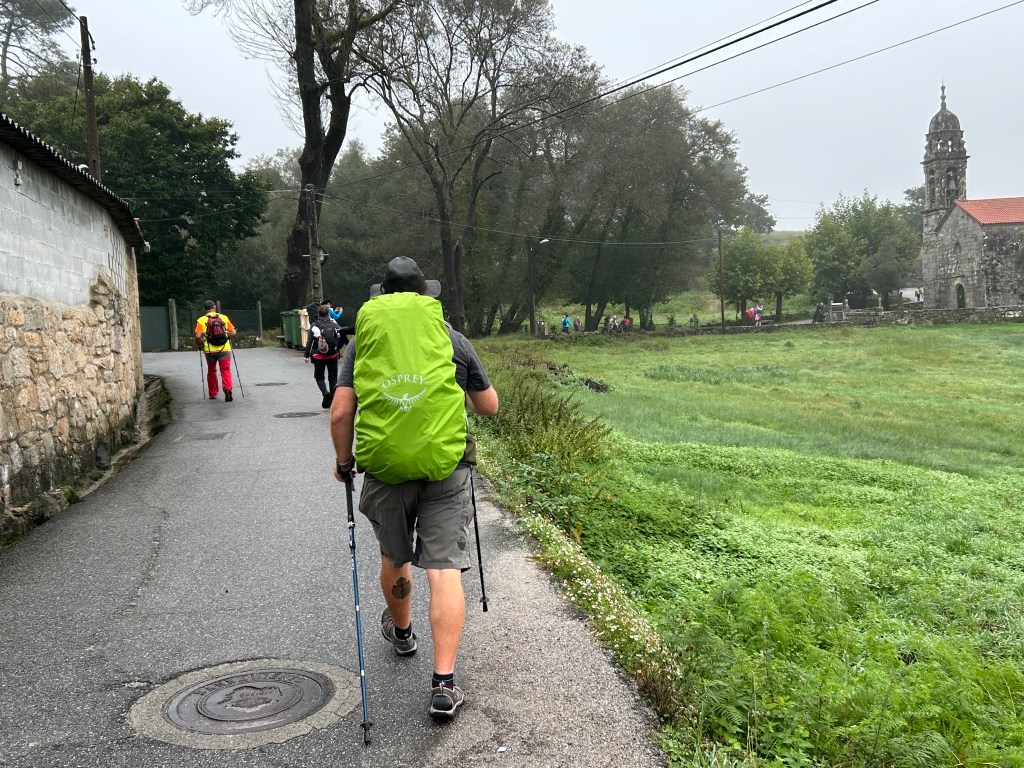
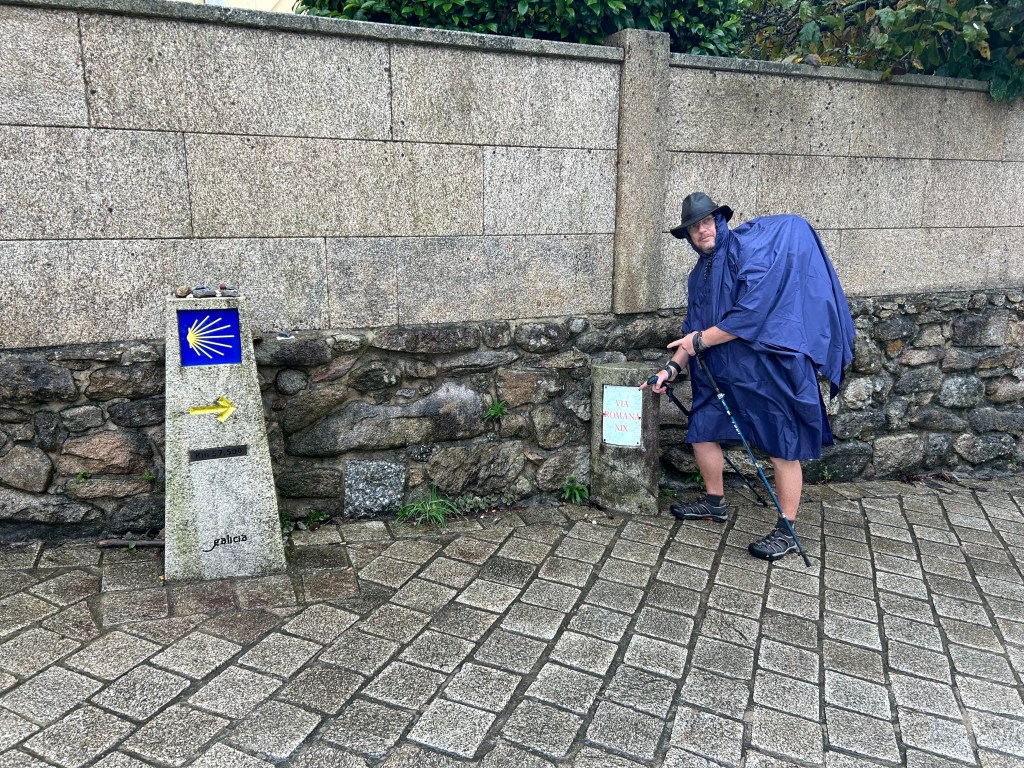
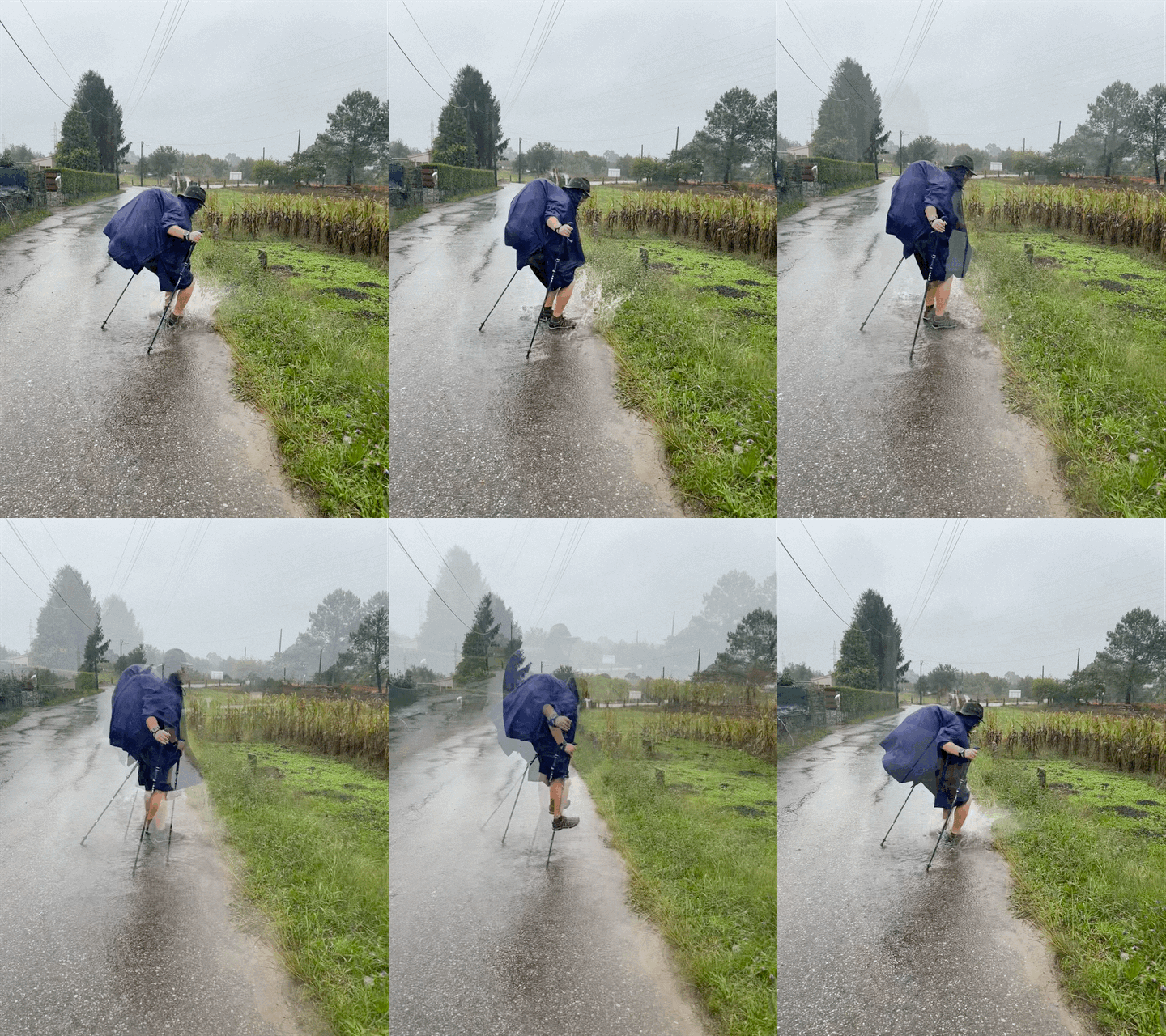
Another day, another donning of the rain gear as we left Pontevedra. It was clear the weather wasn’t going to cut us any slack. Walking in the rain with glasses is its own special brand of challenge: leave them on, and they fog up so badly you can’t see. Take them off, and—well, you still can’t see. Let’s just say the day’s views were a bit blurry for me, literally and figuratively.

The rain didn’t stop at my glasses; my hands became so waterlogged that my phone refused to recognize my fingers. Communicating with Luis turned into a game of voice-command roulette. Siri became our intermediary, but with multiple languages set on our devices, Siri had no clue what we were saying half the time. The results? Pure comedy. Mis-translated messages had us scratching our heads at first, but we soon learned to just laugh it off. Nothing like Siri to keep things interesting on the Camino!

At one point, the crowds separated us by more than a kilometer. When I finally reached Caldas de Reis, I found a café and waited for an hour, only to discover Luis had already passed me! He grumbled as he backtracked, and we reunited over lunch and some much-needed “liquid nutrients.” From our café perch, we people watched— all different types of people: pilgrims, locals, and tourists as they wove through the streets.

With just a few blocks left to walk, we weren’t in any rush, especially since we had reservations at a spa that evening. The spa, or balneario, was perched right on the river, with my room offering a view straight down into the rushing water. We spent the evening soaking up the comfort: hanging out at the bar, doing some laundry, and fully embracing the art of relaxation.

With only two days left to Santiago, the mixed emotions started to creep in. We were both thrilled and melancholic, excited yet reflective. Thrilled to be nearing the end, but sad that this incredible journey was wrapping up. Excited to see what revelations the Camino might bring in the coming weeks and months, but at peace knowing the memories we’d already made would stay with us forever.