Day Four: The Cats, the Climb, and the Kaz Limón

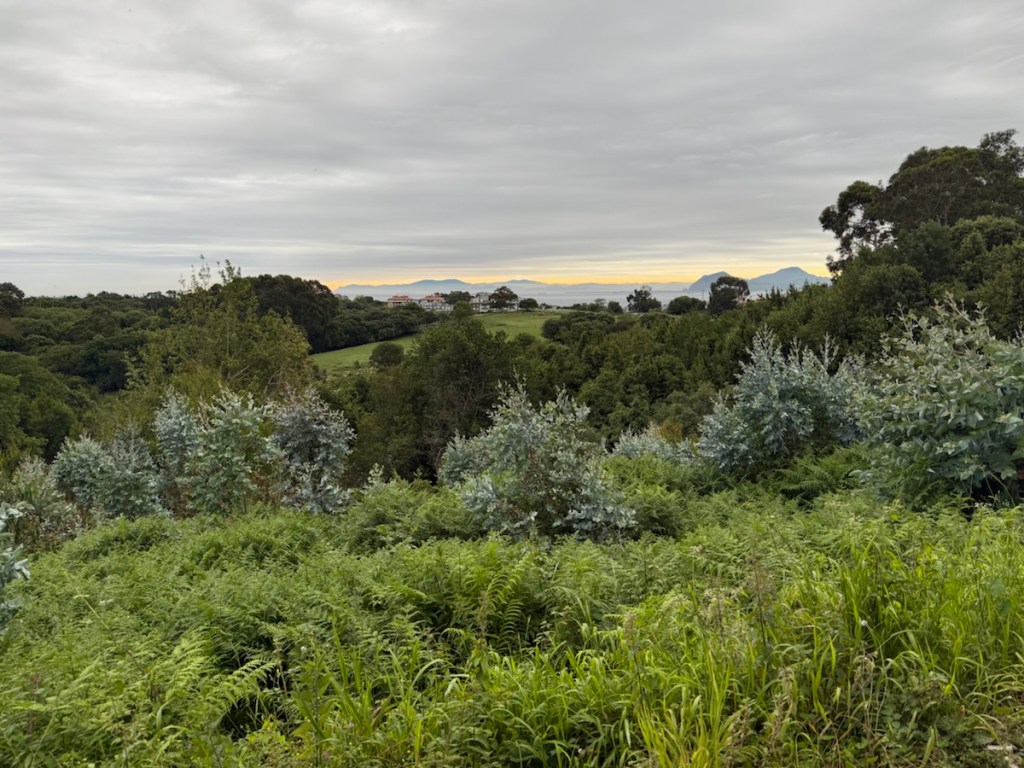
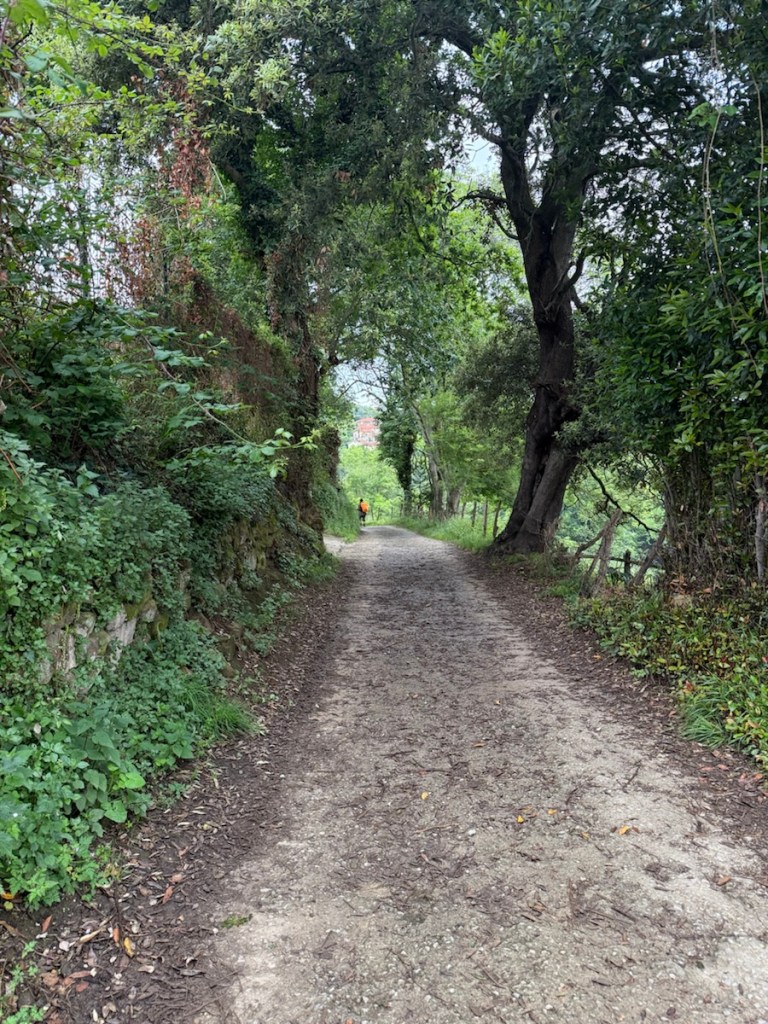
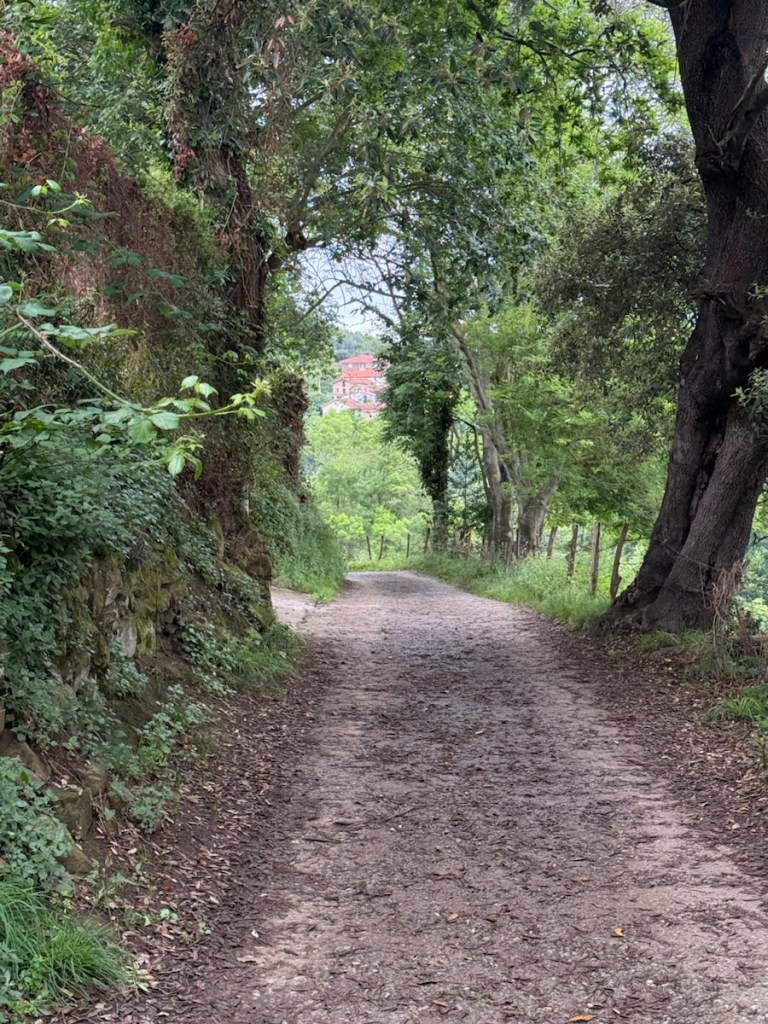
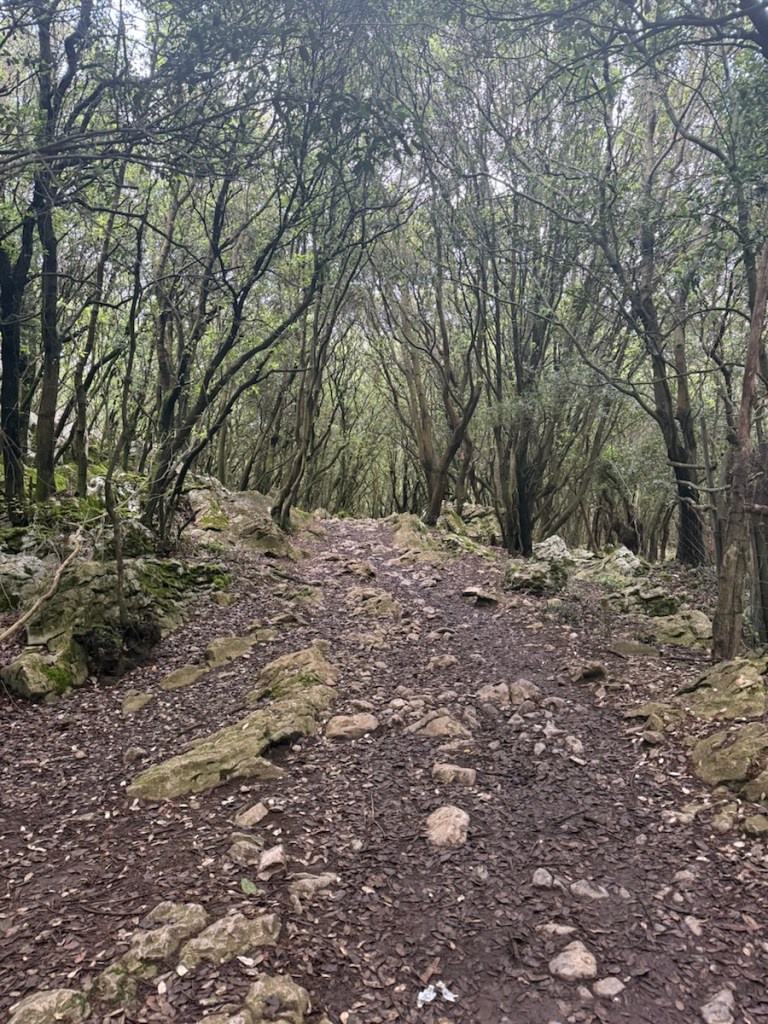
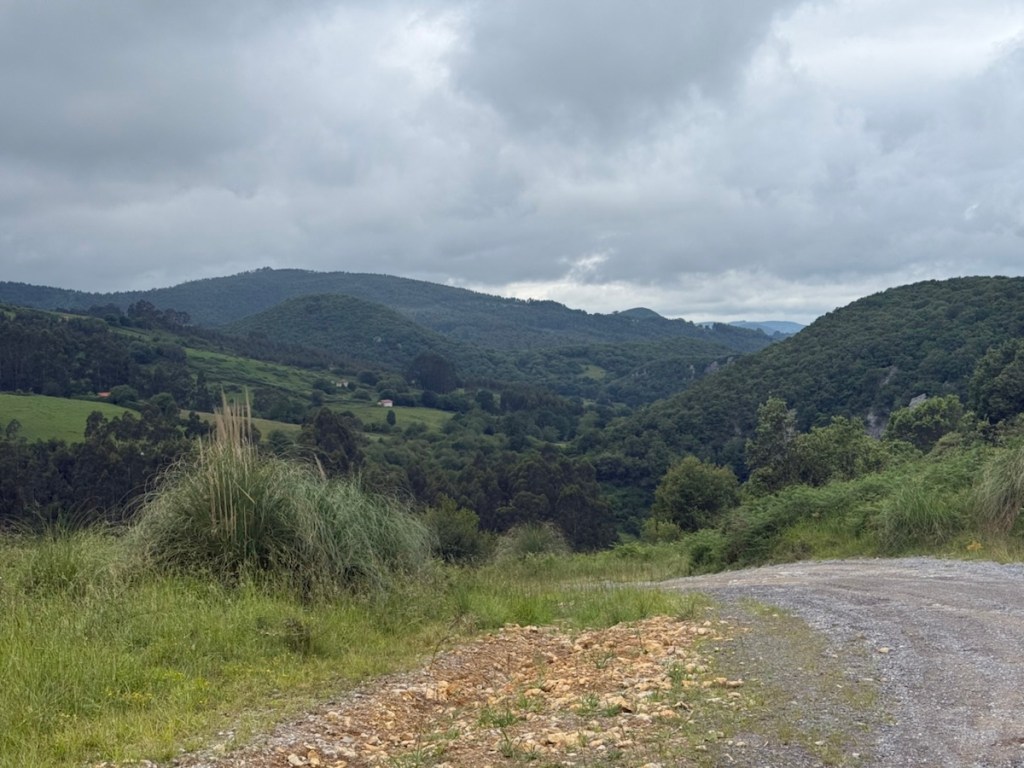
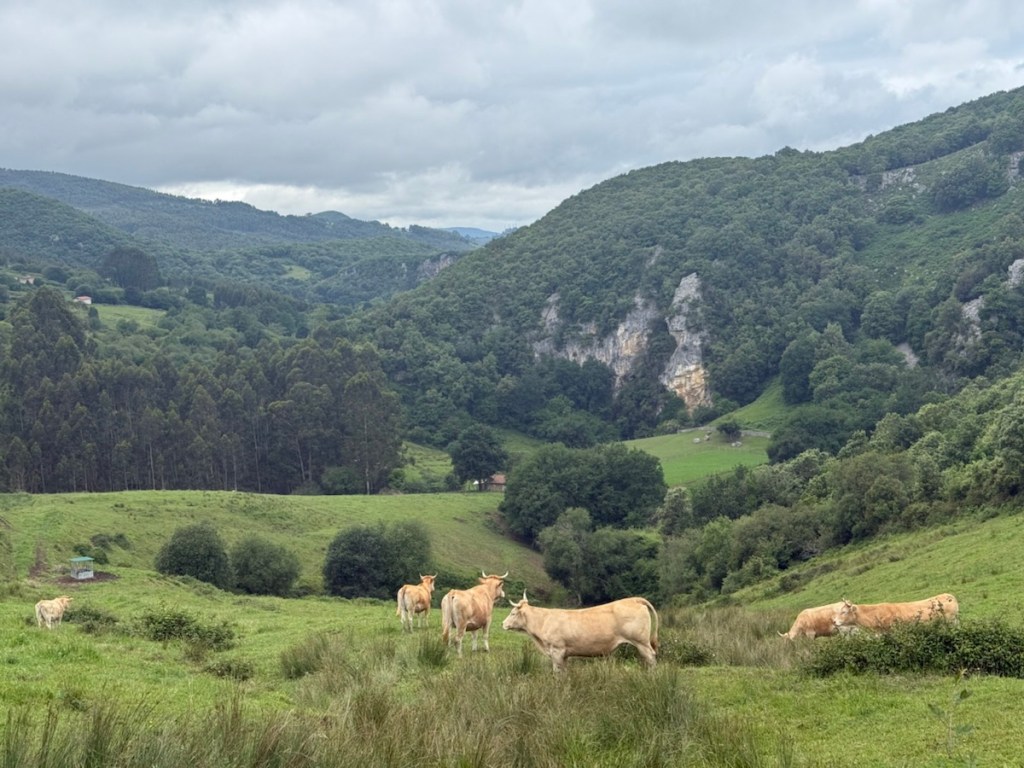
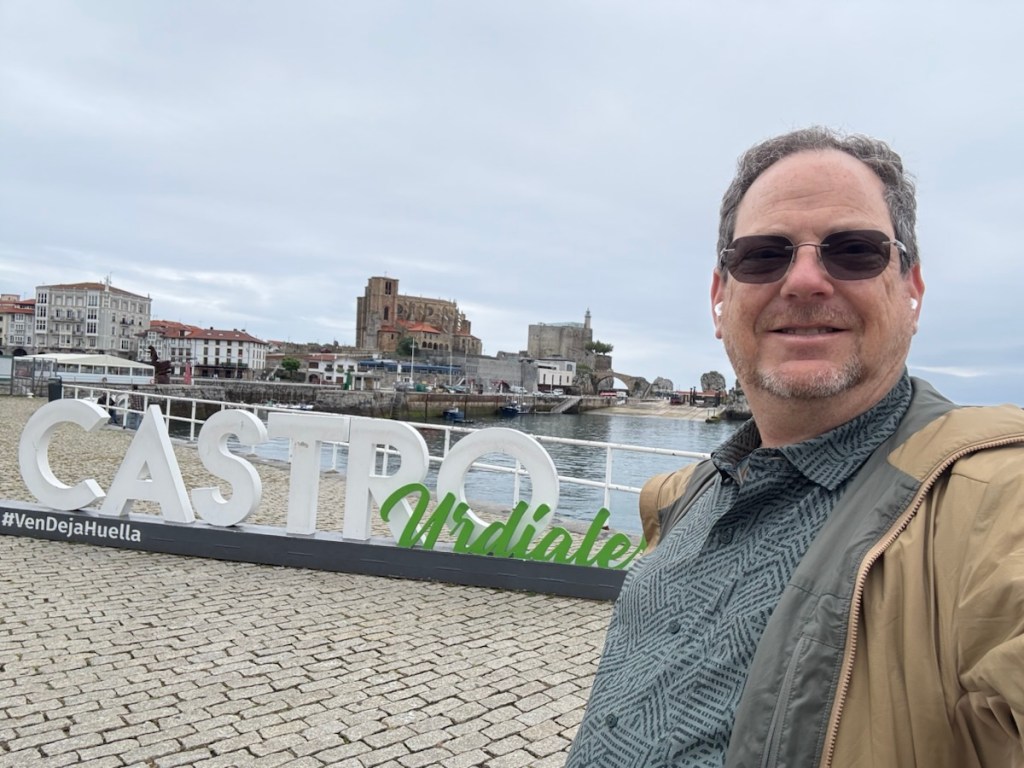
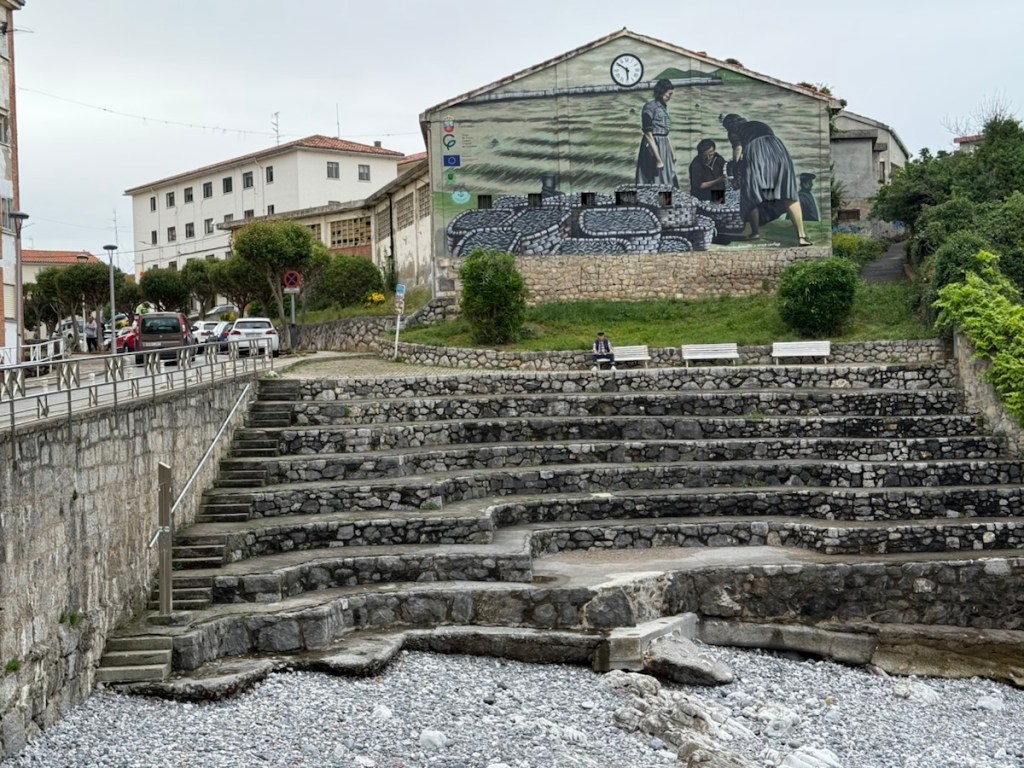
Today’s journey from Castro Urdiales to Laredo came in at a respectable 30 kilometers, a solid march, made a little shorter thanks to some clever rerouting. If I had followed the official route, I’d still be out there somewhere cursing Roman engineers and looking for a vending machine.

One of the stranger effects of walking a route you have done before is how selectively the brain chooses to remember things. You would think, “Ah yes, this bend in the trail! This scenic overlook!” Nope. Today was a complete memory blackout—except for one glorious recollection: the bar ahead served Kaz Limón. And let me tell you, few things in this world taste better than a citrusy, cold Kaz Limón when your internal temperature has climbed to molten lava. I practically tap-danced up to the bar.

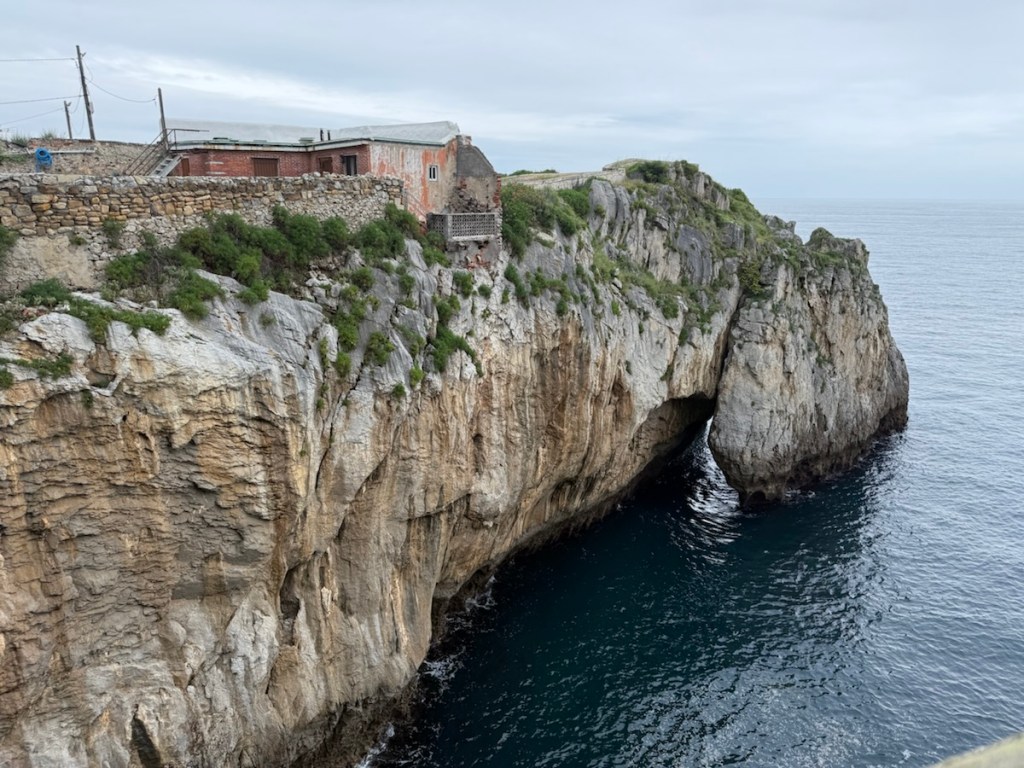
What I did not remember was the hill. Let us call it The Hill That Shall Not Be Forgotten Again. A 280-meter climb over about three kilometers is the Camino equivalent of Stairmaster Roulette. It does not look that dramatic on paper, but on the ground, it had my calves trying to file a complaint with HR.

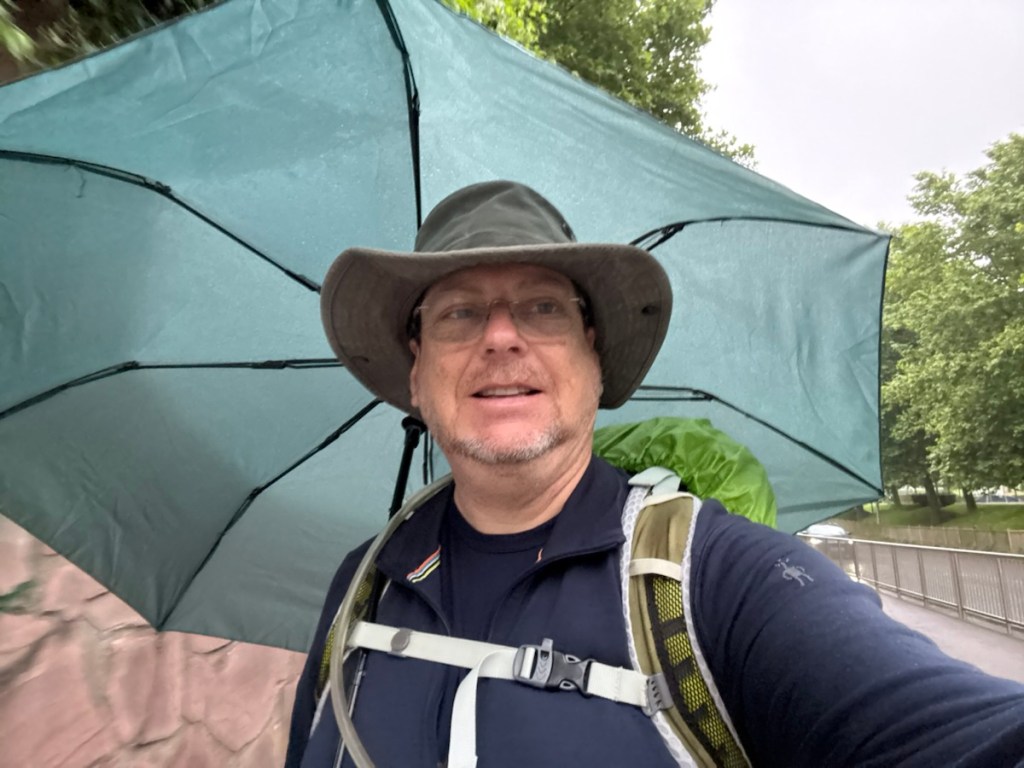
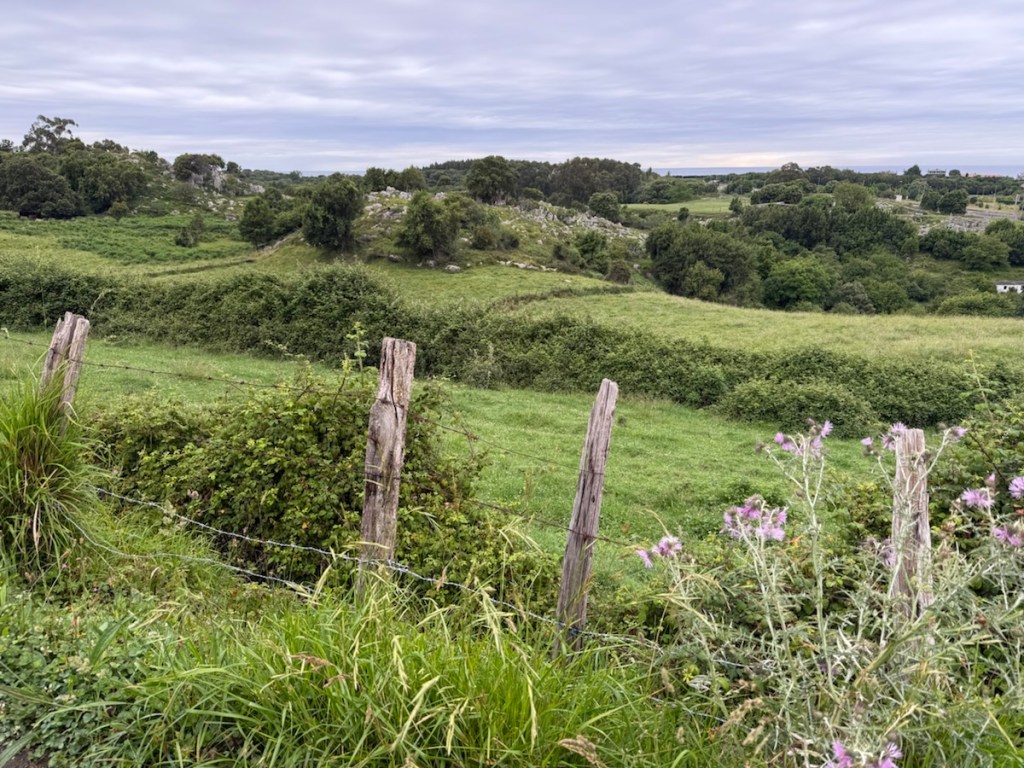
The trail was busy today, way busier than it has been. I exchanged a handful of “Buen Caminos” and polite waves, but mostly kept to myself. It was that kind of day. Cool enough to walk without breaking into a sweatstorm, and dry enough that I only had to put on my rain gear for the final three kilometers. The drizzle was more of a polite suggestion than actual weather.

I even followed my own advice today. Frequent breaks. Eat when you are hungry. Lay down when the opportunity arises. I found a nice park bench and let gravity do the rest. Unfortunately, my impromptu siesta drew in a couple of alley cats who apparently had some ancient vendetta to resolve. Nothing like a mid-nap feline brawl inches from your head to snap you back to reality.

Tonight’s lodging is at an albergue run by nuns, and if you have never been checked into a convent by two cheerful women of the cloth laughing at your jokes, you are missing out on one of life’s gentler joys. Their warmth added a lovely ending to an otherwise thigh-burning day.

My legs are officially tired. Tomorrow is another long haul, but the reward after that will be a short 11-kilometer glide into Santander, a city I once explored with my oldest child nine years ago. It rained every day back then. This time, the weather gods are promising sun. We shall see. Either way, I am glad to be back on this road.

Day Three: Rain and Goats, from Bilbao to Castro Urdiales

Today marked the first real day of walking—and naturally, I began it wide awake at 2 a.m., listening to the dulcet tones of seven other pilgrims snoring in harmony. Had I been asleep, I suppose I would have joined the chorus as the eighth member, possibly adding some rhythmic nasal overtones. But alas, I lay there, staring at the bunk above me, as a thunderstorm rolled in to complete the pre-dawn concert. Just what every anxious pilgrim needs before a soggy 25-kilometer march.

The official Camino route out of Bilbao is a dreary 19-kilometer trudge through industrial wastelands. I have done it twice already. Once with youthful optimism. The second time with resigned acceptance. This third time, I made the only reasonable choice: I took the metro.

Stepping off in Portugalete, I stopped at a café for a comforting breakfast. Eggs, bread, hot café con leche—the kind of fuel you want before a long day. And then… as if on cue, the skies opened up. Not a dramatic storm. Oh no. Worse. The kind of relentless drizzle that starts off charming and ends in full-scale mutiny against your boots, your socks, your will to live.

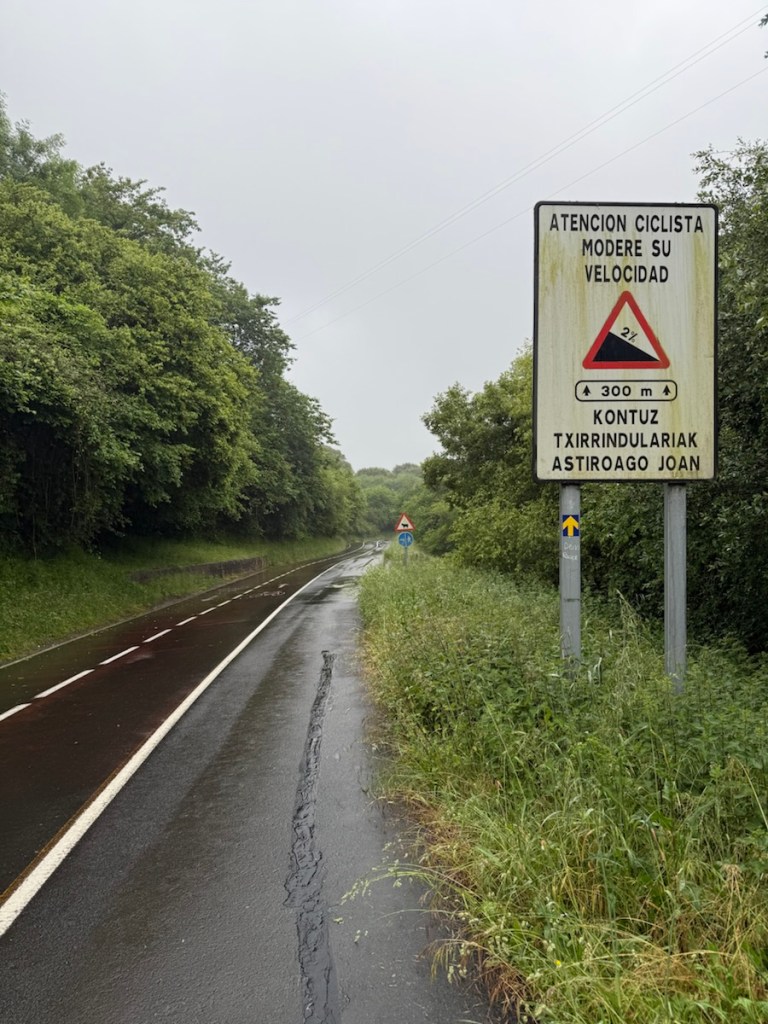
For the first 11 kilometers, I followed the “Red Road,” a smooth and straight pedestrian-bike highway that slices across the Basque Country. Free to use, yes—but not free of consequences. Asphalt is a cruel mistress to the soft-footed pilgrim. My soles throbbed in protest after a few hours, and I realized that “pounding the pavement” is not just a metaphor.

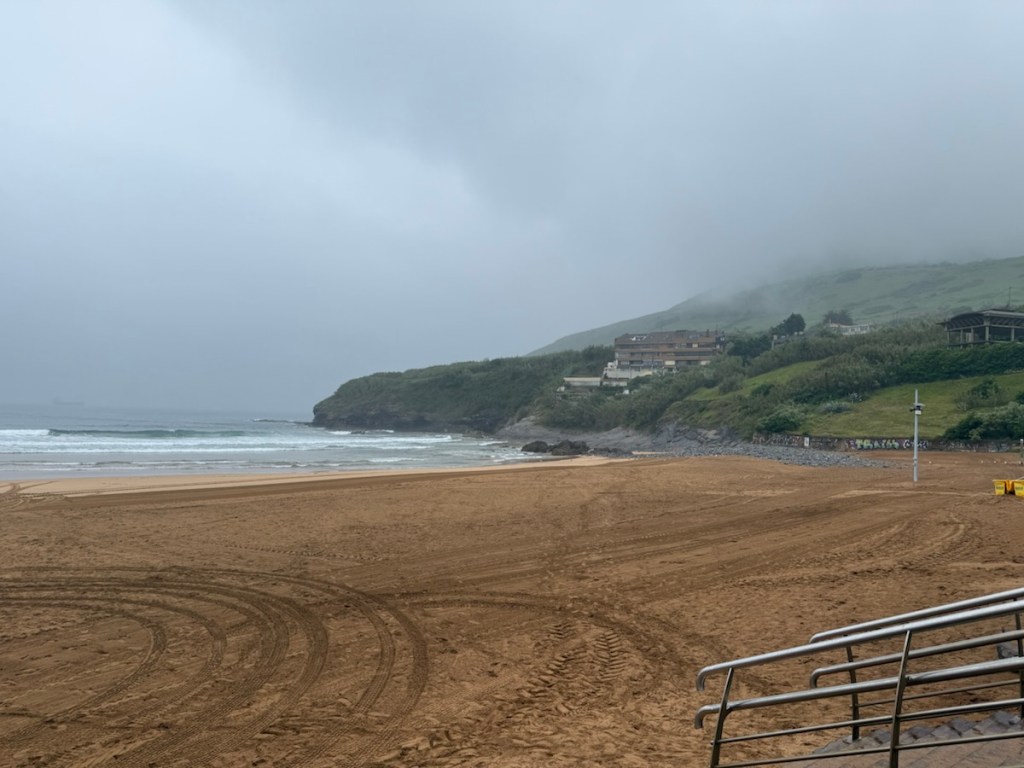
I stopped for a snack in Playa Arena, where I watched a row of tractors, fresh from combing the beach, getting lovingly hosed down by their owners. It seems the locals take clean sand very seriously—even in the rain, even when the only beachgoers are soggy surfers and lost pilgrims eating soggy peanuts.

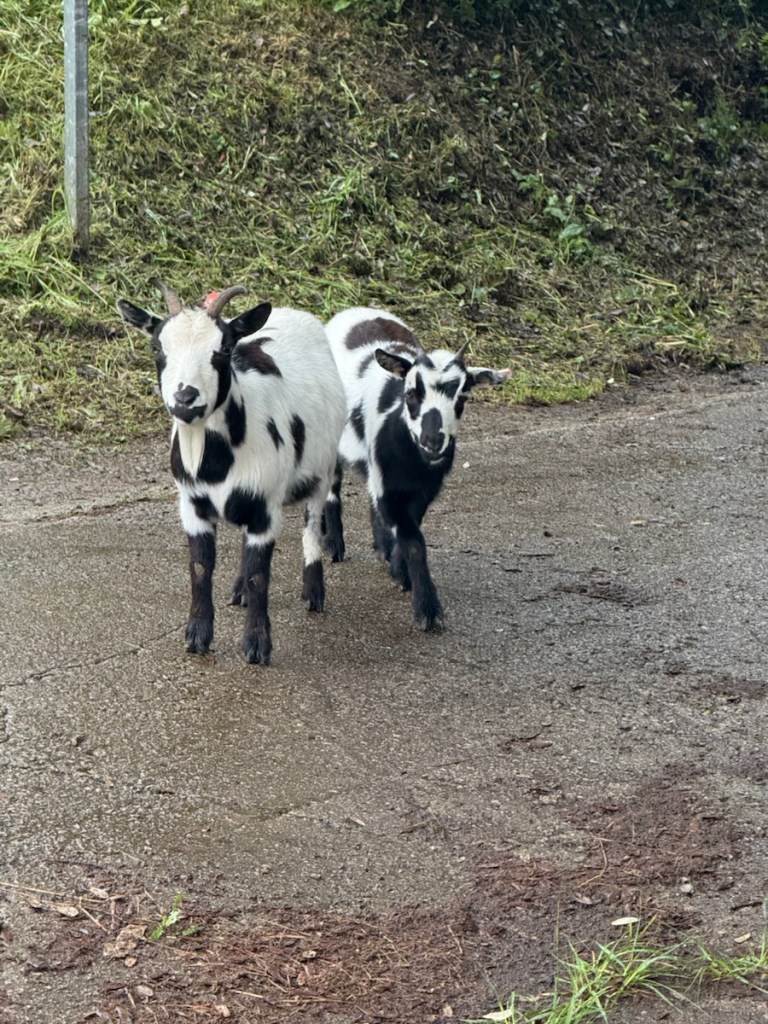
Shortly after, I encountered two goats. Actual goats. They emerged from a thicket looking confused, or maybe just judgmental. I offered a hand—empty, alas—and they moved on. Or so I thought. Minutes later, I looked back and there they were, trailing behind me with quiet persistence. Maybe they thought I had snacks. Maybe they were planning to mug me for the chocolate-nut bars buried in my pack. I did not stick around to find out.

The rain wore on. And so did I. I normally stop every two hours for a break and a bite, but today I broke my own rule. The cold and wet made me push through instead of pause, and I paid for it: shivering, aching, energy tank flashing empty. By the time I reached Castro Urdiales, my feet were numb bricks, and my back felt like it had been introduced to medieval torture.

Worse still, my phone refused to register my waterlogged fingers. I was cold, soaked, and technologically ghosted. Eventually, a kind stranger let me dry my phone on the back of their shirt, and I booked the first private room I could find—more than double the price of the albergue, but worth every euro for a hot shower and clean, dry clothes. I slept like the dead for two hours.

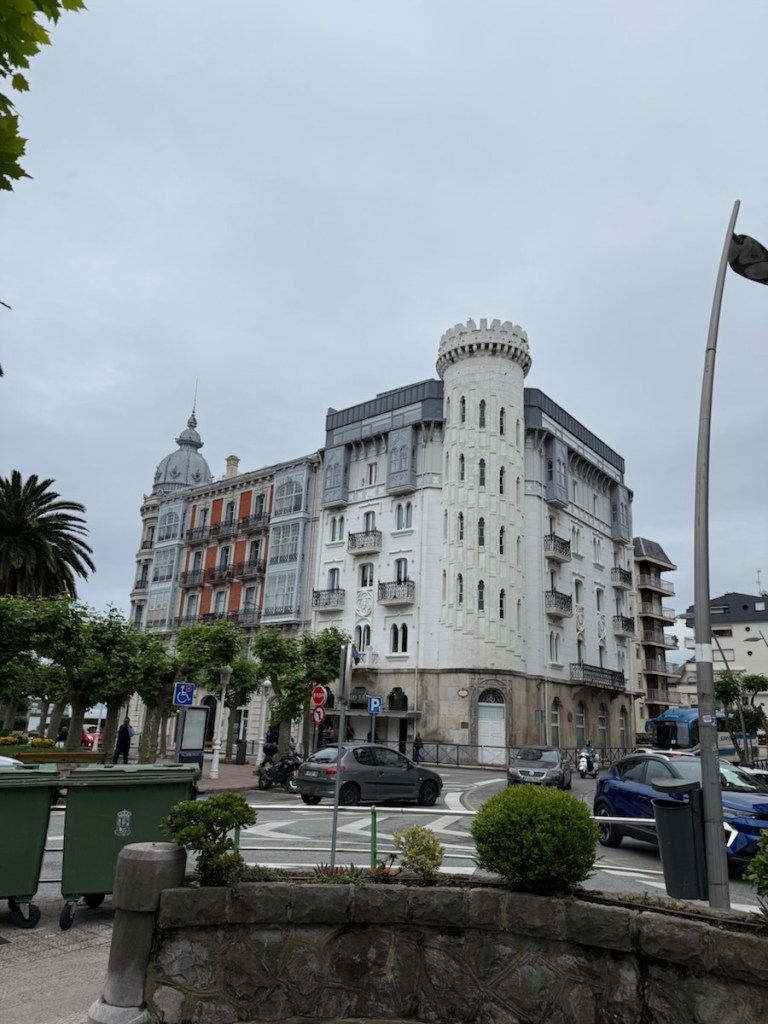
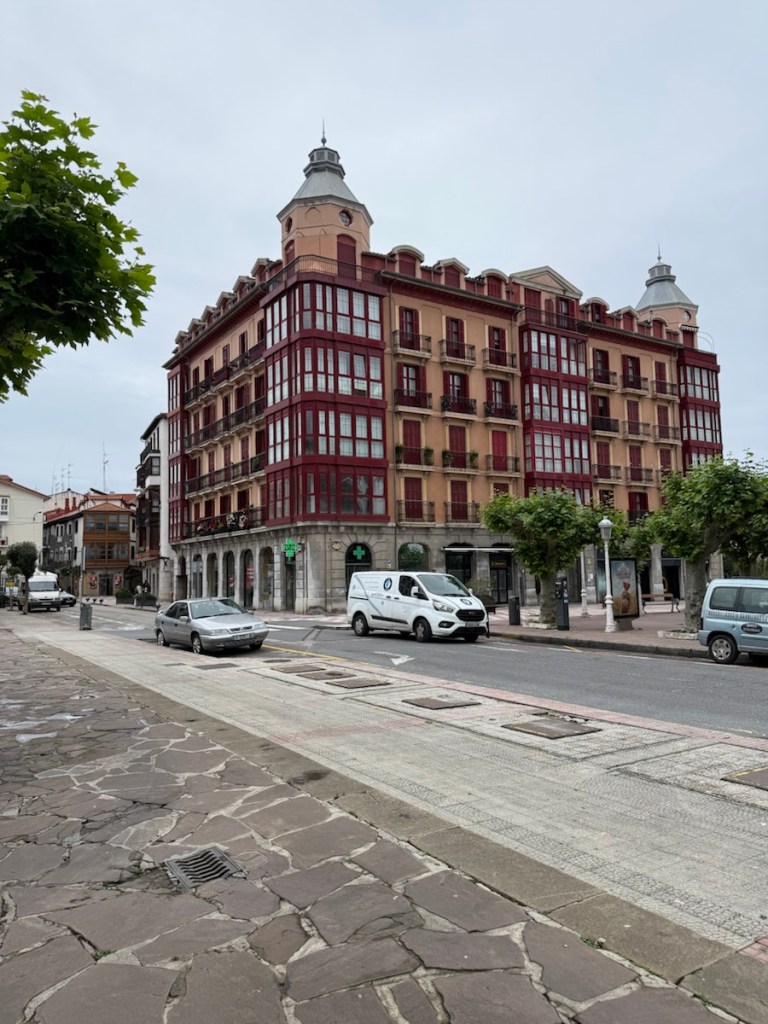
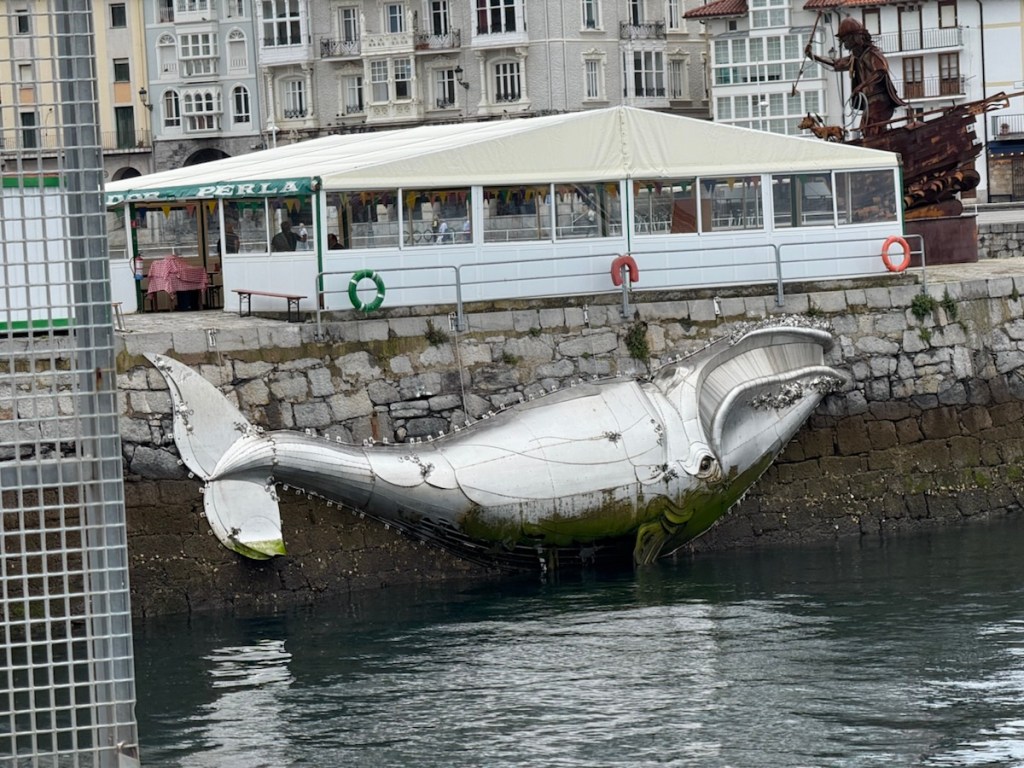
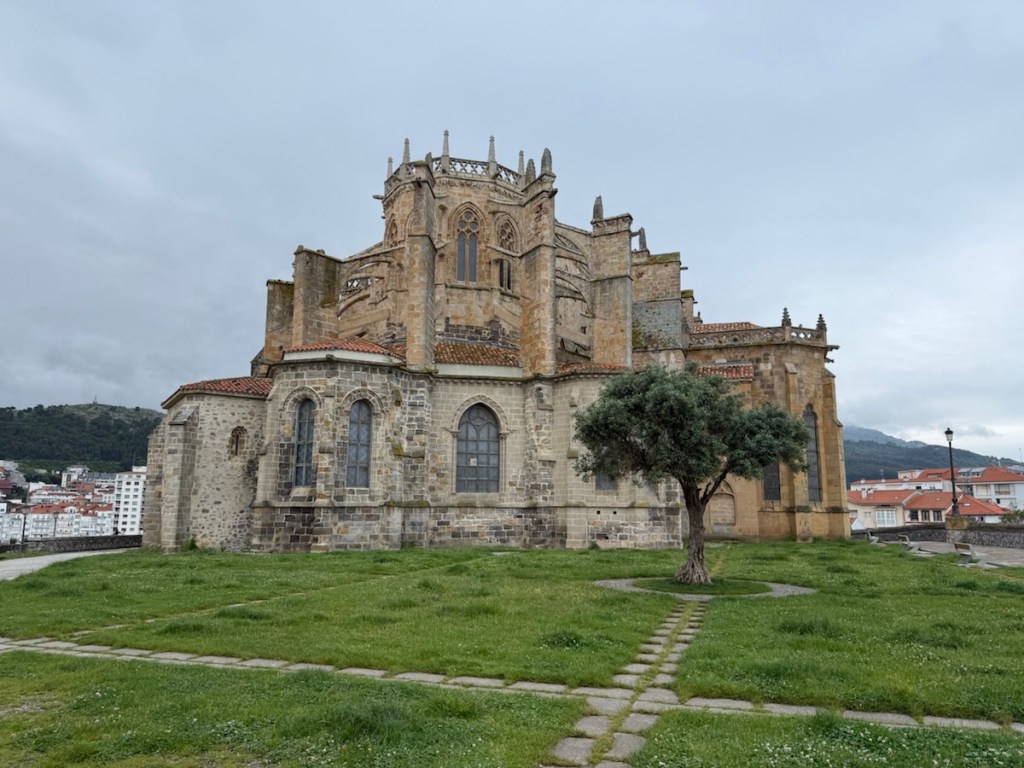
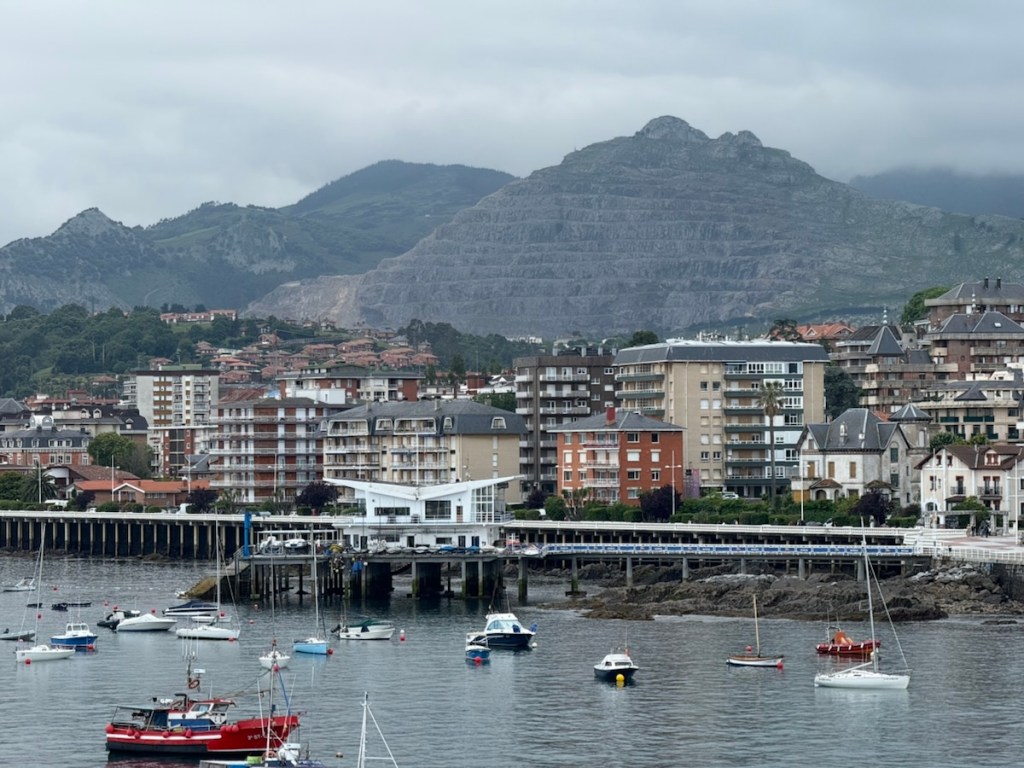
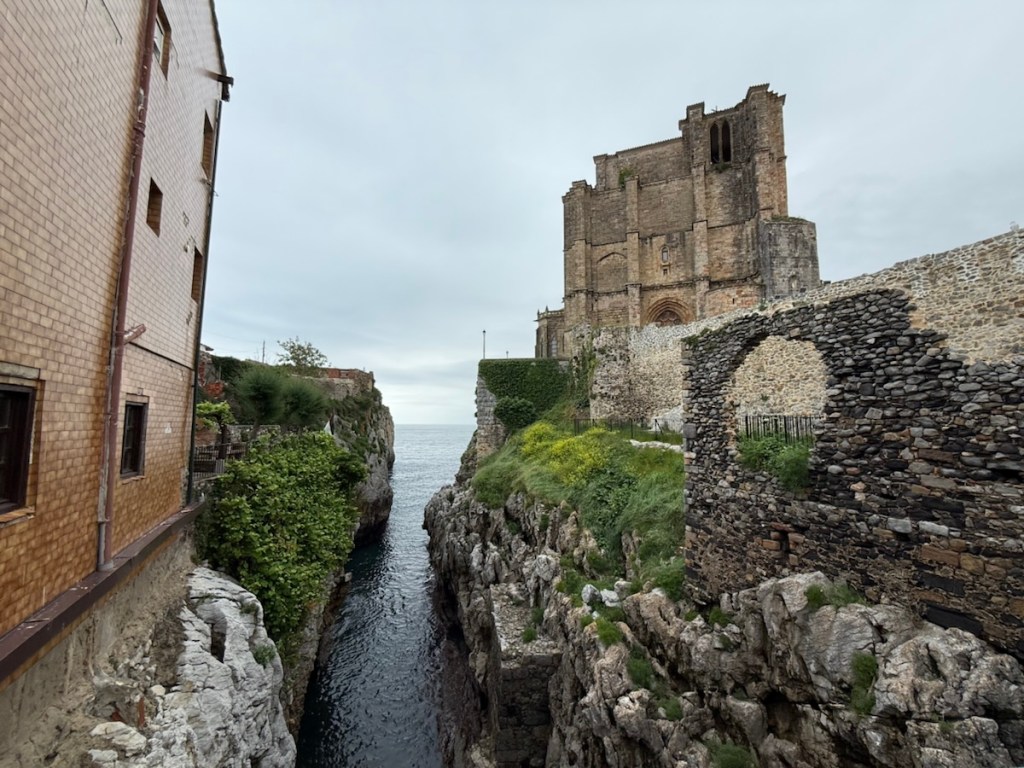
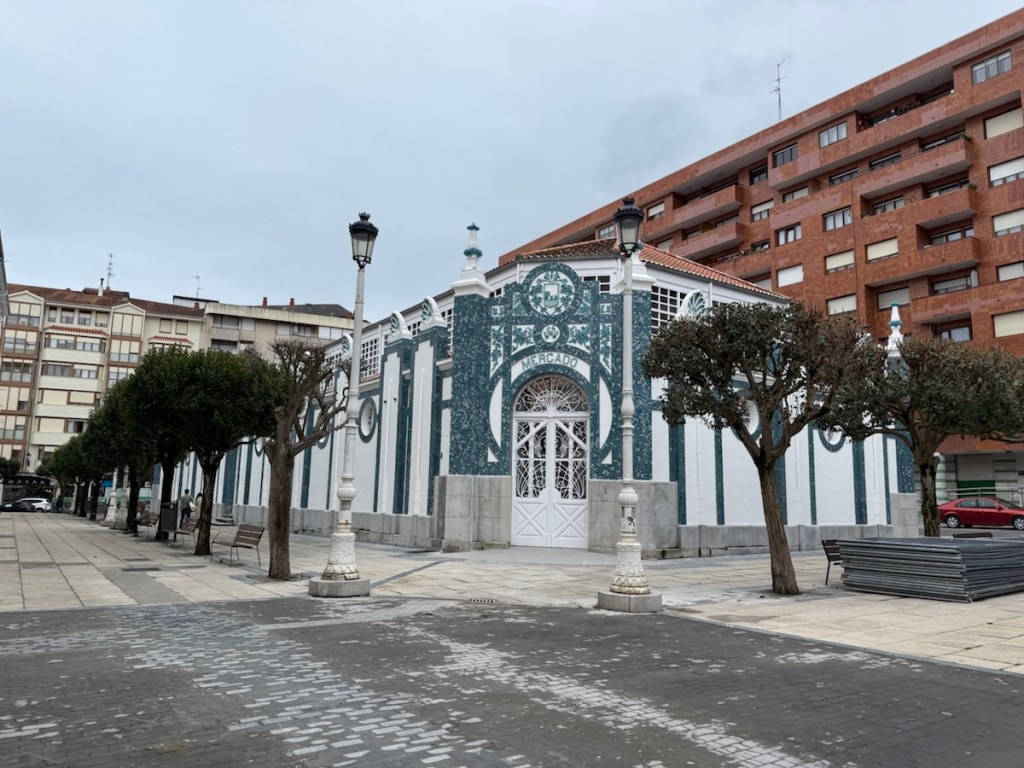
Later that evening, reanimated and refreshed, I wandered the narrow streets of Castro Urdiales. It is a charming town, despite the tourist gloss. Somewhere between the stone church and the seaside promenade, I realized I had crossed into Cantabria, though the border sign remained hidden by fog and my own exhaustion.

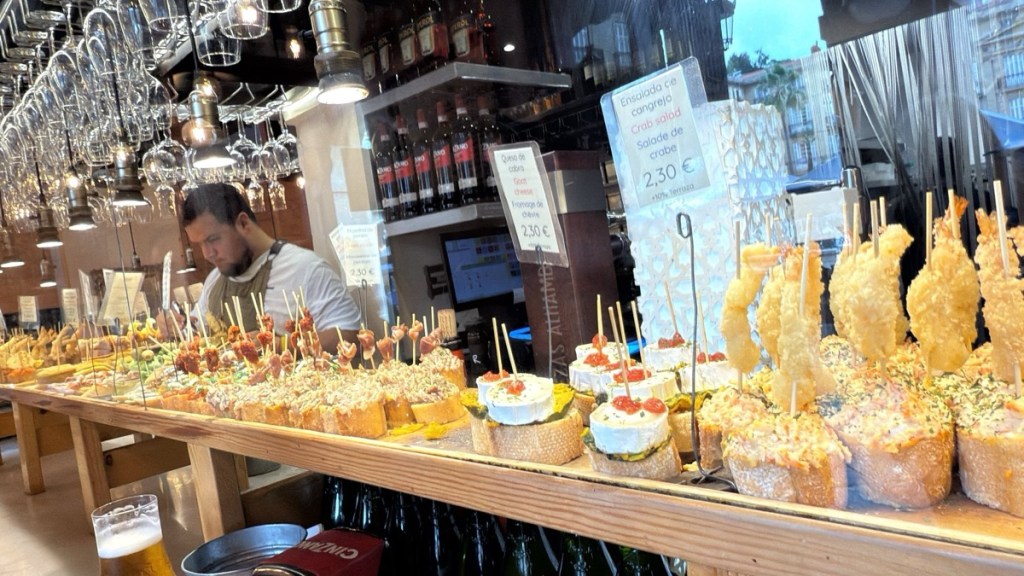
I treated myself to Pintxos and a well-earned caña, my first of the trip. Sitting in a warm bar, beer in hand, watching locals laugh and tourists squelch past in wet sandals—it hit me. Despite the rain, the pain, and the goats with questionable motives, I was here. Walking again. Alive in this moment.

And for that, truly, I am grateful.

Day Two: Acclimation

Some days on the Camino demand action. Others ask only that you sit still long enough to notice the shape of the day.

Today was a day of acclimation in Bilbao. A down day. Not down in spirit—just… still. A kind of gentle limbo between the blur of jet engines and the slow rhythm of pilgrimage. My body is somewhere over the Atlantic, my backpack is here, and my mind is floating in between, wrapped in the soft gray wool of Basque drizzle.

This was not a dramatic rain, not a noble storm. No, this was the kind of drizzle that sneaks into your collar and settles into your bones. The kind that requires an umbrella even though you are already armored in Gore-Tex and optimism. The kind of rain that does not fall… it rests on you, like a wet hand on your shoulder.

I stayed in today. Mostly. I sat near the hostel windows and watched the street life like a slow-motion ballet. Couples with umbrellas performing duets. A man pushing a stroller while smoking and holding a baguette under one arm. A woman in a red coat who paused at the corner and simply stood still for a moment, like she had nothing to prove.

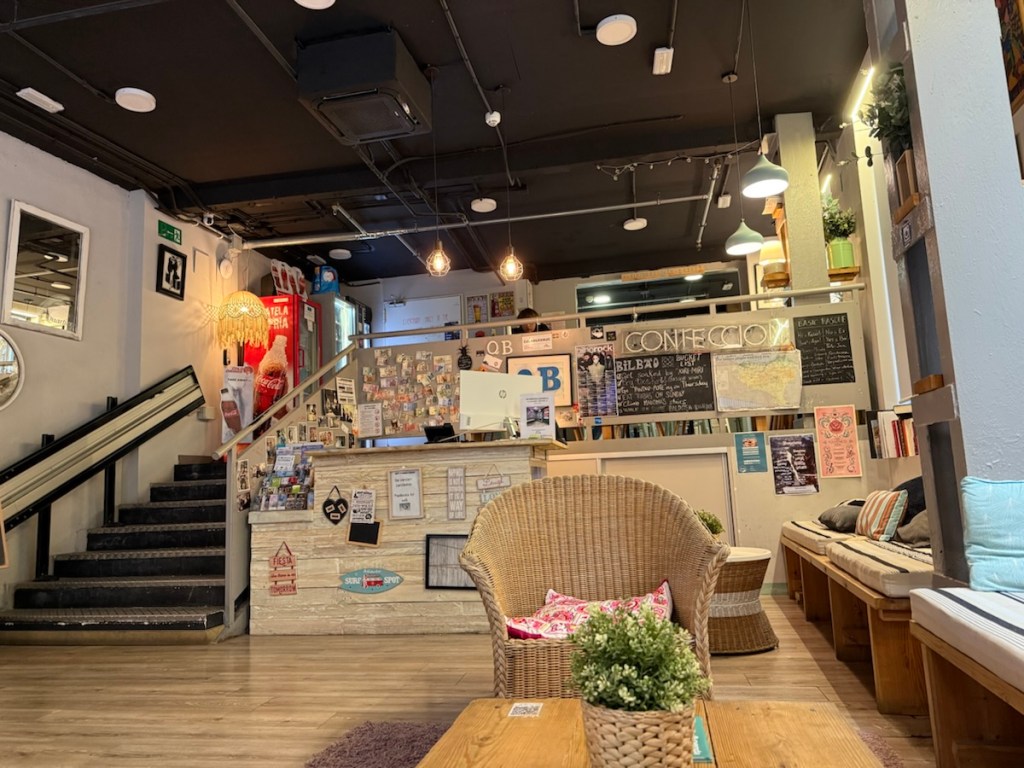
Inside, the hostel was its own weather system. Warm, humid, and full of fellow pilgrims, each orbiting in their own little preparation rituals. Wet socks hung like prayer flags above radiators. Gear was splayed across bunks like battle plans. Someone from Germany was reorganizing their pack for the fourth time since he arrived.

At one point, I decided to retreat to my room for a nap. I padded up the stairs and confidently punched in the code on the door. Nothing. Tried again. Nothing. I stood there for a moment, pressing buttons like a man trying to defuse a bomb with no instructions. Back down to the lobby I went, where the young woman at the desk looked up from her phone and smiled patiently. “Is my code still good?” I asked, trying to sound like someone who hadn’t just been bested by a door. “Yes,” she said, “but you have to enter it quickly.” I nodded solemnly, as if I hadn’t thought of that. Back upstairs I marched—only to discover I had been trying to break into the same room number… on the wrong floor. Apparently, my feet had decided they’d climbed far enough and simply refused the last flight, taking a stand one story too soon.

The bathroom situation here is… tight. The stalls are designed with the assumption that your knees can fold into a 90-degree angle parallel to your ears. Turning around is not a given. It’s a calculated risk. And the sink faucets—well, let us just say they are a test of character. Too far left, and nothing. Too far right, and I’d be the one hanging my clothes in the room. But if you hold your hands just right, in the narrow band of possibility, you are rewarded with a gentle stream of lukewarm water. Sometimes, this feels like a metaphor.

I returned from an afternoon wander to find my roommate had turned the heater up to 24°C, in a hopeful attempt to dry his laundry. The result was a room that stifling hot, and smelled like damp wool and travel dreams. His socks were still soaked, but his spirit remained unbothered. That’s the thing about pilgrims—we are always slightly damp but always moving forward.

At 8:00 p.m., I realized I had not eaten dinner. Fortunately, this is the exact moment that restaurants in Spain begin to consider opening. I found a quiet place, sat down, and ordered zamburiñas, those little scallops that taste like the sea on its best behavior, and a glass of red wine that reminded me why I came back to this country. I sat there for a long while, watching the waiter joke with the cook, the couple at the next table tapping each other’s fingers, the old man at the bar quietly finishing his espresso.

There’s something sacred in days like this. Nothing to prove. Nowhere to go. Just the chance to slow down, let the dampness in your coat remind you that you’re alive, and be grateful.

Grateful for this time. Grateful for the chance to spend six weeks in Spain, walking and watching and waking up in new towns. Grateful for legs that still carry me and for the quiet courage it takes to pause before the walking begins.

Tomorrow the real steps begin. But tonight, the stillness is enough.

Day One: Getting There

It started, as all misadventures do, with great optimism. I left my house near San Francisco at 10:00 a.m. Pacific Time, still fresh-faced and foolishly confident, bound for Bilbao via Madrid. The airline proudly announced our ride would be an Airbus A350-900, a plane so modern and enormous it likely required a PhD just to flush the toilets. They called it an “enhanced cabin experience.” What they meant was “you’re about to get to know your seatmates on a cellular level.”

This marvel of engineering featured a 3-3-3 seating arrangement, which meant I was wedged into the window seat like a letter in a too-small envelope. At first, I was optimistic. Window seats offer views, a headrest, and an illusion of control. But optimism evaporated the moment Garlic Guy sat down beside me.

He wasn’t actually named Garlic Guy, of course, but that’s what I called him in my mind. His breath was a pungent fog of undercooked garlic, possibly fermented, possibly weaponized. Every exhale burned. And when he wasn’t breathing at me, he was releasing slow, silent clouds of intestinal anguish that could have qualified as a biological event. The man was a mobile compost heap.

Add to this the seat pitch, clearly designed by someone who had never met an adult human, and my head firmly embedded in the seatback in front of me. I could feel the heartbeat of the guy reclining in front of me. And there was no hope of escape. Not unless I wanted to perform a full-body extraction that involved scaling the seatback like a disoriented pizote trying to leap from one tree branch to another. On my second attempt, I tripped over a headphone cord, elbowed the armrest, and landed halfway into the aisle with the grace of a sedated coati waking up all of the poor souls that managed to fall asleep for a brief moment.

We flew east into a four-hour night, which gave me just enough darkness to not sleep while dreaming about what it might feel like to stretch. After what felt like a week and a half, we landed in Madrid, and after a short hop north, I finally arrived in Bilbao.

As we descended into Bilbao, something unexpected happened. My forehead was still stuck to the window, half-asleep and dehydrated, when the clouds broke open to reveal the rolling emerald of the Basque countryside. It wasn’t just green, it was vibrant, like the whole region had been dipped in spring and wrung out over the hills. Forests blanketed the hillsides, meadows shimmered with wildflowers, and the city nestled into the landscape like it belonged there. It hit me hard, a gut-level certainty: this is a place I could call home. I hadn’t even touched down yet, and already I felt anchored.

Twenty-one hours after I had left, I checked into a hostel that offered me the lower bunk: a lovely wooden coffin with about 80 centimeters of headroom. The upper bunk had more space, but only three steps, one of them a lie, and I wasn’t about to test the limits of my remaining coordination.

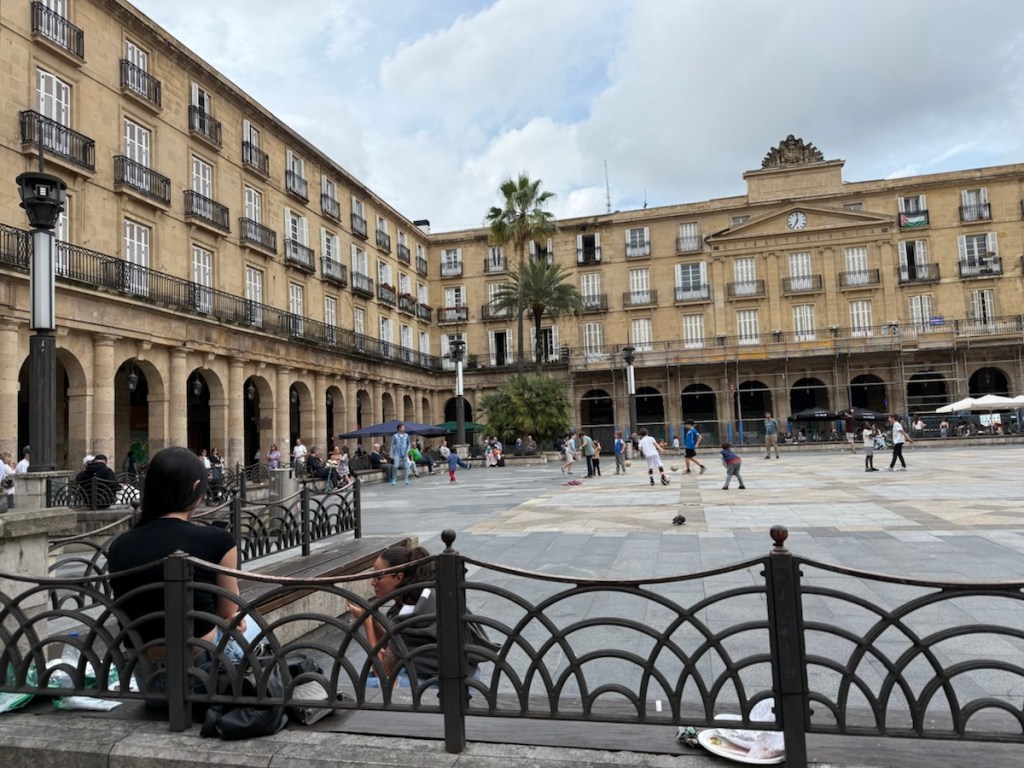
What I needed was food, air, and the quiet hum of other people’s conversations. I headed toward Plaza Nueva in the Casco Viejo, the kind of public square that feels like it’s been waiting for you to show up. Children ran free like pigeons, parents leaned into conversations, and the whole plaza pulsed with that timeless Spanish Sunday rhythm; the one where nobody is in a rush and somehow everything important still gets done.

I found a pintxo bar tucked into one corner of the square, a little jewel box of clinking glasses and laughter. There was a glass divider between me and the barkeep, and despite my best efforts to speak clearly, we ended up in a classic game of charades. I pointed. He nodded. I pointed again. He handed me something else. I was so hungry it didn’t matter what it was; ham, cod, some kind of marinated mystery on bread. It was all good.

I stood there at the counter, slowly chewing, watching life unfold around me. The plaza, the people, the late afternoon sun sneaking in through the archways. No one was hurrying. No one was yelling. It was like the world had turned down the volume just for a moment so I could hear myself breathe again.

I was still tired. My nostrils were still singed. But I was there, in Spain, in my favorite kind of place, surrounded by strangers who didn’t care who I was, just happy to share the moment. And for the first time all day, I didn’t feel like I was trying to get anywhere. I was already there.

The Camino Calls Again: Why You Keep Coming Back

You walked the Camino. You followed the yellow arrows. You reached Santiago. You returned home. And now, something strange is happening. You find yourself daydreaming about the trail, longing for the simple rhythm of walking, the weight of your backpack, the shared laughter of pilgrims, the quiet beauty of a sunrise over the hills.

You thought you were done. But the Camino is calling you back. Why does this happen? Why do so many pilgrims return—sometimes again and again? The answer is different for everyone, but one thing is certain: once the Camino is in your heart, it never truly leaves.

The Camino is a reset button. For weeks, life is simple. You walk. You eat. You reflect. You connect. There are no distractions, no stress, no unnecessary complications. You feel alive, present, free. But then, you return home. Schedules take over. Notifications flood back in. Busyness creeps in. And that feeling you had on the Camino? It starts to fade. Before long, you miss it, not just the walking, but who you were while walking. And so, you start to wonder: What if you went back?There’s Always Another Camino to Walk.

You return because there are so many ways to walk the Camino. Did you walk the Camino Francés? Now you want to try the Camino Portugués. Did you start in Saint-Jean-Pied-de-Port? Next time, maybe Seville, Lisbon, or Le Puy. Every route has a different personality, different landscapes, different challenges. Some pilgrims even choose to walk the same route again, because no two Caminos are ever the same.

The first time you walked, you had a reason, even if you didn’t know it at the time. Maybe you walked to heal from something, find clarity, or reconnect with yourself or others. And you did. But life keeps moving. New challenges arise. New questions emerge. And so, the Camino calls again, this time, for a new reason.

It’s strange, but true: the Camino feels like home. Maybe it’s the simplicity. Maybe it’s the kindness of strangers. Maybe it’s the rhythm of walking, eating, and sleeping. Whatever it is, stepping onto the Camino again feels familiar, comforting, and right. You no longer worry about where to sleep, what to eat, or how to pace yourself. You just walk, breathe, and let the road unfold. And that feeling? You crave it.

If you’ve walked the Camino before, you know this: you never forget the people you met. Some became lifelong friends. Some were only part of your journey for a day, but left a mark. Some are waiting for you to return, to walk together once more. And maybe, just maybe, you’ll meet new people who will change your life all over again.

At home, walking is just a way to get from Point A to Point B. On the Camino, walking is life. You walk with purpose. You walk through beauty. You walk through your thoughts. And after weeks of that, walking becomes a part of you. When you return home, you keep walking, maybe on local trails, maybe through your neighborhood, but it’s not the same. The Camino? That’s where walking feels magical. And so, you long for that feeling again.

The Camino doesn’t stop in Santiago. It continues in the way you see the world. It lives in the lessons you carry home. It stays with you, waiting… And one day, when the time is right, you’ll feel it again. That quiet whisper. That deep longing. It’s time to go back. And when that happens? You’ll tie your boots. You’ll grab your pack. And you’ll walk. Because the Camino always calls you back. And you always, always answer.

Buen Camino! until next time. 🥾✨

P.S. in two weeks time, I will once again depart for Spain to walk yet another Camino. This time, I will pick up from where I left in May of 2024 when I cut my Camino short. This time, starting in Bilbao, I will cross the Cordillera Cantábrica three times, on six different named routes. It’s not the shortest path from point a to point b, it’s a meandering path through the mountains, for I am still searching for something that eludes me.

I will be sharing my journey on this same blog, join along to live vicariously through my journey.

Returning Home: How to Bring the Camino Into Everyday Life

You have walked the Camino. Step after step, you followed the yellow arrows, crossed mountains and plains, pushed through blisters and exhaustion, and, at last, stood in front of the cathedral in Santiago. A journey that once seemed endless suddenly found its end. And now, you are home.

At first, everything feels slightly out of place. Your body still expects to wake up and walk, your mind is restless, and the world around you moves too fast, too loud, too full of things that no longer seem as important. The simplicity of the Camino lingers in your thoughts, the quiet rhythm of footsteps, the open sky stretching ahead, the clarity that came with each day’s purpose. It is a strange kind of longing, an ache for something just beyond reach, and you are not alone in feeling it. Many pilgrims return home to find that the life they left behind no longer fits quite the same way. The Camino changes you in ways you do not always expect, and the real challenge is not the journey itself, but learning how to carry its lessons forward into the life you left behind.

No one warns you about the difficulty of returning. For weeks, your world was reduced to the essentials, walking, eating, resting, and connecting with those around you. There were no schedules to keep, no emails demanding responses, no constant noise of daily responsibilities. Now, you are back in a world that expects you to pick up right where you left off, but something inside you resists. Restlessness creeps in as you find yourself longing for open spaces, the simplicity of carrying only what you need. Disorientation follows, as everything is familiar yet strangely different. Conversations seem rushed, the concerns of everyday life feel trivial, and those around you struggle to understand what you have experienced. This adjustment, often described as reverse culture shock, is as much a part of the pilgrimage as the walk itself. The Camino is still working within you, reshaping the way you see the world, and it will take time to settle. Be patient with yourself. Write about what you are feeling, capture the memories while they are fresh, and accept that not everyone will understand. That is okay. The Camino is yours to carry, and no one else needs to fully grasp its meaning for it to remain a part of you.

One of the greatest gifts of the Camino is its simplicity. Each day had a singular purpose, walk. There was no excess, no clutter, just the essentials carried on your back. Returning home, it is easy to fall back into the familiar patterns of busyness, of filling space with things and time with obligations. But what if you didn’t? The Camino has already shown you how little you truly need. Let that lesson shape your life moving forward. Declutter your surroundings, keeping only what holds meaning. Simplify your time, prioritizing what brings you joy and letting go of unnecessary distractions. Step away from the constant pull of technology, allowing moments of presence and quiet to exist in your daily routine. Appreciate your meals as you did on the Camino, where every bite was a welcome relief at the end of a long day. The pilgrimage taught you that less is more, and there is no reason that wisdom must remain in Spain.

Your body, conditioned by weeks of walking, will not want to stop. Let movement remain a part of your life. Whether it is a morning stroll, a weekend hike, or simply choosing to walk instead of drive, keep that rhythm alive. Walking was never just about reaching a destination, it was about the journey itself, the thoughts that came and went with each step, the way the world unfolded at a pace slow enough to be noticed. Walk not just for exercise, but as a way of thinking, of breathing, of staying connected to the person you became on the road.

Beyond the steps and the simplicity, the Camino gave you something else, people. The friendships formed along the way are unlike any other. These were the people who saw you at your most exhausted and your most elated, who shared meals, stories, and quiet stretches of road, who understood you in a way that is difficult to explain. Leaving them behind can feel like losing part of the journey, but the Camino does not have to end with goodbyes. A simple message, “Buen Camino” can bridge the distance. Reunions, future pilgrimages, or even online groups can keep the spirit of those connections alive. The Camino is more than a place; it is a shared experience that binds people together long after the walking ends.

At its core, the Camino is a way of living. The lessons it teaches, patience, gratitude, simplicity, kindness, are not meant to be left behind. Walk through life as you did on the trail, with awareness, openness, and a willingness to embrace each moment as it comes. Slow down. Let go of the unnecessary. Trust the journey, even when the path ahead is uncertain. And most of all, remember that the pilgrimage does not end in Santiago. The Camino stays with you, shaping the way you see the world, whispering to you in quiet moments, reminding you of the road and all it gave you.

At some point, the longing will return, the quiet pull, the feeling that something is missing. You will catch yourself thinking about it, recalling the sound of boots on gravel, the sight of arrows leading ever forward, the feeling of being on a path with no need to rush. And then, without quite knowing when it began, you will start planning again. Because the Camino does not truly end. It waits. It calls. And when it does, you will answer.

Buen Camino, wherever your path leads next.

Arriving in Santiago: The Cathedral, the Emotions, and What Comes Next

For weeks, maybe even months, you have walked. Step after step, through rain and sun, over mountains and plains, through exhaustion and joy, you have followed the yellow arrows. And now, at last, you are here, Santiago de Compostela, the end of the Camino. But as the spires of the cathedral rise before you, as you take those final steps into the Plaza del Obradoiro, something unexpected happens. Instead of feeling finished, you feel something else. A mix of relief and disbelief, joy and loss. After all this time, after all these miles, the question forms almost immediately, what now?

For many pilgrims, stepping into the Plaza del Obradoiro is one of the most emotional moments of their lives. The cathedral stands before you, grand and weathered, its stones holding centuries of pilgrim stories. Some pilgrims rush forward, arms raised in celebration. Others fall to their knees, overwhelmed by the journey’s end. Many simply stand in silence, staring at the cathedral, unsure of what to feel. It is a moment too big for words, a moment that does not unfold the way you imagined. You expected closure, a clear sense of completion, but instead, something lingers, an awareness that the Camino is not so easily left behind.

There is no rush now. After walking so far, you have earned the right to pause. Find a spot to sit, lean against your pack, and watch as others arrive. Some have been walking for weeks, others just a few days, but here, in this moment, everyone shares something unspoken. If you have walked with others, now is the time to celebrate together, hugs, laughter, maybe a few tears, perhaps even an impromptu bottle of wine passed between friends. Eventually, you take the classic pilgrim photo in front of the cathedral, but more than the snapshot, it is the details that stay with you, the faces of fellow pilgrims, the quiet smiles of those who understand exactly what this moment means.

Before long, you make your way to the Pilgrim’s Office, a short walk from the cathedral, where you will receive your Compostela, the certificate marking the completion of your journey. It is just a piece of paper, yet it carries the weight of every step, every challenge, every moment of doubt and perseverance. The line may be long, but that too is part of the experience. You wait among fellow pilgrims, swapping stories, sharing reflections, knowing that this gathering is one of the last before everyone disperses, each returning to their own lives.

For many, the true ending comes not in the plaza, but inside the cathedral itself. The Pilgrim’s Mass, held daily at noon, welcomes all who have walked the Camino, regardless of faith. As the names of newly arrived pilgrims are read aloud, their nationalities listed one by one, a quiet recognition settles over the room. You are part of something larger than yourself, something that has existed for centuries and will continue long after you have left. If you are fortunate, you may witness the Botafumeiro, the enormous silver incense burner that swings across the cathedral in a breathtaking arc. Once used to cleanse medieval pilgrims of the dust and sweat of the road, it now serves as a symbol of the journey’s history, a final moment of awe before you step back into the world beyond the cathedral doors.

Beneath the altar, many pilgrims visit the crypt where the remains of Saint James are said to rest. Some touch the statue of the apostle in gratitude, while others kneel in silence, reflecting on all they have carried, physically, emotionally, spiritually. Even those who do not come for religious reasons often find something deeply moving in this space. It is a place to say thank you, to acknowledge the journey, to recognize that, in some way, you are leaving a part of yourself behind.

And then, suddenly, it is time to celebrate. The first meal in Santiago is unlike any other. Wine flows freely, plates of pulpo a la gallega and Padrón peppers fill the table, and voices rise in laughter and storytelling. You toast to the miles walked, the friendships formed, the lessons learned. This meal is not just about the food, it is about the shared experience, the knowledge that everyone at the table has walked the same path, endured the same struggles, and arrived here transformed in ways they may not yet fully understand.

But even in the midst of celebration, there is a strange feeling, one that no one warns you about. For weeks, every day had a clear purpose: to walk. Now, there is no next stage, no yellow arrow pointing the way. A restlessness stirs, a feeling that something is missing. Some pilgrims revel in the freedom, while others struggle with the sudden stillness. What do you do when the Camino is over?

For many, the answer is simple, they keep walking. Some continue to Finisterre or Muxía, following the ancient tradition of walking to the coast, where the land meets the sea. It is a three-to-five-day journey to what was once thought to be the end of the world, a place where pilgrims historically burned their old clothes or boots as a symbol of leaving the past behind. Standing at the ocean’s edge, watching the sun dip below the horizon, many find the closure that Santiago did not provide. Others stay in the city for a few more days, unsure of what comes next, reluctant to step back into a world that now feels too fast, too disconnected from the simplicity they have come to love. And some head home, only to realize, not long after, that the Camino is calling them back.

Because here is the truth, the Camino does not end in Santiago. It stays with you, woven into the way you see the world, into the choices you make, into the way you carry yourself each day. The question is no longer about where you are going, but how you will bring the Camino home with you. Will you slow down, as you did on the trail? Will you let go of what no longer serves you? Will you be more open, more patient, more grateful? The Camino is not just a walk; it is a way of being. And when you return home, you will realize that the journey is never truly over.

At some point, after the excitement fades, after the last hugs and goodbyes, after the final sip of Galician wine, you will feel it, that familiar pull, that quiet voice reminding you of the road. And one day, almost without realizing it, you will start planning again. Because the Camino never really ends. It is a path you will carry with you forever. And maybe, just maybe, you will find yourself, once more, at the starting point, tying your boots, ready to walk again.

Buen Camino.
The Last 100km: What Changes in the Final Stretch

The final 100 kilometers of the Camino de Santiago, from Sarria to Santiago on the Francés, Tui to Santiago on the Portugués, or any last stretch of your chosen route, is unlike any other part of the journey. For some, it feels like a victory lap, the last few days before reaching the long-awaited cathedral. For others, it is the most difficult stretch, not because of the walking itself, but because the end is finally in sight. And for those who begin their Camino in these last 100 kilometers, it is an entirely different experience, bringing a new energy to the trail, one that can be both invigorating and, at times, overwhelming.

If you have walked from farther back, Saint-Jean-Pied-de-Port, Porto, or beyond, the moment you reach Sarria (or your route’s 100km marker), the shift is immediate. The trail becomes noticeably busier. Pilgrims who have been walking for weeks now find themselves surrounded by fresh faces, many of whom have just begun their journey and are full of energy. Albergues fill up faster, café lines stretch longer, and the once-quiet mornings on the trail are now filled with larger groups, school trips, and organized walking tours. Many of these new pilgrims are walking just the minimum distance required to earn their Compostela, the certificate awarded in Santiago. If you are unprepared for this change, it can be jarring. The sudden contrast between the long-haul pilgrims, carrying the weight of hundreds of kilometers, and the newcomers, walking with lighter packs and fresh enthusiasm, can create tension. But the Camino belongs to everyone. If the crowds feel overwhelming, book accommodations in advance, set out early to find peaceful moments, or take a small detour to a less-traveled village. Most of all, practice patience, every pilgrim, no matter how far they have walked, has their own reason for being here.

As the number of pilgrims increases, so does the energy of the Camino. The atmosphere shifts from the quiet introspection of the earlier stages to something more social, sometimes even festive. Large groups walk together, chatting and laughing, stopping frequently at cafés along the way. The rhythm changes—faster, more animated, and for those who have been walking for weeks, sometimes harder to adapt to. There are also differences in how people experience this stretch. Many new pilgrims walk without full packs, using transport services to send their bags ahead. Some see the Camino as a historical trek, others as a religious pilgrimage, and some simply as an enjoyable walk through the Spanish countryside. While it may be frustrating at times to see the trail transformed in these final days, remember that everyone experiences the Camino in their own way. Some will take it seriously, others will not. That does not diminish your journey, nor does it take away from what you have achieved.

If you plan to receive your Compostela, the last 100 kilometers come with one additional requirement, you must collect two stamps per day in your pilgrim credential. These stamps, or sellos, serve as proof of your journey and can be found at cafés, albergues, churches, and even small roadside stands. Many pilgrims turn this into part of their daily routine, stopping for a coffee or a snack as an opportunity to add another stamp to their collection. It is a small but meaningful ritual, a final act of walking with intention, knowing that soon, you will arrive at the place where your journey will officially end.

Emotionally, these final days are some of the most complex on the Camino. There is excitement, Santiago is close now, the dream is almost real. But there is also sadness, the knowledge that this way of life, this rhythm of walking, eating, and resting, is coming to an end. Every step carries more weight, not because of physical exhaustion, but because each one brings you closer to finishing something that has become deeply personal. Some pilgrims intentionally slow down, savoring the last few days, taking extra breaks, walking shorter distances. Others speed up, eager to reach the finish line, unable to resist the pull of Santiago just ahead. There is no right or wrong way to handle these emotions, there is only your way. Walk in whatever way feels right to you.

Even for those who did not set out on the Camino for religious reasons, something often shifts in these last days. There is more reflection, more awareness of the significance of what you are doing. You hear more personal stories from other pilgrims, stories of grief, of transformation, of searching for something lost. Perhaps you find yourself stopping at more churches, lighting a candle, or sitting in silence for a few extra moments. The Camino has always been more than just a long-distance walk. It is an ancient pilgrimage, one that carries the weight of centuries of faith, history, and human longing. Whether or not you came here for spiritual reasons, it is difficult not to feel something in these final kilometers—a sense of connection, of purpose, of being part of something much larger than yourself.

Your last day of walking is different. The air feels heavier, charged with anticipation. The yellow arrows you have followed for so long now point toward an ending, and every step forward feels surreal. The climb to Monte do Gozo, once a place where medieval pilgrims wept upon seeing Santiago for the first time, is now a mix of reflection, excitement, and, inevitably, a few selfies. As you enter Santiago’s old town, the final streets feel unreal. After all these days, after all these miles, the moment you have imagined is finally here. And then, at last, you arrive at the Plaza del Obradoiro. The cathedral stands before you, towering, waiting. You have made it.

And yet, in that moment, something unexpected happens. Instead of feeling finished, you feel something else. Some pilgrims cry, overcome with emotion. Some laugh, arms around their Camino family. Others simply stand in silence, staring up at the cathedral, unsure what to feel. It is a moment too big to process all at once. The journey you have spent so much time walking toward is over. And now, the real question lingers, what now?

Many assume that reaching Santiago marks the end. But the Camino does not truly end here. Some pilgrims continue walking to Finisterre, drawn by the idea of reaching the edge of the world, where the land meets the sea. Others stay in Santiago for a few days, reluctant to step back into normal life. And many return home, only to realize that the Camino has followed them. Because this journey is not just about walking to Santiago, it is about what comes after. The lessons you have learned, the changes you have felt, the connections you have made, they do not disappear when you stop walking. The last 100 kilometers may feel like a final chapter, but in many ways, they are just the beginning of something much bigger.

Because the Camino does not stop when you take off your boots. It stays with you, in the way you see the world, in the friendships you have made, in the way you carry yourself each day. So walk these last days with open eyes, with an open heart, and with no rush to the finish line. Because when you finally stand in front of the cathedral, looking up at the place where so many have stood before you, you will understand.

The Camino never really ends.

Buen Camino.

Weathering the Camino: Heat, Rain, and the Unpredictable Forces of Nature

If you walk the Camino long enough, you will experience every kind of weather imaginable. One day, you are basking in golden sunlight, feeling like the star of a travel documentary. The next, you are trudging through ankle-deep mud, rain dripping from your nose, questioning every life decision that led you to this moment. The Camino is unpredictable, and the weather is no exception. Even in the height of summer, a cold wind can catch you off guard, and even in spring, the heat can be relentless. No matter when you walk, you need to be prepared for anything. But do not worry, weather is not something to fear. With the right mindset (and a little preparation), you will learn to embrace whatever the sky throws at you. In fact, some of your most unforgettable moments on the Camino will happen in the worst conditions.

The Spanish sun is no joke. If you are walking in July or August, you will face relentless heat, often with little to no shade. The Meseta, those flat plains stretching across central Spain, can feel like a furnace by midday, the air thick with heat, the road shimmering in the distance. Walking in extreme heat is more than just uncomfortable, it can be dangerous if you are not careful. The best defense is to start early. Many pilgrims begin walking before dawn, hoping to finish before the worst of the heat settles in. A wide-brimmed hat and sunglasses are essential, and sunscreen should be applied liberally and often, especially on exposed areas like the back of your neck and ears. Hydration is key, always carry at least a liter of water, more if the next stop is far. If you see shade, take it. Wetting a buff or bandana and wrapping it around your neck can provide instant relief. The warning signs of heat exhaustion, dizziness, nausea, headaches, and, ironically, a lack of sweating, should never be ignored. If you feel any of these symptoms, stop immediately, rest in the shade, and drink water. The Camino is not a race, and pushing through heat exhaustion is never worth the risk.

At some point, it will rain. Galicia, in particular, is known for its damp, misty days, and if you are unlucky, you might find yourself walking through a full week of drizzle. A little rain can be refreshing, but a torrential downpour is another story. A good rain jacket or poncho is invaluable, do not rely on cheap plastic ponchos, as they rip easily and provide little real protection. Waterproofing your backpack is just as important; a rain cover helps, but keeping essential items in dry bags inside your pack adds an extra layer of security. Quick-drying clothes are a must, as cotton holds onto moisture and will leave you damp for hours. Wet socks mean blisters, so change them often, and embrace the reality that, some days, you will just have to walk through the rain. If your shoes get soaked, stuffing them with newspaper overnight helps absorb the moisture, if you can find a café that still carries newspapers, that is.

Wind is sneaky. It seems harmless until you are walking straight into a powerful headwind, making progress feel impossible. The worst winds hit in open areas, the Pyrenees, where the first days of the Camino Francés can be brutal, the Meseta, where there is nothing to block the gusts, and Galicia, where the Atlantic breeze can turn into a full-force battle. Strong winds mean tightening your backpack straps to minimize drag, using walking poles for stability, and layering up, wind cuts through fabric fast, so a lightweight windbreaker can make all the difference. If the wind is especially strong, a buff or headband will protect your ears from the sharp, aching pain that can come from prolonged exposure.

Despite what many imagine, Spain is not warm year-round. If you are walking in early spring, late autumn, or winter, you may find yourself facing bitter cold, frost-covered paths, and even snow. The Pyrenees often see snowfall in the off-season, and the Meseta, while scorching in summer, can be brutally cold in the mornings. The Galician mountains bring an added windchill that makes even mild temperatures feel harsh. The key to staying warm is layering, a good base layer to wick away sweat, a fleece for insulation, and a windproof shell to keep the elements out. Cold hands and feet make everything miserable, so gloves and warm socks are a must. Counterintuitively, sweating too much in cold weather is dangerous, moisture trapped in your clothing can freeze quickly, so adjust layers as needed to keep comfortable without overheating. A hot cup of coffee or tea does wonders, not just for warmth but for morale.

Thunderstorms on the Camino can be intense. If you hear thunder, count the seconds until you see lightning, if it is less than 30 seconds, the storm is dangerously close. Open fields, hilltops, and metal objects (including walking poles) should be avoided. If you are caught on an exposed ridge or plain, descend as quickly as possible. The safest option is to find shelter in a building or a forest, but never under a lone tree, which is more likely to be struck by lightning. If no shelter is available, crouch low to the ground, keeping your feet together to minimize the risk of a ground current. Thankfully, most storms pass quickly, so if one rolls in, it is often best to wait it out in safety before continuing.

Here is the truth, you cannot control the weather. No matter how much you prepare, there will be days when you are uncomfortable. Mornings that start with rain, afternoons that turn blisteringly hot, and nights where the wind howls outside your albergue window. You will find yourself trudging through thick mud, squinting against the relentless sun, or bracing against a cold that cuts through every layer you own. And yet, these will be the days you remember most. The days where you curse the sky, only to laugh about it later. The days where you push through discomfort and discover just how resilient you are. Because the Camino is not about perfect conditions, it is about learning to walk forward, no matter what.

Some of your best Camino memories will be made not in the easy, pleasant moments, but in the ones where you endure, adapt, and embrace the unpredictable forces of nature. When you finally reach Santiago, sunburned, soaked, or windblown, you will know, no matter what the weather threw at you, you walked through it all. And that is something you will carry with you long after the journey ends.

Buen Camino—rain or shine.

Finding Your Pilgrim Family: The Unexpected Friendships of the Camino

The Camino de Santiago is often described as a solo journey, a time for reflection and personal growth. But what no one tells you is that somewhere between your first café con leche and your last steps into Santiago, you will find yourself surrounded by a new family—one made up of total strangers who, before long, will feel like lifelong friends. They will walk beside you, share meals with you, encourage you on tough days, and celebrate with you when the journey is complete. Some of them you will keep in touch with forever. Others will cross your path for only a few days before parting ways, never to be seen again. But each one will leave a mark on your Camino. Because as much as the Camino is a personal journey, it is also a shared experience—and the people you meet along the way will shape it just as much as the landscapes, the history, and the walking itself.

At first, you might assume you will be walking alone. Maybe you came to the Camino hoping for solitude, or maybe you simply do not know anyone else making the journey. But then, something happens. You exchange your first “Buen Camino.” You sit down for second breakfast at a café and end up chatting with the pilgrim next to you. You share a laugh with someone as you both struggle up the same steep hill. You walk together in silence, watching the sun rise over the vineyards. And just like that, you are no longer alone. The Camino has a way of bringing people together in the most natural, effortless way. Conversations flow easily. You do not ask, “What do you do?” You ask, “Why are you walking?”—and the answers open the door to instant connection.

Along the way, you will meet all kinds of pilgrims, each playing a different role in your journey. There is the walking buddy, the one who matches your pace day after day. You never officially decide to walk together—it just happens. There are the social butterflies, the ones who know everyone, who greet people in five different languages and always seem to know where the best food is. There is the Camino guardian, the more experienced pilgrim who looks out for others, teaching you how to treat blisters, find shortcuts, or reminding you to drink more water when you forget. Then there is the unexpected best friend, the one you meet by chance—perhaps a bunkmate in an albergue, perhaps a stranger on the trail—and before you know it, you are sharing stories, laughter, and the kind of connection that feels like it was always meant to be. Some pilgrims are wise, their words staying with you long after you have returned home. Others are fleeting, passing in and out of your journey as quickly as they arrived. And yet, each of them shapes your Camino in some way, reminding you that every step of this journey is shared, even when you think you are walking it alone.

Unlike friendships in everyday life, which take months or years to build, Camino friendships happen fast. The small talk disappears. You do not just ask where someone is from—you ask what brought them here. You do not just share a meal—you share struggles, fears, and dreams. There are no job titles, no social media, no outside expectations. Here, in this space, everyone is equal, stripped down to their most human form. And because of that, people open up in ways they never do at home. This is why Camino friendships feel so deep, so effortless, so real.

But just as quickly as these friendships form, they sometimes come to an end. At some point, you will have to say goodbye—to someone you have walked with for days, weeks, maybe even your entire journey. Maybe they have to leave the Camino early. Maybe they are walking faster or slower than you. Maybe you reach Santiago together, and then it is time to go home. And it will hurt. Because even if you only knew them for a short time, these people witnessed a version of you that few others ever have. They saw you at your best and your worst, exhausted and exhilarated, stripped of everything but the moment in front of you. They walked beside you anyway. And that is not an easy thing to let go of.

But here is the beautiful part: The Camino never really ends. Some people you will stay in touch with, visiting them in their home countries or planning future Caminos together. Others you may never see again, but they will always be part of your story. And no matter what, you will always carry them with you.

Not everyone comes to the Camino seeking friendship. Some walk for solitude, preferring to be alone with their thoughts. Some find the social aspect overwhelming. And that is okay. But even if you choose to walk alone, you will still feel part of something bigger—a network of pilgrims moving toward the same destination, bound by the same experience. You might spend an entire day in silence, but at dinner, you will sit down next to someone and swap stories over a bottle of wine. You might start the morning alone, but by afternoon, you will find yourself walking beside someone new, drawn into conversation, sharing a moment of unexpected connection. Because the Camino has a way of bringing people together exactly when they need it most.

Yes, the landscapes are stunning. Yes, the history is fascinating. Yes, reaching Santiago is an incredible moment. But ask almost any pilgrim what made their Camino special, and they will say, “the people.” Because in the end, it is not about how far you walked. It is about who walked beside you, who shared their story, who lifted you up when you needed it most. And whether you walked together for a day, a week, or a lifetime, that connection—that feeling of being part of something bigger than yourself—stays with you forever.

Buen Camino, and may you find the people who make your journey unforgettable.