Alebrijes – What are they?

Alebrijes are brightly colored Mexican folk art sculptures of fantastical creatures. Originally, these creatures are created using a technique called papier-mâché, but are now carved in wood, and are often adorned with intricate patterns and designs. Alebrijes have become a beloved symbol of Mexican culture and are now popular all over the world.

History

The history of alebrijes dates back to the 1930s, when a Mexican artist named Pedro Linares fell seriously ill. While he was in bed, he dreamed or hallucinated of a strange place resembling a forest. There, he saw trees, animals, rocks, clouds, and other things that suddenly transformed into strange, fantastical creatures. In his dream, these creatures repeated a word to him: “alebrijes.” When Linares recovered from his illness, he started to create sculptures of these creatures, using papier-mâché as the main material. Over time, the craft of creating alebrijes transitioned into wood carving, and became a tradition in Mexico, passed down from generation to generation.

Meaning

The word “alebrijes” comes from two Nahuatl words, “alebrije” and “ixtle.” “Alebrije” means something that is not real or something that does not exist, while “ixtle” is a type of paper made from the bark of a tree. Together, the two words refer to the process of creating something that does not exist in reality.

Alebrijes are not only fanciful creations; they also carry important cultural and symbolic meanings. Many of these creatures are inspired by animals that are considered sacred in Mexican folklore, such as jaguars, eagles, and snakes. These animals represent different spiritual forces, such as courage, strength, and wisdom.

The intricate patterns and designs on alebrijes are also significant. These patterns are often inspired by pre-Hispanic art and motifs, which carry their own symbolic meanings. For example, the use of circles and spirals represents the cycle of life and death, while the use of triangles symbolizes the connection between heaven and earth.

Today, alebrijes continue to be an important part of Mexican culture. They are often created and sold by artisans in markets and shops throughout Mexico, but mainly in the state of Oaxaca. In recent years, alebrijes have also been featured in popular culture, such as in the movie “Coco,” which tells the story of a young boy who dreams of becoming a musician and encounters a magical world filled with alebrijes.

Alebrijes have become important facets in Mexican culture and have been interpreted, not only as protectors but also spirit guides where an Alebrije is paired with the spirit of a loved one and guides the loved one back to the altar during day of the dead festivals so that the spirits can see their family members.

Conclusion

Alebrijes are an important part of Mexican culture, representing a fusion of indigenous and Spanish influences. These whimsical creatures have captivated people’s imaginations all over the world, and their symbolic meanings continue to resonate with many. Through the craft of creating alebrijes, artists are able to express their creativity, preserve cultural traditions, and honor the natural world.

Pueblos Mágicos 2023

The time is rapidly approaching that I embark on another epic adventure with my good friend GLRay. This year, the adventure entails cultural exploration by visiting many Pueblos Mágicos and UNESCO sites in the central highlands of México. The general idea, as my brother-from-another-mother says, is to not have a plan. This year, we have a general idea of what we want to do, but it’s open ended and with a few exceptions, there is no itinerary. We will be traveling in a pattern guided by vagaries.

Our method of travel will be that of dérive. This word literally translates to “drift,” but thanks to some mid-20th century French philosophers, it can also refer to a spontaneous trip, completely free of plans, in which you let your surroundings guide you. This is a much different method of travel than either of us typically embark on, with lots of planning and strict itineraries. This is a journey of change, growth, awareness, and acceptance for what is.

We have some dates and timelines we must abide by, meeting up to leave, when to be at certain airports to pickup/drop-off family and friends that are visiting, visa limitations, etc. Other than the initial getting to México and our first couple of nights, we don’t know where this adventure will take us.

In my past adventures, I have been asked to write about them as most people don’t have the opportunities of travel that I have, and my stories are educational, funny, and inspirational – or so I’m told. I have found that the easiest way to reach people is on social media, but the little red flags and bells have me drooling worse than Pavlov’s dog, and I have better things to do with my time than watch cat videos and engage in toxic exchanges on social media. So the birth of this blog. If I can figure out a way to post my blogs posts of past adventures here, I will, but some of those are many years old and it might not be worth it.

The Dates

The current dérive plan – an oxymoron in itself is to enter México on May 14th, and to return sometime mid-late August, or maybe September… So as mid-May approaches, you will see more and more posts, and possibly a daily post once we enter México.

Meet the Players

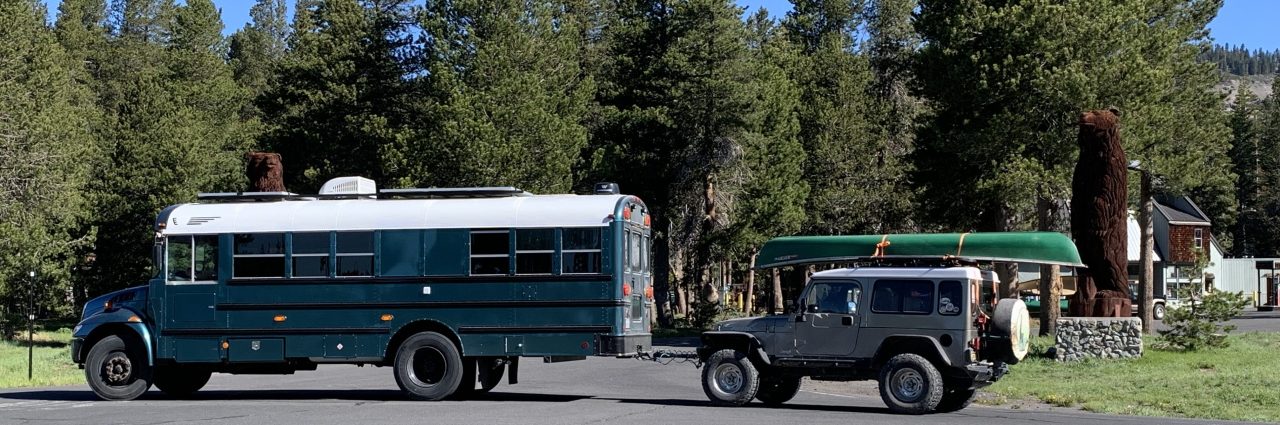
El Alebrije – this is my beast. It’s a school bus conversion, it took me about 18 months to build. Another 24 months in fine tuning and changing things up to meet my needs. The latest iteration was to take out the two captain’s chairs and large dining room table, and in place install a sofa/lounge/bed and a smaller table (still sizable) for mobile work area/dining table, etc. For this trip, I will be taking just the bus. The Jeep (Pizote) stays home.

The word Alebrije is a new term in Mexican Spanish. For more information – visit El Alebrije

Owlbear – this combination is my friend GLRay’s rig. He bought the truck 18 months ago and the trailer about 8 months ago. We’ve been working on modifying the solar and electrical system of the trailer.
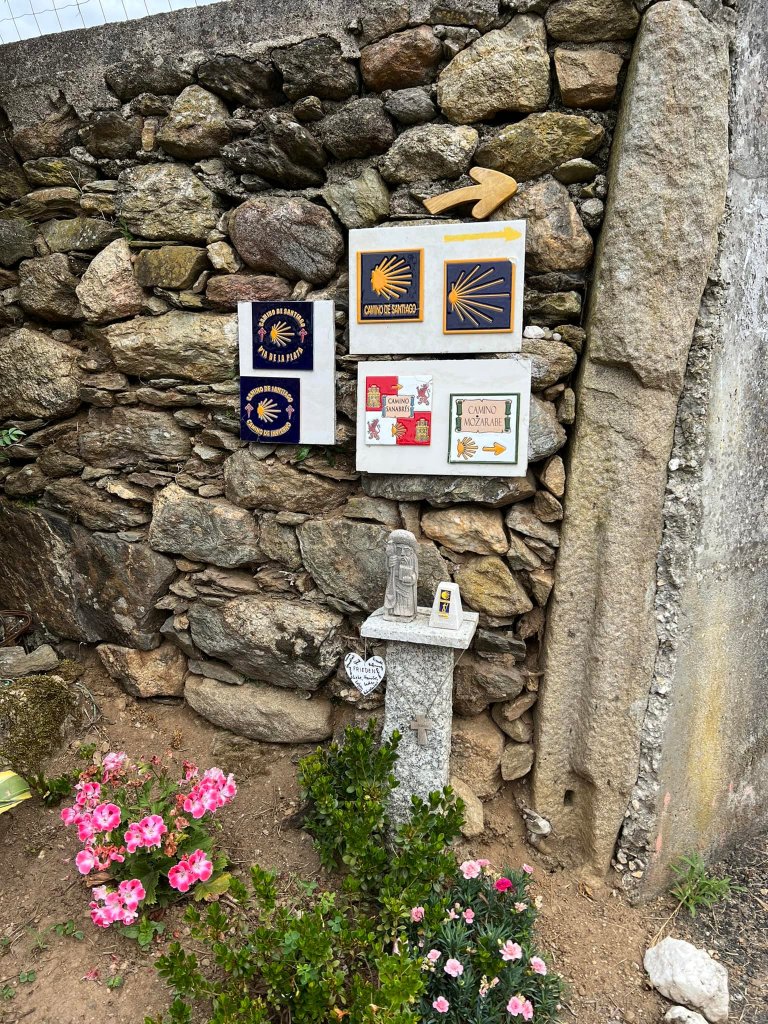
Day 30 fin : Camino De Invierno : Ponte Ulla—>Santiago.

Today was the culmination of five years of wishing to go back to Spain and walk yet another Camino. This makes four arrivals in Santiago de Compostela and six different caminos.

The Camino Olvidado from Bilbao to Ponferrada is about 525km. That’s just trail walking. Daily walking to/from the bar can be up to 10km per day more, but is usually about 5km. The Camino de Invierno is 266km from Ponferrada to Santiago. That makes both routes a minimum of 791km. 791km in 30 days by foot is an accomplishment.

I was asked recently: why did people walk through the mountains for the Camino Olvidado? It’s simple really and has a lot to do with history and war. The Iberian peninsula was occupied by the Moors for many centuries (from 711ce through 1492ce). Because the remains of Saint James were discovered in the 8thC and reburied in the cathedral in Santiago in 847, during the Moore occupation, pilgrims to the tomb could not safely make their pilgrimage to Santiago de Compostela via the plains just south of the Cantabria mountain range. So the original routes were through the mountains – being the Camino Olvidado, Primitivo and Norte. During the winter, the Primitivo and the Olvidado were dangerous to travel due to the high mountains and bad weather – so the Camino de Invierno was taken during the winter, even though it posed dangers and risks by the Moors. There is much more history regarding the Moors, Santiago and the Caminos, and I recommend researching it online if you’re interested.

One tidbit of information: since the Arabs/Moors occupied Spain until 1492, there are many, many cultural influences in Spain from the Moors during this time. And of course, since Columbus sailed from the Iberian peninsula and the conquistadors brought over their culture to the Americas. Latin America has many, many Arab/Moor cultural traits. And since, much of the southern United States was owned/occupied/conquered by Spain/Mexico, we too have cultural, societal and language ancestral Arab/Moor roots. It’s a small world.

Back to the Camino…

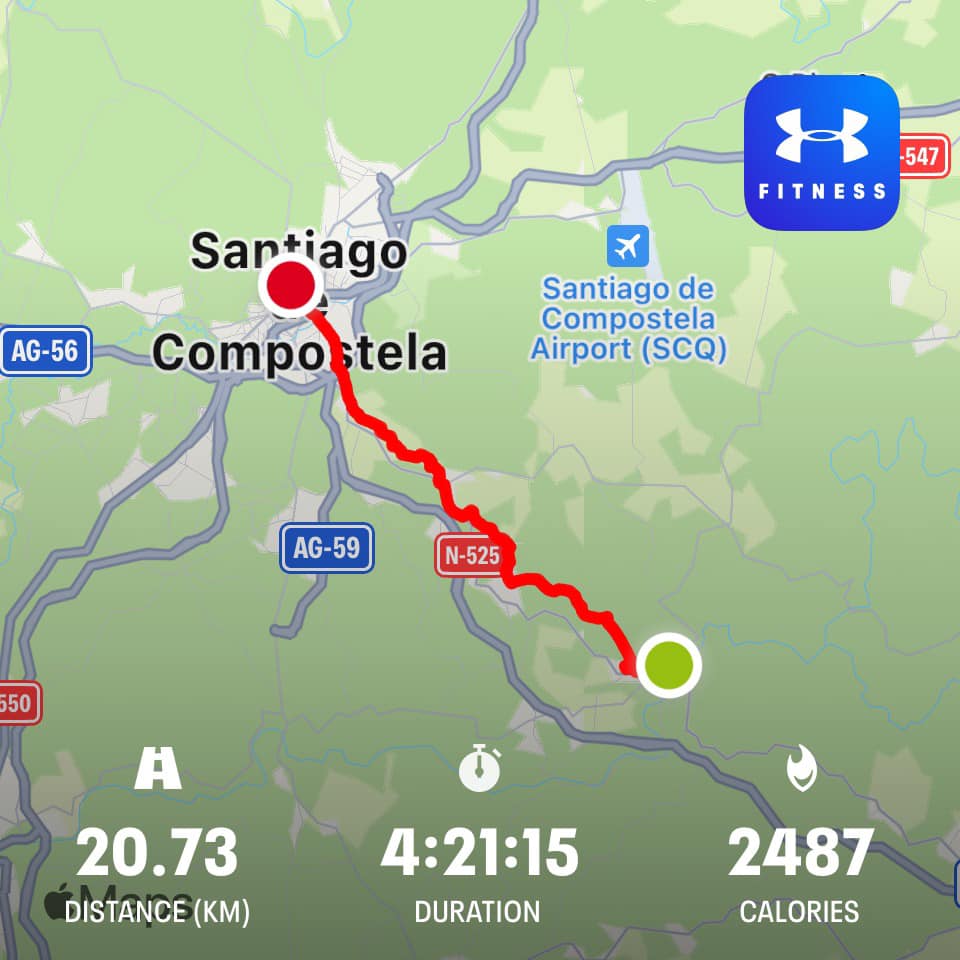
Today was short and sweet. 21km from Ponte Ulla to Santiago – and then another 2-3km wandering around and to the hotel. We’re at 25km for the day and will probably add a few more.

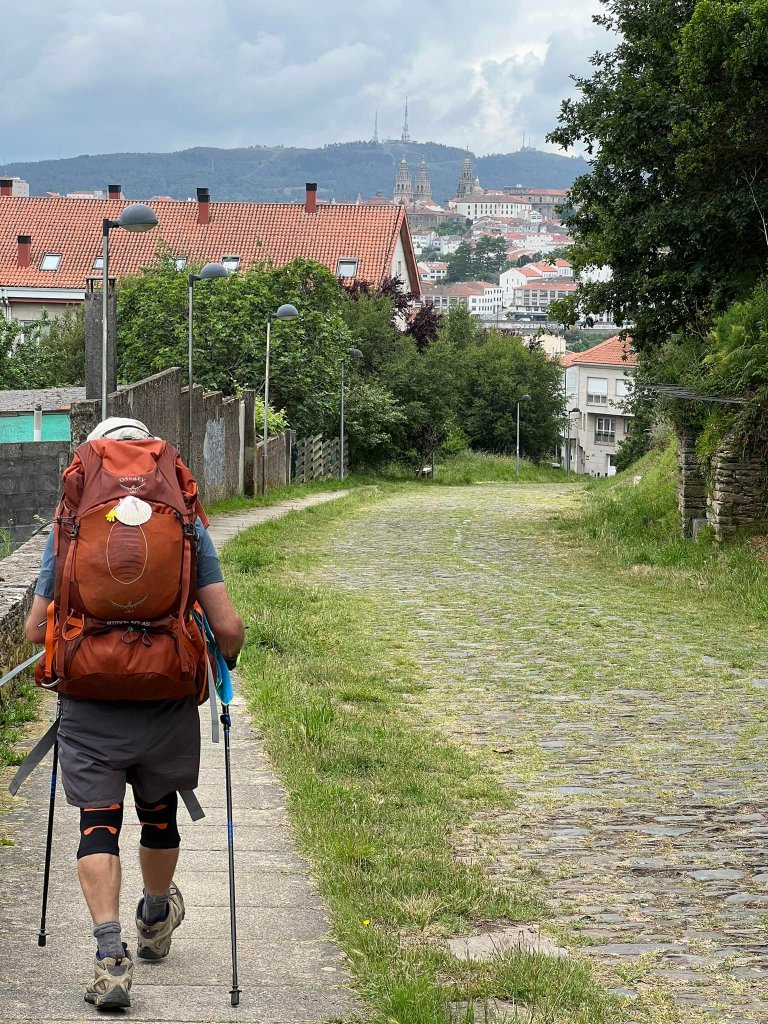
I have entered Santiago from the east and the southwest. Both are many km of suburbs and development. Not really enjoyable. Today I was prepared for something similar but alas, I was treated to 19km of farmlands, rolling country side and forests. Only the last 2-3km were in the city and part of that was through pedestrian walkways. So this was a really nice surprise.

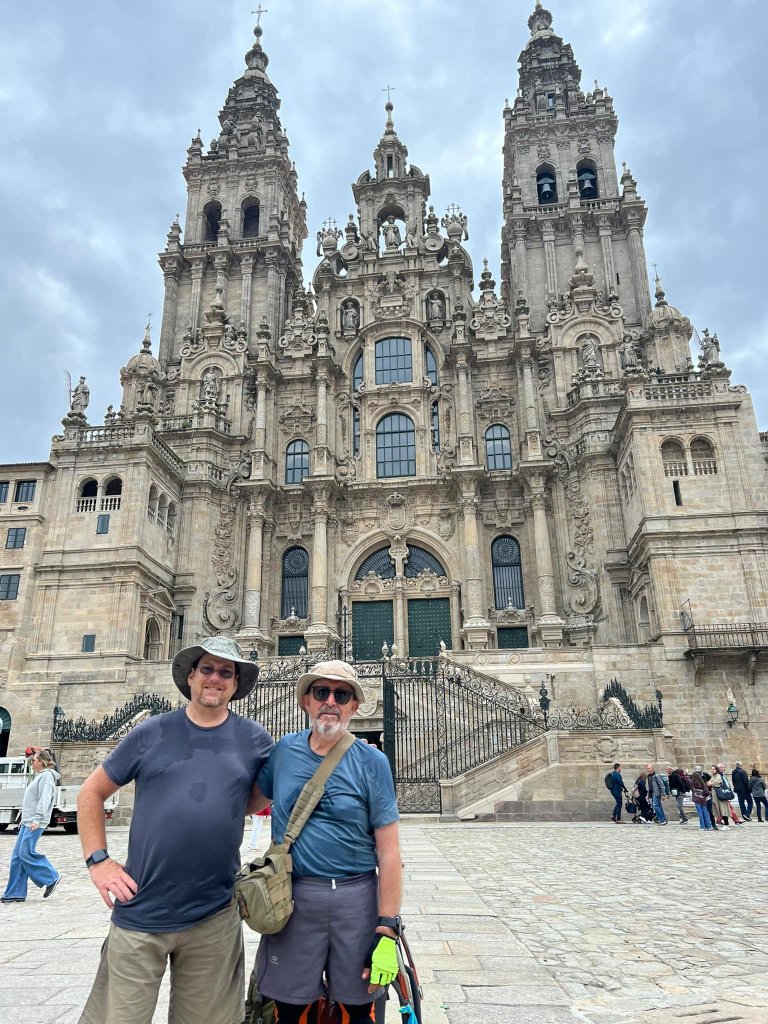
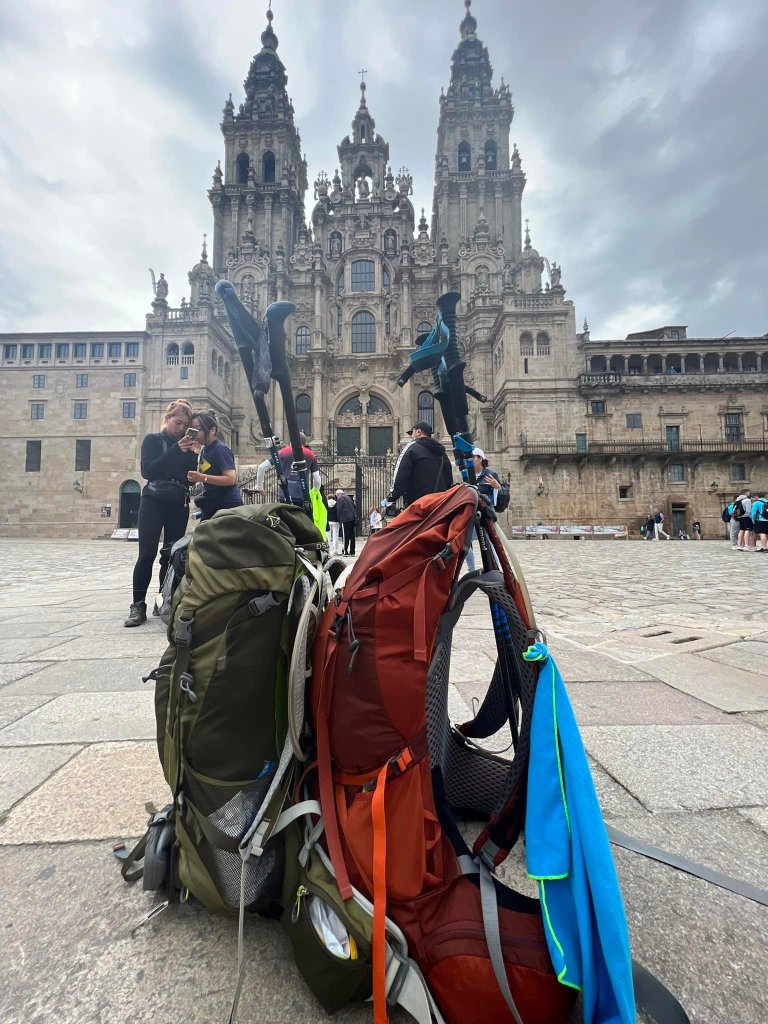
We got to the Cathedral around 12:30 – took some pictures and headed for the hotel. Tomorrow we will wander around and get our compotelas.

The walking portion of the camino is over. Now the real Camino begins. There is a saying: Your Camino starts when you reach Santiago. This has been true for the last three caminos. And I’m sure it will hold true for me this one too.

My current take away: there will be another Camino in my future. Perhaps on bike next time. I won’t know what it will be until I start on it.

Thanks for tuning in and for your comments. Buen Camino!!!

Day 29 : Camino de Invierno : Lalín/Silleda—>Ponte Ulla

Yesterday and today were supposed to be 30km days. Tomorrow a storm is supposed to roll in with sprinkles in the afternoon and then dumping pretty good for the next three days. Due to weather and exhaustion, we decided to make yesterday and today 20km days and take a taxi between Lalín and Silleda. That would put us where we needed to be to get to Santiago before the storm.

I usually don’t post about injuries, but I had a double blister on one foot. One was infected. Last night it was difficult to walk. I went to the pharmacy and bought a syringe, cleaned out the infection and injected the blister with Betadine. This morning I woke up and the blister was all dried up and no pain whatsoever. I usually apply a protective layer to my feet to prevent blisters, today was the first day since May 2nd that I went with just socks. My feet are tired but no sore spots.

Today we went through Galician farm land. Rolling hills, fresh cut hay, wild flowers and… ever present smell of cows and their biproducts… today was especially aromatic – almost to the point of cow manure flavored chewing gum – all day long. It’s beautiful here…

Not a lot of photos but a nice walk. Tomorrow’s walk into Santiago is almost 100% asphalt suburbia – all 21km of it. It will be a slog, but it will be done.

Day 28 : Camino de Invierno : Rodiero —> Lalín

Today was a good day. two days left on the Camino. We were supposed to walk 30km today to Laxe but decided to walk only 22km to Lalín. Seems like it was a good choice. There are lots of celebrations happening today.

Inclusive of my oldest graduating today with multiple degrees. Congratulations Miles – I love you and am proud of you.

Today’s walk was about half and half, dirt trails and country roads. It was probably one of the warmer days but not too bad – about 32°C. The walk was through rolling hills and countryside. There were several climbs but none that were difficult. The difficult part was a short climb and descent followed by another, and another, and another. Never long enough to warm up the climbing or descending muscles so they were always in conflict.

My feet are sore. The constant impact on hard surfaces is taking its toll on my heals. Descending is the worst since I place my heel down first. Ascending feels good. A down day is needed, but rain is in the forecast. So we will skip 20km tomorrow and walk 20km. That makes up for two 30km days in a row.

Two more days until Santiago. Bittersweet but happy.

Day 27 : Camino de Invierno: Chantada —> Rodeiro

Today was a pretty good day. I’m a bit tired, but in good shape. Why is it that you’re always in good shape at the end and suffer at the beginning?

Today was a 28km day -AND- we had a 794m climb. The first 8km had tule fog and we couldn’t really see anything off the Camino – we just knew we were heading up, but not significantly. We got to the bar at 0855 and were wondering if we had read the hours (0900-2200) right on Google (not reliable) but there was no signal there to check. Then two more pilgrims showed up and we jokingly suggested banging on the door, and it opened magically – fresh squeezed orange juice – WooT!

The next 5km, we had a 500m+ climb. As we climbed out of the fog, we were treated to blue skies, yellow in the broom, purple and white flowers, all with a vibrant green backdrop of lush forest.

The last 300m to the top of the mountain we gained about 100m in elevation if not 150m. That specific trail is called the “Via Crucis” – we are in Galicia so they speak Gallego here, which is very similar to Portuguese. The Via Crucis has the crosses for each of the Stations of the Cross. Carrying a backpack up that trail sure seemed like the carrying the burden of the cross…

On top at 1155m (my altimeter said 1348m – that’s a big difference, so I’ll go with mine 😉), we had a snack and took a break while taking in the sights. Photos don’t do it justice so I didn’t take any, I just have the memories.

Walking down, we walked down a dirt road, but it was like a highway – wide, smooth and in good condition. They use it to service the windmills on the ridge and to even transport the huge turbine blades up the mountain. I don’t know how long they are but my guess is that each blade is about 30m long, making a total height of about 80m.

On the way down the woosh-woosh-wooshing of the turbines must have lulled me to sleep because I caught myself walking with my eyes closed several times. Good thing the road was wide.

Today was important also because we made it to an important milestone – less than 100km to Santiago. That means I have walked about 650km in the last 27days – we have three days left on the Camino. This part of the trip is always a little bittersweet. Glad it’s close to being over but sad at the same time.

Day 26 : Camino Invierno : Monforte de Lemos —> Chantada

Today was a prescribed 29km day. Yesterday we walked the first 8km to cut it down a bit as the last 7km of the day was a roller coaster.

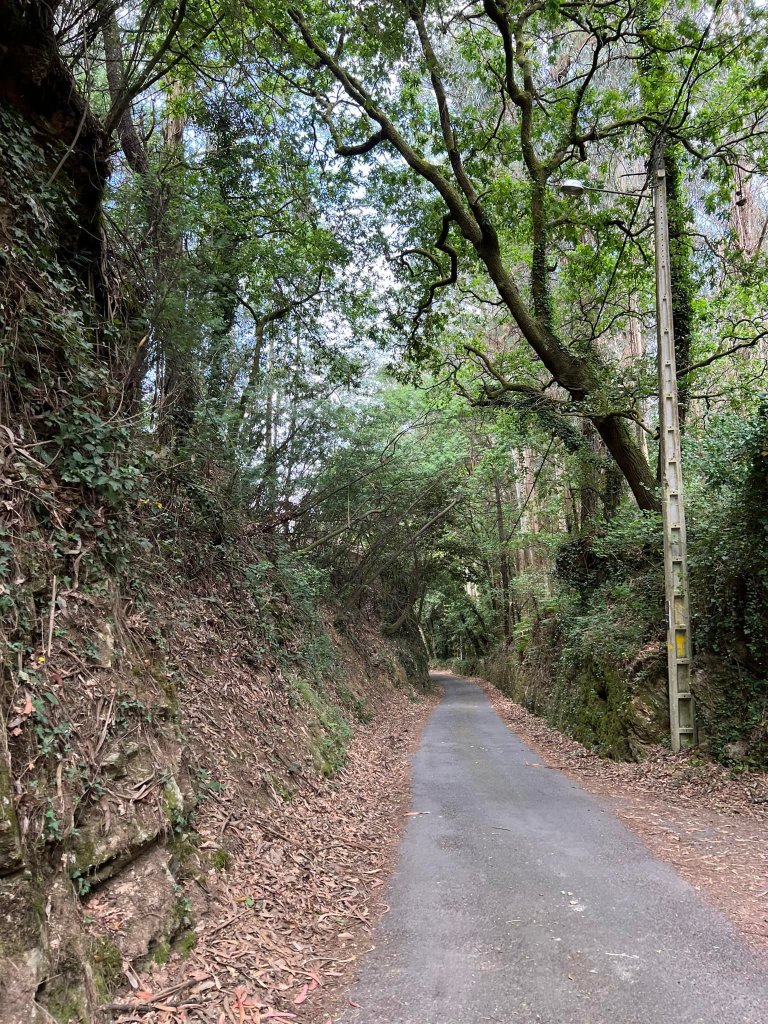
So the first 5km we walked today was absolutely spectacular. Rolling single track trail on top of an old Roman road tooks is through thick forests and hidden little farms. Aside from dramatic mountain ranges, emerald valleys, sweeping landscapes, this type of walking in Spain is what I really look forward too.

The next 7km were through similar landscapes but on country lane asphalt. Asphalt is it fun to walk on, especially since I’m walking in sandals. The sandals give me -almost- issue free walking. But the main issue is there’s little heel padding and asphalt takes it’s toll on the heels.

After the first 12km, we had an intense 2.5km descent of about 350m to the river Miño. That’s about 730’ per mile. This trail was beautiful but for the fact that the steep descent with leaf covered stones of the Roman road made a very slippery descent where I had to place my full attention to where I was placing my feet. Once at the bottom, the bar I was looking forward to was… closed 😢. We took a 15min break at the river and headed up the other side. This time we ascended the same elevation change in the same distance. There were no fallen leaves but there were times we were walking up steps of the old Roman road – with 12” deep wheel ruts on the sides in places. It was a brutal 5km but we did it in good time.

We’re now in a city called Chantada – which has a medieval castro histórico and I remember the name because it’s close to the Spanish word Encantada – or enchanted.

We are also at a milestone to Santiago – there are only 105km left. That means a couple of things – we will probably see more pilgrims from here on out, we only have four days left, and we need to get our credential stamped twice daily to prove we walked. Tomorrow I should have a picture of the 100km marker.

Day 25 : Camino de Invierno: Salcedo —> A Broza

Today was supposed to be a short day of 15km. But tomorrow was supposed to be ~30km with some ups and downs. We decided to do something strange.

Since we actually stayed in Salcedo – 4km off the Camino from A Pobra do Brollón (which didn’t have anywhere to stay), the owner of the Casa Rural took us back to where he picked us up yesterday. Our walk to A Pobra was only 2km and a perfect 30min walk to a coffee and tortilla.

We then walked 13km through green farms, pine forests, fern lined streams and rolling hills until we got to Monforte de Lemos. A good sized town/city which has all the services we would need. One of the most impressive things was the sight as we crested the mountain 5km shy of Monforte, we saw in the distance an impressive castle sitting on a knoll surrounded by the city. Unfortunately, 5km is a bit far for a good picture from the phone.

Once we got into Monforte, we dropped our packs off at the Albergue and got a taxi to take us 8km down the road so we could walk back. The idea here is to take a 15km day and a 30km day and make them two ~22km days.

Walking the Camino backwards is… challenging. There are no visible arrows guiding you way and conflicting GPX tracks and “official” routes. One such conflict had us going through a field full of netles. Legs on fire anyone???

Tomorrow we will take a taxi back to where we got dropped off today and start our walk from there. Two ~22km days… easy.

Today we met a couple of pilgrims… K.C. and Fred. They have actually been behind me for quite a few weeks and we have exchanged DMs on social platforms. I was greeted with “Chris Williams – you’re famous”. It was good to have a conversation with fellow pilgrims and share a meal together – and a couple of bottles of wine.

Today was a beautiful walk and almost a stroll. I was so busy looking around at the scenery and just enjoying everything, I forgot to take pictures for the most part. But here are some…

Day 24 : Camino de Invierno : Quiroga—>Salcedo

I would normally say that 20km is a short day. The reality is that it’s just about perfect. It’s five hours of walking and allows for a few short breaks. Less than that and it seems like something is missing. More than that and you really start counting each step.

…normally. Today we had two climbs and one descent.

We have been following the river Sil and it’s valley for the last 100km. Today, we deviated from the river Sil because it creates what I can only imagine as gorges and is fairly impassible so the Camino takes us over the mountains for 2-3 days where we rejoin the river Sil.

The first climb was 6km long and just over 350m. It was constant and therefore not too bad – rather comfortable if you will. This climb brought us through a wildfire burn that they were cutting down all dead trees. Several mountains had nothing left – reminiscent of the California wildfires most reading this are familiar with.

Once we got to the top, we had a short descent and easy walk for about 3km. Then the real descent came – you know that 350m we just came up? Well, we descended more than that in about 2km. Interestingly, at the top, I was in good form and full of energy. We took a break for a snack and the wind picked up and the temperature dropped. By the time we got to the bottom of the descent, I had no energy left – completely exhausted. We had some more to eat and then headed out again.

The second climb happened immediately and brought us up 250m in 2.5km. We just put the trekking poles into low gear and put one foot in front of the other. Before we knew it, we were at the top of the ridge just cruising along.

We are staying in a town called Salcedo. It’s not actually on the Camino but several years ago, the couple that managed the albergue in Castroncelos retired and this is the next best thing. The reason is that we don’t have too deviate the 8km there and back to find a place to stay. The owner will come pick up the pilgrims and bring them back – a value add service.

Day 23 : Camino de Invierno : A Rúa—> Quiroga

The grey clouds hung low over the mountains today, showing us glimpses of rain on the next ridge over. Luckily, we were only sprinkled on in the last hour or so, and just enough to cool us down, not get us wet.

Most of today was on asphalt, but the country roads were probably the original Roman roads 1500-2000 years ago as the river canyon was fairly steep and prevented road building in many parts.

The first hour – 5km – was a steady climb out of the valley for a 180m elevation gain. We were then dropped back into the valley and back up to another ridge. This time on what was obviously an old Roman road with the wagon wheel ruts ground into to rock the road was constructed on. Once we got to the top, we were again dropped steeply back to the valley floor below where we followed the river closely until we go to Quiroga.

On the way, we passed through little villages and an old community olive press – which unfortunately was locked up so we couldn’t see the actual press.

On one of the drops into the valley below, we came across an old man who was walking his three cats – or they might have been walking him. When we met, he invited us to have a chupito of his home made orujo – an alcoholic beverage made from herbs and left over crops of the year. He had been making orujo for over fourty years. He was 96 years old and had lost his wife four years ago. His kids have moved away and he has lived in the country his whole life. There were no other houses within 500m, he and his cats greeted pilgrims on the Camino and offered them cherries and fresh water – and some he invited to have a chupito. The sparkle in his eyes made it clear, he was full of life and energy and he told us many stories of country life. He’s certainly an old soul, but a very kind one, and loves to give back to community and pilgrims alike. This world needs more people like him.