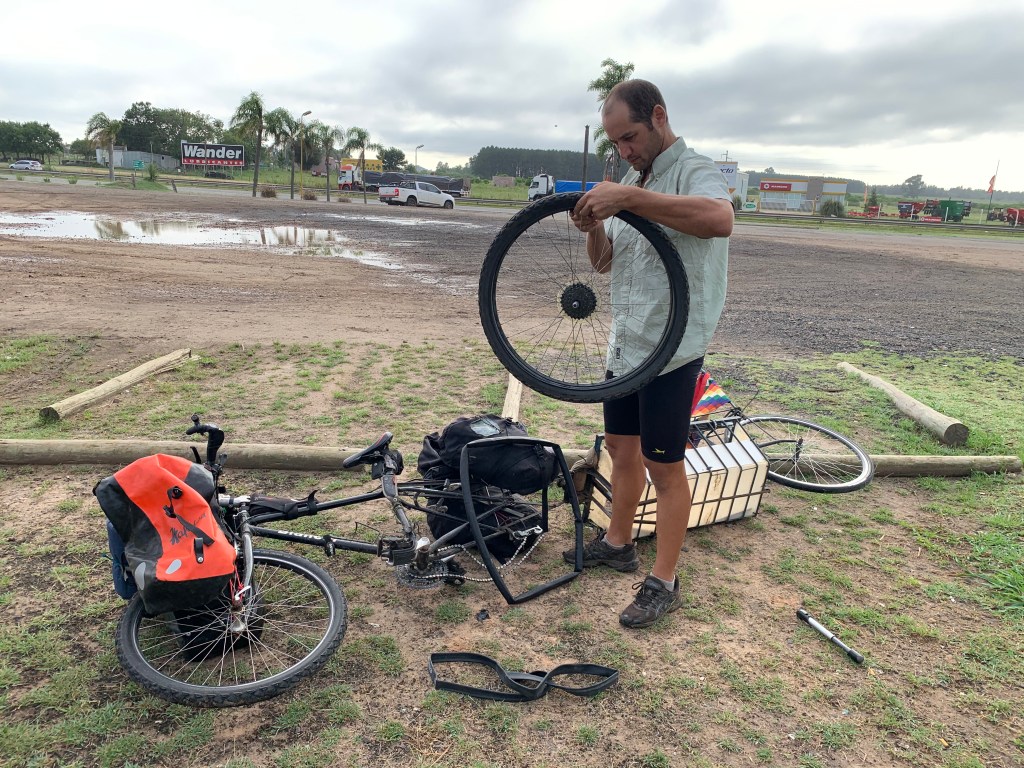
When we left off, I was holding a cider and squinting at something shiny on my back wheel.
It was a crack. I put the cider down and looked closer. Then I found another one. And another. By the time I had gone all the way around, I had counted ten. Ten spokes slowly pulling their way out of the rim, each one with its own little crack.
The rim was destroyed. Not “keep an eye on it” destroyed. Done.
My guess is the spokes were too tight from the factory. After Argentina the bike mostly sat for five years, and the cracks sat with it, waiting patiently for me to pour a cider and notice.
A word about Guille
My first instinct was to hand the whole mess to a bike shop and write a check. Then I talked to Guille.
Some history. On day one of our Argentina ride, I was sitting in the heat with a liter of beer when my phone buzzed. It was Guille: “My rim broke, can you meet us here?” A third of his spokes had torn clean out of the metal. We spent four hours at a gas station with our thumbs out.
So naturally, the man with the exploded rim is the one who convinced me to build my own wheels. And naturally, I listened.
While I’m in there
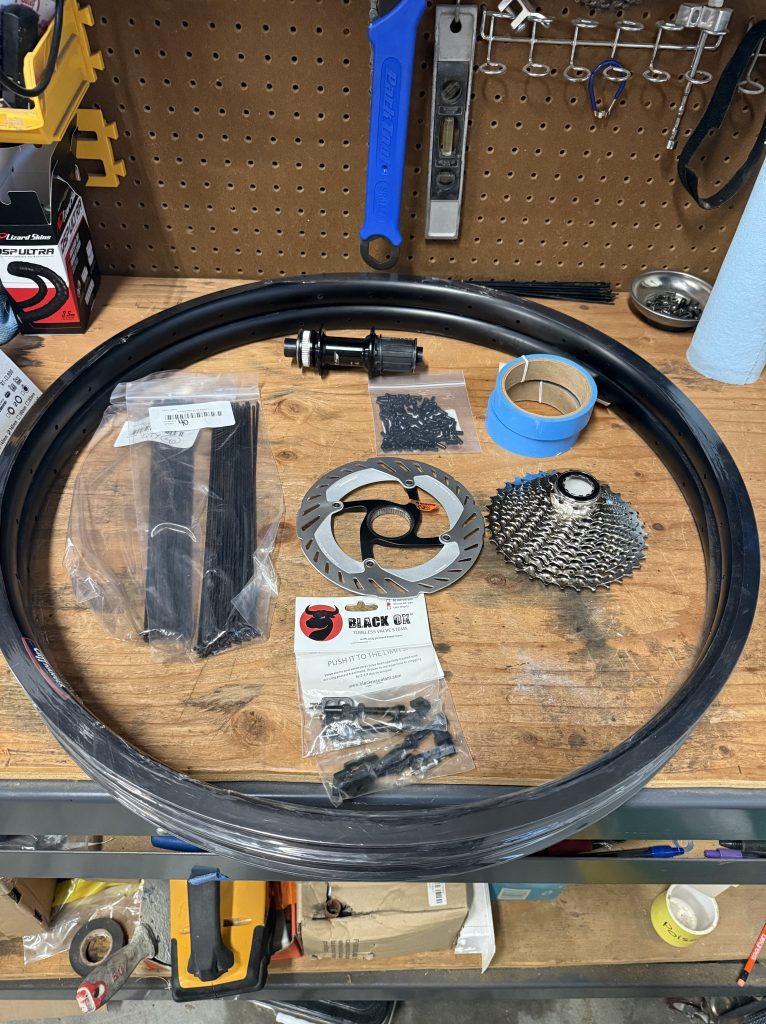
The only things I kept were the hubs. New rims, new spokes, new everything else, front and rear. The front rim hadn’t cracked, but it was the same age and had lived the same life, and I wasn’t going to wait for it to tell me.
Then came the most expensive phrase in any garage: might as well. The rear wheel was already in pieces, so I might as well replace the brake rotors. And the cassette. The old ones would probably have lasted. Now I know they will.
Final tally: the wheels cost double what the cockpit did. The thrifty plan is not going well.
Tools? Who needs tools?
Wheel builders use a truing stand, a precise and costly piece of equipment that tells you exactly where your wheel wobbles.
I used zip ties.
Put the wheel in the bike, strap a zip tie to the frame on each side, snip the ends so they just miss the rim, and spin. Where the rim touches a zip tie, that’s your wobble. Tighten a spoke, spin again. It works. It works well enough that I was a little smug about it.
And now, sheepishly: I did buy a few things. A bike stand, so the whole bike could hang at eye level while I worked. And a spoke tension meter, because if too-tight spokes killed the last rim, I wanted a number this time and not a feeling.
But the truing stand, the precise and costly one? Never bought it. The bike went up on the stand, the zip ties went on the frame, and two bits of plastic that cost less than a cent each did the job. I have stopped trying to explain this to people.
Like butter
You are supposed to oil the spokes and nipples before you put a wheel together. On the rear wheel I did exactly that, and it went together like butter.
On the front wheel, I did not.
I also had a cheap spoke tool. Dry threads plus a cheap tool is how you round the corners off brass nipples, one after another, each time thinking the next one will be different. It was not. I tore the whole wheel back down and replaced half of them.
Then I bought a better tool. I oiled the spokes and the nipples. Went together like butter.
Some lessons you pay for twice.
The tire problem
Both rims are now taped for tubeless tires. Which brings me to my wheel size: 650b x 47 mm.
Finding that tire in the US has become close to impossible. Everyone has moved to 700. Shops look at you like you asked for a typewriter ribbon. And 650b is… sigh.
Yes, I could have gone to 700 while I was rebuilding everything anyway. They would probably fit the fork. I never measured. They would not fit under my splash guards, and I am riding through Norway. The splash guards stay.
So I searched. And searched. And found three Teravail Washburns.
Yes, three. I am aware that “bi” means two. The third one is the spare.
I don’t expect to need it. 650b is still popular in Europe, so finding a tire over there should be easier than here. Which is exactly the kind of sentence Murphy’s Law was written for. If a tire is going to gash open, it will do it on a Sunday, in the rain, 40 km from a shop that closed on Saturday. So the spare comes along.
They are the “Durable” version, with a tougher sidewall. Better for touring. Heavier, but… durable. Fewer gashed sidewalls on the side of the road, which is a trade I will take every time.
Where things stand
Both wheels are built. They are round, they are true, and I made them, which still surprises me. Now I am just waiting on the tires.
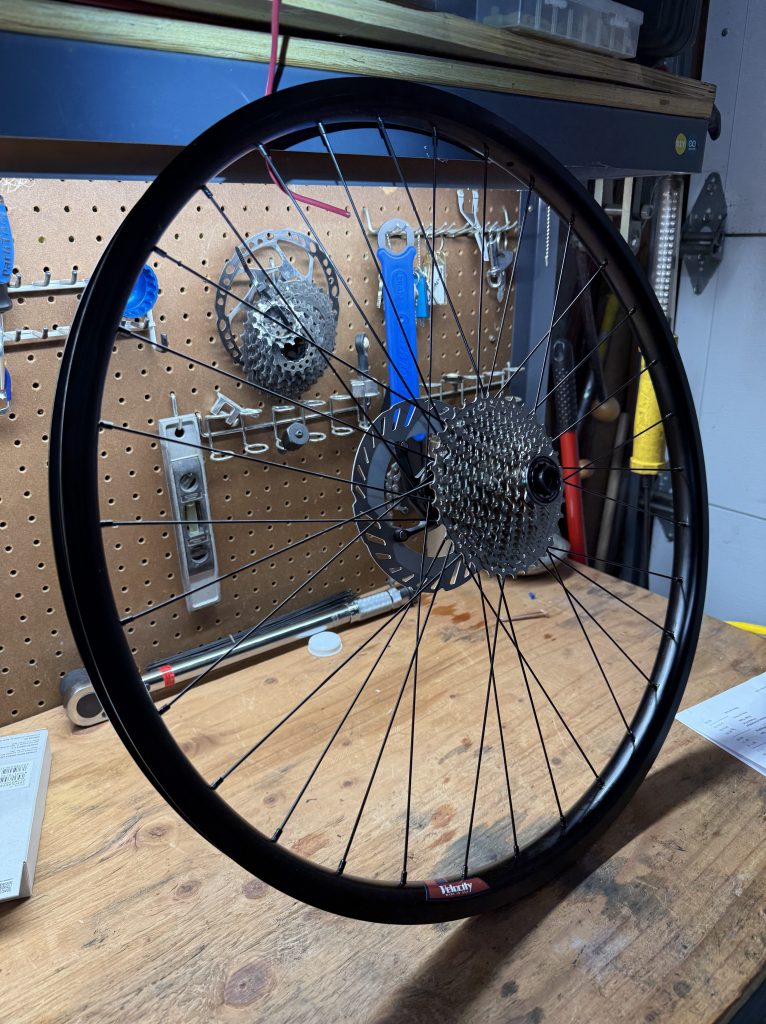
Next time: the finished bike, all of it, settled.
What changed
- Rims: Velocity Cliffhanger, front and rear
- Spokes and nipples: DT Swiss, brass nipples
- Hubs: kept
- Brake rotors and cassette: new
- Tires: Teravail Washburn, Durable, 650b x 47, tubeless. Two on the bike, one spare.

