Day 13: Portilla to Raiño — Boisterous Bars, Sticker Socks, and Submerged Trails

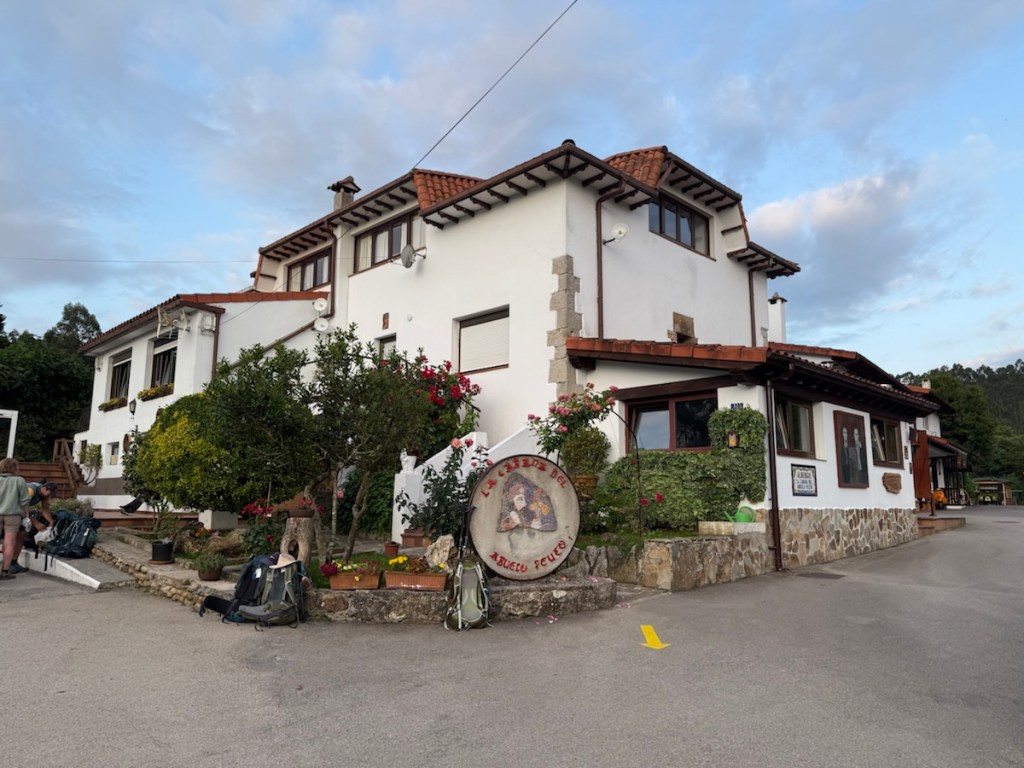
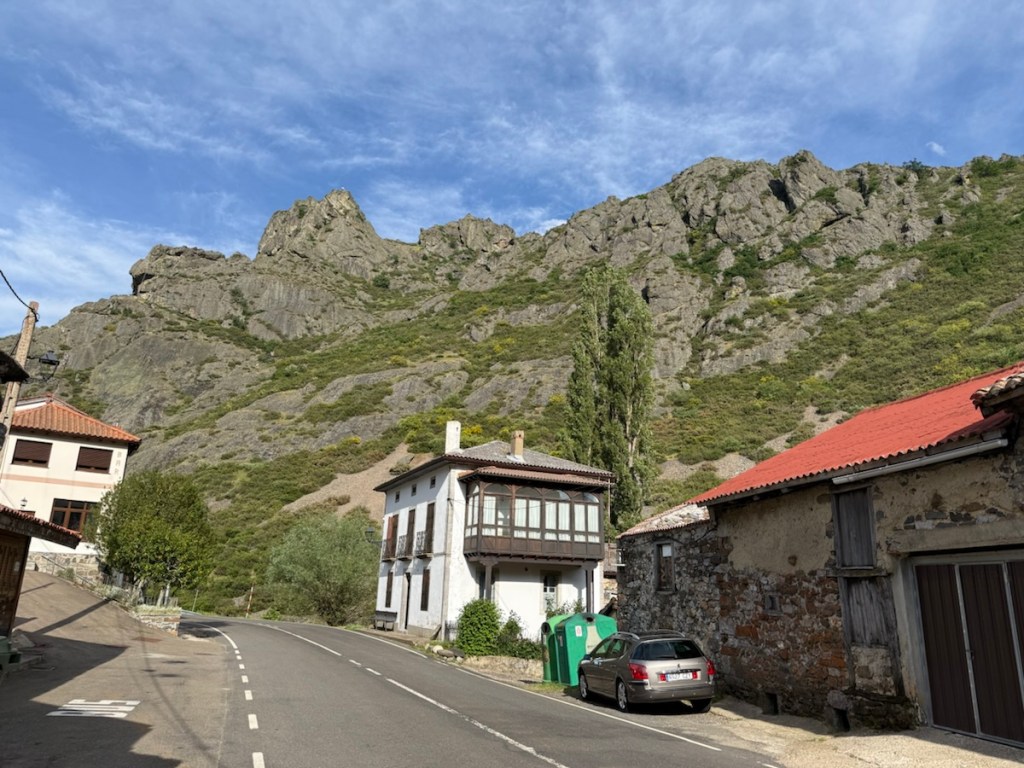
Portilla’s albergue had all the charm of your eccentric uncle’s living room, if your aunt happened to own the only bar in town and was also the cook, host, and DJ. It was a one-woman show, and when the local menfolk popped in for their early evening cañas, it turned into a jolly scene of clinking glasses, laughter, and the kind of animated storytelling that can only be understood if you’re fluent in Cantabrian mumbles.
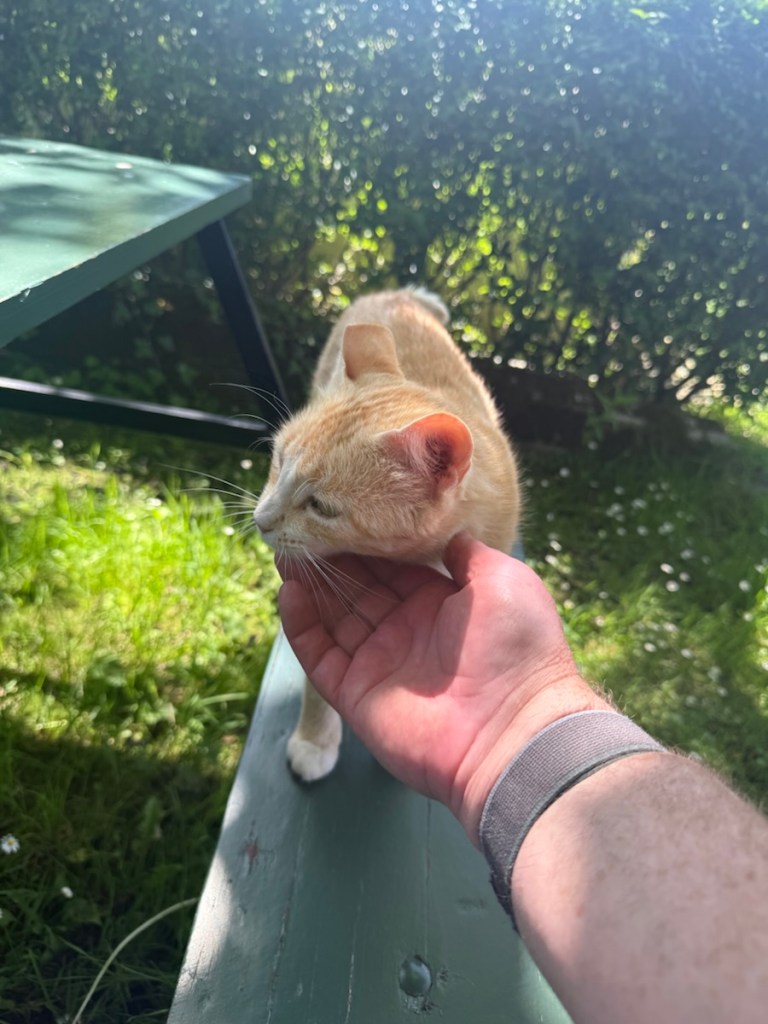
Among the pilgrims sharing this cheerful chaos were the Spanish father-son speed demons, last seen somewhere between “Where’d they go?” and “I’ll never catch them.” They had vanished for three days on a loop back to Potes and reappeared just in time to head home via a scenic detour. The Camino has a funny way of crossing paths exactly when it wants to.

Also bunked in with us were three sprightly retired ladies, two with military-grade reservation strategies and one poor soul without a bed beyond tomorrow. When she asked for help, I was about to offer a contact I had… until the veteran trip commander briskly inserted herself with the precision of a border collie herding sheep. I slipped the info to our reservation-less friend like a spy in an old Cold War movie, phone number, name, and the hope of a pillow for the night.

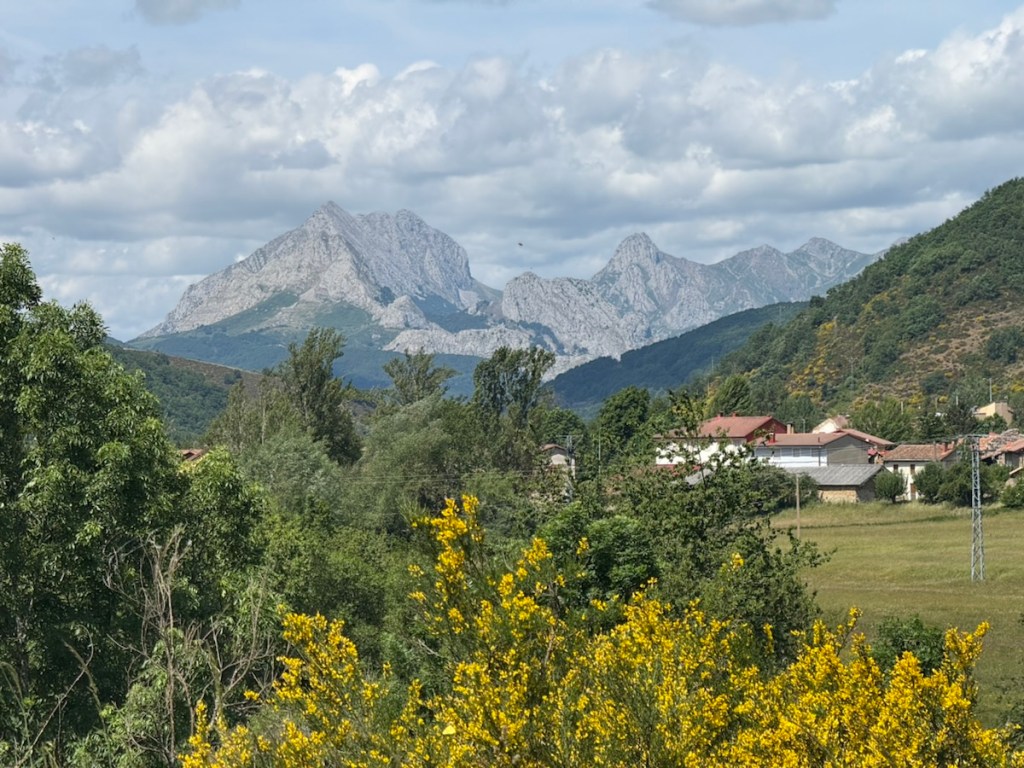
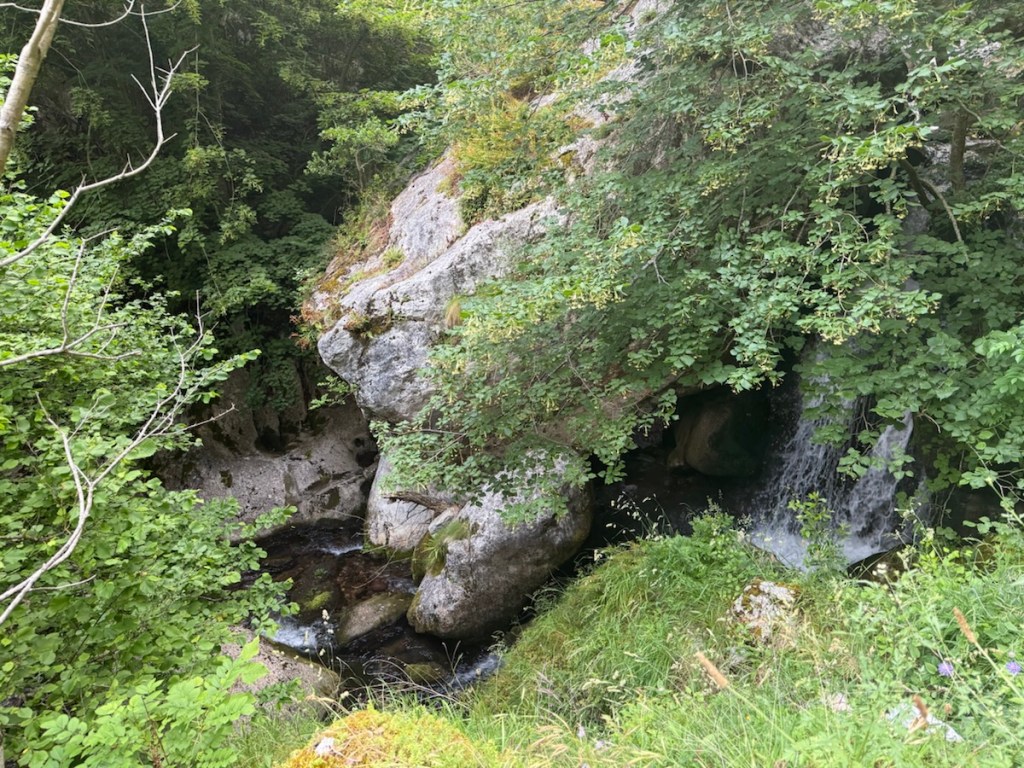
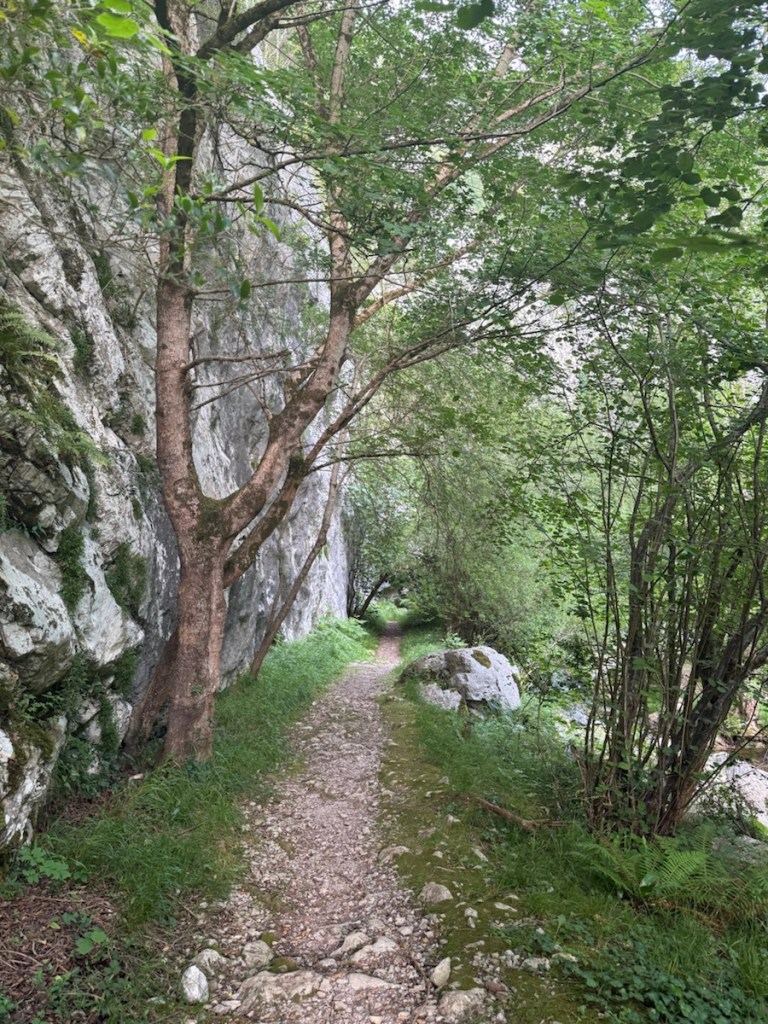
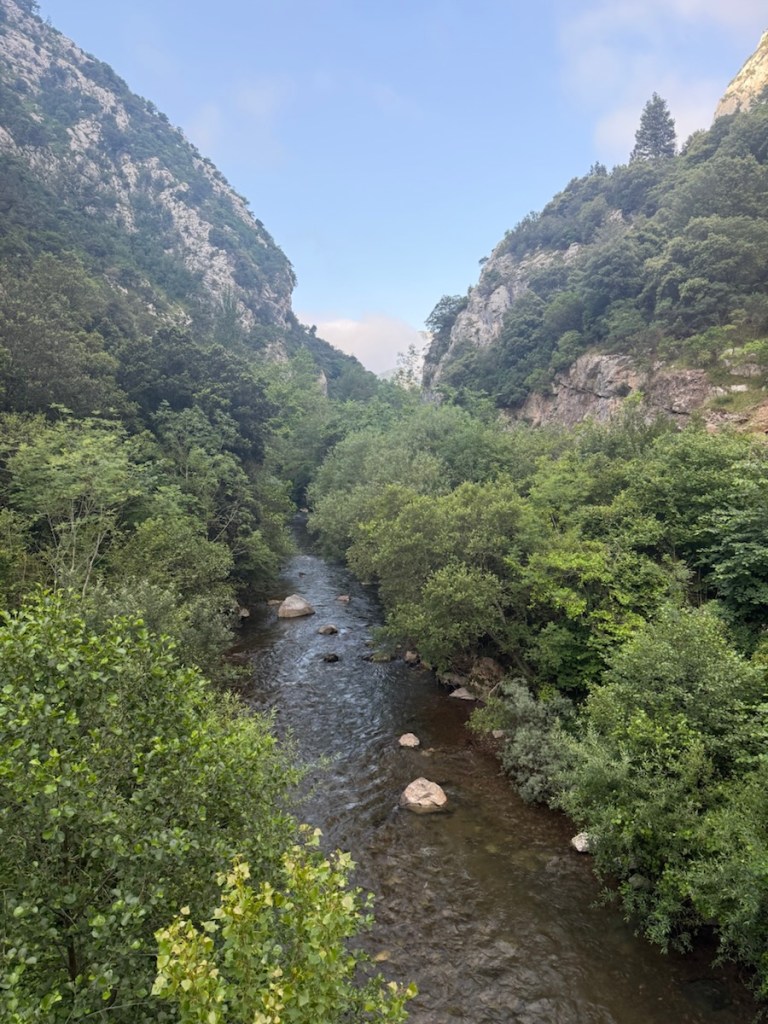
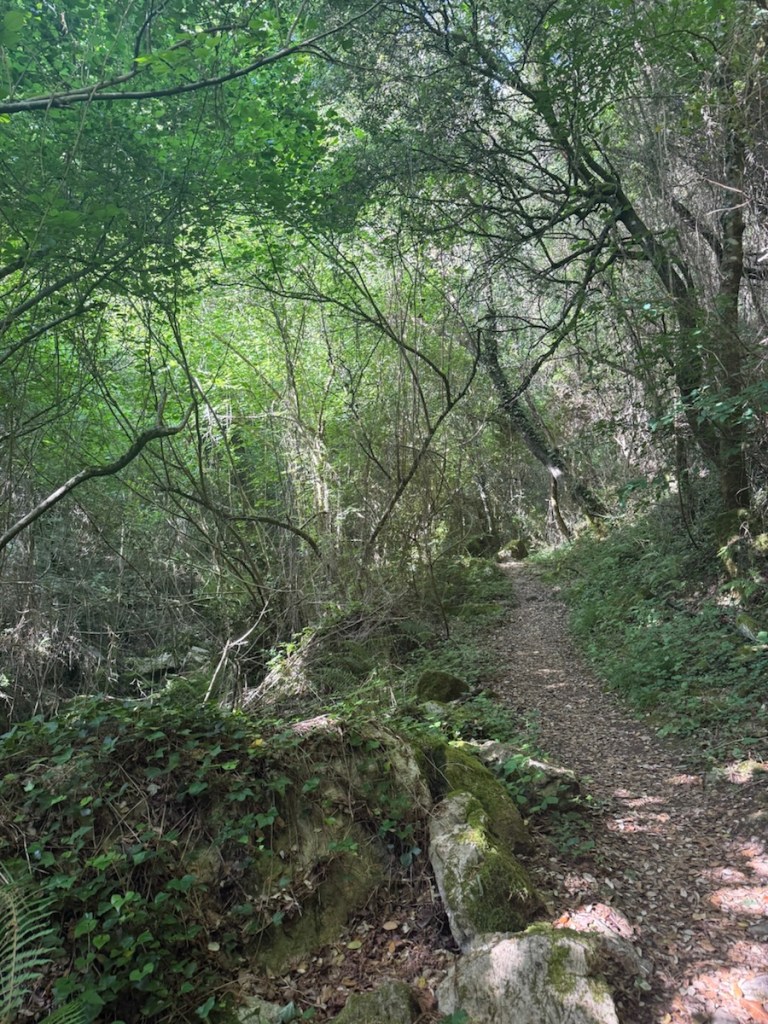
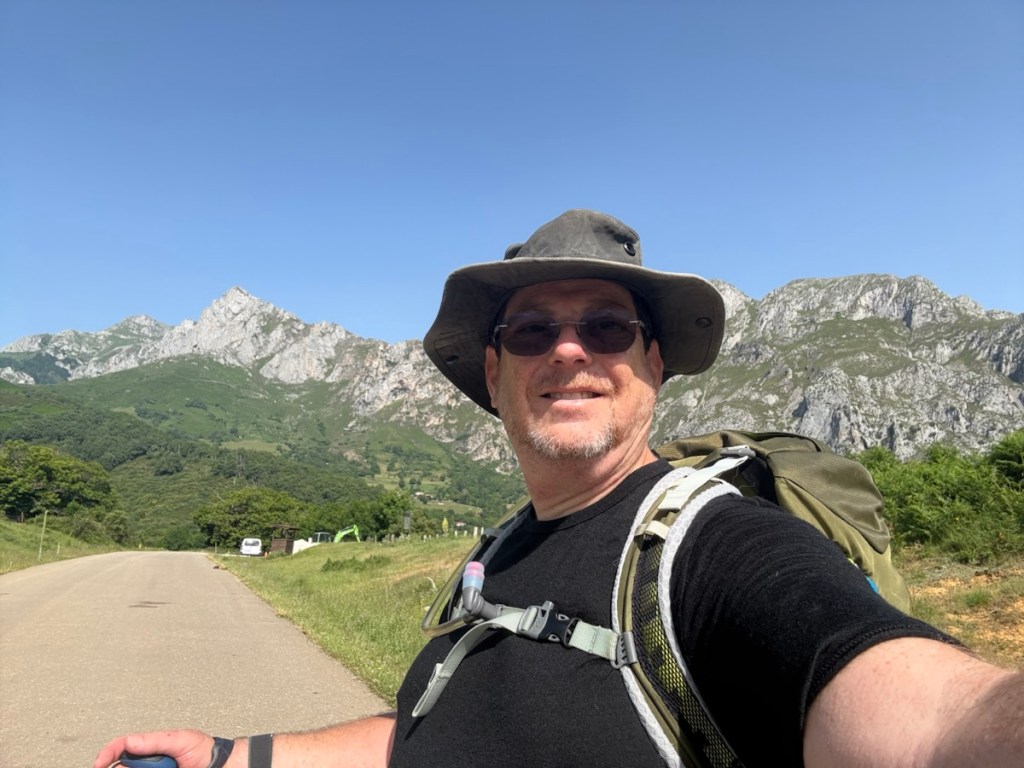
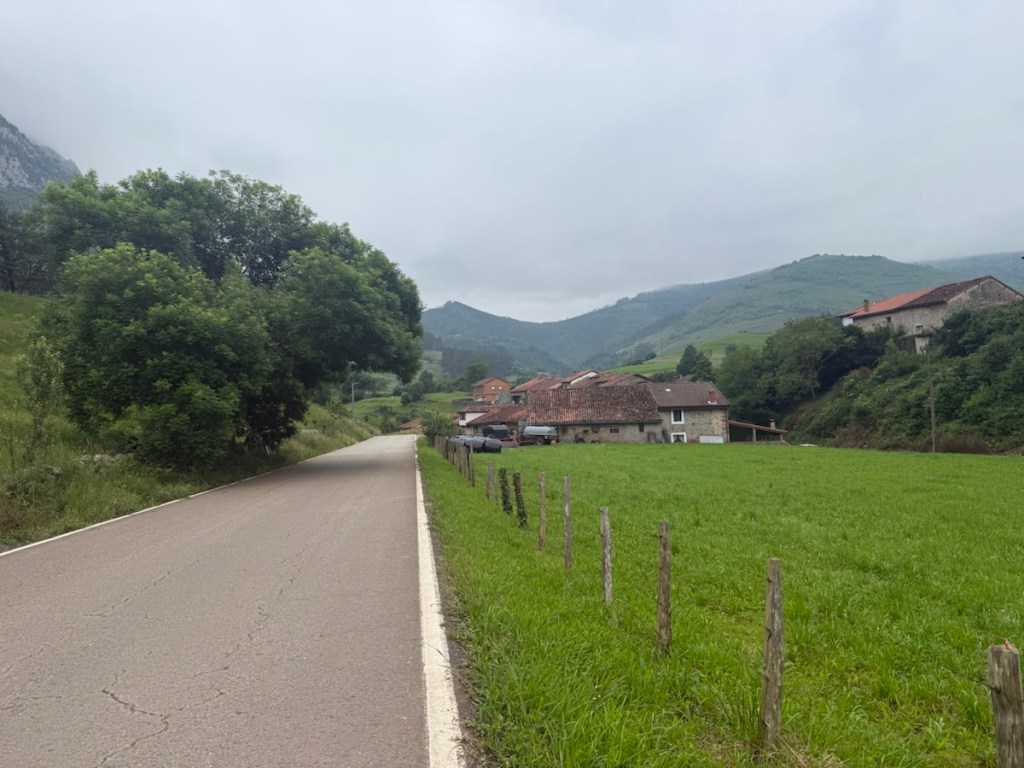
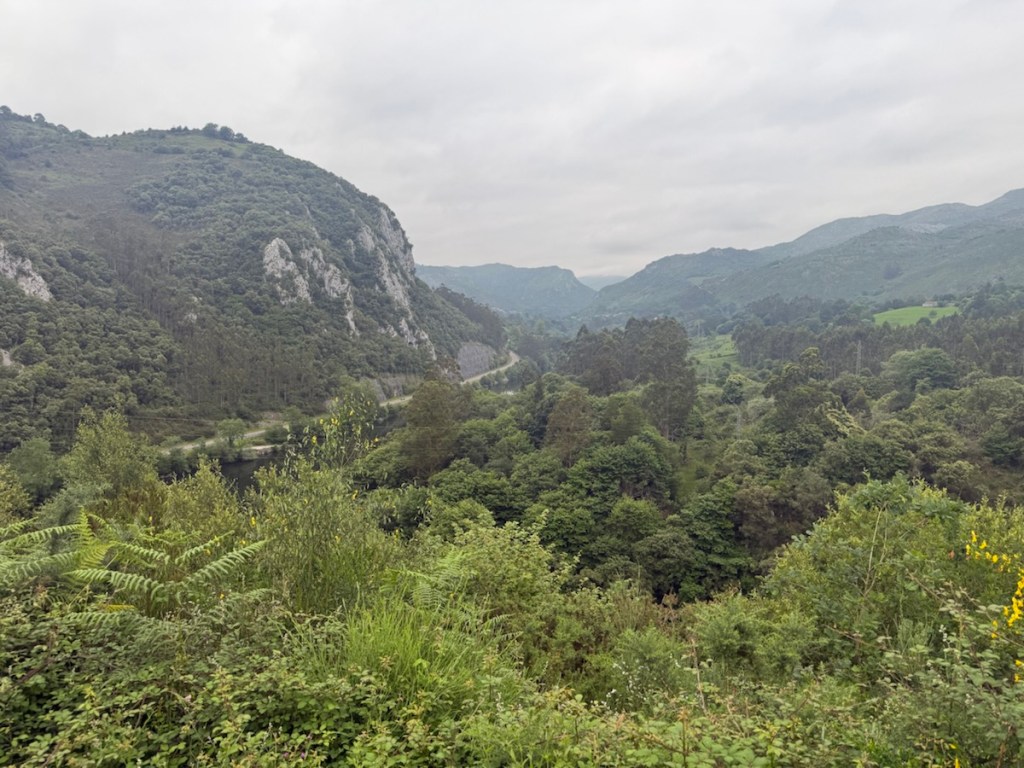
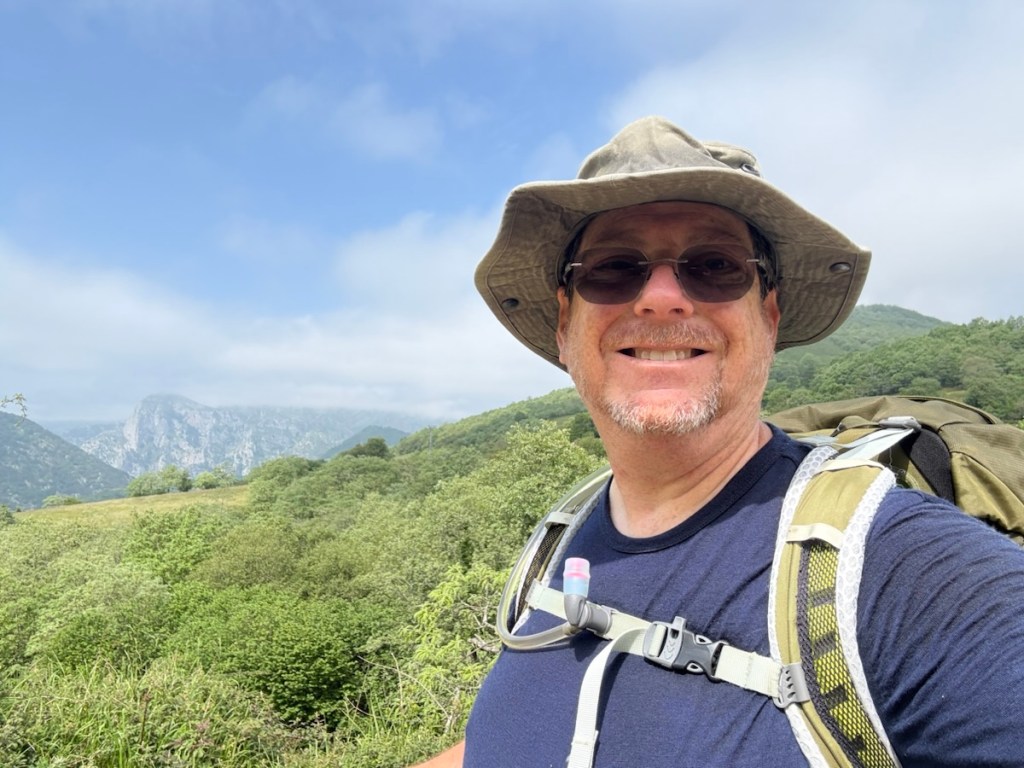
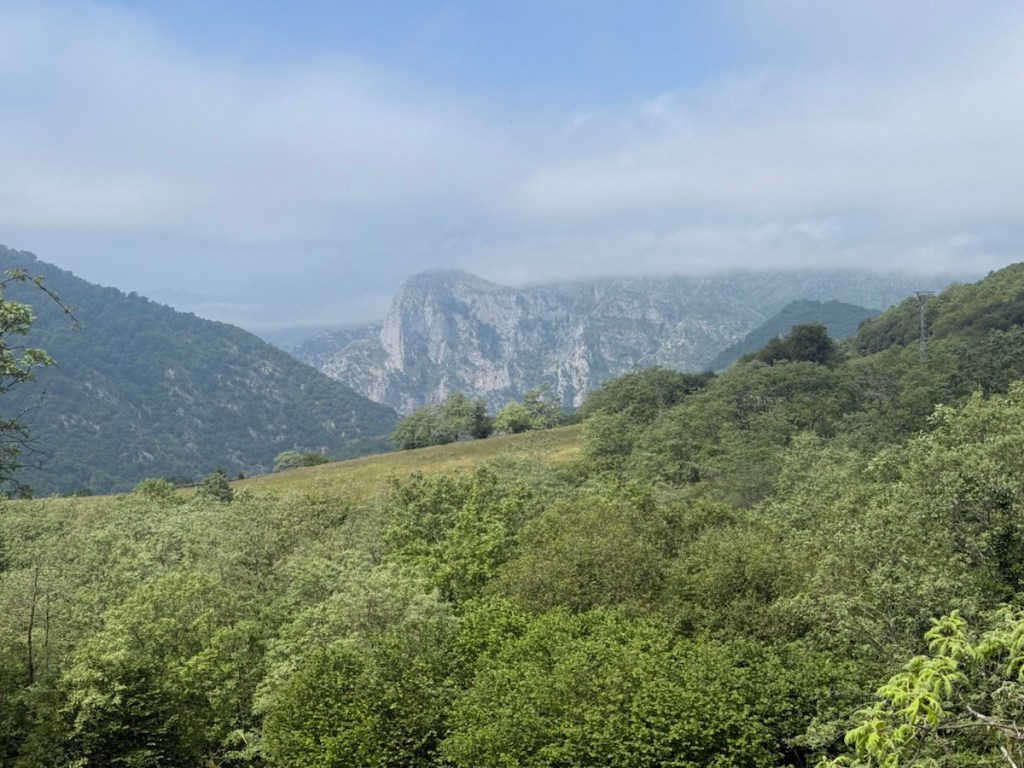
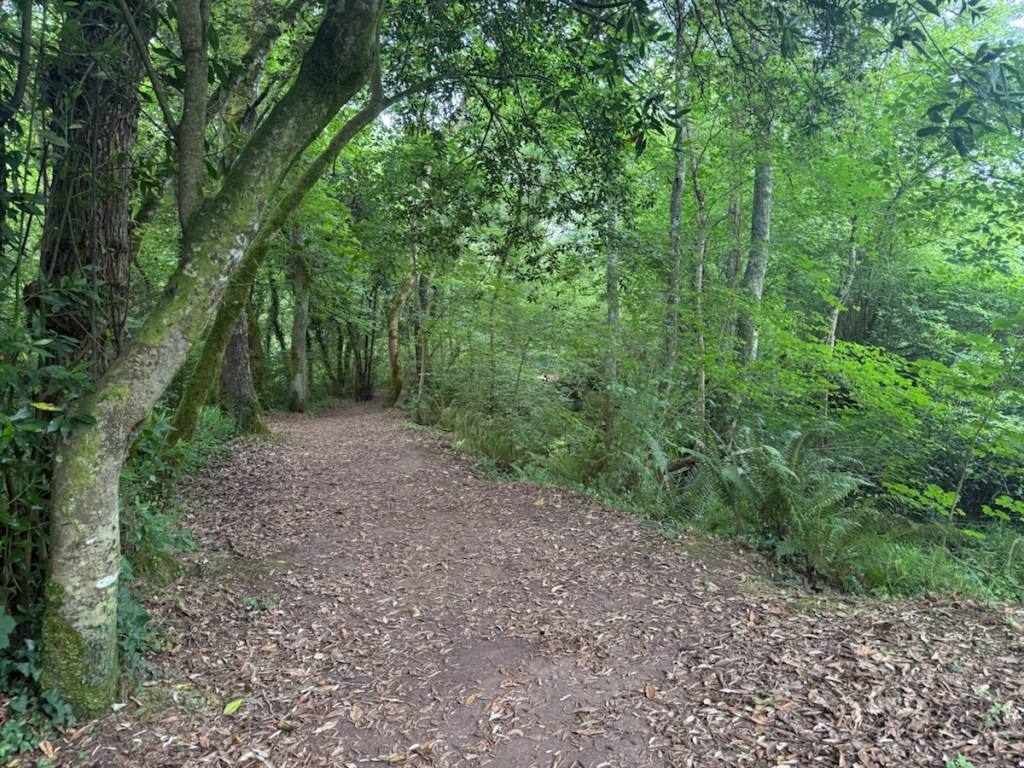
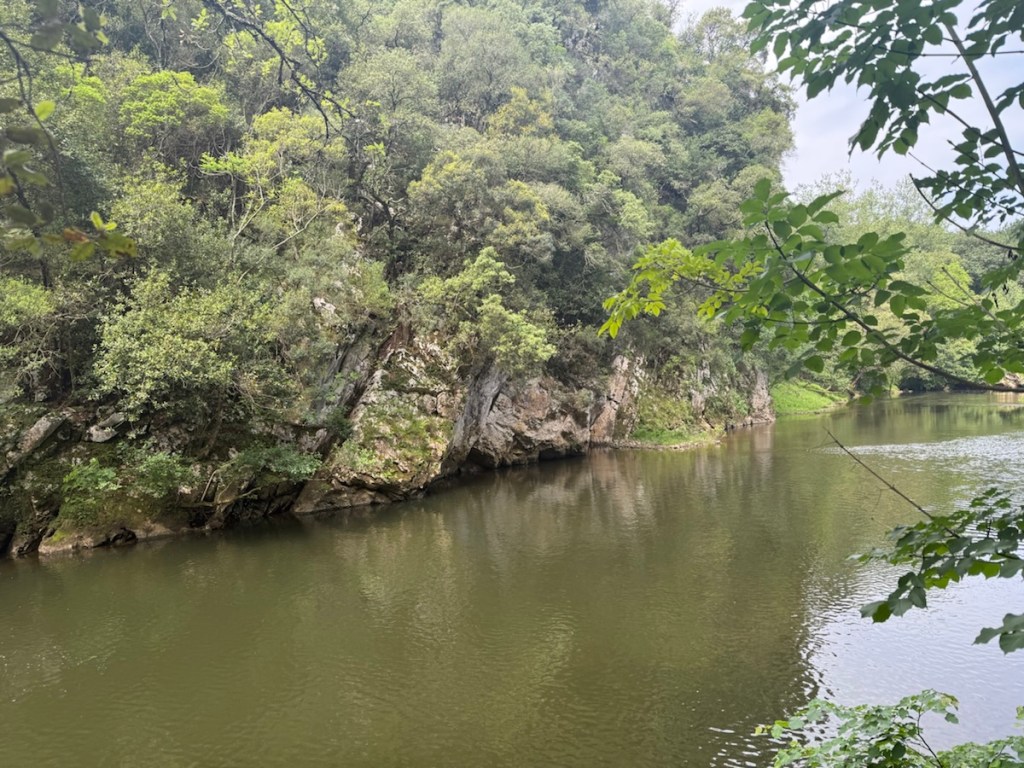
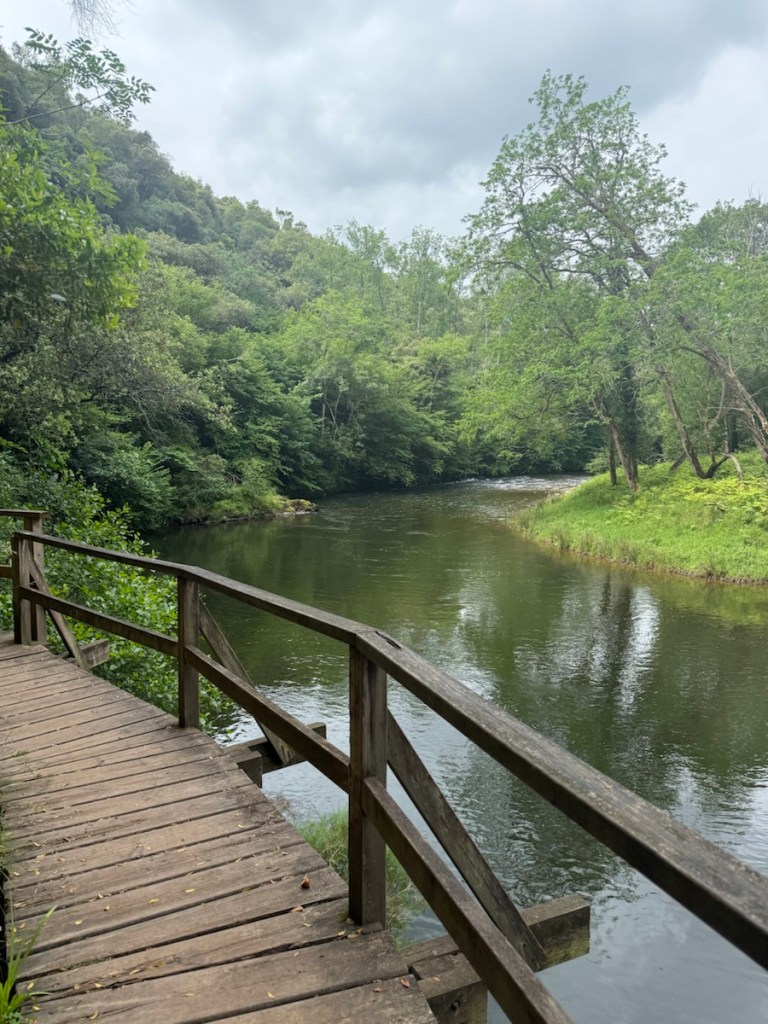
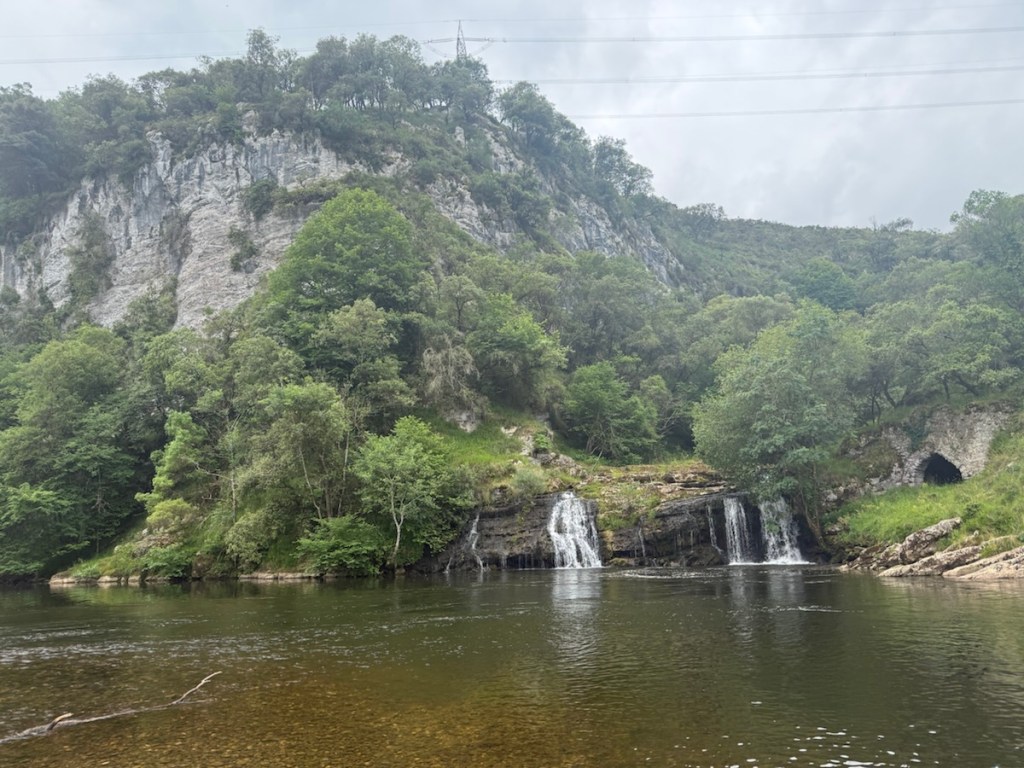
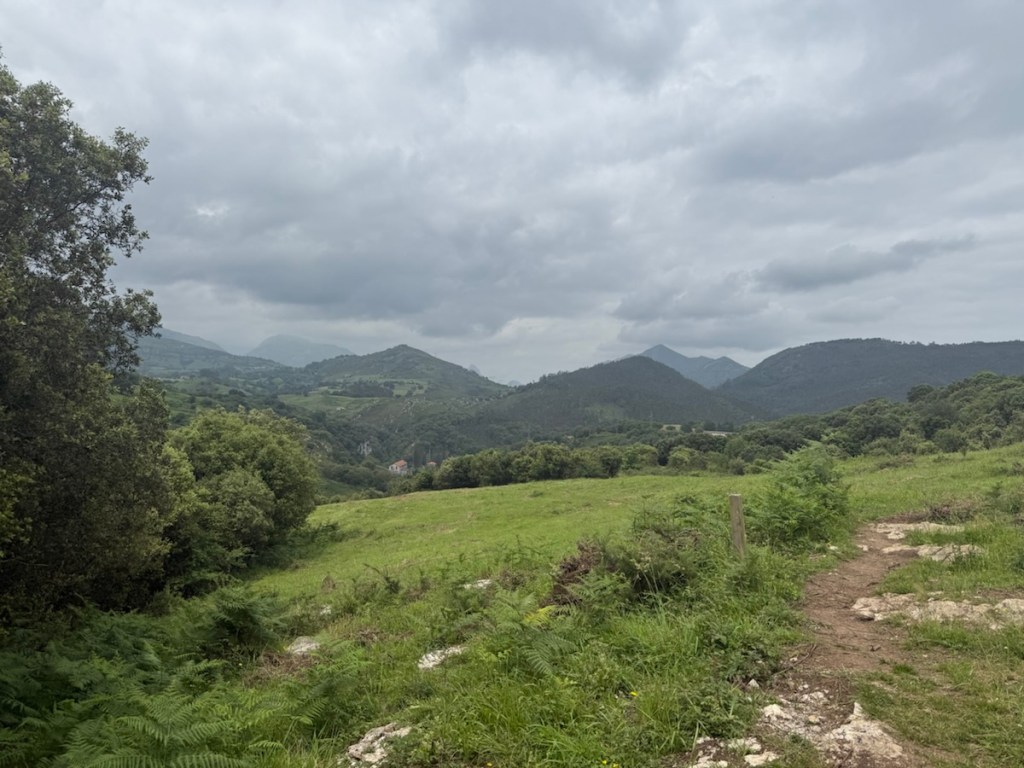
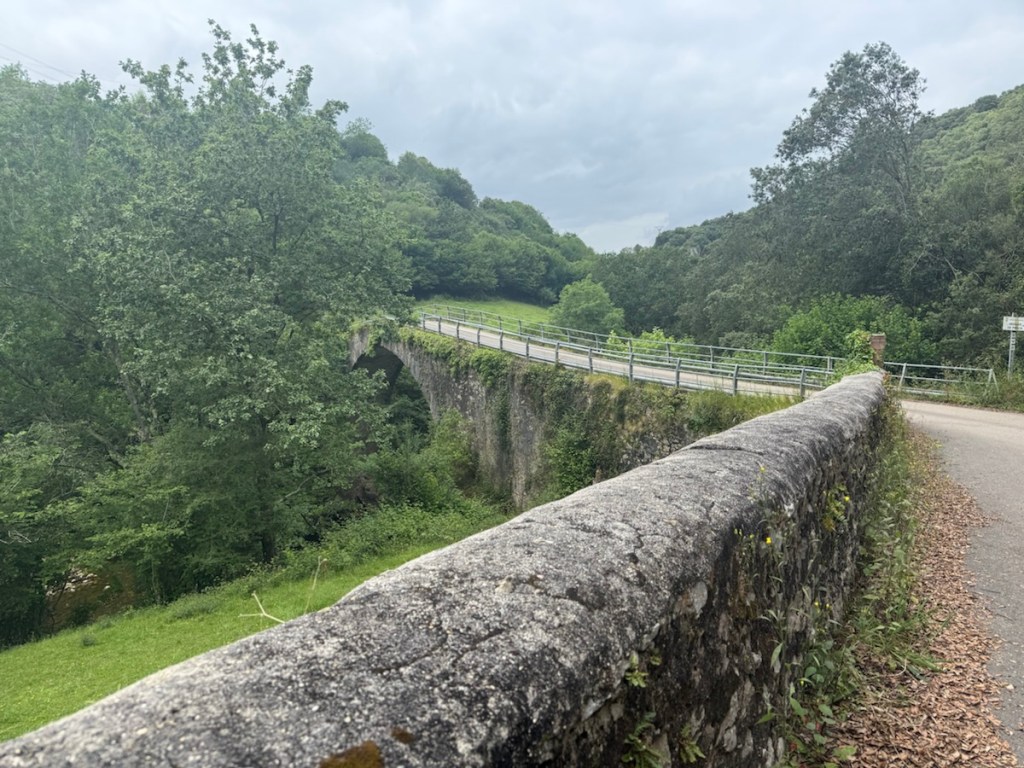
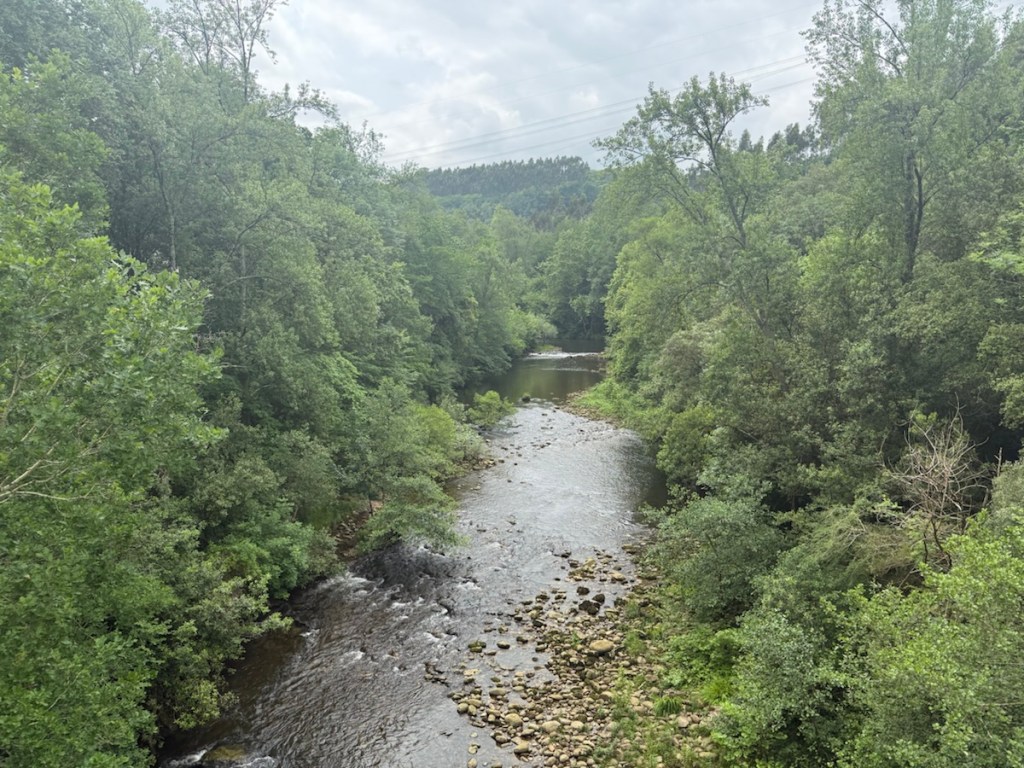
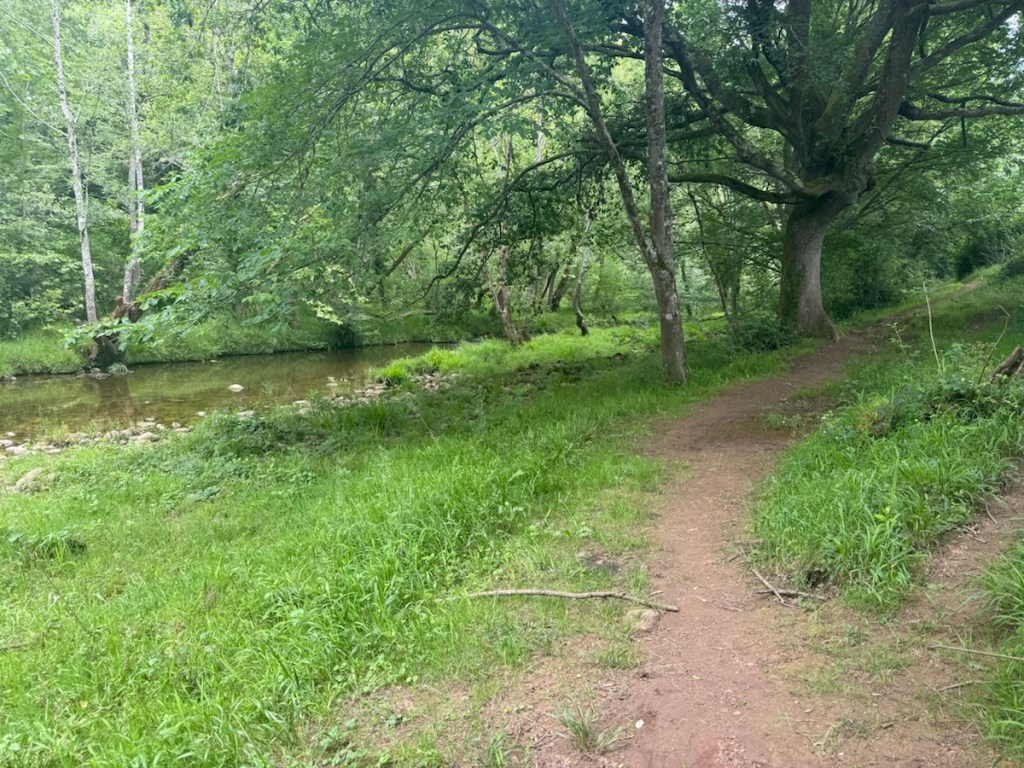
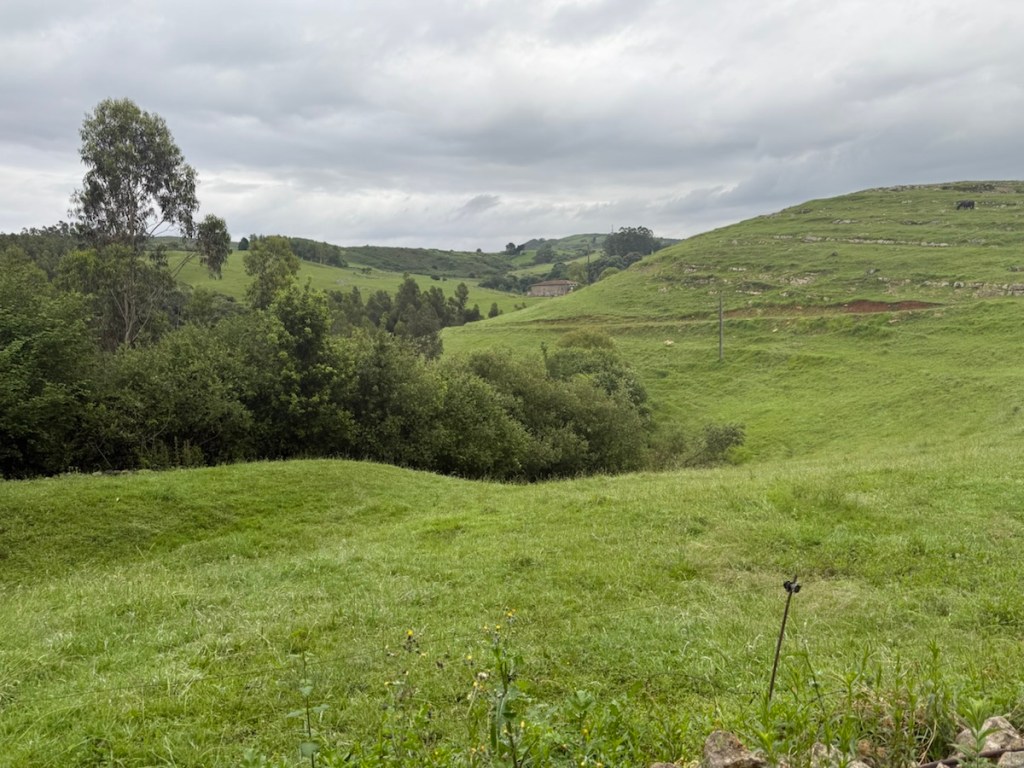
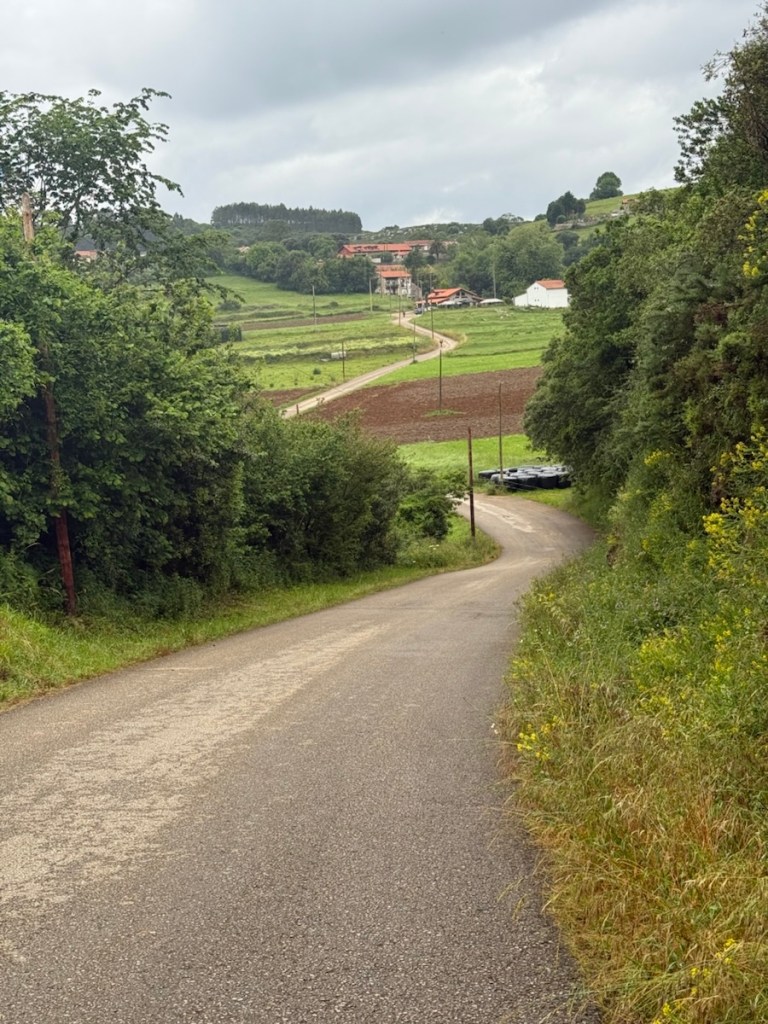
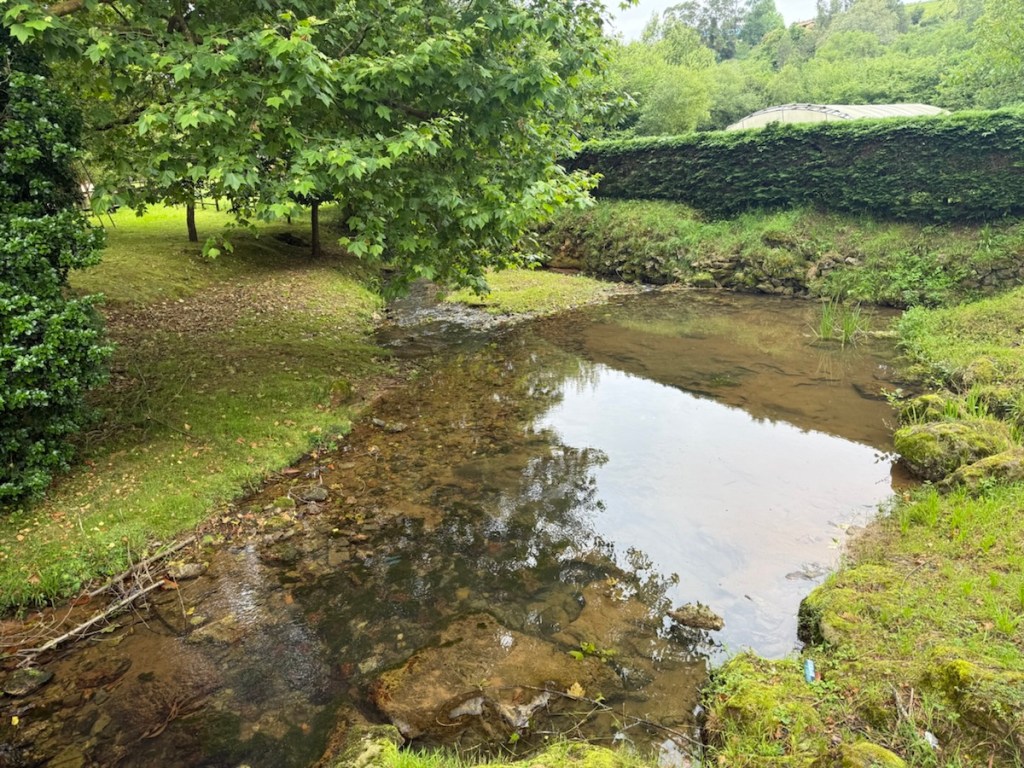
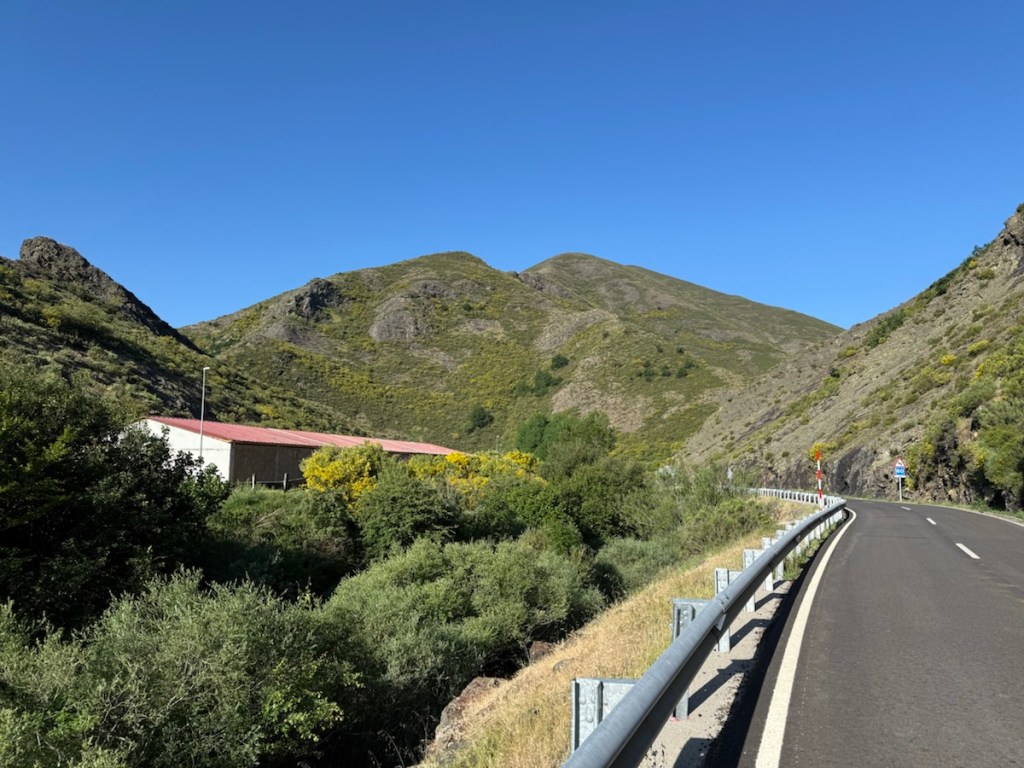
This morning I woke up with a spring in my step and that rare pilgrim feeling that my legs might actually work as intended. The trail was solo, peaceful, and gloriously sloped downhill, hugging a river that sparkled with darting fish and the occasional poetic reflection. Gone were the deep greens of the Picos’ north side, replaced by broom, pine, and stubborn little shrubs with a thirst for socks.
The one café on the route was shuttered until 2:00 PM (of course), but I made the best of it: venison sausage and smoked cheese from Potes, enjoyed al fresco on their patio furniture like a trespassing hobbit having second breakfast.

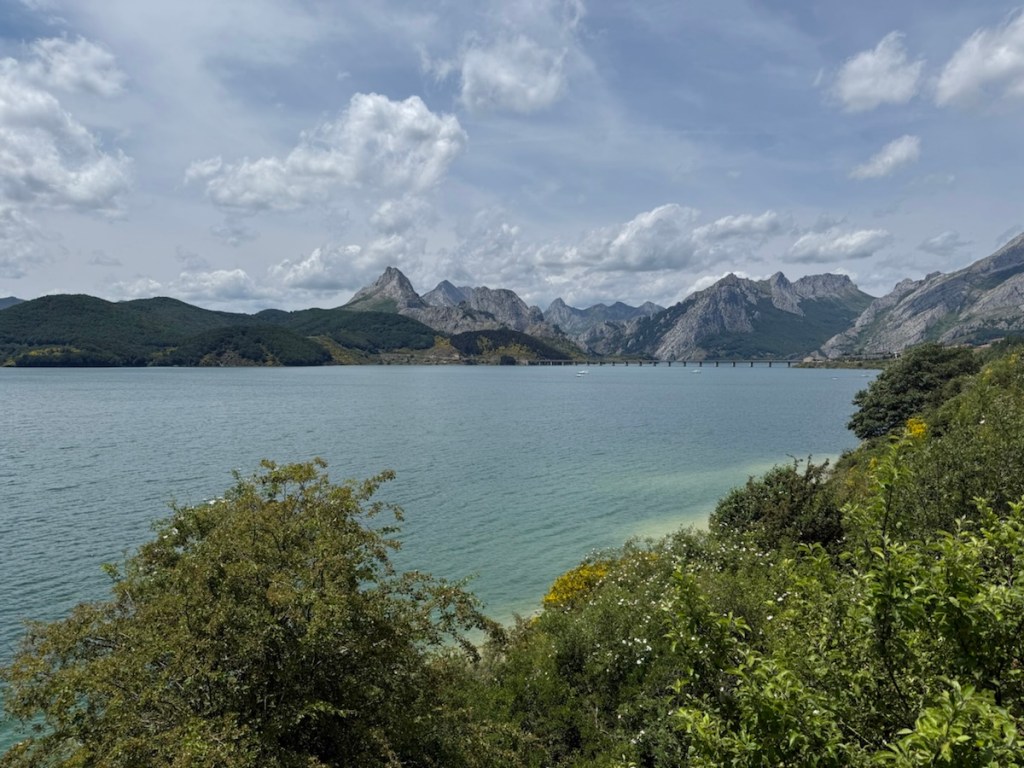
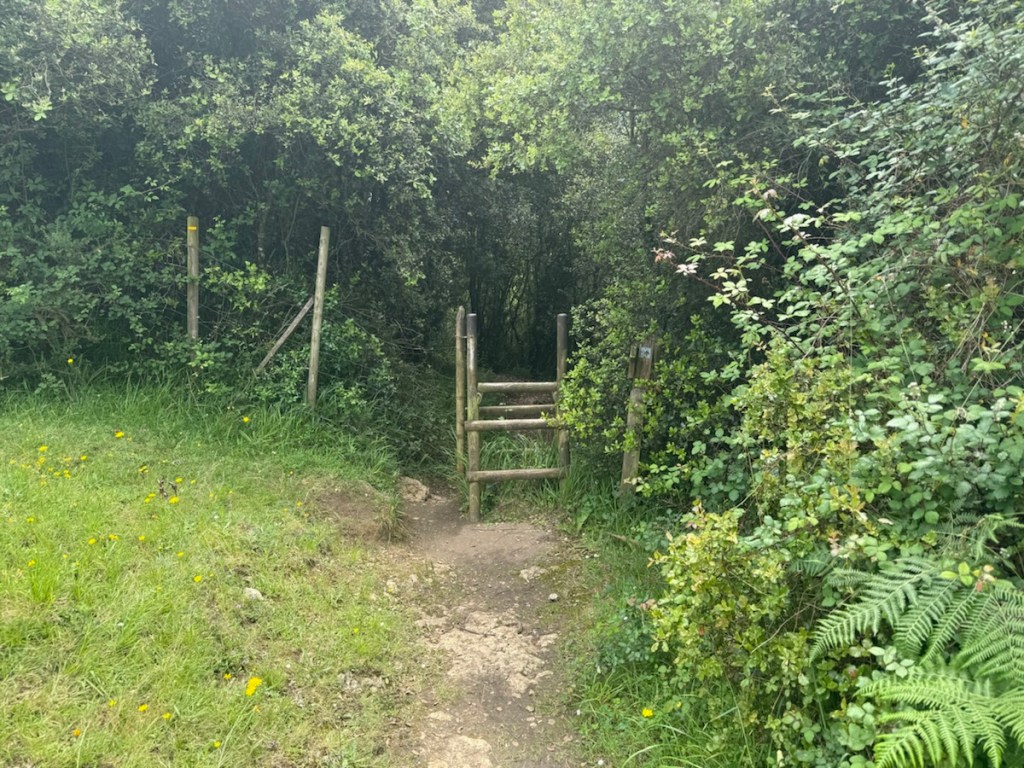
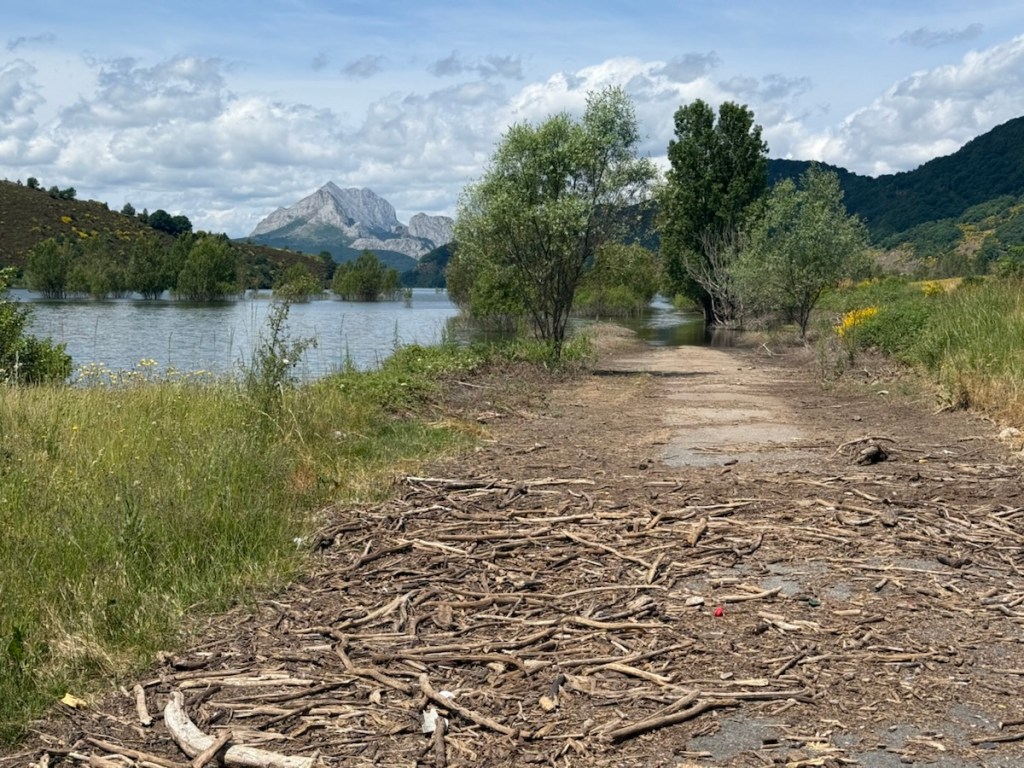
Then came the surprise: the Camino marched confidently toward a lake, and then into it. No warning signs, no detours, just a gentle aquatic vanishing act. I stood there for a moment wondering if I was meant to swim, but decided instead to trudge through an overgrown field that launched a full-scale assault on my ankles. My sandals welcomed dozens of needle-like stickers that provided a complimentary acupuncture session courtesy of Mother Nature’s less cuddly side.
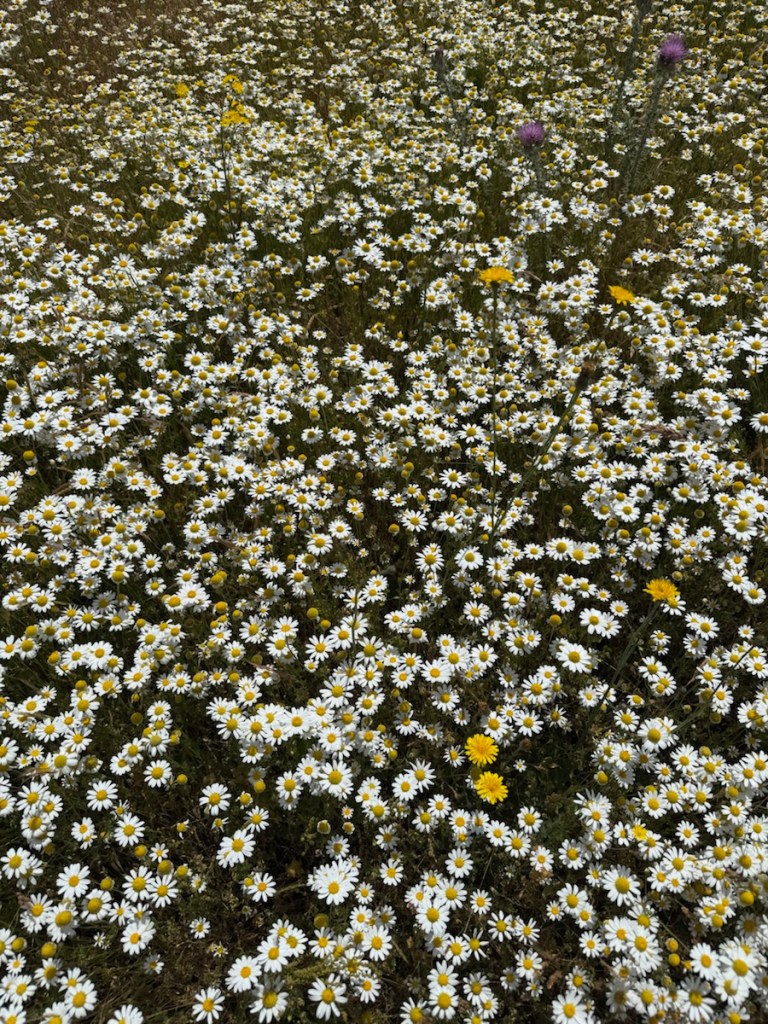
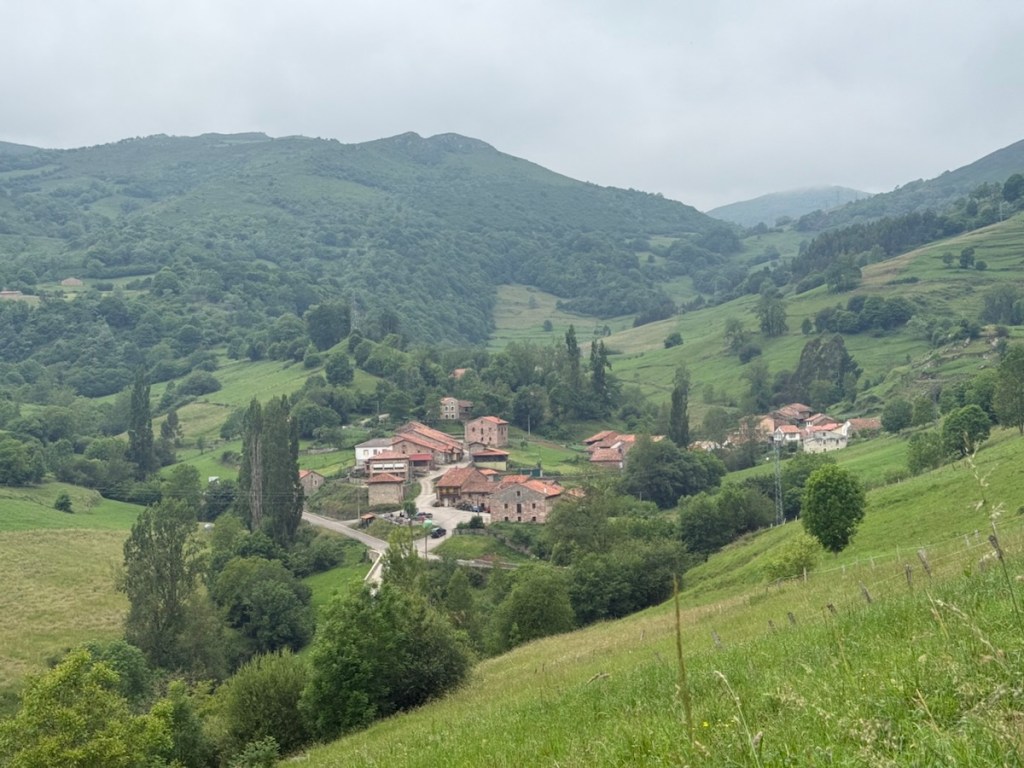
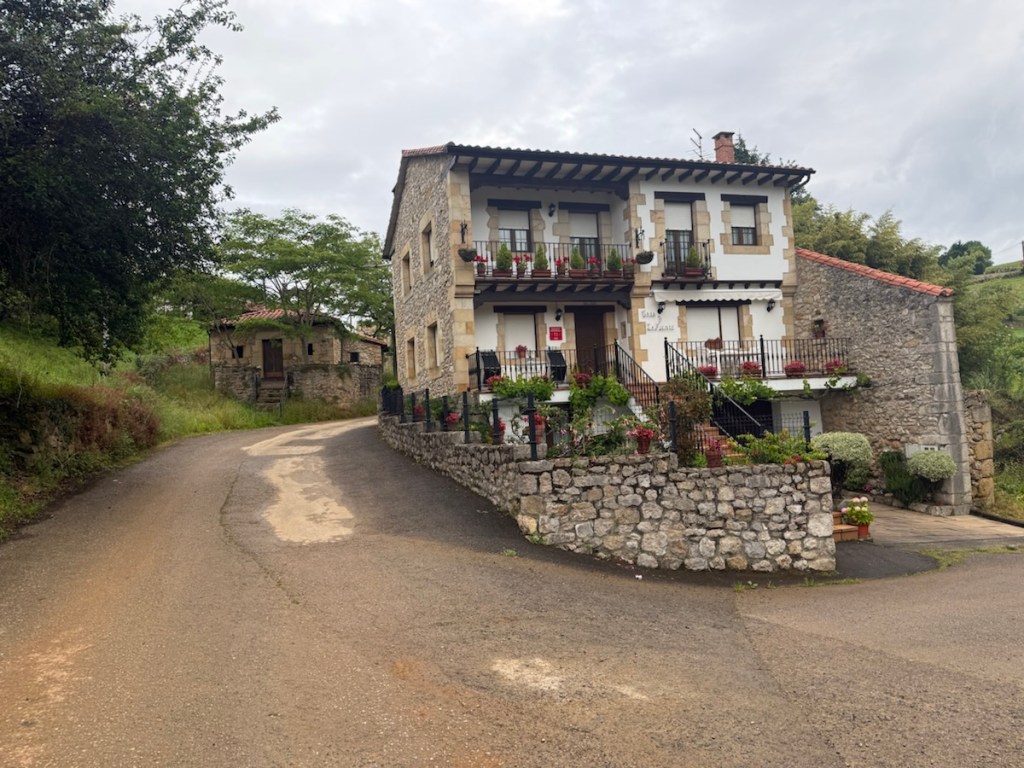
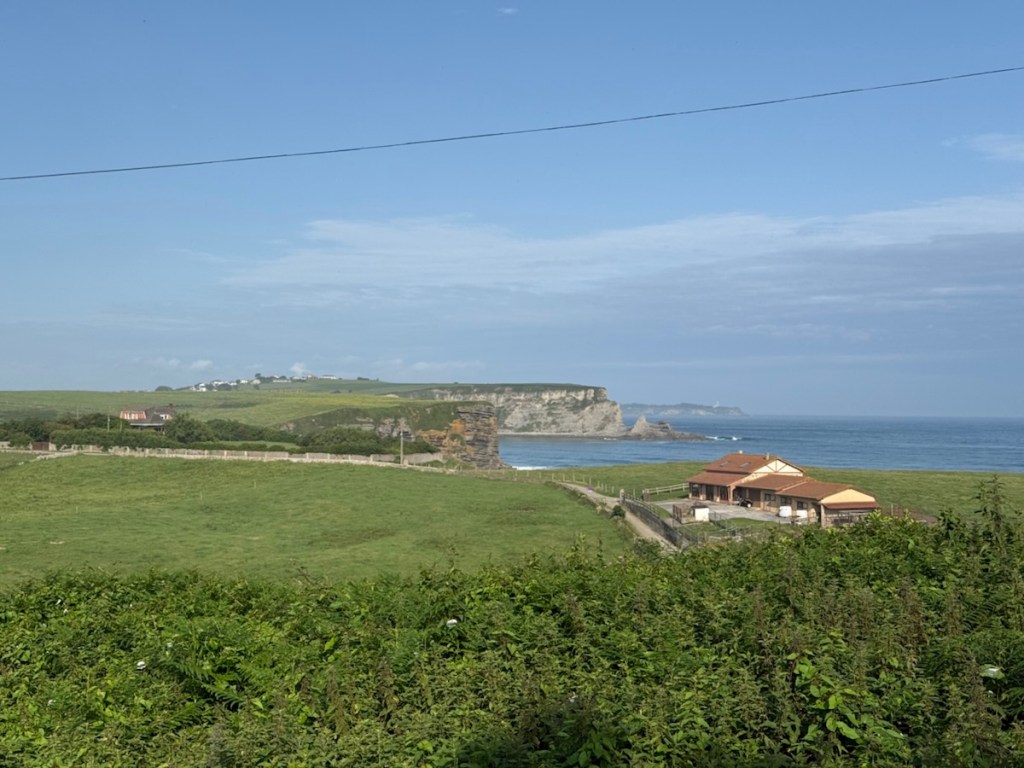
Raiño eventually revealed itself like a promised land. A restaurant appeared, and with it, an Ensalada Mixta—Luigi’s interpretation, heavy on surprise ingredients, light on lettuce. But it hit the spot.

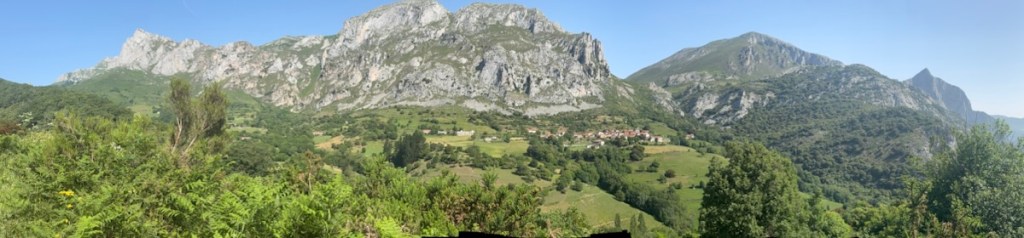
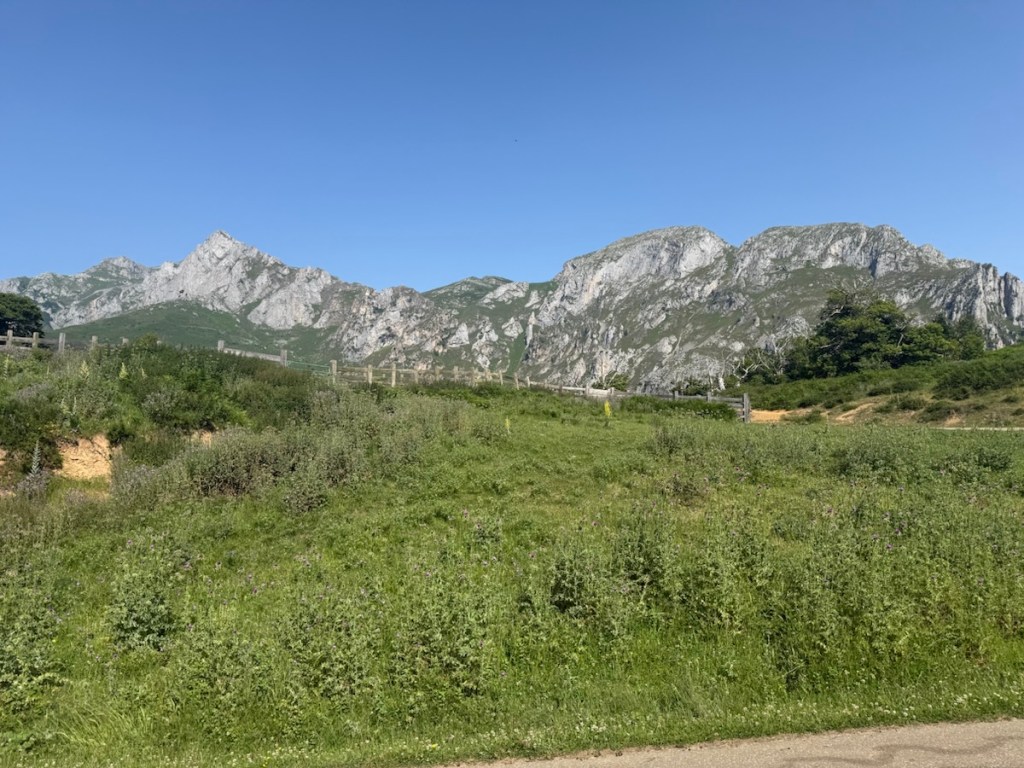
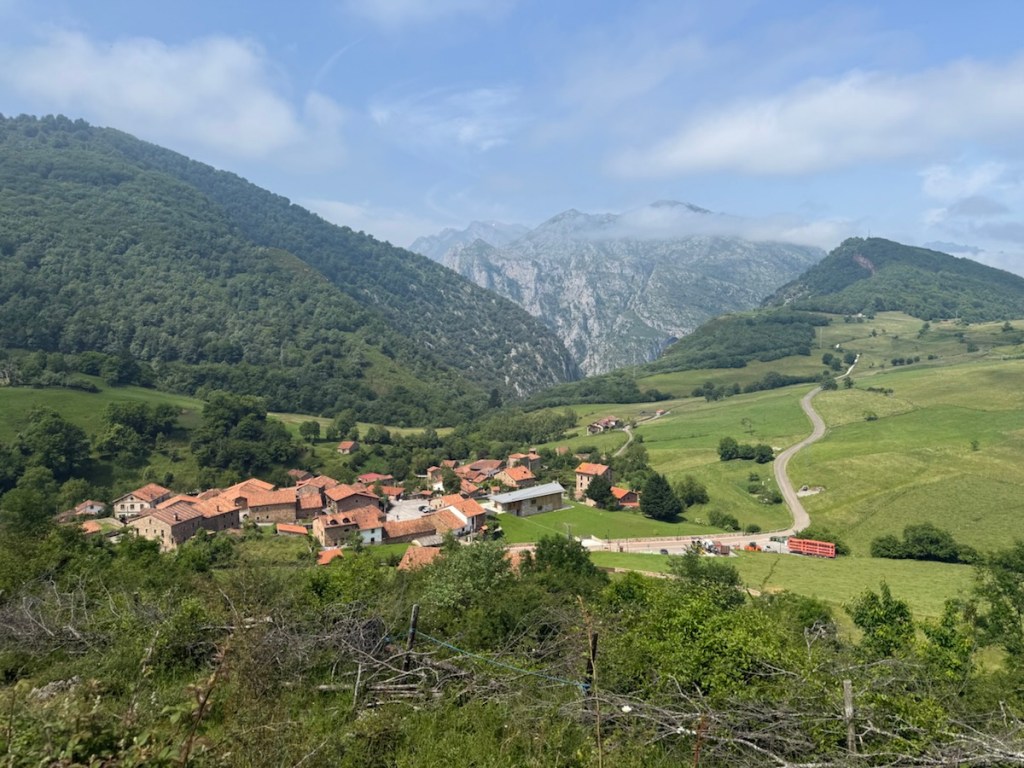
This town, with its stunning backdrop and bittersweet story (seven villages drowned for progress), now plays host to adventurers, kayakers, and folks like me, wandering in from the edges of maps. It is a place built on loss but shaped by purpose. Looking at the waters below and the peaks beyond, I could not help but feel thankful—for stickerless socks, hearty salads, and the quiet miracles of finding your way when the path disappears.

Day 12: Slippery Stones, Surprise Funiculars, and the Whispering Picos

Today was supposed to be a modest 15km jaunt with a “gentle” 700m climb. You know, one of those refreshing uphill strolls where you contemplate nature, your breath, and your will to live. But after dragging my legs up to Cosgaya the day before, I was bracing for a death march. Thankfully, my bed in Cosgaya was so comfortable it could have healed minor wounds. I slept like a saint and ate like a Roman senator. Morale: surprisingly high.

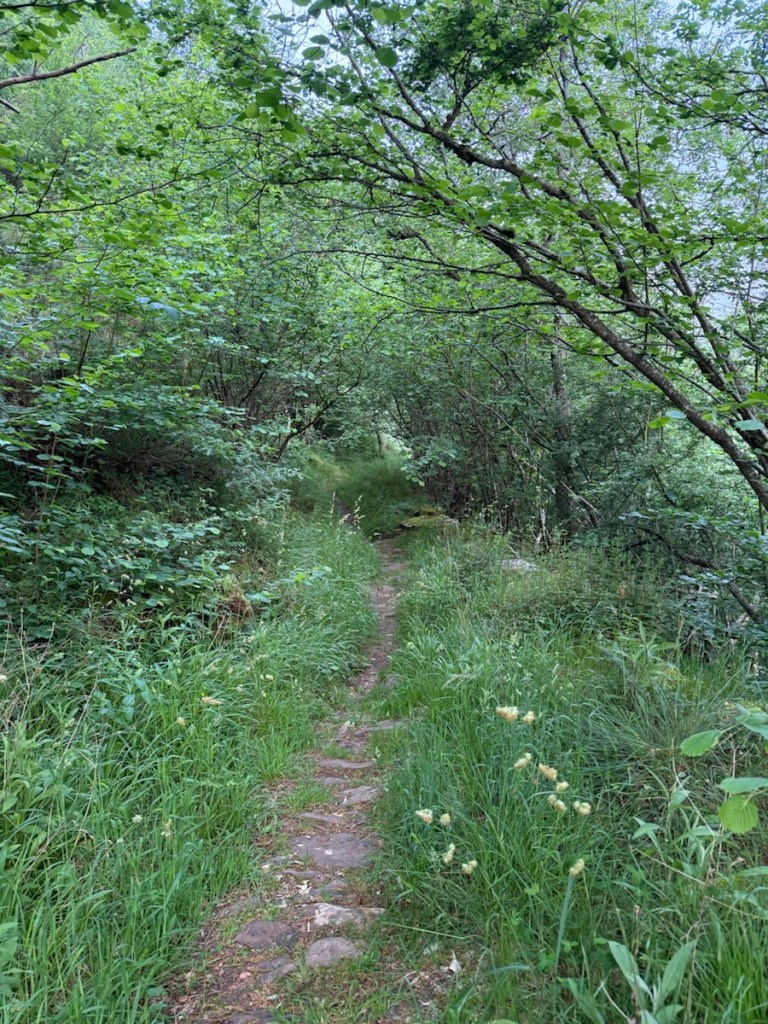
The morning began innocently enough. One click-clack kilometer along the road, and then I spotted the path that whispered promises: a river walk through the forest. I took it. And for once, the Camino delivered exactly what it promised, a soft incline beneath a cathedral of trees so green and lush they made Ireland look like a beige smudge.

But forest paths are tricky. The first obstacle? Shoulder-high weeds, deceptively cheerful, hiding blackberry brambles and stinging nettles like medieval booby traps. One minute you are admiring the dappled light, the next you are hopping around slapping your calves and whimpering like a goat caught in a briar patch.

Then came the river crossings. Several, in fact, but only one had real comedic potential. Locals had heroically placed stones to hop across, but the flattest-looking one in the middle turned out to have the moral integrity of a banana peel. I stepped onto it with confidence, and promptly performed a perfect sideways splash that would’ve scored a 9.4 from the Eastern European judges. My socks still squish.

The valley led to Fuente Dé, which translates roughly to “The Fountain Of” and then trails off like an unfinished sentence. But it marks the headwaters of the Río Deva, so let us pretend it means “Fountain of Epic Views,” because it absolutely is. Every turn in the trail revealed another fairy-tale village tucked under the skirts of the Picos de Europa each one apparently competing in a pageant titled Most Adorably Timeless Hamlet.

Fuente Dé sits in a dramatic glacial cirque at 1,000 meters, and the Picos loom above like mythic sentinels. And just when I thought I was done climbing, someone mentioned a cable car. A four-minute funicular shot me straight up another 800 meters with views that required seatbelts for your soul. At the top, I met back up with my German friend, and we celebrated with beers, dangling our feet over the edge, not of the cliff, but of the chairs inside the bar. We may be adventurous, but we are not insane.

Then came the logistical chaos.

I needed to get to Portilla de la Reina 26km away, with a beastly 1,300m climb, and it was already 5:00pm. No problem! I had Ottomar’s number, the man, the myth, the 4×4 taxi service. I texted him. His response: “Wasn’t that for tomorrow?” Panic set in. The receptionist overheard and casually informed me that Ottomar was unavailable due to a death in the family. Cue guilt. But Ottomar rallied. “I’ll send someone else.”

And send he did, his friend showed up on the dot. Not in a 4×4, but in a regular ol’ sedan that looked like it moonlighted as a grocery getter. So instead of the mountain pass, I got the 80km grand scenic tour around it, complete with commentary: “That’s where I grew up. That’s where I went to school. That river? That’s where I fished when I played hooky from school.”

Sometimes you do not need a mountaintop view to feel like you are exactly where you are meant to be. I got dropped off on schedule, checked in, and am now contemplating dinner at the criminally late hour of 8:00pm while my legs whisper mutiny and my bed whispers lullabies.

Spain, you beautiful, absurd, glorious land, you are wearing me out in the best way.

Day 11: Potes to Cosgaya – The Mountains Are Calling, but Apparently I’m Hard of Hearing

Today was supposed to be a low-key day. You know, a leisurely 15km stroll halfway up the Picos de Europa to ease into the harder climbs. A soft mountain hug. A gentle whisper of elevation. Instead, it became a 17km choose-your-own-adventure that featured disappearing Germans, Jesus’s lumber, and the kind of navigation that would make a squirrel roll its eyes.

Let me back up. I had initially planned to climb all the way to Fuente Dé in one go, but common sense, or maybe just the bruising fatigue of 10 days walking convinced me to split the stage. That, in turn, broke my lodging reservations and set off a logistical butterfly effect that would ripple all the way to my credit card.

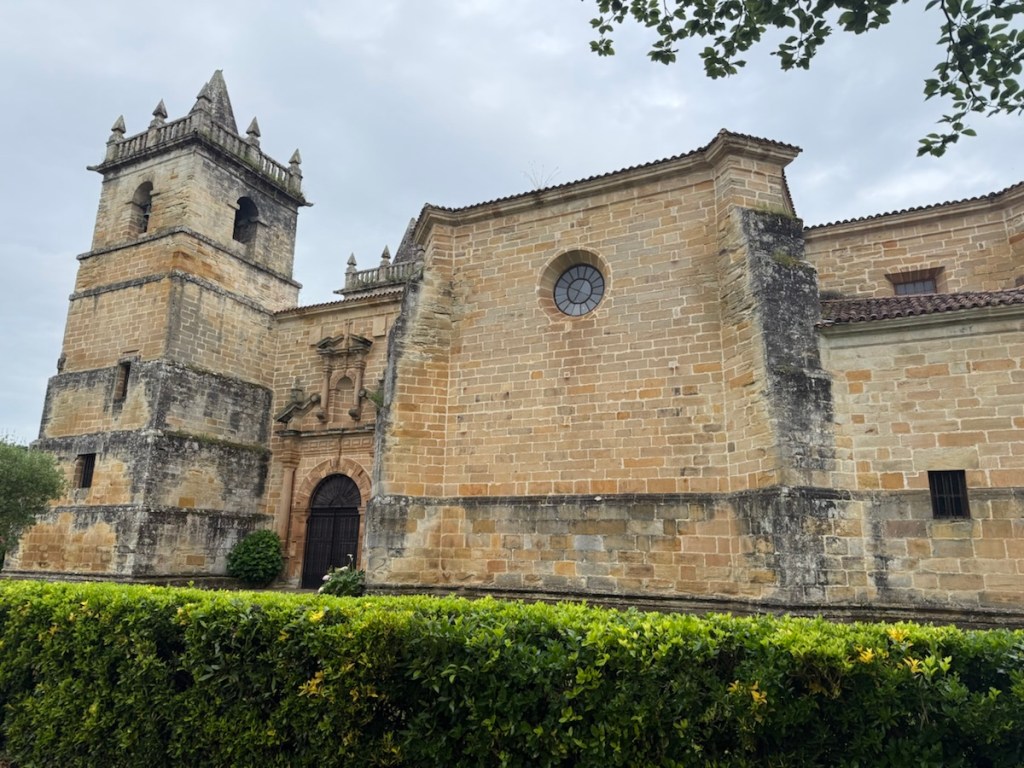
The trail out of Potes took me to Santo Toribio de Liébana, an old monastery housing what’s claimed to be the largest remaining chunk of the True Cross. That’s right, actual splinter from the crucifixion. No big deal. Just history’s most famous 2×4. Even more amusing? This makes the site one of the five most important pilgrimages of the Christian world. I have now stumbled upon three of them without realizing it. Apparently, I’m spiritually efficient by accident.

After some obligatory relic reverence and valley selfies, I noticed my German walking companion had vanished. Poof. Gone. No note. No bratwurst trail. Just me, the wind, and the yellow arrows which, fun fact, sometimes lie.

I spotted a set of stairs going straight up a cliffside and figured, “Well, this looks unpleasant. It must be the Camino.” So I climbed. About 150 meters straight up like a caffeinated mountain goat. At the top, there was a tiny chapel and, you guessed it, still no German. Just more yellow arrows leading deeper into the unknown. Like a moth to a holy breadcrumb, I followed.

Eventually, the terrain shifted from “rustic spiritual path” to “are we still on Earth?” and my map confirmed I was… let’s say “geographically creative.” The trail continued, but much like my optimism, it did not circle back. So I downclimbed. Slowly. With grace. Like a toddler on roller skates.

Eventually, I reconnected with the main road. Relief! Salvation! A brief moment of joy before I missed the next turnoff and wound up hiking alongside traffic like a hitchhiking monk. My legs were toast. My brain was jam. My GPS was judging me silently.

Cosgaya eventually arrived, tucked in the arms of the mountain like a sleepy hamlet in a postcard. I checked into the hotel and was immediately briefed by the receptionist (a true angel among mortals) that tomorrow’s route should follow the river, shaded, simple, and slightly uphill.

In theory. But we all know how that tends to go.

Day 10? on the Trail to Potes: Detours, Pumas, and Pickled Victory

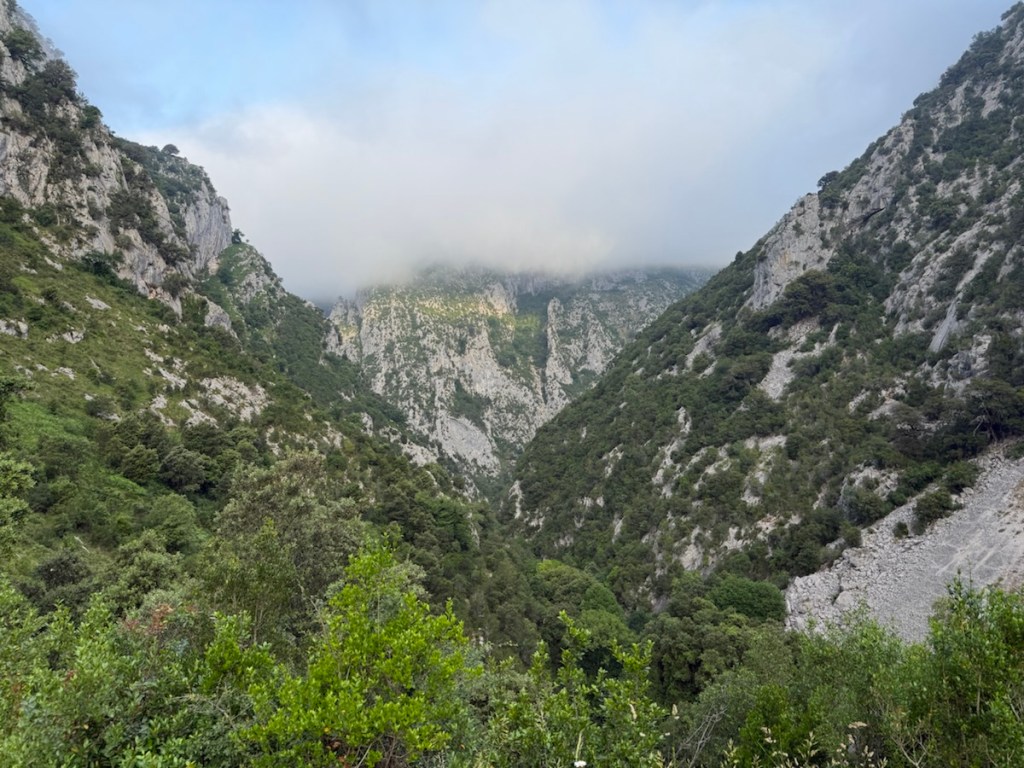
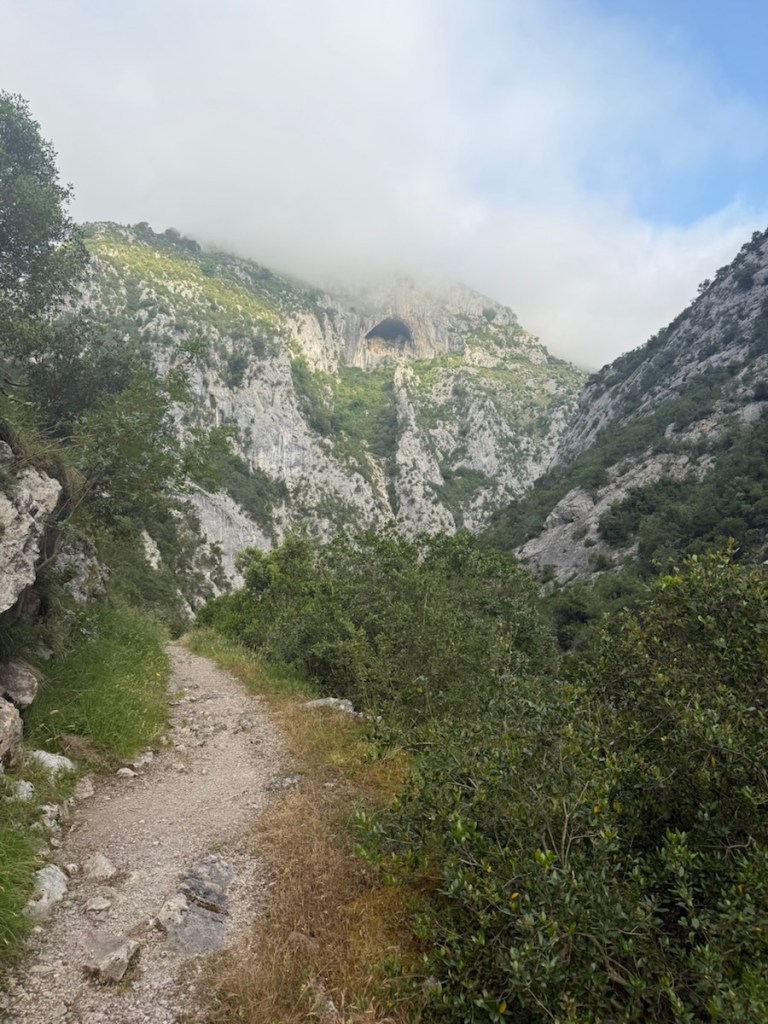
This morning began in a soft cocoon of fog, the kind that makes everything feel mysterious and a little enchanted, right up until you accidentally take the wrong trail and descend 400 meters into bear and puma country. Yes, you read that right. Signs warned of both, and let me tell you, I put on the longest solo concert of my life. I sang every song I could remember, folk tunes, half-remembered pop lyrics, and possibly the chorus of “Eye of the Tiger” more than once. My singing voice may not be concert-worthy, but it was clearly repellent enough to keep the local wildlife at bay.

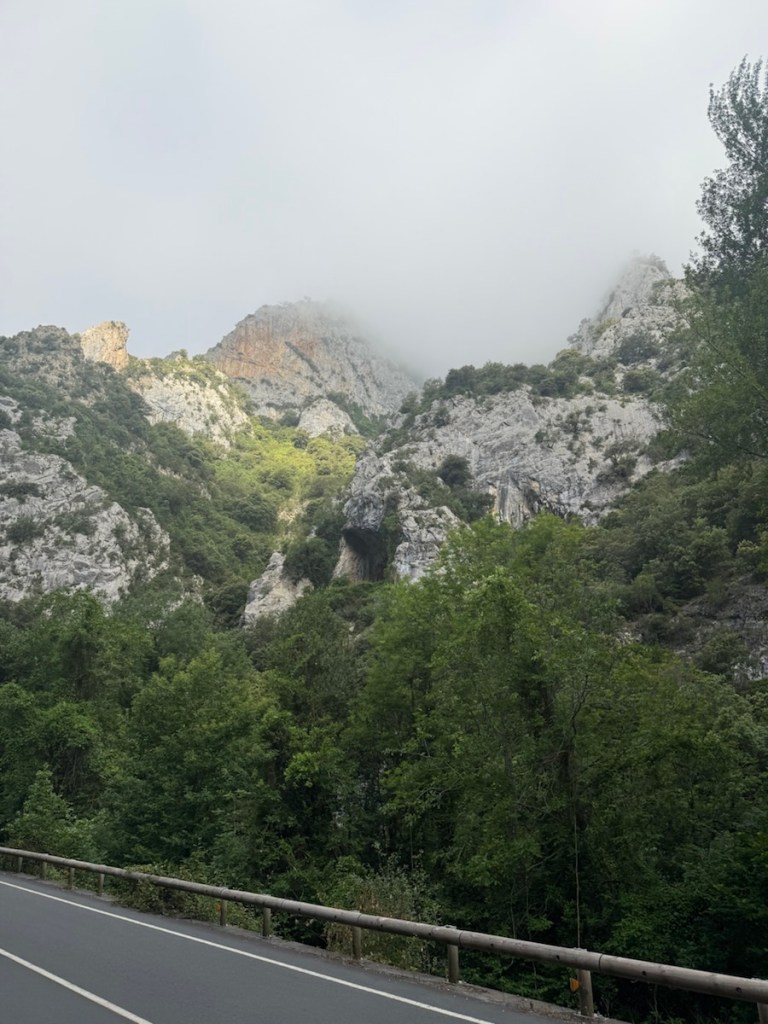
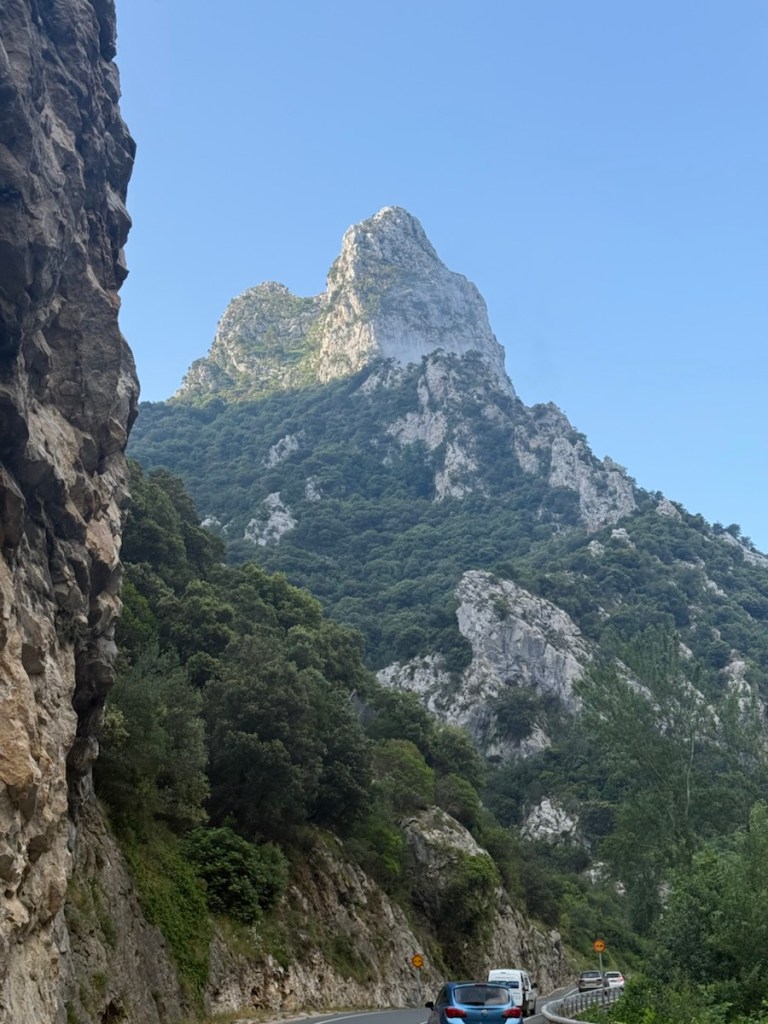
At the bottom of the canyon, the reward for my accidental detour was a quiet 3-kilometer stroll alongside a clear river, dwarfed by the limestone peaks of the Picos de Europa. The morning light played tricks on the cliffs, and for a moment, one of the benefits in this case of a route deviation was that I didn’t have to climb 400 meters and my route was shorter by multiple kilometers.

Then came the climb. Four kilometers. Four hundred meters up. A cheerful little 10% average grade while hauling a 10-kilo pack. I panted, wheezed, and paused every few meters to check that my heart had not relocated to my throat. I might not have seen a bear, but I did reach a primal state where I would have wrestled one just for an airlift.

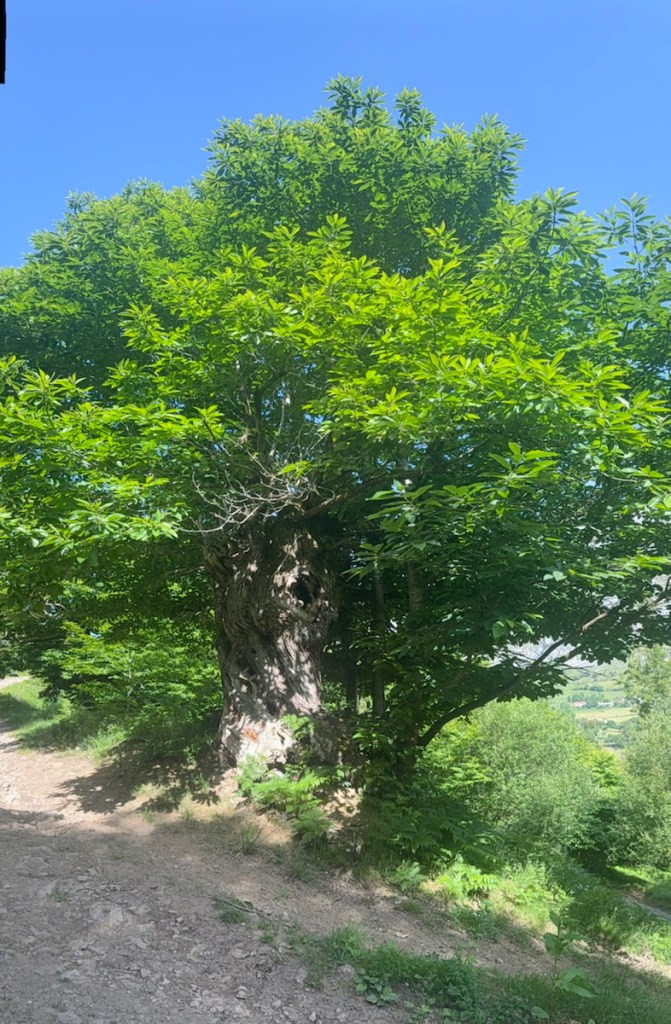
But at the top: oh, at the top! I walked through a grove of ancient chestnut trees, some more than 1,000 years old and wide enough to hide a Fiat behind. Locals take immense pride in them, and rightly so. These aren’t your average spindly tree-huggers. These are stumpy, tank-like titans, designed for harvesting and quietly judging pilgrims who “accidentally” add detours to their day.
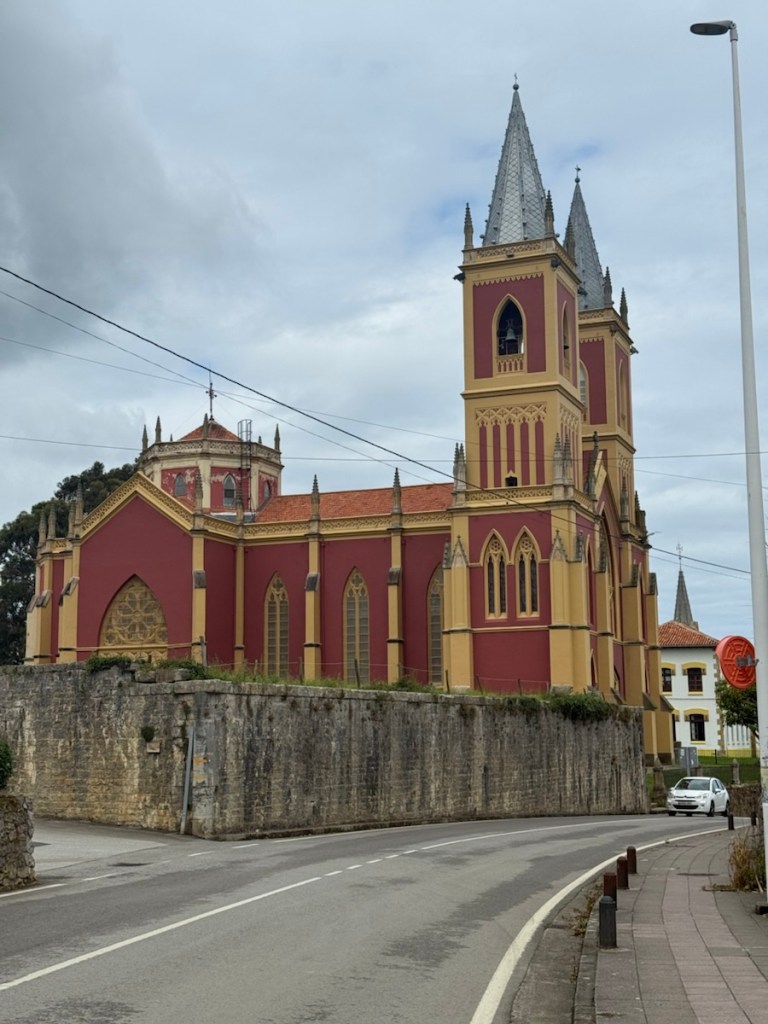
The descent was no gentler than the climb, except now my knees were applying for early retirement. And of course, because it was Tuesday, rural Spain’s day of sloth and shuttered bars not a café or cold beer was in sight. Six more kilometers in the kind of heat that bakes your soul, and I staggered into Potes.
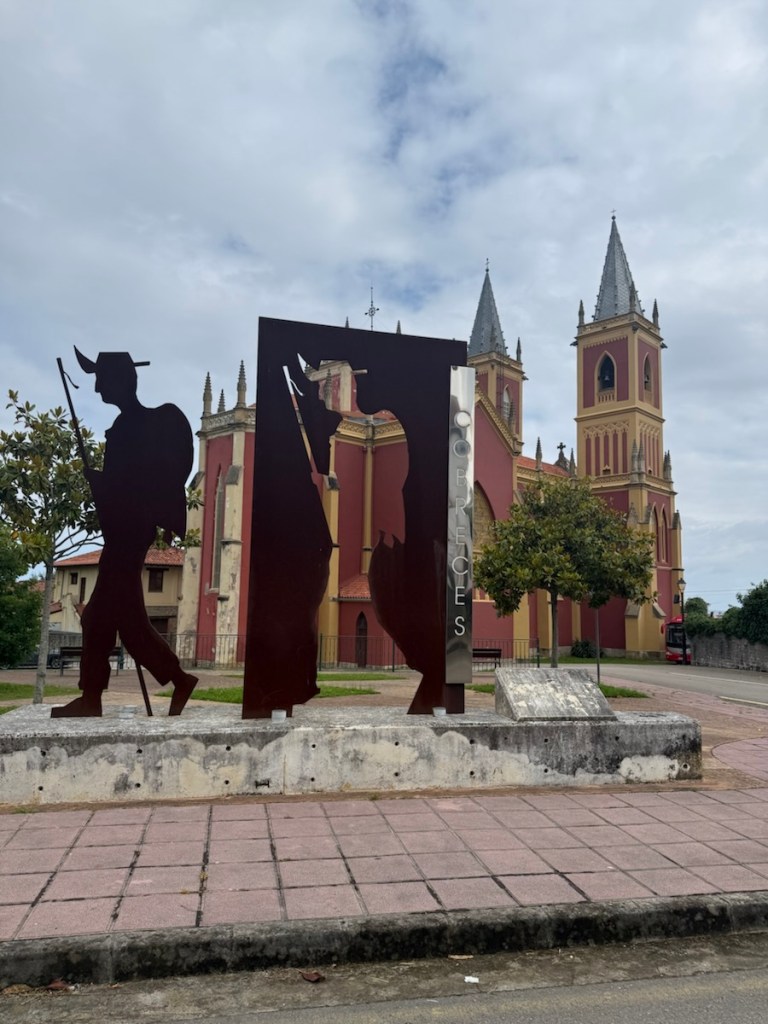
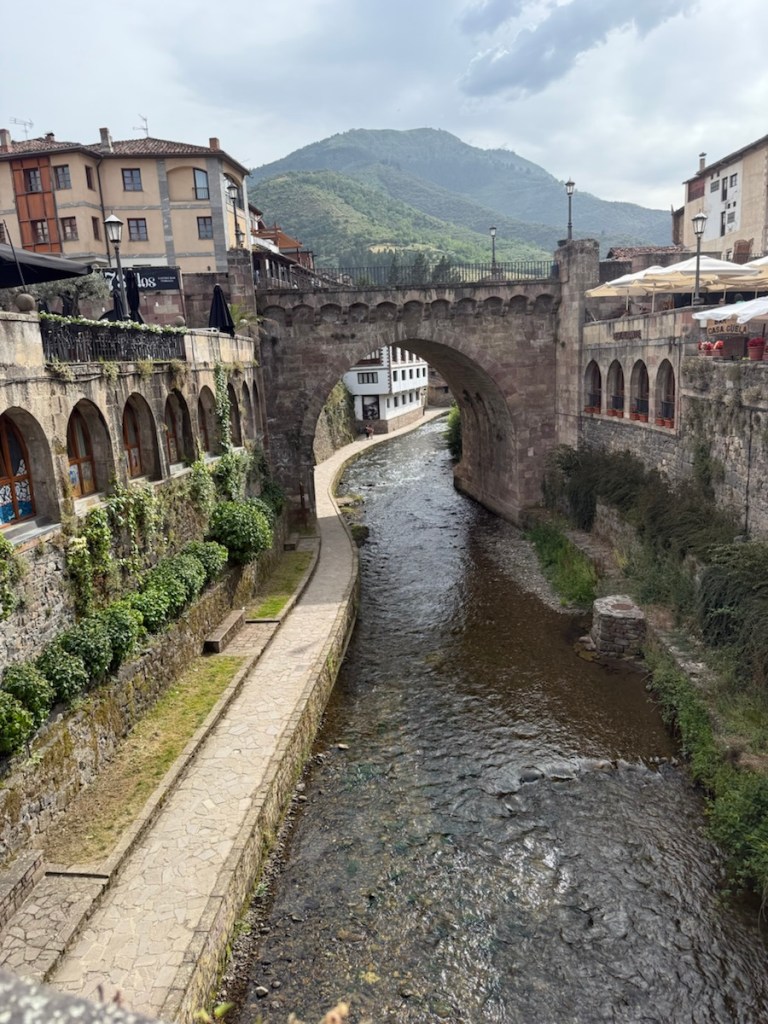
Potes: a town with big tourism energy and the promise of Orujo, Spain’s version of a stern talking-to in liquid form. I plopped myself down next to the old Roman bridge with a liter of beer and a bowl of pickled oddities, and waited for the rest of the world to catch up.
And then, as it often does on the Camino, serendipity strolled in, this time in the form of a 70-year-old German pilgrim with 12 Caminos under his belt and a wife perpetually asking, “Will this be your last?” He pitched a detour of his own: a cable car ride 2,000 meters up the Picos, followed by a celebratory beer at the top of the world. I was sold before he finished his sentence. Sure, I had reservations in the next town, but I allowed the Camino to guide me and I threw one to the wind and made other arrangements, including a taxi ride to catch up afterward. YOLO, as the kids say.

So yes, maybe Potes itself is more postcard than pulse, but between the majestic peaks, ancient chestnut sentinels, German wanderers, and cold beers earned the hard way, it turned out to be exactly where I needed to be.

I am sore in places I didn’t know existed, but I am here, I am alive, and I am grateful, grateful for detours, for the silence of forests, for unexpected wisdom over a beer, and for the kind of beauty that sneaks up on you when you are too tired to resist.

Day 9 – Valleys, Views, and the Mystery of Otto’s Taberna

Today’s walk was a short one, only 16 kilometers which on paper looks like a gentle stroll through the Cantabrian countryside. But the last 5 kilometers had other plans. A cheeky 500-meter ascent reminded my calves that they are, in fact, attached to an aging body with a deep fondness for café con leche and not nearly enough respect for elevation profiles.

The path followed the whisper of a river, one of the smaller tributaries of the one I’d walked beside yesterday. I could not see it, but it was always there, humming through the trees like a background song stuck in your head. The kind that reminds you of something old and important, though you cannot say exactly what.

My first stop came at the halfway mark, where I plopped down on a bench outside a tidy stone house. An older woman appeared, as if summoned by the gravitational pull of pilgrims needing a chat. We talked for twenty minutes. I have no idea what about. I think at one point she asked if I preferred cows or goats. I said both, which seemed to satisfy her. She reminded me of all the abuelas I’ve ever known, gentle eyes, practical shoes, and the ability to hold court from a bench like it was a throne.

Break number two happened halfway up the hill, where I discovered a little fountain and another bench. This one, however, doubled as a nap trap. I sat down, let out a sigh, and promptly dozed off. The kind of sleep that comes when your body decides your opinion no longer matters. I startled myself awake snoring, just in time for two pilgrims to walk by. I fell in beside them and we laughed our way up the remaining climb together, bonded by my public display of nasal enthusiasm.

From the summit, the view back was worth every uphill grunt and groan. Behind me, the valley I had just walked through unrolled in layers of green. Ahead, the Picos de Europa rose like a myth, snow-dusted peaks looking down on red-roofed farms tucked into the folds of the hills. This is the kind of place that makes you forget your Wi-Fi password and remember your grandparents’ voices.

The albergue sat right at the entrance to town. Door locked, sure, but bags already inside like a reassuring wink from the Camino gods. Not wanting to wait around for it to open, I followed rumors of the local watering hole: La Taberna de Otto. The only bar in a village with maybe 100 residents, and run by a young Argentinian couple who apparently woke up one day and said, “You know what? Let’s run a pub at the edge of the known world.”

Now to waiting game. At a more respectable hour, I’ll head back uphill back to the albergue and get situated. And since Otto’s is the only food in town, I’ll be headed back down for dinner later.

Tonight, the mountains feel close. The stars feel old. And I feel lucky.

Day 8: San Vicente de la Barquera to Cades – The Camino Lebaniego Awakens

The first half of today’s 25km trek was about as thrilling as watching moss grow on a damp tortilla. Rolling countryside, pleasant enough, but uneventful. I was warned, somewhere between a guidebook and a fellow pilgrim with wild eyes that services were scarce, so I stopped at the 8km mark to perform the sacred Camino ritual known as the Impulse Snack Grab. Orange Juice, cafe con leche, tortilla, and TWO mystery meat sandwich to go, I was provisioned and ready to make poor decisions deeper into the wilderness.

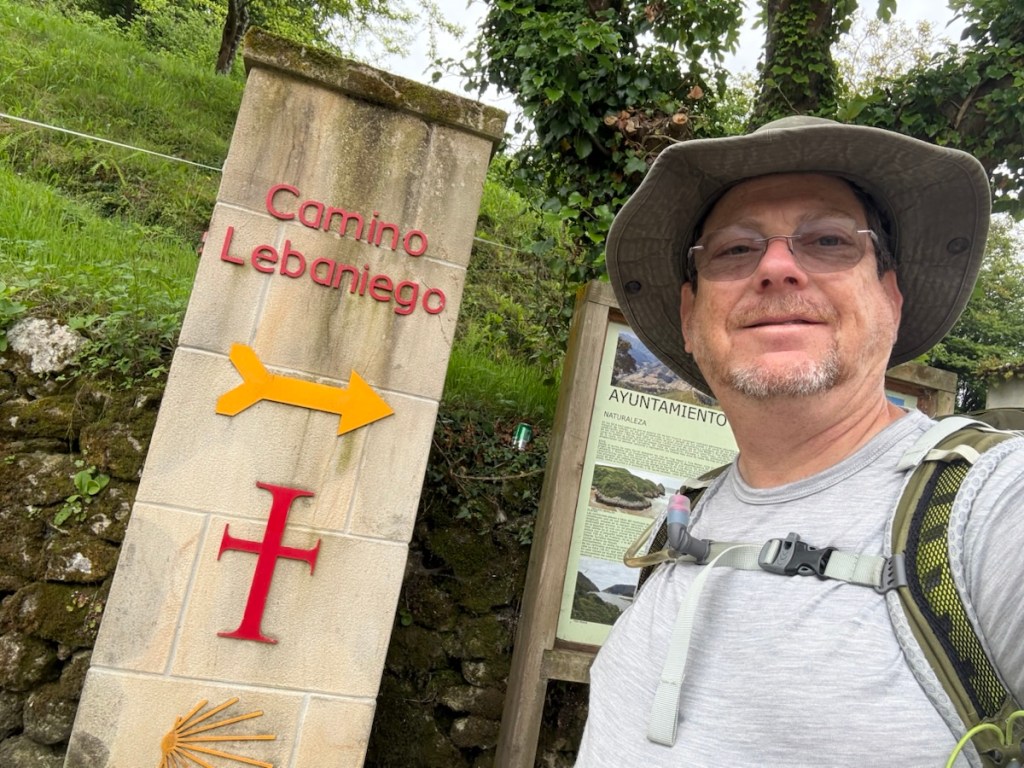
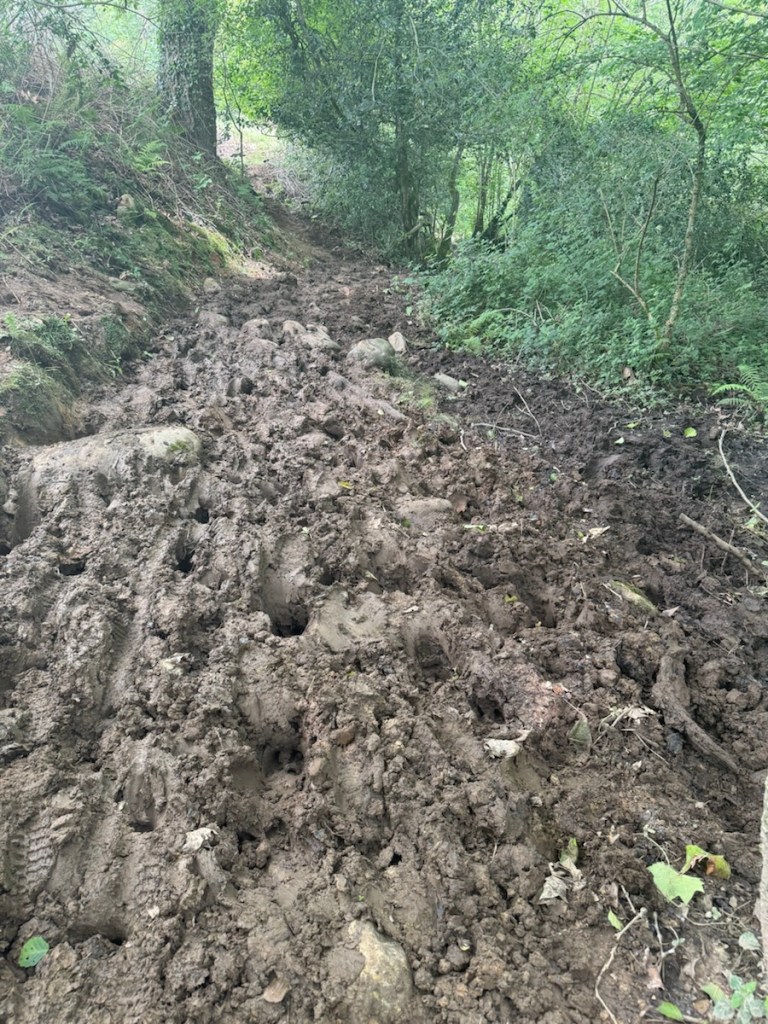
And then—bam—like stepping through a wardrobe into a Narnian fever dream, I left the Camino del Norte and joined the Camino Lebaniego. It was not a subtle transition. One moment I was gliding along on neatly paved asphalt, and the next I was ankle-deep in what I can only describe as nature’s revenge: a pungent blend of mud, cow pies, and the kind of squelch that makes you check if you still have toenails.

This trail did not mess around. It was single track, overgrown, and designed by someone who clearly hated knees. There were climbs that required more prayer than traction, descents that defied geometry, and sections so steep I briefly considered installing a rope system and selling rappel tickets to passing goats.

And yet, good Lord was it beautiful. The forest was a swirling kaleidoscope of green: mossy rocks, fern canopies, ivy-laced trunks, and fields that looked like Disney animators had sketched them at peak whimsy. I half expected Bambi himself to prance out and offer me a protein bar.

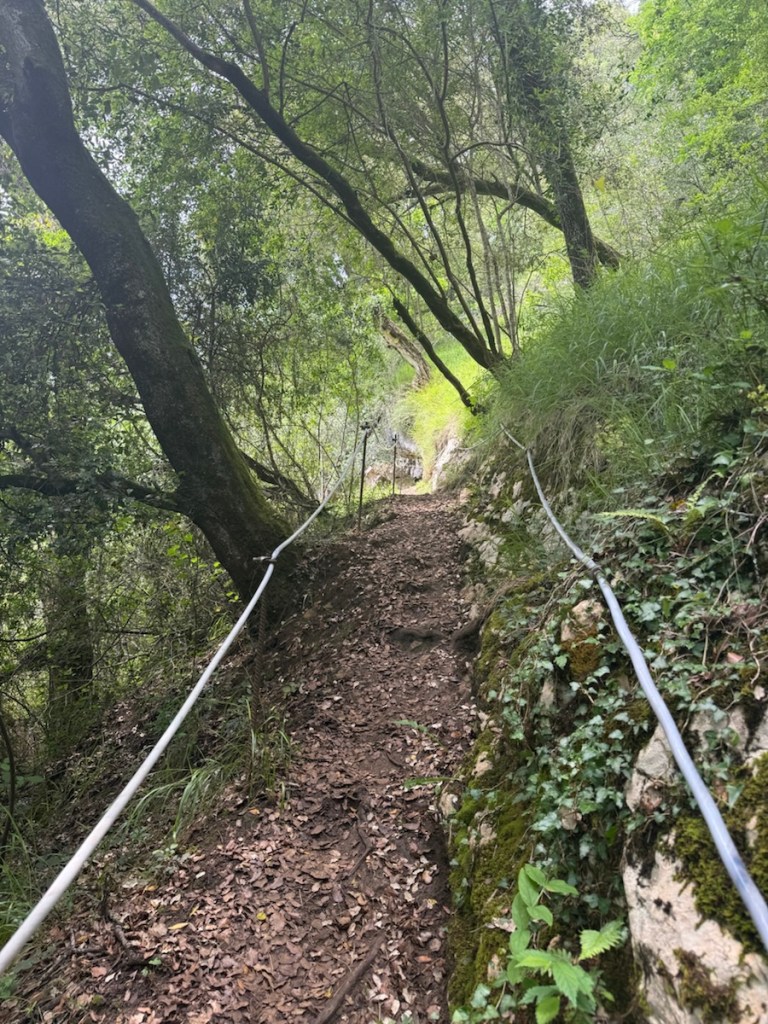
The trail snaked along the Río Nansa, which was either beside you, far below you, or taunting you from a hidden ravine. At one point I found myself clinging to a safety cable bolted into the limestone cliff, contemplating life choices and trying not to sneeze in case I launched myself into the abyss. The cable was more of a polite suggestion than a safety measure. OSHA would have needed therapy.

By the 20km mark, I had begun negotiating with my thighs. They had unionized and demanded a siesta. So I honored their demands with a riverside lunch: a ham and cheese sandwich that had spent the morning marinating in backpack heat and friction. It emerged looking like it had been sat on by a medium-sized bear, but let me tell you—it tasted like victory and questionable choices.

Today may have been the most breathtaking, bone-rattling, mud-caked segment so far. It was quiet, wild, and absolutely unfiltered. Bridges were made from rebar, branches, and (possibly) hope. The trail was both punishment and reward—like being mugged by a forest elf and then hugged by it afterward.

And so I rolled into Cades muddy, tired, and completely alive.

Day Seven: Santillana del Mar to San Vicente de la Barquera

This one falls squarely into the category of “Pilgrims vs. Tourists: The Ongoing Summer Saga.”

The plan was a tidy 24-kilometer stroll to the coastal town of Comillas. I had visions of breezy seaside cafés and maybe even drying my socks in the sun while pretending to be deep in spiritual thought. But somewhere around the halfway point, I caught up with a few folks I had dinner with the night before. They looked at me with the same expression you might reserve for telling someone their dog ran away: “There are no beds in Comillas.”

Just like that, my peaceful seaside plan crumbled like a day-old tortilla.

I pulled out my phone and began the classic Camino accommodation scramble—dialing places while walking, checking apps, trying to convince myself that €125 was a “spiritual investment.” I did find one bed. It came wrapped in a private room, plush sheets, and a price tag that made my backpack spontaneously gain weight. I stared at the listing, sighed like an old monk, and then did what any committed pilgrim would do: I kept walking.

The next logical stop was San Vicente de la Barquera, another 13 kilometers down the coast. No big deal… unless you already had 24 km in your legs and a body that had very clearly voted against an ultra-marathon day.

Still, something shifted. Once I made peace with the extended walk (or at least the possibility of one), the day settled into a kind of grace. Rolling farmland gave way to green forests, and the coast reappeared in the distance like a reward for not stressing. I had lunch with some pilgrims I met along the trail, and though we did not walk together, there was that unspoken kinship of people choosing the same path, for their own reasons.

After lunch, I made a decision that every pilgrim faces eventually: I called a cab. No shame in it. My feet were doing a great impersonation of roasted peppers, and a 37-kilometer day was not going to make me a better person.

San Vicente greeted me with salty air and a sense of transition. This is more than a geographic waypoint—it is the point where I leave the Camino del Norte and veer south toward the Camino Vadiniense and eventually the Olvidado to a place called Cistierna. I have been here before, in 2022, when I walked the Olvidado and stayed in Cistierna. There is something comforting about returning to a place you know from years prior.

Ahead lie the Picos de Europa, those unruly mountains born from tectonic drama and time itself. I will walk among them soon enough. I will walk, or wander through, up, and over them for the next seven days.

But tonight? Tonight I rest, grateful to have found a bed that did not require a loan application.

Day Six: Güemes to Santillana del Mar (with a Santander Shuffle)

The official stage today was supposed to be a modest 18 km stroll. Reasonable. Sensible. But I am a Coati, not a sensible person.

Instead of heading straight for Santander like any rational biped might, I decided to make a day of it—mixing a pinch of nostalgia with a generous helping of sand-in-your-shoes wandering. You see, Santander holds a special place in my heart. About nine years ago, my oldest flew in from Oxford for Father’s Day, and we spent three glorious days drenched in both rain and joy. It was one of those slow, soggy, beautiful memories that stick with you like wet socks.

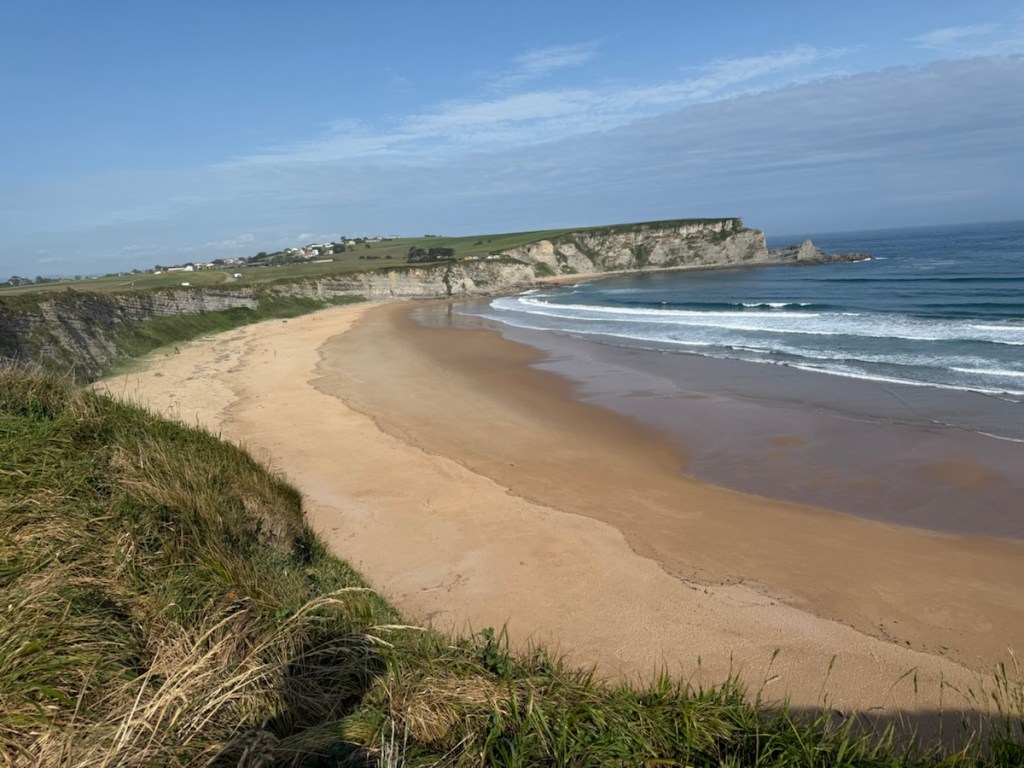
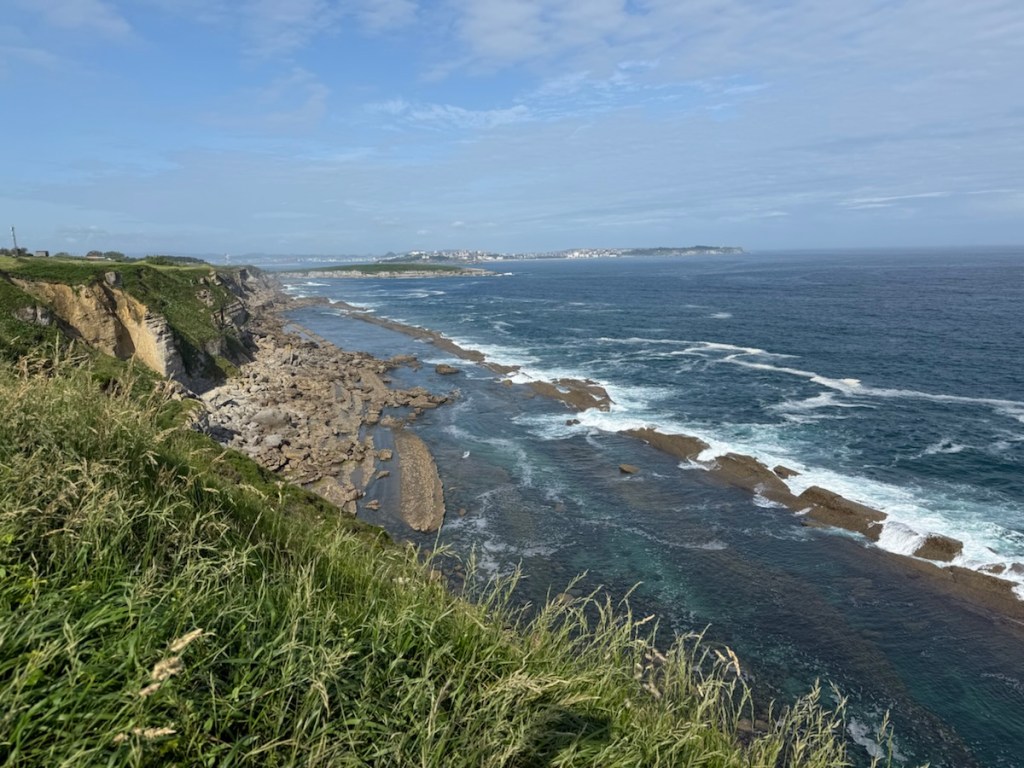
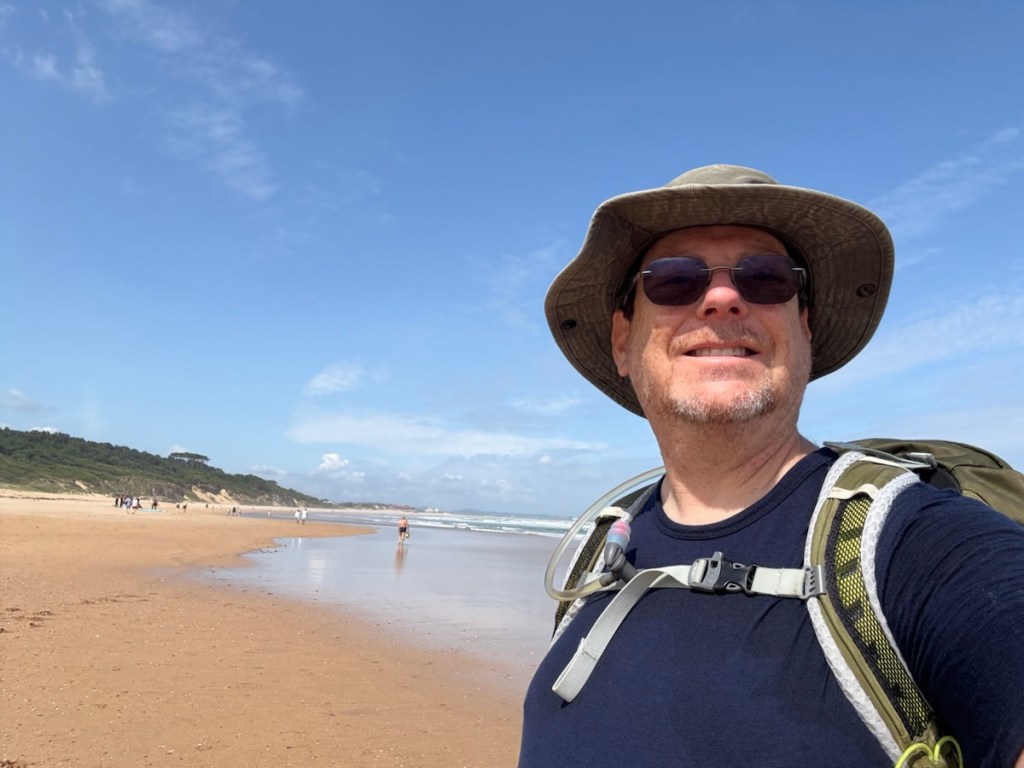
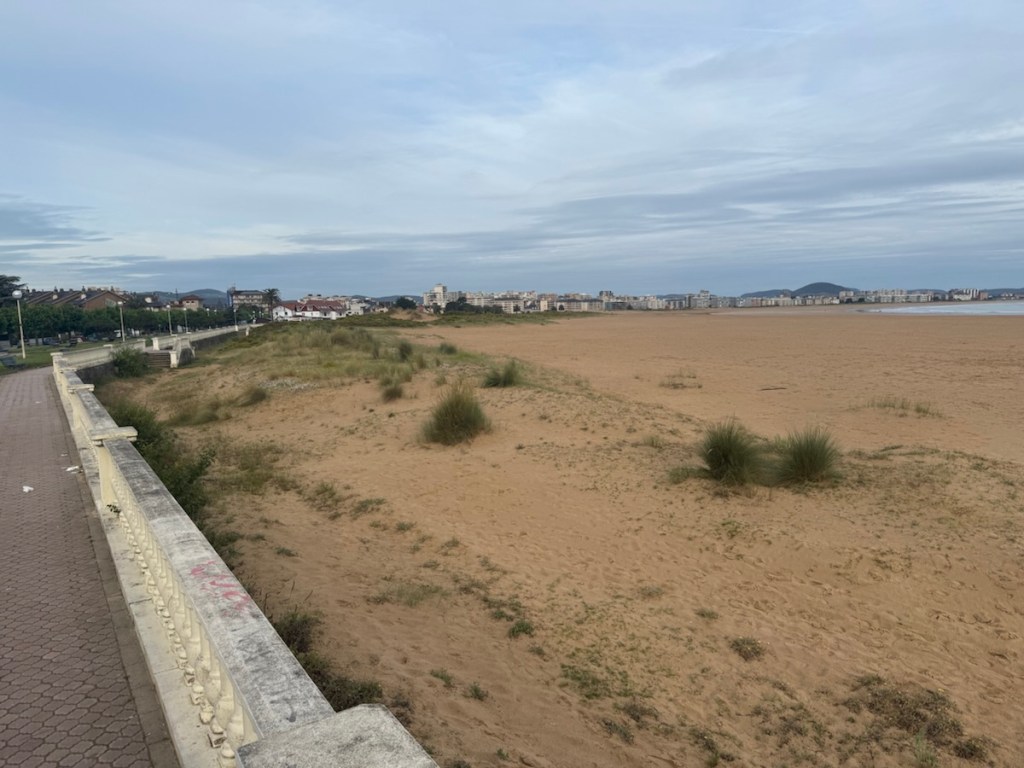
Today, though, the skies stayed clear as I wound my way through the rolling green hills and coastal paths, catching glimpses of the Cantabrian Sea doing its best impression of a postcard. The last stretch was a five-kilometer wander along the beach, where the surfers were just starting to thaw out after winter and the scent of summer was beginning to bake into the sand. The beach had that “before the chaos” calm—sunbathers scarce, surfboards plentiful, and just enough salt in the air to season the soul.

I hopped the ferry into Santander, shared lunch with some newly-minted pilgrim friends I met mid-crossing, and we immediately launched into that sacred Camino ritual: comparing sleeping arrangements. It was like playing musical chairs with backpacks, except half the chairs had already been reserved by tourists who booked in March.

With Santander overrun and albergue beds as scarce as dry socks in a Galician storm, I turned to my stages spreadsheet and squinted. I had a choice: walk 36 km today or walk 36 km tomorrow. Which is to say, I had no choice at all. My knees unionized and staged a protest.

So I made a perfectly legal Camino maneuver: I took the train.

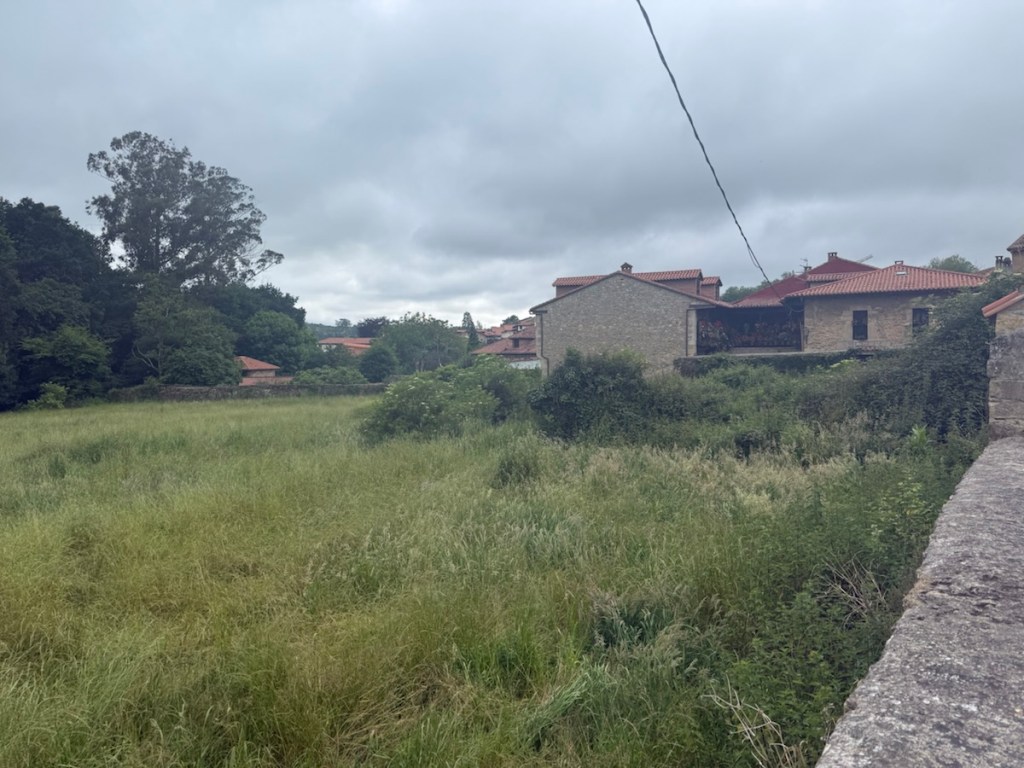
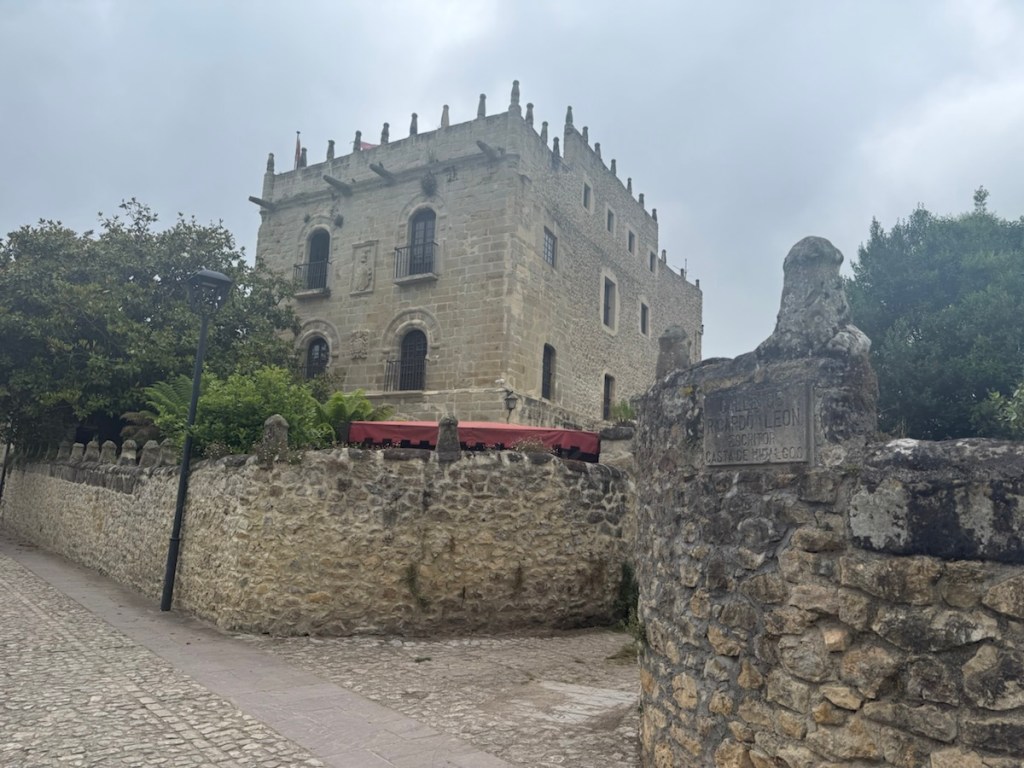
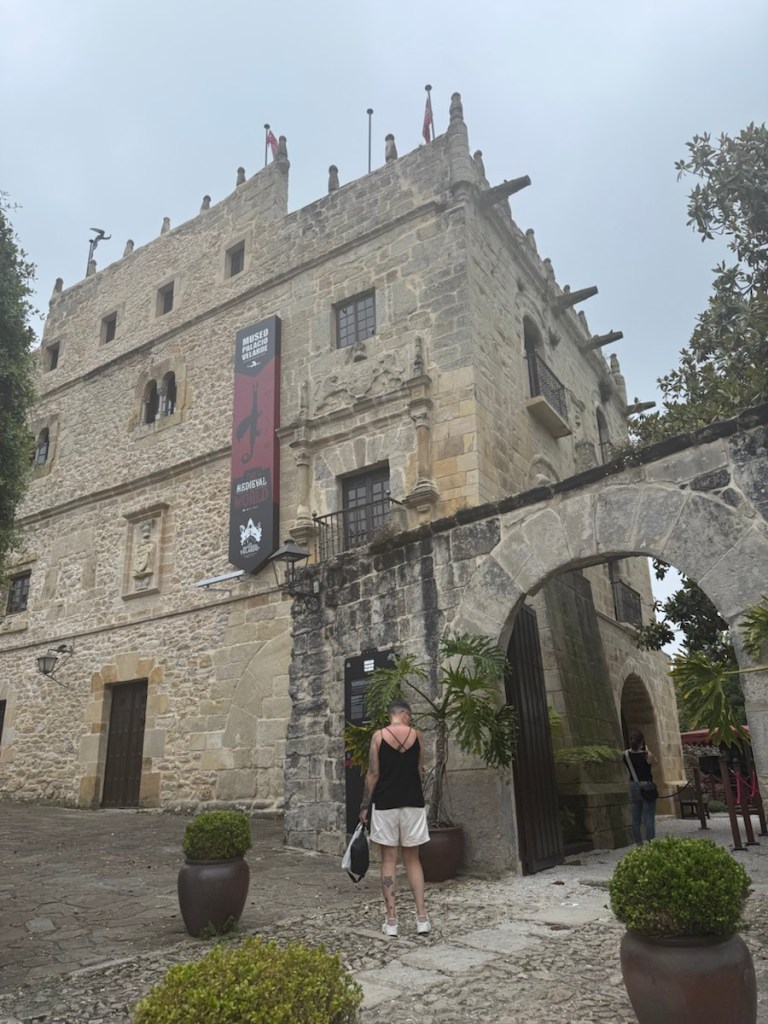
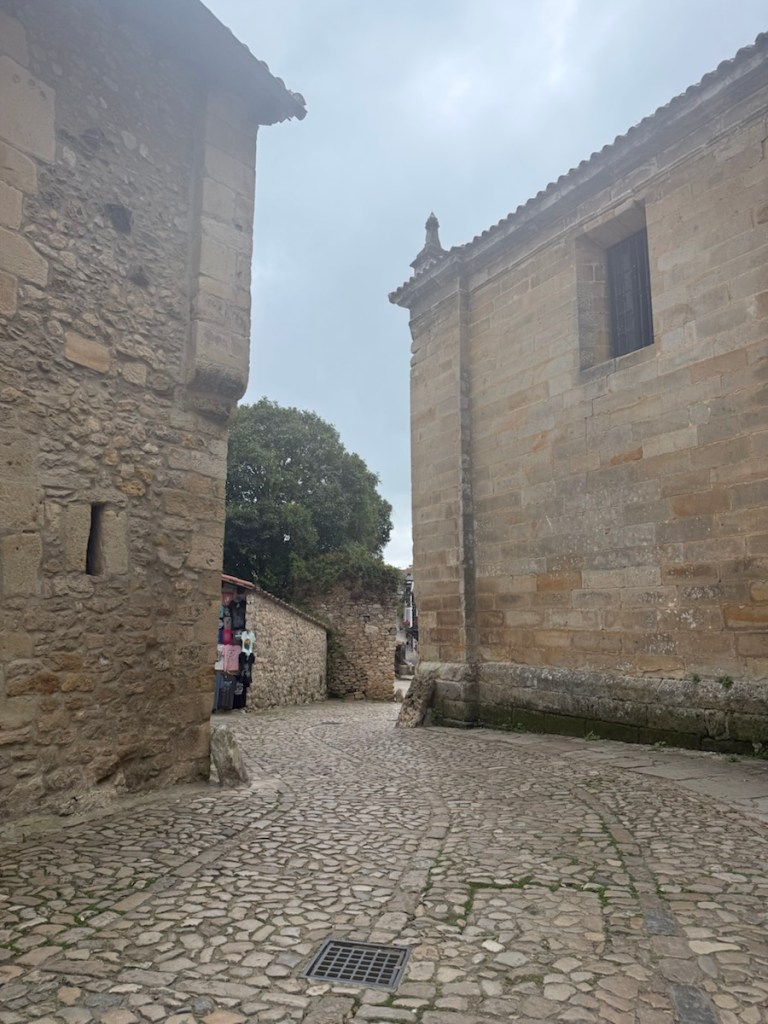
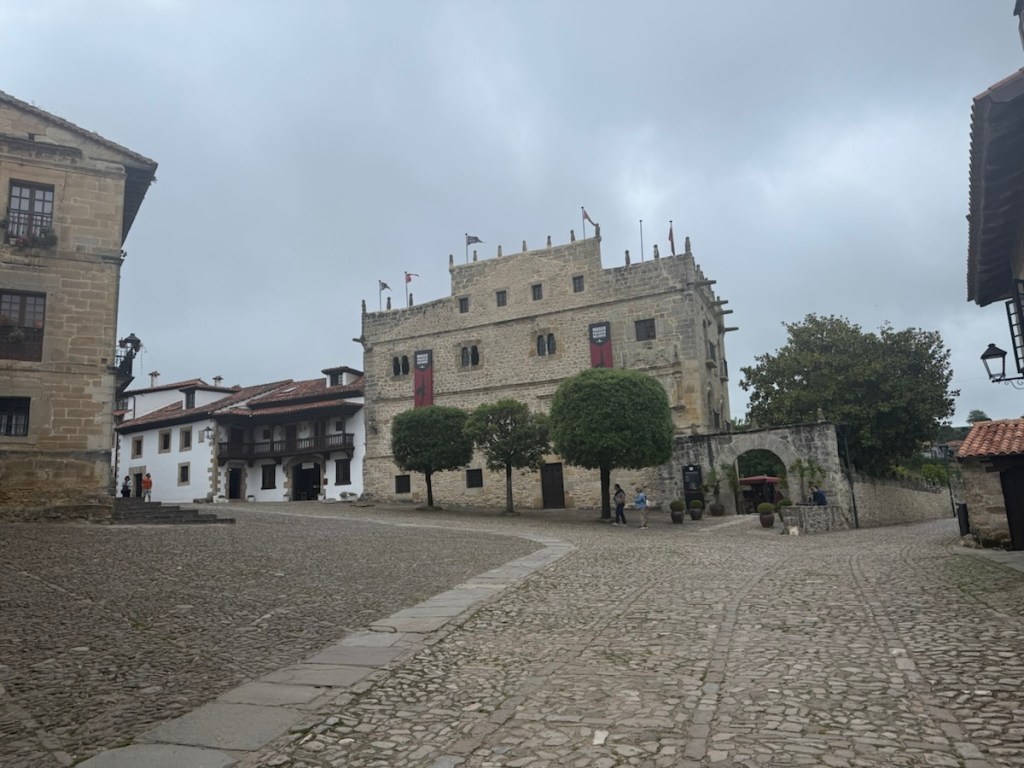
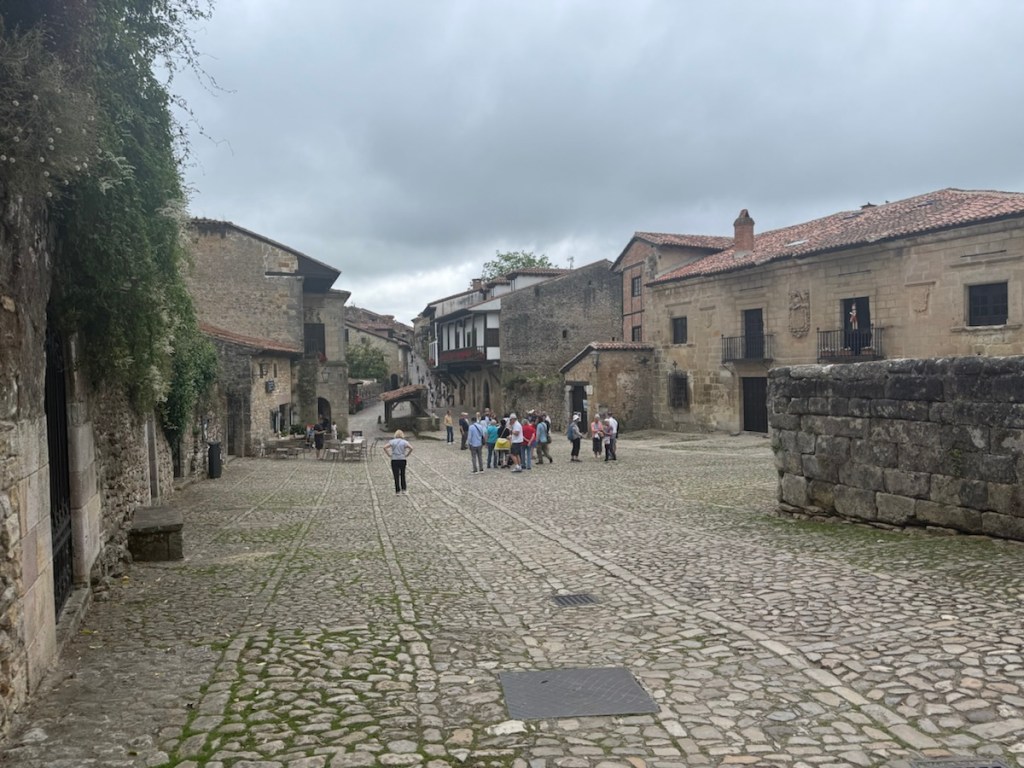
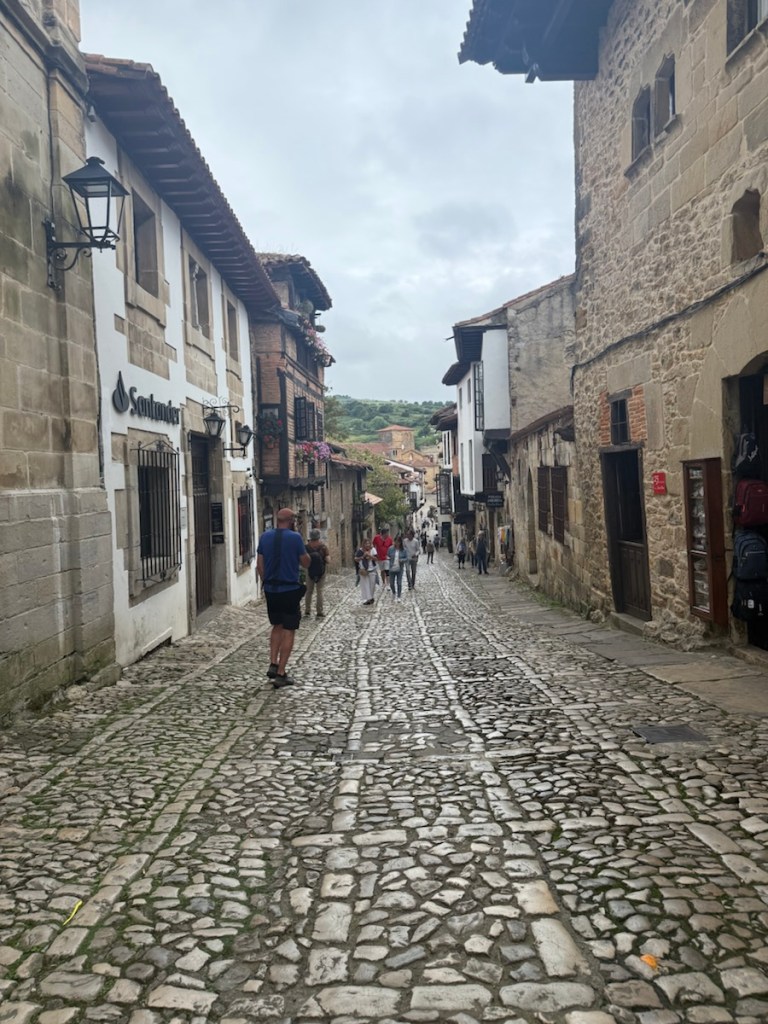
A quick hop and skip later, I was back on my feet and walking the last 7 km into Santillana del Mar, which is neither Santa, nor Llana, nor del Mar. What it is, though, is a living diorama of medieval charm. Cobbled lanes, stone façades with flower boxes, and enough atmosphere to star in a dozen period dramas. Which, it turns out, it has.

Better yet, Santillana had open beds and open hearts. Dinner was a lively affair with new friends and fellow hobble-legged pilgrims, and by 10:30 p.m., we all collapsed into our bunks like felled timber. Lights out, smiles on.

And yes—this wandering path, this unexpected detour, this combination of ferry, feet, and train tickets? It was just right.

Day Five: Laredo to Güemes

The nuns did not kick me out. That’s the headline. Despite my track record with mischief, I made it through a night in a convent without triggering divine intervention or stern looks. A small miracle, really.

This morning had no urgency, thanks to the 0900 ferry crossing from Laredo to Santoña. Getting there, though, felt like I had stumbled into a deleted scene from Indiana Jones and the Ticked-Off Anchovy Fleet. The “trail” was more suggestion than path—mostly overgrown brush that spit me out onto a wide beach. The ferry, bless its little metal heart, docked directly on the sand, gangplank clanging down like a medieval drawbridge.

The crossing was short—barely 100 meters—but absolutely made up for it in entertainment value. Our boat, which I shall henceforth call The USS Minnow, bravely navigated the chaos of returning anchovy boats. Each passing vessel sent out waves that collided with others, multiplying in strength and sloshing us around like olives in a martini shaker. I held onto my pack and dignity with equal desperation.

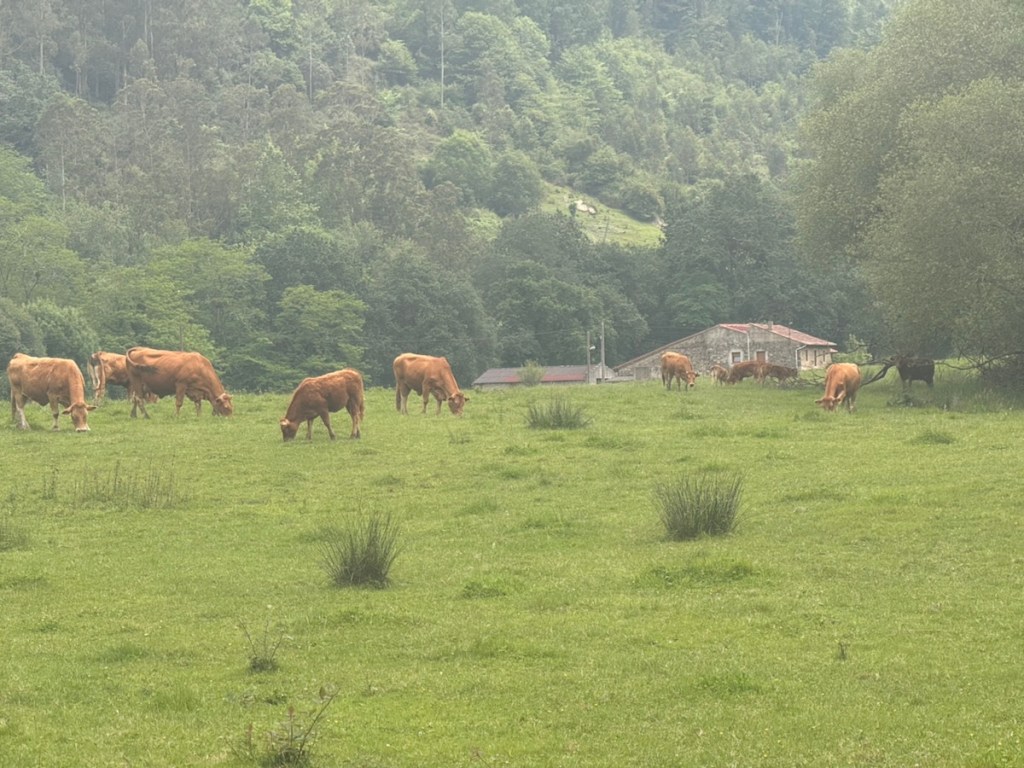
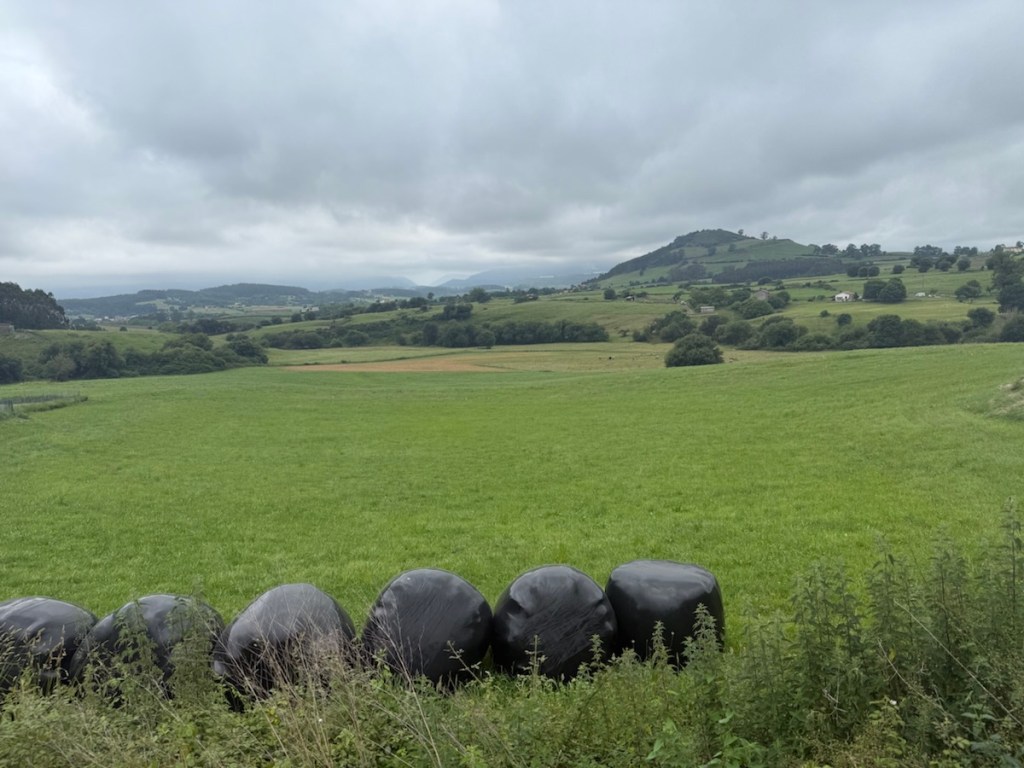
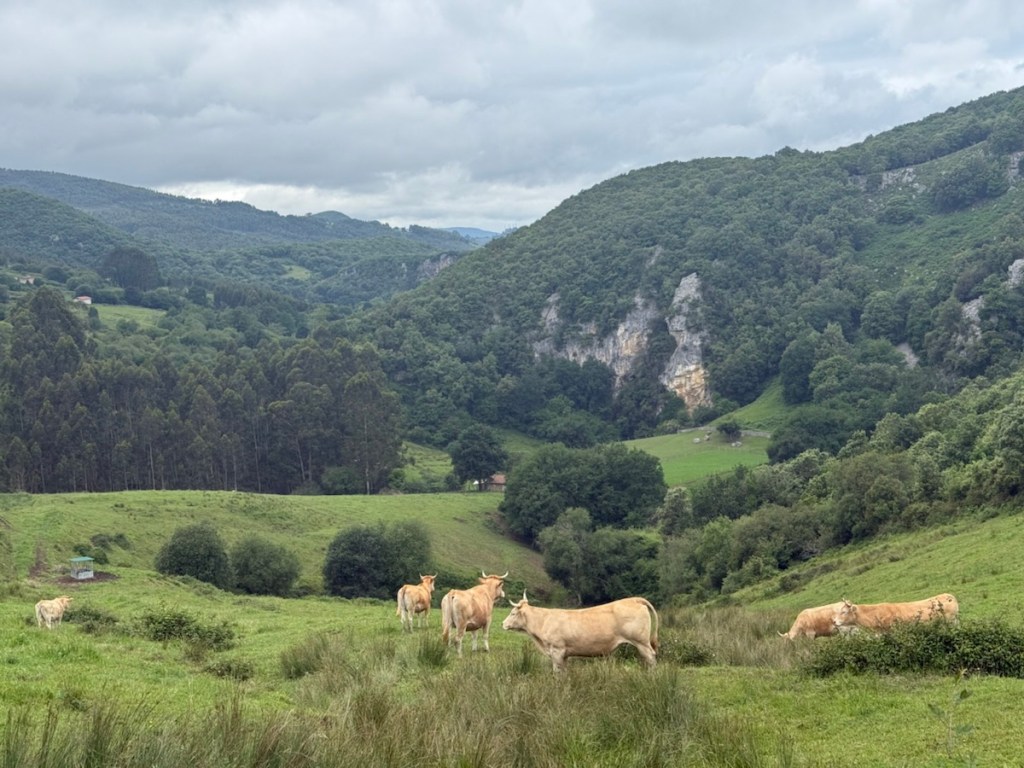
Once on solid ground again, I meandered through a string of sleepy beach towns before climbing into the rolling green hills of Cantabria. The eucalyptus groves whispered, the cows stared, and the paths I took were so quiet I began to wonder if I had slipped into a parallel Camino where I was the only pilgrim. Just me and the occasional “moo.”

By the time I reached Güemes, I was ready to rest—and apparently so were the cats. The albergue is ruled by at least four of them. These are not skittish farm cats. These are confident, table-top-strolling, bench-hogging landlords with whiskers. One stared me down until I shifted, then claimed the remaining sliver of bench I had left like a true aristocrat.

Today gave me a rare gift on the Camino: cloud cover without rain. My feet are grateful, my spirit is full, and my bench is shared. Not bad at all.

Day Four: Postscript. Challenging Spanish convent hours.

It never fails. After 30 kilometers, your brain enters a state I call pilgrim mush—a delightful cocktail of fatigue, hunger, and the vague misunderstanding in your own mind that common sense no longer apply to you.

In my case, this led to a tragic error. I wandered out for dinner in what began as a a clear sky and transformed, with all the subtlety of a Shakespearean plot twist, into a downpour. Naturally, my rain gear; jacket, pants, dignity was back in the albergue, neatly laid out on my bed like a shrine to better planning.

Dripping wet and muttering prayers to Saint James, I sloshed back to the convent only to discover the doors were locked. Not just locked, but medievally locked, with a sign in three languages, no less explaining that from 17:15 to 19:45, entry is forbidden. Apparently, even modern pilgrims must endure penance.

Cue the impatient Frenchman. He rang the bell. He knocked. He read the sign and knocked again, as if it were a riddle he could brute-force. The nuns, however, were mid-chant, likely summoning divine patience for moments just like this. I watched the door remain unmoved. The Lord may be forgiving. The sisters’ lock schedule is not.

Embarrassed by proximity, I did what any self-respecting soggy pilgrim would do: I retreated to the nearest café to dry off and plot my next move. As I stepped in, the young woman behind the counter gently informed me she was closing. I sighed the sigh of a man denied both sanctuary and sandwich.

But fortune, in the form of human kindness, smiled once again. She was from El Salvador, and we struck up a warm, familiar chat that made me forget the cold. Before I left, she told me she would open at 07:30 the next morning just in time for me to swing by for breakfast before my next trek.

And just like that, tomorrow’s forecast includes good coffee, a warm smile, and if I can remember my rain gear, a dry start.